Showing posts with label Church. Show all posts

Friday, April 10, 2020

DIY Easter

What are you doing for Easter this year. For many families this season is heartily anticipated. There is a 40 day period of preparation called Lent; then comes Palm Sunday when people begin to remember Jesus’ last week on earth; and finally there is the weekend with Maundy Thursday (Passover), Good Friday, and Resurrection Day. Churches prepare huge celebrations, dramas, cantatas, and special services (which will be remote this year). People purchase Sunday clothing, plan Easter Egg Hunts, and large family gatherings. BUT ...

This is the year that everything External will be different. There will be no large community gatherings because of the COVID-19 epidemic. We must stay home. So what will Easter be like? Perhaps, in its own way, for one year, better, because, if we will, we can focus on the internal meaning rather than the external events.

So, what is Easter? Is it the clothing, the chocolates, the choir specials, or the crowds? Not really! Easter celebrates the atoning death and the surprising resurrection of Jesus. Easter celebrates LIFE (not life with gusto, which only distracts us from real life - but LIFE that connects with God and goodness). So, what will you be doing this Easter?

It is time for a do it yourself Easter.

How can you do that? Plan! If you have children, here is a recommendation. Purchase a Kindle version of the book “The Case of the Missing Body.” (It is 99¢, hope that does not break the bank!) It contains a nine act play, and some added stories and facts. Most of the acts only require 2-4 actors, and are written so children can understand. Pass the book around, and read the parts. Then talk about how each scene fits into the larger Easter story.
Order this book today on Amazon.com
Children learn by doing … not by sitting in a church service. This play is doing! Your family will greatly benefit if you will spend the hour you normally spend in church, reading through this play. Don’t fight the system, don’t mourn the loss of normal … just do something different, and you will be glad you did! (And talk about it for years!)

The book is on Amazon.com - click here!

This Easter is a great time for something different! A great time for DIY, with help, of course. So try it out.

And please pass this idea on, so others can enjoy Easter, wrapped in its full meaning also.

Tuesday, August 20, 2019

What is a Church?

   Perhaps you think “everybody knows that!” or would tell me that the answer to this question is common knowledge in the United States … but you are wrong! In recent years there are many (and that number is growing) people who have no idea what a church is or what a church stands for.
   A recent survey (2018) asked the question, “Aside from weddings and funerals, how often do you attend religious services?” 46% (almost half) answered seldom or never. About ten years a group went door to door in a small southern town and asked the question, “do you belong to a church or religious organization in this community?” An amazing 80% answered “no.” Christians who encourage each other by saying, ‘people will come to church if we just invite them,’ fool themselves. Most people who do not regularly attend religious services have no idea what happens in a church, synagogue, mosque or temple.
    And how would people know what goes on in a place they seldom attend? Think about it … do you know what goes on inside the building of another religion? Do you know what their services are like? What holy book they use? What they teach, or how they interact with the community? Do you know what they think about your religion? Do you even know how to approach them?
   During the months of August & September 2019, I will write several short blogs about the church. I will look at what it is, what it is not, and hopefully raise awareness so people of the church, or synagogue, or mosque or temple can understand there is a perception problem and better explain who they are and what they do within their local communities.

Friday, August 18, 2017

Capernaum

In May 2018 I will be taking a group on a 14 day trip to the Holy Land. During this trip we will visit the Galilee region and Capernaum, a city where Jesus lived for several years. This city on the shores of the Sea of Galilee is an interesting place to visit. The site is maintained by the Franciscans, who have added walkways and benches and maintained the landscape so the story of Jesus’ residence can be told without too many modern intrusions.
Gate at the Franciscan Monastery of Capernaum
During our visit to Capernaum, we will enter the archaeological site through gates situated by a Catholic church. Once on the property we will be seated on shaded benches where our tour leaders will explain what can be seen at the site and share associated Bible stories so we can take away a memorable experience.
Shade trees which protect seating area of Capernaum
From the benches we will be directed into a fourth century synagogue constructed from imported limestone. Limestone was chosen for the exterior of the Synagogue to give a white (pure) appearance in a village constructed mostly out of the black basalt rock, which was easily available in the region. The fourth century building is well-maintained and enables the visitor to walk within and understand construction and practices in ancient places of worship. Tall pillars and an intact anterior provide photo opportunities and an ambiance to the visit.
Anterior of the Capernaum Synagogue
On the south side of the Synagogue, a portion of the earlier basalt synagogue has been uncovered where visitors are able to see a portion of the building in which Jesus and the disciples worshipped.
Remains of a first century synagogue at Capernaum
Outside the Synagogue, we will walk through a large area of foundational ruins. Many of the foundations are several feet in height and display steps and other features which will help us visualize the city Jesus called home (Matthew 9:1)
Ruins of Capernaum from the Synagogue
Over one area of ruins we will be able to enter a twentieth century church which sits above a residence believed to be the home of Peter’s mother-in-law. The modern church has a glass floor which allows visitors to see foundations of a first century home and a fifth century church. Diagrams give explanation of the existing foundations.
Looking across ruins of Capernaum to the new octagonal church
Beyond the ruins we will be able to walk down to the Sea of Galilee. We will visualize the beaches from which Peter, Andrew, James, and John departed on their fishing excursions. These shores are also the place recorded in Matthew 4 where Jesus meets Peter and says, “Come, follow Me, and I will make you fishers of men.”
Looking from Capernaum across the Sea of Galilee
On our trip within Galilee we will see Capernaum from several different vantage points. We will see the village from our boat ride on the Sea of Galilee, from the top of Mount Arbel, and if we strain our eyes from Kibbutz Ma’agan, where we will spend three nights. Once we walk through the village of Capernaum in Galilee, each sighting will give us a new perspective as we discover the shores along which Jesus often walked.
A view of Capernaum from the top of Mt. Arbel
If you would like to join us on our 14 day trip to the Holy Land click this link. To sign up for the trip click here. I hope you will travel with us during our 14 day trip to the Holy Land in May 2018.

Friday, February 24, 2017

Spiritual Preparation for Passover

The method of modern dining takes many forms. Some meals are eat and run event. Other meals are eaten with family in front of the Television. For most the time honored tradition of dining at a table without distractions and interruptions is a thing of the past.  The ritual meal which plans for and expects God’s presence is a relic which has been forgotten in contemporary settings.
Seder Plate at Passover
With the exception of our Thanksgiving meal most people have tossed time consuming meal preparation and environmental atmosphere setting as too laborious and unnecessary. The removal of intentional sit down suppers has created a void spiritually and socially within families and the fabric of our society.
Our Passover Haggadah with explanations
The Passover Seder is an intentionally spiritual meal. Them family is to select a lamb, which is a gift for God and give special care to the animal for three days. Then they kill the animal, take some of the blood and put a sign for God on the doorposts of their homes. Preparation for the feast begins before the meal.
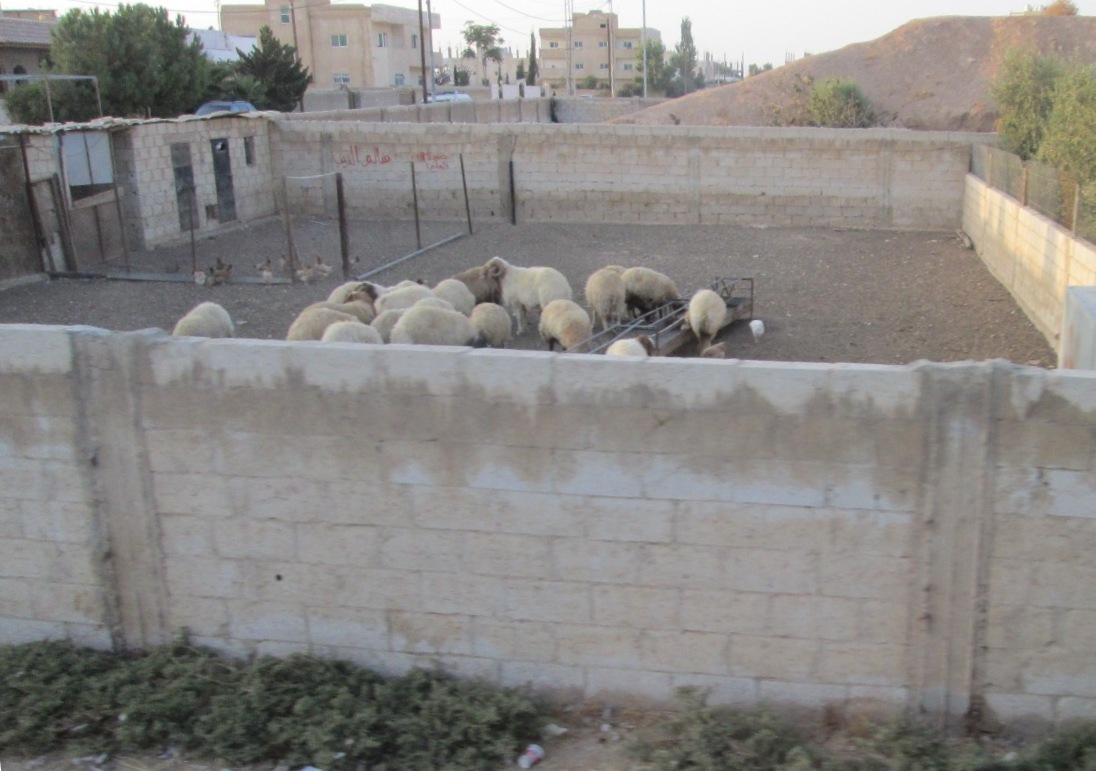
Sheep Pen in Jordan
As the family sets up their meal more spiritual preparation takes place. They are to prepare to leave Egypt in haste as they eat their supper. The Hebrew people are about to become pilgrims of the desert who are completely dependent on God. They are also to eat only unleavened bread for seven days restricting the most basic of all foods, bread, to a just barely food item.
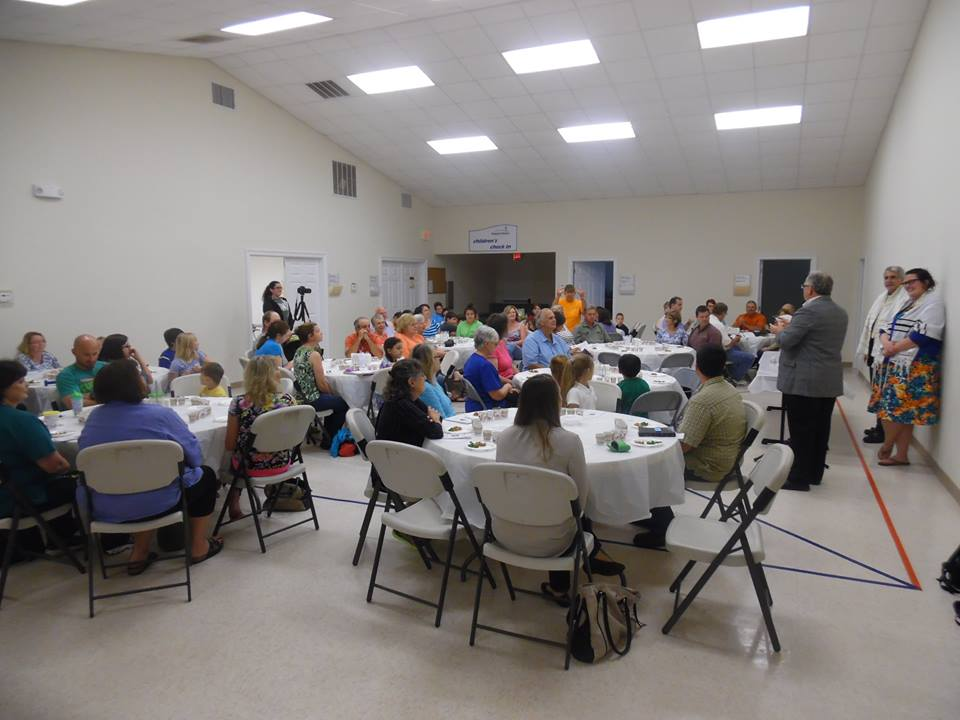
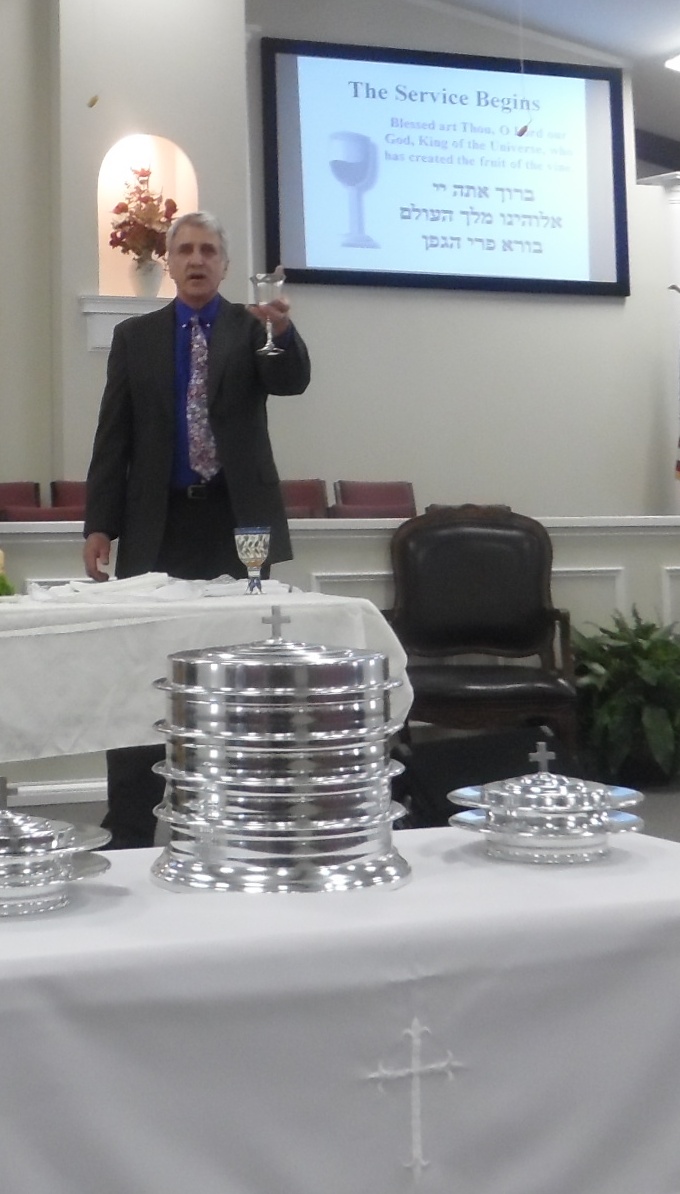
Sharing the Passover at Central Methodist, Mooresville, NC
The Lord told Israel, “when your children ask you, ‘What does this ceremony mean to you?’ then tell them, ‘It is the Passover sacrifice to the Lord, who passed over the houses of the Israelites in Egypt and spared our homes when he struck down the Egyptians.’” (Ex 12:26-27)
Sharing the Passover in New Orleans
The Passover dinner is to be a time for meeting with God. From the beginnings of preparation to the conclusion of the Seder this event is to teach about and celebrate God. At times I see advertized a thirty minute, or a fifteen minute Haggadah. But these are too brief and miss the point. To shortchange Passover would be the same as to skip a Sabbath meal to spend the evening shopping.
A Skit during the telling of the Passover Srory
When I lead Passover Seders in churches one of the things I offer them is a seven day plan for spiritual preparation. Only a few people have participated in this opportunity. I feel I must offer it anyway because God desires growth in our lives, even if this takes self denial. The Lord desires we live a better life, not a pampered life.
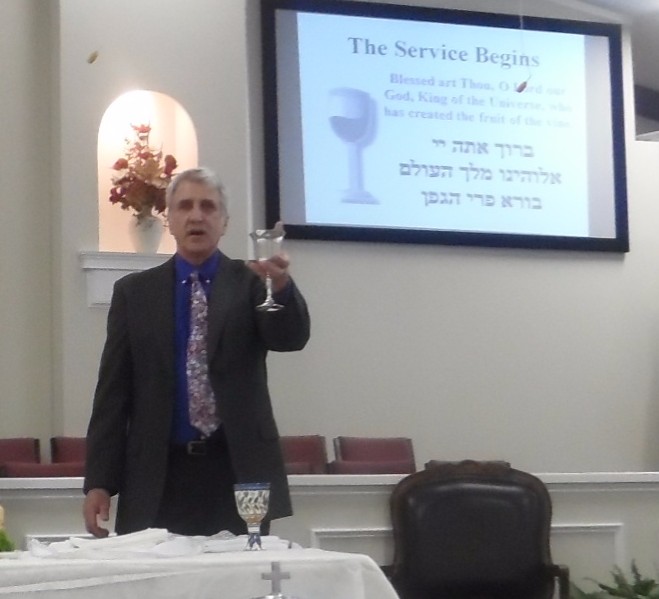
Wine Glass and Sabbath Candles at Passover
The Seder service is built on understanding the multitude of ways God has cared for us so we can give thanks and praise. The service begins with thanks, and then proceeds to share with us what life was like during Israel’s days of slavery. As the Seder progresses participants move from physical concern to spiritual cleansing. This is shown through the two hand washings of the evening. The first is to clean hands, the second is to clean the heart.

As we approach the Passover season, I ask how you will grow spiritually this season. How will you bring the annual Seder from placement as an annual event to being a springboard to a closer relationship with God.

Friday, February 10, 2017

Preparation for a Passover Meal

Passover is a unique event which most churches have yet to discover. Communion, the Lord’s Supper and Eucharist originate from a section of the Passover celebration. The teaching of the Jewish people shared during the Passover can add great understanding to the meaning of the bread and the cup which Christians share regularly.
Most churches have never had a Passover Seder demonstrated for them, and therefore fear what this event might bring. The event is not designed to make people “more Old Testament,” convert Christians to Judaism, or to pull them away from their current church. The program is designed for people to have a better understanding of their own faith. The first step to preparation for a Passover Seder is to contact someone who can lead this for your church. If your church would like a Passover Dinner, click this link.
The desire to celebrate the Passover as a supper is worthy for a church because when Christians come together with one heart and mind in this expanded format of the Lord’s Supper they gain a larger picture of the event and grasp a fuller understanding of the meaning behind the bread and the cup. The story told during the Passover sets up a dialogue on how the freeing of the Jewish people from slavery and liberation from bondage to sin enable a believer to take their first steps in a journey with the Lord God.  Bringing the dream of a community dinner around the Passover observance is the first step in preparation for a church Passover meal.
The next steps get more practical, like what day should the event happen, who should lead the event and who should be invited to the Passover. For a large group the event needs to be calendared in advance and personnel enlisted for shopping, publicity, cooking and cleanup. A list should be made of the group selected for participation. This can be a family, a fellowship group, or the entire church. In the spirit of evangelism people from the community (probably people who are not Christians) should be invited to the event. Mailing lists, facebook posts, twitter feeds and e-mails with blogs and information should be planned and sent as scheduled. Personal invitations always build a larger and more complete participatory group.
For a church there are several ways to do a Passover presentation. For those who just want to get their toes wet, a speaker could be invited to give a presentation during the time of the sermon. The serving of the Lord’s Supper could be a part of this presentation. I personally think a great deal is lost when Passover is placed in the foreign environment of a church presentation with no personal involvement.
The original Passover was shared in the context of a meal. For us this meal was “no skimping” (except for bread) a full supper like a Thanksgiving dinner. A church or fellowship group must decide what type of meal they want and how it will be prepared. The two most common ways to prepare a meal are to organize a “covered dish” event or to enlist a cook for the meal. The Passover can also be held at a restaurant or as a catered event.
The two things I ask people to avoid during Passovers I lead are bread and pork products. To avoid bread or leavening is part of the teaching of the Passover. Tradition says the Jewish people left Egypt in such haste they did not have time to let their bread rise. Matzoh, an unleavened bread is served in place of our normal staple. The Jewish people replace traditional flour with Matzoh meal during the seven days of the festival. We know for a fact that Jesus would have done this.
One preparation for Passover which I all too often forget are the printed programs. During the home Seder a booklet called a Haggadah is given to each participant. These booklets are read during the meal and parts are given to different individuals. Participation adds to the festival and is part of the reason this celebration is much more effective around the dinner table than in an auditorium. I have published a participant's Haggadah available on Kindle for a very low cost.
I am a big believer that people can receive more benefit from activities by advance preparation. I have outlined in this blog post several areas to help people prepare for a Passover Seder. On February 20, I will detail some things which need to be on the table during a Passover celebration. These can be found in my book “A Christian Passover in the Jewish Tradition.” Most people who regularly lead Passover Seders will walk groups through practical preparation for a small group or church event.
The one area of preparation many people forget is in all probability the most important, spiritual preparation. The Jewish Rabbis of the first century gave great attention to preparation, I think because practical preparation for Passover leads to prayer which is the keystone of spiritual preparation. I will write more on spiritual preparation in a blog to be published February 24. I have published seven previous blogs to prepare for Passover. These are available for free  beginning with a March 8, 2015 blog (to view click here).

I can not emphasize enough the spiritual growth and understanding which comes through participation in a traditionally (or Messianic) observed Passover Seder. I will be glad to help you set one up, contact me for help or if you have questions.

Friday, February 3, 2017

Passover and the Lord's Suppper

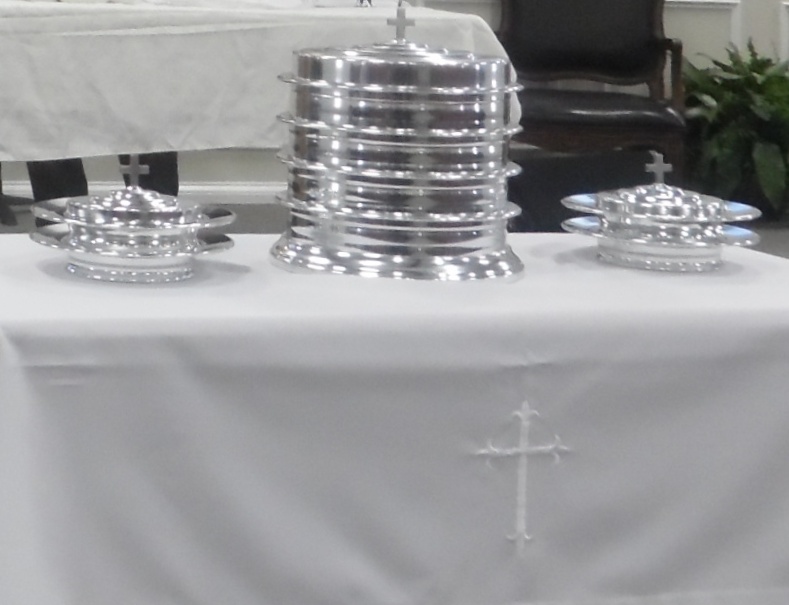
The least changed and most celebrated moment in Christian worship is called Communion, the Lord’s Supper or Holy Eucharist. A simple piece of bread and a sip of wine or grape juice open to the believer a moment with the Lord and bring to the forefront of heart and mind the teachings of Jesus Christ. In the Catholic church the entire worship service moves toward the Holy Eucharist. In Christian and Disciples of Christ congregations communion is served every week. In Baptist and other non-liturgical assemblies the Lord’s Supper can be a regulatory add-on to a meeting with another focus. Participants of all churches look forward to the moment they partake of the bread and the wine.
Communion services bring to remembrance a moment in the final supper Jesus ate with his disciples on the evening before he was crucified on the cross. The book of Mark captures the moment this way: “While they were eating, He took some bread, and after a blessing He broke it, and gave it to them, and said, "Take it; this is My body." And when He had taken a cup and given thanks, He gave it to them, and they all drank from it. And He said to them, ‘This is My blood of the covenant, which is poured out for many.’”
The Bible tells us in this verse that something is missing from many communion services, and in the hearts and minds of many participants who regularly partake of the Holy Eucharist. The hint in Mark’s gospel says, “While they were eating.” Luke shows two cups in his look at the supper. Matthew states: “On the first day of Unleavened Bread the disciples came to Jesus and asked, ‘Where do You want us to prepare for You to eat the Passover?’ ... The disciples did as Jesus had directed them; and they prepared the Passover.” Paul references the Lord’s Supper as a meal and an important teaching several times in his letters to the Corinthians.
Most Christians know that the Eucharist was a portion of Jesus’ Last Supper, but they have never experienced the Passover observance from which the practice of Communion arose. The teachings and symbols of the Passover Seder (order of teaching) contain much which will contribute to Christian practice and understanding of the Lord’s Supper.
Passover is a celebration of freedom from slavery. The story which is told in the Passover Haggadah begins with the call of Abraham, who was a man of faith who live a life of obedience towards God. It tells how the family of Jacob came to sojourn in Egypt and were enslaved as the enemy of Egypt. The Haggadah teaches how when the people of Israel cried out to God in prayer their voices were heard. God brought miracles (we call them plagues which came about to punish Pharaoh and change his mind, the Haggadah calls them miracles which came in order to show the strength and power of God) in order to free His people. Then the Hebrews were commanded to gather as families, to place the blood of a lamb upon the doorposts of their homes, to roast the animal and to eat their last meal in readiness as God granted them the freedom they sought.
The Passover meal walks the participant through stages of preparedness from the cleansing of hands to the purification of the heart. It teaches observers about God's mercy through experiential lessons of tasting particular foods. The service calls upon the voices of each person present to give praise to God through the Hallel Psalms. It teaches us to savor the love of God who continually shows His love for His people.
The Passover Seder is led by the head of the household, not the priest (or pastor). The celebration is today as it was at the beginning (Ex 12:3) a home (not a church) celebration. This realization should call all believers to imbue the home with teaching and the practice of faith. It is belief which is actively lived out in the home which passes from generation to generation.
If you would like to celebrate a Passover Seder in your church (or receive coaching to lead it yourself) send an e-mail to KosherCopy@gmail.com. My family and I regularly lead Passover Seders in North and South Carolina, New Orleans and the Cincinnati area.

Wednesday, January 25, 2017

Passover at Church??

Really? Should a church ever hold a Passover dinner?
The answer is YES! The congregation which never celebrates the Passover creates a huge deficit for a complete and experiential understanding of the BIble. Jesus and his disciples sat down for a Passover meal every year. The early church celebrated a derivative of the Passover called the Agape Feast. Passages such as 2 KIngs 23:21 and 2 Chronicles 30:1-20 condemn Israel for not observing the Passover.
BUT, some would say: “The Passover is an Old Testament celebration. The church is a New Testament organization.”
Sadly, such conversation betrays a lack of understanding. The New Testament tells us that Jesus celebrated Passover annually. In my book Spring: Connecting with God, I give details of Passover from the life of Jesus that many have missed. Jesus and his parents visited Jerusalem for a Passover celebration when he was twelve years old. The context of this celebration explains how Joseph and Mary could leave Jerusalem without their son.
The Passover also forms the backdrop for a visit from Nicodemus and the feeding of the 5,000 at the Sea of Galilee. Elements of the Passover Seder (especially the order of service including prayers and songs which takes place around at the dinner table) show up in both New Testament teachings.
Passover forms the basis for the Christian Communion (or Eucharist) service. The elements of bread and wine show up prominently in the Passover Seder. The Seder is outlined by four servings of wine associated with four promises given in Exodus 6:6-8. The stories of the Seder tell how salvation and redemption come to Israel beginning with the shedding of the blood of a lamb.
A celebration of Passover with your church will answer many confusing questions, such as, “Why is Easter, unlike other Christian holidays, celebrated on different days, and even in different months?”
Passover explains the timing and organization of the Jewish calendar. The festival is held during the first month (of the religious year) which is set by design to help people understand when to plant crops. Passover is the spring planting and early harvest festival. The holiday teaches us to look to God as the provider of all good things such as creation, spring, freedom, families, and love.
The Passover Seder (Seder means order, and includes prayers, songs, storytelling, questions, symbolic foods, and scripture - all taking place around the dinner table) is a family event. Inherent in its design, the gathering is held at home and not in the synagogue/church. The parents, not the pastor, are the teachers at this event. The family member leading speaks the words, “I do this because of what the Lord did for me when I came out of Egypt.” The leader goes on to teach his or her family, with whom he or she has a personal connection,This observance will be for you like a sign on your hand and a reminder on your forehead that this law of the Lord is to be on your lips.” Passover is a home-based celebration of God’s love and providence for his people. The meal of remembrance has enabled the Jewish identity to survive for over 2,000 years without a homeland. Passover can be a great learning experience for Christian families and children.
Many Christians object to a Passover Seder because, “We’ve never done that before!”
However, these Christians are mistaken. The early church annually celebrated the Passover. An early church manual called the Didache explains that Christians met for a meal on the first day of every week, which was very similar to a Passover dinner. This meal is called the Love Feast in Luke 24:25-35; Acts 20:7, Jude 12, and Revelation 3:20. 1 Corinthians 11:17-34 gives a detailed teaching on the Agape Feast.
Passover is a major theme throughout our Bible in both the Old and New Testaments. The teachings of this festival are fundamental to our faith. The environment and means in which the story of Passover is repeated demonstrates the teaching of history and faith for young children, solidifies and exemplifies these lessons for adults, and creates strength in the faith community. The Passover is a celebration worthy of our attention. Why has the church overlooked this important practice?
My family is available to lead a Passover Seder for your church (or to coach you to lead the meal). We regularly lead this service in North and South Carolina, New Orleans and the Cincinnati area. Contact us by leaving a comment on this blog.

Sunday, December 11, 2016

Christmas Sunday School

For many years I have served as a Minister of Education at churches in Wyoming, Kansas and North Carolina. As a Minister of Education I developed educational programs for all age levels from Preschool to Adults. I found and trained workers to staff these programs.
As a retired minister, I continue in my life’s work, but at a slower pace. One area where I continue to serve is in the Preschool. During my time of service I encouraged everyone to volunteer with Preschoolers once per month during the time of the worship service (we called this “extended session.”) As an example (because I must do as I said) I serve in the Kindergarten class (our Minister of Children finagled a way to get me to serve twice a month), and develop my lesson plans where the curriculum is weak.
I have observed across the years that faith development in children is not automatic and a guide is required both at home and in church to to help children find the right path. I have shared in previous posts how I developed and carried out a lesson plan for the Christmas season each year with my family and in church. During the two weeks of teaching this month I drew upon my plan for Sunday’s lessons.
Last week’s lesson for children, and the journal in the devotional Advent Journeys, was about how the Angel Gabriel met Zechariah at the Altar of Incense in the Temple. My activity as I taught children was to have them lay down on a large sheet of paper with a crayon in each hand in order to draw angel wings snow-angel style. After the wings were drawn my helpers and I made an outline around the child’s body and let them color in the picture. As they colored, we taught the lesson.
This week’s lesson for children and the journal in the devotional Advent Journeys is about Joseph and Mary as they travel from Nazareth to Bethlehem and give birth to a Child. The birth of Jesus is the reason for the Christmas season, so it is with great joy that I look forward to teaching the children in our church tomorrow.
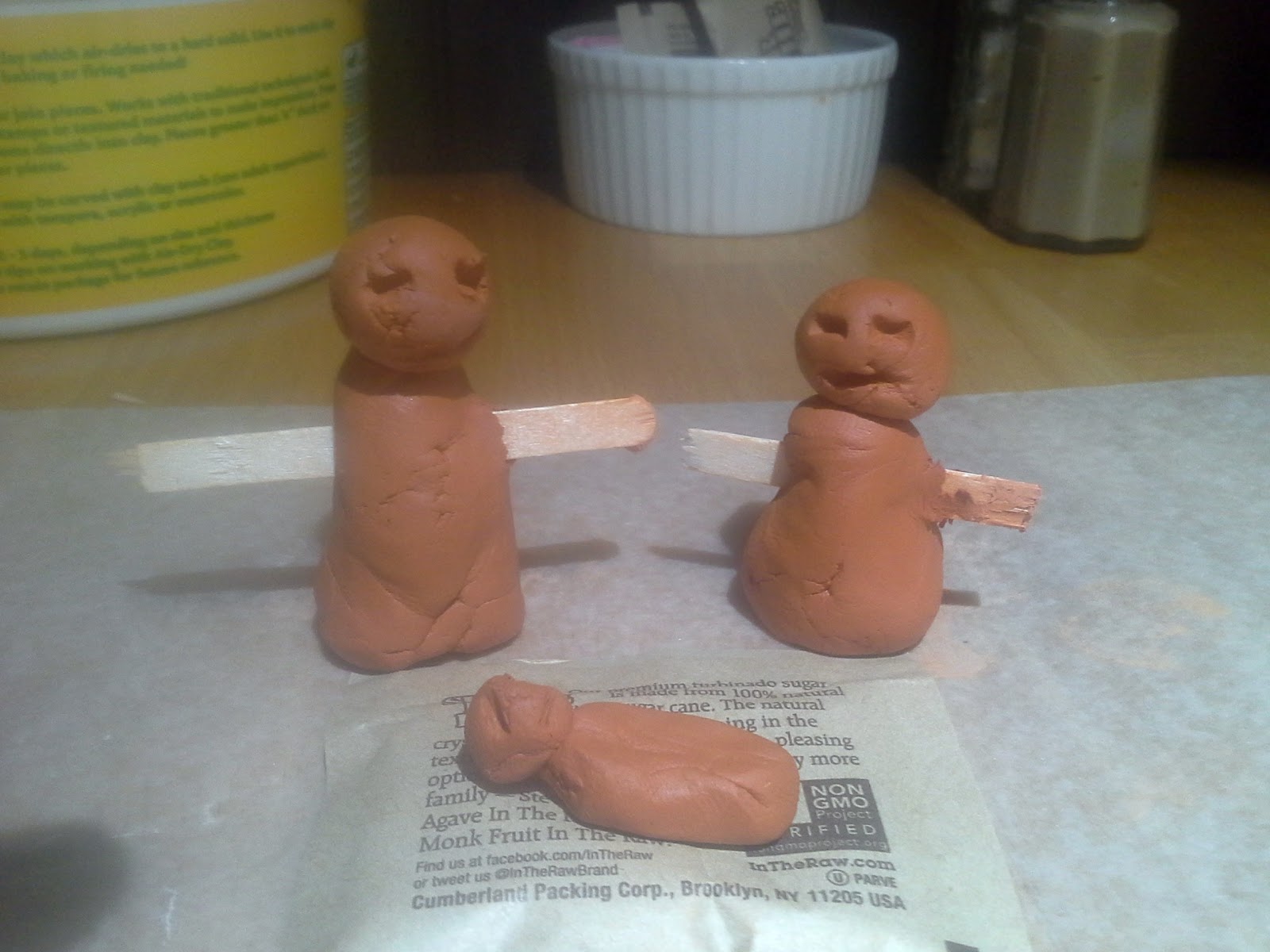
As I thought about what to do (more than just crayons and paper), I decided to give them something that hopefully will last a lifetime: a nativity scene.
In our family we proudly display a nativity scene made of clay by my daughters and myself many years ago. Although rough and misshapen, the set contains many memories, and is hand made. The scene brings back memories of the class, my daughters' childhoods, Christmases of the past and the Christmas message. It is a keepsake which is the springboard to stories and sharing as people visit our home (and as I write this blog).
I decided to give the Kindergarten children in my class a gift. I bought air-dry clay and took it to breakfast this morning, where I practiced (and got it right the first time!) One pinch of clay rolled between my fingers to make the head. Three pinches of clay shaped like a bell to make the body. A coffee stirrer (I will use toothpicks in class) for the arms, and another pinch made the body and head for the baby. I cut small mangers out of pressed wood (looks like hay), and will put it in a box for a stable.

Saturday, November 19, 2016

Parts of a Christmas Plan

The Christmas season ... Christmas day ... each of these hold more meaning when pre-planning takes place. Today, I want to share the parts of a good Christmas plan and a tool which will help make sure the plan falls into place (and is not consumed by the business of the Christmas Season).
The first part of the plan is to establish spiritual themes. I give each week of Advent (beginning the Sunday after Thanksgiving, November 27 this year) a theme. On my website these are: 1) Prophecy; 2) The Journey of Joseph & Mary; 3) The Shepherds; 4) The Magi. Then, each day I mark in the calendar two verses (an Old Testament and a New Testament) verse to share. These can be found in a calendar on my website under the tab for Advent.
The second thing I do is to take a look at my personal calendar. Days when work demands my attention need to be more self-directed; days (weekends) when I am less consumed will become valuable family times because I plan them (early, now) for my family. Long ago I decided if I do not have three days (worship at church, a family night, and an activity day) for my family, I am too busy. The Bible commands us to pass our faith on to the next generation. If I cannot successfully pass on my faith to my children, I have failed.
Next I look at community calendars. Many great things are happening in our community that are worth sharing with my family. Churches have musicals and family days. Museums and towns themselves offer special events and concerts linked to Christmas. Many communities have live Nativities and walk through dramas, such as Walk Through Bethlehem in our community. These events share ideas and fun far beyond what we could provide for our families individually. The events also help children understand that others also feel the spiritual element of Christmas is important.
After unmovable work events and community events are logged on my calendar, I set a family night each week in order to re-tell parts of the Christmas story in a fun way. I place these days as unmovable events on our family calendar. These events (I will share more tomorrow, and each Monday) include a special meal, an opportunity to read a portion of the Christmas story, times of singing, and surprises.
With the calendar planned, I produce a tool which will make sure no day is forgotten during the Christmas rush. This tool is the simple paper chain we made as children. On the outside of each link I place the date (like November 27). On the inside I place the two Bible verses to be read, and the activities I have planned for each day. My children make sure I take off the link for the day each morning. With the promise given in print each day, there is no going back.

These ideas are contained on my website, and linked to the book Advent Journeys.