Showing posts with label Matzoh. Show all posts

Wednesday, April 1, 2020

Virtual Seder

How can this night of Passover be the same as all other Passovers … but Different!

1. On all other Passovers we greet each other with hugs and kisses (including those from bubbe which are always slobbery) in person or through the cell phone … why on this night only through the cell phone?

2. On all other Passovers we light one candle or two … why on this night of Passover do we light many candles, and who says the blessing?

3. On all other Passovers we sit across the table and fill the room with great conversation, sometimes with increasing volume just to hear and be heard … Why on this night do we need a computer and a cell phone?

4. On all other Passovers we clink the wine glass and share l’chaims four times during the Seder, and multiple times before and after … Why on this night are the glasses not from the same set?

5. On all other Passovers we converse around the room and share the Haggadah together … Why on this Passover will we converse from house to house?

6. On all other Passovers we each take a nosh from a big fancy Seder plate set by the big fluffy matzoh tosh … Why on this night must we set our specialty foods on a dainty side dish?

7. On all other Passovers we sing the Dayenu loudly and off key until we run out of words (which is more than enuff), and it sounds horrible … Why on this night do we have volume control?

8. On all other Passovers either bubbe does all the cooking, or we each bring our favorite dishes … Why on this Passover do we share recipes, each cook our own and share the tastes?

9. On all other Passovers after the Matzoh is broken, a piece goes missing and must be found by the children … Why must the children search in multiple houses on this night?

10. On all other Passovers we open one door to welcome Elijah … why on this night do we open many doors for the great prophet.
A new Passover Haggadah for the Musically inclined
With the dangers of Coronavirus invading our lives this Passover Season, the evening will be different. Although we can not be physically present with our family, we can be with them virtually. I will do that with my family, and also some friends. I thought about this … because I do not want the evening to flop, so over the next few days, I will answer the questions above, and a few more. Planning ahead will prevent the dull spots and the failures of this evening, and help us do it right. If you have suggestions, or ideas, please write them in the comment section. Through sharing together this can be a great Passover evening.

Wednesday, March 25, 2020

A New Haggadah

As people in the world think about a plague (Coronavirus) which has multiplied itself ten times over, my mind has started to work on Passover (May the plague passover!). I have written a new Haggadah, The Psalmatic Seder. Why does the world need a new Haggadah, you ask … are there not enough.
A New Passover Haggadah
I answer, because this Haggadah is different than all other Haggadahs.

All other Haggadahs are guided by a Rabbinic tradition that began to set itself near the end of the Second Temple period (70 AD), and reached its high point in the Middle ages. That is when the order and words of the Seder were set (according to many scholars). Some say that the actual service is not much older, a conclusion I object to, because I think that some of our traditions go back to those 40 years of wandering in the Desert.

I assembled this Haggadah to show the service is older. I found two Passover Services in the Book of Psalms, that are not much different than the one we celebrate today. The order of teaching is not much different in Psalms 78 and 105-6, than what we do today … which leads me to see a Seder that was practiced in the days of the Kings of Israel, maybe 700 BC.

This Haggadah is different than most others because it contains more music, 17 songs. Because the words of the Haggadah come from the book of Psalms, I was inspired to look up music that has been sung across the years at Passover Seders. Our seder today is quite wordy, and does not contain much music. The Psalmatic Haggadah contains the words of the songs and musical scores, so they can be played. (They can also be found on Youtube, for a very musical Seder!)

This Haggadah is different from all others, because you probably have not used it before (since it has only now come into print), and so it will be fresh. While the order of the Seder service is the traditional order, the words are different, but many are totally from the Bible, and even older than any Haggadah we have today. (Is older more traditional?)

This Haggadah can make your Passover Eve different! It can bring new ideas and understandings. It can make you think about our freedom in new ways. It is worth a try!

Friday, February 10, 2017

Preparation for a Passover Meal

Passover is a unique event which most churches have yet to discover. Communion, the Lord’s Supper and Eucharist originate from a section of the Passover celebration. The teaching of the Jewish people shared during the Passover can add great understanding to the meaning of the bread and the cup which Christians share regularly.
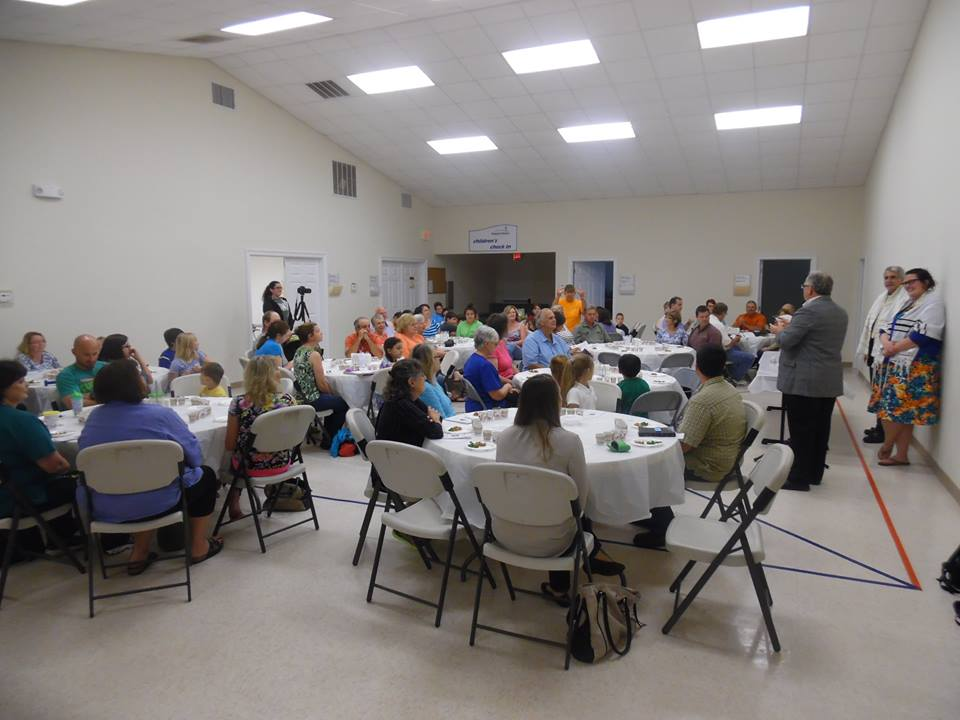
Most churches have never had a Passover Seder demonstrated for them, and therefore fear what this event might bring. The event is not designed to make people “more Old Testament,” convert Christians to Judaism, or to pull them away from their current church. The program is designed for people to have a better understanding of their own faith. The first step to preparation for a Passover Seder is to contact someone who can lead this for your church. If your church would like a Passover Dinner, click this link.
The desire to celebrate the Passover as a supper is worthy for a church because when Christians come together with one heart and mind in this expanded format of the Lord’s Supper they gain a larger picture of the event and grasp a fuller understanding of the meaning behind the bread and the cup. The story told during the Passover sets up a dialogue on how the freeing of the Jewish people from slavery and liberation from bondage to sin enable a believer to take their first steps in a journey with the Lord God.  Bringing the dream of a community dinner around the Passover observance is the first step in preparation for a church Passover meal.
The next steps get more practical, like what day should the event happen, who should lead the event and who should be invited to the Passover. For a large group the event needs to be calendared in advance and personnel enlisted for shopping, publicity, cooking and cleanup. A list should be made of the group selected for participation. This can be a family, a fellowship group, or the entire church. In the spirit of evangelism people from the community (probably people who are not Christians) should be invited to the event. Mailing lists, facebook posts, twitter feeds and e-mails with blogs and information should be planned and sent as scheduled. Personal invitations always build a larger and more complete participatory group.
For a church there are several ways to do a Passover presentation. For those who just want to get their toes wet, a speaker could be invited to give a presentation during the time of the sermon. The serving of the Lord’s Supper could be a part of this presentation. I personally think a great deal is lost when Passover is placed in the foreign environment of a church presentation with no personal involvement.
The original Passover was shared in the context of a meal. For us this meal was “no skimping” (except for bread) a full supper like a Thanksgiving dinner. A church or fellowship group must decide what type of meal they want and how it will be prepared. The two most common ways to prepare a meal are to organize a “covered dish” event or to enlist a cook for the meal. The Passover can also be held at a restaurant or as a catered event.
The two things I ask people to avoid during Passovers I lead are bread and pork products. To avoid bread or leavening is part of the teaching of the Passover. Tradition says the Jewish people left Egypt in such haste they did not have time to let their bread rise. Matzoh, an unleavened bread is served in place of our normal staple. The Jewish people replace traditional flour with Matzoh meal during the seven days of the festival. We know for a fact that Jesus would have done this.
One preparation for Passover which I all too often forget are the printed programs. During the home Seder a booklet called a Haggadah is given to each participant. These booklets are read during the meal and parts are given to different individuals. Participation adds to the festival and is part of the reason this celebration is much more effective around the dinner table than in an auditorium. I have published a participant's Haggadah available on Kindle for a very low cost.
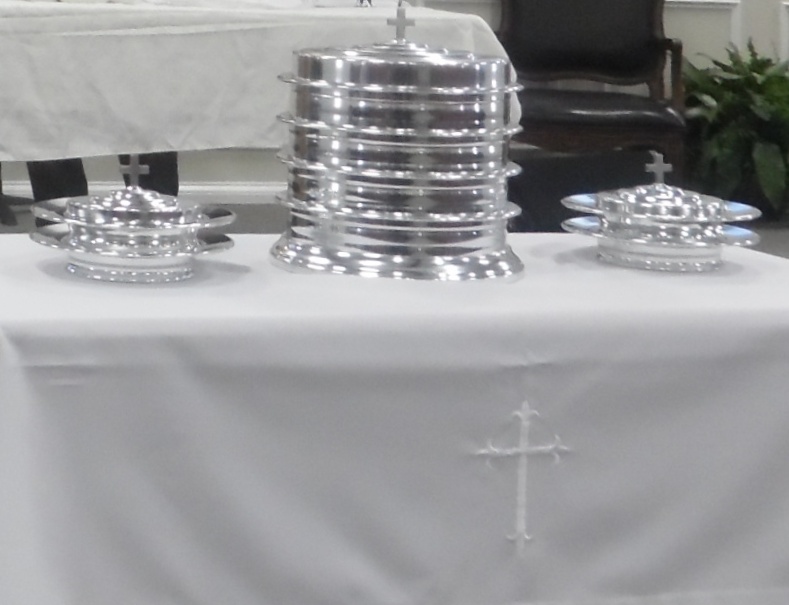
I am a big believer that people can receive more benefit from activities by advance preparation. I have outlined in this blog post several areas to help people prepare for a Passover Seder. On February 20, I will detail some things which need to be on the table during a Passover celebration. These can be found in my book “A Christian Passover in the Jewish Tradition.” Most people who regularly lead Passover Seders will walk groups through practical preparation for a small group or church event.
The one area of preparation many people forget is in all probability the most important, spiritual preparation. The Jewish Rabbis of the first century gave great attention to preparation, I think because practical preparation for Passover leads to prayer which is the keystone of spiritual preparation. I will write more on spiritual preparation in a blog to be published February 24. I have published seven previous blogs to prepare for Passover. These are available for free  beginning with a March 8, 2015 blog (to view click here).

I can not emphasize enough the spiritual growth and understanding which comes through participation in a traditionally (or Messianic) observed Passover Seder. I will be glad to help you set one up, contact me for help or if you have questions.

Friday, February 3, 2017

Passover and the Lord's Suppper

The least changed and most celebrated moment in Christian worship is called Communion, the Lord’s Supper or Holy Eucharist. A simple piece of bread and a sip of wine or grape juice open to the believer a moment with the Lord and bring to the forefront of heart and mind the teachings of Jesus Christ. In the Catholic church the entire worship service moves toward the Holy Eucharist. In Christian and Disciples of Christ congregations communion is served every week. In Baptist and other non-liturgical assemblies the Lord’s Supper can be a regulatory add-on to a meeting with another focus. Participants of all churches look forward to the moment they partake of the bread and the wine.
Communion services bring to remembrance a moment in the final supper Jesus ate with his disciples on the evening before he was crucified on the cross. The book of Mark captures the moment this way: “While they were eating, He took some bread, and after a blessing He broke it, and gave it to them, and said, "Take it; this is My body." And when He had taken a cup and given thanks, He gave it to them, and they all drank from it. And He said to them, ‘This is My blood of the covenant, which is poured out for many.’”
The Bible tells us in this verse that something is missing from many communion services, and in the hearts and minds of many participants who regularly partake of the Holy Eucharist. The hint in Mark’s gospel says, “While they were eating.” Luke shows two cups in his look at the supper. Matthew states: “On the first day of Unleavened Bread the disciples came to Jesus and asked, ‘Where do You want us to prepare for You to eat the Passover?’ ... The disciples did as Jesus had directed them; and they prepared the Passover.” Paul references the Lord’s Supper as a meal and an important teaching several times in his letters to the Corinthians.
Most Christians know that the Eucharist was a portion of Jesus’ Last Supper, but they have never experienced the Passover observance from which the practice of Communion arose. The teachings and symbols of the Passover Seder (order of teaching) contain much which will contribute to Christian practice and understanding of the Lord’s Supper.
Passover is a celebration of freedom from slavery. The story which is told in the Passover Haggadah begins with the call of Abraham, who was a man of faith who live a life of obedience towards God. It tells how the family of Jacob came to sojourn in Egypt and were enslaved as the enemy of Egypt. The Haggadah teaches how when the people of Israel cried out to God in prayer their voices were heard. God brought miracles (we call them plagues which came about to punish Pharaoh and change his mind, the Haggadah calls them miracles which came in order to show the strength and power of God) in order to free His people. Then the Hebrews were commanded to gather as families, to place the blood of a lamb upon the doorposts of their homes, to roast the animal and to eat their last meal in readiness as God granted them the freedom they sought.
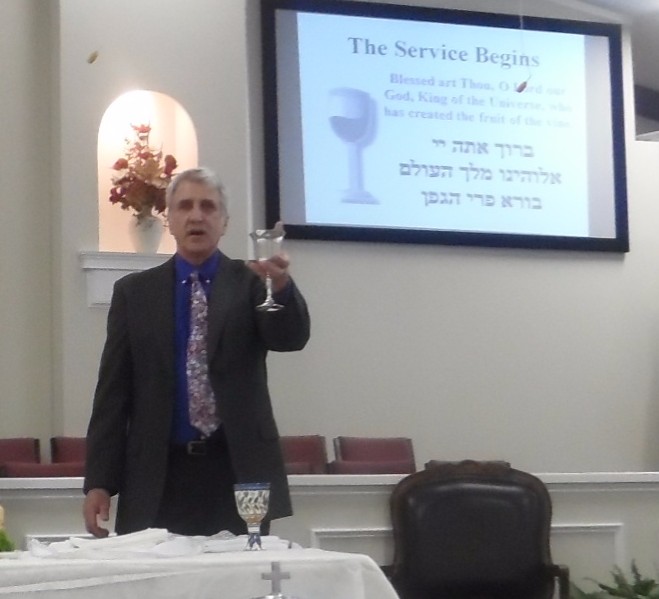
The Passover meal walks the participant through stages of preparedness from the cleansing of hands to the purification of the heart. It teaches observers about God's mercy through experiential lessons of tasting particular foods. The service calls upon the voices of each person present to give praise to God through the Hallel Psalms. It teaches us to savor the love of God who continually shows His love for His people.
The Passover Seder is led by the head of the household, not the priest (or pastor). The celebration is today as it was at the beginning (Ex 12:3) a home (not a church) celebration. This realization should call all believers to imbue the home with teaching and the practice of faith. It is belief which is actively lived out in the home which passes from generation to generation.
If you would like to celebrate a Passover Seder in your church (or receive coaching to lead it yourself) send an e-mail to KosherCopy@gmail.com. My family and I regularly lead Passover Seders in North and South Carolina, New Orleans and the Cincinnati area.