Showing posts with label Presentation. Show all posts

Friday, February 3, 2017

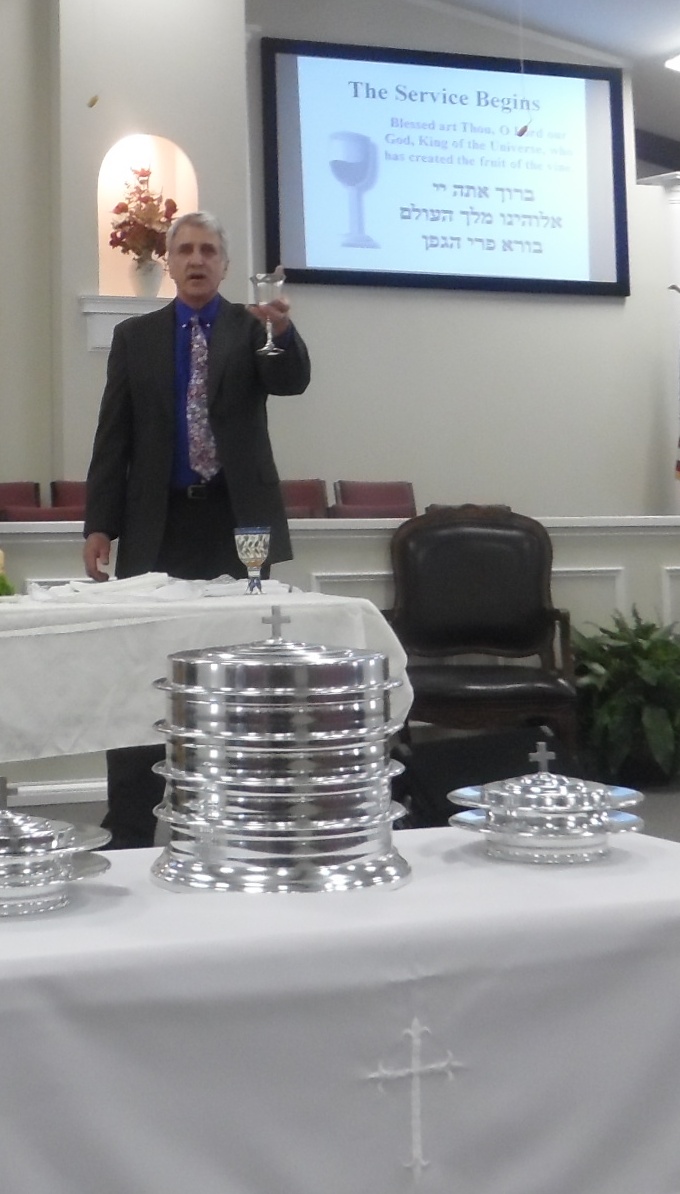
Passover and the Lord's Suppper

The least changed and most celebrated moment in Christian worship is called Communion, the Lord’s Supper or Holy Eucharist. A simple piece of bread and a sip of wine or grape juice open to the believer a moment with the Lord and bring to the forefront of heart and mind the teachings of Jesus Christ. In the Catholic church the entire worship service moves toward the Holy Eucharist. In Christian and Disciples of Christ congregations communion is served every week. In Baptist and other non-liturgical assemblies the Lord’s Supper can be a regulatory add-on to a meeting with another focus. Participants of all churches look forward to the moment they partake of the bread and the wine.
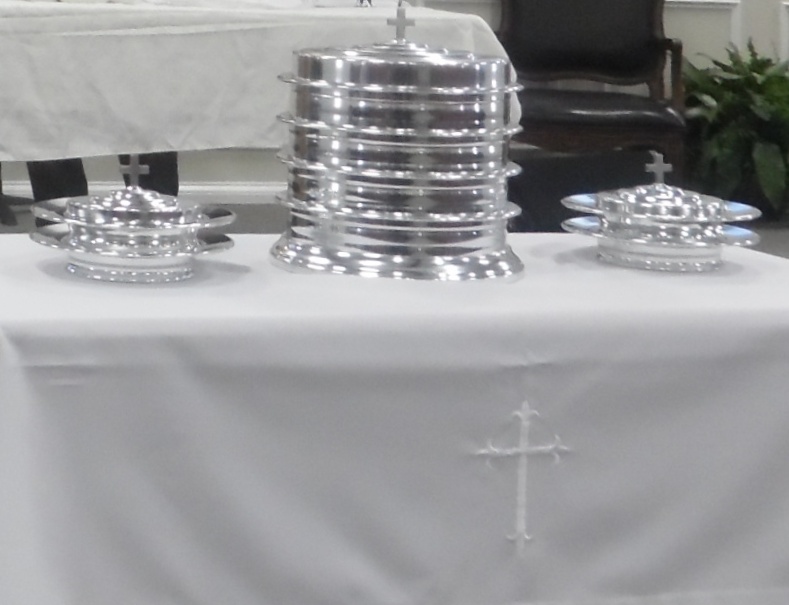
Communion services bring to remembrance a moment in the final supper Jesus ate with his disciples on the evening before he was crucified on the cross. The book of Mark captures the moment this way: “While they were eating, He took some bread, and after a blessing He broke it, and gave it to them, and said, "Take it; this is My body." And when He had taken a cup and given thanks, He gave it to them, and they all drank from it. And He said to them, ‘This is My blood of the covenant, which is poured out for many.’”
The Bible tells us in this verse that something is missing from many communion services, and in the hearts and minds of many participants who regularly partake of the Holy Eucharist. The hint in Mark’s gospel says, “While they were eating.” Luke shows two cups in his look at the supper. Matthew states: “On the first day of Unleavened Bread the disciples came to Jesus and asked, ‘Where do You want us to prepare for You to eat the Passover?’ ... The disciples did as Jesus had directed them; and they prepared the Passover.” Paul references the Lord’s Supper as a meal and an important teaching several times in his letters to the Corinthians.
Most Christians know that the Eucharist was a portion of Jesus’ Last Supper, but they have never experienced the Passover observance from which the practice of Communion arose. The teachings and symbols of the Passover Seder (order of teaching) contain much which will contribute to Christian practice and understanding of the Lord’s Supper.
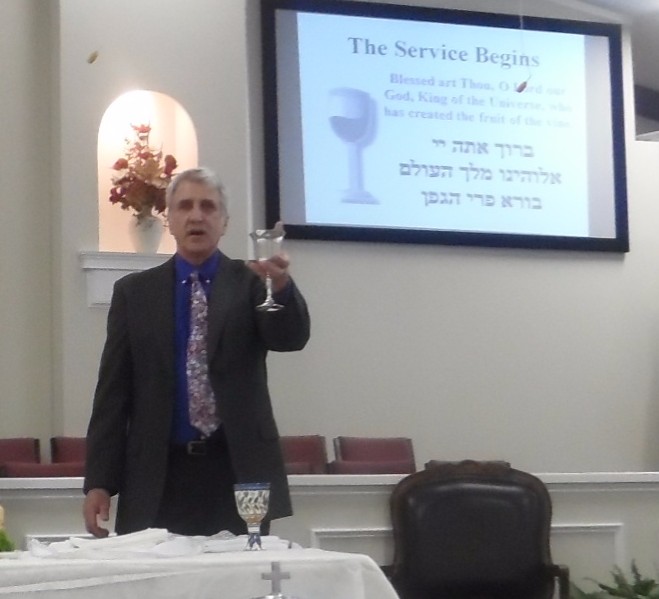
Passover is a celebration of freedom from slavery. The story which is told in the Passover Haggadah begins with the call of Abraham, who was a man of faith who live a life of obedience towards God. It tells how the family of Jacob came to sojourn in Egypt and were enslaved as the enemy of Egypt. The Haggadah teaches how when the people of Israel cried out to God in prayer their voices were heard. God brought miracles (we call them plagues which came about to punish Pharaoh and change his mind, the Haggadah calls them miracles which came in order to show the strength and power of God) in order to free His people. Then the Hebrews were commanded to gather as families, to place the blood of a lamb upon the doorposts of their homes, to roast the animal and to eat their last meal in readiness as God granted them the freedom they sought.
The Passover meal walks the participant through stages of preparedness from the cleansing of hands to the purification of the heart. It teaches observers about God's mercy through experiential lessons of tasting particular foods. The service calls upon the voices of each person present to give praise to God through the Hallel Psalms. It teaches us to savor the love of God who continually shows His love for His people.
The Passover Seder is led by the head of the household, not the priest (or pastor). The celebration is today as it was at the beginning (Ex 12:3) a home (not a church) celebration. This realization should call all believers to imbue the home with teaching and the practice of faith. It is belief which is actively lived out in the home which passes from generation to generation.
If you would like to celebrate a Passover Seder in your church (or receive coaching to lead it yourself) send an e-mail to KosherCopy@gmail.com. My family and I regularly lead Passover Seders in North and South Carolina, New Orleans and the Cincinnati area.

Wednesday, January 25, 2017

Passover at Church??

Really? Should a church ever hold a Passover dinner?
The answer is YES! The congregation which never celebrates the Passover creates a huge deficit for a complete and experiential understanding of the BIble. Jesus and his disciples sat down for a Passover meal every year. The early church celebrated a derivative of the Passover called the Agape Feast. Passages such as 2 KIngs 23:21 and 2 Chronicles 30:1-20 condemn Israel for not observing the Passover.
BUT, some would say: “The Passover is an Old Testament celebration. The church is a New Testament organization.”
Sadly, such conversation betrays a lack of understanding. The New Testament tells us that Jesus celebrated Passover annually. In my book Spring: Connecting with God, I give details of Passover from the life of Jesus that many have missed. Jesus and his parents visited Jerusalem for a Passover celebration when he was twelve years old. The context of this celebration explains how Joseph and Mary could leave Jerusalem without their son.
The Passover also forms the backdrop for a visit from Nicodemus and the feeding of the 5,000 at the Sea of Galilee. Elements of the Passover Seder (especially the order of service including prayers and songs which takes place around at the dinner table) show up in both New Testament teachings.
Passover forms the basis for the Christian Communion (or Eucharist) service. The elements of bread and wine show up prominently in the Passover Seder. The Seder is outlined by four servings of wine associated with four promises given in Exodus 6:6-8. The stories of the Seder tell how salvation and redemption come to Israel beginning with the shedding of the blood of a lamb.
A celebration of Passover with your church will answer many confusing questions, such as, “Why is Easter, unlike other Christian holidays, celebrated on different days, and even in different months?”
Passover explains the timing and organization of the Jewish calendar. The festival is held during the first month (of the religious year) which is set by design to help people understand when to plant crops. Passover is the spring planting and early harvest festival. The holiday teaches us to look to God as the provider of all good things such as creation, spring, freedom, families, and love.
The Passover Seder (Seder means order, and includes prayers, songs, storytelling, questions, symbolic foods, and scripture - all taking place around the dinner table) is a family event. Inherent in its design, the gathering is held at home and not in the synagogue/church. The parents, not the pastor, are the teachers at this event. The family member leading speaks the words, “I do this because of what the Lord did for me when I came out of Egypt.” The leader goes on to teach his or her family, with whom he or she has a personal connection,This observance will be for you like a sign on your hand and a reminder on your forehead that this law of the Lord is to be on your lips.” Passover is a home-based celebration of God’s love and providence for his people. The meal of remembrance has enabled the Jewish identity to survive for over 2,000 years without a homeland. Passover can be a great learning experience for Christian families and children.
Many Christians object to a Passover Seder because, “We’ve never done that before!”
However, these Christians are mistaken. The early church annually celebrated the Passover. An early church manual called the Didache explains that Christians met for a meal on the first day of every week, which was very similar to a Passover dinner. This meal is called the Love Feast in Luke 24:25-35; Acts 20:7, Jude 12, and Revelation 3:20. 1 Corinthians 11:17-34 gives a detailed teaching on the Agape Feast.
Passover is a major theme throughout our Bible in both the Old and New Testaments. The teachings of this festival are fundamental to our faith. The environment and means in which the story of Passover is repeated demonstrates the teaching of history and faith for young children, solidifies and exemplifies these lessons for adults, and creates strength in the faith community. The Passover is a celebration worthy of our attention. Why has the church overlooked this important practice?
My family is available to lead a Passover Seder for your church (or to coach you to lead the meal). We regularly lead this service in North and South Carolina, New Orleans and the Cincinnati area. Contact us by leaving a comment on this blog.