Showing posts with label Kosher. Show all posts

Wednesday, January 25, 2017

Passover at Church??

Really? Should a church ever hold a Passover dinner?
The answer is YES! The congregation which never celebrates the Passover creates a huge deficit for a complete and experiential understanding of the BIble. Jesus and his disciples sat down for a Passover meal every year. The early church celebrated a derivative of the Passover called the Agape Feast. Passages such as 2 KIngs 23:21 and 2 Chronicles 30:1-20 condemn Israel for not observing the Passover.
BUT, some would say: “The Passover is an Old Testament celebration. The church is a New Testament organization.”
Sadly, such conversation betrays a lack of understanding. The New Testament tells us that Jesus celebrated Passover annually. In my book Spring: Connecting with God, I give details of Passover from the life of Jesus that many have missed. Jesus and his parents visited Jerusalem for a Passover celebration when he was twelve years old. The context of this celebration explains how Joseph and Mary could leave Jerusalem without their son.
The Passover also forms the backdrop for a visit from Nicodemus and the feeding of the 5,000 at the Sea of Galilee. Elements of the Passover Seder (especially the order of service including prayers and songs which takes place around at the dinner table) show up in both New Testament teachings.
Passover forms the basis for the Christian Communion (or Eucharist) service. The elements of bread and wine show up prominently in the Passover Seder. The Seder is outlined by four servings of wine associated with four promises given in Exodus 6:6-8. The stories of the Seder tell how salvation and redemption come to Israel beginning with the shedding of the blood of a lamb.
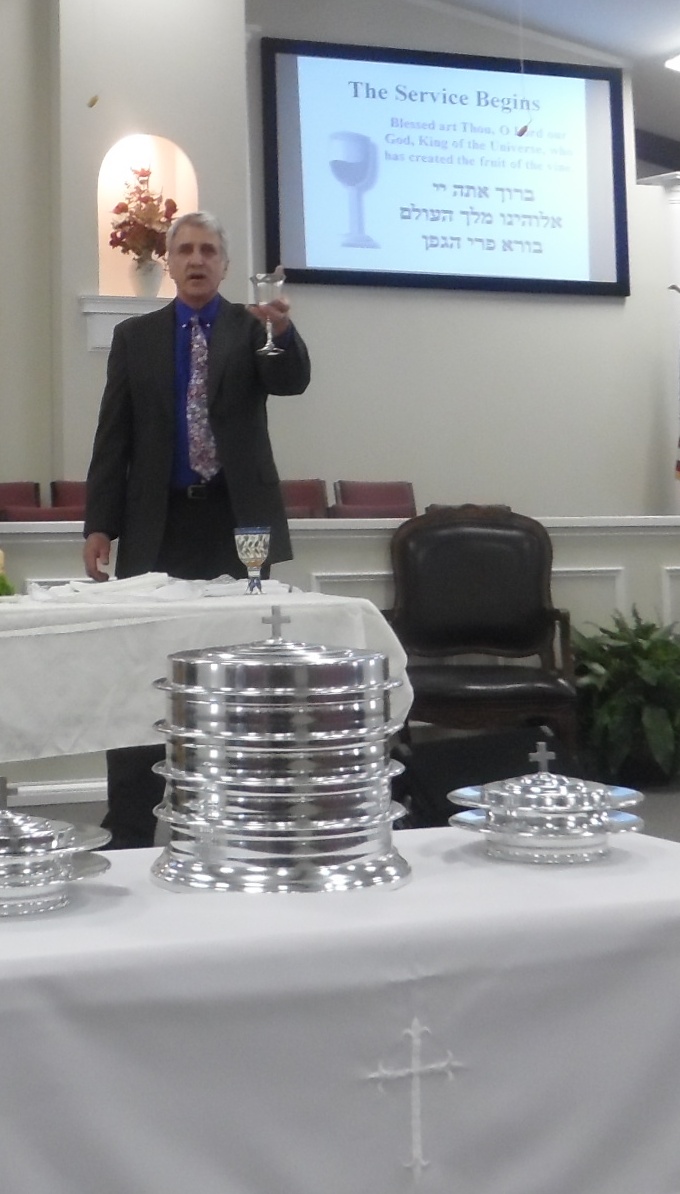
A celebration of Passover with your church will answer many confusing questions, such as, “Why is Easter, unlike other Christian holidays, celebrated on different days, and even in different months?”
Passover explains the timing and organization of the Jewish calendar. The festival is held during the first month (of the religious year) which is set by design to help people understand when to plant crops. Passover is the spring planting and early harvest festival. The holiday teaches us to look to God as the provider of all good things such as creation, spring, freedom, families, and love.
The Passover Seder (Seder means order, and includes prayers, songs, storytelling, questions, symbolic foods, and scripture - all taking place around the dinner table) is a family event. Inherent in its design, the gathering is held at home and not in the synagogue/church. The parents, not the pastor, are the teachers at this event. The family member leading speaks the words, “I do this because of what the Lord did for me when I came out of Egypt.” The leader goes on to teach his or her family, with whom he or she has a personal connection,This observance will be for you like a sign on your hand and a reminder on your forehead that this law of the Lord is to be on your lips.” Passover is a home-based celebration of God’s love and providence for his people. The meal of remembrance has enabled the Jewish identity to survive for over 2,000 years without a homeland. Passover can be a great learning experience for Christian families and children.
Many Christians object to a Passover Seder because, “We’ve never done that before!”
However, these Christians are mistaken. The early church annually celebrated the Passover. An early church manual called the Didache explains that Christians met for a meal on the first day of every week, which was very similar to a Passover dinner. This meal is called the Love Feast in Luke 24:25-35; Acts 20:7, Jude 12, and Revelation 3:20. 1 Corinthians 11:17-34 gives a detailed teaching on the Agape Feast.
Passover is a major theme throughout our Bible in both the Old and New Testaments. The teachings of this festival are fundamental to our faith. The environment and means in which the story of Passover is repeated demonstrates the teaching of history and faith for young children, solidifies and exemplifies these lessons for adults, and creates strength in the faith community. The Passover is a celebration worthy of our attention. Why has the church overlooked this important practice?
My family is available to lead a Passover Seder for your church (or to coach you to lead the meal). We regularly lead this service in North and South Carolina, New Orleans and the Cincinnati area. Contact us by leaving a comment on this blog.

Wednesday, March 23, 2016

Who was Hadassah?

The heroine of the book of Esther is young lady who had a rough start.  The details of her early years are untold.  We know that before Hadassah was a teenager her parents had died and she was under the care of an uncle named Mordecai. Esther’s given Hebrew name was Hadassah, a name which comes from the sweet smell of the myrtle tree.  This could indicate the sweetness of her demeanour which later gained her favor with Hegai and the King of Persia.  Hardships in life either result in bitterness over the events of life, or a grace which comes by acceptance and overcoming of trials.
Following the disposal of Vashti (which I wrote about yesterday), an opportunity opened which would result in a new status for Hadassah.  When King Ahasuerus found the absence of his queen left him lonely, his advisors (illustrious, star, testimony, jasper, lofty, worthy and dignified) recommended the a beauty contest to find the new queen.  This was acceptable to King Ahasuerus (who blindly accepted anything anyone presented in this story), and young women were gathered from each of the 127 provinces who could please the king and his young advisors with their beauty.
Mordecai, who lived in Susa heard of the contest, and shared this with Hadassah, who was also known as Esther (or star).  Mordecai knew this was his niece’s calling.
Esther was accepted for the contest, and resided in the harem.  Esther won favor with Hagai, the steward of the harem.  He made sure she had the best of beauty treatments, and special foods.  Although it was not revealed that Hadassah was Jewish, these were probably the same foods fed to Daniel (1:8-16)

On the night assigned Esther went in to the King, and found favor with him.  She was chosen to replace Vashti, and served as queen of all Persia.  … continued tomorrow!

Wednesday, March 11, 2015

Passover Preparation - Day 4 - Separation of Plates

Your glorying is not good. Know ye not that a little leaven leaveneth the whole lump? Purge out therefore the old leaven, that ye may be a new lump, as ye are unleavened. For even Christ, our Passover, is sacrificed for us. Therefore let us keep the feast, not with old leaven, neither with the leaven of malice and wickedness, but with the unleavened bread of sincerity and truth. (1 Corinthians 5:6-8)
     An orthodox Jewish home will have at least four sets of plates. One set is for meat dishes; a second for dairy dishes, not to be mixed with meat. The third and fourth set are also for meat and dairy (always kept separate) to be used only on Passover, for they must be kept free of any leavening agents. This separation maintains cleanness in dietary restrictions.
     This process of separation is something we often miss. The Bible tells us not to mix wool and linen. We are told not to plant two kinds of seed in one vineyard. Why? In the case of the seeds, it is because they will cross-pollinate; in the case of life, it is because God desires we live holy lives, not getting mixed up with evil. The evil will cross pollinate the fruit of our relationship with God.
     Paul speaks of this separation of the pure from the pure in 1 Corinthians. While our lives are to influence the world by the holiness of God in us, we are to make sure the world does not have a negative influence in our lives. Sometimes we allow the world to cross pollinate the fruit of our relationship with our creator; in our language, dress, customs, worship, and relationships with other people.
     To follow the good and avoid the bad is not as easy as it would seem at times. We are told not to covet and we are told not to lust because something inside us (perhaps Satan) draws us to things that are not best for us (which seems pleasing to the eye, good to the taste, and something which will make us wise), just as products with sugar and other unhealthy ingredients attract us to desire the unhealthy.
     We have all seen evil, and perhaps experienced some. Once experienced, it is hard to rid our hearts of spiritually unhealthy habits. Consider the theme of Exodus: Moses had a hard time getting the Hebrews out of Egypt … and once he did succeed, he found it was even harder to purge life in Egypt (including its idols, foods, and lifestlye) from the minds and hearts the Hebrews.
     In your preparation for Passover, consider, what things do you need to rid from your life or avoid? It is time to remove the chametz (or yeast) in order to make sure our focus is purely and wholly on God.