Showing posts with label Purim. Show all posts

Friday, February 16, 2018

Learning to Love God

I am a Christian Educator. My life’s work was to help people learn and live the words of the Bible. I prepared lessons and trained teachers to lead classes for all ages, from the youngest babies to the most elderly adults. Along the way I substituted, taught and worked alongside the teachers in each age group. Through my life’s work I fell in love with people and the end result of Bible lessons being incorporated into their lives.
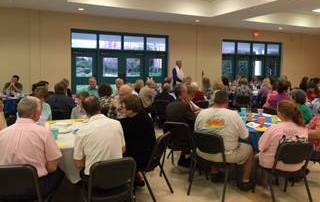
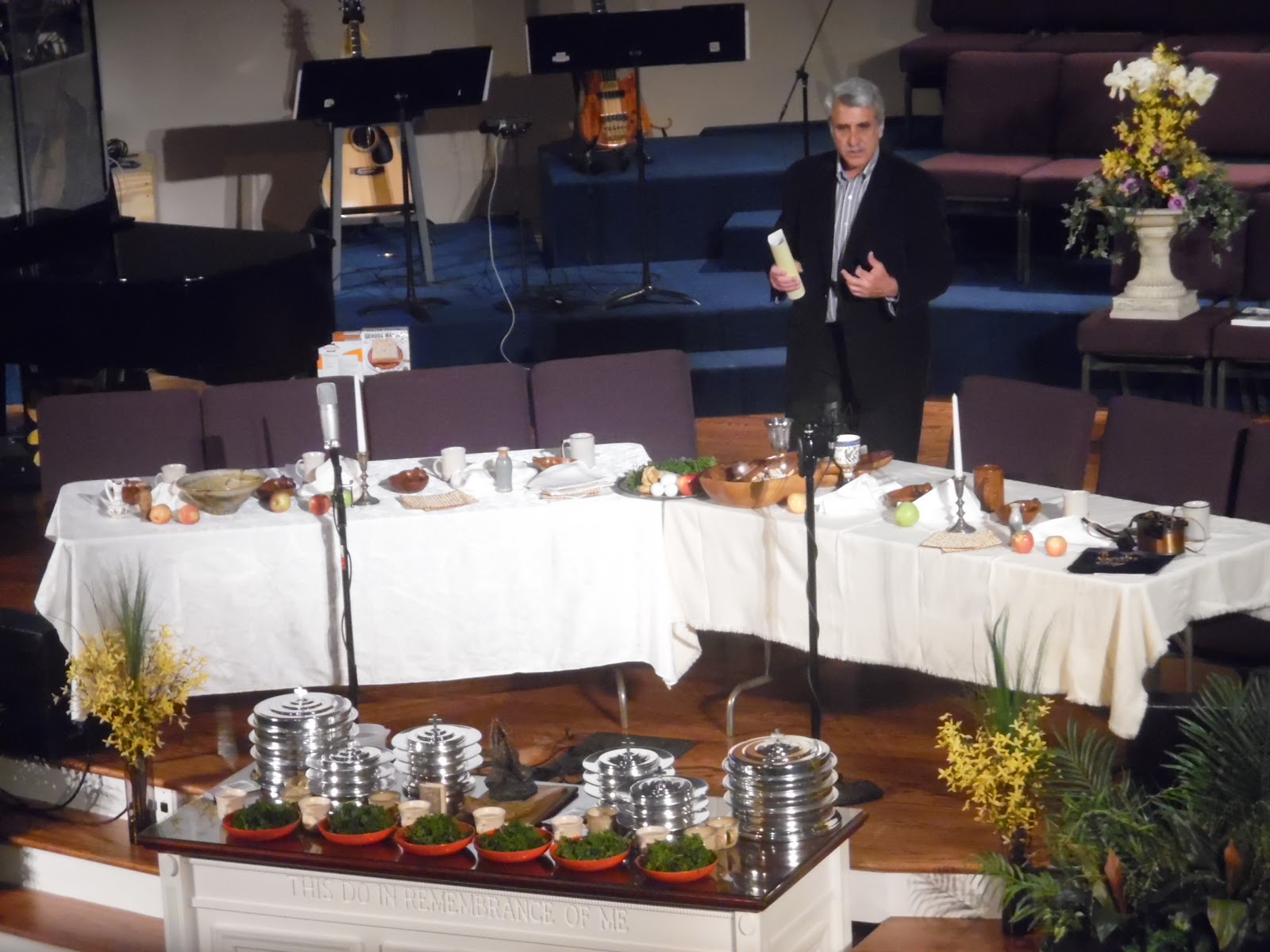
Leading a Passover Seder at Fairview Baptist Church, Statesville
From a very young age I learned to listen to the words of scripture and love it’s stories. This did not happen in a church, for I did not go to church, I was raised in a Jewish home. My most memorable times of Bible learning occurred in the home. When I was young my mother would read to me from a book of Bible stories. Our family also celebrated the Jewish holidays and learned the traditions that go with each event.
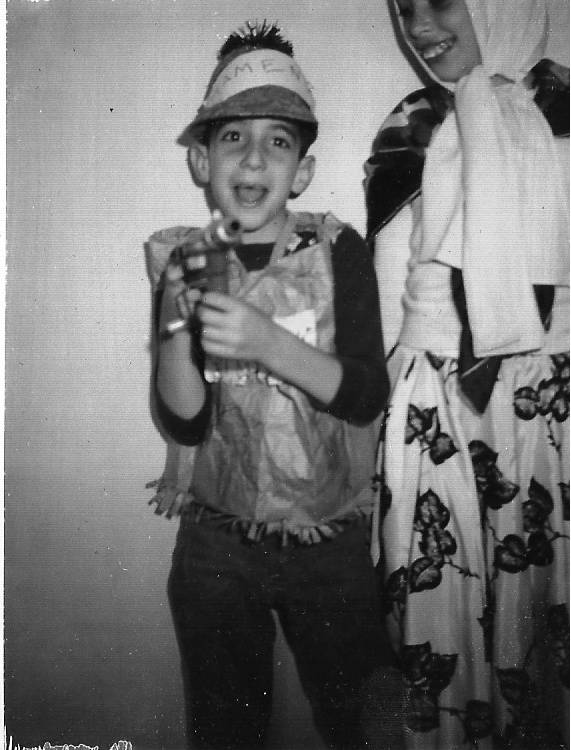
Dressed up for our Purim Celebration
This month we will celebrate the festival called Purim. When I was young, my family would go to the Synagogue, where we would hear stories from the Megillah, the book of Esther. We dressed in costumes, played carnival type games, ate food (including hamantaschen), and heard a presentation from the book of Esther every half hour. These recitations could be story reading, puppet plays or dramas. Each telling was “child friendly,” and enabled me to remember the reason for the event.
My Passover Family
Next month we will celebrate Passover (or Pesach), the Jewish feast which remembers how God enabled my people to escape slavery in Egypt. During this festival we would go to Uncle Stuart and Aunt Betty’s home, for Uncle Stuart was the eldest son in the family. I would see my grandmother and spend the afternoon playing with my cousins. We were family.
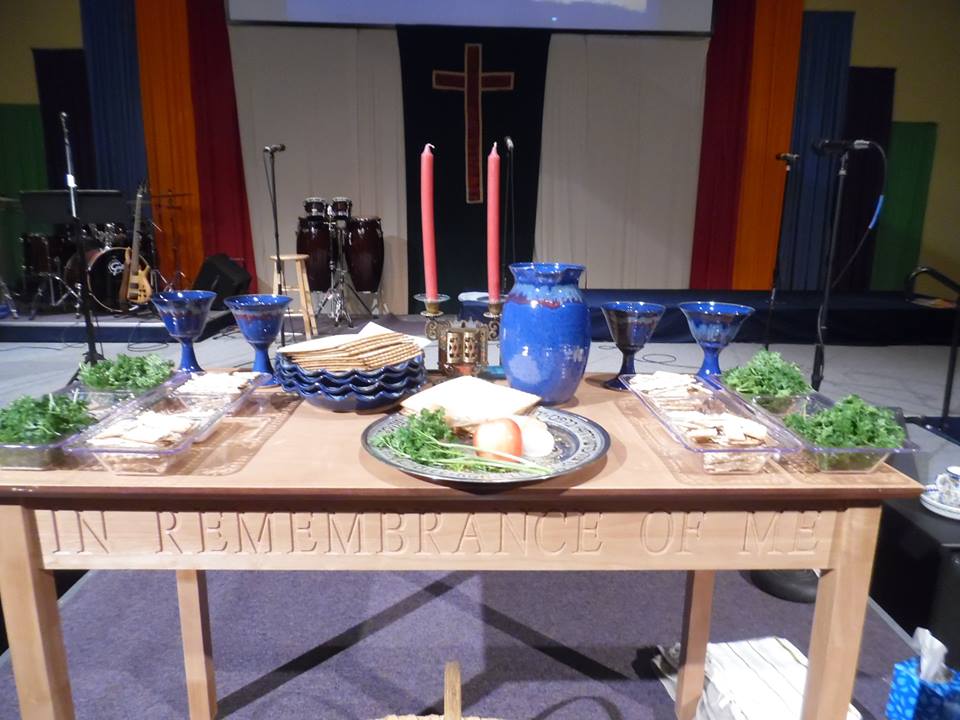
Passover at Salem Baptist Church in Apex, NC
At the appointed time on Passover eve, we would all sit down at the long table to enjoy a feast. But before we ate, we participated in and heard the story of the Exodus from Egypt. The memorable words repeated year after year from the Haggadah for the American Family. My Uncle Stuart would lead and each of us would read our parts, as broken out in the book. After much more than a decade of following this tradition, some of the lines we read are etched on my memory from simple repetition.
Breaking Matzoh at Central Methodist Church, Mooresville, NC
During the evening we would spend at least an hour saying the blessings, reading the scripture, tasting the foods (like karpas, matzoh, morror and charosis), singing the songs, and reciting the story. A huge feast would come near the end of the book, once the story was told and the plagues of Egypt recited.
A Passover lesson at Lighthouse Church, Mooresville, NC 
My Uncle had a fantastic sense of humor, and made our visits to his home fun. Many stories could be told about what happened at our Passover table, but to recite them would get us off topic. The point is, my religious training was a family event, supported by the Synagogue. My family did a good job, and when my children were born I continued the tradition of sharing the story of the Bible through fun festivals and events so they could learn to love my God and my faith.
Buying a goat in Israel for two zuzim
Today, even as my children are grown, I continue to share the Jewish festivals with Christians across the country. I have taken time to study the holidays to see how they were celebrated during the first century in Israel. Jesus, himself, with his parents, participated in all of the Jewish holidays. There are many references to him going to Jerusalem to participate in the Passover, the Feast of Tabernacles and Chanukah. To miss the connection is to erase a portion of the New Testament.
My book celebrating Passover as a Relationship with God
To miss sharing the faith with our children in the same manner as Jesus’ parents shared the Jewish traditions with their children is to ignore the teachings of the Bible handed down since the days of Moses.
A Passover Haggadah with complete explanations and leader hints
My daughters and I have written several books (Spring: Connecting with God, A Christian Passover in the Jewish Tradition, two Kindle Haggadahs, and Advent Journeys) to help Christians understand the Jewish and early Christian traditions of Passover. We lead these services in churches to help people understand these traditions within their context, hoping the next generation will grow up with the same love of God I have enjoyed through life. I guide church Seder services for any who desire to know more. For more information, contact me through my e-mail address.

Friday, March 10, 2017

The Year of Murder (Purim)

It started out covert and hidden. It was not meant to get out to the public, at least not (or I should say most definitely not) in the way it was revealed. But if the trick was to be successful, it needed to be revealed, with lots of PR and a positive spin. And it is here we start the story:

And Haman was his name, Sir.
He would have murdered all the Jews,
Tho they were not to blame, Sir.
Oh yes, there was a wicked (saying it once is not enough, which is why the song repeats this word. I could say evil or many other things about him) wicked man and his name was Haman. Haman (magnificent) son of Hammedatha (the double) the Agagite (I will topple) came from a wicked ancestry, the line of Amalek. This tribe of people sought to destroy the Hebrew people when they were helpless ex-slaves exiting Egypt. Haman wanted to complete the task.
He called his sons and henchmen in to help him plan how to destroy the Hebrew people. After the plan was developed they cast lots (called the pur - פּוּר) to determine the date they would kill the Jews. The dice selected a date almost a year away to do their deed. It was a year of planning for the murder of God’s people.

And Esther was the lovely queen of King Ahashveyrosh
When Haman said he'd kill us all,
Oh my how he did scare us.
Much can be said about Queen Esther. She was a niece of Mordecai, one of the exiles from Judea to Babylon. Her original name was Hadassah (myrtle tree), but her name was changed to Esther (star) when she entered the beauty pageant bo become queen of Persia.

But Mordechai her cousin bold
Said: "What a dreadful chutzpah
If guns were but invented now,
This Haman I would shoot, Sir."
This is a great verse in the song for it talks about Mordecai’s discovery of Haman’s plot in most graphic terms. Haman is called out for his nerve (chutzpah), not just audacity or effrontery but his chutzpah at even thinking God would not discover the plot and protect the Jewish people. Mordecai was so angry when at Haman’s bold venture he would have shot the villain: if gons had been invented at that time!

*When Esther speaking to the King
Of Haman's plot made mention
"Ha, ha," said he, "Oh, no he won't!
I'll spoil his bad intention."*
When Mordecai told his niece she must go before King Ahashveyros in order to reveal what Haman was up to, she got very nervous. The Jewish people prayed so she would gain courage and go before the King. When Esther approached the monarch, he showed favor. Esther invited her husband and the villain Haman to two banquets. Haman was actually the guest of honor. He bragged to his wife Zeresh (Gold), “I’m the only person Queen Esther invited to accompany the king to the banquet.”
But anger got the best of him. He could not stand Mordecai, and planned to kill him on a scaffolding he built near his home. Esther chapter six contains a strange turn of events when God in jest forces Haman to honor Mordecai.

The guest of honor he shall be,
This clever Mr. Smarty
And high above us he shall swing
At a little hanging party.
The bitter turn of events in chapter six was not the worst thing that could happen to Haman (although he thought so at the time). The worst came in the next chapter, on the very same day, when Haman attended the banquet where he would be honored. And, in a sense, Esther did honor him, by telling King Ahashveyros the truth about his “most trusted adviser.” The King was not pleased and called for Haman’s immediate execution.

Of all his cruel and unkind ways
This little joke did cure him
And don't forget we owe him thanks
For this jolly feast of Purim.
The Jewish people celebrate Purim to remember how God watches out for His people. They throw parties, wear costumes and eat Hamantaschen.


Thursday, March 24, 2016

Who is Haman?

Every story needs a villain, and on a rare concurrence of days, we can talk about two stories and two villians.  For Maundy Thursday (the traditional time of Jesus’ Last Supper) and Purim both fall on the same day.
The first villain of the day is named Haman.  He was an advisor to the king, and loved to sit at the right hand (place of power) of the king.  He is called an Agagite, meaning a son of Agag, the king of Amalek.  Amalek was the grandson of Esau.  It is said Amalek bears a grudge against Israel because Jacob stole his birthright.  Moses said, “the LORD will have war against Amalek from generation to generation.
The man named Judas Iscariot was the treasurer for Jesus and his disciples.  He loved to sit at the right hand of Jesus.  His last name indicates he is a resident of Kerioth-hezron, which is on the border of Edom (land of Esau).
When Mordecai discovered Haman’s plot to kill the Jews, Esther fasted for three days before holding a banquet where she revealed the identity of Haman the Agagite and his plot.  Through the banquet Esther saved the nation of Israel.
Jesus identified Judas Iscariot and his plot at his last supper.  When John asked Jesus for the identity of the betrayer, Jesus said it was the one with whom he dipped the bread.  Following the dinner Judas betrayed Jesus, who was hung on a cross to die the next day. Jesus died to save all who would believe and call on His name.  He was laid in the tomb for three days, and rose again.
Both Hamen and Judas wicked wicked men.  Haman was hung by the king on his own gallows.  According to Matthew 27 5, Judas Iscariot hung himself on his own gallows.

Oh once there was a wicked wicked man,
And Judas was his name, Sir.
He would have murdered Jesus Christ,
But he would not stay dead, Sir.

CHORUS:
Oh today we'll merry merry be
And nosh some Matzah now sir..

He told us on the Passover
This meal would be his last, sir
His life would end upon the cross,
Oh my how he did scare us.

CHORUS

And Jesus, as His life did end,
We knew he had some chutzpah
We laid Him in an empty tomb,
Cause that is what we do, sir."

CHORUS

He laid inside the grave all night
And through the whole next day, sir,
And then on through the next night too,
The corpse was in the grave, sir.

CHORUS

When Easter came on Sunday morn
Some wanted to anoint Him,
The stone would it be rolled away?
Oh yes, so we can go in.

CHORUS

When we walked on inside the tomb,
A big surprise we found sir,
The body we saw wasn’t there
The cloth was on the ground sir.

CHORUS

The Angels they did come and say
This man, He did arise sir,
The grave, just look, it’s empty see,
His body did arise sir.
Wednesday, March 23, 2016

Who was Hadassah?

The heroine of the book of Esther is young lady who had a rough start.  The details of her early years are untold.  We know that before Hadassah was a teenager her parents had died and she was under the care of an uncle named Mordecai. Esther’s given Hebrew name was Hadassah, a name which comes from the sweet smell of the myrtle tree.  This could indicate the sweetness of her demeanour which later gained her favor with Hegai and the King of Persia.  Hardships in life either result in bitterness over the events of life, or a grace which comes by acceptance and overcoming of trials.
Following the disposal of Vashti (which I wrote about yesterday), an opportunity opened which would result in a new status for Hadassah.  When King Ahasuerus found the absence of his queen left him lonely, his advisors (illustrious, star, testimony, jasper, lofty, worthy and dignified) recommended the a beauty contest to find the new queen.  This was acceptable to King Ahasuerus (who blindly accepted anything anyone presented in this story), and young women were gathered from each of the 127 provinces who could please the king and his young advisors with their beauty.
Mordecai, who lived in Susa heard of the contest, and shared this with Hadassah, who was also known as Esther (or star).  Mordecai knew this was his niece’s calling.
Esther was accepted for the contest, and resided in the harem.  Esther won favor with Hagai, the steward of the harem.  He made sure she had the best of beauty treatments, and special foods.  Although it was not revealed that Hadassah was Jewish, these were probably the same foods fed to Daniel (1:8-16)

On the night assigned Esther went in to the King, and found favor with him.  She was chosen to replace Vashti, and served as queen of all Persia.  … continued tomorrow!

Tuesday, March 22, 2016

Who was Vashti?

Vashti was the queen of Persia, who was a beauty queen, for her name means beautiful.  The king felt she was his companion, and was indeed proud of her. He gave her great freedom, and anything she desired.
The King, named Ahasuerus was successful, vain and rich.  He ruled over Persia at it’s height.  Although he had not conquered all of the lands leading to his empire’s greatness, he still liked to brag about his military victories.  In the third year of his reign he threw a six month long party. Nothing was off limits to his guests during the party.  The king provided food, drinks and anything else desired to all of his invited guests. Through the endurance of the party Ahasuerus became more and more extravagant.
At the end of the first week of the party, on the seventh day, Ahasuerus decided to show off the beauty of his wife.  He sent his seven eunuchs to bring Vashti to the great hall.  At this time the queen, who was hosting her own party and knew the king was in a drunken state refused to come.
Ahasuerus had been stood up.  He was embarrassed.  He did not know what to do.  (I am sure the king never considered how poor his request was in the first place, and certainly he, the most powerful monarch in the world, would not admit to a mistake, even if he had realized the error of the request or his judgment).  He called his advisers (illustrious, star, testimony, jasper, lofty, worthy and dignified) to given him advice on what to do and how to overcome the great embarrassment which came from Vashti's refusal to show off her beauty in the midst of  his party.
The king’s advisers discussed the matter.  To say the king made a mistake was off the table.  To ignore the situation was a bad idea.  To help the king see the situation from Vashti’s point of view would be unacceptable.  The advisers realized the danger which would come if Vashti were ever allowed to share her side of the story.  They must put Vashti away quickly, before here guests get wind of what just happened, and the queen’s reasoning for not appearing as a token at the king’s party.  The advisers must delicately handle the situation and so the king’s political blunder would not be found out.
The advisers talked through their options and decided to advise the king how the issue.  They informed Ahasuerus that the problem went far beyond his personal embarrassment.  They said, “If the women of the kingdom hear about the queen’s behavior, they will think they can do the same.”  They told the king that wives throughout the kingdom will refuse to obey their husband’s orders and treat everything they with contempt.  A resistance movement could start which would result in instability of home, and eventually the destabilize the entire kingdom.  The only hope for Persia is to put Vashti away.  The king must send her to the far reaches of his harem and never see her again.
The king thought (but not very long, for he had a party to attend), and decided the advisors were correct.  He must never see Vashti again.  He must distance her further than the harem, and indeed throw her out of his household, and punish her, so all of the men, and the women of the kingdom would see this example of what would happen when a wife treated her husband with contempt.
There has been much discussion on why Vashti would refuse the King’s orders, after all he was the most powerful monarch in the world at the time.  Her very existence, and all of her prosperity depended on him.  Some say she was vain and wicked.  She decided to make her stand and put the king in the place.  Others note how drunk the king was.  They say that it would be to Vashti’s embarrassment if she did show up.  She did not want to be a token, or a trophy (as the other things the king was showing off).  Some say she is a role model for women everywhere, for women should not be placed in demeaning situations.

Was she wise, naive, or just plain stupid? The question comes, what would you do.  There was not good solution. It was lose-lose for everyone, except for Esther (more on that tomorrow) and the Jews.  And of course, the party went on.  Five months and three weeks later, no one remembered the incident, or Vashti.  They only felt sorry for the King, for he needed a wife.