Showing posts with label Lord's Supper. Show all posts

Friday, March 22, 2019

Why don’t Christians celebrate Passover

   Passover is a wonderful festival of faith! The celebration includes great food, lots of company (invite everyone!), and a fantastic story. The evening spent commemorating the events surrounding the Exodus from Egypt are informative, entertaining and quite fulfilling. For the Jewish people this is an event that binds our families together. For Christians this is the background story of to the life of Jesus. (see more in my book Spring: Connecting With God).
   Often when I talk to Christians about the Passover I am met with a blank response. Most Christians know that Passover is a Jewish holiday, but they have no idea what it is (although sometimes they know it relates to the Exodus from Egypt). I am amazed at how many people I talk do not know the Last Supper of Jesus was a Passover meal. The vast majority of church members have never participated in a Passover Seder, and are therefore totally ignorant of this important foundation of their faith.
   The lack of information provided to most Christians by the church regarding the Passover is sad, because the story told at this Jewish celebration is at the heart of the entire Bible. In my book, Spring: Connecting With God, I relate with some detail how the gospels related Jesus’ participation in the Passover during every year of his life, including each of the three years of his ministry. It is clear from the New Testament that Jesus and his disciples wanted the church to include the Passover Seder, along with it’s Jewish and Christian symbols as part of the annual calendar.

   The early church developed a weekly meal, similar to the Passover Seder, which it called the Agape (or Love) Feast. This meal, which was often held before worship services included stories of faith and the Lord’s Supper (Communion, Eucharist). But the meal did not last, because Christians forgot a central commandment of their faith, “Love your neighbor as yourself,” or in the words of the Apostle John, “Dear friends, let us love one another, for love comes from God. ... Whoever does not love does not know God, because God is love.” (1 John 4)
   Paul, Luke, Jude and Peter very early in the church’s history relate that there are problems in the Agape (or Love) feast. (1 Corinthians 11:17–34; 2 Peter 2:12-14; Jude 1:12) These problems were similar to those that divide people today. In Corinth the wealthy people did not like to associate with the poor. In Jerusalem, the people who lived in the land were prejudiced against those that came from surrounding Greek territories (Acts 6:1-7). In Antioch of Syria, racism became a major problem in the congregation. (Acts 11:19-27) Jewish believers were causing divisions against the Gentiles (Acts 15:1), and Gentile believers developed a resistance to the Jews.
    Ignatius, an early bishop who led the church at Antioch forbid Jewish practices, including the Passover, in Antioch and beyond. He wrote in his letters to the Philippians and to the Tarsians, “If any one celebrates the passover along with the Jews, or receives the emblems of their feast, he is a partaker with those that killed the Lord and His apostles.” Ignatius did this to increase the power of the early Gentile church. Ignatius helped to build the political power structure within early Christianity. Other early church fathers followed in the practices of antisemitism in order to gain power, leaving behind fears and prejudicial beliefs toward Biblical Jewish practices that remain to this day.
   The Apostle Paul wrote, “Christ, our Passover lamb, has been sacrificed. Therefore let us keep the Festival, not with the old bread leavened with malice and wickedness, but with the unleavened bread of sincerity and truth.” (1 Cor 5:7-8) Paul, who grew up in a Jewish home, always maintained the Jewish traditions, even visiting the Temple in Jerusalem. He understood and taught the Jewish - Christian connection.
   In our modern era, it is sad to loose the Jewish foundations of the Christian faith, because the loss makes the church shallower … and less like Jesus. We need to learn the lesson of the Wise Son, who desires to know everything about the Passover and his faith. We should ask questions, as the eldest child at the Passover Seder, in order to learn. We should learn the meanings of the food and how they relate to the Spring harvest, the Exodus from Egypt, and the life and ministry of Jesus. In a world of refugees, we need to hear these words, “When a foreigner resides among you in your land, do not mistreat them. The foreigner residing among you must be treated as your native-born. Love them as yourself, for you were foreigners in Egypt. I am the Lord your God.” (Ex 22:21; Lev 19:33-34; Deut 10:19; Ps 146:9)

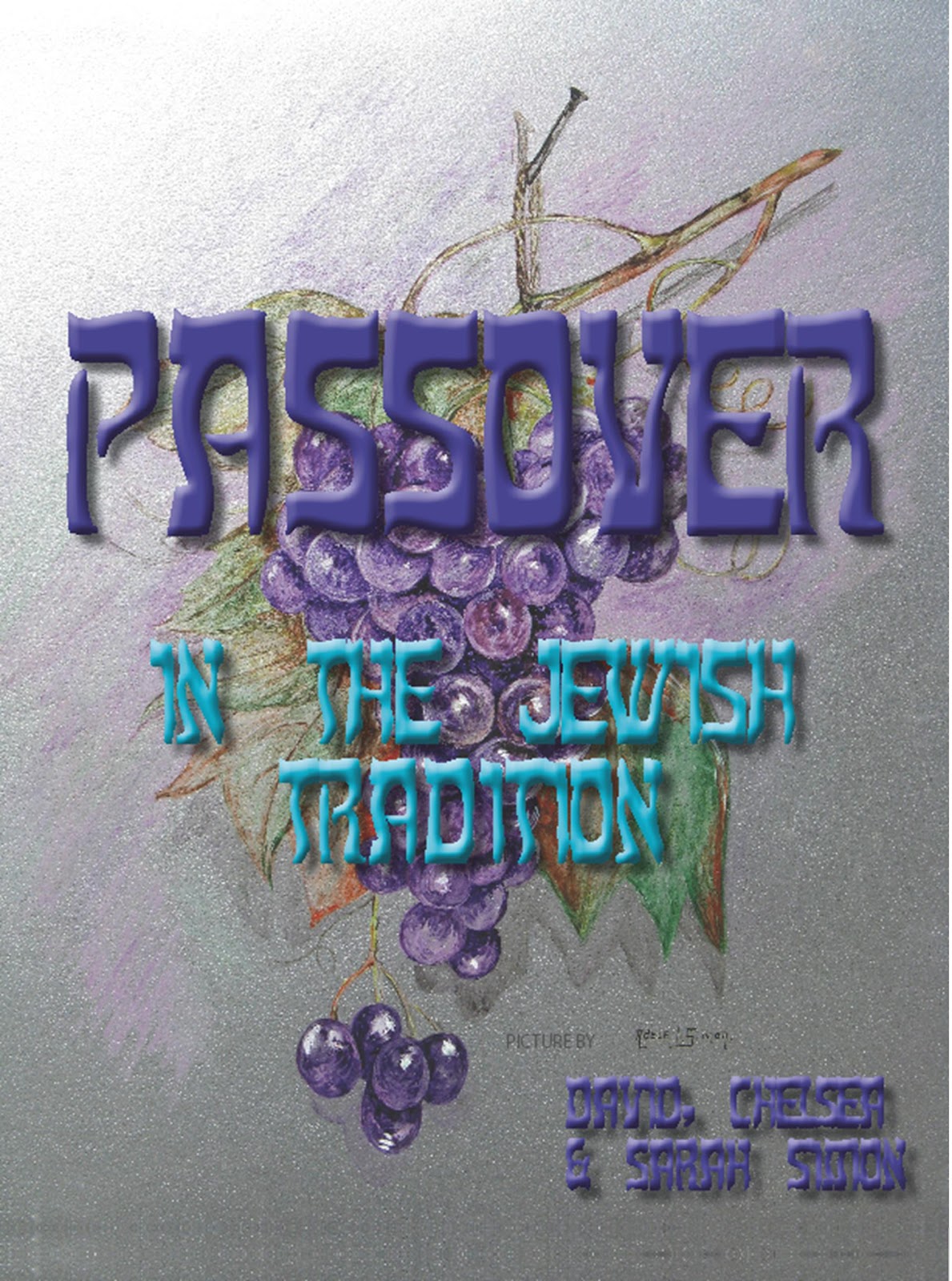
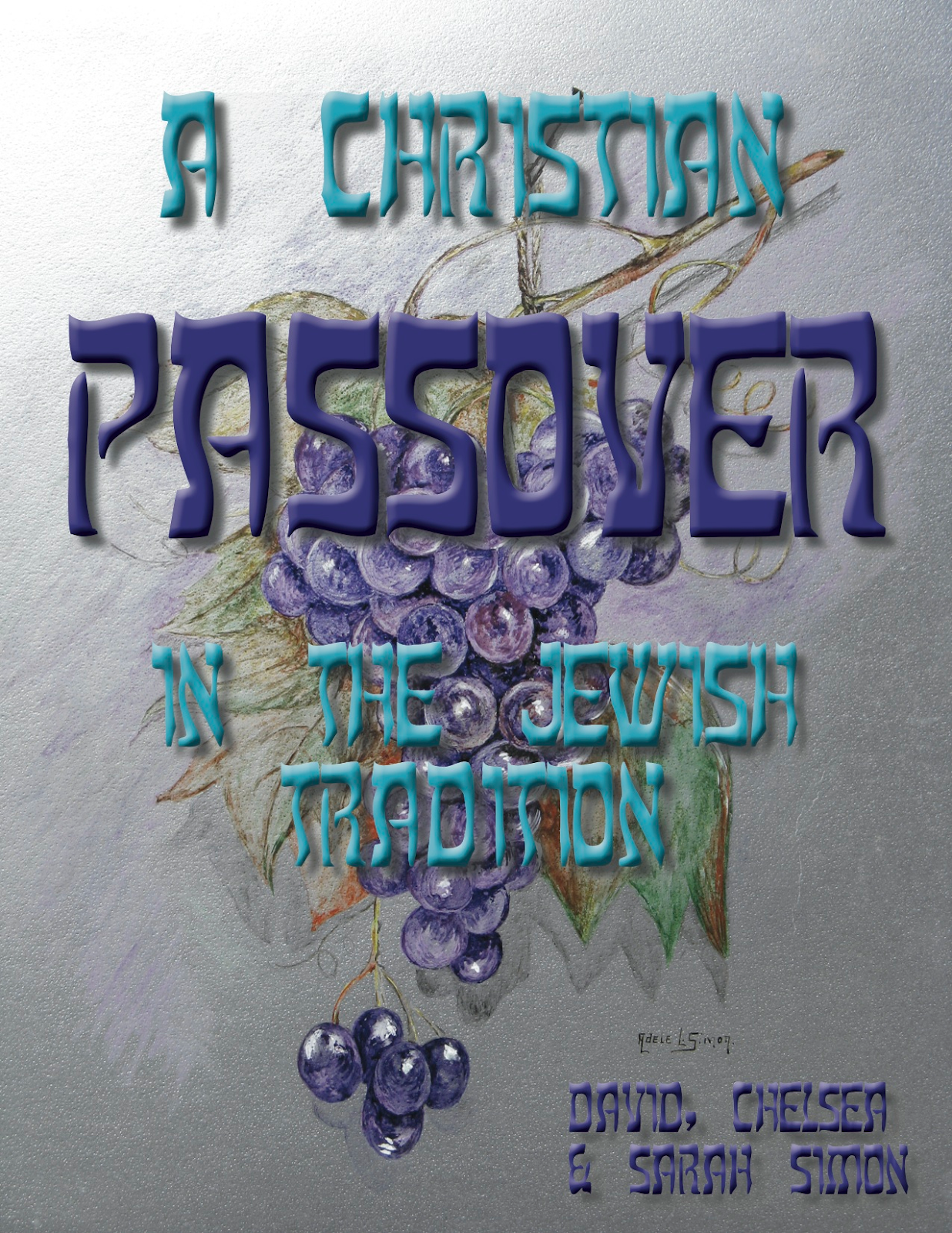
   Every Christian congregation should celebrate the Passover on a regular basis. There are many good leaders who can guide the church (contact me at KosherCopy@gmail.com if you live in the eastern US), or you can use my book “A Christian Passover in the Jewish Tradition” to put together your own Passover Seder.

Friday, February 2, 2018

A Jewish Dinner … in Church?

The title of this blog leads us to a dilemma with a long history. The Bible records that the church was started by a Jewish teacher named Jesus, who came from heaven to provide salvation for all who believe. This Rabbi taught the world about God through the context of his Jewish faith. He used the Jewish Bible, observed Jewish customs and participated in the Jewish festivals. His final meal before he died was a Passover Seder. (Mt 26:17-19; Mk 14:12-16; Lk 22:7-16; Jn 13:1)
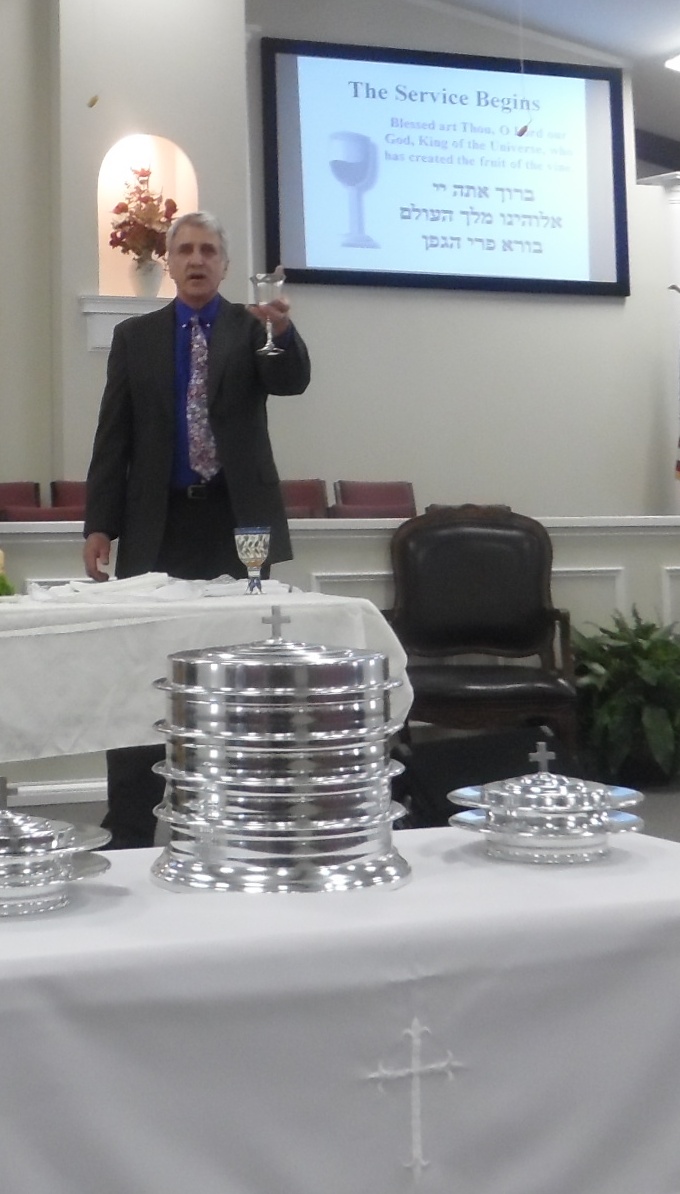
The Last Supper of Jesus was a sit down event
Following the death, burial and resurrection of Jesus, the early disciples, who were all Jewish, began to teach the message of their Lord to the Jew first and also to the Greeks. A large number of gentiles came to believe the message of Jesus, and in time, these people called their faith in Jesus, Christianity. The early church ate a dinner similar to the Passover called the Agape Feast. (Ro 14:13-21; 1 Cor 10-11; Col 2:16; Jude 1:12)
A drama about the Resurrection
In the beginning, many Jewish traditions were followed among believers in Jesus. But as the church grew and spread to the ends of the world, things changed. A largely gentile world developed new traditions and the Jewish ways were no longer followed. By the end of the first century, Ignatius, the bishop of Antioch wrote letters to churches across Asia Minor and told them, “If any one celebrates the passover along with the Jews, or receives the emblems of their feast, he is a partaker with those that killed the Lord and His apostles.” (Letter to the Philippians 14)
Passover builds relationship with God
The celebration of the Passover as a common meal was the practice of Jesus and of the early church. Sharing this festival as a teaching in the home and as a celebration of the church fell out of practice in the second century, and as it did weakened the congregants of the church. The format of the dinner “feels strange” among people used to attending a service rather than participating in a teaching event.
Passover in the home
The church replaced Jewish traditions which sought to teach faith in the home with ceremonies developed in order to empower the bishop. People began to place their loyalties in the priest rather than God. The historic ways which were practiced by Jesus and his family in their home and community were discarded to fuel an organized religion.
Passover shared with a large group
A Passover dinner led in the traditional format (not from the pulpit), can teach a number of things to a church congregation. The dinner teaches the age old story of how God freed His people from Egyptian slavery. It displays the background in which Jesus shared His message of redemption on the very night He was betrayed. If presented correctly the Passover Seder will teach parents how to instruct their children in the faith at home, which will result in stronger and more self sustaining churches.
A Passover resource that explains everything

I have written a book to help pastors, churches and families to present a Passover Seder in its original context. I sought to re-created the meal enjoyed every year by my extended family so it could become a looked-forward-to tradition in Christian homes and churches. A Christian Passover in the Jewish Tradition will equip parents to lead the dinner at home (as it was in the time of Jesus) and pastors to model the dinner for their congregations. I have produced a $1 Kindle book so families and congregations can read along and join in the Passover celebration. My book Spring: Connecting with God shows how celebrating the Passover as families gave strength to the people of Israel. And this tradition can bring strength to churches today.

Monday, February 20, 2017

Preparation for a Church Passover

Passover is a festival that is mentioned throughout the entire Bible, yet most churches only keep the Lord's Supper as the remnant of this incredibly rich holiday. Most Christians have never seen a Passover demonstration, which adds to the knowledge of the Bible and Lord's Supper, adding depth to the faith. Far fewer Christians have experienced an actual Passover dinner. These facts show a huge void in a complete understanding of both the Old Testament Passover Seder and the New Testament celebration called the Lord’s Supper.
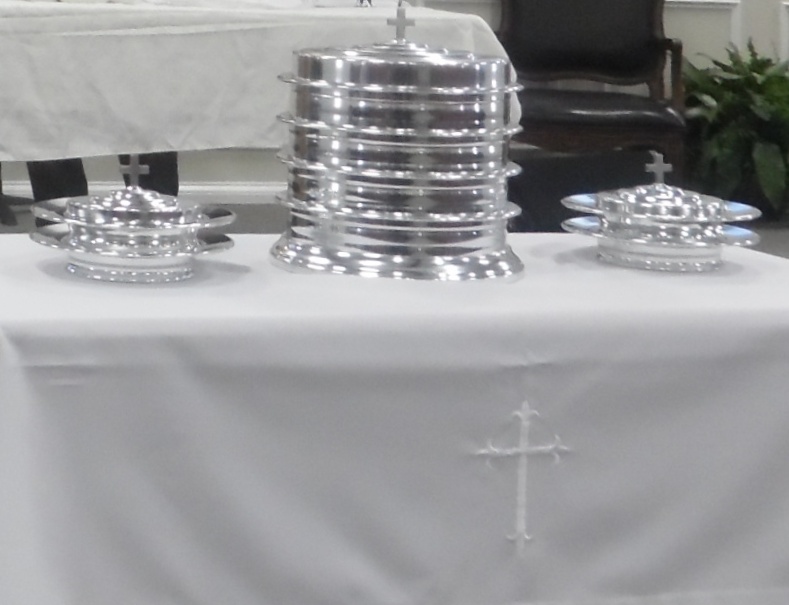
Communion is a regular part of church worship
The Passover is an enduring event. People have gathered around the dinner table for over 3.500 years. This one event has been credited with building a stronger Judaism and in some cases, keeping the faith alive. I have written a guide to help churches organize Passover Seders entitled A Christian Passover in the Jewish Tradition
This book shares leader instructions and insights to Passover
Churches should attempt at least once every 3-4 years to hold a Passover event. Such an event  helps people better understand the Old Testament and the background of the Communion. A church supper held around the dinner table in order to teach faith could also provide a great model for Christian homes.
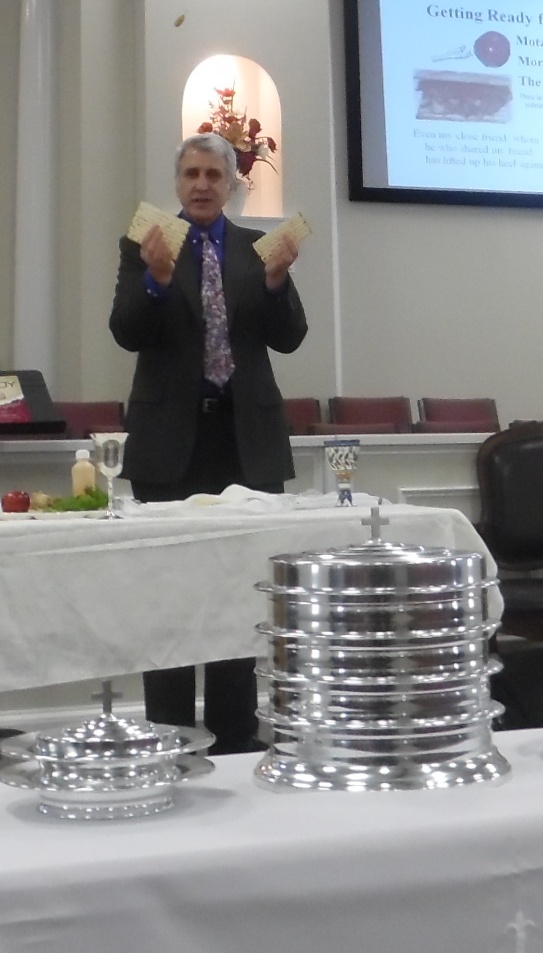
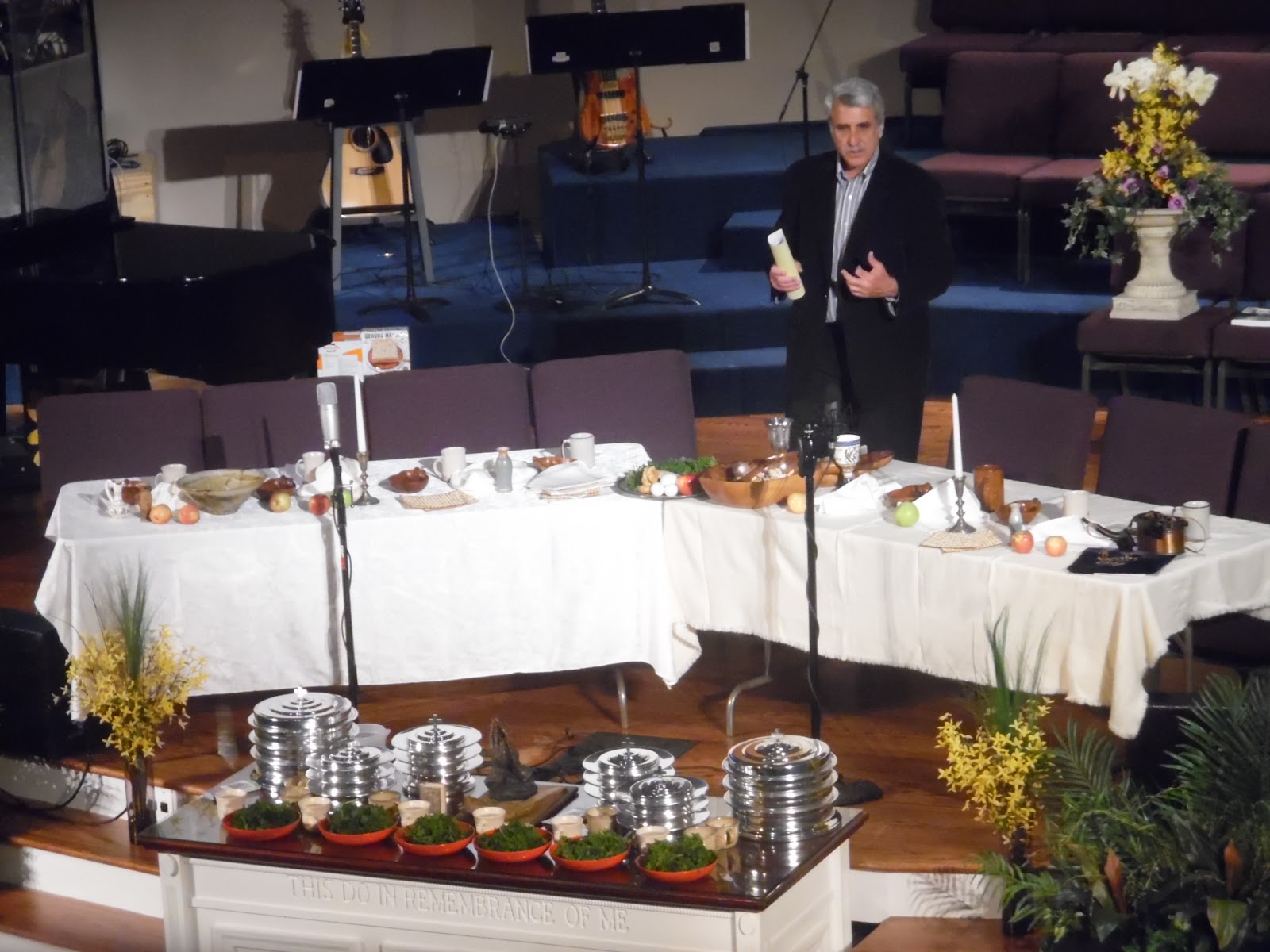
A special speaker at a church supper celebrating Passover
The Passover celebration could be shared as a presentation in worship service (least memorable), a reenactment with communion and other elements in a worship service (more participatory), or a meal where people tell the story and eat together (most memorable and participatory). The meal can be held as a whole church event, or in larger churches the supper could be held by individual or combined small groups. When people sit down together as families around the Passover meal they create memories, build a stronger understanding of the Bible, and grow closer in their relationships with God.
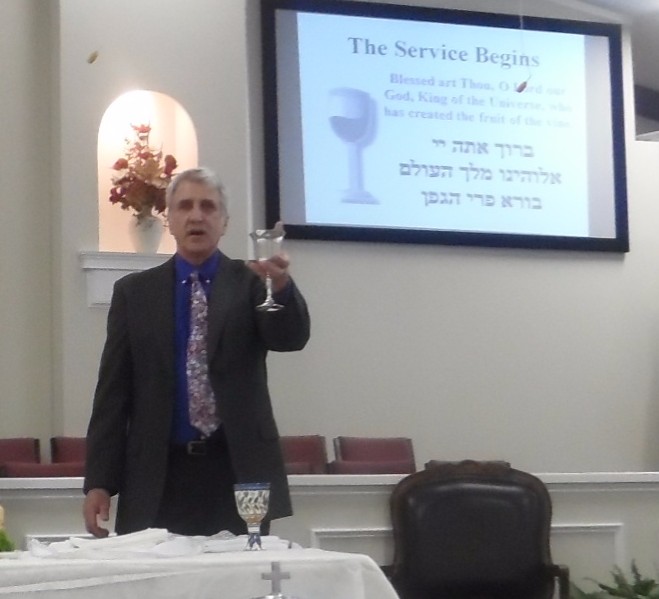
Reenacting Jesus' last Passover including Communion
The first step in holding a Passover event is to place it on the calendar. The second step is to decide what kind of event it will be: worship only, reenactment, or dinner. The third step is to designate a leader for the event. Will the Pastor or a Church member lead the Seder, or will the church invite an outside speaker?
Children should be part of a Church Passover event
At this point, the church needs to decide who will come to the Passover Seder. Will only church members be invited to attend (not recommended), or will the event be opened to the larger community? I encourage people to hold an open event, and encourage regular church attenders to invite guests to the special supper. It should be publicized in the church for at least five weeks. Publicity should include bulletin, newsletter, small group announcements, postcards, e-mails (both surface mail and electronic media are important), facebook, twitter, instagram, and phone calls. People should be invited to share with others through social media. A public service article should also be placed in newspapers and radio stations in the area. Let the world know about this special event. Jesus said to “Go into all the world,” and a special event like Passover is one way churches can obey this commandment.
A menu needs to be set for the meal. The meal could be covered dish (no leavened bread), cooked at the church or catered. If the dinner is held by a small group the dinner could be held in a home or a private room in a restaurant. The meal should be well planned as this is similar to a Thanksgiving event with quality and quantity planned for the evening. China plates, cloth napkins and real silver are not inappropriate.
Special foods of the Passover
Special foods are needed for the supper. These include wine (grape juice), bitter herbs (horseradish), Charoset (an apple and nuts mixture or applesauce with cinnamon), greens (parsley), salt water, Matzoh (unleavened bread), the shankbone of a lamb and an egg (or eggs). A good Passover Haggadah such as A Christian Passover in the Jewish Tradition contain instructions for setting up the table. An instruction page I share with churches is shown below.
Instructions for setting up for a Church Passover
The room should be set up with two places in view of each person. One place is for the leader, the second place is for “Elijah” who will “make a visit” as described in the Passover Haggadah. Places should be set up for each person expected for the meal. At each place include a spoon, napkin, a small cup with wine, and small plate with Horseradish, apple mixture, and greens (these can also be made available for each place or served from the head table according to size of the group). Salt water should be available to each person for dipping.  A plan should be made to refill the wine cups and for each person to be able to wash their hands at least twice during the service.
Creativity and beauty in Communion and Passover
It is good to involve people in the Passover Seder presentation or dinner. People participate in meals by eating. As a preliminary to the meal, and part of the worship service, people taste different foods as meanings are explained.
Books to help lead a Church Passover
In Jewish services people are encouraged to participate through responsive readings. I have included responsive readings on my 99¢  participant books available on Kindle (these books do not contain all the leader material). I always have people read the Hallel Psalms responsively. I also include people by assigning individuals to read parts of the four questions and four sons. In two of my presentations on the Passover story, participants are assigned parts and props so the story does not seem so long. All the parts and props must be assembled in preparation before the meal.
Sample Passover Bulletin (inside portion)

When I lead a Passover Seder in a church, I send a personalized program for churches to duplicate. The bulletin includes sections of responsive readings and also information which participants would want to know about the Passover. When I began leading Seders, I made booklets for each individual. I have since found that a legal sized piece of paper printed on both sides is adequate for what most people need. (If you would like me to lead a Passover Seder at your church, please contact me).

Friday, February 3, 2017

Passover and the Lord's Suppper

The least changed and most celebrated moment in Christian worship is called Communion, the Lord’s Supper or Holy Eucharist. A simple piece of bread and a sip of wine or grape juice open to the believer a moment with the Lord and bring to the forefront of heart and mind the teachings of Jesus Christ. In the Catholic church the entire worship service moves toward the Holy Eucharist. In Christian and Disciples of Christ congregations communion is served every week. In Baptist and other non-liturgical assemblies the Lord’s Supper can be a regulatory add-on to a meeting with another focus. Participants of all churches look forward to the moment they partake of the bread and the wine.
Communion services bring to remembrance a moment in the final supper Jesus ate with his disciples on the evening before he was crucified on the cross. The book of Mark captures the moment this way: “While they were eating, He took some bread, and after a blessing He broke it, and gave it to them, and said, "Take it; this is My body." And when He had taken a cup and given thanks, He gave it to them, and they all drank from it. And He said to them, ‘This is My blood of the covenant, which is poured out for many.’”
The Bible tells us in this verse that something is missing from many communion services, and in the hearts and minds of many participants who regularly partake of the Holy Eucharist. The hint in Mark’s gospel says, “While they were eating.” Luke shows two cups in his look at the supper. Matthew states: “On the first day of Unleavened Bread the disciples came to Jesus and asked, ‘Where do You want us to prepare for You to eat the Passover?’ ... The disciples did as Jesus had directed them; and they prepared the Passover.” Paul references the Lord’s Supper as a meal and an important teaching several times in his letters to the Corinthians.
Most Christians know that the Eucharist was a portion of Jesus’ Last Supper, but they have never experienced the Passover observance from which the practice of Communion arose. The teachings and symbols of the Passover Seder (order of teaching) contain much which will contribute to Christian practice and understanding of the Lord’s Supper.
Passover is a celebration of freedom from slavery. The story which is told in the Passover Haggadah begins with the call of Abraham, who was a man of faith who live a life of obedience towards God. It tells how the family of Jacob came to sojourn in Egypt and were enslaved as the enemy of Egypt. The Haggadah teaches how when the people of Israel cried out to God in prayer their voices were heard. God brought miracles (we call them plagues which came about to punish Pharaoh and change his mind, the Haggadah calls them miracles which came in order to show the strength and power of God) in order to free His people. Then the Hebrews were commanded to gather as families, to place the blood of a lamb upon the doorposts of their homes, to roast the animal and to eat their last meal in readiness as God granted them the freedom they sought.
The Passover meal walks the participant through stages of preparedness from the cleansing of hands to the purification of the heart. It teaches observers about God's mercy through experiential lessons of tasting particular foods. The service calls upon the voices of each person present to give praise to God through the Hallel Psalms. It teaches us to savor the love of God who continually shows His love for His people.
The Passover Seder is led by the head of the household, not the priest (or pastor). The celebration is today as it was at the beginning (Ex 12:3) a home (not a church) celebration. This realization should call all believers to imbue the home with teaching and the practice of faith. It is belief which is actively lived out in the home which passes from generation to generation.
If you would like to celebrate a Passover Seder in your church (or receive coaching to lead it yourself) send an e-mail to KosherCopy@gmail.com. My family and I regularly lead Passover Seders in North and South Carolina, New Orleans and the Cincinnati area.

Wednesday, January 25, 2017

Passover at Church??

Really? Should a church ever hold a Passover dinner?
The answer is YES! The congregation which never celebrates the Passover creates a huge deficit for a complete and experiential understanding of the BIble. Jesus and his disciples sat down for a Passover meal every year. The early church celebrated a derivative of the Passover called the Agape Feast. Passages such as 2 KIngs 23:21 and 2 Chronicles 30:1-20 condemn Israel for not observing the Passover.
BUT, some would say: “The Passover is an Old Testament celebration. The church is a New Testament organization.”
Sadly, such conversation betrays a lack of understanding. The New Testament tells us that Jesus celebrated Passover annually. In my book Spring: Connecting with God, I give details of Passover from the life of Jesus that many have missed. Jesus and his parents visited Jerusalem for a Passover celebration when he was twelve years old. The context of this celebration explains how Joseph and Mary could leave Jerusalem without their son.
The Passover also forms the backdrop for a visit from Nicodemus and the feeding of the 5,000 at the Sea of Galilee. Elements of the Passover Seder (especially the order of service including prayers and songs which takes place around at the dinner table) show up in both New Testament teachings.
Passover forms the basis for the Christian Communion (or Eucharist) service. The elements of bread and wine show up prominently in the Passover Seder. The Seder is outlined by four servings of wine associated with four promises given in Exodus 6:6-8. The stories of the Seder tell how salvation and redemption come to Israel beginning with the shedding of the blood of a lamb.
A celebration of Passover with your church will answer many confusing questions, such as, “Why is Easter, unlike other Christian holidays, celebrated on different days, and even in different months?”
Passover explains the timing and organization of the Jewish calendar. The festival is held during the first month (of the religious year) which is set by design to help people understand when to plant crops. Passover is the spring planting and early harvest festival. The holiday teaches us to look to God as the provider of all good things such as creation, spring, freedom, families, and love.
The Passover Seder (Seder means order, and includes prayers, songs, storytelling, questions, symbolic foods, and scripture - all taking place around the dinner table) is a family event. Inherent in its design, the gathering is held at home and not in the synagogue/church. The parents, not the pastor, are the teachers at this event. The family member leading speaks the words, “I do this because of what the Lord did for me when I came out of Egypt.” The leader goes on to teach his or her family, with whom he or she has a personal connection,This observance will be for you like a sign on your hand and a reminder on your forehead that this law of the Lord is to be on your lips.” Passover is a home-based celebration of God’s love and providence for his people. The meal of remembrance has enabled the Jewish identity to survive for over 2,000 years without a homeland. Passover can be a great learning experience for Christian families and children.
Many Christians object to a Passover Seder because, “We’ve never done that before!”
However, these Christians are mistaken. The early church annually celebrated the Passover. An early church manual called the Didache explains that Christians met for a meal on the first day of every week, which was very similar to a Passover dinner. This meal is called the Love Feast in Luke 24:25-35; Acts 20:7, Jude 12, and Revelation 3:20. 1 Corinthians 11:17-34 gives a detailed teaching on the Agape Feast.
Passover is a major theme throughout our Bible in both the Old and New Testaments. The teachings of this festival are fundamental to our faith. The environment and means in which the story of Passover is repeated demonstrates the teaching of history and faith for young children, solidifies and exemplifies these lessons for adults, and creates strength in the faith community. The Passover is a celebration worthy of our attention. Why has the church overlooked this important practice?
My family is available to lead a Passover Seder for your church (or to coach you to lead the meal). We regularly lead this service in North and South Carolina, New Orleans and the Cincinnati area. Contact us by leaving a comment on this blog.

Thursday, March 26, 2015

Spring – The Last Supper

     Question: How many Passovers (Kindle) did Jesus celebrate? Answer: He celebrated Passover (Kindle) with family or friends every year! Because Jesus was Jewish, we know the Passover was a significant event for him, his family and his friends.
     The New Testament contains details from four Passovers which Jesus celebrated. Each year the celebration was unique and important in his life and ministry. I have detailed these in more depth in my book Spring: Connecting with God. (Kindle)
     The first recorded Passover celebrated by Jesus occurred when he was twelve. His family went to Jerusalem for this important Harvest Festival. During the time of the preparation for the feast, Jesus’ family left him alone, and he went to the Temple. While in the Temple he began to dialogue with the Sadducees, Pharisees, Sanhedrin members and Priests. The Bible records how his parents left him behind in the city when they went home; from the culture we can understand more details.
     The first Passover of Jesus’ ministry years was celebrated in Jerusalem. The Gospel of John contains eye-witness details of this Passover, including a visit to Nicodemus, teacher of the people of Israel. In this Passover Jesus shared with his disciples how to come out of bondage to sin into the light of God’s love.
     The year before Jesus died, he did something very unusual: He celebrated Passover at home. Every other year (except for the years spent in Egypt) Jesus, his family and his friends traveled to Jerusalem. John 6 contains details of how Jesus celebrated this Passover at the Sea of Galilee. As Jesus raised the Motzah on this Passover, he called himself the bread of life.
     Jesus’ last Passover is called the Last Supper. All four gospels tell about this Passover Seder. Matthew, Mark and Luke briefly skim over this dinner. (Luke’s Gospel contains some unique details). John’s gospel goes into detail as he describes the actions and teachings which occurred in the upper room.
     When we understand the Passover we understand more about Jesus, his culture and the teachings he was trying to share. In the Christian world today, it is sad that we too often rush through the cup and bread without understanding the great lessons of Passover; and in these great lessons the things Jesus was really telling us.