Showing posts with label Worship. Show all posts

Friday, March 15, 2019

Spring: Connecting with God

     Praise the Lord, my soul.
     Lord my God, you are very great;
          you are clothed with splendor and majesty.


     In North Carolina, Spring is finally here. We have enjoyed, and will have enough days in the 60’s or above, along with frost free nights, that I have planted kale in the garden, and will trust the Lord for its growth (and the wire fence to keep the rabbits out, which I know observe hopping around!)
     This is the season God puts on a full display of beauty. The forsythia and daffodils are in full display with yellow coloring, early annuals are blooming and I have a camellia still showing its colors. Cherry trees are budded out and my redbuds have begun to pop, and there are other flowers which will soon show their colors.
      The weather outside goes from cloudy to sunny. Last night was a display of thunder … God’s power. Today is cloudy, yesterday overcast, tomorrow will probably be sunny. Every day is new and fresh, and the temperature is about perfect.

     He makes the clouds his chariot
          and rides on the wings of the wind.

     In the spring (and any time of the year) it is appropriate to give praise and thanks.

Spring: Connecting With God
     In the past week, I attempted an experiment. I brought flowers and left them at desks of people I see on a regular basis. One person put their flowers in a vase and displayed it. Two others totally ignored the flowers, one brushing them aside (because I put one flower on the keyboard), and was busy typing. It always amazes me when people brush aside the things of God and ignore, without so much as a look. Are we really like that with the things of God?
     We want God to answer our prayers, but we totally ignore the part of the relationship called Praise. We also often ignore Thanksgiving. Both are important aspects of our prayer life.

     He makes the clouds his chariot
          and rides on the wings of the wind.

     God wants us to notice! Especially this time of year, when everything goes on display.
     And then there are the festivals.
PURIM - a season of thanksgiving for God’s rescue of His people
PASSOVER - again a time of thanksgiving for God’s rescue
GOOD FRIDAY - ditto … Let us give thanks to God for what has been done!
     Jesus said, “Very truly I tell you, unless a kernel of wheat falls to the ground and dies, it remains only a single seed. But if it dies, it produces many seeds. Anyone who loves their life will lose it, while anyone who hates their life in this world will keep it for eternal life. Whoever serves me must follow me; and where I am, my servant also will be. My Father will honor the one who serves me.” (John 12:24-26)
EASTER - more than Easter lilies, God conquered death, and gave life
     “I have come that they may have life, and have it to the full.” (John 10:10) God takes care of us like a shepherd, and leads us to green pastures (Psalm 23).

     How many are your works, Lord!
          In wisdom you made them all;

     This season, let us take time to give thanks … and let us take time to bring thanksgiving to the heart of others. 

     May the glory of the Lord endure forever;
          may the Lord rejoice in his works—

      The book - Spring: Connecting with God is about our relationship with God, noticing. I would commend it to you at this time of year. It is available in paperback, on kindle, and it can be read for free through Amazon Prime.

Wednesday, May 23, 2018

A Trip to Tel Aviv

Yesterday we made a trip from Haifa to Tel Aviv. Transportation along the coast, the “Via Maris” or the “Plain of Sharon,” as it is variously called in different places, is quite easy. We took the bus down the mountain in Haifa to the connected Bus and Train stations near Carmel Beach. Then we went south along the sea.
Rav Card Reader on a Bus
We purchased a Rav Card, which connects all transportation. We paid a few sheckles each way for the train and a few for daily unlimited rides in Tel Aviv. The coast and the cities are places which are connected by mass transit. That is a good thing, because after driving our rental car in the congestion of Tel Aviv the first few days in Israel, I am glad to let someone else do the driving. After attempting to park in Haifa, I am glad to get off the bus, and not have to look for a place and walk up the hill back to our lodging.
Entry to the Train Station
The drive down the coastal plain was beautiful. The ground is mostly level, but with some rock hills or desert sand dunes in places. There are a few rivers, swamps and lots of land which was drained a hundred years ago and is now used for agriculture. There are fields of cut grain, citrus groves, banana plantations and other farms along the plain. Before the nineteenth century, this land contained enough swampy areas that transportation could be controlled by fortresses.
Comfortable interior of the Train Car
The train cars can be one level or two. Of course as a visitor to Israel, and because we like to look out the window, we go to the upper level (the morning train was only one level). The trains were crowded, and on the morning train I had to stand the full ride, of about an hour. Chelsea and I read some of Al-Khazari.
Flowers at Tel Aviv University
We arrived in northern Tel Aviv and took the bus to Tel Aviv University. This is a large, multidisciplinary state college. Several museums on the campus afford visitors great experiences. We have visited the Eretz Israel and Palmach Museums in the past.
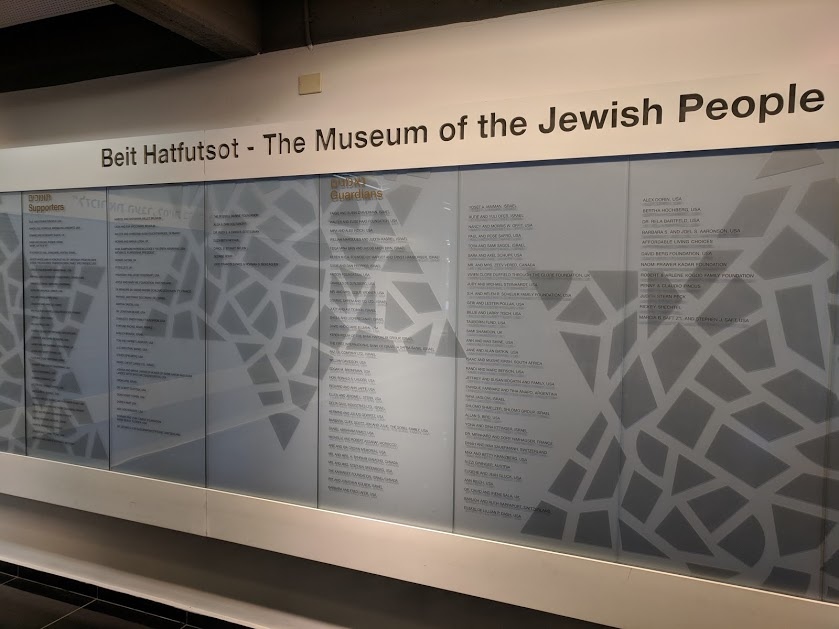
Museum of the Jewish People
Yesterday we visited the Museum of the Jewish People. We enjoyed three different types of exhibits. The entry exhibit is on Jewish Humor. In the early 20th Century about 75% of the comedians in the United States were Jewish. Cultural humor comes from Eastern European communities where Jewish populations were congregated and often relate to the trials of our people.
Museum of Jewish Humor
One source of Jewish humor is the Bible. There are many funny expressions in the Bible, and even books like Esther which are meant to provide relief in life through jest. The festival of Purim, built on the book of Esther, is totally about carnivals and fun.
Fishing for Matzo Balls in Soup
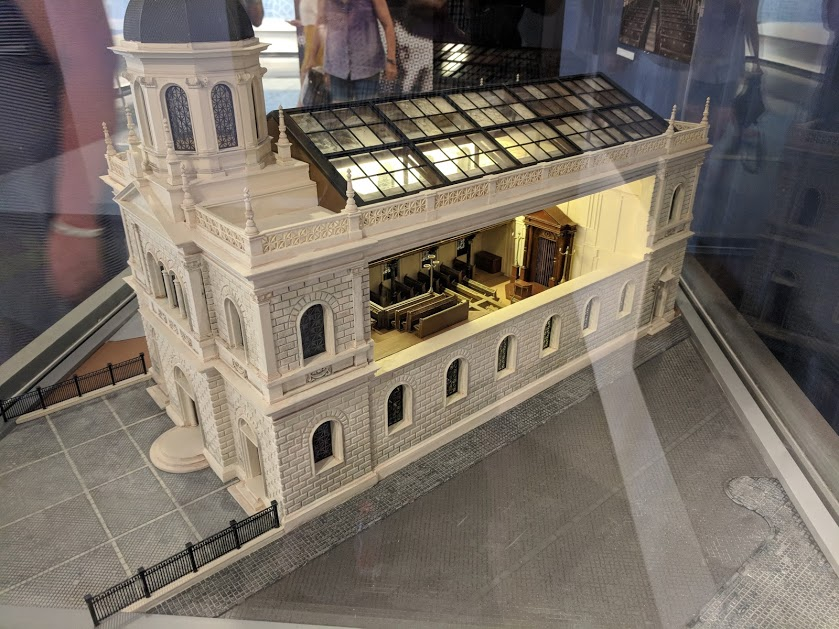
A second, more serious room in the museum was dedicated to places of worship. Detailed scale models, including interior rooms, were on display, showcasing major synagogues in Europe, the Middle East, and Asia.
Synagogue in Vienna, Austria
The Synagogue room also showed videos of Jewish worship.
Capernaum Synagogue
The final room was on photography. It showed early photographs of Israel, and also photography from battle zones in Europe and Central America.

Wednesday, March 1, 2017

Worship Around a Table

Not once, but at least twice in ministry I watched as people rejected the opportunity to worship around the dinner table. The first was in the Midwest as our church planned a Passover Seder for the entire congregation. On the day of our event only one-third of our normal attendance participated. The pastor asked several people, “Why?” The response was, “Because it is an Old Testament observance and we are a New Testament church.”
Church Seder in Lousiana
On the second occasion a man invited his five children and their families to celebrate the Passover with him in his home. Three of the children stayed home with their families because worship belongs in the church and not the home.
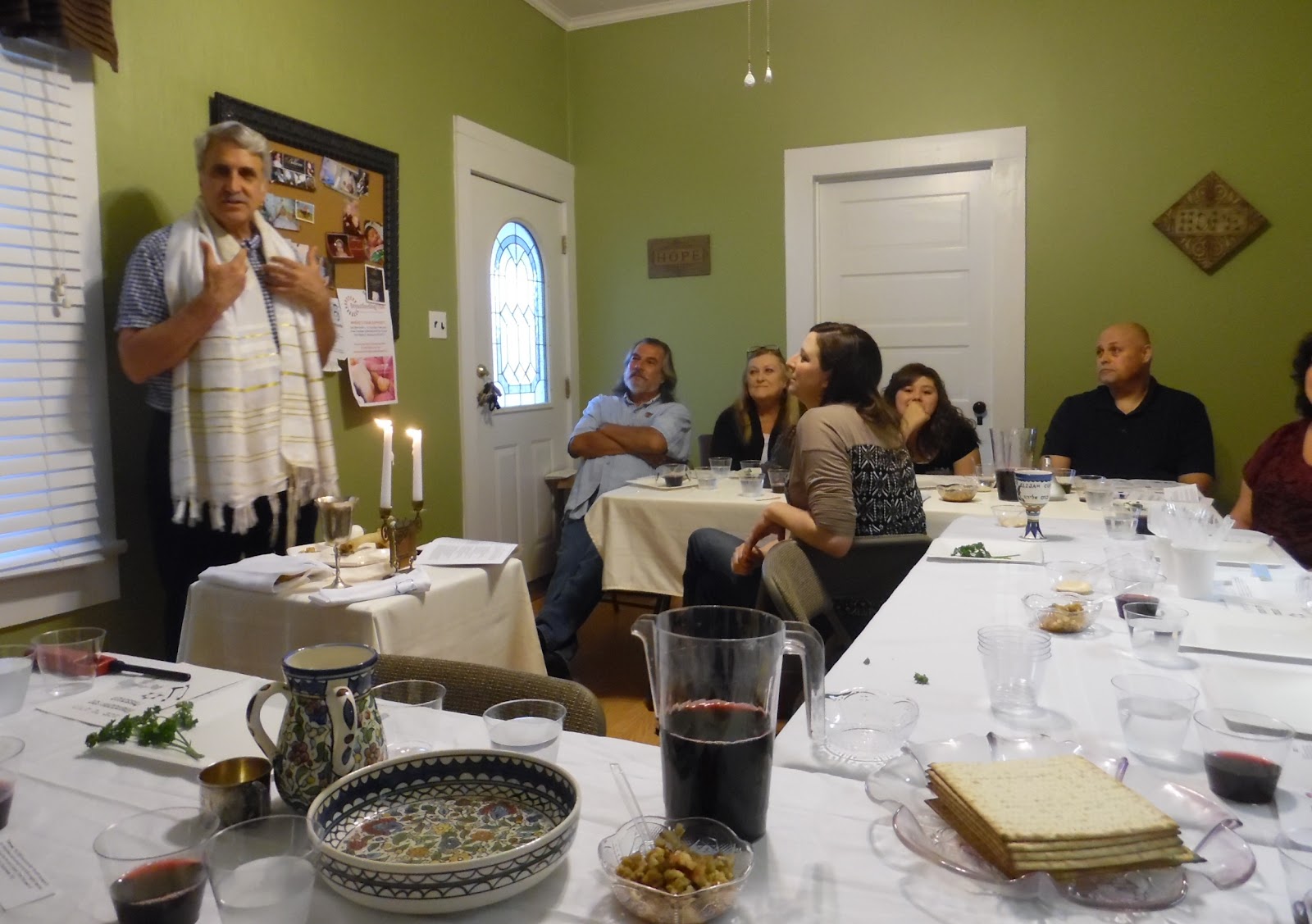
A small group Christian Passover
The people who were absent not only missed an opportunity, they were missing key components of the teachings of Jesus. These faithful Christians should have understood. The Last Supper of Jesus was a Passover meal which occurred in a home and not the church. And Jesus told his followers, “As often as you do this, do this in memory of me.” We are to continue to participate in the communion service around the dinner table.
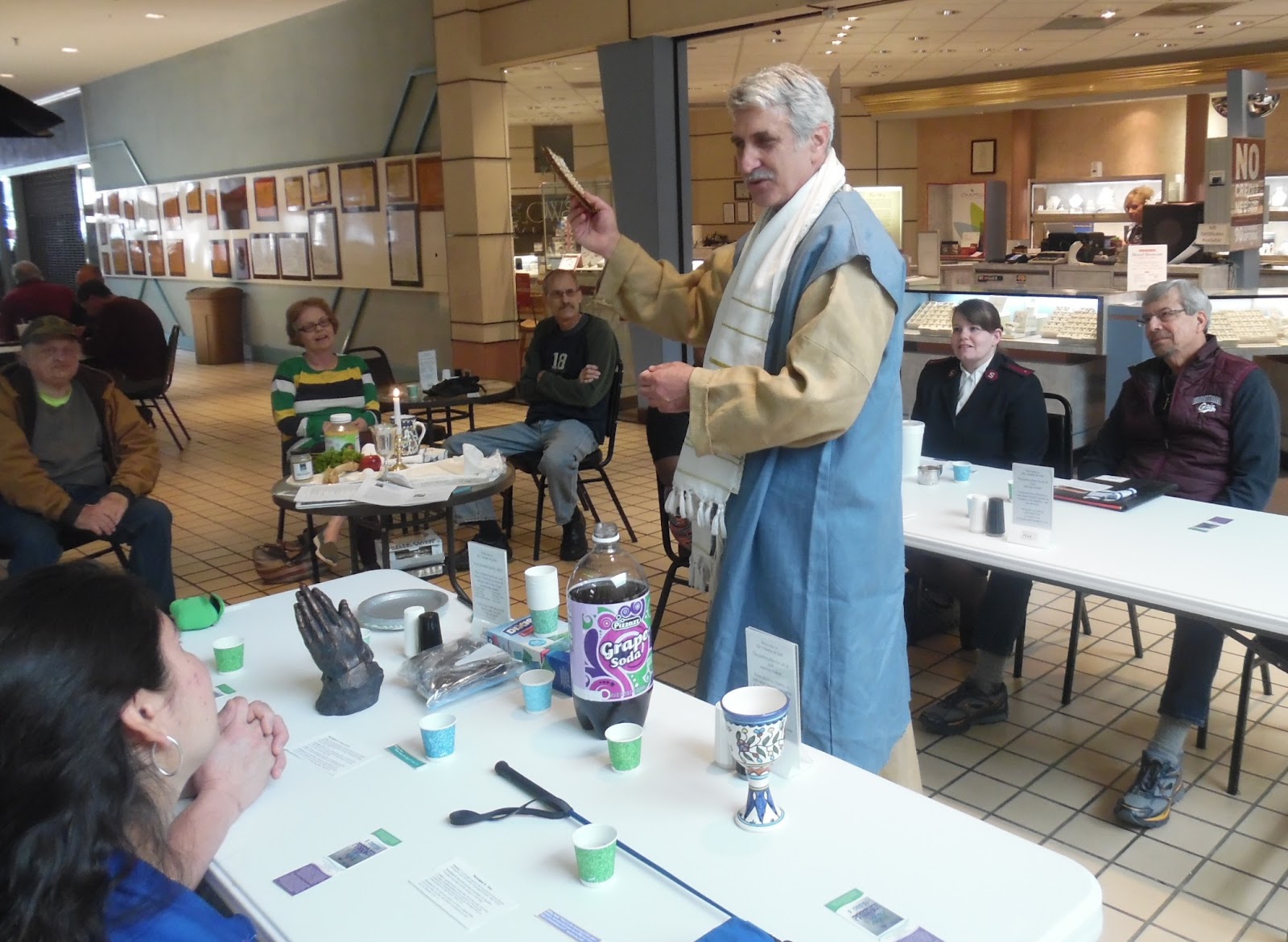
Celebrating Passover at the Shopping Mall
The early church understood this practice. The original disciples, 120 believers gathered after Jesus died in the upper room. After Pentecost Luke tells us, “They broke bread in their homes and ate together with glad and sincere hearts, praising God and enjoying the favor of all people. And the Lord added to their number daily those who were being saved.” (Acts 2:46-47)
Re-enacting the Last Supper
Jesus taught by example, he continually met people for worship at meals. He ate with Levi, Zacchaeus, and Simon the Leper, The only miracle recorded in all four Gospels involves Jesus teaching and then feeding over 5,000 people.The Pharisees questioned Jesus about eating with tax collectors and sinners. Jesus answered them, “It is not the healthy who need a doctor, but the sick.” (Mt 9:10) Even after he died Jesus met to teach two men on the road to Emmaus and also the Disciples in the Upper Room and on the beach.
Emmaus in Israel
Jesus taught us to worship around the dinner table because the home provides the ideal environment. Many people set the tone for spiritual things by praying before meals. Diners are relaxed and put down their guard. Around a meal talking is normal and people will take time to listen.
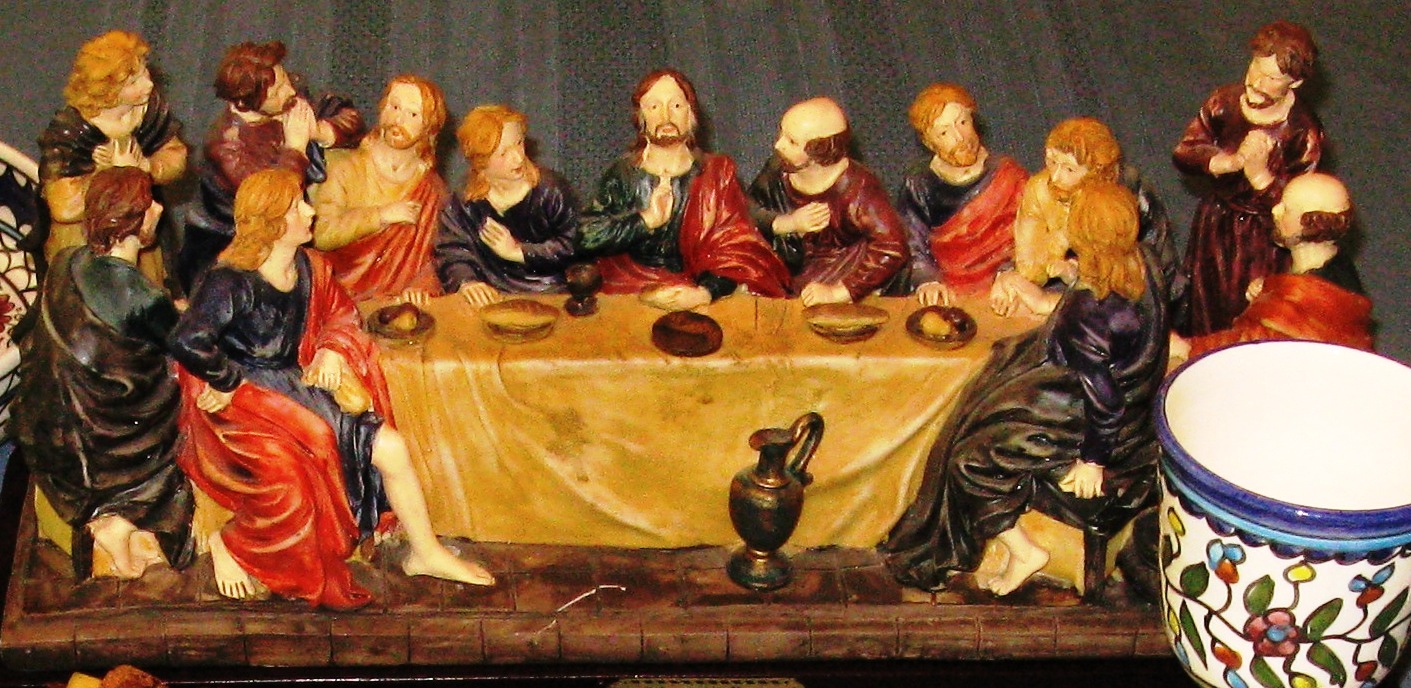
The Last Supper of Jesus
Jesus actually learned this practice from the Old Testament and saw it rehearsed in his home regularly. The Jewish people have a Sabbath observance every week. A holy meal is part of the Feast of Tabernacles, Passover, Shavuot and Rosh Hashanah.
Communion and Passover together
Moses taught us to celebrate meals around the table. He said to talk about the law “when you sit at home and when you walk along the road, when you lie down and when you get up.” (Dt 6:6) He added, “when you eat and are satisfied, be careful that you do not forget the Lord.” (Dt 6:28) He wrote in Deuteronomy 12:7, “You and your families shall eat and shall rejoice in everything you have put your hand to, because the Lord your God has blessed you.” The family that prays and dines together stays together.
Ready for our family Passover Seder
The Passover meal is an ideal example of what an ornate supper can become when celebrated annually. The father (not the professional clergy) teaches his family the historic story of God’s mighty acts through an unforgettable method. Participants listen to, read aloud, act out, taste and see the story as it unfolds. Each person feels the movement from slavery to freedom. And every person who has participated in this festivity for several years can quote lines from the Seder.
Haggadah with explanations, a great resource for the leader
One section of the Seder shares the lesson on the four sons. This lesson originates out of four passages in the books of the law. The first son, the wise son asks the father to tell him the meaning of the stipulations, decrees and laws the Lord our God has commanded.” (Dt 6:20) He is rewarded with commendation because of his desire to learn. The wicked son asks, “What do these things in which you are engaged mean?” He is wicked because he does not desire to personally participate. The simple son asks a simple question and gets a simple answer. (Ex 13:14) The leader of the Seder meal then tells all the participants that we are to tell the story even when a question is not asked.
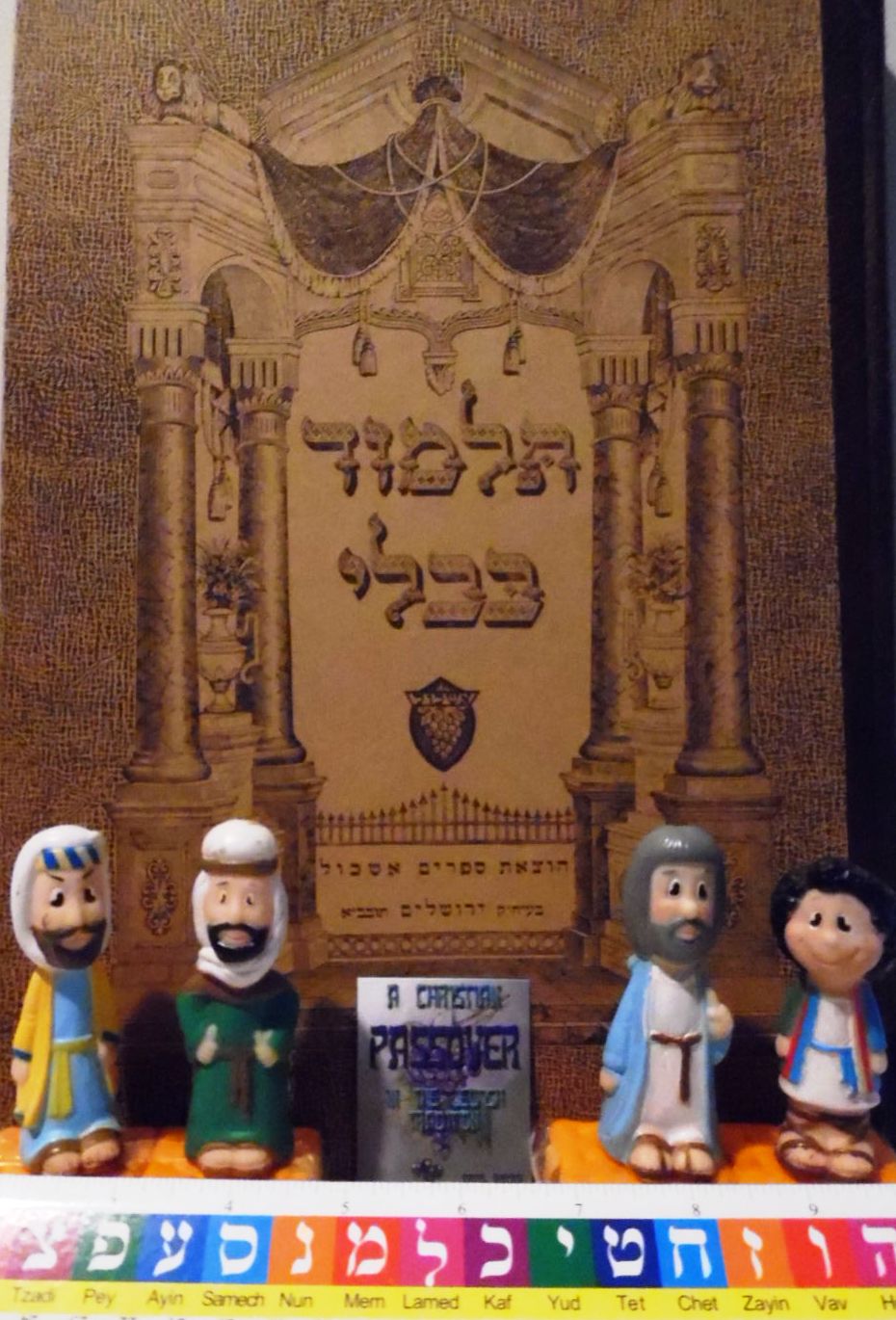
The Four Sons with their favorite Passover guides
We live in a generation when church attendance is decreasing, families are falling apart and crime is on the rise. Perhaps the reason for this plight is that we do not honor the age old command of the Lord to spend time in our homes teaching of His love. This includes weekly meals on the Sabbath, meals on special occasions, and telling of God’s love at home as often as we can.
Spring shares Passovers throughout the Bible - a great read!
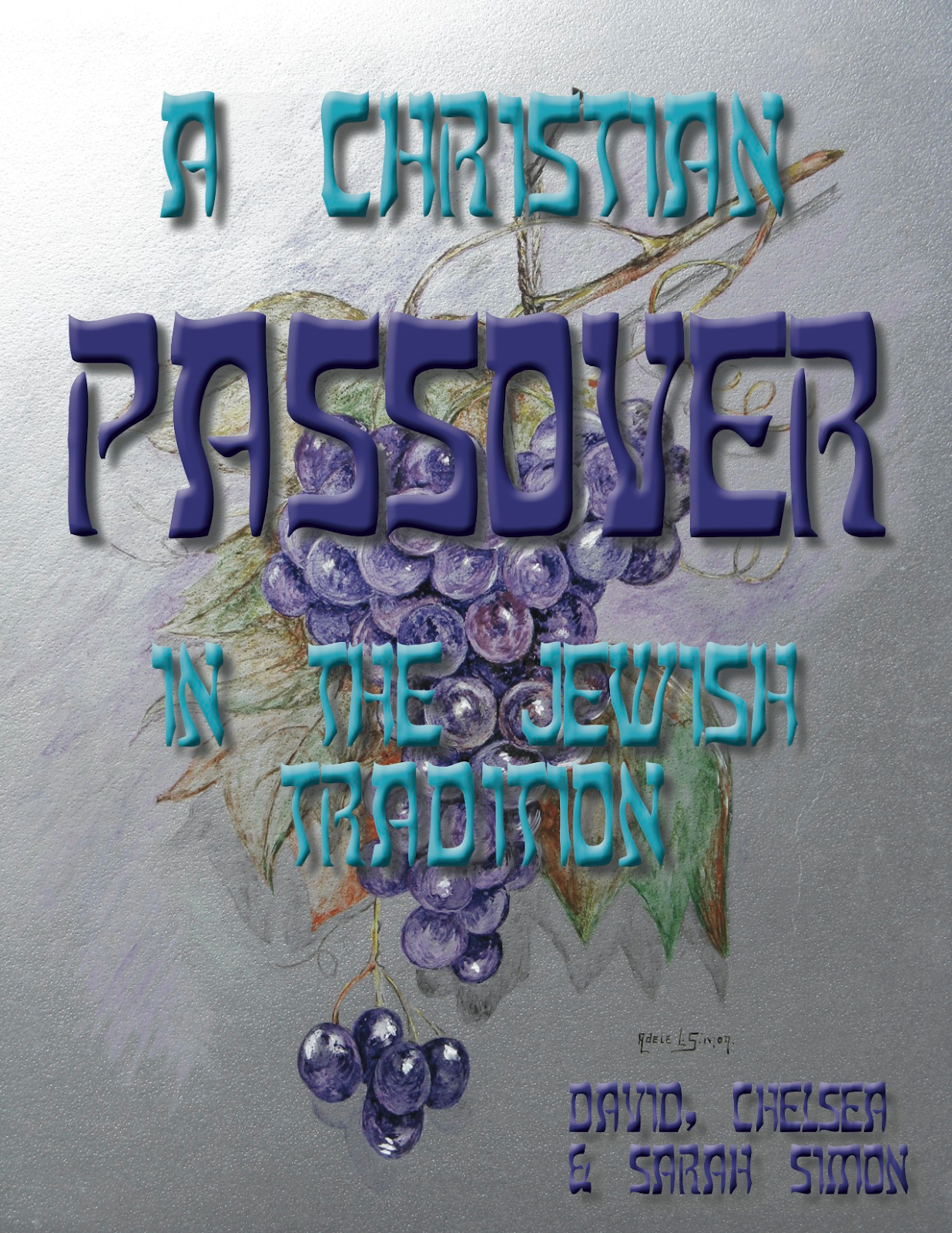
The Passover is but one example of a meal. I try to share this idea every time I lead a church in a Seder Service. If you would like to host a Passover or have a speaker talk about building the spiritual faith of the family around the meal, please contact me. If you would like to lead a Passover yourself there are some excellent resources available including A Christian Passover in the Jewish Tradition.

Monday, February 20, 2017

Preparation for a Church Passover

Passover is a festival that is mentioned throughout the entire Bible, yet most churches only keep the Lord's Supper as the remnant of this incredibly rich holiday. Most Christians have never seen a Passover demonstration, which adds to the knowledge of the Bible and Lord's Supper, adding depth to the faith. Far fewer Christians have experienced an actual Passover dinner. These facts show a huge void in a complete understanding of both the Old Testament Passover Seder and the New Testament celebration called the Lord’s Supper.
Communion is a regular part of church worship
The Passover is an enduring event. People have gathered around the dinner table for over 3.500 years. This one event has been credited with building a stronger Judaism and in some cases, keeping the faith alive. I have written a guide to help churches organize Passover Seders entitled A Christian Passover in the Jewish Tradition
This book shares leader instructions and insights to Passover
Churches should attempt at least once every 3-4 years to hold a Passover event. Such an event  helps people better understand the Old Testament and the background of the Communion. A church supper held around the dinner table in order to teach faith could also provide a great model for Christian homes.
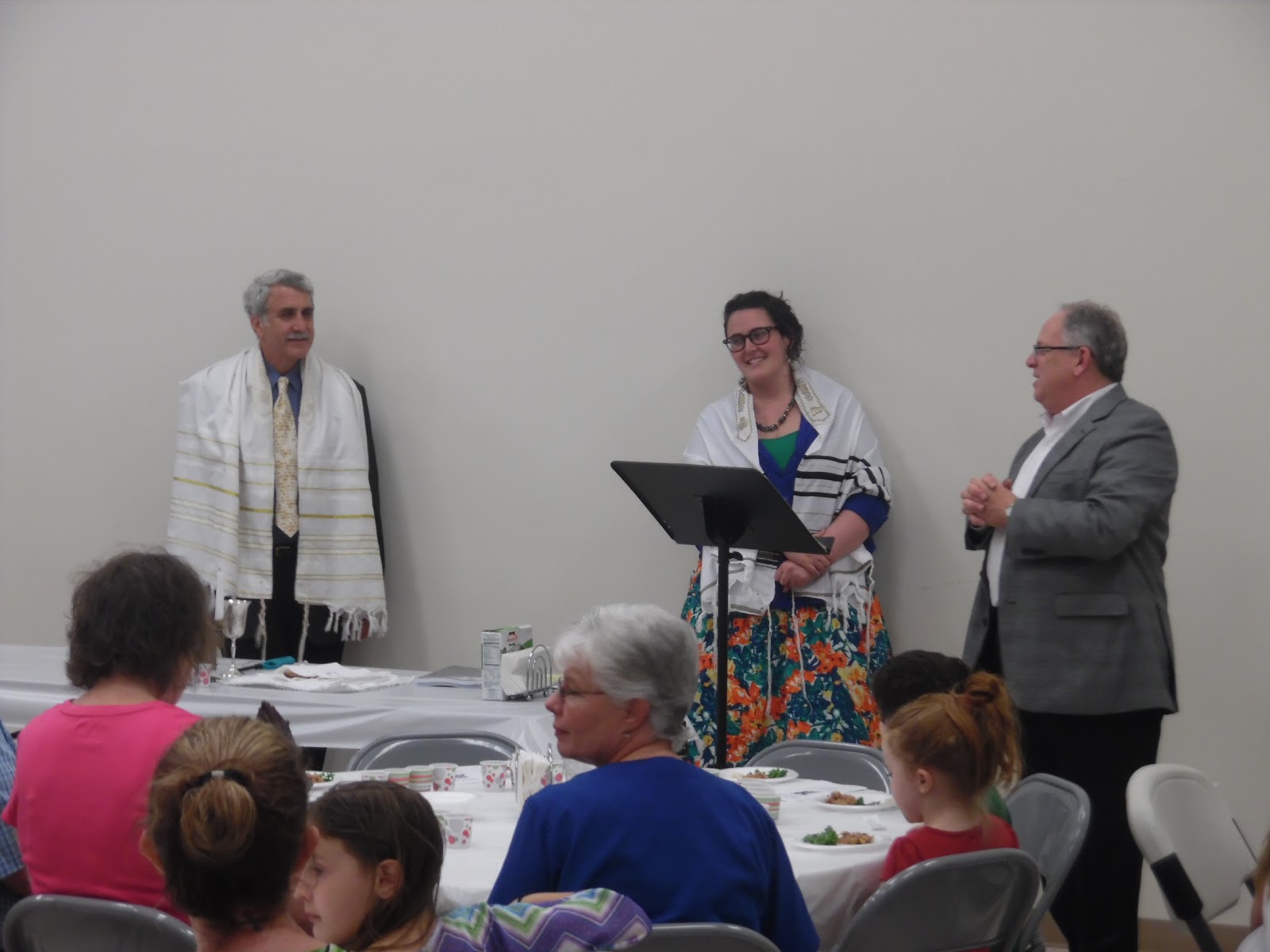
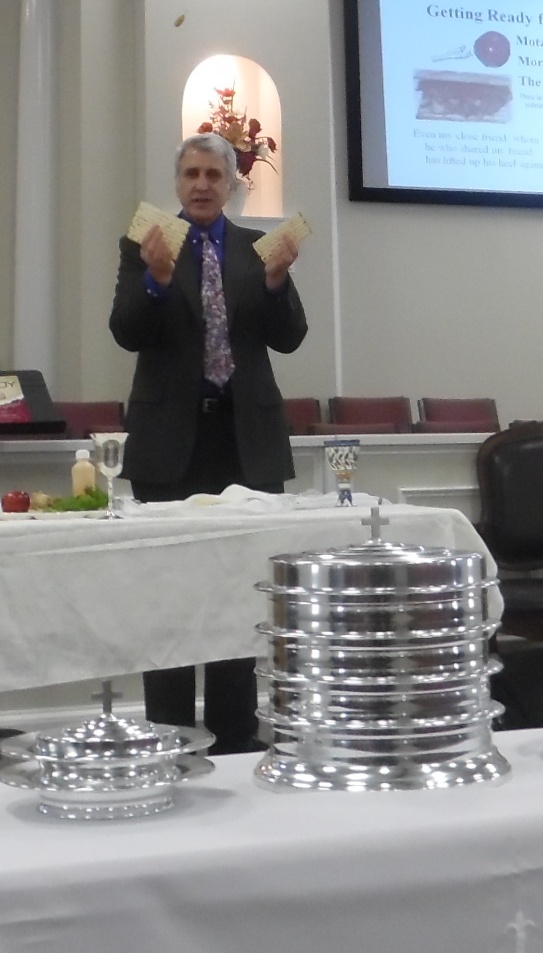
A special speaker at a church supper celebrating Passover
The Passover celebration could be shared as a presentation in worship service (least memorable), a reenactment with communion and other elements in a worship service (more participatory), or a meal where people tell the story and eat together (most memorable and participatory). The meal can be held as a whole church event, or in larger churches the supper could be held by individual or combined small groups. When people sit down together as families around the Passover meal they create memories, build a stronger understanding of the Bible, and grow closer in their relationships with God.
Reenacting Jesus' last Passover including Communion
The first step in holding a Passover event is to place it on the calendar. The second step is to decide what kind of event it will be: worship only, reenactment, or dinner. The third step is to designate a leader for the event. Will the Pastor or a Church member lead the Seder, or will the church invite an outside speaker?
Children should be part of a Church Passover event
At this point, the church needs to decide who will come to the Passover Seder. Will only church members be invited to attend (not recommended), or will the event be opened to the larger community? I encourage people to hold an open event, and encourage regular church attenders to invite guests to the special supper. It should be publicized in the church for at least five weeks. Publicity should include bulletin, newsletter, small group announcements, postcards, e-mails (both surface mail and electronic media are important), facebook, twitter, instagram, and phone calls. People should be invited to share with others through social media. A public service article should also be placed in newspapers and radio stations in the area. Let the world know about this special event. Jesus said to “Go into all the world,” and a special event like Passover is one way churches can obey this commandment.
A menu needs to be set for the meal. The meal could be covered dish (no leavened bread), cooked at the church or catered. If the dinner is held by a small group the dinner could be held in a home or a private room in a restaurant. The meal should be well planned as this is similar to a Thanksgiving event with quality and quantity planned for the evening. China plates, cloth napkins and real silver are not inappropriate.
Special foods of the Passover
Special foods are needed for the supper. These include wine (grape juice), bitter herbs (horseradish), Charoset (an apple and nuts mixture or applesauce with cinnamon), greens (parsley), salt water, Matzoh (unleavened bread), the shankbone of a lamb and an egg (or eggs). A good Passover Haggadah such as A Christian Passover in the Jewish Tradition contain instructions for setting up the table. An instruction page I share with churches is shown below.
Instructions for setting up for a Church Passover
The room should be set up with two places in view of each person. One place is for the leader, the second place is for “Elijah” who will “make a visit” as described in the Passover Haggadah. Places should be set up for each person expected for the meal. At each place include a spoon, napkin, a small cup with wine, and small plate with Horseradish, apple mixture, and greens (these can also be made available for each place or served from the head table according to size of the group). Salt water should be available to each person for dipping.  A plan should be made to refill the wine cups and for each person to be able to wash their hands at least twice during the service.
Creativity and beauty in Communion and Passover
It is good to involve people in the Passover Seder presentation or dinner. People participate in meals by eating. As a preliminary to the meal, and part of the worship service, people taste different foods as meanings are explained.
Books to help lead a Church Passover
In Jewish services people are encouraged to participate through responsive readings. I have included responsive readings on my 99¢  participant books available on Kindle (these books do not contain all the leader material). I always have people read the Hallel Psalms responsively. I also include people by assigning individuals to read parts of the four questions and four sons. In two of my presentations on the Passover story, participants are assigned parts and props so the story does not seem so long. All the parts and props must be assembled in preparation before the meal.
Sample Passover Bulletin (inside portion)

When I lead a Passover Seder in a church, I send a personalized program for churches to duplicate. The bulletin includes sections of responsive readings and also information which participants would want to know about the Passover. When I began leading Seders, I made booklets for each individual. I have since found that a legal sized piece of paper printed on both sides is adequate for what most people need. (If you would like me to lead a Passover Seder at your church, please contact me).

Sunday, November 27, 2016

Zechariah in the Temple

The Temple of the first century is a fascinating place! The Temple itself was the center of activity, serving thousands of people each day. The plaza around the Temple was a meeting place of pilgrims who came from long distances to bring an offering and merchants who were selling the offering to the pilgrims. It was a place of contention for Sadducees, Pharisees, Essenes, Herodians, Zealots, and others who came to argue politics and religion. It was also a place for locals, who came to watch the commotion.
The Robinson Arch entrance to the Temple
The Temple itself was a modern building, having been totally reconstructed by King Herod the Great. The magnificent Sanctuary was a hundred cubits square and a hundred cubits in height. The Temple Mount measured five hundred cubits by five hundred cubits. Its largest open space was to the south, the next largest to the east, the third largest to the north, and its smallest was to the west. The King had erected the monstrous edifice in order to claim bragging rights (it was a third larger than Solomon’s Temple) and hopefully to appease the Jews who could be a rebellious and obstinate people.
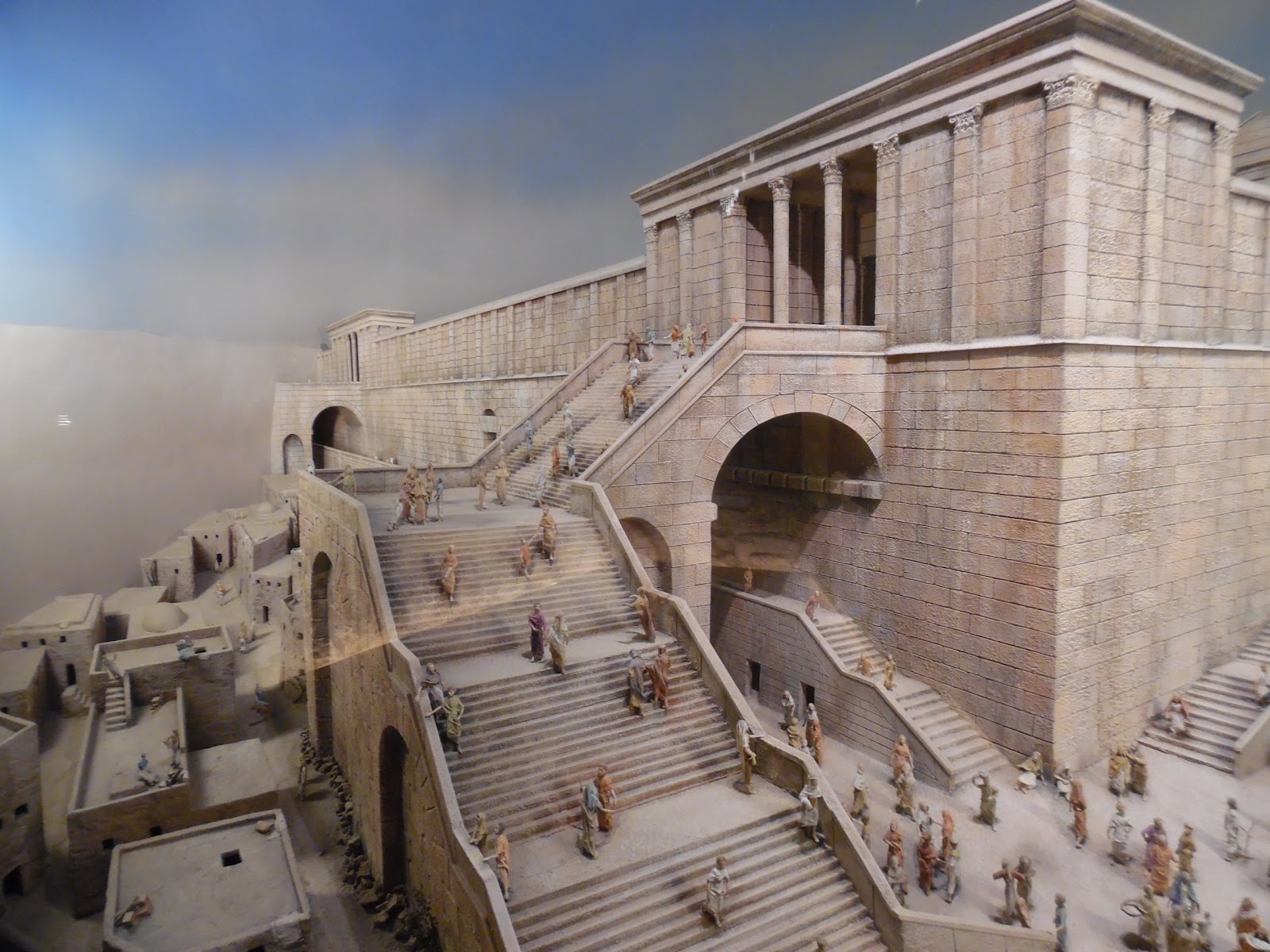
Jerusalem at the time of Jesus
Zechariah, the father of John the Baptist and the subject of this week’s readings in Advent Journeys, was of the generation of priests who had served in both the old Temple and the new facility. The priests enjoyed the spaciousness and modernalities of the new superstructure. The priests enjoyed the tables of marble upon which the sacrifices were prepared. They talked about parading down the colonnades on the east and west of the Temple itself early in the morning. They bragged about the wooden device which Ben Katin had made for the laver. They knew that no expense had been spared in the construction of the new Temple.
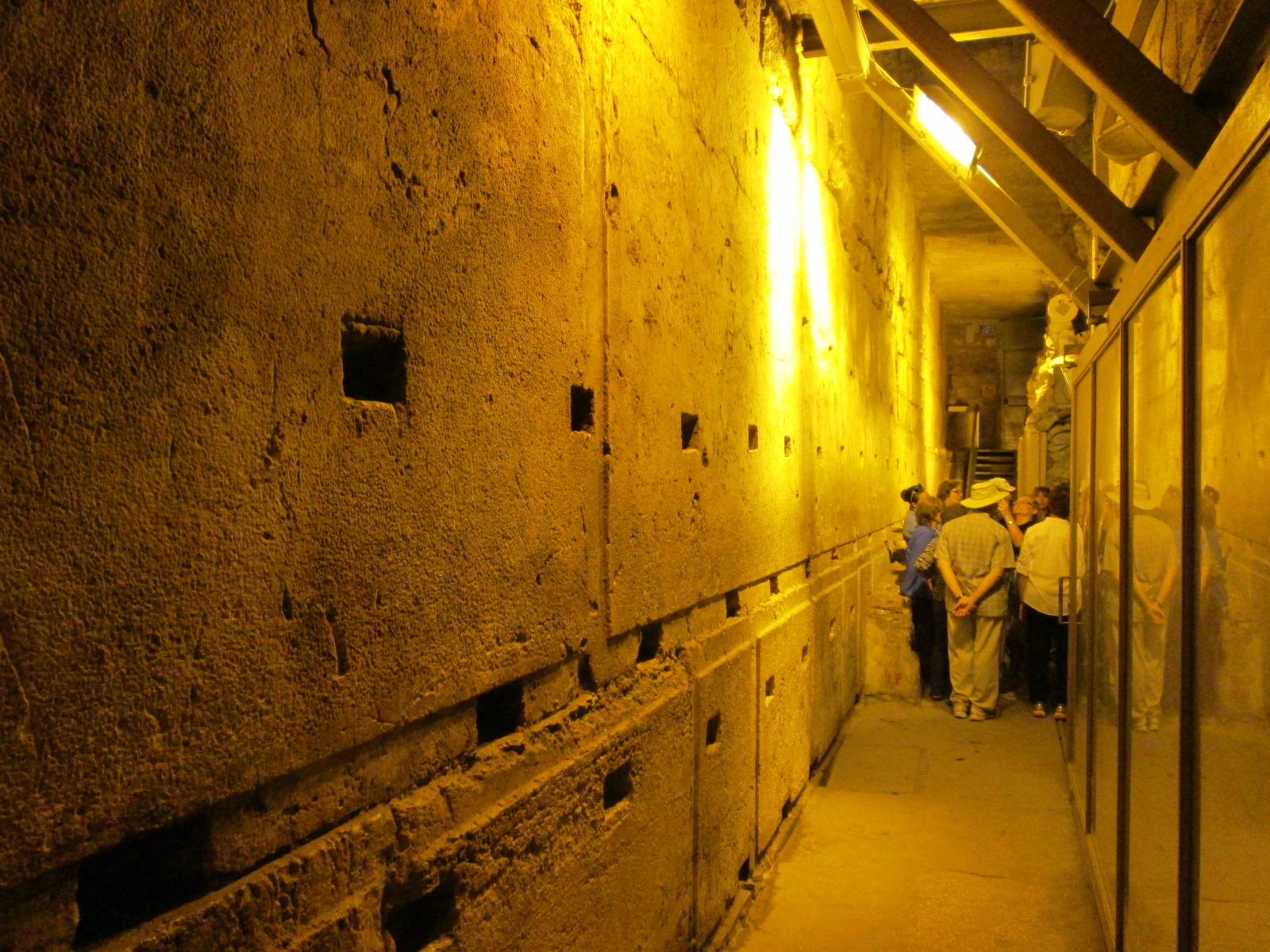
Underground tour shows large stones of Temple Mount
The magnificence and wonder of the construction can still be seen on the underground tour of the Western Walls. If you would like to see and touch the stone structure, please accept this as an invitation to join our family on a June 2018 tour of the Holy Land. More information can be found on our website.
Marker for location closest to Holy of Holies
Around the Temple were service buildings constructed to facilitate every portion of the work. There were six chambers in the Temple Court, three to the north and three to the south. Those to the north were the Salt Chamber, the Parwah Chamber, and the Rinsing Chamber. To the south were the Wood Chamber, the Golah Chamber, and the Chamber of Hewn Stone. There were seven gates to the Temple Court: three to the north, three to the south, and one to the east. Those to the south were the Kindling Gate, next to it the Gate of the Firstlings, and the third was the Water Gate. The one to the east was the Nicanor Gate, beside which were two Chambers, one to the right and one to the left; the one was the Chamber of Phineas, the keeper of the vestments, and the other the chamber of them that made the Baken Cakes.

Archaeological finds south of original Temple Mount
The new Temple was in every way a stark contrast to the Temple built under the leadership of Ezra, Joshua, Zerubbabel and Nehemiah. Zechariah approached the Temple with a sense of awe each week of his service.


Friday, August 26, 2016

Children & Education

As the month of August draws to an end, families across the United States focus on the beginning of the new school year. A good education is often the key to a successful life. Children are taught math, reading, languages, social studies, and science with a dose of physical education mixed in. Curriculum is developed to help children and youth find success in their careers and in life.
With the dawn of a new school year it is time to note that the most important place for a child’s education is at home. Children from the time they are born depend on their parents for all things in life: for food, for shelter, for teaching, for comfort, for security and for life.
The Bible, recognizing the importance of parents in the lives of their children, instructs parents on many occasions to teach their children. Moses instructed parents, “be careful, and watch yourselves closely so that you do not forget the things your eyes have seen or let them fade from your heart as long as you live. Teach them to your children and to their children after them.” (Dt. 4:9-10) Jewish parents repeat this every week as part of the Shema (Dt 6:4-9). Other imperatives include Deuteronomy 11:1-2129:11-29; 31:12.
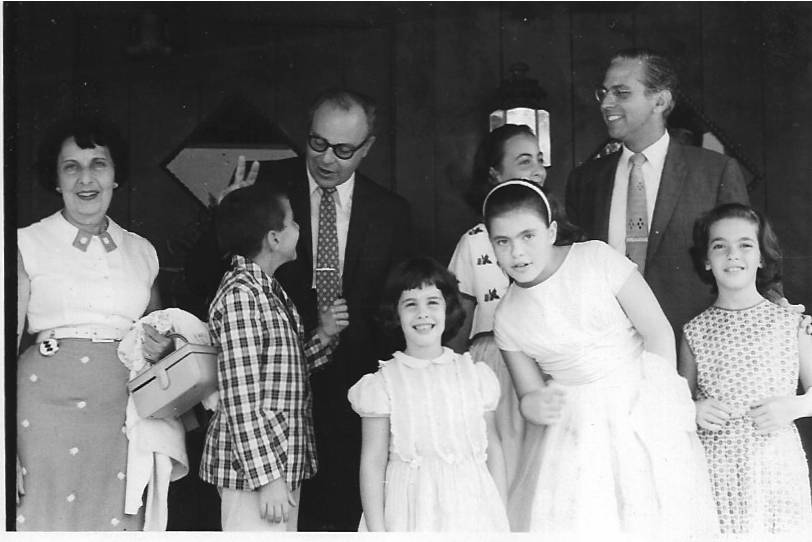
During my childhood I experienced my parents share the Biblical injunction as part of the Passover Seder: “When your son asks you … tell him.” (Ex 13:14; Dt. 6:20) My mother read me the Bible and my family attended synagogue together. Memories were forged which remain in my heart today.
Jesus, according to his Jewish heritage, told his disciples, “Let the little children come to me, and do not hinder them, for the kingdom of God belongs to such as these. Truly I tell you, anyone who will not receive the kingdom of God like a little child will never enter it.” (Luke 18:16-17) It is the obligation of the church and of each parent to personally teach their children about God.
All too often parents today, as the disciples of the Bible, send the children away. Across our nation churches put time and effort into children’s worship service “so children can understand the gospel on their own level.” But this brings irreparable harm, for through this act the church has removed responsibility for spiritual development from parents and from the family.
Parents kindly say, “but my children won’t understand the pastor.” Or they share their children will get bored. Some parents have also told me the truth: “I don’t want my children to attend the service, because they bother me with questions and I cannot worship myself.” The last statement is one of extreme selfishness and displeases God (Mt 18:1-10).
My wife and I took my children to worship, and throughout the years we have encouraged parents to sit next to their children in worship service. Here are some ideas to help children “grow into” worship service:
First Grade: teach children to sing in worship service. You can do this by playing CDs of music sung or singing them in the car. I would sit while my children stood so they could hear me singing behind them and follow my example. During the sermon we gave our children a book or coloring book to keep them quiet, and taught them to sit during the sermon.
Grade two: By this point children are reading. When the pastor read the scripture we would follow along in the Bible. Otherwise they had their book and remained quiet.
Third Grade: We asked the children to share something from the sermon in the car as we left church. Through this activity we were teaching them to listen. Third graders have an 8-10 minute attention span, so asking them to hear something is totally fair.
Fourth Grade: We asked the children for the theme of the message. We expected them to know what the pastor was talking about.
Fifth Grade: We began to work with them on listening for the points of the sermon and the outline so we could talk about what the pastor said on the way home.
My children learned what worship was about. To this day my children love the Lord and remember early lessons learned at home and in church. The Bible tells fathers to bring their children up “in the training and instruction of the Lord” (Eph 6:4).
One of the things I enjoy speaking about in church is how to share our faith with our children. As a Minister of Education I have studied, trained and applied time tested principles with preschool, children, and youth teachers and parents. I would be glad to come and help your church teach and reach more children. I have learned through experience that a church where the Bible is taught on the level of its students generally grows and experiences great blessings.

Saturday, December 19, 2015

Angelic Messages

Behold, an angel of the Lord stood before them, and the glory of the Lord shone around them.” (Luke 2:9) Today, in the book Advent Journeys we talk about angels, angels who came and made an announcement to the shepherds.  For this Blog, I decided to start with a questionnaire to see how much you know about angels.
  1. What is the translation for the word “angel”?
  2. Where is the first use of the word angel in the Bible?
  3. Who are the two named angels of the Bible?
  4. What is the name of the angel who told Daniel the meaning of the 70 weeks?
  5. What is the name of the angel who spoke to Zechariah, father of John the Baptist?
  6. What is the name of the angel who spoke to Mary telling her she was pregnant?
  7. What angel spoke to Joseph concerning the birth of Jesus and the anger of Herod?
  8. What was the message spoken by the first angel which appeared to the shepherds?
  9. What message was spoken by the multitudes of angels to the shepherds?
  10. What do angels tell us about Christmas?


Here are the answers to the above questions:
  1. The words מַלְאָךְ (mal'ak - Hebrew) and ἄγγελος (aggelos - Greek) mean “messenger.”  Angels serve God and do His bidding.  One of the areas of service is to bear messages.
  2. The first use of the word מַלְאָךְ is found in Genesis 16:7, telling Hagar to go back to Sarah.  Some people see the angels gathering with God in Genesis 1:26, which says, “Let us make man in our own image...”  In Midrash Rabbah Rabbi Yochanan taught angels were created on the second day with the heavens (Psalm 104:3-4), but Rabbi Chanina argues it was the fifth day when God made the winged creatures.  Another early reference to angels is found in the first chapter of Job.
  3. Gabriel (warrior of God) and Michael (who is like God).  There is also the mysterious “man clothed in linen”
  4. Gabriel
  5. Gabriel
  6. Gabriel
  7. This angel is identified as “the angel of the Lord”  … possibly Gabriel
  8. Do not be afraid, for behold, I bring you good tidings of great joy which will be to all people. For there is born to you this day in the city of David a Savior, who is Christ the Lord. And this will be the sign to you: You will find a Babe wrapped in swaddling cloths, lying in a manger.” (Luke 2:10-12)
  9. Glory to God in the highest, and on earth peace, goodwill toward men!” (Luke 2:14)
  10. The angels tell us Christmas is about Christ.  They are looking to Christ in Luke 2:14; and also in Psalm 103:21; 148:2; Mt 18:10; 25:31; Luke 15:10; Hebrews 1:6; 12:22; Revelation 5:11-147:11
The angels worship God and serve Him.  There are many wonderful passages about angels in the scripture.  There are also some not so wonderful passages: such as Ezekiel 28, which displays what happens when we place the focus on ourselves rather than heaven.
May this Christmas be for you, as it was for the angels of Heaven, who, when the great news was shared, said, “Glory to God in the highest, and on earth peace, goodwill toward men!” (Luke 2:14)