Showing posts with label Holy Land. Show all posts

Monday, October 29, 2018

A Dig at Zippori

During my two month visit to Israel, I participated in four archaeological digs, at Gezer, Tel Hadid, Zippori and at Tel Dan. My favorite experience was the work at Zippori.
Arches Reservoir at Zippori
Zippori was the capital city of Galilee in the first century AD. It is located a few miles from Nazareth, and many feel that Joseph the father of Jesus worked on government projects at Zippori.
Merchants sidewalk along main street
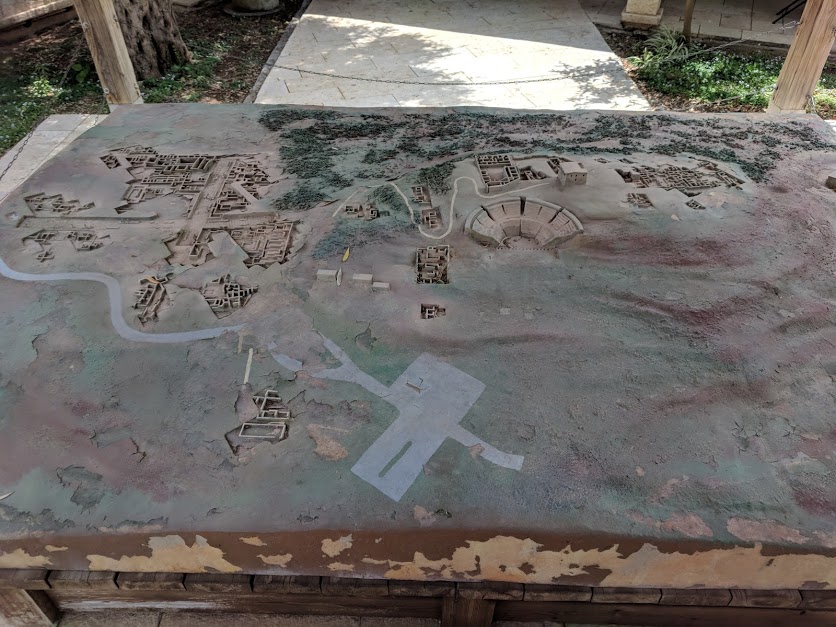
The cardo of this city is amazing. It is actually two roads that cross each other at the main intersection. Buildings have been recovered along both roads.
Site map of Zippori
The city also contains amazing mosaics. Some are located in what is called the Nile house.
Centar at the Nile House
Other mosaics can be found at the Dionysus House.
Mona Lisa of Galilee
There is also an amazing mosaic in the Synagogue.
Mosaic on the floor of the Synagogue
We worked at the first century water project. This is a cistern that held water that flowed down hill from spring along the Nazareth ridge.
Nazareth Ridge above Zippori
There are actually two cisterns. The first was untouched since the first century.
Arches Reservoir at Zippori
The second was developed into a wine press.
First view of the Arches Reservoir
Wine was stomped at one end of the cistern
First view of the Arches Reservoir
It flowed into a mikvah that was more than seven feet deep.
Shade tarp over the Arches Reservoir
There was also a stone reception area with pavers.
Measuring the Mikvah
We helped excavate the mikvah area.
Debris and stones above the Mikvah
It started by clearing roofing members which fell. The roof was a system of arches and coverings to keep the water in the dark until it was needed.
Digging Team at Zippori
We hauled lots of dirt out of the system, and also rocks. We found coins, pottery and other items as we dug.
Pottery found during our dig at Zippori
We worked with several archeologists who taught us about the site. They showed us the difference between first and second century plaster, as well as showing us areas of the cistern (structure) that was not plastered.
Filling dirt buckets at Zippori
I have included some stories from the hills of Galilee in my new book, Israel:Stories for Your Journey.
New book on Israel
Some of the places I visited during the two weeks of my tour were places I visited before, but since I helped plan the tour, there were some new places also.

Saturday, June 16, 2018

Tel Hadid

I have just completed a week of an archaeological probe at Tel Hadid, Israel.
A map of Tel Hadid
Tel Hadid is located on a hill on the north side of the entrance to the Ayalon Valley. Tel Gezer is located on the south side of this important transportation zone which leads up the hill to Jerusalem.
Sheep grazing on olive trees at Tel Hadid
The ancient walled city is listed in the Mishnah (Arachin 9:6) as existing in the time of Joshua. Archaeological researchers are interested in the site because several land transfer documents have been found which date back to the times of King Hezekiah, and to the Assyrian and Babylonian conquests of the land of Israel.
Test probes at Tel Hadid
It is thought that after the deportation of the ten northern tribes of Israel that the Assyrians placed a diverse group of people from many nationalities in the land called Samaria. They did this to prevent uprisings in occupied territories. The cultural identity of the people took years to develop into anything more than displaced peoples.
A day's finds from our hole at Tel Hadid
The Maccabees had a presence in this city, which they called Adiada, which is close to Modi’in. Coins and other remains have been found from this period, one of which was a coin found in the probe I was assigned to dig. I asked if the Maccabean coin was from Judah or Simon, and was told I would have to wait until the final reprot.
A Hasmonean Coin from our hole at Tel Hadid
Other coins and metal objects, some extremely rare were also found during our dig.
Highway 6 runs under Tel Hadid

The work at Tel Hadid began as a salvage operation about twenty years ago, as Israel Highway 6 was being planned. Tel Aviv University is mapping and performing test probes in this area, and will begin an actual dig next year. You can go to their website for more information, or if you want to dig at this place. New Orleans Baptist Theological Seminary will be working with Tel Aviv University as they dig.

Wednesday, May 23, 2018

A Trip to Tel Aviv

Yesterday we made a trip from Haifa to Tel Aviv. Transportation along the coast, the “Via Maris” or the “Plain of Sharon,” as it is variously called in different places, is quite easy. We took the bus down the mountain in Haifa to the connected Bus and Train stations near Carmel Beach. Then we went south along the sea.
Rav Card Reader on a Bus
We purchased a Rav Card, which connects all transportation. We paid a few sheckles each way for the train and a few for daily unlimited rides in Tel Aviv. The coast and the cities are places which are connected by mass transit. That is a good thing, because after driving our rental car in the congestion of Tel Aviv the first few days in Israel, I am glad to let someone else do the driving. After attempting to park in Haifa, I am glad to get off the bus, and not have to look for a place and walk up the hill back to our lodging.
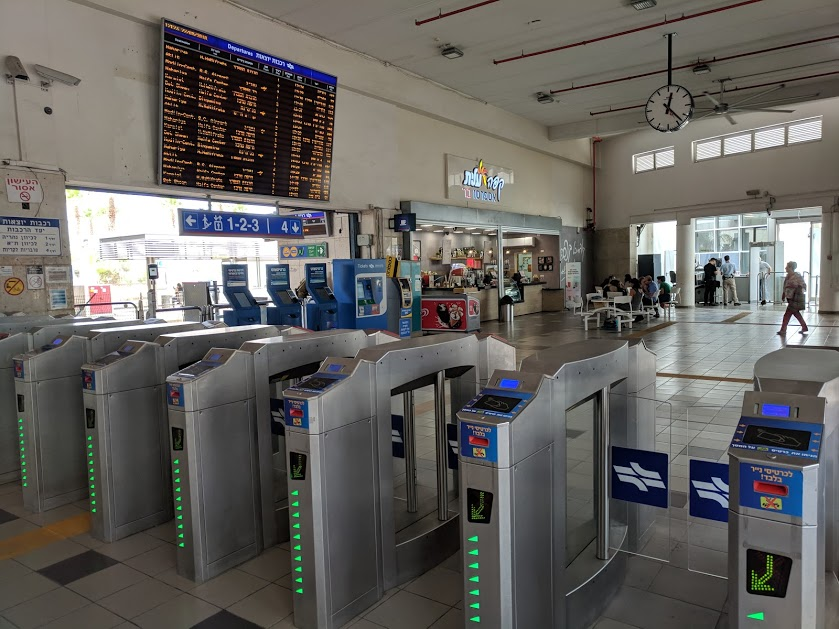
Entry to the Train Station
The drive down the coastal plain was beautiful. The ground is mostly level, but with some rock hills or desert sand dunes in places. There are a few rivers, swamps and lots of land which was drained a hundred years ago and is now used for agriculture. There are fields of cut grain, citrus groves, banana plantations and other farms along the plain. Before the nineteenth century, this land contained enough swampy areas that transportation could be controlled by fortresses.
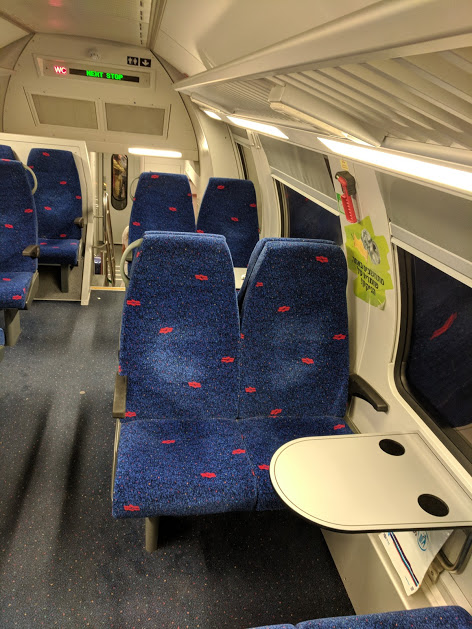
Comfortable interior of the Train Car
The train cars can be one level or two. Of course as a visitor to Israel, and because we like to look out the window, we go to the upper level (the morning train was only one level). The trains were crowded, and on the morning train I had to stand the full ride, of about an hour. Chelsea and I read some of Al-Khazari.
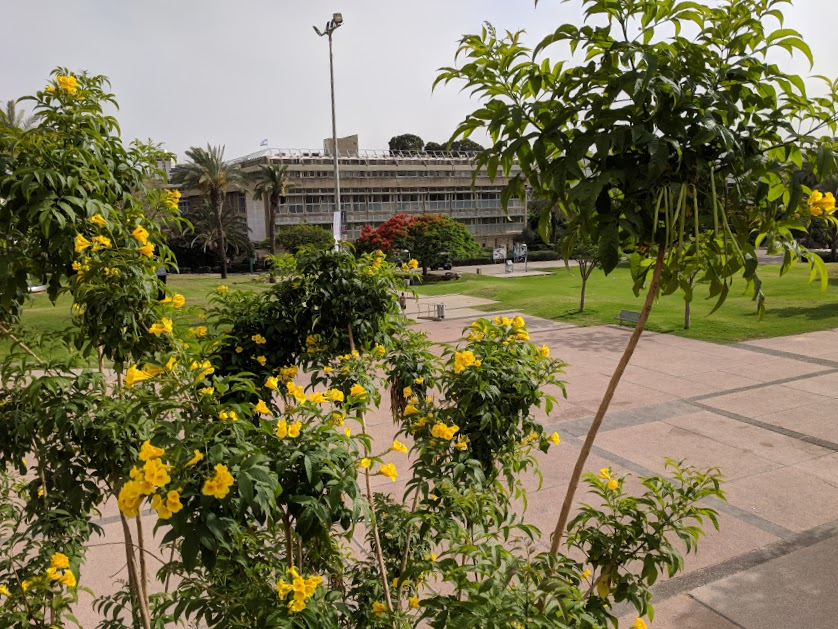
Flowers at Tel Aviv University
We arrived in northern Tel Aviv and took the bus to Tel Aviv University. This is a large, multidisciplinary state college. Several museums on the campus afford visitors great experiences. We have visited the Eretz Israel and Palmach Museums in the past.
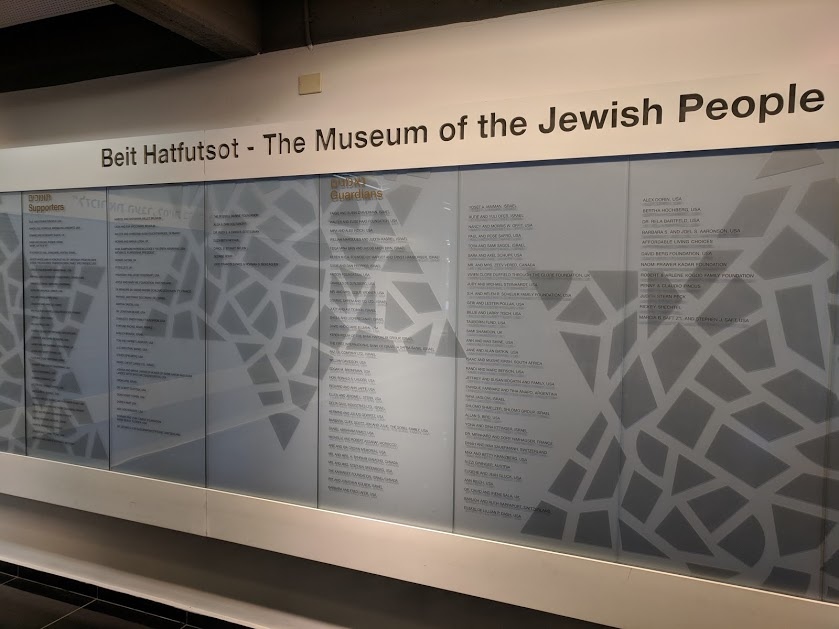
Museum of the Jewish People
Yesterday we visited the Museum of the Jewish People. We enjoyed three different types of exhibits. The entry exhibit is on Jewish Humor. In the early 20th Century about 75% of the comedians in the United States were Jewish. Cultural humor comes from Eastern European communities where Jewish populations were congregated and often relate to the trials of our people.
Museum of Jewish Humor
One source of Jewish humor is the Bible. There are many funny expressions in the Bible, and even books like Esther which are meant to provide relief in life through jest. The festival of Purim, built on the book of Esther, is totally about carnivals and fun.
Fishing for Matzo Balls in Soup
A second, more serious room in the museum was dedicated to places of worship. Detailed scale models, including interior rooms, were on display, showcasing major synagogues in Europe, the Middle East, and Asia.
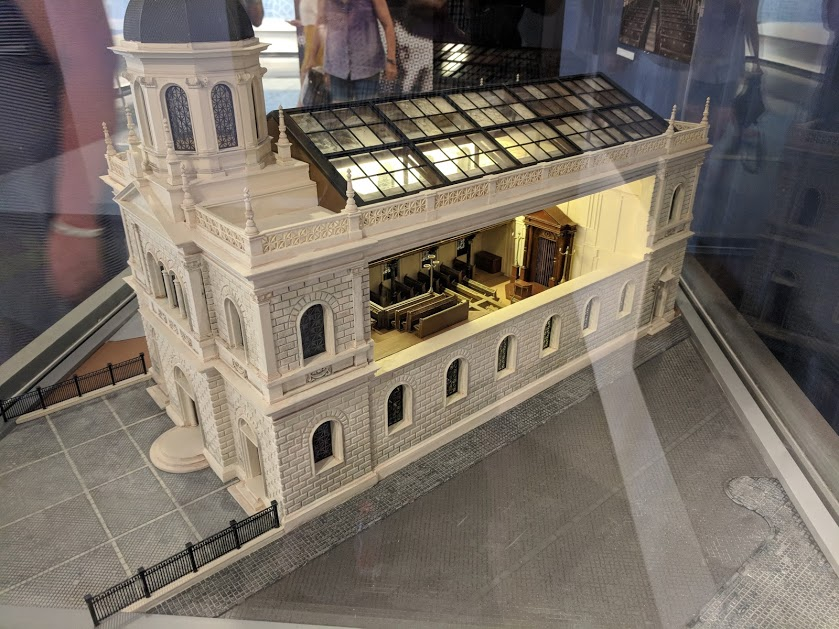
Synagogue in Vienna, Austria
The Synagogue room also showed videos of Jewish worship.
Capernaum Synagogue
The final room was on photography. It showed early photographs of Israel, and also photography from battle zones in Europe and Central America.

Monday, May 21, 2018

Shavuot, A Summer Festival

Today is Shavuot, the summer harvest festival celebrated in Israel from antiquity. God told Moses to command the Hebrews, “Count off seven weeks from the time you begin to put the sickle to the standing grain. Then celebrate the Festival of Weeks to the Lord your God by giving a freewill offering in proportion to the blessings the Lord your God has given you. And rejoice before the Lord your God at the place he will choose as a dwelling for his Name.” (Deut. 16:9-11)
Flowers in the Golan

The Jews have taken this celebration as a time as an opportunity for thanksgiving, remembering that God is the provider of all good things. Children wear wreaths of flowers around their heads to celebrate the beauty of nature during the days leading up to the festival of weeks. Christians, without realizing it, count the omer and call the day of first fruits Pentecost.
Pomegranate Tree with flowers and young fruit

The Mishnah relates that before the destruction of the Temple in 70 AD, the Festival of First Fruits was a community gala when people of Eretz Yisrael (the land of Israel) would make a pilgrimage to the Temple in Jerusalem bringing an offering from their agricultural produce at the time of their local harvest.
Banana Plantation in Galilee
A local official would cry out on the day after the first harvest in each local community, “Rise and let us go up to Zion, to the House of the Lord our God.”
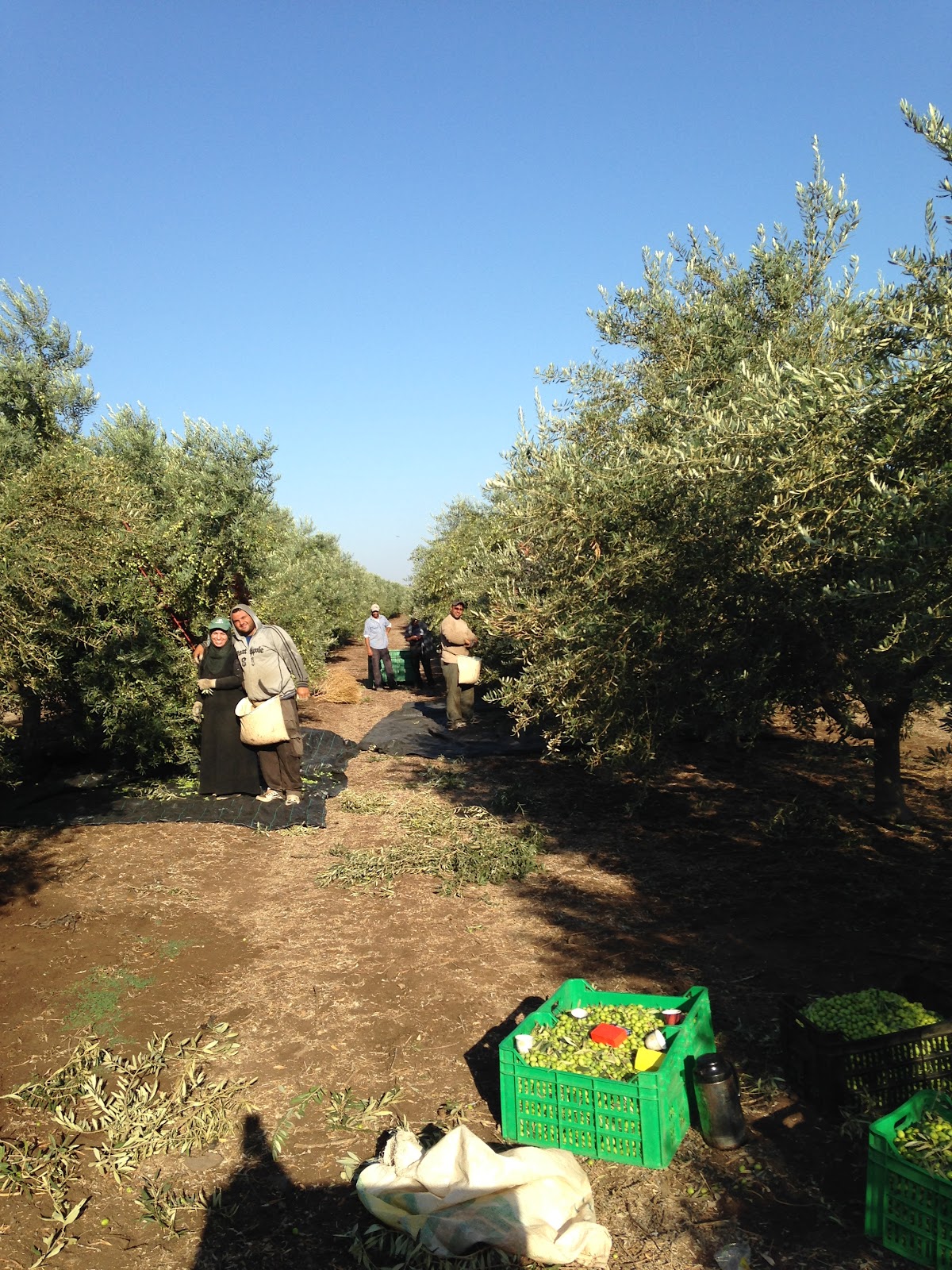
Olive Harvest in Israel
The offering of first fruits would be placed on a cart, drawn by an ox which was decorated for the occasion. Its horns were covered with gold, an olive crown was placed on its head, and fruits and wreaths adorned its back and the cart.
Flowers in Golan
The local official and a musician who played the halil (flute) would lead a procession, followed by the decorated ox who pulled the cart, which was followed by the people of the community until they reached the vicinity of Jerusalem. Along the road a team of greeters would join the procession and enlarge the music and joy of the celebration until the entire procession reached the gates of the city.
Damascus Gate, a main entry into Jerusalem from the north
At the gates of Jerusalem an important official met the procession and led them to Temple Mount. Along the streets of the city tradesmen would greet them with a welcome of peace, with singing, and probably with encouragement to examine their wares as the procession left town.
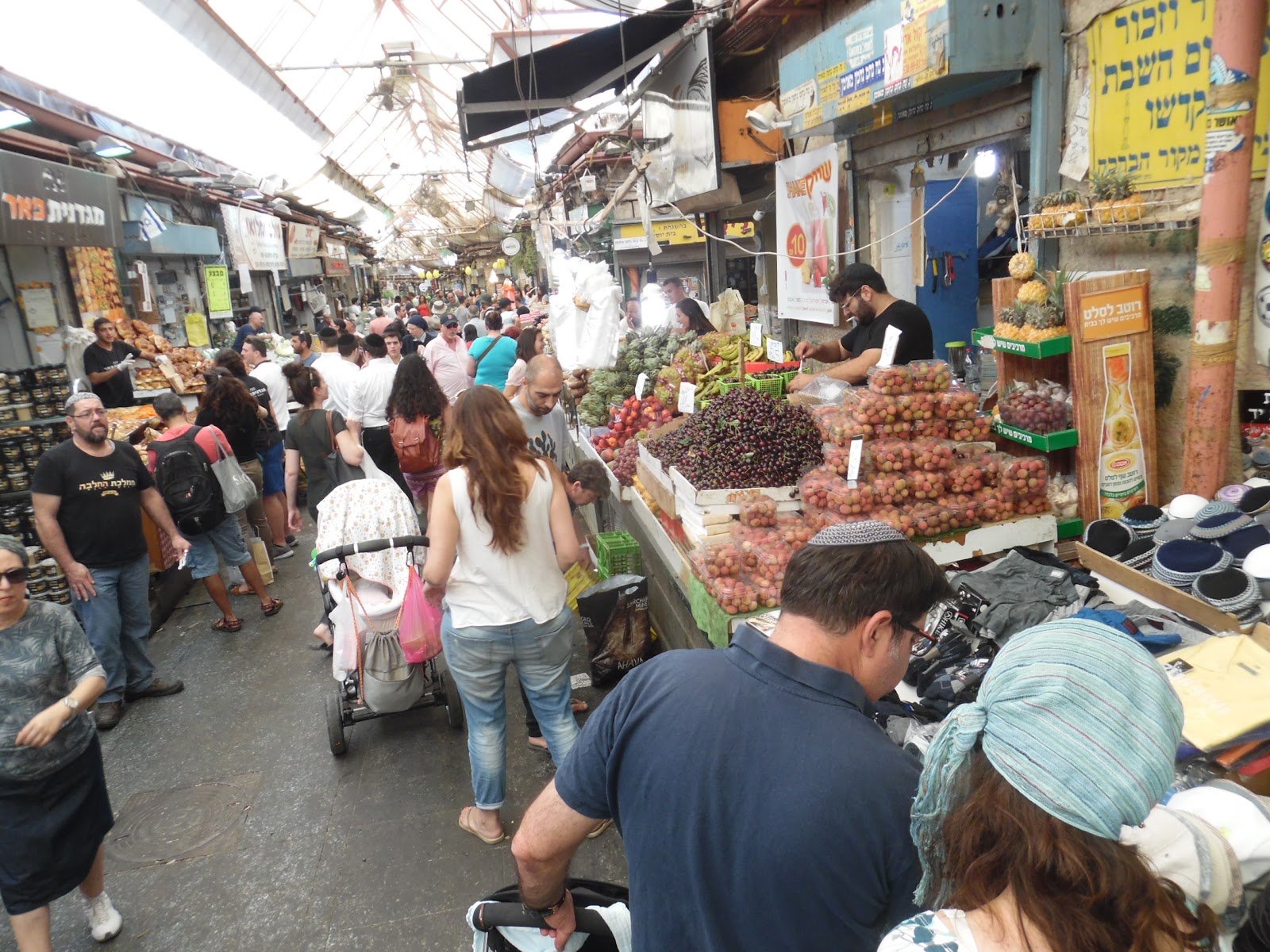
The Shuk, Mahane Yehuda Market
Following the destruction of the Temple, the Jewish people were faced with the dilemma as to how God should be honored without a designated meeting place to honor The Name. Rabbi Meir suggested (Exodus Rabbah, chapter 31) that the festival should be celebrated as the day the Torah was given on Mount Sinai. It has been noted that this event occurred about three months after Passover, which preceded the exodus from Egypt.
Shavuot Program in Haifa
In response, many Jews have added an all night study of Torah to the celebration of Shavuot. They also encourage partaking of dairy products (such as ice cream and cheesecake) to enhance the celebration.

Saturday, May 5, 2018

A Trip to Haifa

Today’s trip started in Joppa, where we are staying. We walked over the hill to get the car, and found a couple of places to stop and get pictures. Yafo is a beautiful Mediterranean city with narrow streets, interesting houses, and great views along the coast. I have several stories in a book compiled for our tour group (and any other tour group going to Israel), Israel: Stories for Your Journey.
A Talmudic School on Street that leads to the Yafo Shoreline
This of course is near the place where Peter went in the morning to enjoy the breeze and view, and saw a sheet coming down from heaven with various kinds of unclean animals.
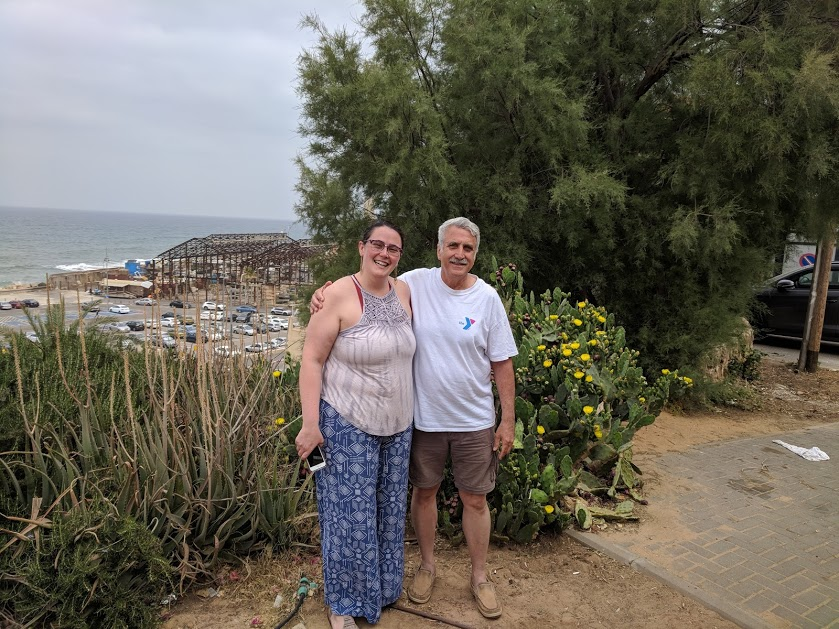
Cactus Flowers on the top of the hill by the beach
After breakfast, we traveled north. 
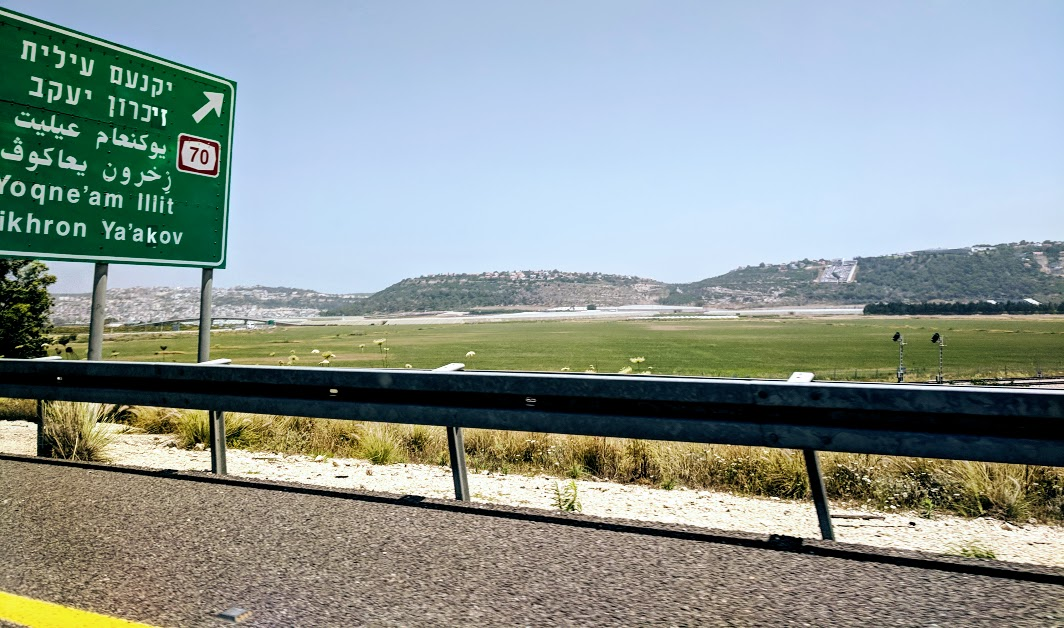
Yokenan Pass, which leads from the Via Maris to Jezreel Valley
Our objective for the day was Haifa. Our first stop was at Sarah’s apartment.
Housing in Haifa
She has a great view from her back window.
Looking North across Mount Carmel
From the top of the hill Elijah was able to watch for rain over the sea. Many people live on the hill now. This was also the place where the Giro d’Italia was run today. We saw some of the closed off streets.
Mount Carmel from the beach
The beach where we ate lunch was along the beach.
Places to eat along the beach near Haifa
And then walked down the beach to enjoy the cool water and the views.
A rocky place along the Seashore

Then we headed back to Tel-Aviv. We took a local road because there was a wreck on the main road as people were returning from Shabbat and coming to Tel-Aviv during the race.

Wednesday, February 7, 2018

Joppa Gate

Pass through, pass through the gates! Prepare the way for the people. Build up, build up the highway! Remove the stones. Raise a banner for the nations. (Isaiah 62:10)
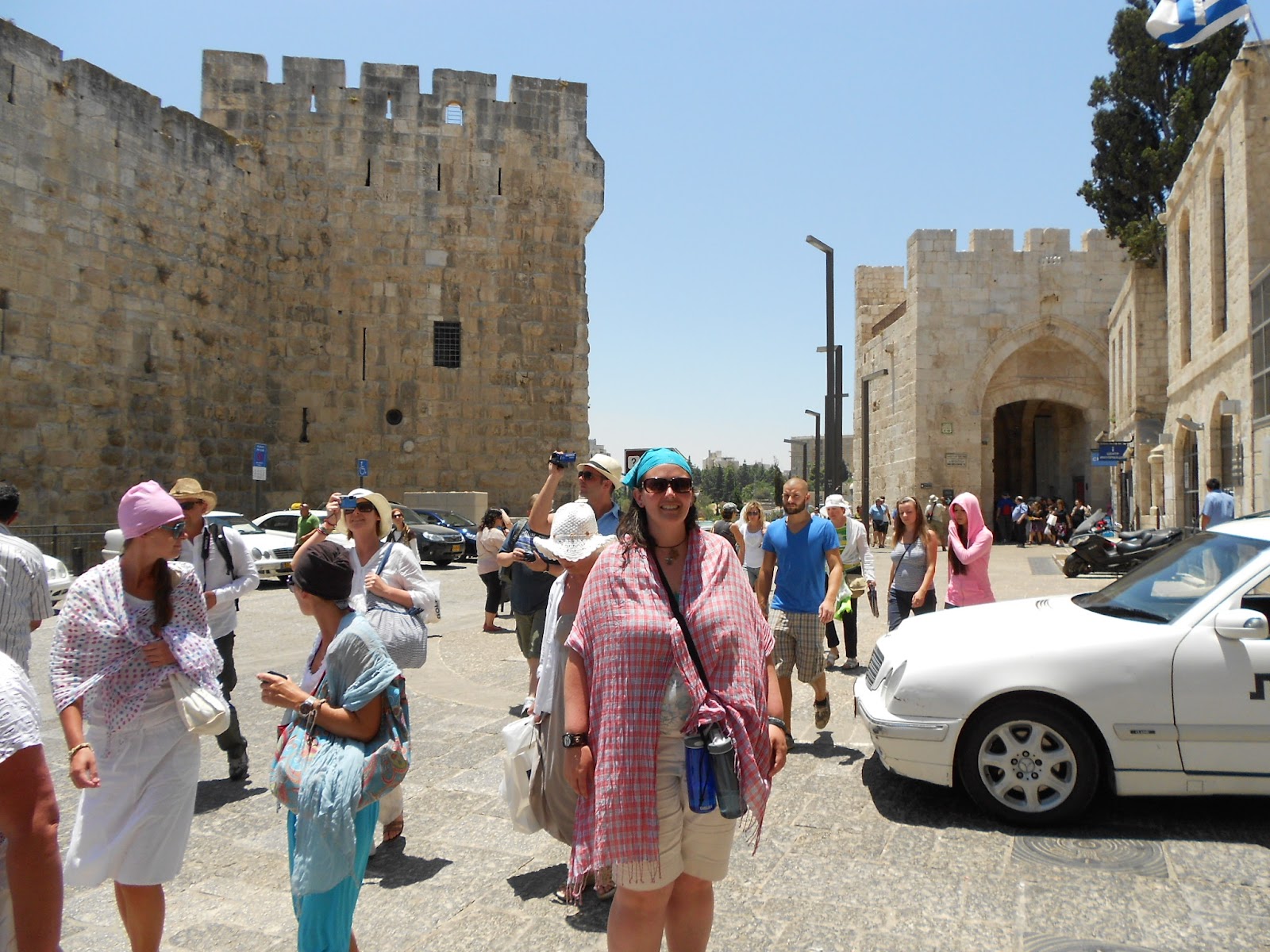
Jaffa Gate from inside the walls of Jerusalem
The Jaffa Gate is, in a way, the international gate of Jerusalem. The name shared most often today motions away from the city to the port city of Jaffa (and beyond that to Caesarea), from which travelers arrive into Eretz Yisrael from all over the world. From the days of King David, when King Hiram of Phoenicia passed by this gate, even until today travelers and others have written about the beautiful Jaffa Gate.
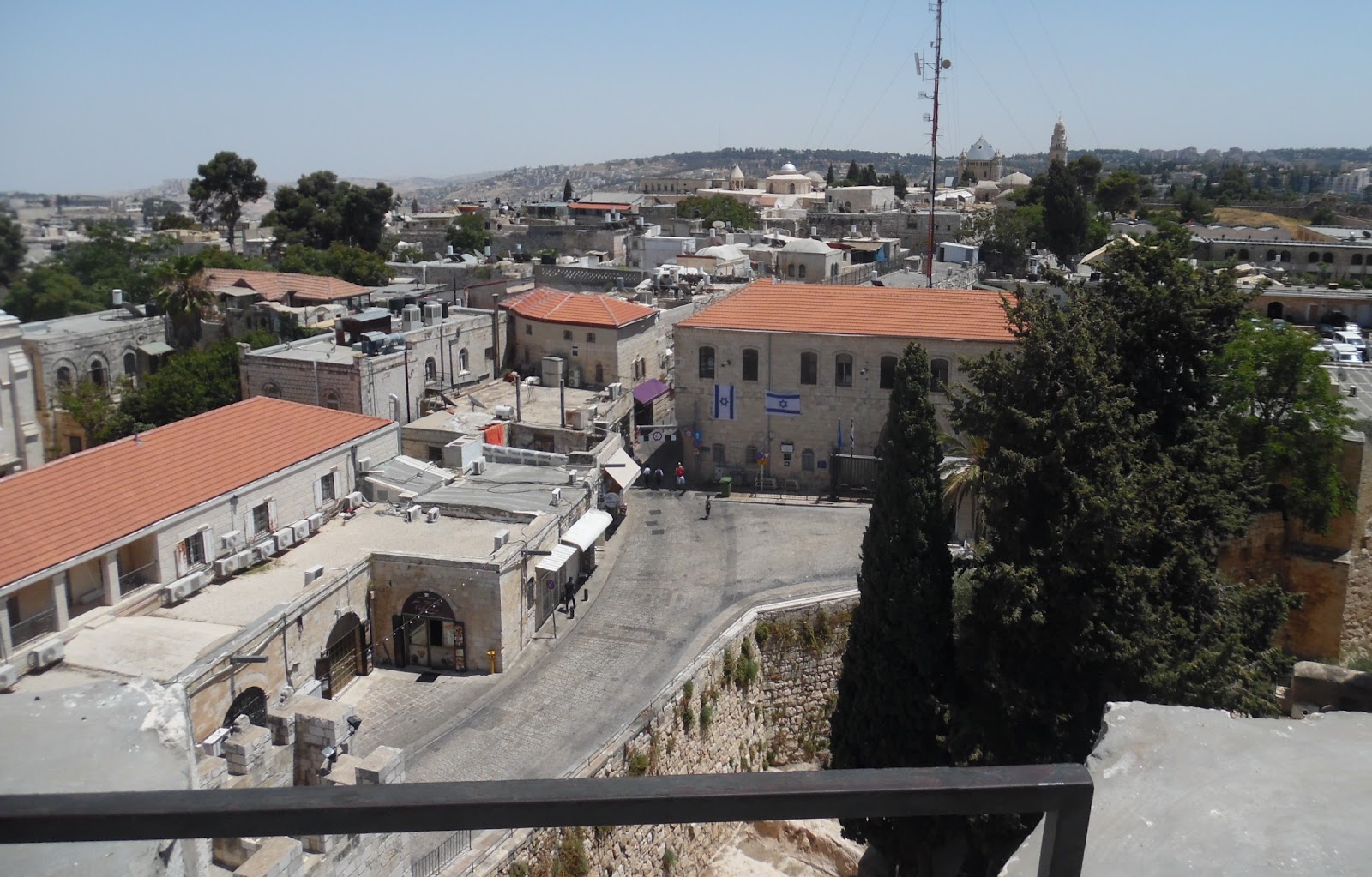
Looking down from the top of the Rampart Walls
At one time the gate was heavily guarded, with a double entry and heavy wooden doors which sat upon bronze hinges. Towers guarded this entrance, portions of which still stand today. King Herod named these towers Phasael (145’ high), Hippicus (132’) and Mariamne (74’) after his brother, a friend, and his favorite wife. Of these, only a portion of the Phasael tower stands today, and the gates were removed to allow Kaiser Wilhelm II easier access to the city in 1898. (More in my book, Israel: Stories for Your Journey)
A must for tourists to Israel
Most of the walls and gates of Jerusalem, which we see today, were ordered to be constructed by Sultan Suleiman the Magnificent who ruled the Ottoman Empire in the sixteenth century. A story is told of how he found the walls of Jerusalem in ruins after being visited by four lions in a dream. He sent two architects to build a wall following the original course of the city’s protective enclosure. When completed the Sultan visited the city, and when inspecting the work found it satisfactory with one exception. The Tomb of King David was left outside the walls. The two architects were hanged and put to rest in graves outside the Jaffa Gate.
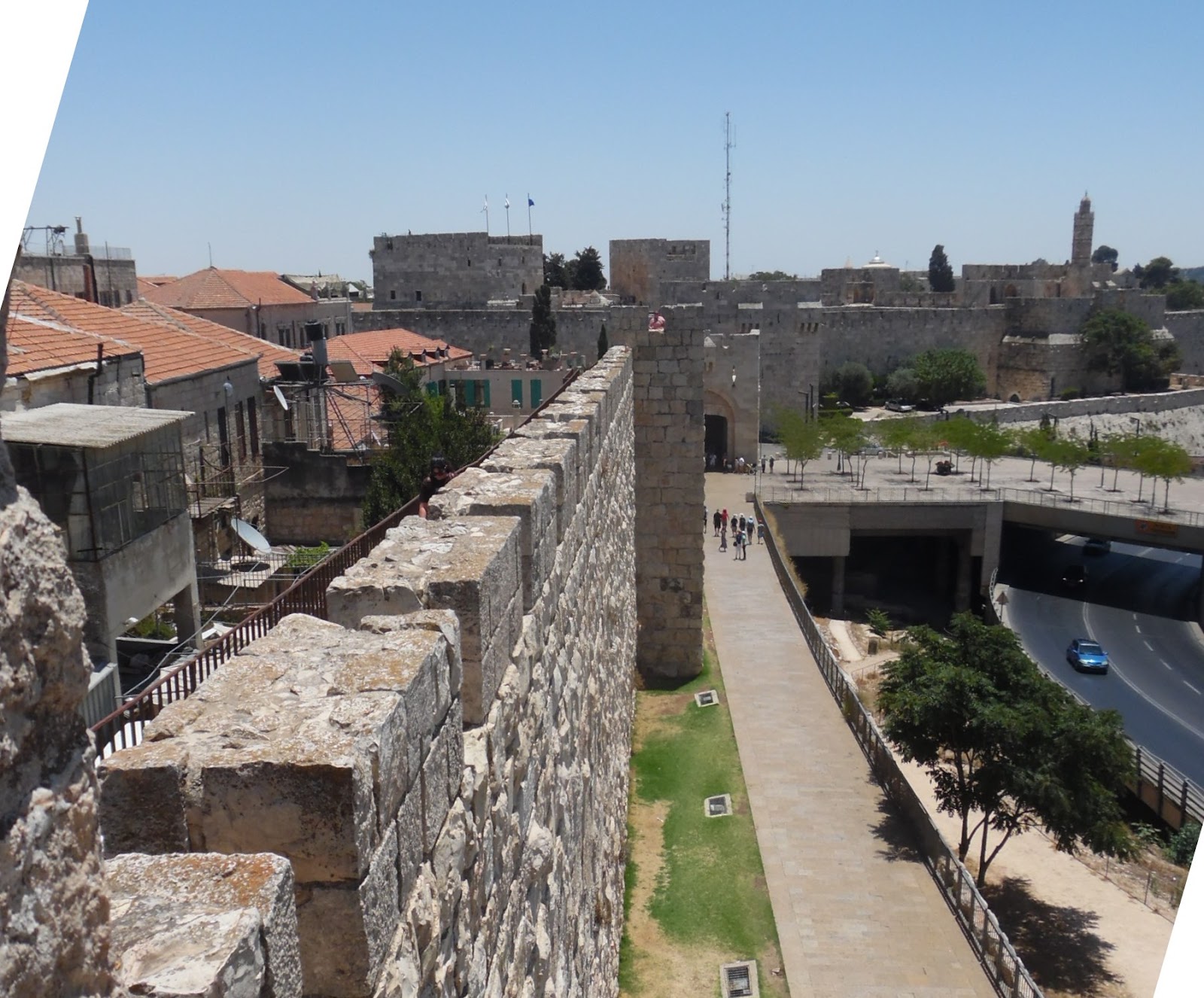
The outside of Jaffa Gate from the top of the walls
Most people pass in and out of the wide Jaffa Gate with no notice of these two graves, for this international gate is the portal into Jerusalem’s oldest and one of it’s newest marketplaces. The walls of Jerusalem contain a vast marketplace spreading out from David Street which leads toward Temple Mount. An entrance to the Mamilla Mall can be found when exiting the old city through the Jaffa Gate. Below the mall visitors will enjoy the fountains, shops and sights of Teddy Park.
Join me for a great tour of Israel

Jerusalem with its gates and holy sites is worth a visit. Please join me on my next trip May 5-18, 2018 (click this link for more details). If you can not go, please order my $2 book, Israel: Stories for Your Journey.