Showing posts with label Herod. Show all posts

Monday, October 29, 2018

A Dig at Zippori

During my two month visit to Israel, I participated in four archaeological digs, at Gezer, Tel Hadid, Zippori and at Tel Dan. My favorite experience was the work at Zippori.
Arches Reservoir at Zippori
Zippori was the capital city of Galilee in the first century AD. It is located a few miles from Nazareth, and many feel that Joseph the father of Jesus worked on government projects at Zippori.
Merchants sidewalk along main street
The cardo of this city is amazing. It is actually two roads that cross each other at the main intersection. Buildings have been recovered along both roads.
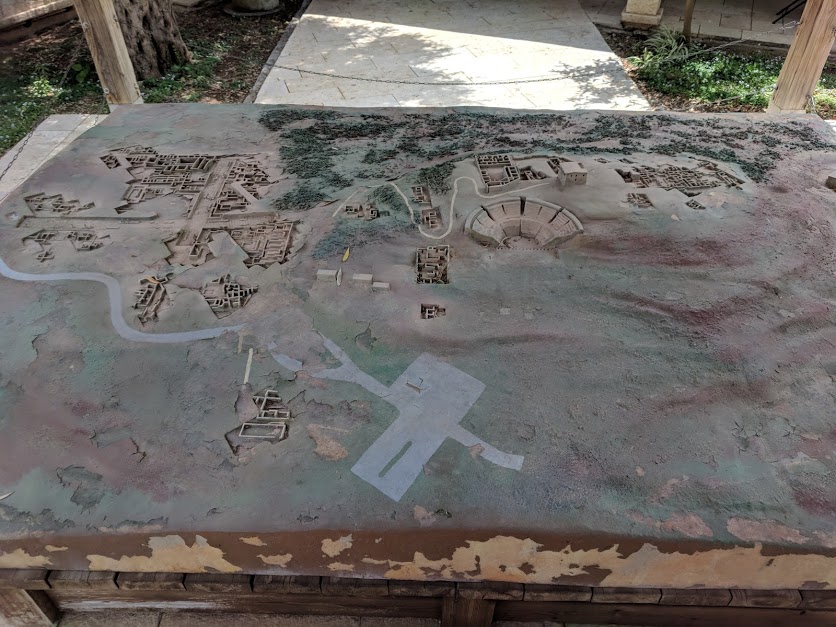
Site map of Zippori
The city also contains amazing mosaics. Some are located in what is called the Nile house.
Centar at the Nile House
Other mosaics can be found at the Dionysus House.
Mona Lisa of Galilee
There is also an amazing mosaic in the Synagogue.
Mosaic on the floor of the Synagogue
We worked at the first century water project. This is a cistern that held water that flowed down hill from spring along the Nazareth ridge.
Nazareth Ridge above Zippori
There are actually two cisterns. The first was untouched since the first century.
Arches Reservoir at Zippori
The second was developed into a wine press.
First view of the Arches Reservoir
Wine was stomped at one end of the cistern
First view of the Arches Reservoir
It flowed into a mikvah that was more than seven feet deep.
Shade tarp over the Arches Reservoir
There was also a stone reception area with pavers.
Measuring the Mikvah
We helped excavate the mikvah area.
Debris and stones above the Mikvah
It started by clearing roofing members which fell. The roof was a system of arches and coverings to keep the water in the dark until it was needed.
Digging Team at Zippori
We hauled lots of dirt out of the system, and also rocks. We found coins, pottery and other items as we dug.
Pottery found during our dig at Zippori
We worked with several archeologists who taught us about the site. They showed us the difference between first and second century plaster, as well as showing us areas of the cistern (structure) that was not plastered.
Filling dirt buckets at Zippori
I have included some stories from the hills of Galilee in my new book, Israel:Stories for Your Journey.
New book on Israel
Some of the places I visited during the two weeks of my tour were places I visited before, but since I helped plan the tour, there were some new places also.

Friday, May 5, 2017

Masada

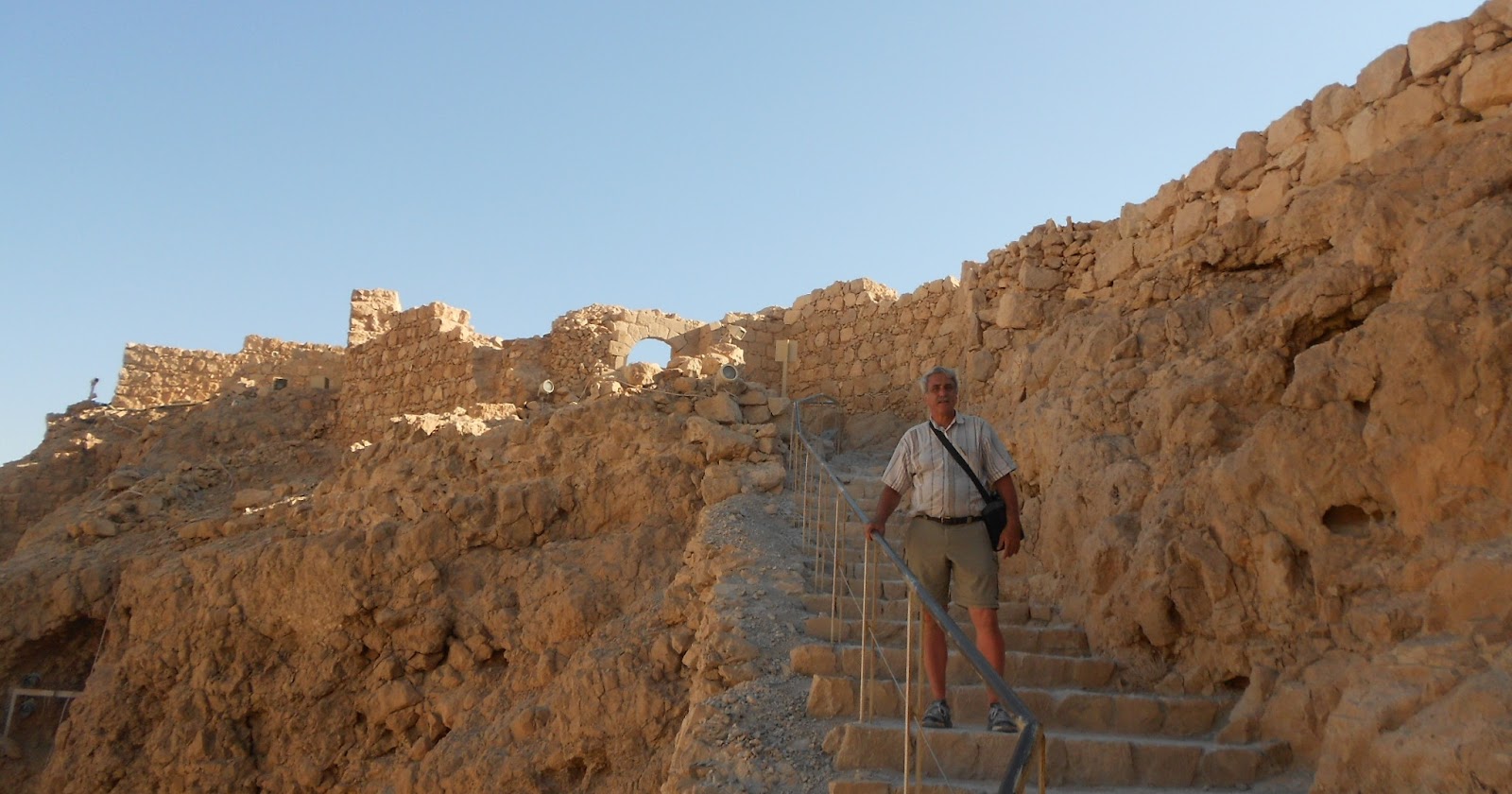
You will see many beautiful and historic sites if you join me during a 14 day trip to the Holy Land in May 2018. One of the fascinating places we will visit is Masada, a location first fortified by Hasmonean Alexander Jannaeus. The fortress was captured by Herod the Great and greatly expanded. We will see Herod’s fortress as we visit the top of Masada.
Masada is a geological formation called a horst, or a raised area which sits between two faults. Masada reaches more than a thousand feet above the Dead Sea of the Great Rift Valley fault zone. The top is a large mesa like plateau which contains palaces and housing for soldiers and staff. A large cistern system is contained within the mountain to collect and conserve water for the people who reside there.
We will approach Masada on our  14 day trip to the Holy Land from the east along the Roman siege ramp. We will see a Roman campground, catapult and a memorial to the Zealots who died in 73 AD.
At the top of the siege ramp we will enter through a gate, observing along the way guard walkways which were outside the walls. The gate is near the Western Palace, which we will tour and see the section of wall which was breached by Rome. Further south is a swimming pool, a southern fort and a mikvah pool.
Further north we will visit a barracks and the Synagogue which was used for worship. From this spot we will have an excellent view of the Dead Sea and the far shoreline. We will stop along the Northeastern side of the wall and hear a speech given to the Zealots in 73 AD just before the Romans breached the wall into Masada.
Beyond the Synagogue are storage areas, a bath house, the northern palace and administrative areas. We will have plenty of time to walk around Masada before descending either by the snake path or on a cable car. We will end up in the visitor center near the Dead Sea.
From Masada we will drive north along the Dead Sea to En Gedi, Qumran, and a beach where we will float on top of the water. The Dead Sea is lowest habitable place on earth. The air is very dry and oxygen rich. The water is mineral heavy which enables swimmers to float.
To sign up for the 14 day trip to the Holy Land in May 2018 use the link provided. Visit the Travel Brochure to see our schedule, then visit the registration page to claim a trip discount your initial deposit (details in the travel brochure).

Wednesday, March 22, 2017

Maresha and Bell Caves

The land of Israel is filled with natural beauty. One of the sites we will visit on our 14 day trip to the Holy Land in May 2018 are the bell caves at Bet Govrin. These huge caves are the result of underground quarries during the Byzantine and early Muslim periods. Over the years erosion has created bell shaped interiors with walls from the chalk compound that makes up the caves.
The Bell Caves are located near the older town of Maresha built by Rehoboam (2 Chronicles 11:5-8). The area was attacked by Egyptian Pharaohs Shishak and Osorkon. The Madaba Map records Maresha as the home of Micah the prophet.
After the assault by Nebuchadnezzar Edomites moved into abandoned cities in the region. The region became known by the Greek term Idumenea. John Hyrcanus conquered the region in 112 BC and forced Judaism upon the residents.  King Herod the Great, who was a son of a converted Idumaean consolidated power and showed favor to Maresha.
During the New Testament era Maresha was able to capitalize on its relationship with King Herod and his relationship with the High Priests of the Temple, especially his relationship with Simon Boethrus. Dove columbarium caves were excavated and raising these birds for food and Temple sacrifice became a major industry. The columbariums are filled with thousands of roosts so the birds can rest inside and find food outside. We will walk through a large roosting cave while we are on our trip to the Holy Land.
Bet Guvrin-Maresha National Park is filled with history and interesting sights. In addition to the Bell Caves and Columbarium Cave there are olive press caves, bathtub caves, Sidonian caves, and a Maze Cave from the Hellenistic period. Caves have been carved and used in the region from prehistoric times to the present. Caves were used as a hiding place for troops commanded by Polish General Wladslav Anders during World War II. There are many ancient housing areas including Tel Maresha, Eleutheropolis and Bet Guvrin. Kibbutz Bet Guvrin is located just outside the National Park.
Maresha is in the Judean Hills and the Shephelah region of Israel. It is in the Guvrin Valley at its intersection with what is known as the Parallel Road.  Guvrin Valley, also known as Wady el-`Afranj leads from Ashdod to Hebron.

As we travel through the hill country and through the various valleys we will gain an understanding of this region’s importance in both Biblical and modern eras.