Showing posts with label Pilgrimage. Show all posts

Wednesday, March 28, 2018

The Meeting at the Golden Gate

"In the records of the twelve tribes of Israel was Joachim, a man rich exceedingly; and he brought his offerings double, saying: There shall be of my superabundance to all the people, and there shall be the offering for my forgiveness to the Lord for a propitiation for me." (Gospel of James 1)
View of the Golden Gate from the Mount of Olives
According to an ancient legend a beautiful love story takes place between Joachim, a shepherd who tended flocks near Nazareth, and Anne, the daughter of Matthan the priest at the Golden Gate. The tale about the couple relates that they had been married a long time, and loved each other deeply. They were happy and their lives seemed perfect in every way, except that the they were childless. The Joachim and Anne had hoped and prayed for a child, but over the years had become satisfied, because of their love for God and for each other. The accepted as fact that it was not the God’s will for them to have children.
The Vision of Joachim
The Golden Legend, a book of hagiographies by Jacobus de Voragine completed in about 1260 AD, tells the story of Joachim and Ann. It relates how one day when Joachim went to the Temple during the Feast of Tabernacles in order to offer a gift to God, a priest told him his offering was not acceptable because of his wife’s barrenness. The shepherd, who was very dedicated to God was highly distraught, for his relationship with God was pure. He wondered why the Lord would not accept an offering given in love.
The Golden Gate entrance to Temple Mount
Joachim went to pray, and read the stories of Abraham, Elkanah, and Manoah, Each of these men’s wives, although barren for many years, bore sons in old age. Upon understanding the Biblical record of these couples, Joachim realized his offering was acceptable, and immediately returned home. He selected ten of his best lambs and went to make an offering at the Temple.
View of Jerusalem from Mount Scopus
At the same time Joachim’s wife Anne became depressed, went out to the garden and sat down under a laurel tree to pray. While she was in prayer, an angel of the Lord came to her and said, “Anna, Anna, the Lord God has heard your prayer. You will conceive and give birth to a child who will become famous in the world.”
Map of Jerusalem in Temple times
Immediately Anne arose and went to the Temple to pray. As she approached the Golden Gate and was about to enter, she saw Joachim arriving at the same gate with ten lambs from the flock. The two embraced, and Anne asked her husband why he was bringing the offering. He said he had seen an angel who told him, “Joachim, the Lord God has heard your prayer.” The pair entered the Temple in order to give thanks to God.
Joachim meets Anne at the Golden Gate
Nine months later Anne gave birth to a daughter and gave her the name Mary because the years of bitterness and waiting had come to an end. The elderly couple cared for their daughter and brought her up in the Lord. When she became a young woman she was betrothed to a carpenter named Joseph, and from this holy couple was born the Child named Jesus.
Over 250 great stories about Israel

More about this anecdote, and other stories related to the Holy Land can be found in the new book, Israel: Stories for Your Journey, available on Kindle for $1.99.

Friday, August 25, 2017

The Sea of Galilee

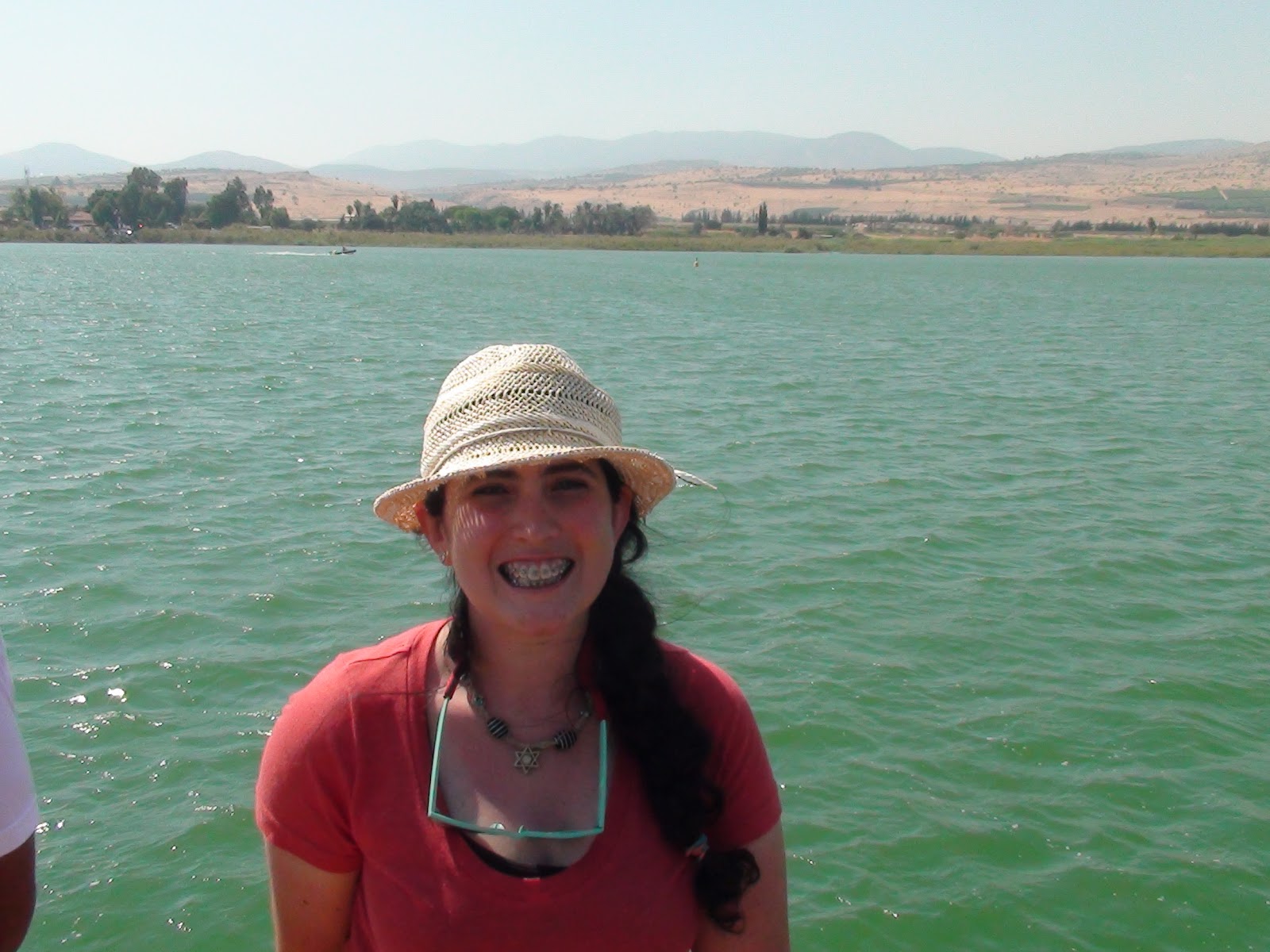
A voyage on the Sea of Galilee will be one of the activities during our 14 day trip to the Holy Land in May 2018. This body of water, also known as Lake Kinneret, Sea of Ginosar, or Lake Tiberias is a large freshwater body which was gone out upon frequently by Jesus and his disciples. Lake Kinneret was an oasis along a route used by ancient travelers through the land. An excursion on the Sea of Galilee is a highlight for many travelers to Israel.
The Sea of Galilee from Ginosar
The Sea of Galilee is a very wide spot in the Jordan River basin.  The river enters on the north side of the Sea near Bethsaida and exits on the south side of the sea near Kinneret. Within the pool of Tiberias, the collected water is 13 miles long and 8 miles wide. The level of the water sits at 700 feet below sea level, with a water depth which reaches 140 feet. The basin is made largely of basalt rock which can be picked up from the bottom as smooth stones.
The Sea of Galilee from Maagan Holiday Village
Lake Kinneret sits along the main trade route from Mesopotamia to Egypt. Caravans would have traveled along the Euphrates river, across the desert near Damascus, down the Hula Valley, and through Galilee to the Horns of Hattin and the Jezreel Valley. Settlement in the area has existed since prehistoric times with the archeological site of Ohalo at the southern end of the lake being called “one of the best preserved hunter-gatherer archaeological sites of the Last Glacial Maximum.
The Sea of Galilee from the East
During New Testament times, the Sea of Galilee was known for its fishing industry. Josephus records that as many as 230 fishing vessels sailed on the lake daily. We know the names of several fishermen from the New Testament including Peter, James, John, Andrew, and Zebedee. They caught a variety of fish including Musht, Biny, and Sardine.4
The Jesus Boat at Ginosar
On our trip we will visit the museum at Kibbutz Ginosar, where we will see “the Jesus Boat,” a fishing vessel which dates to the time of Jesus. This boat, made from twelve types of wood, is in good condition for its age. We will watch a video detailing its recovery and see the site where this boat was found.
The Jesus Boat at Ginosar
During our voyage on the Sea of Galilee, we will become acquainted with the surrounding villages as seen from the sea. We will enjoy watching windsurfing and other sailing endeavors from our boat. We will hear about the storms often stirred up because of the unique geography of the region and we will be told the story of how Jesus calmed the sea.
Looking north from a boat on the Sea of Galilee
The journey on the Sea of Galilee will help us visualize where a major portion of the Gospels took place. Throughout this journey we will not only walk where Jesus walked, but we will also ride a boat atop the lake where he often sailed. To find out more about the trip, click this link. To sign up for the trip click here. I hope you will travel with us during our 14 day trip to the Holy Land in May 2018.

Friday, August 18, 2017

Capernaum

In May 2018 I will be taking a group on a 14 day trip to the Holy Land. During this trip we will visit the Galilee region and Capernaum, a city where Jesus lived for several years. This city on the shores of the Sea of Galilee is an interesting place to visit. The site is maintained by the Franciscans, who have added walkways and benches and maintained the landscape so the story of Jesus’ residence can be told without too many modern intrusions.
Gate at the Franciscan Monastery of Capernaum
During our visit to Capernaum, we will enter the archaeological site through gates situated by a Catholic church. Once on the property we will be seated on shaded benches where our tour leaders will explain what can be seen at the site and share associated Bible stories so we can take away a memorable experience.
Shade trees which protect seating area of Capernaum
From the benches we will be directed into a fourth century synagogue constructed from imported limestone. Limestone was chosen for the exterior of the Synagogue to give a white (pure) appearance in a village constructed mostly out of the black basalt rock, which was easily available in the region. The fourth century building is well-maintained and enables the visitor to walk within and understand construction and practices in ancient places of worship. Tall pillars and an intact anterior provide photo opportunities and an ambiance to the visit.
Anterior of the Capernaum Synagogue
On the south side of the Synagogue, a portion of the earlier basalt synagogue has been uncovered where visitors are able to see a portion of the building in which Jesus and the disciples worshipped.
Remains of a first century synagogue at Capernaum
Outside the Synagogue, we will walk through a large area of foundational ruins. Many of the foundations are several feet in height and display steps and other features which will help us visualize the city Jesus called home (Matthew 9:1)
Ruins of Capernaum from the Synagogue
Over one area of ruins we will be able to enter a twentieth century church which sits above a residence believed to be the home of Peter’s mother-in-law. The modern church has a glass floor which allows visitors to see foundations of a first century home and a fifth century church. Diagrams give explanation of the existing foundations.
Looking across ruins of Capernaum to the new octagonal church
Beyond the ruins we will be able to walk down to the Sea of Galilee. We will visualize the beaches from which Peter, Andrew, James, and John departed on their fishing excursions. These shores are also the place recorded in Matthew 4 where Jesus meets Peter and says, “Come, follow Me, and I will make you fishers of men.”
Looking from Capernaum across the Sea of Galilee
On our trip within Galilee we will see Capernaum from several different vantage points. We will see the village from our boat ride on the Sea of Galilee, from the top of Mount Arbel, and if we strain our eyes from Kibbutz Ma’agan, where we will spend three nights. Once we walk through the village of Capernaum in Galilee, each sighting will give us a new perspective as we discover the shores along which Jesus often walked.
A view of Capernaum from the top of Mt. Arbel
If you would like to join us on our 14 day trip to the Holy Land click this link. To sign up for the trip click here. I hope you will travel with us during our 14 day trip to the Holy Land in May 2018.

Thursday, June 15, 2017

Shiloh, where Samuel served

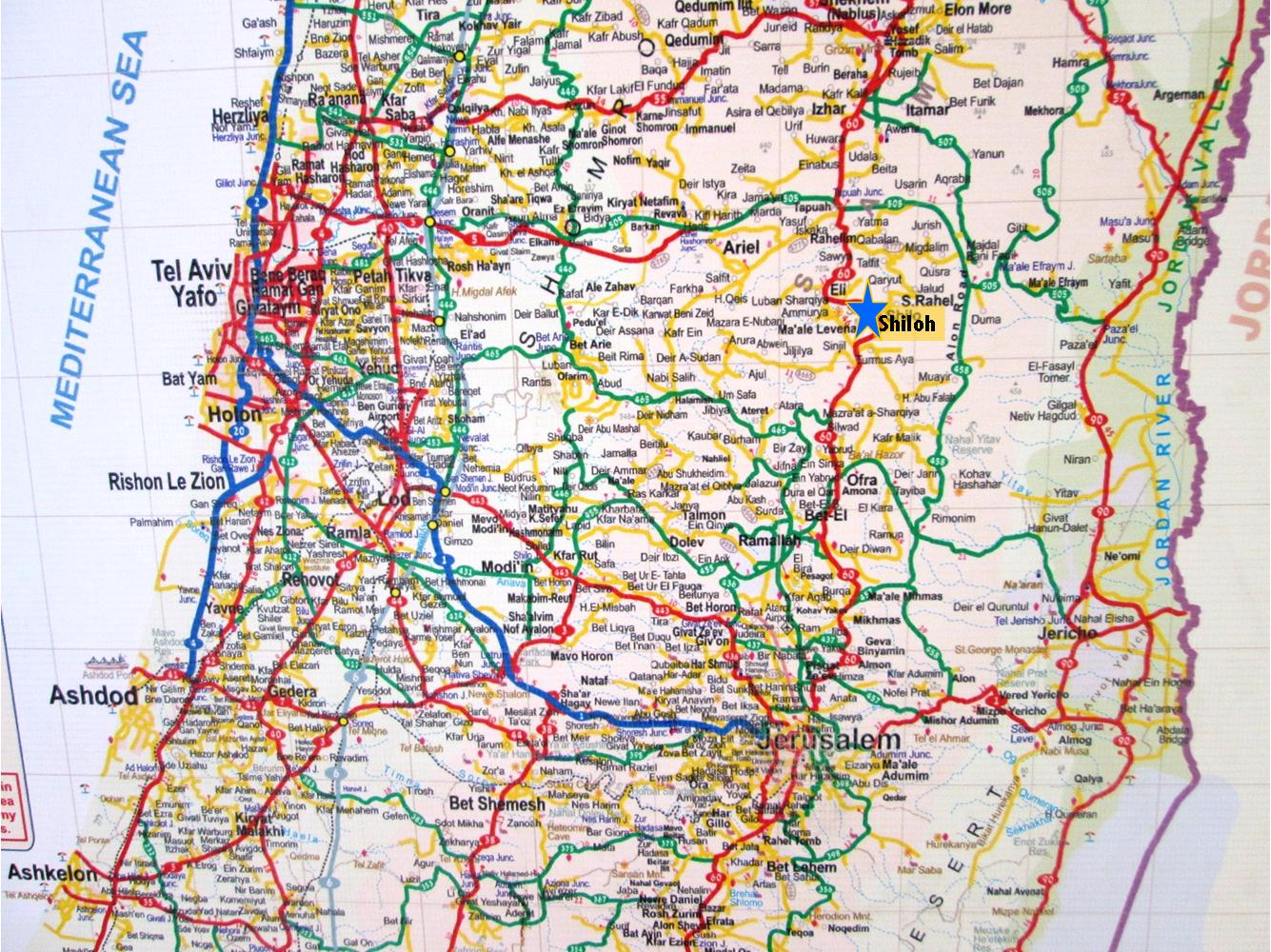
Shiloh is a place I am most looking forward to visiting during a 14 day trip to the Holy Land in May 2018. Shilo is where the Tabernacle was located from the time of Joshua to the days of King David. Shiloh is on the Central Ridge highway traveled by Abraham, Jacob, many of the judges, kings and by Jesus and his parents.
The Central Ridge Highway (Israel Route 60) goes through the heart of the country where the people lived, not along the coast or through the Jordan River Valley. We will be in proximity of GIlbeah, Rama, Mizpah, Bethel, Michmash, Ophrah on our journey to visit Shiloh, about 25 miles north of Jerusalem.
In pre-history there have been various finds at Shiloh. These include an ancient cave where people lived. This primitive settlement grew into a walled city by the time of Joshua and a cultic site. The site was conquered in the conquest as Joshua was directing the sons of Joseph, descendants of Ephraim and Manasseh to have enough faith to conquer their assigned territory.
Joshua 18:1 tells us, “The whole assembly of the Israelites gathered at Shiloh and set up the tent Shiloh meeting there.” This was the beginning of worship at this site and continued for 369 years. The tabernacle was not moved, which probably added to the tent lasting that long. The people of Israel visited this site for the three harvest festivals: Passover, Shavuot, and the Feast of Tabernacles. Josephus says, “Joshua removed his camp to the mountainous country, and placed the tabernacle in the city of Shiloh, for that seemed a fit place for it, because of the beauty of its situation.” (Antiquities 5.1.19)
The Mishnah states, “Shiloh differed from Jerusalem only in that at Shiloh they could consume the lesser Holy Things and the second tithe anywhere within sight (of Shilo); but at Jerusalem only within the city wall. But both here and there the Most Holy Things could be consumed only wiithin the curtains. After the sanctification of Shiloh it was permissible to set up high places elsewhere; but after the sanctification of Jerusalem it was not permissible. (Megillah 1.11)
The town of Shiloh is located in the heart of today’s West Bank. In the days of the Judges this area was the seat of government. Samuel traveled from Rama to “Bethel and Gilgal and Mizpah, and he judged Israel in all these places.” (1 Sam 7:16) Judges Ehud, Deborah, Gideon, Jair, Jephtah and Abdon were from the West Bank tribes of Benjamin, Ephraim and Manasseh. We will visit the land they protected and called home.
Most people would be familiar with the story of how Samuel the prophet came to live in the Tabernacle and care for its contents. Eleazar, son of Aaron, his son Phinehas, Abijah, Bukki, Uzzi, Eli, Ithamar and Ahitub probably served as High Priests at this site. During the time of King David the Tabernacle and the Ark of the Covenant were taken from Shiloh and relocated to Jerusalem.
At Shiloh we will see an ancient synagogue and the Tel of the city. The gates of the city have been uncovered as well as Eli’s grave. It is thought that a flat area carved from rock was the location for the Tabernacle.

I look forward to traveling to Shiloh as I have not been there before. The stories of Shiloh are memorable because they predate Jerusalem. This is the Tabernacle King Saul visited and David would have come to as a boy. We will see many unique sights while in Israel and gain new insights into the Bible. For more details visit our our Israel Tour page at www.KosheCopy.com. Sign up today for a discount!

Monday, June 12, 2017

Traveling the West Bank

On this year’s 14 day trip to the Holy Land in May 2018, we will visit areas and sites not included on many tours. One of these areas is the West Bank north of Jerusalem. Our objective on the day we enter the West Bank is to see Tel Shiloh where the Tabernacle of Moses once stood. Along the way we will talk about the hill country of Judea, Benjamin and Ephraim.
We will travel the Central Ridge Highway (Israel Route 60) which goes through the heart of the land where the people lived, not along the coast or through the Jordan River Valley. We will be in proximity of GIlbeah, Rama, Mizpah, Bethel, Michmash, Ophrah on our journey to visit Shiloh, about 25 miles north of Jerusalem.
In the days of the Judges this area was the seat of government. Samuel traveled from Rama to “Bethel and Gilgal and Mizpah, and he judged Israel in all these places.” (1 Sam 7:16) Judges Ehud, Deborah, Gideon, Jair, Jephtah and Abdon were from the West Bank tribes of Benjamin, Ephraim and Manasseh. We will visit the land they protected and called home.
The road is called “the way of the Patriarchs” because it was traveled by Abraham, Isaac and Jacob. We know that Jesus used this road as he traveled from Jerusalem to Galilee, stopping at Jacob’s well in Shechem. For Joseph and Mary this route provided the shortest route to Bethlehem. I wrote Joseph’s travel journal in the book Advent Journeys. As our tour bus takes us along this route I will be interested in seeing the road for myself.
The trip from Jerusalem to Shiloh requires a group to go north. The first part of the journey will go through areas which were formerly independent towns, but became suburbs with the growth of Jerusalem. The first town of note is Gibeah which served for 38 years as the capital of Israel during the reign of King Saul. Today the town is called Pisgat Ze'ev and contains the unfinished Royal Palace at Tell el-ful which was to serve King Hussein of Jordan as his summer residence.
Israel Highway 60 goes around a curve to head north. Contained in or near this curve are two of the Levitical towns named in scripture Geba (modern Jeba’) and Anathoth (modern Anatot or Almon). The Bible tells how Jonathan freed Gaba from the Philistines. Later King Asa enlarged the city. Anathoth was the hometown of Jeremiah the prophet.
Continuing north we will pass Mizpah, a place translated “watchtower,” which is the first place on the Central Ridge Highway where Jerusalem can be viewed. Then we pass close to Ramallah, Bet-el and Et-Tel. Ramallah is a Palestinian administrative capital with a population close to 30,000. Beit-el is an Orthodox Jewish settlement placed at this location to honor Jacob, the grandson of Abraham who slept at this spot when he left home. Et-Tel is thought to be the site of the Biblical village of Ai which was destroyed by Joshua after the walls fell around Jericho.
Further north we pass Michmash (modern Mukhmas) where Saul and Jonathan fought the Philistines. Continuing north we pass Ophrah (modern Taybeh), a Christian village in the West Bank. It was near this village that Jesus spent time in hiding after he raised Lazarus from the dead.
Before reaching Shiloh we pass Mazra'a e-Sharkiya, an ancient farming community known as a farming community known for olive orchards, grape vineyards, fig trees and almond trees. As we travel we will learn the history past and present of these villages and the political situation of the West Bank. We will learn many interesting things to take home.

One of our objectives during our 14 day trip to the Holy Land in May 2018 is to see the West Bank and Shiloh. We will hear many stories from the Old Testament, the New Testament, Palestine and modern Israel as we travel this region. This trip to Israel will be unforgettable! Make sure you are included on this trip. For more details visit our our Israel Tour page at www.KosheCopy.com. Sign up today for a discount!

Thursday, May 11, 2017

En Gedi

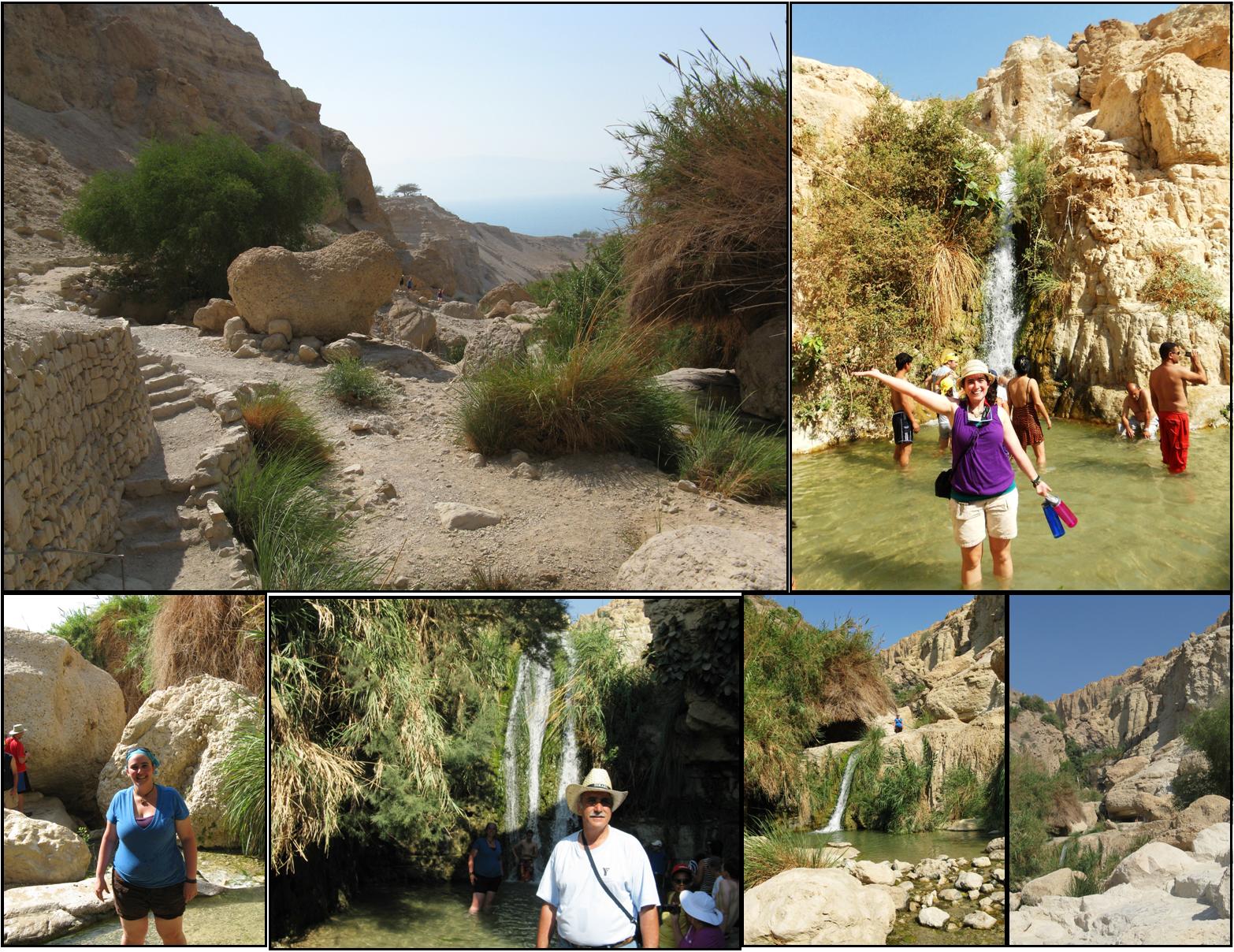
What is more fun than floating in the Dead Sea? A walk up the creek at En Gedi in order to take a dip in the pool at the waterfall. We will take this great walk during a 14 day trip to the Holy Land in May 2018.
The oasis at En Gedi is very ancient. Settlements have been documented along the freshwater streams since the Chalcolithic era or Copper age in Israel. Remains can be found for rich farming communities, Essene schools, Temples, Synagogues, and Roman Villas. It is written that King David used this region as a hide-out, living in caves and partaking of the rich foods found along the cool streams in the area. En Gedi was famous for its Balsam, Date Palms, Henna, and aromatic resins. Solomon wrote, “My beloved is to me a cluster of henna blossoms in the vineyards of Engedi.”
“David went up from there and lived in the strongholds of En Gedi. After Saul returned from pursuing the Philistines, he was told, ‘David is in the Desert of En Gedi.’ So Saul took three thousand able young men from all Israel and set out to look for David and his men near the Crags of the Wild Goats.” (1 Sam. 24) We will walk up Wadi David during our visit at En Gedi.
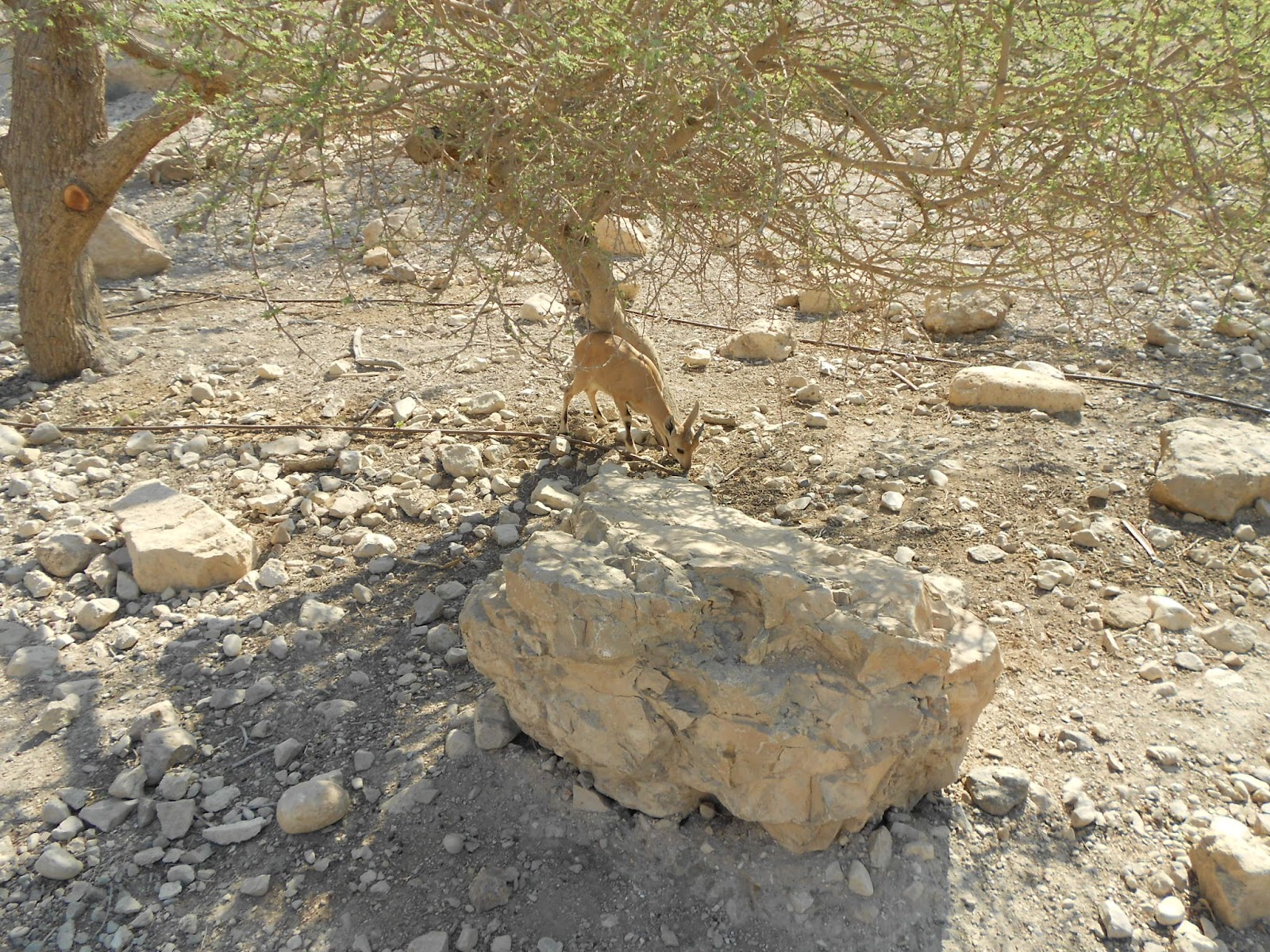
We will begin our walk in a picnic area shaded by acacia trees and Christ-thorn jujube. Because of the water there is an abundance of plants and animals along the wadi. We will observe small antelope and Rock Hyrax or Conies under and in the trees.
After taking time to look at and take photos of the animals we will walk a well laid out trail along the stream. The trail crosses the stream on bridges giving us a closer look at the valley, the plants and the water flowing through shallow pools and  trickling over rocks. We will see the caves in which David camped and trails leading to the Judean heights.
There are many trails which traverse this Ein Gedi National Park which are well laid out and cover the various wadis in the area. The hike for our group will not be difficult, and there are benches along the way. Climbers who have time and are able can ascend along the Zetuya, Ha issiyyim, B ‘nei Hamoshavim, EnGedi or Yishay ascents to Mt. Zenuya on the desert plateau.
We will ascend at a much more moderate path along the creek, taking time as we desire to look back along the trail we have traveled. The views are different as we look up the hill toward the waterfall and look downwards toward the Dead Sea in the distance. Those who desire can wander a little and rock climb on marked trails. The rest of us will easily navigate a gradual ascent.
Our climb will end at David’s waterfall below Dodim’s Cave. We will have time to put or feet in the water, or if prepared we will be able to get into the water and refresh ourselves. From the pool we will be able to stand under the waterfall and look down the canyon to the Dead Sea.

On the completion of our time at En Gedi we will prepare for a swim in the Dead Sea and possibly a visit to Jericho. Fun times are in store for those who join us on our 14 day trip to the Holy Land in May 2018. To sign up, use the link to find more information at www.KosherCopy.com. You will also find links to the trip itinerary and for trip registration.

Wednesday, March 22, 2017

Maresha and Bell Caves

The land of Israel is filled with natural beauty. One of the sites we will visit on our 14 day trip to the Holy Land in May 2018 are the bell caves at Bet Govrin. These huge caves are the result of underground quarries during the Byzantine and early Muslim periods. Over the years erosion has created bell shaped interiors with walls from the chalk compound that makes up the caves.
The Bell Caves are located near the older town of Maresha built by Rehoboam (2 Chronicles 11:5-8). The area was attacked by Egyptian Pharaohs Shishak and Osorkon. The Madaba Map records Maresha as the home of Micah the prophet.
After the assault by Nebuchadnezzar Edomites moved into abandoned cities in the region. The region became known by the Greek term Idumenea. John Hyrcanus conquered the region in 112 BC and forced Judaism upon the residents.  King Herod the Great, who was a son of a converted Idumaean consolidated power and showed favor to Maresha.
During the New Testament era Maresha was able to capitalize on its relationship with King Herod and his relationship with the High Priests of the Temple, especially his relationship with Simon Boethrus. Dove columbarium caves were excavated and raising these birds for food and Temple sacrifice became a major industry. The columbariums are filled with thousands of roosts so the birds can rest inside and find food outside. We will walk through a large roosting cave while we are on our trip to the Holy Land.
Bet Guvrin-Maresha National Park is filled with history and interesting sights. In addition to the Bell Caves and Columbarium Cave there are olive press caves, bathtub caves, Sidonian caves, and a Maze Cave from the Hellenistic period. Caves have been carved and used in the region from prehistoric times to the present. Caves were used as a hiding place for troops commanded by Polish General Wladslav Anders during World War II. There are many ancient housing areas including Tel Maresha, Eleutheropolis and Bet Guvrin. Kibbutz Bet Guvrin is located just outside the National Park.
Maresha is in the Judean Hills and the Shephelah region of Israel. It is in the Guvrin Valley at its intersection with what is known as the Parallel Road.  Guvrin Valley, also known as Wady el-`Afranj leads from Ashdod to Hebron.

As we travel through the hill country and through the various valleys we will gain an understanding of this region’s importance in both Biblical and modern eras.