Showing posts with label Teaching. Show all posts

Friday, February 23, 2018

The Four Sons for Daughters

February is a month of birthdays for our family, both of my daughters were born in the month of February. We celebrate their birthdays no matter where they are in the world. Families are support systems and birthdays are supposed to be fun. Because Purim is next week, I must add that I am sure Mordecai would never forget Esther’s birthday, and probably made sure she had fun.
Spiritual Life and a Relationship with God
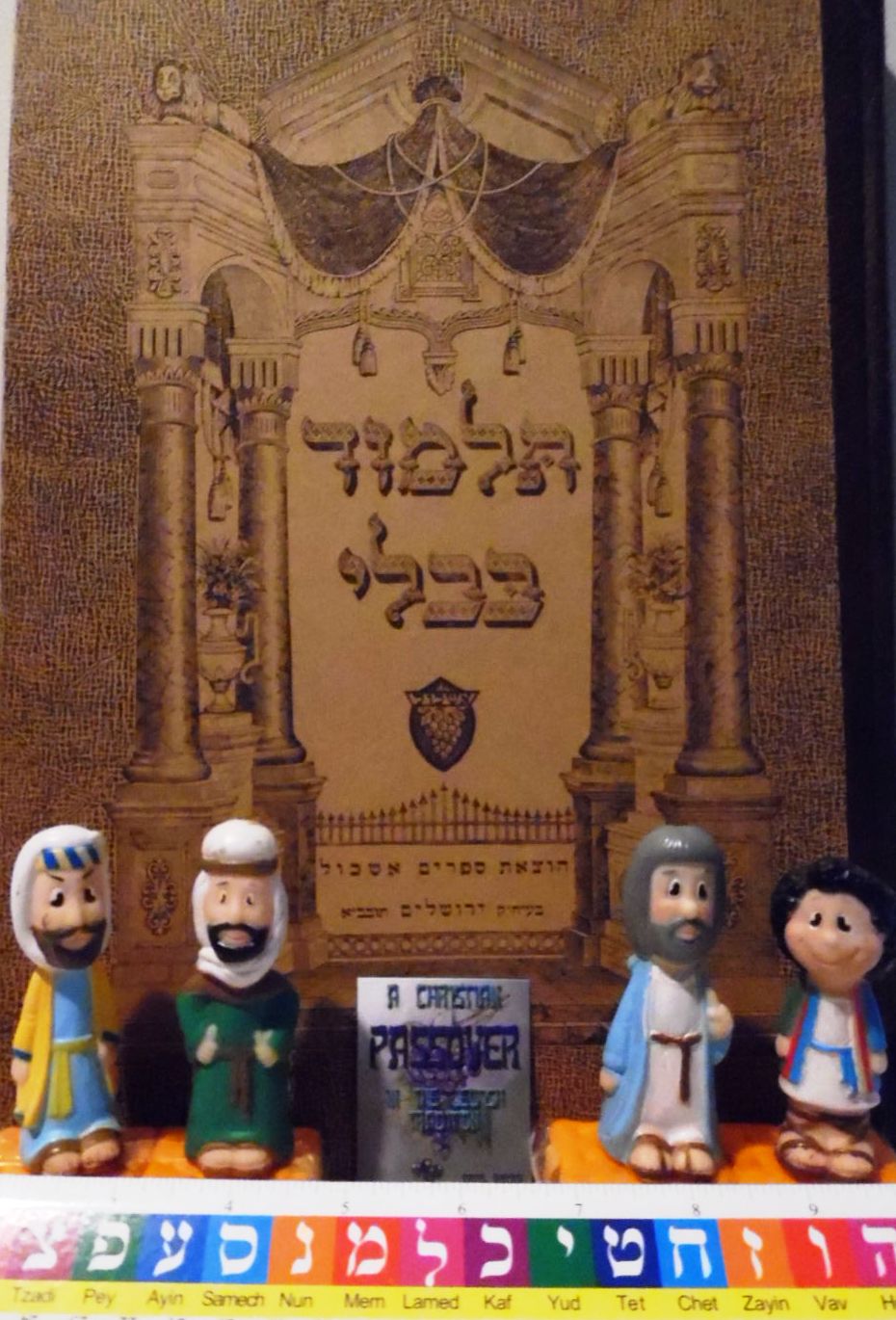
In my blog I often write about Passover during this time of year. That is partially to promote the fact that I lead Passover Seders, and partly to promote two books I have written with my daughters. (They are available in print and on kindle). The Passover was instituted in order to help our children learn about God’s care for His people. Various instruments are used during the Pesach celebration to share God’s desires.
Passover Seder participant Haggadah
The Passover Haggadah tells about four sons through four questions and answers given to children in the Torah. The Rabbis use the questions to teach about four types of people in the world: The wise, the wicked, the simple and the young.
Four Sons and Four types of people


The fourth son of the Seder is the young child. From Exodus 13:8, we discern that this son is very young, too young to ask a question, because. Moses instructed the fathers to answer their child without a question ever being asked. The Bible tells us, “You shall tell your son on that day, ‘It is because of what the Lord did for me when I came out of Egypt.’”

The message of Exodus 13:8 is very important for parents of today. Our children are always learning, and we should always be teaching. When my children were very young, even a few days old, I enjoyed holding them and teaching them. My teaching at that age was mostly in songs I sang to my daughters. They did not ask questions, they did not speak back. They only girlgled, smiled or, sometimes, cried.
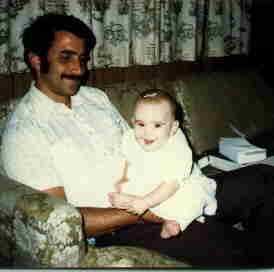
Dad and Daughter
But as I sang and as I spoke, my children learned. Their minds were opened, and they understood the language of love, and they were learning the words I shared with them. On the day of a child’s birth we begin to teach them about life, and hopefully about God. I shared with my daughters “because of what the Lord did for me when I came out of Egypt.”
Story time and then nap time


As my children grew older, they learned to ask simple questions. About two or three years old they constantly asked, “Why?” THe question is only one word long, but it can be applied in so many ways. The natural inclination is to push a child aside, because, as a parent, you get tired of hearing the constant, “Why?” and then when you answer the question, another “Why?” And another and another.

For the child who asks lots of “Why?” or other simple questions, Moses wrote, “when in time to come your son asks you, ‘What does this mean?’ (or ‘Why?’) you shall say to him, ‘By a strong hand the Lord brought us out of Egypt, from the house of slavery.” (Exodus 13:14)
Chelsea and her Grandmother
The Bible tells me never to tire of my children’s questions, for they are a source of learning. In my educational courses, I learned to use teachable moments with my classes. Whenever a child asks a question, they are sharing a teachable moment. The child’s intention is to be discerned so their question can be answered. (Sometimes the question is so simple it is ambiguous. It is up to the parent to know their child and the situation well enough to give an applicable answer). As questions are appropriately answered and as teachable moments are used to instruct children, they learn and grow, and come to know God’s love more clearly.
A Grandmother's Bedtime Routine


The second son in the Passover Seder asks the question, “What do YOU mean by this service?” (Exodus 12:26) The child who asks this question is called ‘the wicked son,’ because he wishes he could be excluded from the Passover and from his family's teachings. This indeed is a sad situation, for it means the teachings did not take. Fortunately, I did not have to deal with this type of child. Because I started to teach my children when they were young, and because I was patent when they got older, and because I sought to bring ‘the joy of the Lord’ into our faith, my children grew up to adopt our religion, rather than to reject it.

If I were asked, “Do your children believe and practice exactly as you do?” I would have to answer no, because each person’s faith walk will be a bit different. But certainly we worship the same God, and hold to the same faith, and there is a bond. My daughters have now passed the three decade mark, and therefore we can have discussions about religion. I can learn from them, as they have learned from me.

My daughters are now like the wise son, who asks, “What is the meaning of the testimonies and the statutes and the rules that the Lord our God has commanded you?” (Deut 6:20) They have gone to school, become learned, and now they teach others, and sometimes they teach me.

I recently read on a Chabad website: “Since all of Torah addresses all of Israel, we must say that all four messages of the Torah are applicable to all of us, since we all possess the “four children” within ourselves. We are therefore all required—even one who does not have children—to recite all four answers, since we are in essence speaking to the wise, wicked, simple, and “unable to ask” elements that exist within every one of us.”

Friday, August 18, 2017

Capernaum

In May 2018 I will be taking a group on a 14 day trip to the Holy Land. During this trip we will visit the Galilee region and Capernaum, a city where Jesus lived for several years. This city on the shores of the Sea of Galilee is an interesting place to visit. The site is maintained by the Franciscans, who have added walkways and benches and maintained the landscape so the story of Jesus’ residence can be told without too many modern intrusions.
Gate at the Franciscan Monastery of Capernaum
During our visit to Capernaum, we will enter the archaeological site through gates situated by a Catholic church. Once on the property we will be seated on shaded benches where our tour leaders will explain what can be seen at the site and share associated Bible stories so we can take away a memorable experience.
Shade trees which protect seating area of Capernaum
From the benches we will be directed into a fourth century synagogue constructed from imported limestone. Limestone was chosen for the exterior of the Synagogue to give a white (pure) appearance in a village constructed mostly out of the black basalt rock, which was easily available in the region. The fourth century building is well-maintained and enables the visitor to walk within and understand construction and practices in ancient places of worship. Tall pillars and an intact anterior provide photo opportunities and an ambiance to the visit.
Anterior of the Capernaum Synagogue
On the south side of the Synagogue, a portion of the earlier basalt synagogue has been uncovered where visitors are able to see a portion of the building in which Jesus and the disciples worshipped.
Remains of a first century synagogue at Capernaum
Outside the Synagogue, we will walk through a large area of foundational ruins. Many of the foundations are several feet in height and display steps and other features which will help us visualize the city Jesus called home (Matthew 9:1)
Ruins of Capernaum from the Synagogue
Over one area of ruins we will be able to enter a twentieth century church which sits above a residence believed to be the home of Peter’s mother-in-law. The modern church has a glass floor which allows visitors to see foundations of a first century home and a fifth century church. Diagrams give explanation of the existing foundations.
Looking across ruins of Capernaum to the new octagonal church
Beyond the ruins we will be able to walk down to the Sea of Galilee. We will visualize the beaches from which Peter, Andrew, James, and John departed on their fishing excursions. These shores are also the place recorded in Matthew 4 where Jesus meets Peter and says, “Come, follow Me, and I will make you fishers of men.”
Looking from Capernaum across the Sea of Galilee
On our trip within Galilee we will see Capernaum from several different vantage points. We will see the village from our boat ride on the Sea of Galilee, from the top of Mount Arbel, and if we strain our eyes from Kibbutz Ma’agan, where we will spend three nights. Once we walk through the village of Capernaum in Galilee, each sighting will give us a new perspective as we discover the shores along which Jesus often walked.
A view of Capernaum from the top of Mt. Arbel
If you would like to join us on our 14 day trip to the Holy Land click this link. To sign up for the trip click here. I hope you will travel with us during our 14 day trip to the Holy Land in May 2018.

Tuesday, December 6, 2016

Why?

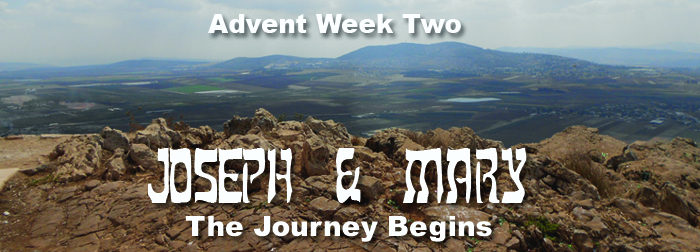
This week’s journal in the devotional Advent Journeys seeks to speak the words of Joseph as he travels with Mary from Nazareth to Bethlehem. Joseph and Mary were unique individuals of character, and for this reason they were chosen by God to become parents who would be remembered and who would serve as examples for other parents across two thousand years of history.
View from the Precipice near Nazareth 
Have you ever wondered why God chose this couple and how we can emulate their parenting methods with our own children?
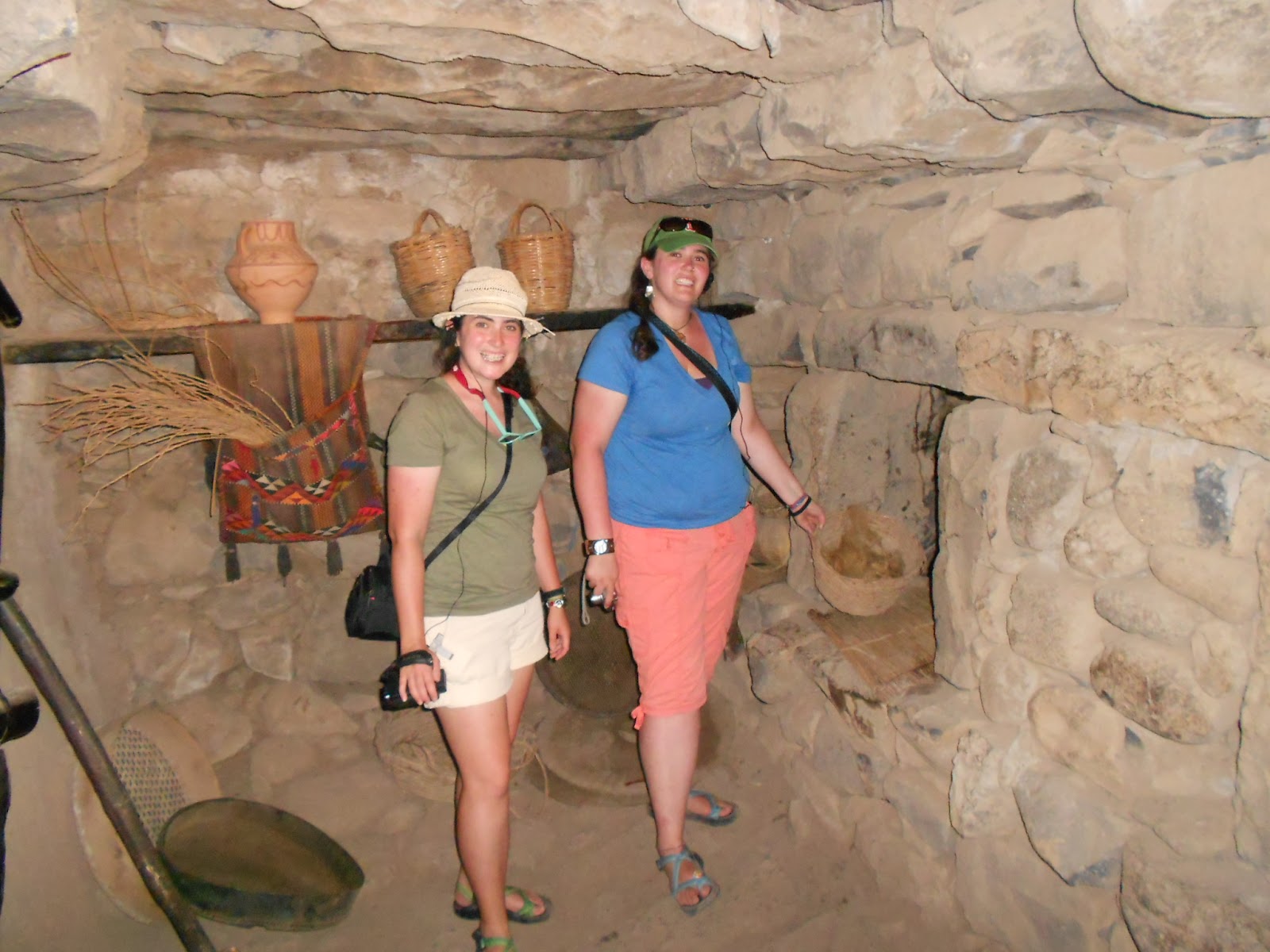
Kitchen at a home in Katzrin
The scripture teaches that Joseph and Mary were individuals with integrity. Each parent in their own way sought to honor God with all their hearts, minds and strength. (Deuteronomy 6:5) When Gabriel came to Mary in order to inform her that she was chosen to give birth to the one called “the Son of the Most High” (Luke 1:32), she responded by asking “How can this be since I am a virgin.” Mary wanted her faithfulness to be known by the angel, by her parents, by her community and by Joseph.
Village of Katzrin in the Galilee
Matthew 1 tells of Joseph’s concern when he found out that Mary was pregnant. He loved her, but he knew his integrity would be compromised when the community came to know Mary was with child. Joseph sought a way to end the betrothal in an extremely private manner. As he prayed and sought God’s wisdom on the matter, Gabriel visited Joseph as he had visited Mary. The heavenly being assured Joseph that Mary had done nothing wrong. And the Angel asked Joseph to complete the marriage and to adopt the child.
Village of Katzrin in the Galilee
Both parents had similar concerns and stepped out in faith to accept the child and God’s calling to become parents and teachers of a child who was well beyond them in intellect and righteousness.
Scaffolding at Katzrin
Joseph and Mary sought throughout the life of Jesus and of their other children (Matthew 13:55-56) to bring faith to their family. The holy parents taught their children the scripture at every opportunity. They stood as examples of faith through every trial (and there were many, such as the necessity of escape from Bethlehem and living as parents of faith in a foreign land). Joseph and Mary honored every Jewish tradition and honored the festivals with their family. Joseph taught Jesus the skills of his trade and Mary loved Jesus and lived her care for him to the day of his death and beyond.
Packing down a roof in Katzrin
Jesus’ parents willingly took on any hardship and sought in every way to bring their children up in the faith. Today as parents we must do the same. We must honor the Christmas season with more than presents, we must honor God by giving our children our presence to tell real story of our faith. Parents show God’s love through proper placement of priorities.


Saturday, November 19, 2016

Parts of a Christmas Plan

The Christmas season ... Christmas day ... each of these hold more meaning when pre-planning takes place. Today, I want to share the parts of a good Christmas plan and a tool which will help make sure the plan falls into place (and is not consumed by the business of the Christmas Season).
The first part of the plan is to establish spiritual themes. I give each week of Advent (beginning the Sunday after Thanksgiving, November 27 this year) a theme. On my website these are: 1) Prophecy; 2) The Journey of Joseph & Mary; 3) The Shepherds; 4) The Magi. Then, each day I mark in the calendar two verses (an Old Testament and a New Testament) verse to share. These can be found in a calendar on my website under the tab for Advent.
The second thing I do is to take a look at my personal calendar. Days when work demands my attention need to be more self-directed; days (weekends) when I am less consumed will become valuable family times because I plan them (early, now) for my family. Long ago I decided if I do not have three days (worship at church, a family night, and an activity day) for my family, I am too busy. The Bible commands us to pass our faith on to the next generation. If I cannot successfully pass on my faith to my children, I have failed.
Next I look at community calendars. Many great things are happening in our community that are worth sharing with my family. Churches have musicals and family days. Museums and towns themselves offer special events and concerts linked to Christmas. Many communities have live Nativities and walk through dramas, such as Walk Through Bethlehem in our community. These events share ideas and fun far beyond what we could provide for our families individually. The events also help children understand that others also feel the spiritual element of Christmas is important.
After unmovable work events and community events are logged on my calendar, I set a family night each week in order to re-tell parts of the Christmas story in a fun way. I place these days as unmovable events on our family calendar. These events (I will share more tomorrow, and each Monday) include a special meal, an opportunity to read a portion of the Christmas story, times of singing, and surprises.
With the calendar planned, I produce a tool which will make sure no day is forgotten during the Christmas rush. This tool is the simple paper chain we made as children. On the outside of each link I place the date (like November 27). On the inside I place the two Bible verses to be read, and the activities I have planned for each day. My children make sure I take off the link for the day each morning. With the promise given in print each day, there is no going back.

These ideas are contained on my website, and linked to the book Advent Journeys.

Friday, September 2, 2016

Teaching of God

In my last blog I shared my passion for teaching children about God. This passion in my life was not a passing phase or a job-related necessity. I truly believe we must put time, effort, energy, creativity, substance and finances into preparing our children to receive the torch of life from us and sprint into the future.
One way I followed my heart was to teach children the true meaning of Christmas. (it is not too early to prepare or to tell. The Christmas season will consume us with activity and meaningless tradition unless we prepare ahead!)  While in ministry I would begin planning for the Christmas season as soon as fall activities were functioning, generally toward the end of September.
The activities I planned for the Christmas season were personal for my family, and were shared with others. The plans made revolved around the idea that time given to my children is the best gift of the season, and that the time is only worthwhile if it furthers their faith in God. The object of the plan was to provide, lead, and/or join my children in at least one activity each day to enhance the Biblical story.
Our activities included eating birthday cake (for Jesus’ birthday), going on trips, making and sending Christmas cards (they announce our faith in Jesus, just as the angels announced His coming), eating at Burger King (and wearing crowns like the magi), visiting sheep farms and serving our neighbors and other community members in service. Each day of Christmas was carefully planned around a theme and given a scripture to set context. Many of these ideas can be found under the Advent Tab on www.KosherCopy.com. My best ideas for daily activities are on my website.
I also published a devotional entitled “Advent Journeys”, a book containing six weeks of devotionals. The devotionals are written like short diary entries and spoken by the people of our Biblical story. The diaries help the people of the Bible stories, who can at times seem two-dimensional, become three-dimensional as the reader gets a look into what their daily lives were like. Each diary entry links to the ideas found under the Advent tab on www.KosherCopy.com.
Readers of Advent Journeys remark that the diaries make the Bible come alive. The favorite chapter seems to be the first week’s journal about Zechariah (John the Baptist’s father) at the Temple; the chapter has even been awarded. When a reader embarks on, and finishes the week’s journey with Zechariah, he will experience with Zechariah what it is like to serve in the Temple and tend the altar of incense in the Holy Place. The reader will see the pure joy Zechariah and Elizabeth experience when they find out about their baby.
On the second week, the reader will meet Joseph and Mary and walk alongside them on their journey from Nazareth to Bethlehem. During the third week the reader will join the shepherds in the fields tending sheep. He will find himself there the moment the Angel announces Christ’s birth. In the fourth week the reader will experience the anticipation and adventure of the Magi as they travel across the desert and through the throne room of King Herod in search of the newborn king.. The book, Advent Journeys, also contains a week of devotions for Chanukah. The book is meant to be read by either individuals, groups, or families: your family will enjoy reading the book together each day.

Last year I did a giveaway for a short time on Kindle. This year I am asking people who read the book to share the experience by giving Advent Journeys as an Advent gift (before Thanksgiving) or a Christmas gift. My goal is for children and their families, at least for a moment, to leave the schedule and demands of the Christmas season and escape into the world of the Bible in order to seize the wonder of the first Christmas.

Thursday, November 12, 2015

Christmas on a Child’s Level

Christmas is a wonderful time of year.  We talk about Hope, Peace, Joy and Love.  We light candles, and in church we enjoy wonderful worship services.  Life is busy during December with events and parties and various celebrations.  We spend time in stores shopping for those we love, and for those we are obligated to buy for.  And we come home exhausted because of all our activities.
But have you ever looked at the Advent season through the eyes of your child?  Hope and Peace are concepts which are  often too difficult for young children to grasp.  (Joy and Love can also be difficult depending on how they are presented.)  The more we are gone for events, the less time we spend with our children.  And we drag our children on shopping trips only the hear them whine because they want us to go to the toy department rather than understanding we must select just the right gifts for family members, friends, co-workers and others.
The result of all this can be boredom, fatigue and hearing our children whine.
Christmas must be better.  The season can be a foundation of learning and joy if we manage our time well.  But during December, that means we must plan our time ahead so it does not get ahead of us.  On my regular website called KosherCopy I have included free resources under the Advent 2015 tab to help parents plan.  I have developed and shared this plan for thirty years.  The plan has been used in my family with my children with great success.  If you will work with the plan and use it, it can change your family’s Christmas.
I often tell parents the greatest gift you can give your children at Christmas, the gift of Love is spelled TIME.  Your children want undivided time with you more than anything else.  And in a season where time is limited, you must plan ahead in order to share this commodity in love.  Which is why I have put free resources for planning on my website.
Development of an Advent plan for children begins with your personal calendar and the free resources  on my website.  Your calendar will show what obligations you have which can not be moved.  Under the headings:
ADVENT WEEK ONE - ZECHARIAH THE PRIEST
ADVENT WEEK TWO - JOSEPH AND MARY
ADVENT WEEK THREE - THE SHEPHERDS
ADVENT WEEK FOUR - THE MAGI -  select an activity to place on your calendar to do as a gift for your children each day of December.  Each day - no exceptions.  You will notice that some activities require undivided time and attention to your children.  These are to be placed on days which are most open on your calendar … and reserved so nothing else can crowd in.  Other activities require only a few resources (which you must make available), and almost no time.  These are to be placed on busy days.  You will find that planning ahead for December, placing ideas on your calendar and having the resources available before Thanksgiving will buy you time and great Peace in December. (Yes, your children are quiet and better behaved when you keep them busy).
The activities from the calendar should be developed according to your child’s age and interests.  Include activities and events in your community (concerts, readings for children at the library, etc….) in your community as part of the plan and your giving of time.  Then take and place these on a calendar for your children.  (I made paper chains: one link for each day with two scriptures and one promised activity.  We took the link off at breakfast each morning so my children could hold me to the promise.)  Day after day you will notice your children becoming more involved in the message (not the mess) of Christmas … learning the true meaning Christ wants us to learn in this, His season, which will bring great Hope to your children.  
Hope, Peace, Joy and Love can be part of your Advent Journey with the investment of planning ahead and reserving a little time.  (the plan links to our book , Advent Journeys which can be read to children grade 3 and above)

Monday, November 2, 2015

Advent Traditions

   The Advent traditions of my family began almost thirty years ago in a young adult Sunday School class at University Baptist Church in Wichita, KS.  Our study for December included four lessons: Zechariah, Joseph, Shepherds and Magi.  In preparation for these lessons I picked up a book from our church library, the title of which I have long forgotten.  The book said the Christmas season is a great time to teach on spiritual things because people were more attune because it was the time of Jesus' birth.
   Members of the class I was teaching had young children, three of them born the same month as my oldest daughter, Chelsea.  The lessons I prepared that year included not only the scripture but also ideas for teaching our children the Bible stories on a preschool level.  I made a notebook for each member of the class (color coded by week).  The ideas presented in the notebook I continued to use and improve each year.
   As my daughters aged from preschool to young child to older elementary and then on into middle school I continued to develop the idea of Advent scripture and stories.  I added activities according to their age.  I picked up the idea of sharing finger plays from the Hutchinson, KS library.  Those were included in a new Advent schedule.
   I began to develop other activities in the schedule as my daughters reached five years of age and beyond.  These included a weekly family time with dinner, songs, a skit and the story.  One of the favorite stories was the trip of Joseph and Mary to find a room in Bethlehem.  One of the girls was Joseph, the other Mary.  I was the donkey (many people told me that was a good role for me) and Denise was the innkeeper.
   When the children entered elementary school in Apex, NC, I added more activities.  We prepared Christmas cards on the week the angels told the Shepherds of Jesus' birth.  We drew wrapping paper in the week we told of the gifts brought by the Magi.  We made care packages for our neighbors to minister to them.  We also saw a sheep farm (or sheep at the zoo), and Christmas programs.  Christmas grew to be a season we loved.
   When my daughters entered Middle School, I stopped reading the story as much, because I wanted them to be more self disciplined.  I put a story with their lunch each day, along with thought questions, activities we would do when they came home, and also with a game: word search, crossword, maze, or similar, which they could solve as they ate lunch.  We still have a notebook of these pages.
   The devotions came full circle as Sarah helped me write Advent Journeys, a Christmas devotional.  We had fun, and talked about some of the activities of the past.  I put out a pamphlet for others to enjoy for many years.  I will be putting the same ideas on our website in the very near future (this week I hope) so others can enjoy celebrating Advent with their families.
   To celebrate a fun Advent will bring families closer to the true meaning of the Christmas season.  I have found these activities to be the perfect antidote for consumerism so prevalent at this time of year.  Keep an eye out for the list ... and if you have other ideas, please share them.

Wednesday, April 16, 2014

Passover's Rich Tradition

From father to son to son to son to son for over 3,500 years that's one of the miracles of Passover. It's a wonder! From generation to generation the story has been told over and over again in a line that has never been broken. Fathers (and Mothers and brothers and sisters) share with family members and with the next generation(s) so the story continues to be shared and its truths passed on. (Exodus 12:24-27)

I see books which sound a warning about how in today's world 75 percent of young adults (ages 18-24) you have fallen away from their faith (or practice of their faith). This is a sad state of affairs when I compare this reality to the tradition of sharing Passover together. As I read these books I realize we've missed something.

We're missing out on inspiring the next generation in their faith.  We're missing out on telling the story and passing on the faith to those who need it most. (Deut. 4:9)

What is it that makes a difference with young adults and causes the story to pass from one generation to the next? I think sometimes we get to hung up in our own traditions and in the law.  We focus on doing this in exactly the format it was shared by our parents, and in doing so we forget to make sure this is relevant and enjoyable by all. Possibly it is because we did not enjoy this celebration, so we cut it short thinking it will be boring to those hearing us (which is a self-fulfilling prophecy!).  Because it is our parent’s story, we fail to get into the story ourselves.

How can we affect and infect the next generation? We need to pass on our love and passion for God.  In order to do this love and passion have to live in our hearts.  This causes us to have an irresistible passion to share our love for God all the time (Deut. 6:5-9).  This causes us to desire to make sure the next generation understands and adopts the same passion we have.  We can not mess up.  The faith of the next generation is too important!

There is a verse which is shared each year in the Passover Seder, "On that day tell your son, `I do this because of what the LORD did for me when I came out of Egypt.’" (Exodus 13:8).  This year make sure the next generation knows we have personally left Egypt ... and we are bringing them out also.  Moses would be pleased! 

Wednesday, February 25, 2009

Teaching with Depth

This week I am at a conference in the mountains outside of Asheville, NC. My family told me to take good notes - so I decided to jot down notes and ideas here. Although not exactly what was spoken, this is what I received from the presentation.
The speakers are looking at what it takes to reach the post-modern world. In the initial presentation they listed four things that the church needs to do to reach this key market:
1. Provide Depth (see further down to explain)
2. Provide Community
3. Provide Connections - or mentors. This generation wants to interact with someone who has walked the walk.
4. Responsibility - meaning the generation wants to leave a better world than they came into. This could be done in a number of ways including becoming socially active or recycling.
** One thing they said is that the generation does not necessarily need the coolist and biggest program or high dollar fluff. They want something that is real.

The session from this afternoon was on depth. The question was asked, "What is meant by depth?" and the answer could be about anything. It could be better Greek or Hebrew exegesis, it could be pulling out more meaning. Lots of things could be done to achieve depth - and not necessarily hit the mark.
Then, how can we achieve depth? Four things were listed to be aware of in a presentation:
1. People are looking for Mystery, not Logic. Facts can be learned by reading a book. They want to go further. We must explore the facts, and find the things that are not in the facts. We must find the hidden things. The things that will cause the mind to wonder and to begin working. We need to have the "wow's." But this does not mean lots of statistics. This means the things that make you want to look deeper yourself. In a sense, there is an entertainment aspect here, but not really entertainment, for it is meant to go beyond tickling the interest. The Mystery is meant to open the door for the person - and to make them want to go in to explore.
2. People are looking for Story, not Fact. Again, this is about helping people gain an interest. Stories have been around for a long time. We all ejoy some kind of story. Some are better than others. I have taken Rudyard Kipling's "Just So Stories" (The "Elephant's Child is my favorite, O Best Beloved), and kept the interest of third graders - even without pictures. (Of course the spanking parts really help, especially if I tell them with a loud, sharp voice). Stories fill in the spaces between the facts. The leader of the conference told the story of Nicodemus from John 3. He started with Nicodemus approaching the tent, with his hood up so he could not be detected in the darkness of night. Peter opened the tent flap to see who was there, and pulled it aside, not recognizing the guest. When the guest was inside, and saw Jesus in the back of the tent, he pulled his hood back, and everyone gasped, they recognized Nicodemus, one of the Pharasees ...
3. People desire Change and not Stability. Stability gets boring, we want something different. People in the recent election voted for "Change." They did not know exactly what it was, but it must be better than what existed before. And it is a little like living on the edge. This sytle of presentation will make us all work harder. We need to think of a fresh approach every time. But that is what people are looking for. Although God does not change ... yet He does. Take note: The Amelekites, Jericho, and the Midianites were all defeated in different ways. The leaders of the people were required to pray and find what method God wanted - and follow. We must pray and discover what method will work best with our audience, and design the presentation around the needs.
4. We live in a society of Distrust and not Trust. People especially distrust authority. There used to be a time they trusted Pastors, the President, etc... but not any more. They are looking for truth. They want to get to know us, our motivations, our sources. They want to see the genuine person before they trust us. Leadership used to come by standing in front of the group. It was a position of respect. Now it is from withing the group. People follow the person with passion - a person they have gotten to know - one of them. They want reliability.
Changes also include presentation style.
1. People no longer look for information. They want to explore. This is much better, for we remember far more of what we explore than what we are told. Let's open the door, build the curiosity and place people where they can learn.
2. Society has moved from Admiration to Identification. Again, they want the leader to be one of them. We all have faults. We are nervous when we stand in front of others. We have fears. We have shortcomings. The post-modern generation respects someone like them, because they know if the person like them did it, they probably can too.
3. We need to move from dispensation to revelation. We need to reveal or communicate ourselves to others. We don't need to just teach the facts of the Bible. But we need to teach ourselves and how we interact, and what we have learned, and how we have put this into practice, mistakes we have made, things we learned through the mistakes.
Teaching is to be a journey that others want to experience with us and through us.