Showing posts with label Children. Show all posts

Sunday, November 4, 2018

Christmas is Coming!

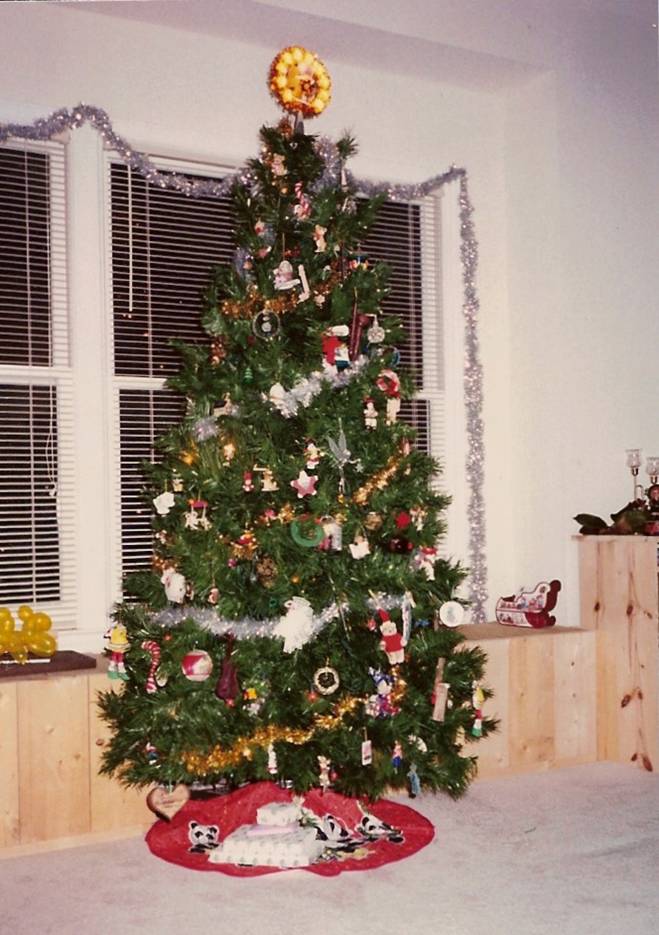
Christmas Tree
     November marks a season of change. Gone are the months of September and October that mark the beginning of the school season. Gone is the season of shifting from summer’s vacations to a normal schedule (whatever that might mean). Gone is the season when we can depend on warmth to return after every cold snap. We have come fully into the season called autumn, when leaves are either colored or gone.
     November marks the beginning of the holiday season. It is a time for making Thanksgiving plans and thinking about what items to purchase on Black Friday. The time of Indian Summer is upon us and we all begin to realize that Christmas is just around the corner.
     For me personally, November marked the time when the organization of a new church year came to an end, and things were beginning to run smoothly. November for me, and for the Pilgrims, and for many farmers marks a time of rest, when recovery is possible after a hectic year. But it was not time to stop planning completely, the busy month of December was just ahead.
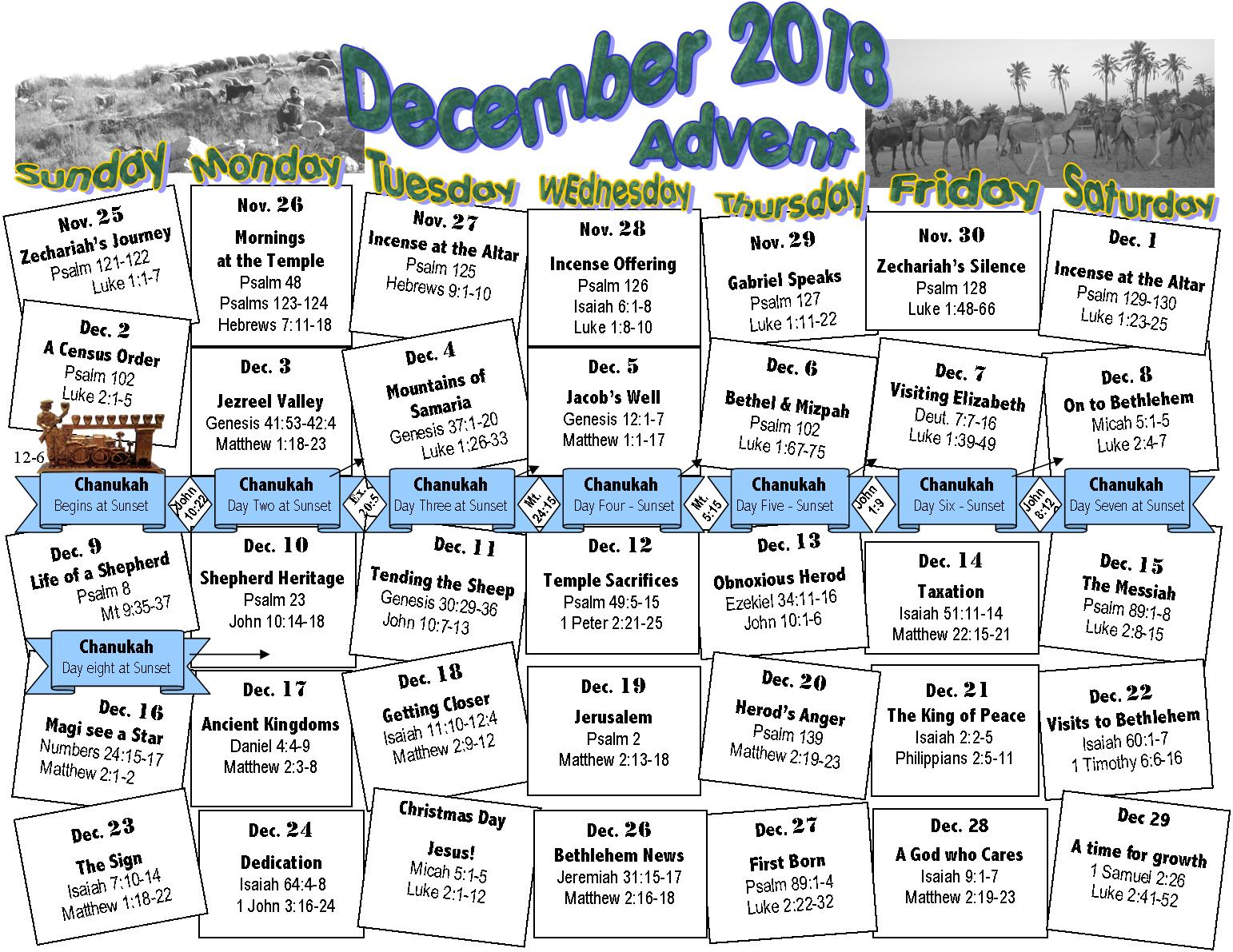
Advent Calendar
     November was the time I planned for December. I placed the multitude of church activities, parties, school programs and community events on my calendar. But I did not stop after these plans were input into my calendar. I went on to plan something much more important: My children’s Christmas (Advent) celebration.
     Soon after my first daughter was born, it came to my awareness that there is something more important than events and more eternal than presents, Jesus’ birthday. I could not and should not forget to plan family events that would help my children understand my faith. I set an agenda to share a Bible verse with my family each day at breakfast, and also a special seasonal event every day.
Children's Christmas Activities
     All these plans are included at www.KosherCopy.com under the Advent tab. I have produced a pamphlet of ideas to share with your children, and also an advent calendar. Many of the ideas do not take long to accomplish, but set one by one, each day of december, they have a profound effect on faith (and greed). Through providing an activity every day of Advent, the emphasis is taken off the giving of presents and placed on the celebration of Christ’s birth.
     With the free resources at my website, www.KosherCopy.com, it does not take long to plan a great Christmas. It only takes a decision and a couple hours of time. There is a great reward when your children find joy in Jesus rather than “what’s in it for me.”

Friday, February 23, 2018

The Four Sons for Daughters

February is a month of birthdays for our family, both of my daughters were born in the month of February. We celebrate their birthdays no matter where they are in the world. Families are support systems and birthdays are supposed to be fun. Because Purim is next week, I must add that I am sure Mordecai would never forget Esther’s birthday, and probably made sure she had fun.
Spiritual Life and a Relationship with God
In my blog I often write about Passover during this time of year. That is partially to promote the fact that I lead Passover Seders, and partly to promote two books I have written with my daughters. (They are available in print and on kindle). The Passover was instituted in order to help our children learn about God’s care for His people. Various instruments are used during the Pesach celebration to share God’s desires.
Passover Seder participant Haggadah
The Passover Haggadah tells about four sons through four questions and answers given to children in the Torah. The Rabbis use the questions to teach about four types of people in the world: The wise, the wicked, the simple and the young.
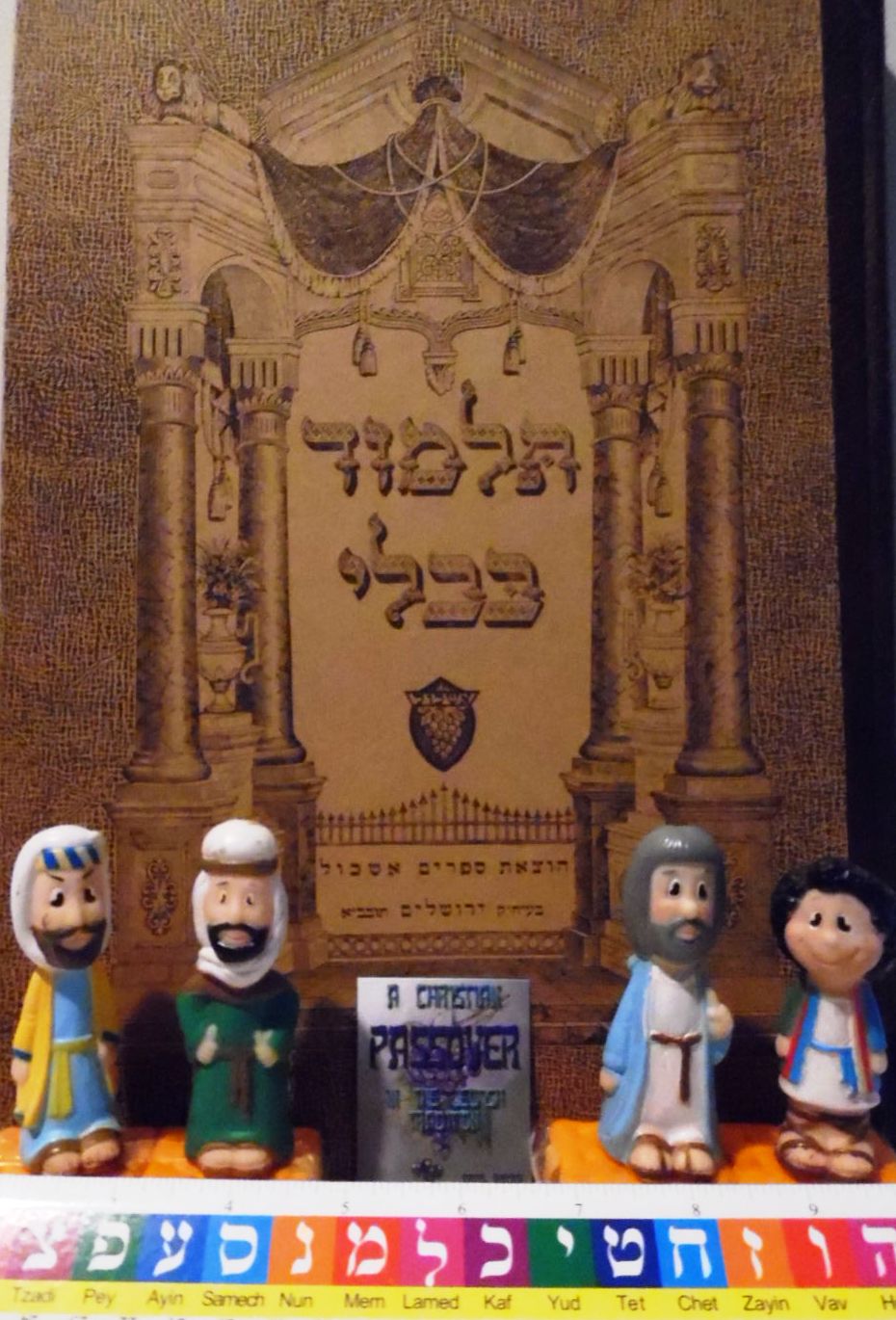
Four Sons and Four types of people


The fourth son of the Seder is the young child. From Exodus 13:8, we discern that this son is very young, too young to ask a question, because. Moses instructed the fathers to answer their child without a question ever being asked. The Bible tells us, “You shall tell your son on that day, ‘It is because of what the Lord did for me when I came out of Egypt.’”

The message of Exodus 13:8 is very important for parents of today. Our children are always learning, and we should always be teaching. When my children were very young, even a few days old, I enjoyed holding them and teaching them. My teaching at that age was mostly in songs I sang to my daughters. They did not ask questions, they did not speak back. They only girlgled, smiled or, sometimes, cried.
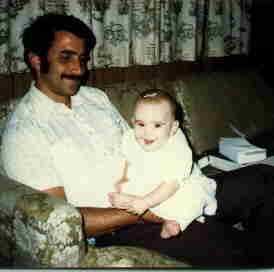
Dad and Daughter
But as I sang and as I spoke, my children learned. Their minds were opened, and they understood the language of love, and they were learning the words I shared with them. On the day of a child’s birth we begin to teach them about life, and hopefully about God. I shared with my daughters “because of what the Lord did for me when I came out of Egypt.”
Story time and then nap time


As my children grew older, they learned to ask simple questions. About two or three years old they constantly asked, “Why?” THe question is only one word long, but it can be applied in so many ways. The natural inclination is to push a child aside, because, as a parent, you get tired of hearing the constant, “Why?” and then when you answer the question, another “Why?” And another and another.

For the child who asks lots of “Why?” or other simple questions, Moses wrote, “when in time to come your son asks you, ‘What does this mean?’ (or ‘Why?’) you shall say to him, ‘By a strong hand the Lord brought us out of Egypt, from the house of slavery.” (Exodus 13:14)
Chelsea and her Grandmother
The Bible tells me never to tire of my children’s questions, for they are a source of learning. In my educational courses, I learned to use teachable moments with my classes. Whenever a child asks a question, they are sharing a teachable moment. The child’s intention is to be discerned so their question can be answered. (Sometimes the question is so simple it is ambiguous. It is up to the parent to know their child and the situation well enough to give an applicable answer). As questions are appropriately answered and as teachable moments are used to instruct children, they learn and grow, and come to know God’s love more clearly.
A Grandmother's Bedtime Routine


The second son in the Passover Seder asks the question, “What do YOU mean by this service?” (Exodus 12:26) The child who asks this question is called ‘the wicked son,’ because he wishes he could be excluded from the Passover and from his family's teachings. This indeed is a sad situation, for it means the teachings did not take. Fortunately, I did not have to deal with this type of child. Because I started to teach my children when they were young, and because I was patent when they got older, and because I sought to bring ‘the joy of the Lord’ into our faith, my children grew up to adopt our religion, rather than to reject it.

If I were asked, “Do your children believe and practice exactly as you do?” I would have to answer no, because each person’s faith walk will be a bit different. But certainly we worship the same God, and hold to the same faith, and there is a bond. My daughters have now passed the three decade mark, and therefore we can have discussions about religion. I can learn from them, as they have learned from me.

My daughters are now like the wise son, who asks, “What is the meaning of the testimonies and the statutes and the rules that the Lord our God has commanded you?” (Deut 6:20) They have gone to school, become learned, and now they teach others, and sometimes they teach me.

I recently read on a Chabad website: “Since all of Torah addresses all of Israel, we must say that all four messages of the Torah are applicable to all of us, since we all possess the “four children” within ourselves. We are therefore all required—even one who does not have children—to recite all four answers, since we are in essence speaking to the wise, wicked, simple, and “unable to ask” elements that exist within every one of us.”
Tuesday, December 6, 2016

Why?

This week’s journal in the devotional Advent Journeys seeks to speak the words of Joseph as he travels with Mary from Nazareth to Bethlehem. Joseph and Mary were unique individuals of character, and for this reason they were chosen by God to become parents who would be remembered and who would serve as examples for other parents across two thousand years of history.
View from the Precipice near Nazareth 
Have you ever wondered why God chose this couple and how we can emulate their parenting methods with our own children?
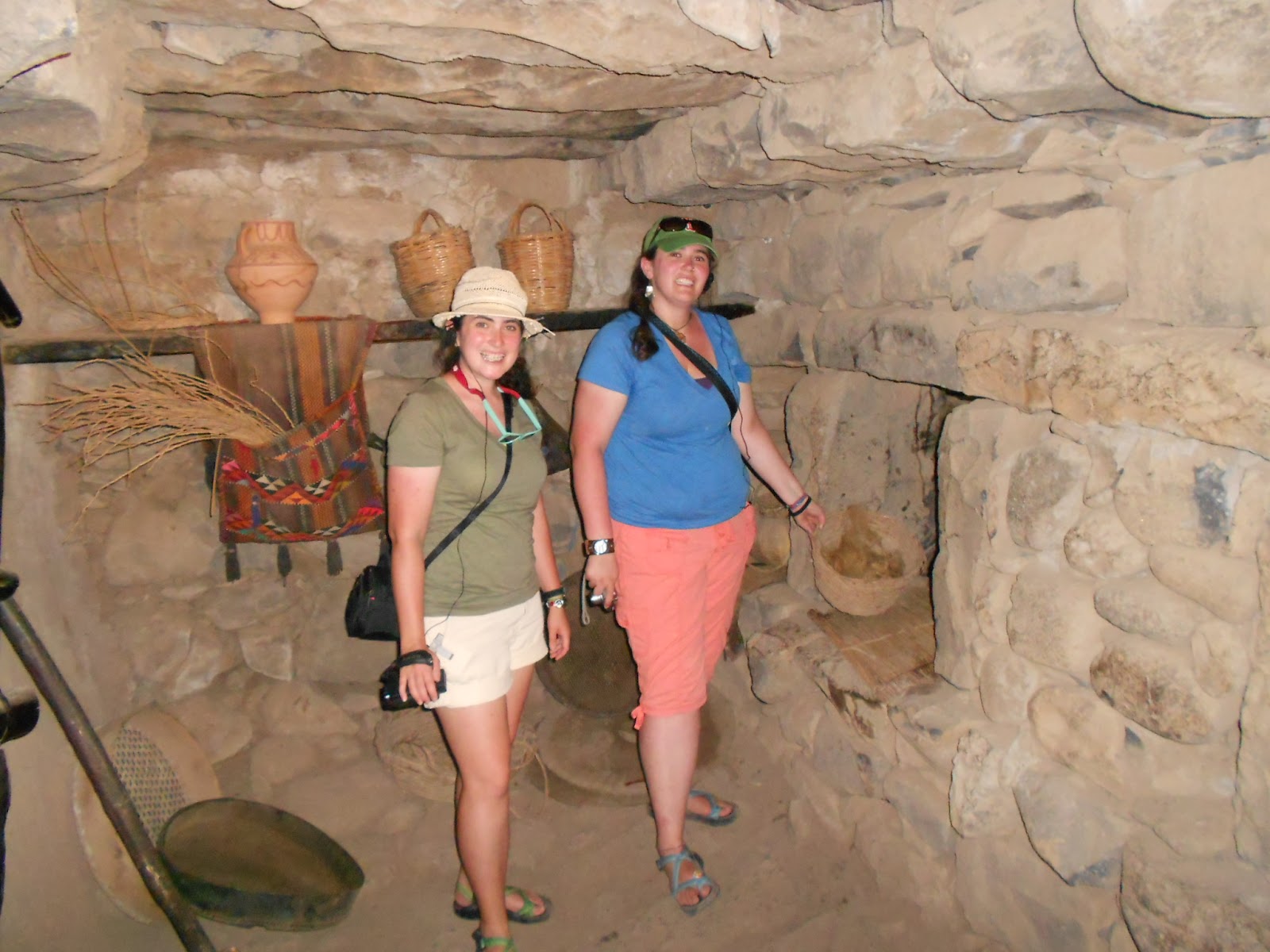
Kitchen at a home in Katzrin
The scripture teaches that Joseph and Mary were individuals with integrity. Each parent in their own way sought to honor God with all their hearts, minds and strength. (Deuteronomy 6:5) When Gabriel came to Mary in order to inform her that she was chosen to give birth to the one called “the Son of the Most High” (Luke 1:32), she responded by asking “How can this be since I am a virgin.” Mary wanted her faithfulness to be known by the angel, by her parents, by her community and by Joseph.
Village of Katzrin in the Galilee
Matthew 1 tells of Joseph’s concern when he found out that Mary was pregnant. He loved her, but he knew his integrity would be compromised when the community came to know Mary was with child. Joseph sought a way to end the betrothal in an extremely private manner. As he prayed and sought God’s wisdom on the matter, Gabriel visited Joseph as he had visited Mary. The heavenly being assured Joseph that Mary had done nothing wrong. And the Angel asked Joseph to complete the marriage and to adopt the child.
Village of Katzrin in the Galilee
Both parents had similar concerns and stepped out in faith to accept the child and God’s calling to become parents and teachers of a child who was well beyond them in intellect and righteousness.
Scaffolding at Katzrin
Joseph and Mary sought throughout the life of Jesus and of their other children (Matthew 13:55-56) to bring faith to their family. The holy parents taught their children the scripture at every opportunity. They stood as examples of faith through every trial (and there were many, such as the necessity of escape from Bethlehem and living as parents of faith in a foreign land). Joseph and Mary honored every Jewish tradition and honored the festivals with their family. Joseph taught Jesus the skills of his trade and Mary loved Jesus and lived her care for him to the day of his death and beyond.
Packing down a roof in Katzrin
Jesus’ parents willingly took on any hardship and sought in every way to bring their children up in the faith. Today as parents we must do the same. We must honor the Christmas season with more than presents, we must honor God by giving our children our presence to tell real story of our faith. Parents show God’s love through proper placement of priorities.


Saturday, November 19, 2016

Parts of a Christmas Plan

The Christmas season ... Christmas day ... each of these hold more meaning when pre-planning takes place. Today, I want to share the parts of a good Christmas plan and a tool which will help make sure the plan falls into place (and is not consumed by the business of the Christmas Season).
The first part of the plan is to establish spiritual themes. I give each week of Advent (beginning the Sunday after Thanksgiving, November 27 this year) a theme. On my website these are: 1) Prophecy; 2) The Journey of Joseph & Mary; 3) The Shepherds; 4) The Magi. Then, each day I mark in the calendar two verses (an Old Testament and a New Testament) verse to share. These can be found in a calendar on my website under the tab for Advent.
The second thing I do is to take a look at my personal calendar. Days when work demands my attention need to be more self-directed; days (weekends) when I am less consumed will become valuable family times because I plan them (early, now) for my family. Long ago I decided if I do not have three days (worship at church, a family night, and an activity day) for my family, I am too busy. The Bible commands us to pass our faith on to the next generation. If I cannot successfully pass on my faith to my children, I have failed.
Next I look at community calendars. Many great things are happening in our community that are worth sharing with my family. Churches have musicals and family days. Museums and towns themselves offer special events and concerts linked to Christmas. Many communities have live Nativities and walk through dramas, such as Walk Through Bethlehem in our community. These events share ideas and fun far beyond what we could provide for our families individually. The events also help children understand that others also feel the spiritual element of Christmas is important.
After unmovable work events and community events are logged on my calendar, I set a family night each week in order to re-tell parts of the Christmas story in a fun way. I place these days as unmovable events on our family calendar. These events (I will share more tomorrow, and each Monday) include a special meal, an opportunity to read a portion of the Christmas story, times of singing, and surprises.
With the calendar planned, I produce a tool which will make sure no day is forgotten during the Christmas rush. This tool is the simple paper chain we made as children. On the outside of each link I place the date (like November 27). On the inside I place the two Bible verses to be read, and the activities I have planned for each day. My children make sure I take off the link for the day each morning. With the promise given in print each day, there is no going back.

These ideas are contained on my website, and linked to the book Advent Journeys.

Friday, September 2, 2016

Teaching of God

In my last blog I shared my passion for teaching children about God. This passion in my life was not a passing phase or a job-related necessity. I truly believe we must put time, effort, energy, creativity, substance and finances into preparing our children to receive the torch of life from us and sprint into the future.
One way I followed my heart was to teach children the true meaning of Christmas. (it is not too early to prepare or to tell. The Christmas season will consume us with activity and meaningless tradition unless we prepare ahead!)  While in ministry I would begin planning for the Christmas season as soon as fall activities were functioning, generally toward the end of September.
The activities I planned for the Christmas season were personal for my family, and were shared with others. The plans made revolved around the idea that time given to my children is the best gift of the season, and that the time is only worthwhile if it furthers their faith in God. The object of the plan was to provide, lead, and/or join my children in at least one activity each day to enhance the Biblical story.
Our activities included eating birthday cake (for Jesus’ birthday), going on trips, making and sending Christmas cards (they announce our faith in Jesus, just as the angels announced His coming), eating at Burger King (and wearing crowns like the magi), visiting sheep farms and serving our neighbors and other community members in service. Each day of Christmas was carefully planned around a theme and given a scripture to set context. Many of these ideas can be found under the Advent Tab on www.KosherCopy.com. My best ideas for daily activities are on my website.
I also published a devotional entitled “Advent Journeys”, a book containing six weeks of devotionals. The devotionals are written like short diary entries and spoken by the people of our Biblical story. The diaries help the people of the Bible stories, who can at times seem two-dimensional, become three-dimensional as the reader gets a look into what their daily lives were like. Each diary entry links to the ideas found under the Advent tab on www.KosherCopy.com.
Readers of Advent Journeys remark that the diaries make the Bible come alive. The favorite chapter seems to be the first week’s journal about Zechariah (John the Baptist’s father) at the Temple; the chapter has even been awarded. When a reader embarks on, and finishes the week’s journey with Zechariah, he will experience with Zechariah what it is like to serve in the Temple and tend the altar of incense in the Holy Place. The reader will see the pure joy Zechariah and Elizabeth experience when they find out about their baby.
On the second week, the reader will meet Joseph and Mary and walk alongside them on their journey from Nazareth to Bethlehem. During the third week the reader will join the shepherds in the fields tending sheep. He will find himself there the moment the Angel announces Christ’s birth. In the fourth week the reader will experience the anticipation and adventure of the Magi as they travel across the desert and through the throne room of King Herod in search of the newborn king.. The book, Advent Journeys, also contains a week of devotions for Chanukah. The book is meant to be read by either individuals, groups, or families: your family will enjoy reading the book together each day.

Last year I did a giveaway for a short time on Kindle. This year I am asking people who read the book to share the experience by giving Advent Journeys as an Advent gift (before Thanksgiving) or a Christmas gift. My goal is for children and their families, at least for a moment, to leave the schedule and demands of the Christmas season and escape into the world of the Bible in order to seize the wonder of the first Christmas.

Friday, August 26, 2016

Children & Education

As the month of August draws to an end, families across the United States focus on the beginning of the new school year. A good education is often the key to a successful life. Children are taught math, reading, languages, social studies, and science with a dose of physical education mixed in. Curriculum is developed to help children and youth find success in their careers and in life.
With the dawn of a new school year it is time to note that the most important place for a child’s education is at home. Children from the time they are born depend on their parents for all things in life: for food, for shelter, for teaching, for comfort, for security and for life.
The Bible, recognizing the importance of parents in the lives of their children, instructs parents on many occasions to teach their children. Moses instructed parents, “be careful, and watch yourselves closely so that you do not forget the things your eyes have seen or let them fade from your heart as long as you live. Teach them to your children and to their children after them.” (Dt. 4:9-10) Jewish parents repeat this every week as part of the Shema (Dt 6:4-9). Other imperatives include Deuteronomy 11:1-2129:11-29; 31:12.
During my childhood I experienced my parents share the Biblical injunction as part of the Passover Seder: “When your son asks you … tell him.” (Ex 13:14; Dt. 6:20) My mother read me the Bible and my family attended synagogue together. Memories were forged which remain in my heart today.
Jesus, according to his Jewish heritage, told his disciples, “Let the little children come to me, and do not hinder them, for the kingdom of God belongs to such as these. Truly I tell you, anyone who will not receive the kingdom of God like a little child will never enter it.” (Luke 18:16-17) It is the obligation of the church and of each parent to personally teach their children about God.
All too often parents today, as the disciples of the Bible, send the children away. Across our nation churches put time and effort into children’s worship service “so children can understand the gospel on their own level.” But this brings irreparable harm, for through this act the church has removed responsibility for spiritual development from parents and from the family.
Parents kindly say, “but my children won’t understand the pastor.” Or they share their children will get bored. Some parents have also told me the truth: “I don’t want my children to attend the service, because they bother me with questions and I cannot worship myself.” The last statement is one of extreme selfishness and displeases God (Mt 18:1-10).
My wife and I took my children to worship, and throughout the years we have encouraged parents to sit next to their children in worship service. Here are some ideas to help children “grow into” worship service:
First Grade: teach children to sing in worship service. You can do this by playing CDs of music sung or singing them in the car. I would sit while my children stood so they could hear me singing behind them and follow my example. During the sermon we gave our children a book or coloring book to keep them quiet, and taught them to sit during the sermon.
Grade two: By this point children are reading. When the pastor read the scripture we would follow along in the Bible. Otherwise they had their book and remained quiet.
Third Grade: We asked the children to share something from the sermon in the car as we left church. Through this activity we were teaching them to listen. Third graders have an 8-10 minute attention span, so asking them to hear something is totally fair.
Fourth Grade: We asked the children for the theme of the message. We expected them to know what the pastor was talking about.
Fifth Grade: We began to work with them on listening for the points of the sermon and the outline so we could talk about what the pastor said on the way home.
My children learned what worship was about. To this day my children love the Lord and remember early lessons learned at home and in church. The Bible tells fathers to bring their children up “in the training and instruction of the Lord” (Eph 6:4).
One of the things I enjoy speaking about in church is how to share our faith with our children. As a Minister of Education I have studied, trained and applied time tested principles with preschool, children, and youth teachers and parents. I would be glad to come and help your church teach and reach more children. I have learned through experience that a church where the Bible is taught on the level of its students generally grows and experiences great blessings.

Sunday, November 29, 2015

Life in the Temple: The Mishnah

One of the sources I used as background information in my book entitled Advent Journeys is the Mishnah, a Jewish volume which has been called various things including Oral Tradition.  The Mishnah indeed contains some of the oral tradition of the teachers of Jewish law, but these collected writings also contain some writings intended to keep the Jewish tradition alive after the Temple in Jerusalem was destroyed by the Romans.
History records that the Temple in Jerusalem was destroyed and rendered uninhabitable by Titus in 70 AD.  At that time the Jews including priests and the sanhedrin were expelled from the city.  Jerusalem lay in ruins until about 130 AD when Hadrian decided to rebuild the city.  In the process it became a Roman city called Aelia Capitolina.  THe Jewish Bar Kokhba revolt also occurred during this time period.
I am sure that after the destruction of the Temple on Tisha B'Av there were hopes that worship would be restored within seventy years as it was after the Temple fell to Nebuchadnezzar on the same day.  Hopes remained alive until Hadrian completed Aelia Capitolina with a temple to Jupiter on the site of the altar.  At that time members of the Sanhedrin realized all Jewish practices and tradition would be forgotten if not written down.  Rabbi Judah the Prince is credited with finalizing the writing of the Mishnah.
The Mishnah is actually six books of collected writings organized into what is sometimes called tractates.  These tractates are called and contain the following: Zera'im (Seeds) dealing with prayer; Mo'ed (Festival), pertaining to the Sabbath and the Festivals; Nashim (Women) concerning marriage and divorce; Nezikin (Damages) about civil and criminal law; Kodashim (Holy things), including sacrifices, the Temple, and dietary law; Tohorot (Purities) contains laws of purity and impurity.
Of great interest is that the Mishnah, written approximately 150 AD, contains relevant Jewish tradition and culture from the time of Jesus and the New Testament.  The Mishnah contains details of the construction of the Temple, the daily activities of the Priests, and much more.
It is interesting to note at this point that our faith and practices are fragile.  They will only endure for a generation if we fail to pass them on to our children.  A journal (such as this blog and my books) can hold the information and our passions for many generations.  The Advent project which produced both Advent Journeys  and Advent traditions for my family was intended to do both.

Tuesday, November 17, 2015

Interfaith on the Holidays

Chanukah or Christmas, Chanumas or Christikah … that is the question.  In the olden days our faith was often more consistent and predictable, but in today’s world many families are interfaith.  How does a family celebrate the holidays when one parent is a Christian and the other is Jewish?  Families could choose to avoid, but with all the seasonal displays for a family not to celebrate something is like the ostrich which places its head in the ground.
As people we are created with  a desire to believe … something.  History teaches this: every culture which has ever existed has a faith component.  Absence of faith causes people to desire; weak faith causes people to look for something stronger.  In a world with radicalized faith options, it is important for parents to teach good faith in a strong way.  So, where should a family begin?
The discussion about the holiday season should start with one statement: Jesus was Jewish.  Jesus would have celebrated Chanukah.  This statement tells us not to battle and invites us to do something a little different.  Christianity grew out of Judaism, and to bring these two traditions together accentuating the great stories of each with their identical moral base can create an environment of peace rather than battles.
How does a family bring both holidays together?  The beginning point is to talk about what is important.  Both faith traditions should enjoy a presence in the month of december, and because there are differences each celebration can own a place of its own.  Unique elements of each season: the stories of Christmas and Chanukah should be told and retold all month.  The trim of the holidays such as the tree, the dreidels, latkes, candles and lights should co-exist and be enjoyed by all.
To make plans for seasonal harmony take a look at the calendar.  Chanukah occurs at a different time every year.  The lighting of the menorah should occupy its rightful place, and can lead to a discussion on how we got our calendar … and the differences between a lunar cycle and a solar calendar.
Christmas occupies December 24-25 each year.  Worship experiences on these days, as well as other special events should be honored in families.  Young children will enjoy the festivities.  As children grow they will ask questions.  Answering questions will bring growth for parents and learning to children.  Teenagers will begin to challenge each faith, and through the challenge the parent obtains the ability to show how the love and hope of each faith should bring people together rather than split them apart.
How can this work, and how can a parent fill in some perceived gaps?  The new book Advent Journeys can serve as a guide.  This book not only shares the stories and traditions of both holidays; it also shares Jewish cultural backgrounds which are many times remain unseen as we read the New Testament.  As we see and understand the unique culture into which Jesus was born we can begin the discussion which will help us live together and celebrate both faith traditions.
The Christian faith and the Jewish faith should fit together.  Across the centuries these two religions have drifted apart, forged individual identifications and set up battle zones.  And in so doing each group has obliterated the fact that Christianity was born out of Judaism.  Judaism contains the foundation and some important keys to really understanding the world and teachings of Jesus.

Thursday, November 12, 2015

Christmas on a Child’s Level

Christmas is a wonderful time of year.  We talk about Hope, Peace, Joy and Love.  We light candles, and in church we enjoy wonderful worship services.  Life is busy during December with events and parties and various celebrations.  We spend time in stores shopping for those we love, and for those we are obligated to buy for.  And we come home exhausted because of all our activities.
But have you ever looked at the Advent season through the eyes of your child?  Hope and Peace are concepts which are  often too difficult for young children to grasp.  (Joy and Love can also be difficult depending on how they are presented.)  The more we are gone for events, the less time we spend with our children.  And we drag our children on shopping trips only the hear them whine because they want us to go to the toy department rather than understanding we must select just the right gifts for family members, friends, co-workers and others.
The result of all this can be boredom, fatigue and hearing our children whine.
Christmas must be better.  The season can be a foundation of learning and joy if we manage our time well.  But during December, that means we must plan our time ahead so it does not get ahead of us.  On my regular website called KosherCopy I have included free resources under the Advent 2015 tab to help parents plan.  I have developed and shared this plan for thirty years.  The plan has been used in my family with my children with great success.  If you will work with the plan and use it, it can change your family’s Christmas.
I often tell parents the greatest gift you can give your children at Christmas, the gift of Love is spelled TIME.  Your children want undivided time with you more than anything else.  And in a season where time is limited, you must plan ahead in order to share this commodity in love.  Which is why I have put free resources for planning on my website.
Development of an Advent plan for children begins with your personal calendar and the free resources  on my website.  Your calendar will show what obligations you have which can not be moved.  Under the headings:
ADVENT WEEK ONE - ZECHARIAH THE PRIEST
ADVENT WEEK TWO - JOSEPH AND MARY
ADVENT WEEK THREE - THE SHEPHERDS
ADVENT WEEK FOUR - THE MAGI -  select an activity to place on your calendar to do as a gift for your children each day of December.  Each day - no exceptions.  You will notice that some activities require undivided time and attention to your children.  These are to be placed on days which are most open on your calendar … and reserved so nothing else can crowd in.  Other activities require only a few resources (which you must make available), and almost no time.  These are to be placed on busy days.  You will find that planning ahead for December, placing ideas on your calendar and having the resources available before Thanksgiving will buy you time and great Peace in December. (Yes, your children are quiet and better behaved when you keep them busy).
The activities from the calendar should be developed according to your child’s age and interests.  Include activities and events in your community (concerts, readings for children at the library, etc….) in your community as part of the plan and your giving of time.  Then take and place these on a calendar for your children.  (I made paper chains: one link for each day with two scriptures and one promised activity.  We took the link off at breakfast each morning so my children could hold me to the promise.)  Day after day you will notice your children becoming more involved in the message (not the mess) of Christmas … learning the true meaning Christ wants us to learn in this, His season, which will bring great Hope to your children.  
Hope, Peace, Joy and Love can be part of your Advent Journey with the investment of planning ahead and reserving a little time.  (the plan links to our book , Advent Journeys which can be read to children grade 3 and above)