Showing posts with label Christmas. Show all posts

Friday, November 30, 2018

Angel Messengers

   Throughout history God has sent his messengers (Angels) to make announcements of great importance to people. Sometimes these messengers are seen as heavenly beings, at other times they appear as normal men, but the message is just the same, moving.
Abraham met three men at his tent
     Take for instance the day that three men show up at Abraham’s tent in Genesis 18. In traditional Bedouin hospitality, Abraham says, “Let a little water be brought, and then you may all wash your feet and rest under this tree.” after the traditional informalities, one of the men asks, “Where is your wife Sarah?” and follows up with the statement, “I will surely return to you about this time next year, and Sarah your wife will have a son.”
Farm fields in Israel
     In a more dramatic fashion a man of God who looked like an angel of God came to Manoah’s wife in Judges 13. He likewise announced the birth of a son who would “be a Nazirite, dedicated to God from the womb. He will take the lead in delivering Israel from the hands of the Philistines.”
     The Bible says, “the angel of the Lord appeared to him in flames of fire from within a bush.” (Ex 3:2) Joshua “looked up and saw a man standing in front of him with a drawn sword in his hand.” (Josh 5:13) “The angel of the Lord came and sat down under the oak in Ophrah that belonged to Joash the Abiezrite, where his son Gideon was threshing wheat.” (Judges 6:11) “David looked up and saw the angel of the Lord standing between heaven and earth.” (1 Chronicles 21:16) and the Angel of the Lord met Elijah the Tishbite. (1 Kings 1:3)
     When an angel speaks to a person, it is always life changing. But, beware, “do not believe every spirit, but test the spirits to see whether they are from God.” (1 John 4:1; 1 Kings 13:18; Jer 14:14; 23:16; Mt 7:15). Paul said, “even if we or an angel from heaven should preach a gospel other than the one we preached to you, let them be under God’s curse!” (Galatians 1:8) Check the message before you believe it!
     John did check the message of the Angel. He asked, “How can I be sure of this?” And even though the angel replied, “I am Gabriel. I stand in the presence of God,” John dubious until the baby, John the Baptist, was born. But history records he was born, and all things occurred according to the word of God. (Deut 18:18)
Advent Devotions, Walk the Bible
     You can read more about the meeting between Zechariah and Gabriel in the book Advent Journeys, available as a book, as a Kindle e-book, and readable through Amazon Prime) Order, or read the book today!

Friday, November 9, 2018

Avoiding the Christmas Crush

     November stands at the beginning of a very busy time of year. Now that the Election is over, people are thinking about Thanksgiving and the Christmas Season. Late Autumn and the first two weeks of winter are filled with many activities and special time with family. This season, which is usually just after the first freeze of the year is the time to pull out your calendar in order to make plans for everything that needs to be done.
     In only a few weeks we will celebrate Thanksgiving, with its accompanying family meal, football games, parades and black friday sales. All these take preparation. There are people to invite to our home (or travel plans if we are going somewhere else) for a feast of turkey and all the fixings. Shopping lists need to be created for the festive dinner, football snacks and black Friday sales.
     Thanksgiving, with its black Friday events leads us into the busy month of December. This is a month of parties, church activities, community events, year end closeouts, and preparation for Christmas. Preparation of the calendar alone, with it’s multiple conflicts can be a nightmare. It is best to do this month ahead (in November), in order to avoid as many problems as possible. For those traveling, this is especially important to catch the sales and deadlines before price increases.
     Strategic planning at the beginning of November can help a lot during the busy month between Thanksgiving and Christmas. A bit of pre-holiday organization of time can prevent conflicts and their associated headaches. A thoroughly drafted agenda will make sure nothing slips through the cracks during the busy weeks between the turkey dinner and the Christmas gift unwrapping event.
     If the schedule is unplanned, some necessary details of the holidays will be omitted. What can this be? The central item of the season which has not yet been suggested: the taking in and the sharing with others the all important matters of faith that are central to Thanksgiving and Christmas.
     Consider, how will you weave the central objective of gratitude into your Thanksgiving? How will you ingrain faith sharing into the advent season. In what way will you celebrate the birth of Jesus on Christmas morning? Don’t let the mundane and less important “necessities” crowd out the real reason for the season.
     I discovered many years ago the necessity of taking part of a day to weave a faith agenda into my December calendar. Without planning, the legacy of my family’s Christmas memories would only be the gifts they received. But I did not allow that to happen … and I hope you will not permit a secular Christmas to occur in your home either.
     Do you need help with your holiday plans? Take a look at my web-page www.KosherCopy.com. On top of the page you will see a tab that says Advent. There are two items on the drop down menu: Advent Calendar and Advent Activities. Click on Advent Activities to discover multiple ideas (which will work for families with children of any age). The PDF document (free) will help you create a Christmas that brings home the real reason for the season and celebrates the coming of the Savior, Jesus.
     Please also take note of the book Advent Journeys, which appears just to the left of this blog. The contents of this book will transport you to first century Bethlehem as it recreates the events of the first Christmas. This is not a book filled with homespun homilies, but short daily readings to help you join Mary and Joseph for the first Christmas, the best Christmas ever, because it is the foundation stone and beginning of all Christmases that have or ever will occur.

Sunday, November 4, 2018

Christmas is Coming!

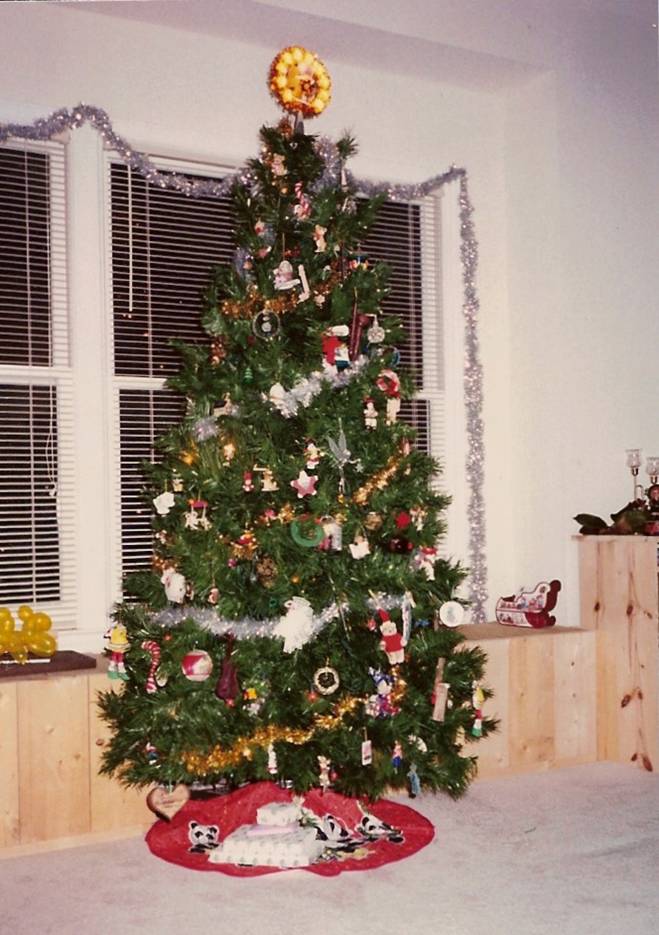
Christmas Tree
     November marks a season of change. Gone are the months of September and October that mark the beginning of the school season. Gone is the season of shifting from summer’s vacations to a normal schedule (whatever that might mean). Gone is the season when we can depend on warmth to return after every cold snap. We have come fully into the season called autumn, when leaves are either colored or gone.
     November marks the beginning of the holiday season. It is a time for making Thanksgiving plans and thinking about what items to purchase on Black Friday. The time of Indian Summer is upon us and we all begin to realize that Christmas is just around the corner.
     For me personally, November marked the time when the organization of a new church year came to an end, and things were beginning to run smoothly. November for me, and for the Pilgrims, and for many farmers marks a time of rest, when recovery is possible after a hectic year. But it was not time to stop planning completely, the busy month of December was just ahead.
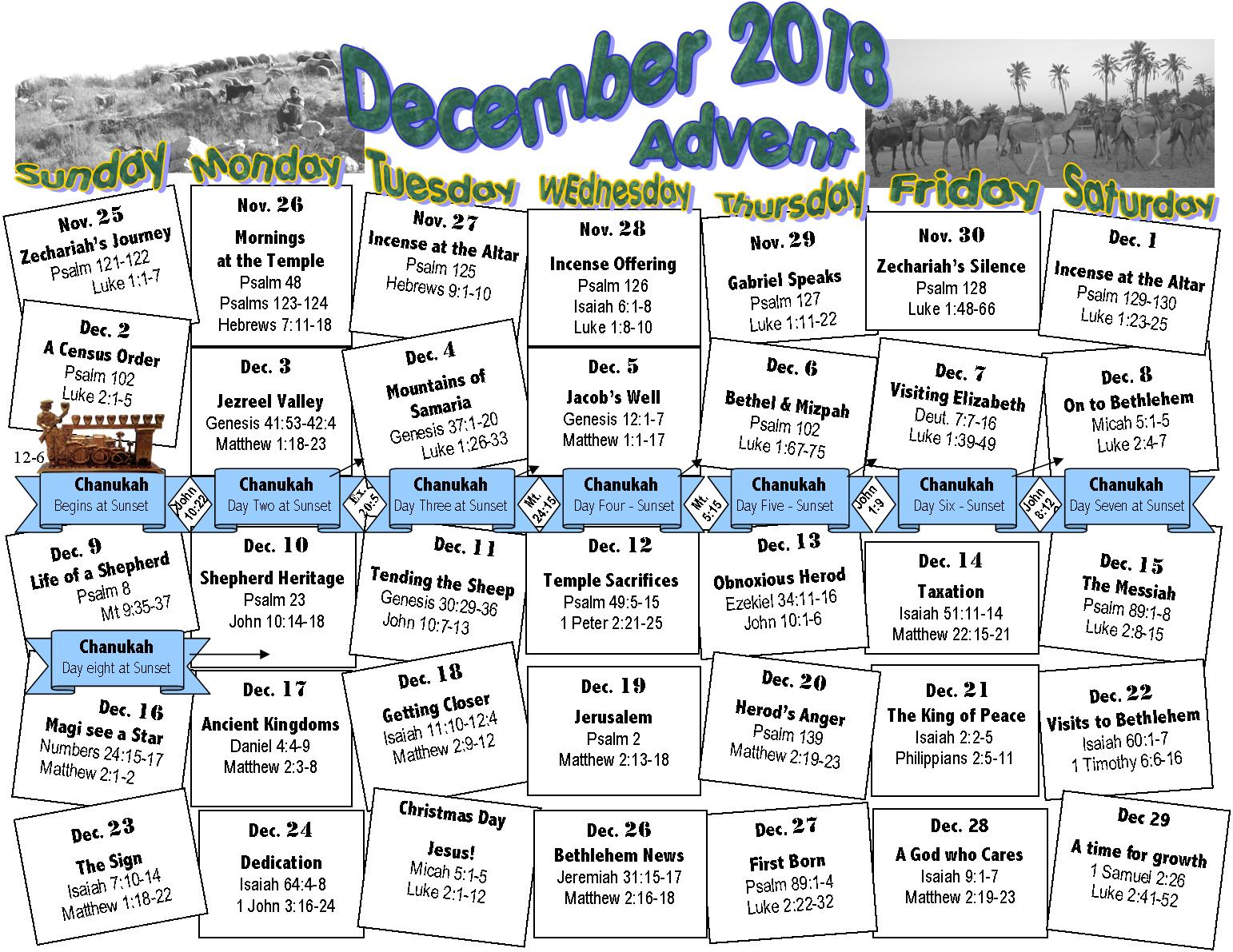
Advent Calendar
     November was the time I planned for December. I placed the multitude of church activities, parties, school programs and community events on my calendar. But I did not stop after these plans were input into my calendar. I went on to plan something much more important: My children’s Christmas (Advent) celebration.
     Soon after my first daughter was born, it came to my awareness that there is something more important than events and more eternal than presents, Jesus’ birthday. I could not and should not forget to plan family events that would help my children understand my faith. I set an agenda to share a Bible verse with my family each day at breakfast, and also a special seasonal event every day.
Children's Christmas Activities
     All these plans are included at www.KosherCopy.com under the Advent tab. I have produced a pamphlet of ideas to share with your children, and also an advent calendar. Many of the ideas do not take long to accomplish, but set one by one, each day of december, they have a profound effect on faith (and greed). Through providing an activity every day of Advent, the emphasis is taken off the giving of presents and placed on the celebration of Christ’s birth.
     With the free resources at my website, www.KosherCopy.com, it does not take long to plan a great Christmas. It only takes a decision and a couple hours of time. There is a great reward when your children find joy in Jesus rather than “what’s in it for me.”

Friday, March 31, 2017

Jesse’s Sons: Part 1

Sons, there were 8 of them and they knew their job. Their job was to shepherd the sheep. Eliab was the oldest, and therefore he was the first of the sons to shepherd the sheep. As the other sons got older they would also take care of the family’s crop of animals. Each son in order would go out with his father, and then his brothers to learn the family craft. They were like Abraham, Isaac, Jacob and his sons. The family was involved and learned the family trade.
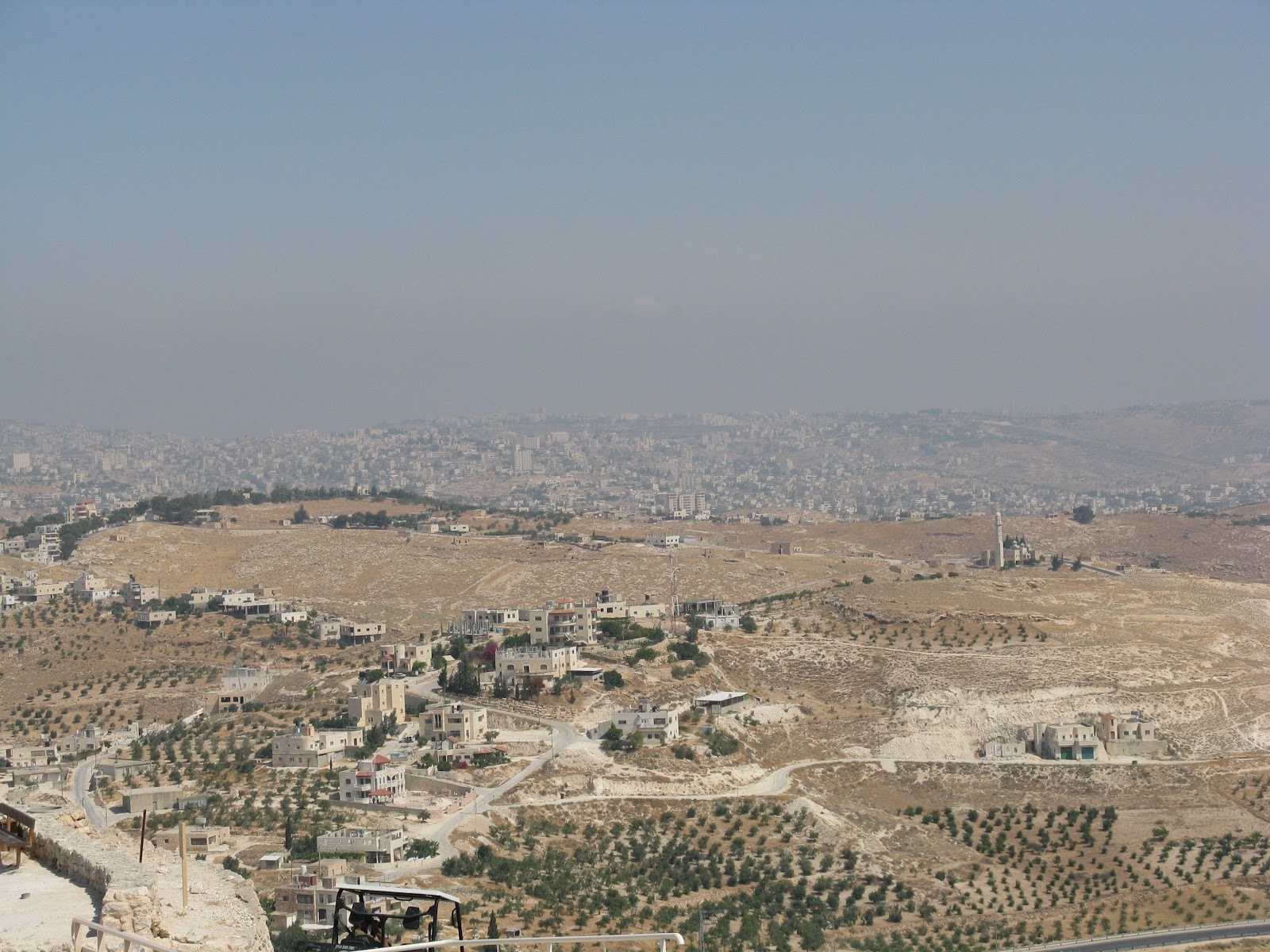
A view of the land near Bethlehem in the Judean highlands
In Israel, in the years of the Judges, that meant starting early. When Eliab was but eight years old his father Jesse brought him to the fields of  Bethlehem in order to learn the ways of the sheep and how to care for them. By ten he was ready to leave home for the summer and travel with the herd, for sheep can be hard on the pasture and must be moved from field to field so the land does not wear out. Jesse, as all good shepherds had mapped out a route and taught what he learned about life to his sons.
Caring for sheep on the slopes of Judea
Jessie did not start out as a shepherd.  His father and his grandfather were farmers who raised grain in the Bethlehem highlands. But each winter as a boy he would see sheep which grazed on his father’s land and on other pastures in the area throughout the winter.  He watched the animals and talked to the shepherds. He would hear tales of adventure as the men would journey to the lowlands each year as they cared for their sheep. The son of Obed decided he wanted see to live a life of adventure like the stories he was hearing. He would spend nights with the shepherds to learn about the sheep, and then one day he told his father that this was the life for him. Farmers stay put and shepherds guide sheep.  Jesse wanted to see the world and being a caretaker of sheep would enable him to earn a living and see the world.
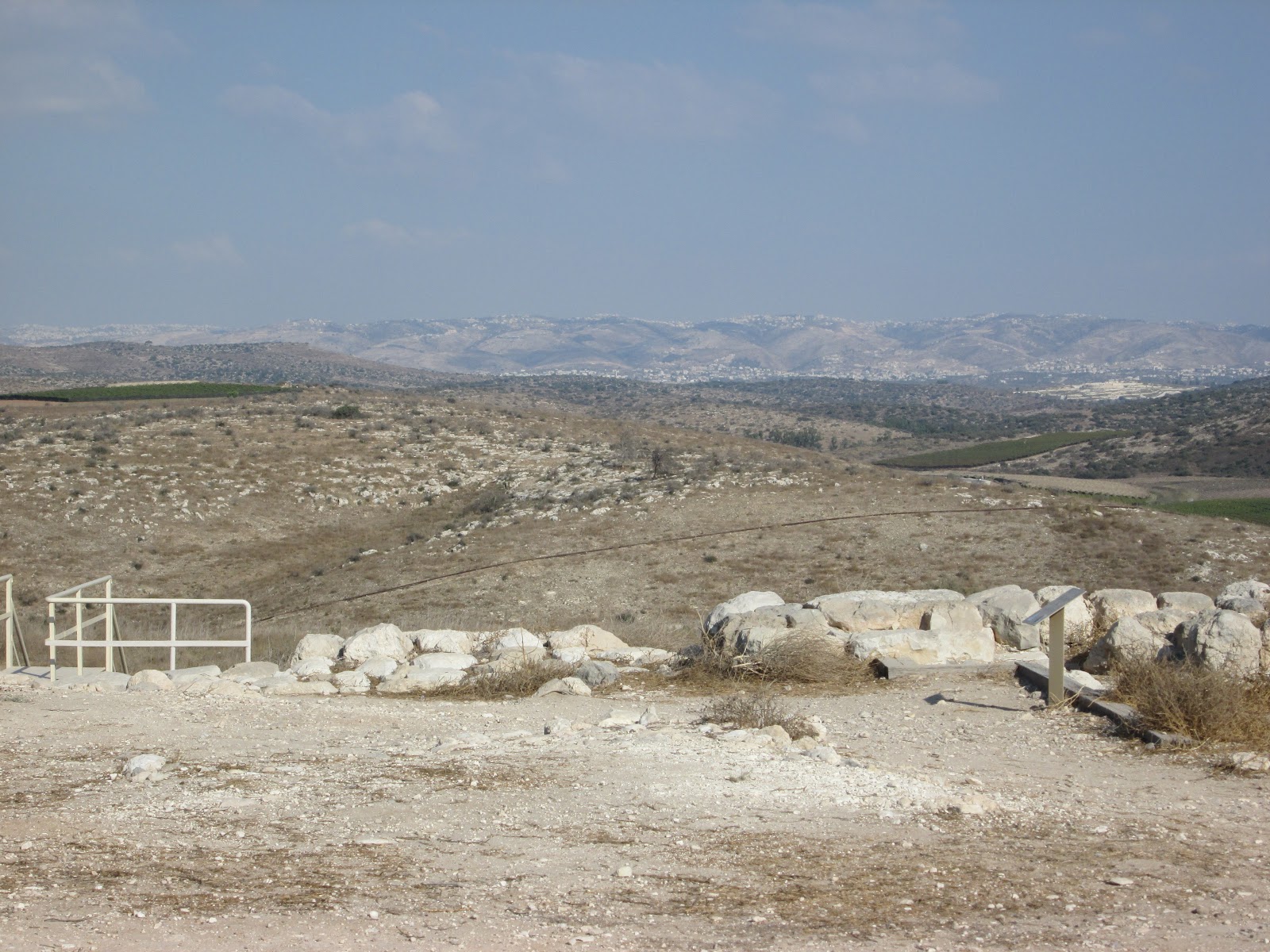
A view of the Judean highlands from the Shfela
Each spring Jesse and then his sons led sheep from the high fields of Bethlehem to find better pasture as the earth sprung to life below. He began by descending the steep slopes of the mountains to find what was growing and where the animals could graze. The annual rains would percolate down through the soil until it hit rock, and then it would surface through the multiple springs on the Judean slopes. The sheep would eat fresh food and drink clear water. Jesse, Eliab, and eventually his other sons would sleep in the cool of the caves which dotted the land.
By the full moon of Passover it was Jesse’s goal to be down the mountain and into the low hills called Shfela.  Some of the farmers had raised their first crop, barley, and the chaff and stubble left behind by the harvest made good fodder for sheep. This rich valley was an agricultural dreamland and would bring fatness to the family’s sheep so when the time came for them to be sold each sheep would bring a good price for the family to bring home before the autumn rains.
The green valleys near Azeka in Israel
In time the stubble would give out, and it was time to move on. As the son of a farmer, and now a shepherd, Jesse had learned not to test the patience of farmers. If he was kind to the people who lived on the land and limited damage by his sheep the herd could move without trouble. But if his sheep damaged the earth he would suffer the consequences.
Jesse taught his skills to his sons: To Eliab, to Abinadab, to Shimea, Nethanel, Raddai, Ozem and also to David. They each learned their lessons well as father taught son and son taught brothers and together they worked. The family made friends as they traveled and ate the fruits of the earth and saw the world which lay beyond the small highland community which they called home.
By summer this shepherd family worked their way from the high pastures near Bethlehem, down the steep hills with caves, through the valleys of grain until they reached the plain of Sharon. And it was here they rested. The streams were plentiful and the grass was abundant, and so they slowed their pace to enjoy the place and fatten the sheep.
A view of the coast-land from Tel Gezer
But they did not rest too much, for a shepherd must always move on, and in this coastal plain while the animals grazed the shepherds kept watch, for a strong people in walled cities inhabited this land.  But Jesse and his sons did not fear the people, they only watched. They also sold sheep which they grew to the foreign people who occupied this land, for the people needed food, wool, milk and other products which the herd could provide. Jesse sold some sheep, and he thinned the flock, and by the time of the fruit it was time to move again. This time they would go up the hills and not down.
The day’s work was like this: find a place to graze, guide the sheep, set a boundary and watch. Protect the flock from humans and predators, from eagles, snakes, bears, lions and people. Jesse and his sons worked hard to make sure their sheep grew fat in order to be sold.  Each spring it was down the hill, each fall it was up the hill to return to Bethlehem before the fall rains. And then there was rest.

Monday, December 26, 2016

Its Not Over Yet!!

Well, the title might be misleading; Christmas is over, but Chanukah is not. We are in the second of eight days of the Festival of Lights (or Feast of the Dedication). The Jewish writings say one must rejoice every day of the festival.
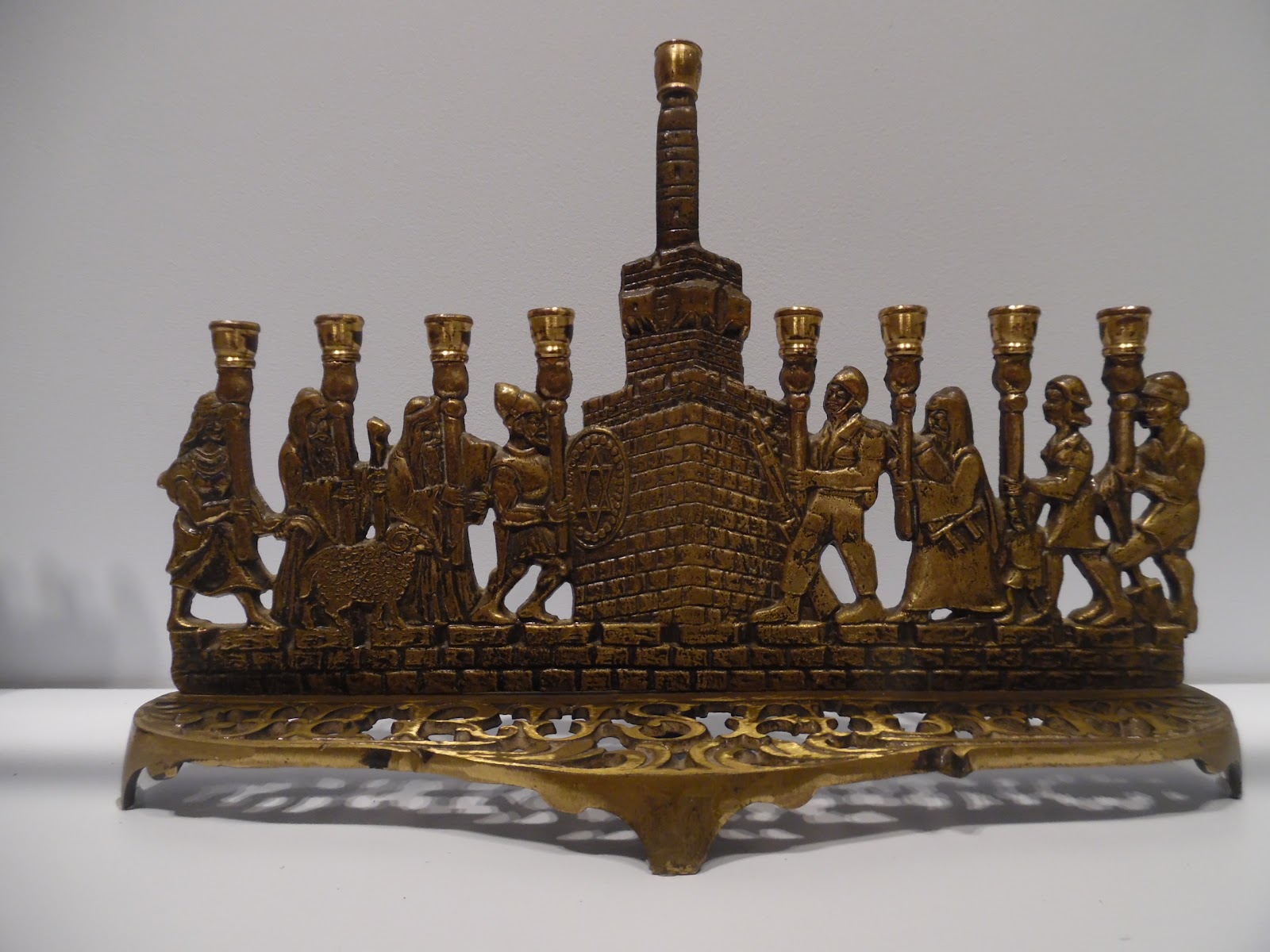
The Jews at one point argued over how to light the candles on the Menorah. Hillel thought we should begin with one candle on the first day, two on the second day, and so forth until there are eight candles lit (plus the servant candle) on the final day. Shammai said there should be eight (plus one) candles lit on the first day, and as the holiday wore on there should be one less candle each night. The Rabbis decided to support Hillel’s idea because the holiday should grow on us and not diminish.
Even so, this season, whether you celebrate Christmas, Chanukah or both, should grow in meaning and joy day by day into the New Year. And the spirit of the holiday should continue to grow day by day throughout 2017. (Unless there is a good reason, why should we worry or be sad next year?) So the point is to take one, two or three things which come out of the Christmas season (not material, but spiritual), and live them throughout the New Year. I have more about this in my book, Advent Journeys. There are devotions for all eight days of Chanukah.
I wrote in my last blog to “let your light shine.” Jesus said, “You are the light of the world. A town built on a hill cannot be hidden. Neither do people light a lamp and put it under a bowl. Instead they put it on its stand, and it gives light to everyone in the house. In the same way, let your light shine before others, that they may see your good deeds and glorify your Father in heaven (Mt 5:14-16).
In 2017 we should be a witness to others. People are drawn to joy (which is why we all like Christmas) and light (as moths are drawn to light). While many might complain about the state of our world, the economy or the government, as Christians we must realize we have and we need to be something more. The only real way to change this world is from the inside out. And that means we must share what is inside: faith.

Saturday, December 24, 2016

Jesus and Chanukah

The conversation comes up way too often. Someone says, “Merry Christmas.”
I reply, “Happy Chanukah.”
They say, “I thought you were a Christian. Christians don’t celebrate Chanukah.”
I reply, “Jesus did. When I celebrate Chanukah I think of Jesus.”
They reply, “Jesus did not. It was not even around then.” [Although I think they would rather say, “Why would Jesus do that, He wasn’t even Jewish.” But most know better or have enough doubt that they don’t want my answer on that one.]
The fact is, Jesus did celebrate Chanukah. It is recorded in John 10:22: “Then came the Festival of Dedication at Jerusalem. It was winter.”
The Festival of Dedication was a time Jewish people stopped to thank God for restoring the Temple from the desecration of Antiochus Epiphanes, which is recorded in the New Testament also. “When you see standing in the holy place ‘the abomination that causes desolation, spoken of through the prophet Daniel (9:27; 12:11) —let the reader understand…’” (Mt 24:15; Mk 13:14) The Abomination took place on the 25th day of Kislev (Jewish month), and Judas Maccabeus restored worship on Kislev 25 three years later. (The story is in our book Advent Journeys)
The problem which allowed the desecration of the Temple was not a mighty army entering Israel, but rather a people who blended with society. At first the people sought to dress and decorate their homes like Greeks (vases and colonnades, then the little figurines or idols). Then they blended more, with music and cultural habits. This extended to the family of the High Priest. The High Priest’s brother took a Greek name and then he took his brother’s office by deceit and bribery. The cultural shift opened the door for a tyrant to enter and take over.
Matthias (father of the Maccabees) was sickened by the cultural shift. He saw the things happening in Jerusalem and moved from the city to the country. Then, when he and his village were forced to bow down to an idol, he took his stand and refused to submit himself to the humiliation, to the soldiers or to the culture. A battle erupted, which the Jews won. Then worship was restored and the Jews were able to dedicate the Temple.
To remember the dedication, the Jewish people light a candelabrum called a menorah each night for eight nights (beginning tonight … Christmas Eve coincides with the first day of Chanukah this year). Jesus would encourage us, “let your light shine!”

Wednesday, December 21, 2016

Trip to Bethlehem

I am pleased to announce a much anticipated 2018 trip to Israel. This trip will be like few others, with five guides who each have unique knowledge, perspectives and interesting stories to share while we are on the ground in Israel.
Dome of the Rock from the Mount of Olives
This week’s readings in the devotional Advent Journeys framed a portion of our upcoming trip to Israel as the Magi travel past Caesarea-Philippi, down the Hula Valley, around the Sea of Galilee and beyond through the Jordan River Valley. My trips to Israel helped me to understand much more of the Bible through the context of experiencing the geography of the land of Israel.  We will travel through the places and experience some of the sights (topography and fauna) seen by the heroes of our faith.
Advent Journeys, a book worth reading!
The first idea which developed into the book Advent Journeys was to walk the route of Joseph and Mary through central Israel. The events which occurred along this road framed our Bible and demonstrate God’s love and care for us in life, no matter where life takes us. The adventures which occurred along the Patriarch’s Highway, in the Jordan River Valley and at the other sites we will visit tell of God’s love, protection and gift of salvation.
The road from Nazareth across Jezreel Valley
As I laid out our trip I made sure we included the Jordan River Valley, the Via Maris (coastal highway) and an excursion to Shiloh. This site is north of Jerusalem along a route known as the Central Ridge Road which was traveled by Abraham, Isaac, Jacob and his sons, Joshua, Samuel, King David, Ezra, and Jesus. This route forms a portion of week two in Advent Journeys which I have only explored from satellite mapping, travel journals, the Bible and modern facebook pages. Now I will be able to travel this road in the comfort of an airconditioned bus and share its stories with you.
Satellite map showing the route of Joseph & Mary
We will travel the the Central Ridge Road (also known as the Patriarch’s Highway) in order to visit Shiloh, the site of Israel’s earliest place of worship known as the Tabernacle. We will see the extensive archaeological exploration at this site and discover its importance in the Bible. We will see Bethel, Mizpah, Ramah, Anathoth and other sites along the way.
From Nazareth looking to the east
Our trip will include Tel-Aviv, Joppa, Caesarea, Mt. Carmel, Megiddo, Nazareth, Sepporis, Galilee, Katzrin, Mt. Hermon, Mt. Arbel, Magdala, Jericho, Masada, Qumran, the Dead Sea, Jerusalem, Gezer, the Wilderness of Zin, Arid and Beer-Sheva: in other words, all areas of Israel. You will have the option of a nine day trip or a fourteen day excursion (Take the fourteen day excursion, this truly is the trip of a lifetime and will make the Bible come alive!)
The city of Joppa as seen from the Mediterranean beaches
I will make available for those who go with me not only an agenda for this trip, but also a detailed itinerary for those who enjoy reading, and desire to know where we are going so they can spend time looking around the places they have studied. I like to study a place before I go so I can spend my time away from home looking at and experiencing the land rather than playing catch up through readings or lectures. I will send these to be placed on a tablet or kindle which can be easily carried to Israel.
Exploring the Dome of the Rock and Temple Mount

I will soon have more details on my website, including travel dates and cost of the trip. To receive updates, learn about the trip or to sign up please like and follow KosherCopy on Facebook. With this blog I am inviting you to travel with me and come to see the Bible as only those who have set foot in the land of Israel can understand.

Sunday, December 18, 2016

All that Glitters at Christmas

What makes Christmas bright? For many of us, attention is drawn to all the flashy luster that is part of this special season of the year. Possibly the most shining example of shimmering sheen in the season of Christmas are the lights. Starting in November and lasting through January, Christmas lights appear all over the place. In our neighborhood there are scintillating displays that glitter like tiny beacons after the all-too-soon setting of the sun brings darkness to our community. Beyond our subdivision, many other homes portray their love for the season using twinkling displays, moving lights, or even characters that sway as they burst with bright light. A few homes entertain passers-by with glitzy themes. Other residences show their value for quantity, teetering on the edge of gaudiness (a destination at which some have fully arrived). A few humble dwellings shine out with unbelievable extravagance. The glow of lights set out with great effort brings a welcome moment of joy and celebration for all.
Beyond the lights of the facade, many homes are filled on the inside with glittering, shimmering decor. Snowmen, snowflakes, skaters and icicles announce that the time is winter.  Candy canes, M&M’s and other mouth watering displays draw out the sweet tooth in us. Evergreen trees smothered with decor and tinsel share a hope that springtime will come again to break the cold and darkness. Displays of faith announce the real or historic reason we call this season Christmas.
The season draws out an expression of hope among merchants who fill stores with wares and line shelves with glittering trinkets which they hope we will buy. It is said that one out of every five merchandise purchases is made within thirty days before Christmas and produces three trillion dollars in sales on main street, mall row, byways stores and internet surfside displays.
Where did this all get started? Tradition tells us it was three kings who traveled the silk road from the east and brought the original glittering gifts of gold, frankincense and myrrh. But many in our secular world argue it was Santa Claus who dropped the original gold trinkets down chimneys into the stockings of the poor.  You can choose, but remember: One shiny gift brings only a quick flash of glitter, but a gift given with the love of Christ displays abiding light from within.
By some readings, both the Kings and Santa Claus (St. Nicholas) gave a one-time present. But when you look at the real Kings, and the genuine heart of the real St. Nicholas, you discover they each gave their gifts out of a heart seeking to please God. This Christmas, will you give presents that carry the glitters and glimmers of this world in order to impress, or will you give the gifts prayed over and driven by the love of Christ in order to embrace our world in an unbelievable way on that first Christmas morning?

Friday, December 16, 2016

Do Angels Sing?

A consistent theme of the Christmas story is the appearance of Angels to people. The story begins with an Angel who comes to Abraham on Mount Moriah and tells him, “through your offspring all nations on earth will be blessed.” (Ge. 22:18, repeating the promise given by God in Ge. 12:3) The Angel also visits Zechariah (Luke 1), Mary (Luke 2), Joseph (Matthew 1), and shepherds in the fields outside Bethlehem (Luke 2). These Angels are a major part of the Christmas story; they bring the good news and promises of God to earth.
This week in Advent Journeys we are experiencing Christmas through the journal of a shepherd. In Saturday’s journal this shepherd wrote howan angel of the Lord appeared … and the glory of the Lord shone around them.” The angel said to the shepherd and his co-workers, “Do not be afraid. I bring you good news that will cause great joy for all the people. Today in the town of David a Savior has been born to you; he is the Messiah, the Lord. This will be a sign to you: You will find a baby wrapped in cloths and lying in a manger.”
Then the Bible tells us, “a great company of the heavenly host appeared with the angel, praising God and saying, ‘Glory to God in the highest heaven, and on earth peace to those on whom his favor rests.’”
There are many who tell us that Angels do not sing, because the Greek word used for the communication of the Angels in this passage is λέγω (legō), which means “to say or to speak.” The dictionary also tells us this word covers every kind of speaking: to bid, boast, call, describe, name, tell, utter. When this word is used in scripture (and in other places) most often it describes someone speaking or talking. But in a wider sense, this word conveys communication. What many ignore is that singing is a form of communication.
The truth which many scholars (who study this passage in a very narrow way) miss is that when multitudes of angels come together in communication it is most often through the medium of singing. The pattern of speaking which we see in this passage is a basis for the way we worship. Mary led Israel to worship through singing in Exodus 15. They continued singing as they traveled in the wilderness (Numbers 21:17) and as they settled in the land of Israel (1 Chronicles 6:31). God commanded Moses (Dt. 31:19), David (1 Chronicles 15:8) and others to write music.
The Bible tells us of the true songs of pure worship which are sung in heaven. These include ‘a new song’ which is sung in Revelation 5:9-10 “You are worthy to take the scroll and to open its seals, because you were slain, and with your blood you purchased for God persons from every tribe and language and people and nation. You have made them to be a kingdom and priests to serve our God, and they will reign on the earth.” The angels also sang the new song of Moses, ““Great and marvelous are your deeds, Lord God Almighty. Just and true are your ways, King of the nations. Who will not fear you, Lord, and bring glory to your name? For you alone are holy. All nations will come and worship before you, for your righteous acts have been revealed.” (Revelation 15:3-4)
The song of the angels to shepherds in fields outside of Bethlehem was a vibrant means of communication. “Fear not,” should explain to us we should fear neither hearing, speaking or singing the message of God. “Behold, I bring you Good News of Great Joy,” gives an example of how we should communicate the Gospel (good news) to those who have not heard. “Glory to God in the highest heaven, and on earth peace to those on whom his favor rests.” gives us the example that all of our music should be pointed to God (and not to we ourselves). This song also teaches (as does the song previously mentioned from Revelation 5) that as a result of our worship (and like the shepherds who “spread the word concerning what had been told them about this child”) we should “be a kingdom and priests to serve our God.”
The Apostle Paul tells us to be like the angels, “Let the peace of Christ rule in your hearts, since as members of one body you were called to peace. And be thankful. Let the message of Christ dwell among you richly as you teach and admonish one another with all wisdom through psalms, hymns, and songs from the Spirit, singing to God with gratitude in your hearts” (Colossians 3:15-16). Never let anyone tell you not to sing the joyous message of Christ, especially at Christmas!


Wednesday, December 14, 2016

Shepherds of Greatness

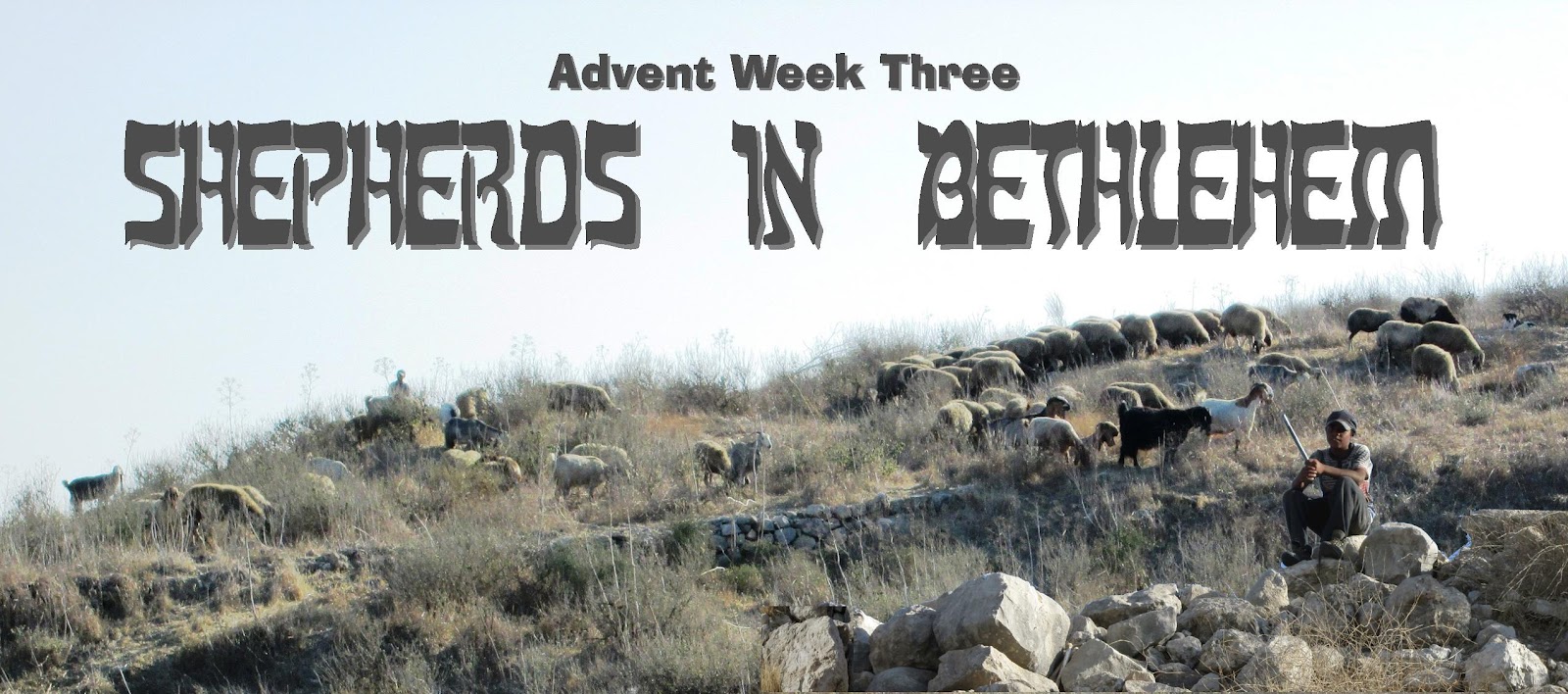
This week in the devotional Advent Journeys we move to the fields outside Bethlehem. Have you ever wondered what it would be like to live as a shepherd? There is more to the life than just following sheep. Take a look at the devotions this week, you can explore for free if you are an Amazon Prime member. I think you will enjoy the adventures of the Shepherds.
The Bible has a lot to say about shepherds. The first shepherd in the Bible (and we can assume the man who domesticated sheep) was Abel. His work, his heart of faith, and his offering pleased God. God’s love for Abel was seen by all (but there were not many people in the world at that time), and was displeasing to Abel’s brother Cain.
The Patriarchs: Abraham, Isaac, Jacob and Jacob’s sons were all shepherds. They developed large flocks, enjoyed great prosperity and developed quite a reputation as businessmen. Some of their neighbors were not too keen on their success. The Philistines stopped up their wells and attempted to get them to move, but God protected the Hebrew people.
Moses took up shepherding at the age of forty after a tragedy made a move necessary to sof ha’olam smola (סוף העולם שמאלה). Moses possibly learned the basics of shepherding through leadership training in Egypt in the school of Pharaoh. On the back side of the desert Moses met his wife, saw a burning bush and received his call to lead the people of Israel out of Egypt. (Who ever said Shepherding is boring?)
In an opposite way a shepherd boy named David received training to become King of all Israel through his leadership of sheep. (I wonder if there is a similarity between dumb sheep and a nation full of people). David learned bravery through protecting his sheep. He learned to sing and compose music either through necessity because of the vastness and emptiness of the Judean wilderness or through the constant bleating of the sheep. The solitude of the desert also taught David to worship God.
Shepherds are a unique group of people who carry a huge responsibility. This week we will join the shepherds as they live out their responsibilities and carry out their duties. Please, join the reading!

.

Sunday, December 11, 2016

Christmas Sunday School

For many years I have served as a Minister of Education at churches in Wyoming, Kansas and North Carolina. As a Minister of Education I developed educational programs for all age levels from Preschool to Adults. I found and trained workers to staff these programs.
As a retired minister, I continue in my life’s work, but at a slower pace. One area where I continue to serve is in the Preschool. During my time of service I encouraged everyone to volunteer with Preschoolers once per month during the time of the worship service (we called this “extended session.”) As an example (because I must do as I said) I serve in the Kindergarten class (our Minister of Children finagled a way to get me to serve twice a month), and develop my lesson plans where the curriculum is weak.
I have observed across the years that faith development in children is not automatic and a guide is required both at home and in church to to help children find the right path. I have shared in previous posts how I developed and carried out a lesson plan for the Christmas season each year with my family and in church. During the two weeks of teaching this month I drew upon my plan for Sunday’s lessons.
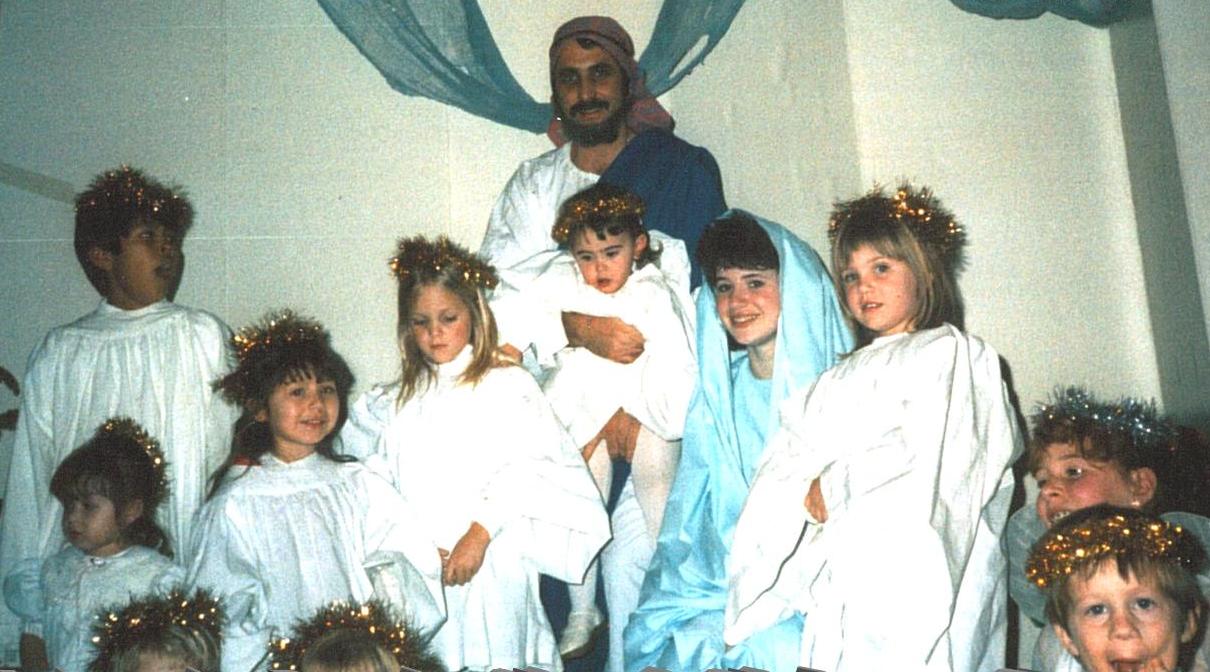
Last week’s lesson for children, and the journal in the devotional Advent Journeys, was about how the Angel Gabriel met Zechariah at the Altar of Incense in the Temple. My activity as I taught children was to have them lay down on a large sheet of paper with a crayon in each hand in order to draw angel wings snow-angel style. After the wings were drawn my helpers and I made an outline around the child’s body and let them color in the picture. As they colored, we taught the lesson.
This week’s lesson for children and the journal in the devotional Advent Journeys is about Joseph and Mary as they travel from Nazareth to Bethlehem and give birth to a Child. The birth of Jesus is the reason for the Christmas season, so it is with great joy that I look forward to teaching the children in our church tomorrow.
As I thought about what to do (more than just crayons and paper), I decided to give them something that hopefully will last a lifetime: a nativity scene.
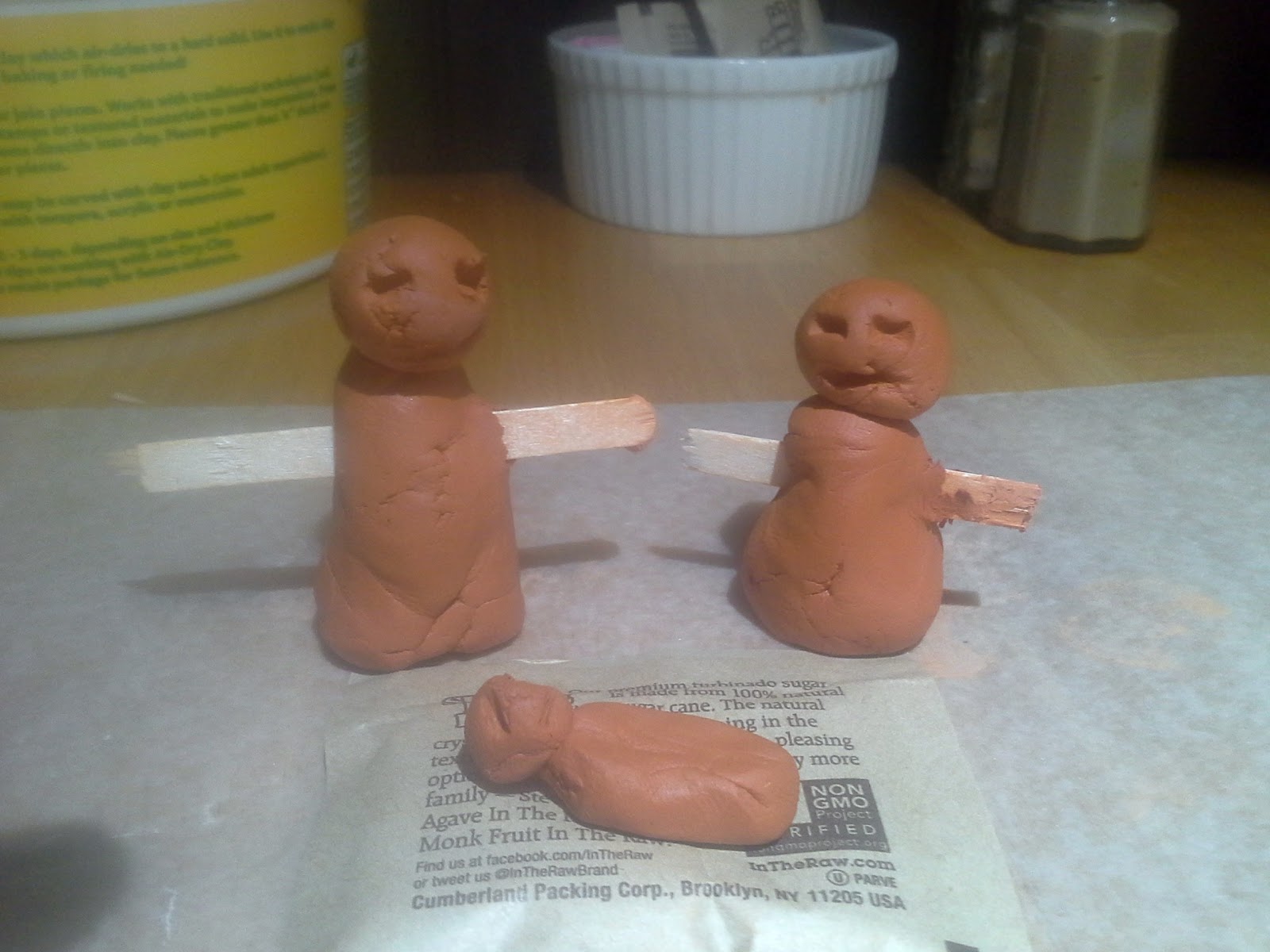
In our family we proudly display a nativity scene made of clay by my daughters and myself many years ago. Although rough and misshapen, the set contains many memories, and is hand made. The scene brings back memories of the class, my daughters' childhoods, Christmases of the past and the Christmas message. It is a keepsake which is the springboard to stories and sharing as people visit our home (and as I write this blog).
I decided to give the Kindergarten children in my class a gift. I bought air-dry clay and took it to breakfast this morning, where I practiced (and got it right the first time!) One pinch of clay rolled between my fingers to make the head. Three pinches of clay shaped like a bell to make the body. A coffee stirrer (I will use toothpicks in class) for the arms, and another pinch made the body and head for the baby. I cut small mangers out of pressed wood (looks like hay), and will put it in a box for a stable.