Showing posts with label Shepherd. Show all posts

Friday, March 31, 2017

Jesse’s Sons: Part 1

Sons, there were 8 of them and they knew their job. Their job was to shepherd the sheep. Eliab was the oldest, and therefore he was the first of the sons to shepherd the sheep. As the other sons got older they would also take care of the family’s crop of animals. Each son in order would go out with his father, and then his brothers to learn the family craft. They were like Abraham, Isaac, Jacob and his sons. The family was involved and learned the family trade.
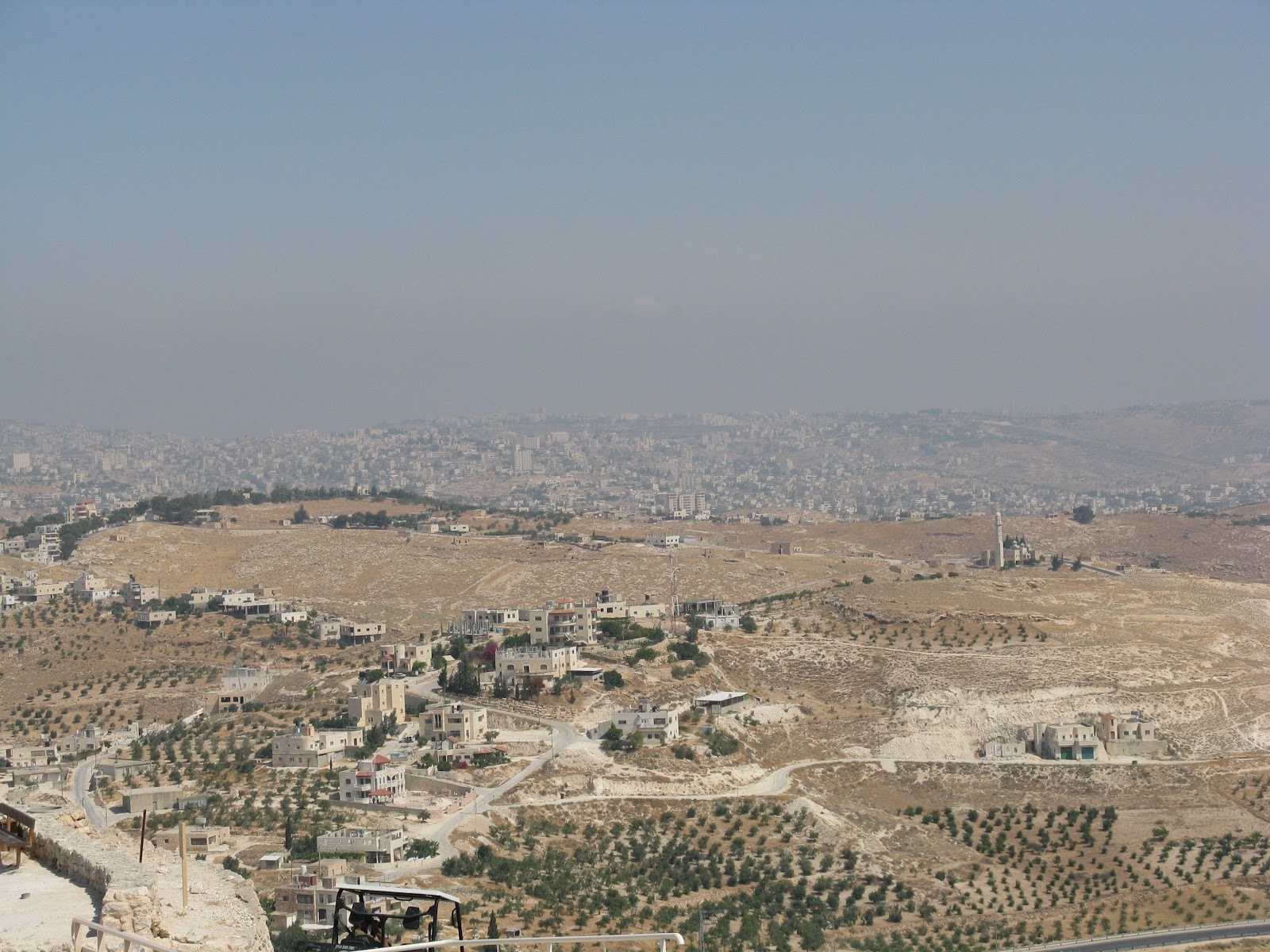
A view of the land near Bethlehem in the Judean highlands
In Israel, in the years of the Judges, that meant starting early. When Eliab was but eight years old his father Jesse brought him to the fields of  Bethlehem in order to learn the ways of the sheep and how to care for them. By ten he was ready to leave home for the summer and travel with the herd, for sheep can be hard on the pasture and must be moved from field to field so the land does not wear out. Jesse, as all good shepherds had mapped out a route and taught what he learned about life to his sons.
Caring for sheep on the slopes of Judea
Jessie did not start out as a shepherd.  His father and his grandfather were farmers who raised grain in the Bethlehem highlands. But each winter as a boy he would see sheep which grazed on his father’s land and on other pastures in the area throughout the winter.  He watched the animals and talked to the shepherds. He would hear tales of adventure as the men would journey to the lowlands each year as they cared for their sheep. The son of Obed decided he wanted see to live a life of adventure like the stories he was hearing. He would spend nights with the shepherds to learn about the sheep, and then one day he told his father that this was the life for him. Farmers stay put and shepherds guide sheep.  Jesse wanted to see the world and being a caretaker of sheep would enable him to earn a living and see the world.
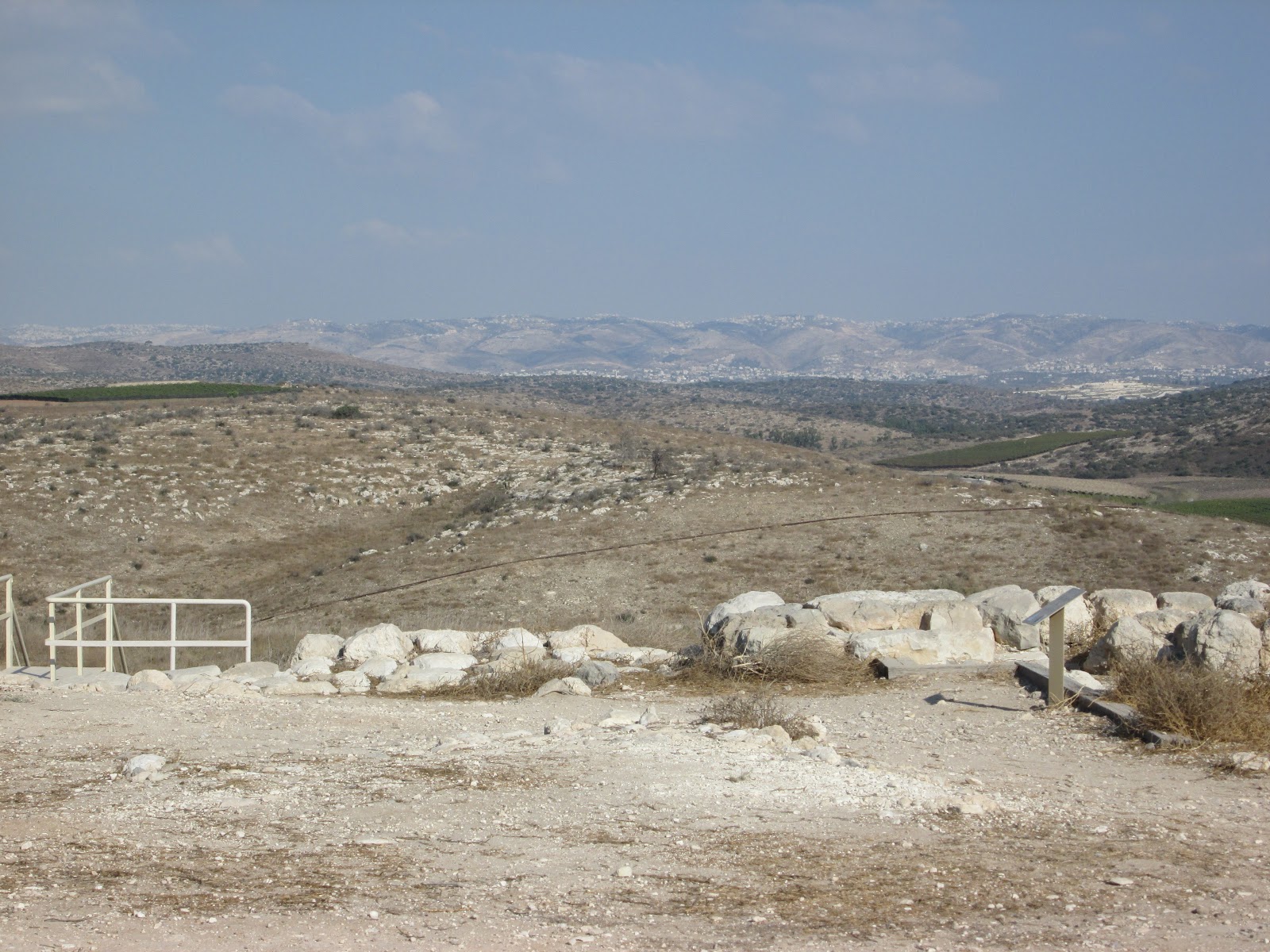
A view of the Judean highlands from the Shfela
Each spring Jesse and then his sons led sheep from the high fields of Bethlehem to find better pasture as the earth sprung to life below. He began by descending the steep slopes of the mountains to find what was growing and where the animals could graze. The annual rains would percolate down through the soil until it hit rock, and then it would surface through the multiple springs on the Judean slopes. The sheep would eat fresh food and drink clear water. Jesse, Eliab, and eventually his other sons would sleep in the cool of the caves which dotted the land.
By the full moon of Passover it was Jesse’s goal to be down the mountain and into the low hills called Shfela.  Some of the farmers had raised their first crop, barley, and the chaff and stubble left behind by the harvest made good fodder for sheep. This rich valley was an agricultural dreamland and would bring fatness to the family’s sheep so when the time came for them to be sold each sheep would bring a good price for the family to bring home before the autumn rains.
The green valleys near Azeka in Israel
In time the stubble would give out, and it was time to move on. As the son of a farmer, and now a shepherd, Jesse had learned not to test the patience of farmers. If he was kind to the people who lived on the land and limited damage by his sheep the herd could move without trouble. But if his sheep damaged the earth he would suffer the consequences.
Jesse taught his skills to his sons: To Eliab, to Abinadab, to Shimea, Nethanel, Raddai, Ozem and also to David. They each learned their lessons well as father taught son and son taught brothers and together they worked. The family made friends as they traveled and ate the fruits of the earth and saw the world which lay beyond the small highland community which they called home.
By summer this shepherd family worked their way from the high pastures near Bethlehem, down the steep hills with caves, through the valleys of grain until they reached the plain of Sharon. And it was here they rested. The streams were plentiful and the grass was abundant, and so they slowed their pace to enjoy the place and fatten the sheep.
A view of the coast-land from Tel Gezer
But they did not rest too much, for a shepherd must always move on, and in this coastal plain while the animals grazed the shepherds kept watch, for a strong people in walled cities inhabited this land.  But Jesse and his sons did not fear the people, they only watched. They also sold sheep which they grew to the foreign people who occupied this land, for the people needed food, wool, milk and other products which the herd could provide. Jesse sold some sheep, and he thinned the flock, and by the time of the fruit it was time to move again. This time they would go up the hills and not down.
The day’s work was like this: find a place to graze, guide the sheep, set a boundary and watch. Protect the flock from humans and predators, from eagles, snakes, bears, lions and people. Jesse and his sons worked hard to make sure their sheep grew fat in order to be sold.  Each spring it was down the hill, each fall it was up the hill to return to Bethlehem before the fall rains. And then there was rest.

Monday, March 27, 2017

New things in Ancient Lachish

During our 14 day trip to the Holy Land we will be visiting ancient sites and more modern sites in Israel. Sometimes primitive sites and modern conveniences exist together. The historic Tel Lachish is a historic area which has been modernized.
When I first visited this site in 2014, we could not enter through the city gates because of a major construction project. Ramps were being installed for the disabled so they could easily approach the site without steep inclines or rough terrain.
Our group could not enter through the gate, and we were forced to find another way to the top of the mound. The most obvious approach was to climb the high hill which still covered some of the walls.
The hill was very steep, and we ascended with great difficulty. But we managed and helped one another to the top of the site. From the top we looked down on the entire area which was once the city.
Lachish was a major historic site dating back to the Neolithic period (5500–4500 BC). It is first mentioned in the Amarna letters of Pharaoh Amenhotep III dating to the fourteenth century BC. The city was destroyed several times, but because of its location, it became a major administrative center during the reign of kings Asa and Jehoshaphat with thick walls for protection.
Sennacherib and Nebuchadnezzar were able to overcome the walls and conquer the city, which was abandoned not long after in 587 BC.
The city is inhabited by sheep and shepherds today. The shepherd and sheep pictured in the heading of week three of my book Advent Journeys was taken at Lachish. (I thought about David the shepherd as I took the picture.) Lachish is located (by air) twenty-two miles from Bethlehem.
I hope you can join us on our 14 day trip to the Holy Land.To see the full agenda or to sign up, click the links. You will be rewarded through personal discoveries and experiences by going on this journey.

Wednesday, March 15, 2017

A Boy Named David

Today we’ll take a fresh look at an ageless story which has been told often, but is worth telling again. The story contains elements of self-preservation, protection of a people, and heroism which guides us in faith and also gives an understanding of the land where the epic events and teachings of the Bible took place.
Scrolls at the 5th Quarter in Jerusalem
The story begins in the fields outside a village called Bethlehem, or the House of Bread. Shepherds had passed through this village for more than a thousand years before our story occurred. Abraham, Isaac, and Jacob are known to have passed along the road, Rahab settled here after leaving Jericho, and Boaz lived in the village. Jesse and his eight sons (who are the subject of our story) also lived here.
Elah Valley in Jerusalem where David fought Goliath
The town of Bethlehem sat near an important junction where the Central Ridge Road meets the road which descends through the Elah Valley to the coast.
Road leading down to the Elah Valley from Ramat Rachel
In the days of King Saul, the Philistines (also called the Sea Peoples) were enemies of the new Kingdom of Israel. The Philistines lived along the coast in five major towns and surrounding villages. Throughout their history, they sought to expand their territory. One area of expansion was through the Elah Valley and up the hill to the Central Ridge Road.
Looking into Philistine territory from Gezer, Israel
The Bible tells us of one such war initiative of the Philistines. “Now the Philistines gathered their forces for war and assembled at Sokoh in Judah. They pitched camp at Ephes Dammim, between Sokoh and Azekah.” (1 Sam 17).
Information sign at Tel Azeka, Israel
King Saul responded by enrolling enlistees and sending an army down the road into the Elah Valley, and they camped near Azekah. “A champion named Goliath, who was from Gath, came out of the Philistine camp. His height was six cubits and a span. He had a bronze helmet on his head and wore a coat of scale armor of bronze weighing five thousand shekels; on his legs he wore bronze greaves, and a bronze javelin was slung on his back. His spear shaft was like a weaver’s rod, and its iron point weighed six hundred shekels. His shield bearer went ahead of him.”
Looking into Elah Valley from Azekah
The Hebrews trembled when they saw the nine foot giant. In fear they froze and did not know what to do. For forty days the giant would come down from the Philistine camp and issue the challenge, “Why do you come out and line up for battle? Am I not a Philistine, and are you not the servants of Saul? Choose a man and have him come down to me. If he is able to fight and kill me, we will become your subjects; but if I overcome him and kill him, you will become our subjects and serve us. This day I defy the armies of Israel! Give me a man and let us fight each other.”
Looking into Elah Valley from Tel Azekah
For forty days the giant Goliath descended from his hometown of Gath in order to challenge the Hebrews. The standoff lasted so long that Jesse, who had three sons (Eliab, Abinadab, and Shimma) among the camp of Israel, decided to try to encourage his family. He sent his youngest son, David, to carry food from his home in Bethlehem to his sons who were camped in the Elah Valley.
Looking east from Tel Azekah
While David was delivering food to his brothers, Goliath descended to repeat his challenge before the army of Israel. David told his brothers that he would fight the Giant, and this was told to the King, but Saul thought the boy was too young.
Shepherd near Lachish in Israel
David told the King he was able to defend his sheep against lions and bears. He pushed his desire to fight the Giant against every objection the king could dish out his way. Because no one else was willing step forward, the king allowed a young shepherd to accept the challenge.
Sheep near Lachish in Israel
We all know the outcome - with one stone in a sling, David, the young shepherd, felled the nine foot giant. He also kept the giant’s brothers at bay with other smooth stones collected for ammunition.
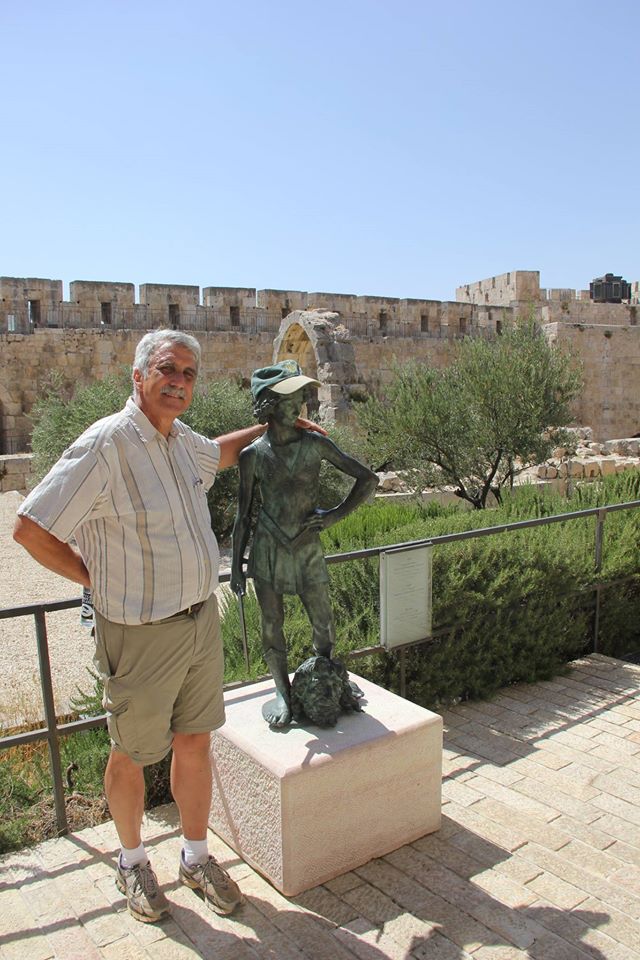
Two Davids at Tower of Israel Museum, Jerusalem

On our tour of Israel May 5-18 we will visit the Valley of Elah, we will see Azekah, and we will ascend Gath. We will retell the stories and relive the events which changed history so long ago. I invite you to join us on this trip in order to experience the stories of the Bible as they come to life.

Monday, December 14, 2015

Character traits of True Shepherds

The people of the Bible were much more tied to the earth, to agriculture, than we are today.  Through these ties, people were able to observe what worked … and what did not work.  People were trained through some aspects of agriculture for more vigorous service to God.  Take for instance shepherds.
Abel was the first shepherd, and the Bible tells us he gave a more excellent sacrifice than his brother Cain.  Beyond the blood offering, we must note that sheep require more care than crops.  A farmer can get by with tilling the soil, watering the crop, and making sure thieves do not come in and destroy.  A shepherd must do all of the above (instead of tilling, the shepherd must carefully select a field with good grass), and more!  The shepherd is in charge of living animals.  They can wander (and he must watch).  And more important, he must love the sheep with all of his life.  Sheep who are loved flourish.  Sheep which are just tended do ok.  Sheep who are abused grow weaker and die.
Through the care of sheep men like Abraham, Isaac, Jacob, Joseph, Moses and David learned to rule people.  They learned one cannot haphazardly do his work, occupying their time with pleasure rather than focused care: or the sheep, and the nation will wither.
I have been reading some of Philo of Alexandria, who lived at the same time as Jesus, who said this of the Shepherds: “It is customary to call those who have management of sheep both the name of shepherd and the keeper of sheep.” We often do not do not connect these names with government leaders or business managers of people, but we must reason the same way for leaders and managers are caretakers of people and therefore superintendents of the flock of the soul. “A man who is but an indifferent manager of the flock is called a keeper of sheep, but a good and faithful one is called a shepherd.”  
In the book Advent Journeys, I wanted to make sure to represent the shepherds of Bethlehem as good shepherds, not just “keepers of sheep,” for God gives extra privileges only to the righteous.  Philo says, “Since the flock is devoid of reason, and God is the fountain of reason, it follows of necessity that a man who lives in an irrational manner is separated from the life of God.”
“Those indeed who are able to reason correctly, it is more noble employment than that of a king, to be able to govern the body and the outward senses, and the belly, as one might govern a city or a country, and to restrain the pleasures which have their seat around the belly, and the other passions, and one’s tongue, and, in short, all the different parts of one’s composite nature with vigor and exceeding power, and again to guide them in the right way with due gentleness, for it is necessary at one time to act like a charioteer who slackens the reigns with which he holds the horses which are yoked in his chariot.”
“It is said that ‘Moses was the shepherd of the sheep of Jethro, the priest of Midian.’  And this man himself prays that the flock many not be left without a shepherd, meaning by the flock the whole multitude of the parts of the soul; but that they may meet with a good shepherd, who will lead them away from the nets of folly, and injustice, and all wickedness, and conduct them to the doctrines of learning and all other virtue.”
I am sure the shepherds of Bethlehem, as referenced in Advent Journeys, were good shepherds, who were given the privilege of hearing angels and seeing the Great Shepherd at his birth because they were not only responsible shepherds, but also shepherds who cared for their sheep out of love rather than obligation.
Our lessons from this: 1) Pastors, Elders, Deacons, Sunday School Teachers and other leaders in our churches must serve out of love rather than obligation; and must diligently care for the souls of the people they lead and serve. 2) We must carry the teachings of Christ into business, always making sure we care for the needs of employees as a good shepherd, as opposed to the manipulative methods used in some organizations. 3) Our political leaders (this is a political year) should exemplify the care for citizens which would define a good shepherd.
“

Friday, March 27, 2015

Heaven

     Have you ever wondered what Heaven will be like? In real life sometimes we can catch glimpses of Heaven through the words of the dying, who see through the valley of the shadow of death, and tell us the things they have seen. A few people have come back from near death experiences and describe the things they have seen. More profound, Jesus tells us about heaven, and shares his credentials as the one who came down from heaven. (John 3:13; 6:38; 8:58)
     Throughout the Bible details are shared of what Heaven will be like. Some of these are simple, and show the real life going on in Heaven (Zech 8:3-6). Other scenes are more lofty and tell of the beauty of heaven (Revelation 21). The Bible says those who believe will go to heaven, while the ones who choose to fight God will suffer punishment.
     I have heard many who describe heaven as a place where we receive our angel wings and spend the day playing harps. But through this statement, people miss the things the Bible teaches about heaven. When we get to heaven and lie down in green pastures, life does not stop. Our life continues. God will show us things we could not understand on earth. We will enjoy great times of worship before the throne of God in heaven. And we will get to hang out with friends, new and old. Life will go on, but life will be much better than what is experienced here on earth.
     When I studied for and wrote chapter 9 of Spring: Connecting with God (Kindle), I found a unique picture of heaven in Psalm 23. I invite you to order and read this book. And through the book, I hope you will see how much God loves us and calls us to enjoy the life He has offered both here and in heaven.