Showing posts with label Jesse. Show all posts

Sunday, April 2, 2017

Jesse’s Sons: Part 3

Eliab was back in the valley he had grown to love, but this time it was not to herd sheep, it was for war. And the conflict was not going well, for an evil spirit tormented King Saul and apparently his people had fallen out of favor with God. The Philistines were successfully expanding their kingdom into Benjamin and were on their way to raid and loot the Judean highlands. King Saul and his generals decided to stand against them in the Elah Valley. This is a place where they had been successful before. In the days of Joshua God helped His people to win a decisive victory over the Amorites by sending a hail storm (Joshua 10:10-11). Samson, the Judge of Israel had killed Philistines in the area with the jawbone of an ass.
When King Saul called out his army Eliab with two of his brothers, Abinadab and Shammah responded. They were camped below the town of Azekah, an ancient village set at a strategic vantage point where the Elah Valley wraps around a hill.  From the top of the hill the entire valley could be observed from end to end. The high position also enabled communication with fire signals which could be seen in the south at Lachish to the east in Judah and to the north in Benjamin. The Assyrians at a later date said the the place was like the nest of an eagle located on a mountain ridge. Simon bar Kocba set a fort in this area in the early second century and his trademark tunnels still run just below the surface. This defendable position was easily accessible for King Saul from his capital at Gibeah through Beit Shemesh.
Satellite View of Azekah
The army of the Philistines was camped on the south side of the valley near the village of Socoh. The Elah River stood between the two armies and was nicknamed in anticipation of the battle to come “Ephes Dammim” or the boundary of blood.
Socoh Hill
But the battle did not come as anticipated, for the Philistines from Gath had a powerful diversion with them, and after a time of acting out and noise making by both armies in order to bring fear to the opposition the Philistines revealed a secret weapon. His name was Goliath, which means splendor. And he was magnificent. He stood nine feet tall and carried a spear like a weaver's beam. He issued a challenge which according to the rules of war in that day must be accepted, “Choose one man and let him fight me. If he is able to kill me, then the Philistines will become your servants: but if I prevail against him, and kill him, then you shall be our servants.”
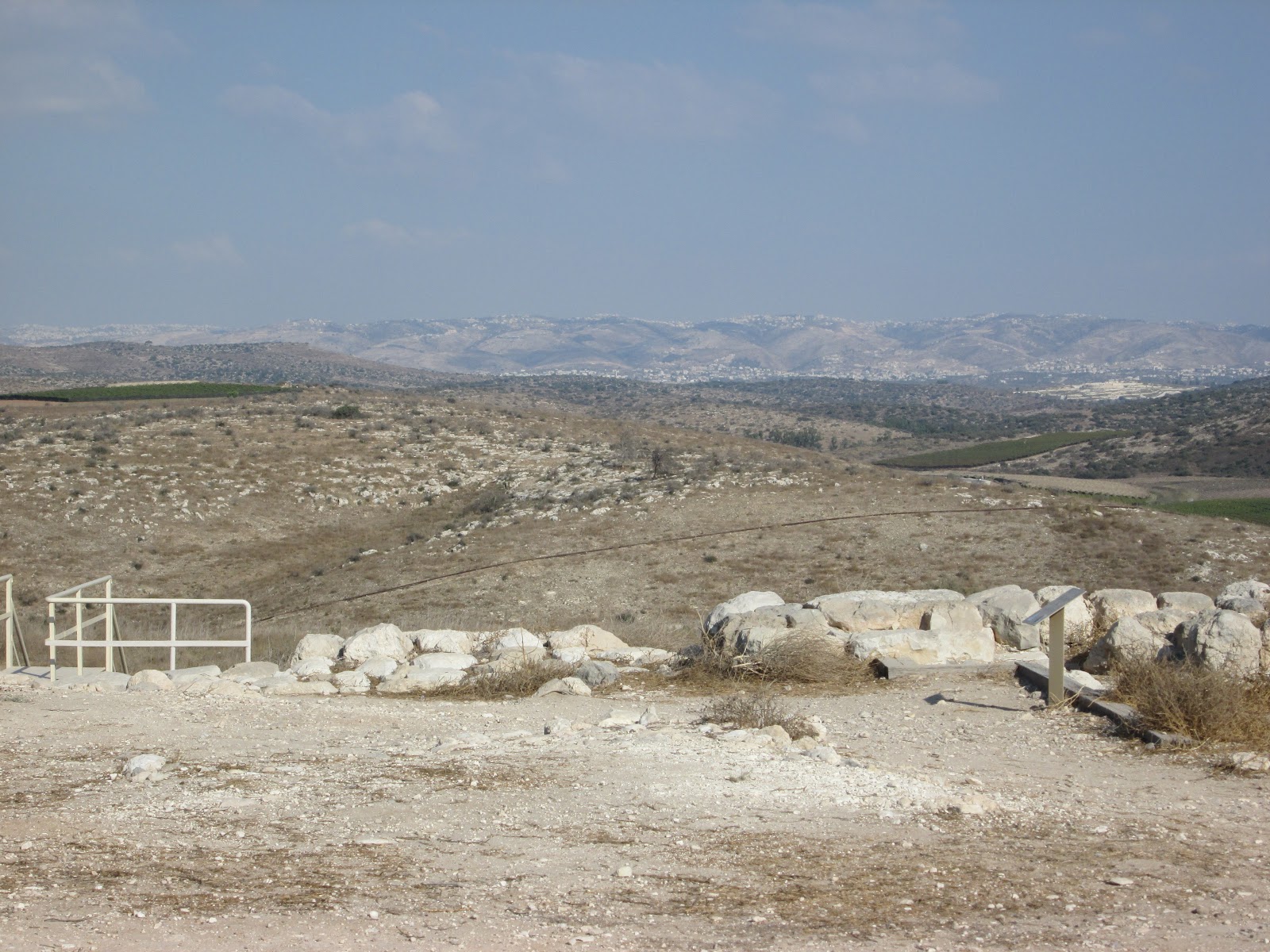
View from the top of Azekah
The army of Israel trembled, for no one was willing to fight Goliath. He was tall, he sounded mean, he wore a coat of iron and carried a large spear with a sharp tip. By arm length alone a Hebrew was bound to lose, and Israel did not yet possess either iron armor or iron tipped spears.
King Saul called for volunteers, but no one stepped forward. He promised riches to the man who won, but no one was willing. The King even said he would give his daughter as a wife to the successful soldier, but they would not be enticed. The challenge was made each morning and evening for forty days with taunting and ridicule, and every man of the Hebrew army feared for his life.
View from the top of Azekah
Eliab’s elderly father Jesse grew concerned, for he was in Bethlehem and had not seen or heard from his oldest three sons for more than a month. He decided to send provisions by way of his youngest son David because he served the king and knew where the army was camped. David found a substitute to take his place with the sheep, and rushed to the camp of the Hebrews.
As David arrived the Hebrews were gathering to hear Goliath make one of his evening rants. The Lord filled David with grief because no one trusted God enough to step forward. David told his brothers that he would go to the king and volunteer for the battle. Anger flashed in Eliab’s heart, and he told David he was as spoiled as Jacob’s son Joseph who pulled stunts like this to embarrass his brothers.
But discouragement from his brothers did not stop David from going to King Saul. He said, “Let no one lose heart on account of this Philistine; your servant will go and fight him.”
David fighting Goliath
Saul was concerned because of David’s small size and his lack of experience, but David said to the King, “Your servant has been keeping his father’s sheep. When a lion or a bear came and carried off a sheep from the flock, I went after it, struck it and rescued the sheep from its mouth. When it turned on me, I seized it by its hair, struck it and killed it. Your servant has killed both the lion and the bear; this uncircumcised Philistine will be like one of them, because he has defied the armies of the living God. The Lord who rescued me from the paw of the lion and the paw of the bear will rescue me from the hand of this Philistine.”
Saul knew there were no other options, and that time was short before the Philistine’s patience would run out. He agreed that the young shepherd could accept the challenge. The rest is history. Antigonus of Socoh, a voice from the Mishnah who lived 700 years after this event said, perhaps remembering this story, "Be not like servants who serve the master on condition that they receive a reward. Rather be like servants who serve the master irrespective of any reward.  And let the fear of heaven be upon you."
Sign at the entrance to Azekah site
The Elah Valley is quiet now. Azekah and Socoh are now part of British Park, a Jewish National Fund nature sanctuary. Blue Turmus (Lupin) flowers sprout around Socoh rather than Philistines.  Farmers raise crops in the valleys and tourists visit historic sites without fear of being taunted by the giant.

Saturday, April 1, 2017

Jesse’s Sons: Part 2

Eliab and his father Jesse spent the month descending the steep slopes below Bethlehem and then another month guiding their herd through the rich agricultural lands along the Elah river allowing the sheep to graze on the barley stubble. The valley was greener and the trees were taller than around Bethlehem, which he called home. The people of this region were odd, not like his friends in Bethlehem. They spoke with a different accent, ate unclean foods and paid homage to strange gods.
Early picture of the tel at Gath
As the shepherds and their sheep rounded the bend past Azekah the Valley began to widen and Eliab was amazed at the large city and the fortress which appeared before him. The hill was at least 300 feet tall with a white coloration, and even from what would normally be a two hour walk (if he and his dad were not slowed by the pace of the sheep) he could see high walls along the ridge upon which the city sat. His father told him this was the powerful city of Gath (Tell es-Safi), a stronghold of the Philistines and the sons of Anak. Jesse saw the look of amazement on his son’s face and stopped him to explain.
Sheep below Gath - Aren Maeir, Bar-Ilan University
“You will find these people different than our people, and they are unlike the Canaanites we have seen in the valley. These are the Sea Peoples, a strong civilization of warriors who feel that they should own the world. The Philistines rule their territory from five strong cities, Ekron is five miles north. Ashdod, Ashkelon and Gaza are to the south and closer to the coast. Gath ruled by King Achish who is the guardian of the Valley of Elah and the coastal plain below his city. He will allow us to graze our sheep in his territory because the people need meat and wool which comes from our animals. But do not trust anyone, and do not go out of your way to talk with them. Answer when spoken to, but keep your conversations short.”
Gath from the air - from Ferrell Travel Blog
Jesse explained to Eliab, and to his other sons when they first beheld this city, that the people were as strong as their city walls. They had developed a metal called iron, which was far greater in strength than any material which the Hebrews could use. If confronted in a fair face to face, hand to hand, strength to strength battle the Philistines would probably win because their weapons and training were superior to anything Jesse or his people possessed. There were giants in the city, which Jesse had seen. Several were at least eight feet tall, and probably larger. Eliab was to keep his distance from these people, and he was to let his father deal with them as they sold food and cloth.
Jesse had been in the city which was very large, loud and cosmopolitan. The gates of Gath were formidable. The ramparts atop the wall were expansive, and the King’s palace was elaborate. The market was several times larger than any village in the Judean highlands and the dwellings were several stories tall. The city was a busy place in which a person could easily get lost, and if not careful a man could get hurt or killed by these warrior people.
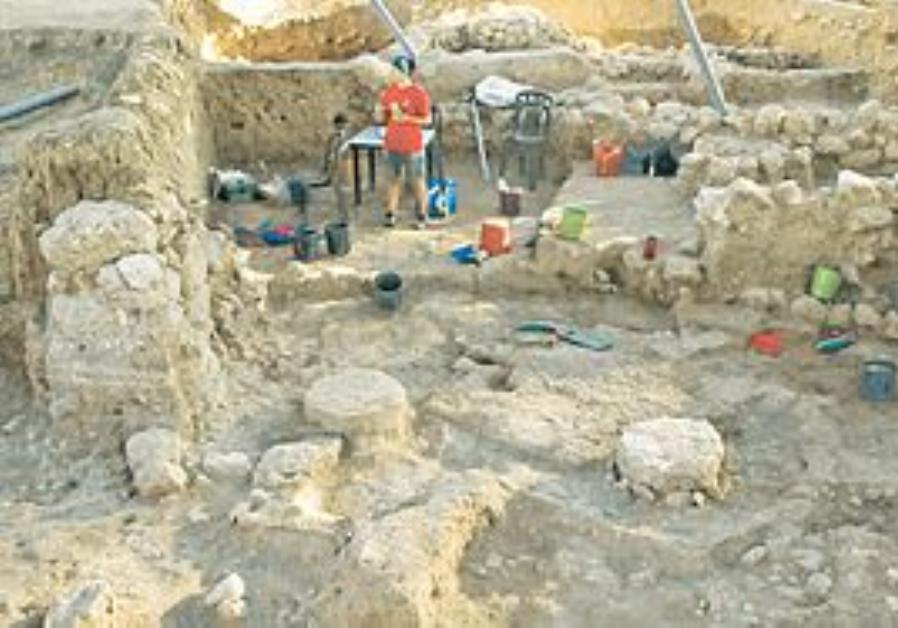
Area F staff and the Early Bronze fortification wall at Tell es-Safi/Gath
The people were especially proud of their great temple to dagon, a god of grain. Jesse told the story of how the Hebrew people battled with them during the settlement of the land and how at one time they captured the Ark of the Covenant. He said, “It was only by the strength of our God that we got it back.”
Jesse told the story of Samuel who was called a judge by the Hebrew people. “In the end,” he said, “Samson was betrayed by Delilah and taken captive by the Philistines who put his eyes out and made him tread grain like an oxen before their god dagon.”
Temple of dagon with its two pillars
Eliab remembered the story and added, “But when the Philistines tried to show the power of their god over our people by chaining Samson to the twin pillars in their temple this strong man was able to shove the supports apart and crush the heathen through the destruction of their temple and their god.

Friday, March 31, 2017

Jesse’s Sons: Part 1

Sons, there were 8 of them and they knew their job. Their job was to shepherd the sheep. Eliab was the oldest, and therefore he was the first of the sons to shepherd the sheep. As the other sons got older they would also take care of the family’s crop of animals. Each son in order would go out with his father, and then his brothers to learn the family craft. They were like Abraham, Isaac, Jacob and his sons. The family was involved and learned the family trade.
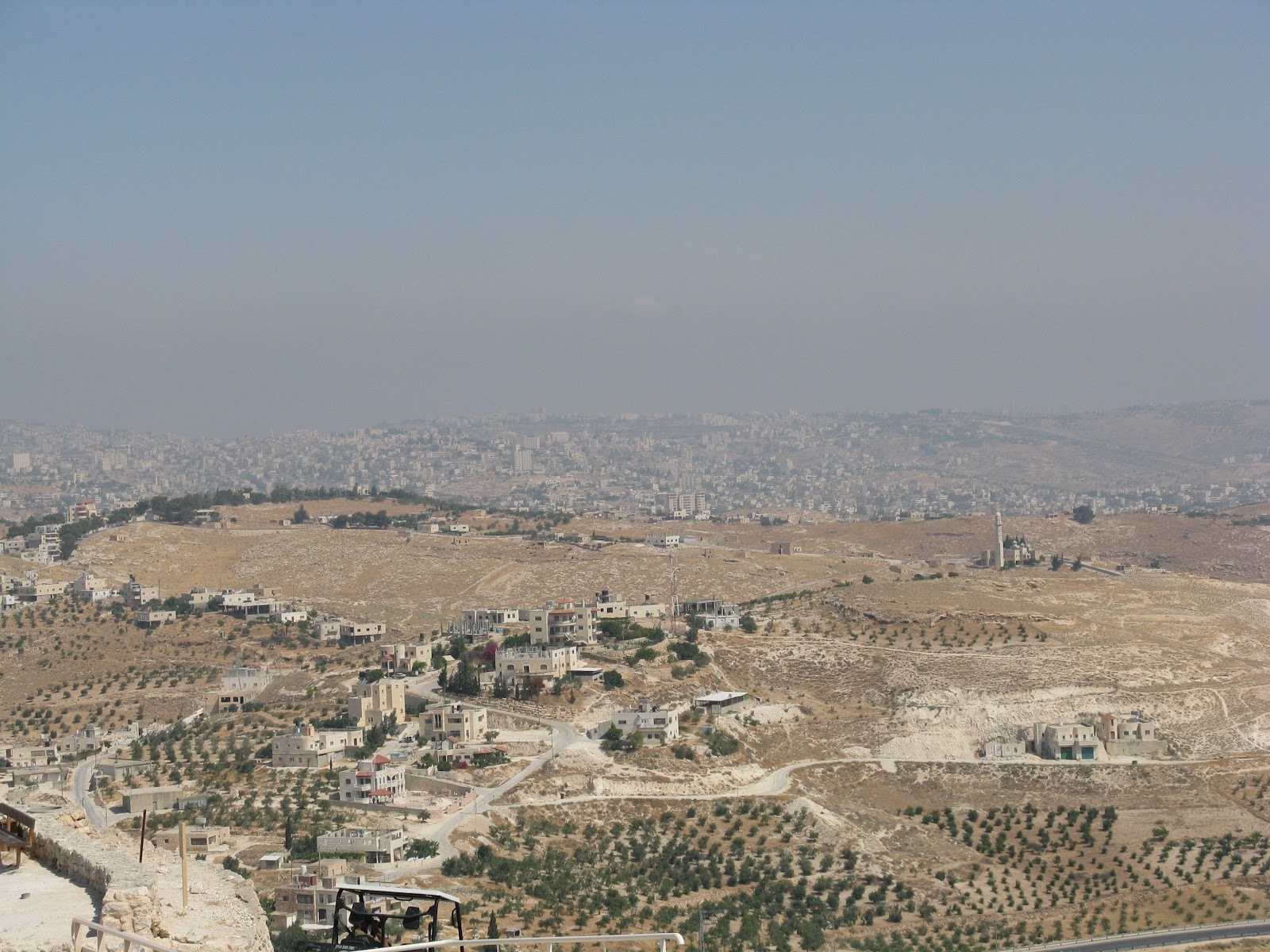
A view of the land near Bethlehem in the Judean highlands
In Israel, in the years of the Judges, that meant starting early. When Eliab was but eight years old his father Jesse brought him to the fields of  Bethlehem in order to learn the ways of the sheep and how to care for them. By ten he was ready to leave home for the summer and travel with the herd, for sheep can be hard on the pasture and must be moved from field to field so the land does not wear out. Jesse, as all good shepherds had mapped out a route and taught what he learned about life to his sons.
Caring for sheep on the slopes of Judea
Jessie did not start out as a shepherd.  His father and his grandfather were farmers who raised grain in the Bethlehem highlands. But each winter as a boy he would see sheep which grazed on his father’s land and on other pastures in the area throughout the winter.  He watched the animals and talked to the shepherds. He would hear tales of adventure as the men would journey to the lowlands each year as they cared for their sheep. The son of Obed decided he wanted see to live a life of adventure like the stories he was hearing. He would spend nights with the shepherds to learn about the sheep, and then one day he told his father that this was the life for him. Farmers stay put and shepherds guide sheep.  Jesse wanted to see the world and being a caretaker of sheep would enable him to earn a living and see the world.
A view of the Judean highlands from the Shfela
Each spring Jesse and then his sons led sheep from the high fields of Bethlehem to find better pasture as the earth sprung to life below. He began by descending the steep slopes of the mountains to find what was growing and where the animals could graze. The annual rains would percolate down through the soil until it hit rock, and then it would surface through the multiple springs on the Judean slopes. The sheep would eat fresh food and drink clear water. Jesse, Eliab, and eventually his other sons would sleep in the cool of the caves which dotted the land.
By the full moon of Passover it was Jesse’s goal to be down the mountain and into the low hills called Shfela.  Some of the farmers had raised their first crop, barley, and the chaff and stubble left behind by the harvest made good fodder for sheep. This rich valley was an agricultural dreamland and would bring fatness to the family’s sheep so when the time came for them to be sold each sheep would bring a good price for the family to bring home before the autumn rains.
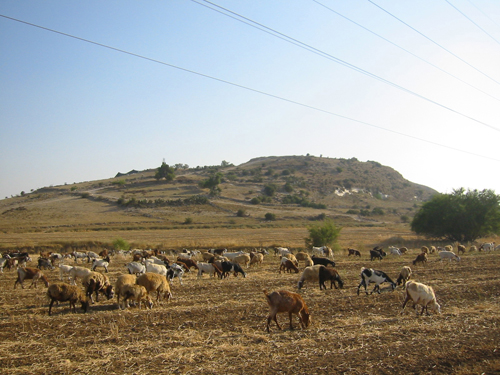
The green valleys near Azeka in Israel
In time the stubble would give out, and it was time to move on. As the son of a farmer, and now a shepherd, Jesse had learned not to test the patience of farmers. If he was kind to the people who lived on the land and limited damage by his sheep the herd could move without trouble. But if his sheep damaged the earth he would suffer the consequences.
Jesse taught his skills to his sons: To Eliab, to Abinadab, to Shimea, Nethanel, Raddai, Ozem and also to David. They each learned their lessons well as father taught son and son taught brothers and together they worked. The family made friends as they traveled and ate the fruits of the earth and saw the world which lay beyond the small highland community which they called home.
By summer this shepherd family worked their way from the high pastures near Bethlehem, down the steep hills with caves, through the valleys of grain until they reached the plain of Sharon. And it was here they rested. The streams were plentiful and the grass was abundant, and so they slowed their pace to enjoy the place and fatten the sheep.
A view of the coast-land from Tel Gezer
But they did not rest too much, for a shepherd must always move on, and in this coastal plain while the animals grazed the shepherds kept watch, for a strong people in walled cities inhabited this land.  But Jesse and his sons did not fear the people, they only watched. They also sold sheep which they grew to the foreign people who occupied this land, for the people needed food, wool, milk and other products which the herd could provide. Jesse sold some sheep, and he thinned the flock, and by the time of the fruit it was time to move again. This time they would go up the hills and not down.
The day’s work was like this: find a place to graze, guide the sheep, set a boundary and watch. Protect the flock from humans and predators, from eagles, snakes, bears, lions and people. Jesse and his sons worked hard to make sure their sheep grew fat in order to be sold.  Each spring it was down the hill, each fall it was up the hill to return to Bethlehem before the fall rains. And then there was rest.