Showing posts with label Goliath. Show all posts

Sunday, April 2, 2017

Jesse’s Sons: Part 3

Eliab was back in the valley he had grown to love, but this time it was not to herd sheep, it was for war. And the conflict was not going well, for an evil spirit tormented King Saul and apparently his people had fallen out of favor with God. The Philistines were successfully expanding their kingdom into Benjamin and were on their way to raid and loot the Judean highlands. King Saul and his generals decided to stand against them in the Elah Valley. This is a place where they had been successful before. In the days of Joshua God helped His people to win a decisive victory over the Amorites by sending a hail storm (Joshua 10:10-11). Samson, the Judge of Israel had killed Philistines in the area with the jawbone of an ass.
When King Saul called out his army Eliab with two of his brothers, Abinadab and Shammah responded. They were camped below the town of Azekah, an ancient village set at a strategic vantage point where the Elah Valley wraps around a hill.  From the top of the hill the entire valley could be observed from end to end. The high position also enabled communication with fire signals which could be seen in the south at Lachish to the east in Judah and to the north in Benjamin. The Assyrians at a later date said the the place was like the nest of an eagle located on a mountain ridge. Simon bar Kocba set a fort in this area in the early second century and his trademark tunnels still run just below the surface. This defendable position was easily accessible for King Saul from his capital at Gibeah through Beit Shemesh.
Satellite View of Azekah
The army of the Philistines was camped on the south side of the valley near the village of Socoh. The Elah River stood between the two armies and was nicknamed in anticipation of the battle to come “Ephes Dammim” or the boundary of blood.
Socoh Hill
But the battle did not come as anticipated, for the Philistines from Gath had a powerful diversion with them, and after a time of acting out and noise making by both armies in order to bring fear to the opposition the Philistines revealed a secret weapon. His name was Goliath, which means splendor. And he was magnificent. He stood nine feet tall and carried a spear like a weaver's beam. He issued a challenge which according to the rules of war in that day must be accepted, “Choose one man and let him fight me. If he is able to kill me, then the Philistines will become your servants: but if I prevail against him, and kill him, then you shall be our servants.”
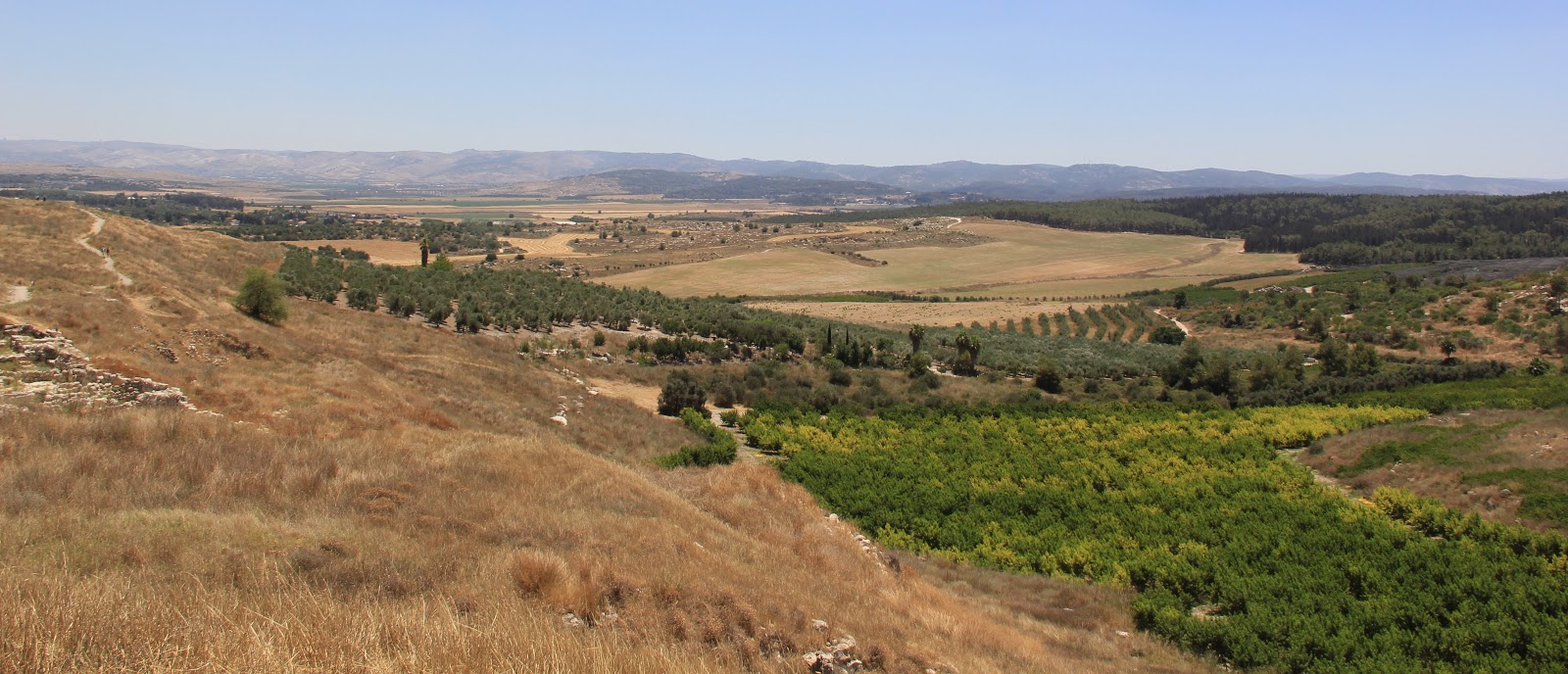
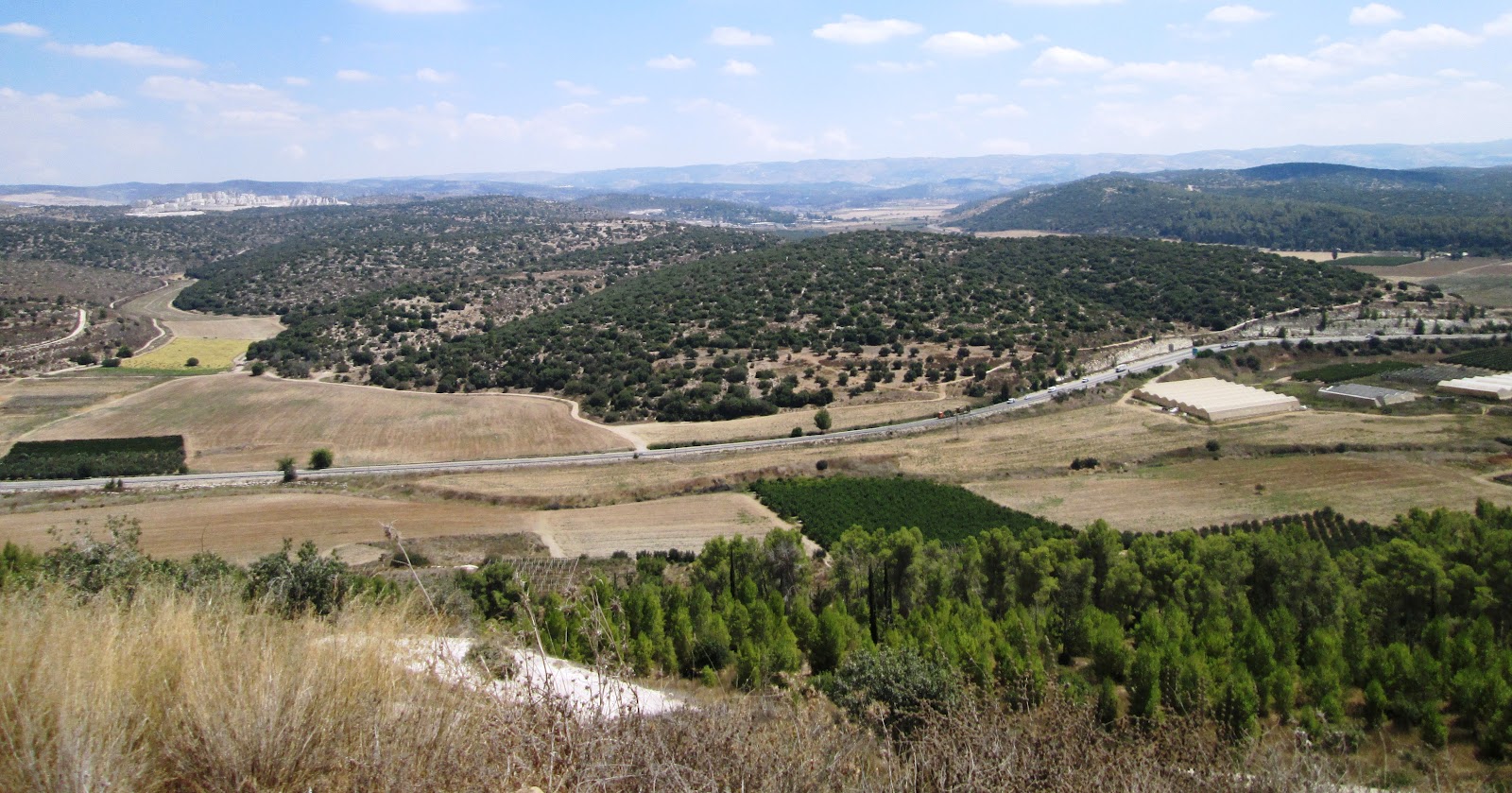
View from the top of Azekah
The army of Israel trembled, for no one was willing to fight Goliath. He was tall, he sounded mean, he wore a coat of iron and carried a large spear with a sharp tip. By arm length alone a Hebrew was bound to lose, and Israel did not yet possess either iron armor or iron tipped spears.
King Saul called for volunteers, but no one stepped forward. He promised riches to the man who won, but no one was willing. The King even said he would give his daughter as a wife to the successful soldier, but they would not be enticed. The challenge was made each morning and evening for forty days with taunting and ridicule, and every man of the Hebrew army feared for his life.
View from the top of Azekah
Eliab’s elderly father Jesse grew concerned, for he was in Bethlehem and had not seen or heard from his oldest three sons for more than a month. He decided to send provisions by way of his youngest son David because he served the king and knew where the army was camped. David found a substitute to take his place with the sheep, and rushed to the camp of the Hebrews.
As David arrived the Hebrews were gathering to hear Goliath make one of his evening rants. The Lord filled David with grief because no one trusted God enough to step forward. David told his brothers that he would go to the king and volunteer for the battle. Anger flashed in Eliab’s heart, and he told David he was as spoiled as Jacob’s son Joseph who pulled stunts like this to embarrass his brothers.
But discouragement from his brothers did not stop David from going to King Saul. He said, “Let no one lose heart on account of this Philistine; your servant will go and fight him.”
David fighting Goliath
Saul was concerned because of David’s small size and his lack of experience, but David said to the King, “Your servant has been keeping his father’s sheep. When a lion or a bear came and carried off a sheep from the flock, I went after it, struck it and rescued the sheep from its mouth. When it turned on me, I seized it by its hair, struck it and killed it. Your servant has killed both the lion and the bear; this uncircumcised Philistine will be like one of them, because he has defied the armies of the living God. The Lord who rescued me from the paw of the lion and the paw of the bear will rescue me from the hand of this Philistine.”
Saul knew there were no other options, and that time was short before the Philistine’s patience would run out. He agreed that the young shepherd could accept the challenge. The rest is history. Antigonus of Socoh, a voice from the Mishnah who lived 700 years after this event said, perhaps remembering this story, "Be not like servants who serve the master on condition that they receive a reward. Rather be like servants who serve the master irrespective of any reward.  And let the fear of heaven be upon you."
Sign at the entrance to Azekah site
The Elah Valley is quiet now. Azekah and Socoh are now part of British Park, a Jewish National Fund nature sanctuary. Blue Turmus (Lupin) flowers sprout around Socoh rather than Philistines.  Farmers raise crops in the valleys and tourists visit historic sites without fear of being taunted by the giant.

Saturday, April 1, 2017

Jesse’s Sons: Part 2

Eliab and his father Jesse spent the month descending the steep slopes below Bethlehem and then another month guiding their herd through the rich agricultural lands along the Elah river allowing the sheep to graze on the barley stubble. The valley was greener and the trees were taller than around Bethlehem, which he called home. The people of this region were odd, not like his friends in Bethlehem. They spoke with a different accent, ate unclean foods and paid homage to strange gods.
Early picture of the tel at Gath
As the shepherds and their sheep rounded the bend past Azekah the Valley began to widen and Eliab was amazed at the large city and the fortress which appeared before him. The hill was at least 300 feet tall with a white coloration, and even from what would normally be a two hour walk (if he and his dad were not slowed by the pace of the sheep) he could see high walls along the ridge upon which the city sat. His father told him this was the powerful city of Gath (Tell es-Safi), a stronghold of the Philistines and the sons of Anak. Jesse saw the look of amazement on his son’s face and stopped him to explain.
Sheep below Gath - Aren Maeir, Bar-Ilan University
“You will find these people different than our people, and they are unlike the Canaanites we have seen in the valley. These are the Sea Peoples, a strong civilization of warriors who feel that they should own the world. The Philistines rule their territory from five strong cities, Ekron is five miles north. Ashdod, Ashkelon and Gaza are to the south and closer to the coast. Gath ruled by King Achish who is the guardian of the Valley of Elah and the coastal plain below his city. He will allow us to graze our sheep in his territory because the people need meat and wool which comes from our animals. But do not trust anyone, and do not go out of your way to talk with them. Answer when spoken to, but keep your conversations short.”
Gath from the air - from Ferrell Travel Blog
Jesse explained to Eliab, and to his other sons when they first beheld this city, that the people were as strong as their city walls. They had developed a metal called iron, which was far greater in strength than any material which the Hebrews could use. If confronted in a fair face to face, hand to hand, strength to strength battle the Philistines would probably win because their weapons and training were superior to anything Jesse or his people possessed. There were giants in the city, which Jesse had seen. Several were at least eight feet tall, and probably larger. Eliab was to keep his distance from these people, and he was to let his father deal with them as they sold food and cloth.
Jesse had been in the city which was very large, loud and cosmopolitan. The gates of Gath were formidable. The ramparts atop the wall were expansive, and the King’s palace was elaborate. The market was several times larger than any village in the Judean highlands and the dwellings were several stories tall. The city was a busy place in which a person could easily get lost, and if not careful a man could get hurt or killed by these warrior people.
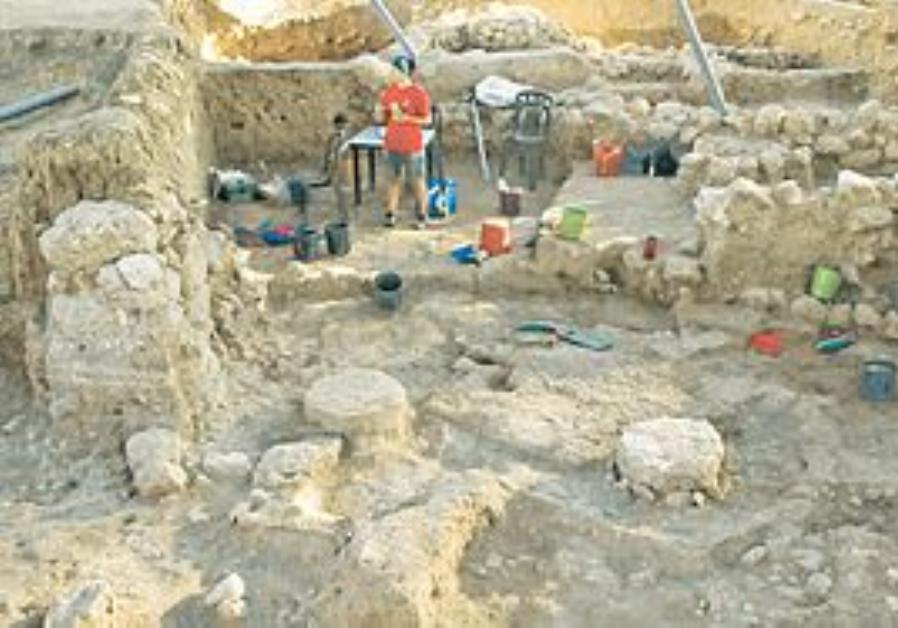
Area F staff and the Early Bronze fortification wall at Tell es-Safi/Gath
The people were especially proud of their great temple to dagon, a god of grain. Jesse told the story of how the Hebrew people battled with them during the settlement of the land and how at one time they captured the Ark of the Covenant. He said, “It was only by the strength of our God that we got it back.”
Jesse told the story of Samuel who was called a judge by the Hebrew people. “In the end,” he said, “Samson was betrayed by Delilah and taken captive by the Philistines who put his eyes out and made him tread grain like an oxen before their god dagon.”
Temple of dagon with its two pillars
Eliab remembered the story and added, “But when the Philistines tried to show the power of their god over our people by chaining Samson to the twin pillars in their temple this strong man was able to shove the supports apart and crush the heathen through the destruction of their temple and their god.

Wednesday, March 15, 2017

A Boy Named David

Today we’ll take a fresh look at an ageless story which has been told often, but is worth telling again. The story contains elements of self-preservation, protection of a people, and heroism which guides us in faith and also gives an understanding of the land where the epic events and teachings of the Bible took place.
Scrolls at the 5th Quarter in Jerusalem
The story begins in the fields outside a village called Bethlehem, or the House of Bread. Shepherds had passed through this village for more than a thousand years before our story occurred. Abraham, Isaac, and Jacob are known to have passed along the road, Rahab settled here after leaving Jericho, and Boaz lived in the village. Jesse and his eight sons (who are the subject of our story) also lived here.
Elah Valley in Jerusalem where David fought Goliath
The town of Bethlehem sat near an important junction where the Central Ridge Road meets the road which descends through the Elah Valley to the coast.
Road leading down to the Elah Valley from Ramat Rachel
In the days of King Saul, the Philistines (also called the Sea Peoples) were enemies of the new Kingdom of Israel. The Philistines lived along the coast in five major towns and surrounding villages. Throughout their history, they sought to expand their territory. One area of expansion was through the Elah Valley and up the hill to the Central Ridge Road.
Looking into Philistine territory from Gezer, Israel
The Bible tells us of one such war initiative of the Philistines. “Now the Philistines gathered their forces for war and assembled at Sokoh in Judah. They pitched camp at Ephes Dammim, between Sokoh and Azekah.” (1 Sam 17).
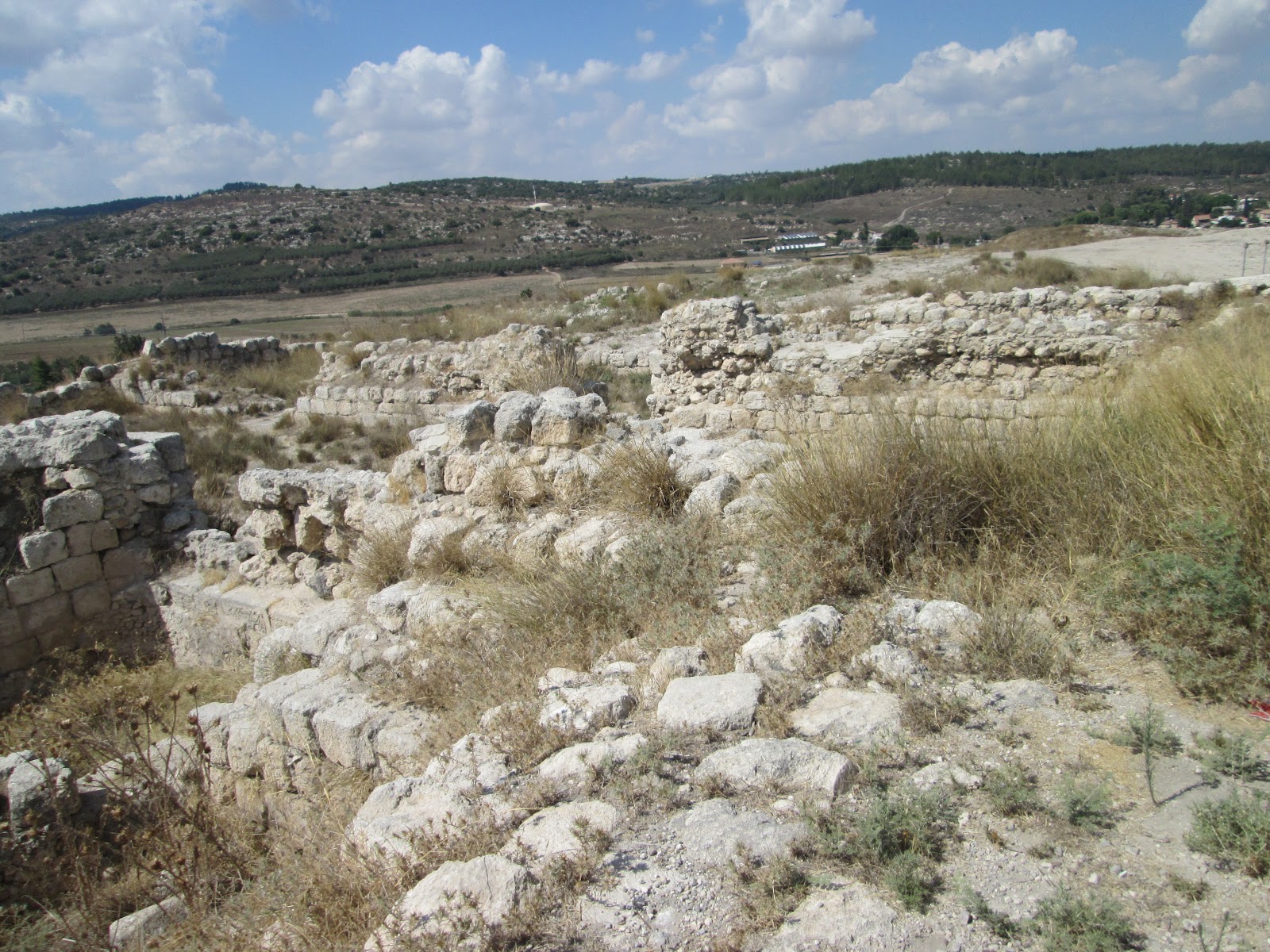
Information sign at Tel Azeka, Israel
King Saul responded by enrolling enlistees and sending an army down the road into the Elah Valley, and they camped near Azekah. “A champion named Goliath, who was from Gath, came out of the Philistine camp. His height was six cubits and a span. He had a bronze helmet on his head and wore a coat of scale armor of bronze weighing five thousand shekels; on his legs he wore bronze greaves, and a bronze javelin was slung on his back. His spear shaft was like a weaver’s rod, and its iron point weighed six hundred shekels. His shield bearer went ahead of him.”
Looking into Elah Valley from Azekah
The Hebrews trembled when they saw the nine foot giant. In fear they froze and did not know what to do. For forty days the giant would come down from the Philistine camp and issue the challenge, “Why do you come out and line up for battle? Am I not a Philistine, and are you not the servants of Saul? Choose a man and have him come down to me. If he is able to fight and kill me, we will become your subjects; but if I overcome him and kill him, you will become our subjects and serve us. This day I defy the armies of Israel! Give me a man and let us fight each other.”
Looking into Elah Valley from Tel Azekah
For forty days the giant Goliath descended from his hometown of Gath in order to challenge the Hebrews. The standoff lasted so long that Jesse, who had three sons (Eliab, Abinadab, and Shimma) among the camp of Israel, decided to try to encourage his family. He sent his youngest son, David, to carry food from his home in Bethlehem to his sons who were camped in the Elah Valley.
Looking east from Tel Azekah
While David was delivering food to his brothers, Goliath descended to repeat his challenge before the army of Israel. David told his brothers that he would fight the Giant, and this was told to the King, but Saul thought the boy was too young.
Shepherd near Lachish in Israel
David told the King he was able to defend his sheep against lions and bears. He pushed his desire to fight the Giant against every objection the king could dish out his way. Because no one else was willing step forward, the king allowed a young shepherd to accept the challenge.
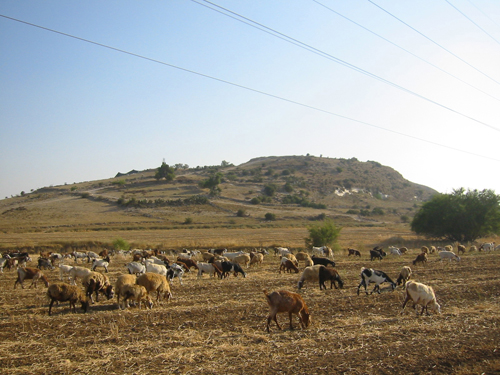
Sheep near Lachish in Israel
We all know the outcome - with one stone in a sling, David, the young shepherd, felled the nine foot giant. He also kept the giant’s brothers at bay with other smooth stones collected for ammunition.
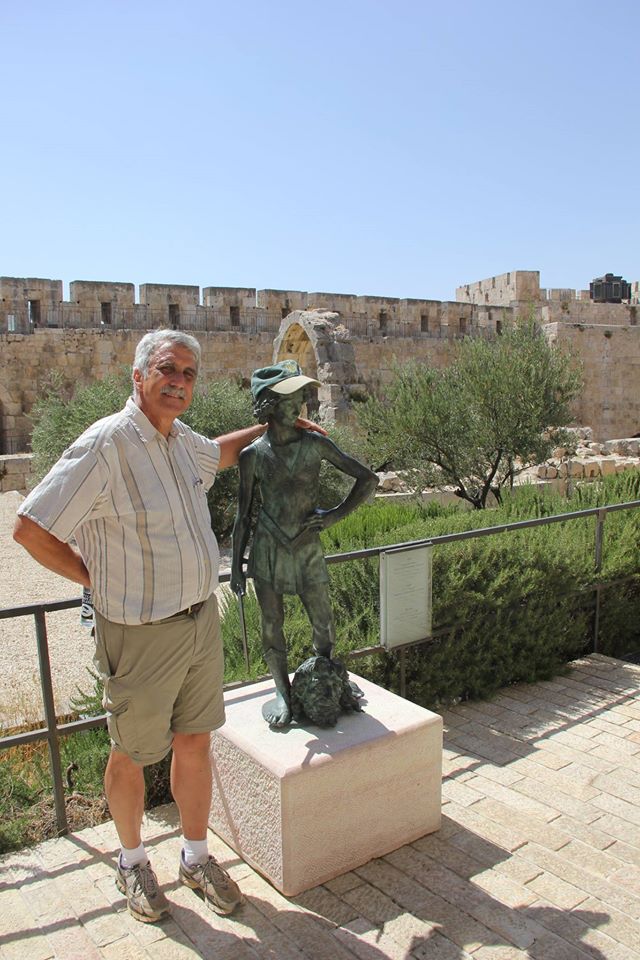
Two Davids at Tower of Israel Museum, Jerusalem

On our tour of Israel May 5-18 we will visit the Valley of Elah, we will see Azekah, and we will ascend Gath. We will retell the stories and relive the events which changed history so long ago. I invite you to join us on this trip in order to experience the stories of the Bible as they come to life.

Wednesday, March 8, 2017

The Shephlah

We will spend the third day of our 14 day trip to the Holy Land in May 2018 in the shephelah, a series of low hills which connects the coast of Israel to the Judean Highlands. This region contains important transportation hubs and has been one of the most hotly contested regions in Israel.
A map of the Shephiah region of Israel
The word  שְׁפֵלָה, Shephlah, sephela, saphela or shefla comes from the word low, and thus indicates low or sinking lands. This unique landform exists from the east of Tel Aviv and the Plain of Sharon and ends north of the Negev. The Shephlah rises from the coastal plain to the Judean highlands. The rumpled land of this area contains low hills and valleys between the hills.
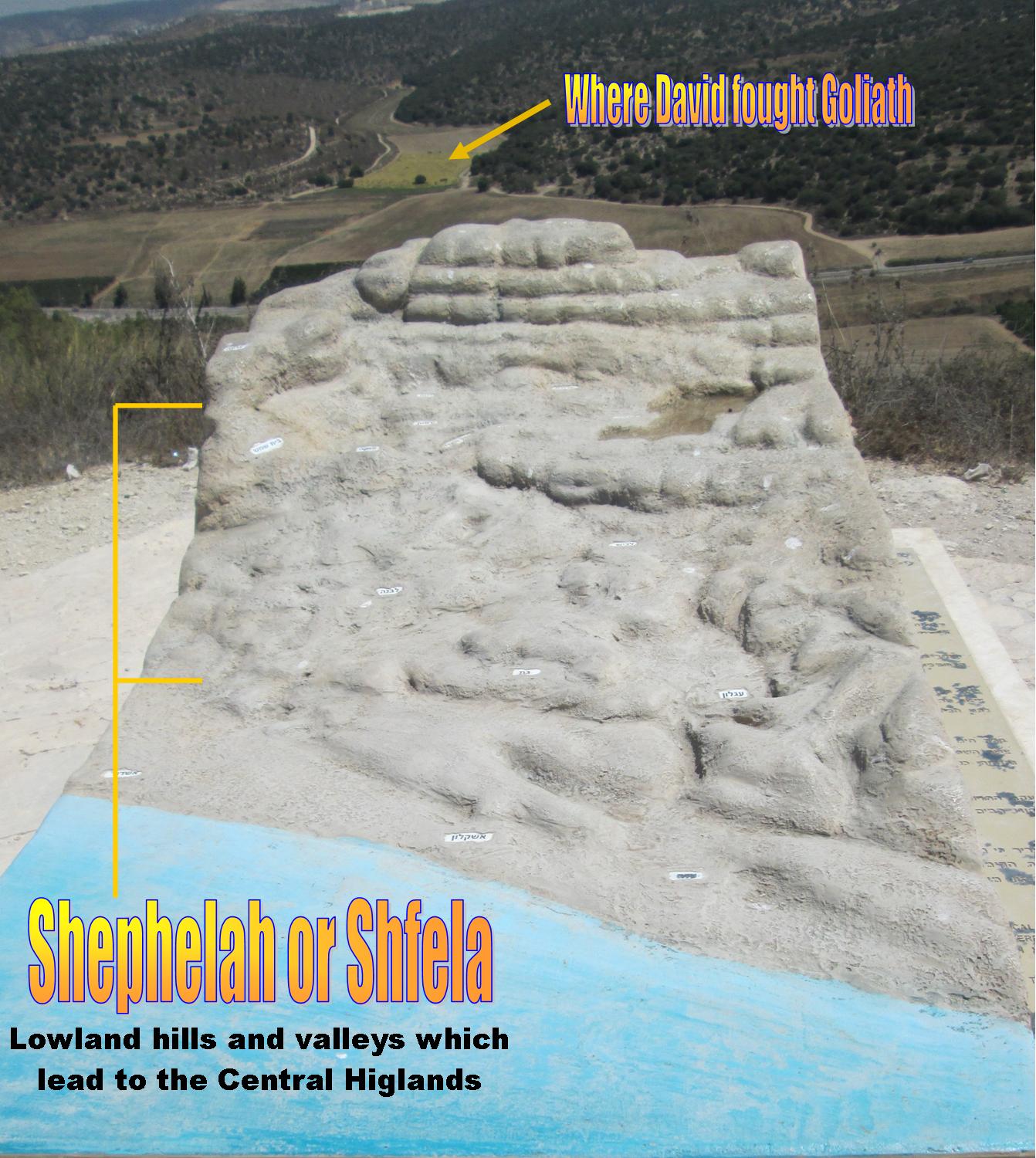
Model of the Shfela in Elah Valley where David defeated Goliath
Throughout the history of the promised land people have traversed the valleys in order to reach the central highlands. Today the roads of Israel continue to follow the Ayalon Valley, Sorek Valley, Elah Valley, Beth Gurvin Valley and the Lachish Valley. We will visit sites in each of the five major routes on our the third day of our 14 day trip to the Holy Land.
Tel Gezer in Israel
At the head of each of the valleys there is a high hill upon which a fortified city has been built. At the head of the Ayalon Valley this is the city of Gezer. At the top of the road are the towns of Yalu and Emmaus. The road runs from Jaffa across the coastal plain, up the Ayalon Valley and the Beit Horon ascent to Jerusalem. The route is still popular today with Israel Highway 1 using this route from Jerusalem past Ben Gurion Airport to Jaffa.
Monoliths at Tel Gezer
The Ayalon Valley is a place of much history. This is the place where the sun stood still during Joshua’s conquest of the land. The Amarna letters written to Pharaohs Akhenaten and Tutankhamun menton the town of Ayalon. Pharaoh Sheshonk I attacked the Amorites in this area in the 10th century BC. King Saul and the Maccabees also fought in this valley. The state of Israel fought several major battles for the Ayalon Valley in the twentieth century.
Beit Shemesh where the Ark was returned to Israel
The Sorek Valley extends from Ekron on the coastal plain to Eshtol at the top of the valley. The town of Beit Shemesh (recorded in 1 Samuel 6) is in at a junction where the valley narrows. The Sorek Valley was home to Samson and Delilah. The main road to Jerusalem ran through this valley in the early nineteenth century. The railroad from Jaffa to Jerusalem still runs through the Sorek Valley.
The place where David fought Goliath
The Elah or terebinth Valley is a known for its many oak trees and great fertility. The lower end of the valley is protected by the fortress town of Gath, which is also the hometown of Goliath. The valley runs past Azekah and Socoh to Adullam. David fought Goliath in this valley, picking up five smooth stones from Elah creek. We will visit Khirbet Qeiyafa while in visiting Elah Valley.
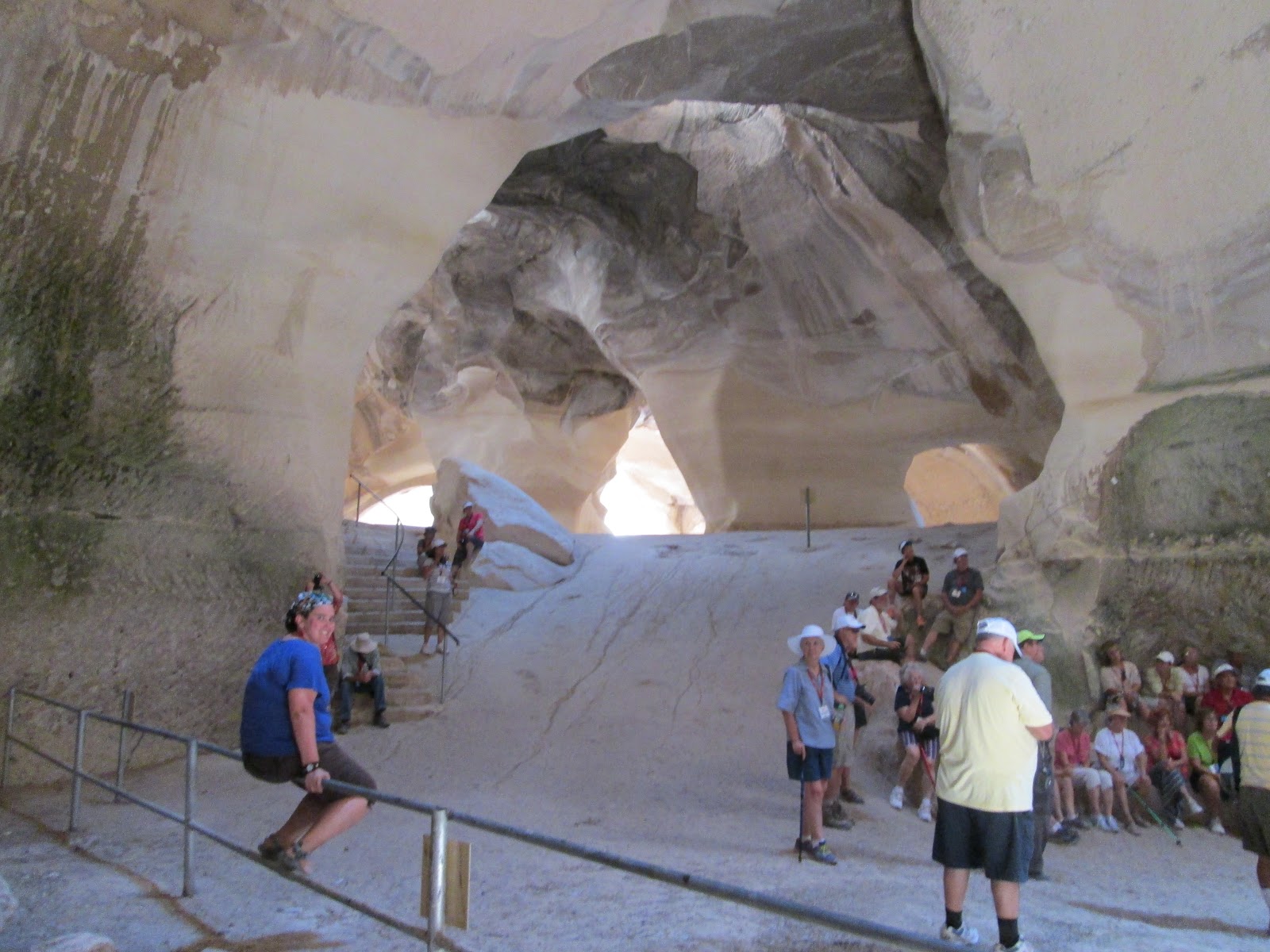
Inside the Bell Caves
The Guvrin Valley leading from Gaza to Hebron was one of the region's most important trade routes. Joshua fought many battles in this valley, King Rehoboam made Maresha into a fortress and later Micah the prophet preached in the area. After Israel fell to Nebuchadnezzar many Edomites migrated to Guvrin Valley and made it a second homeland which was later called Idumea. King Herod of the New Testament ties to this region.
View from the top of Tel Lackish 
Lachish sits to the south of the Gurvin Valley and protects a secondary road from Gaza througt the Shephlah. The city was a major communication center which served as a beacon which sent signals to Azekah and other hilltop locations. Because of its importance it was made into a royal city for Rehoboam and was later conquered by Nebuchadnezzar on his way to Jerusalem.
Please join us on a tour of Israel in May 2018

On a tour of Israel in May 2018 we will take a day to experience sites within the Shephliah and tell stories out of Israel’s past. Please take time to sign up to travel with us.