Showing posts with label Travel. Show all posts

Friday, November 9, 2018

Avoiding the Christmas Crush

     November stands at the beginning of a very busy time of year. Now that the Election is over, people are thinking about Thanksgiving and the Christmas Season. Late Autumn and the first two weeks of winter are filled with many activities and special time with family. This season, which is usually just after the first freeze of the year is the time to pull out your calendar in order to make plans for everything that needs to be done.
     In only a few weeks we will celebrate Thanksgiving, with its accompanying family meal, football games, parades and black friday sales. All these take preparation. There are people to invite to our home (or travel plans if we are going somewhere else) for a feast of turkey and all the fixings. Shopping lists need to be created for the festive dinner, football snacks and black Friday sales.
     Thanksgiving, with its black Friday events leads us into the busy month of December. This is a month of parties, church activities, community events, year end closeouts, and preparation for Christmas. Preparation of the calendar alone, with it’s multiple conflicts can be a nightmare. It is best to do this month ahead (in November), in order to avoid as many problems as possible. For those traveling, this is especially important to catch the sales and deadlines before price increases.
     Strategic planning at the beginning of November can help a lot during the busy month between Thanksgiving and Christmas. A bit of pre-holiday organization of time can prevent conflicts and their associated headaches. A thoroughly drafted agenda will make sure nothing slips through the cracks during the busy weeks between the turkey dinner and the Christmas gift unwrapping event.
     If the schedule is unplanned, some necessary details of the holidays will be omitted. What can this be? The central item of the season which has not yet been suggested: the taking in and the sharing with others the all important matters of faith that are central to Thanksgiving and Christmas.
     Consider, how will you weave the central objective of gratitude into your Thanksgiving? How will you ingrain faith sharing into the advent season. In what way will you celebrate the birth of Jesus on Christmas morning? Don’t let the mundane and less important “necessities” crowd out the real reason for the season.
     I discovered many years ago the necessity of taking part of a day to weave a faith agenda into my December calendar. Without planning, the legacy of my family’s Christmas memories would only be the gifts they received. But I did not allow that to happen … and I hope you will not permit a secular Christmas to occur in your home either.
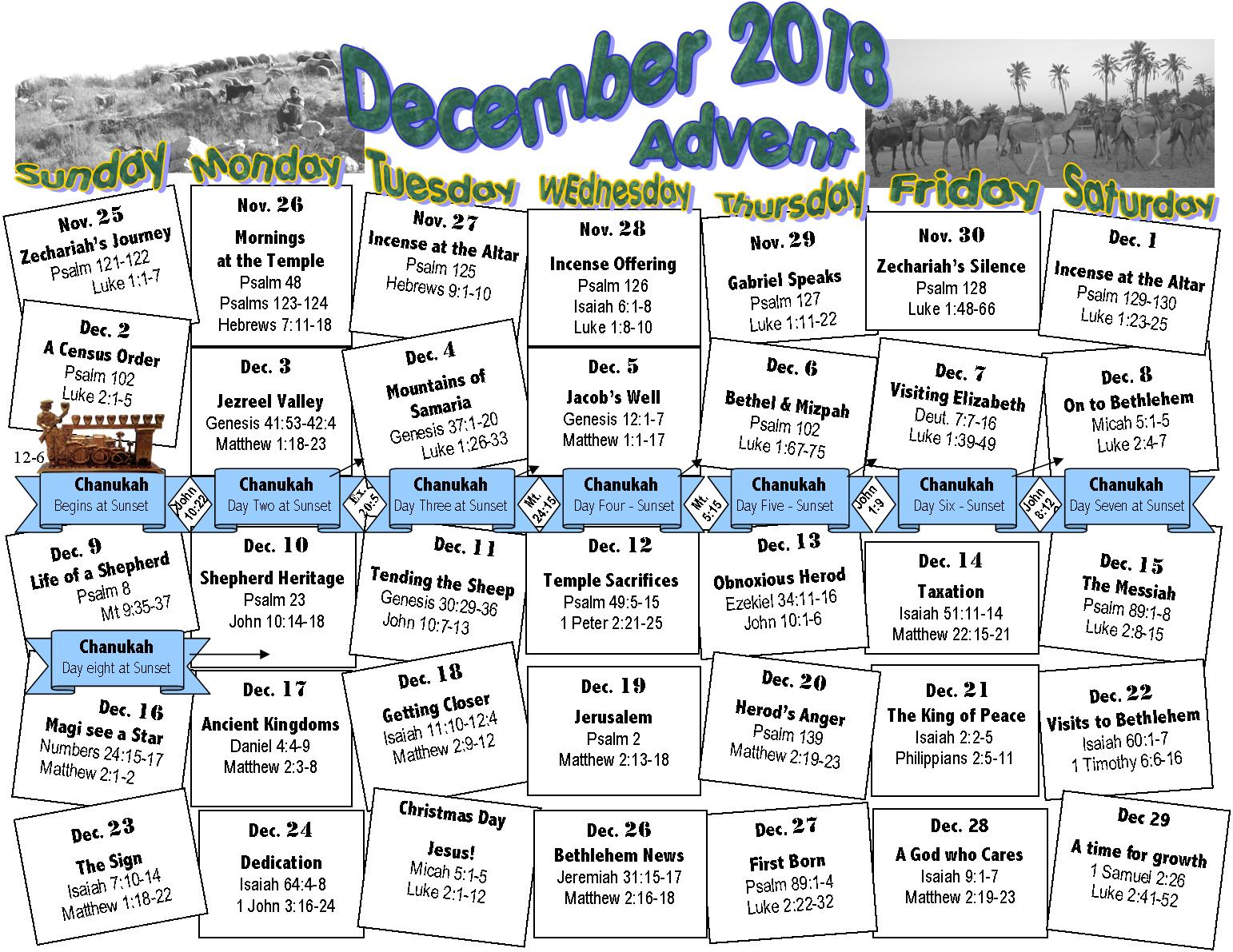
     Do you need help with your holiday plans? Take a look at my web-page www.KosherCopy.com. On top of the page you will see a tab that says Advent. There are two items on the drop down menu: Advent Calendar and Advent Activities. Click on Advent Activities to discover multiple ideas (which will work for families with children of any age). The PDF document (free) will help you create a Christmas that brings home the real reason for the season and celebrates the coming of the Savior, Jesus.
     Please also take note of the book Advent Journeys, which appears just to the left of this blog. The contents of this book will transport you to first century Bethlehem as it recreates the events of the first Christmas. This is not a book filled with homespun homilies, but short daily readings to help you join Mary and Joseph for the first Christmas, the best Christmas ever, because it is the foundation stone and beginning of all Christmases that have or ever will occur.

Monday, October 29, 2018

A Dig at Zippori

During my two month visit to Israel, I participated in four archaeological digs, at Gezer, Tel Hadid, Zippori and at Tel Dan. My favorite experience was the work at Zippori.
Arches Reservoir at Zippori
Zippori was the capital city of Galilee in the first century AD. It is located a few miles from Nazareth, and many feel that Joseph the father of Jesus worked on government projects at Zippori.
Merchants sidewalk along main street
The cardo of this city is amazing. It is actually two roads that cross each other at the main intersection. Buildings have been recovered along both roads.
Site map of Zippori
The city also contains amazing mosaics. Some are located in what is called the Nile house.
Centar at the Nile House
Other mosaics can be found at the Dionysus House.
Mona Lisa of Galilee
There is also an amazing mosaic in the Synagogue.
Mosaic on the floor of the Synagogue
We worked at the first century water project. This is a cistern that held water that flowed down hill from spring along the Nazareth ridge.
Nazareth Ridge above Zippori
There are actually two cisterns. The first was untouched since the first century.
Arches Reservoir at Zippori
The second was developed into a wine press.
First view of the Arches Reservoir
Wine was stomped at one end of the cistern
First view of the Arches Reservoir
It flowed into a mikvah that was more than seven feet deep.
Shade tarp over the Arches Reservoir
There was also a stone reception area with pavers.
Measuring the Mikvah
We helped excavate the mikvah area.
Debris and stones above the Mikvah
It started by clearing roofing members which fell. The roof was a system of arches and coverings to keep the water in the dark until it was needed.
Digging Team at Zippori
We hauled lots of dirt out of the system, and also rocks. We found coins, pottery and other items as we dug.
Pottery found during our dig at Zippori
We worked with several archeologists who taught us about the site. They showed us the difference between first and second century plaster, as well as showing us areas of the cistern (structure) that was not plastered.
Filling dirt buckets at Zippori
I have included some stories from the hills of Galilee in my new book, Israel:Stories for Your Journey.
New book on Israel
Some of the places I visited during the two weeks of my tour were places I visited before, but since I helped plan the tour, there were some new places also.

Tuesday, July 11, 2017

Visiting a Biblical Period Home

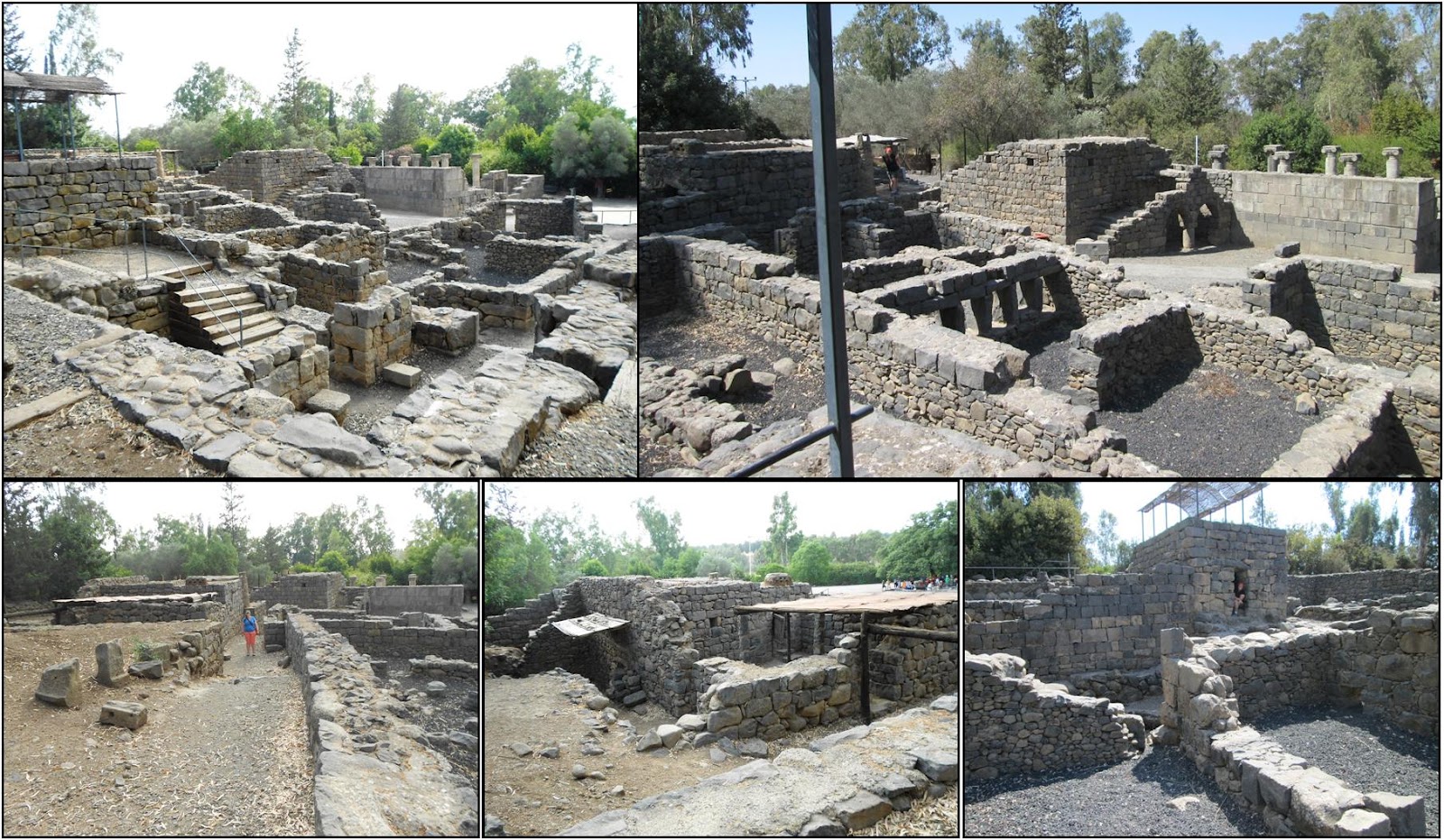
On a 14 day trip to the Holy Land in May 2018 we will visit the Talmudic village of Katzrin. Within this village we will find well preserved homes and streets reminiscent of what villages looked like during the time of Christ. While in Katzrin we will be able to see and enter homes, study the layout of the village and worship in the Synagogue.
We will enter the national park at Katzrin through a gate. Upon entry our attention will be drawn to Menorah emblazoned on the wall as a mosaic. The picture is colorful and symbolic. The town of Katzrin was known for its faith and the words of at least one Rabbi are immortalized in the Mishnah.
Through the gates we will enter the village of Katzrin along a street containing several standing homes dating to the sixth century AD. The homes are made of basalt rock, which is native to the region of Galilee and the entire Golan Heights. Residents of Israel built homes of rock because it was much more available than wood. Because of climate and geography homes and buildings of historic Israel are much different than homes our twentieth century architecture which relies on the rich woodlands of the eastern United States.
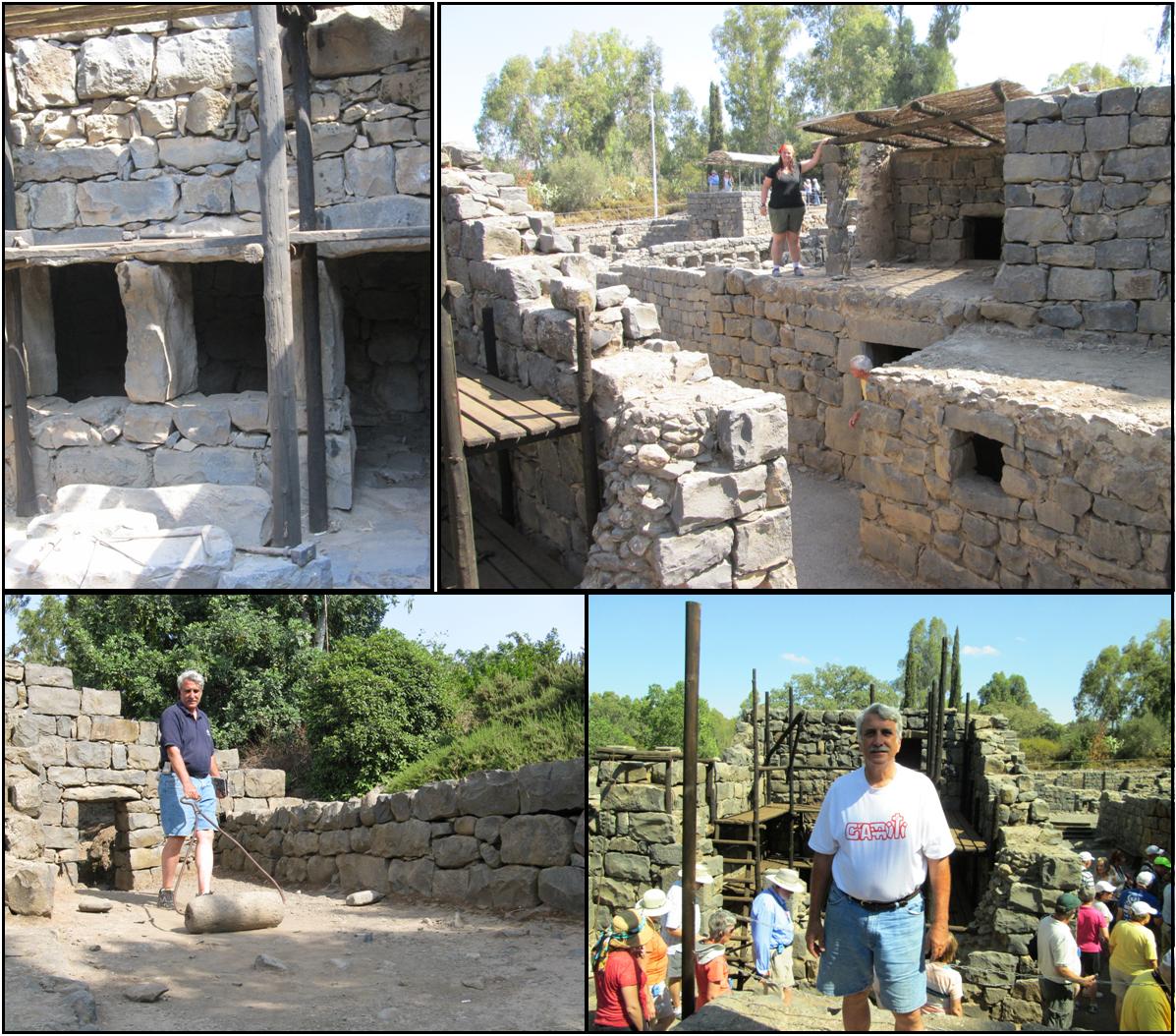
We will make our first stop along the road at a place where we can observe construction practices of ancient Galilee. A set of building scaffolding has been reconstructed so we can visualize early building practices. Nearby we will discover how roofs were built and see the tool used to compact the dirt and thatch so it holds together.
Next to the construction site we will enter a typical house of the New Testament era. We will see and be able to show respect for the Mezuzah on the doorway. This wooden box contains scripture passages from Deuteronomy 6:4-9 and 11:13-21 and remind all who enter a building that it is our faith in God which sets us apart as a people and brings blessings to our nation.
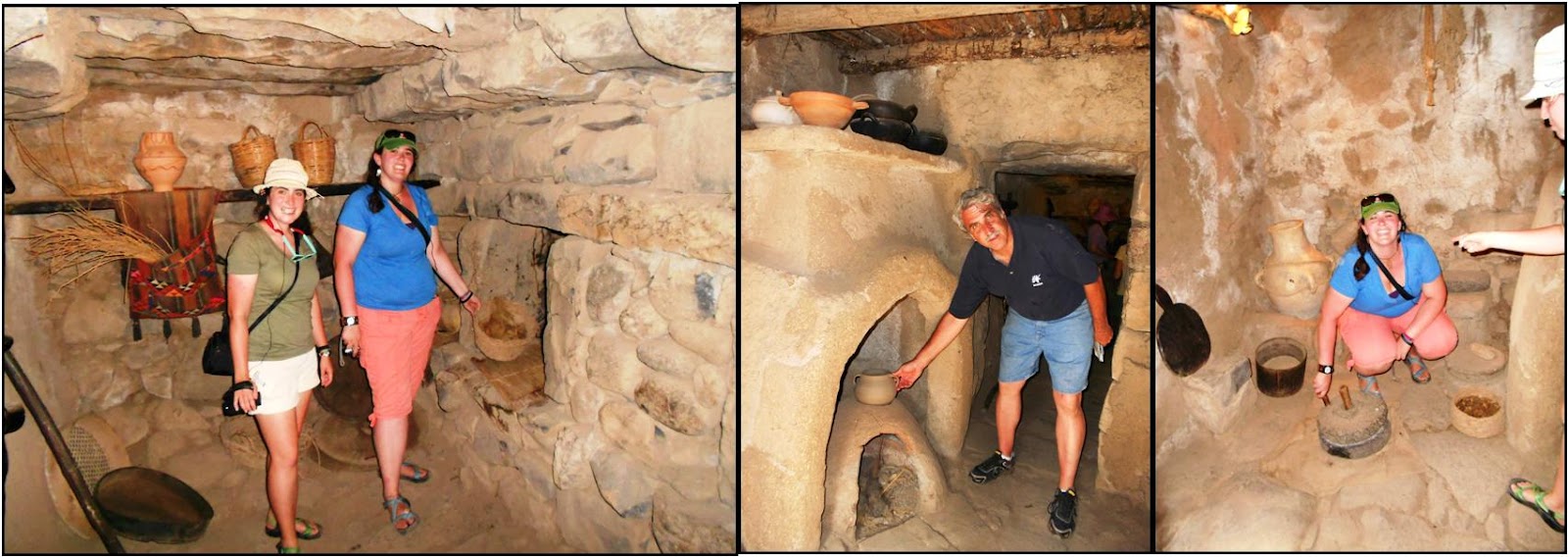
We will enter the house through the kitchen, the workspace of the home where meals are food is prepared and meals are cooked. We will see the oven and the dishes. We will be able to sweep the floor and step back into the days of our Bible, understanding what home life was like for the early disciples.
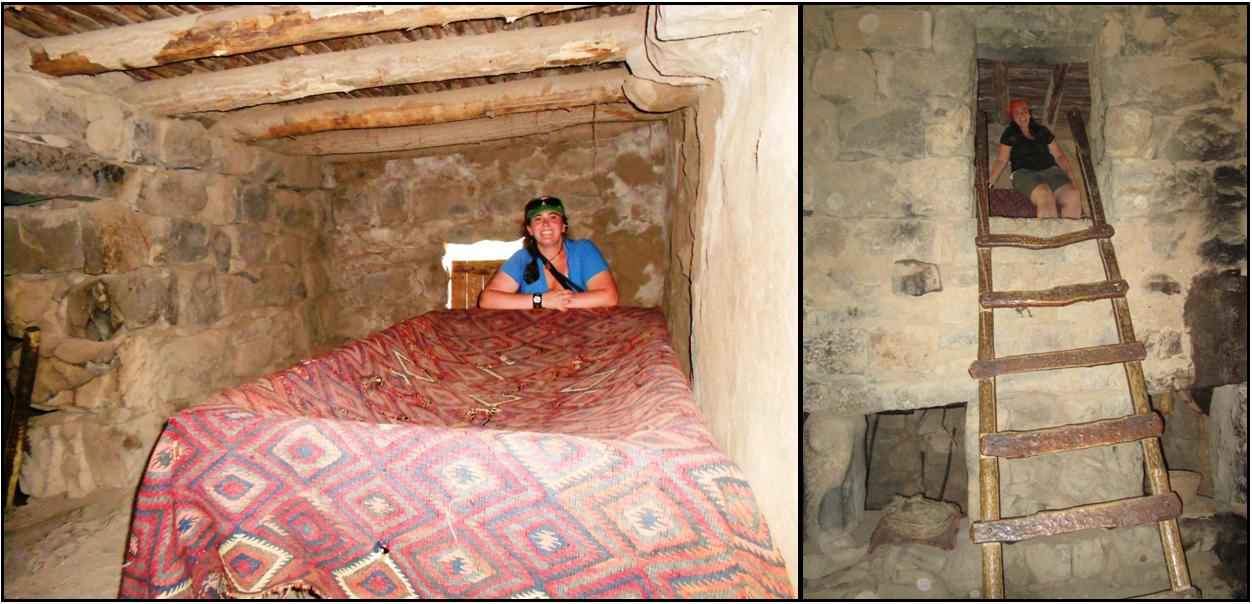
Beyond the kitchen is a dining area and the living room. It is in this space the family lived. We will observe the dining table, a couch/bed and the ladder which leads to the second level of the home.
On the wall of the home hangs an oil lamp, typical of lighting fixtures in Biblical times.
The family slept on the upper level of the home. We will see the large room where the family might have slept together. We will also be able to step out on the roof where the family slept when the weather was hot.
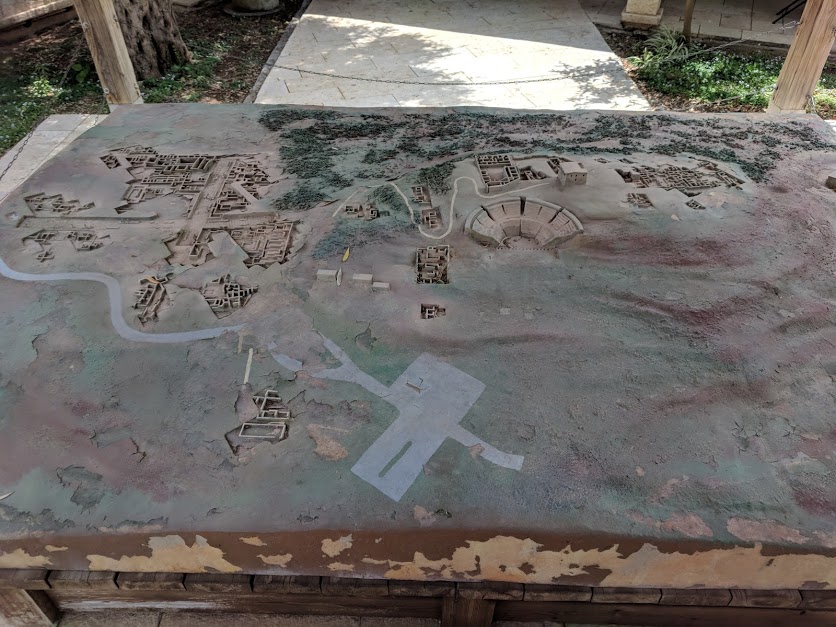
Beyond the house we will move into the rest of the town. We will see the remains of homes and businesses which were destroyed by an earthquake in 749 AD. The layout of the town is still detailed enough for us to understand the consistent architecture of every building. There is an overlook where we can see the layout of the town from a higher location.
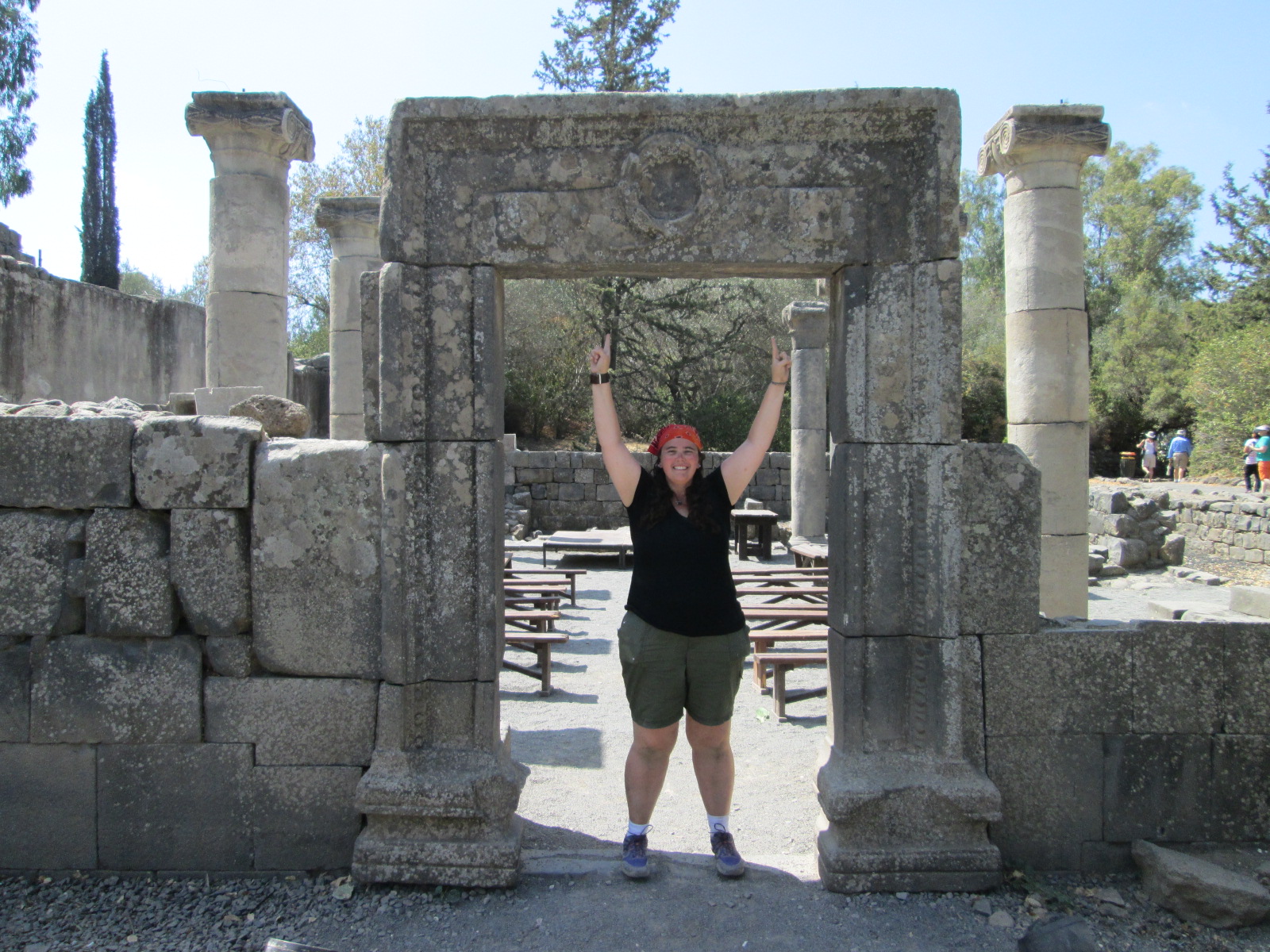
We will visit the synagogue near the exit of the city. We will step through the large doorway of the building and see the carved lintels and stonework. One of the lintels recovered in the area says, "This is the beit midrash (house of study) of Rabbi Eleazar ha Kappar." Rabbi Eleazar is recorded in the Mishnah as saying, “Envy, lust, and ambition shorten man's life." (Ab. 4.21)
We will see, experience and learn many things about the land of Israel and how people of the Bible lived during our 14 day trip to the Holy Land in May 2018. This trip can greatly expand your understanding of the Scripture and help you to visualize Bible stories you hear every week. To sign up, use the link to find more information at www.KosherCopy.com. You will also find links to the trip itinerary and for trip registration.

Thursday, June 15, 2017

Shiloh, where Samuel served

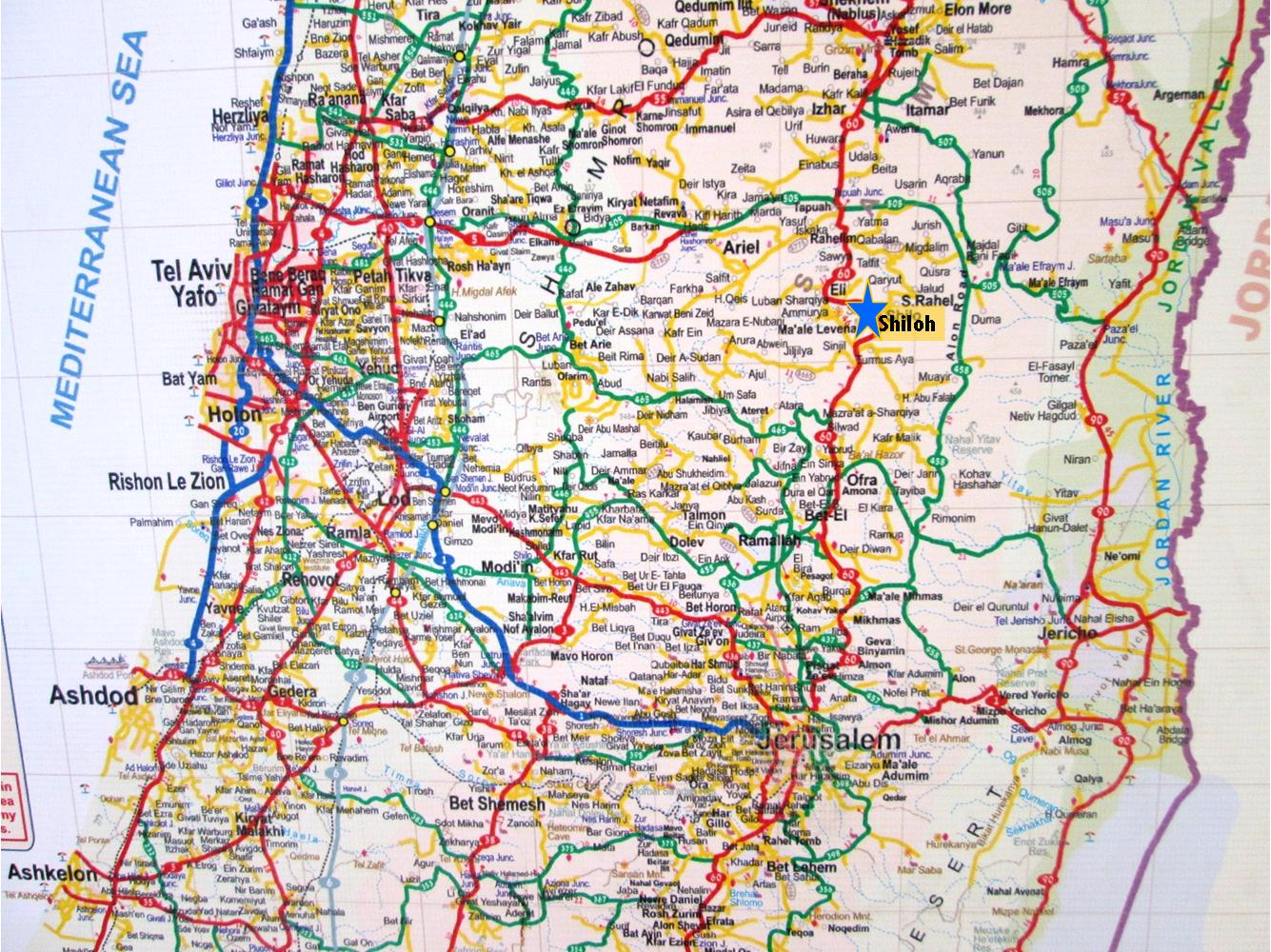
Shiloh is a place I am most looking forward to visiting during a 14 day trip to the Holy Land in May 2018. Shilo is where the Tabernacle was located from the time of Joshua to the days of King David. Shiloh is on the Central Ridge highway traveled by Abraham, Jacob, many of the judges, kings and by Jesus and his parents.
The Central Ridge Highway (Israel Route 60) goes through the heart of the country where the people lived, not along the coast or through the Jordan River Valley. We will be in proximity of GIlbeah, Rama, Mizpah, Bethel, Michmash, Ophrah on our journey to visit Shiloh, about 25 miles north of Jerusalem.
In pre-history there have been various finds at Shiloh. These include an ancient cave where people lived. This primitive settlement grew into a walled city by the time of Joshua and a cultic site. The site was conquered in the conquest as Joshua was directing the sons of Joseph, descendants of Ephraim and Manasseh to have enough faith to conquer their assigned territory.
Joshua 18:1 tells us, “The whole assembly of the Israelites gathered at Shiloh and set up the tent Shiloh meeting there.” This was the beginning of worship at this site and continued for 369 years. The tabernacle was not moved, which probably added to the tent lasting that long. The people of Israel visited this site for the three harvest festivals: Passover, Shavuot, and the Feast of Tabernacles. Josephus says, “Joshua removed his camp to the mountainous country, and placed the tabernacle in the city of Shiloh, for that seemed a fit place for it, because of the beauty of its situation.” (Antiquities 5.1.19)
The Mishnah states, “Shiloh differed from Jerusalem only in that at Shiloh they could consume the lesser Holy Things and the second tithe anywhere within sight (of Shilo); but at Jerusalem only within the city wall. But both here and there the Most Holy Things could be consumed only wiithin the curtains. After the sanctification of Shiloh it was permissible to set up high places elsewhere; but after the sanctification of Jerusalem it was not permissible. (Megillah 1.11)
The town of Shiloh is located in the heart of today’s West Bank. In the days of the Judges this area was the seat of government. Samuel traveled from Rama to “Bethel and Gilgal and Mizpah, and he judged Israel in all these places.” (1 Sam 7:16) Judges Ehud, Deborah, Gideon, Jair, Jephtah and Abdon were from the West Bank tribes of Benjamin, Ephraim and Manasseh. We will visit the land they protected and called home.
Most people would be familiar with the story of how Samuel the prophet came to live in the Tabernacle and care for its contents. Eleazar, son of Aaron, his son Phinehas, Abijah, Bukki, Uzzi, Eli, Ithamar and Ahitub probably served as High Priests at this site. During the time of King David the Tabernacle and the Ark of the Covenant were taken from Shiloh and relocated to Jerusalem.
At Shiloh we will see an ancient synagogue and the Tel of the city. The gates of the city have been uncovered as well as Eli’s grave. It is thought that a flat area carved from rock was the location for the Tabernacle.

I look forward to traveling to Shiloh as I have not been there before. The stories of Shiloh are memorable because they predate Jerusalem. This is the Tabernacle King Saul visited and David would have come to as a boy. We will see many unique sights while in Israel and gain new insights into the Bible. For more details visit our our Israel Tour page at www.KosheCopy.com. Sign up today for a discount!

Tuesday, June 6, 2017

Jericho's Walls and more

How low can you go? Find out during a 14 day trip to the Holy Land in May 2018. While on our journey we will make several stops along the shores of the dead sea. We will visit Jericho, home town of King David’s grandmother, Rahab. We will spend the night at Al Mog, a Jewish Kibbutz on the Dead Sea.
Our trip agenda - www.KosherCopy.com
Tell es-Sultan, or Jericho, is reputed to be the lowest and oldest city on earth. And indeed many archeological digs confirm the antiquity of this site. The earliest remains belong to the Natufian people who established a hunting site near the ever flowing spring which supports settlement. In the Neolithic period round houses constructed of mud brick have been found in a village surrounded by a wall and a round tower. This is the earliest fortification system known on earth.
Walls and ancient housing in Jericho
We will visit the site of the excavation and see the walls surrounding the ancient city. During our tour we will re-tell the story of Joshua and how the walls crumbled on the seventh day when the trumpets sounded for the seventh time. In what amounted a a great victory Israel conquered the most powerful city in Canaan during the days of Joshua.
Ancient building and walls at Jericho
Outside of the Tell es-Sultan we will visit the spring which existed during the time of Elijah and Elisha. The two prophets visited this area as Elijah traveled toward his appointment with God on the far side of the Jordan River.
One of the springs at Jericho. Elijah visited here!
We will go near the area where Elijah was taken to heaven in a chariot of fire. We will celebrate baptism in this area for any who wish to be baptised in the Holy Land. This is the area where Jesus was immersed by John the Baptist.
Mount of Temptation at Jericho
We will see what is traditionally called the Mount of Temptation behind Jericho. A cable car climbs the mountain and a monastery is located in the area to commemorate the fact that Jesus overcame the temptations Satan put forth.
Looking across Jericho toward Jordan
We will also see sycamore trees while we visit in the city of Jericho. The modern city is home to about 18,000 people. We will drive through the city and around a city square. We will talk about Zacchaeus who was the chief tax collector in this region and how he climbed a tree like the trees we will see on our journey.
Jordan City square with Sycamore and Palm trees
We will observe and travel the roads which enter Jericho from every direction. There was a major travel route from Jordan, across the river, through Jericho, and up Wadi Quelt into Jerusalem and beyond to the Great sea. A trade route traveled by Jesus also came into Jericho from the north. Many travelers would use this route to avoid Samaria and travel on to Jerusalem. Others would continue south on the road through Jericho to visit the Dead Sea.
The north and south road near Jericho. Date Palm farm
Jericho is a desirable place to live with hot summers and mild winters. Many types of fruit grow in this area including date palms. Cleopatra fell in love with Jericho. Herod the Great gave her a palace to live in which was also visited by Mark Anthony. THe remains of this palace are visible today.
Looking across the City of Palms toward Moab
Al Mog is a Kibbutz located just north of the Dead Sea with views toward the heights of Moab from which Moses first saw the Promised land and views of the ascent to the Judean highlands. The Kibbutz is located in the oxygen rich Rift Valley and features a swimming pool which will be quite refreshing at the end of a warm day.
Take time to sign up for a unique trip - www.KosherCopy.com

During the time we spend along the Dead Sea and Jericho during our 14 day trip to the Holy Land many Bible stories and more recent history will be shared. Please check the brochure located at www.KosherCopy.com under the tab Israel Tour 2018. Sign up for the tour on the linked registration page. The trip to Israel will be unforgettable.  

Friday, May 19, 2017

Qumran

We will visit Qumran, an ancient site along the Dead Sea during a 14 day trip to the Holy Land in May 2018. This is the village of the Essenes and the place where a shepherd boy found the first of the Dead Sea Scrolls. The settlement has a long and interesting history and has influenced our faith in many ways.
Qumran sits near the Dead Sea. It is an isolated location, far from Jerusalem and the populated areas of Israel. The men who moved to Qumran did so to get away from multitudes of people, what they felt was a corrupted priesthood and to avoid foreigners who were influencing the Israelites in wrong ways. Philo wrote “They flee the cities and live in villages where clean air and clean social life abound. They either work in the fields or in crafts that contribute to peace.”
The people who lived in Qumran were a monastic sect called the Essenes. Philo described them in this way, “They do not hoard silver and gold and do not acquire great landholdings; procuring for themselves only what is necessary for life. Thus they live without goods and without property, not by misfortune, but out of preference. They do not make armaments of any kind. They do not keep slaves and detest slavery. … With respect to philosophy, they dismiss logic but have an extremely high regard for virtue. They honor the Sabbath with great respect over the other days of the week. They have an internal rule which all learn, together with rules on piety, holiness, justice and the knowledge of good and bad.”
Pliney the Elder wrote, “To the west (of the Dead Sea) the Essenes have put the necessary distance between themselves and the insalubrious shore. They are a people unique of its kind and admirable beyond all others in the whole world; without women and renouncing love entirely, without money and having for company only palm trees. Owing to the throng of newcomers, this people is daily reborn in equal number; indeed, those whom, wearied by the fluctuations of fortune, life leads to adopt their customs, stream in in great numbers. Thus, unbelievable though this may seem, for thousands of centuries a people has existed which is eternal yet into which no one is born: so fruitful for them is the repentance which others feel for their past lives!"
Josephus says, “They renounce pleasure as an evil, and regard continence and resistance to passions as a virtue. They disdain marriage for themselves, being content to adopt the children of others at a tender age in order to instruct them. They do not abolish marriage, but are convinced women are all licentious and incapable of fidelity to one man. They despise riches. When they enter the sect, they must surrender all of their money and possessions into the common fund, to be put at the disposal of everyone; one single property for the whole group. Therefore neither the humiliation of poverty nor the pride of possession is to be seen anywhere among them.”
Josephus also wrote, “Before sunrise they recite certain ancestral prayers to the sun as though entreating it to rise. They work until about 11 A.M. when they put on ritual loincloths and bathe for purification. Then they enter a communal hall,where no one else is allowed,and eat only one bowlful of food for each man, together with their loaves of bread. They eat in silence. Afterwards they lay aside their sacred garment and go back to work until the evening. At evening they partake dinner in the same manner. During meals they are sober and quiet and their silence seems a great mystery to people outside. Their food and drink are so measured out that they are satisfied but no more.”
The men of Qumran are famous for their scrolls. The community copied scriptures, works written by others and writings of their own. The copyists worked in a disciplined manner so the product of their work would be error free. They counted letters to make sure each scroll was correctly copied, and then the scrolls were checked for style. Letters could not touch each other and the script had to conform to a specific style.
The Essenes assembled a library of scrolls. Every book of the Bible, with the exception of Esther, is contained in their library. Other great works both religious and nonreligious can be found also. Writings of their teachers are found among the scrolls and give clues to their theology.
During our 14 day trip to the Holy Land in May 2018 we will see the ruins of Qumran. We will see the Scriptorium, mikvah pools, craft houses and kitchen. We will also have the opportunity to walk up to caves where the scrolls were stored. We can climb into several caves to explore and see how they connect together.

The site was destroyed during the first Jewish-Roman War of 66-70 AD. With the dissolving of Jewish society the Essene communities ceased to exist.