Showing posts with label Tour. Show all posts

Tuesday, July 11, 2017

Visiting a Biblical Period Home

On a 14 day trip to the Holy Land in May 2018 we will visit the Talmudic village of Katzrin. Within this village we will find well preserved homes and streets reminiscent of what villages looked like during the time of Christ. While in Katzrin we will be able to see and enter homes, study the layout of the village and worship in the Synagogue.
We will enter the national park at Katzrin through a gate. Upon entry our attention will be drawn to Menorah emblazoned on the wall as a mosaic. The picture is colorful and symbolic. The town of Katzrin was known for its faith and the words of at least one Rabbi are immortalized in the Mishnah.
Through the gates we will enter the village of Katzrin along a street containing several standing homes dating to the sixth century AD. The homes are made of basalt rock, which is native to the region of Galilee and the entire Golan Heights. Residents of Israel built homes of rock because it was much more available than wood. Because of climate and geography homes and buildings of historic Israel are much different than homes our twentieth century architecture which relies on the rich woodlands of the eastern United States.
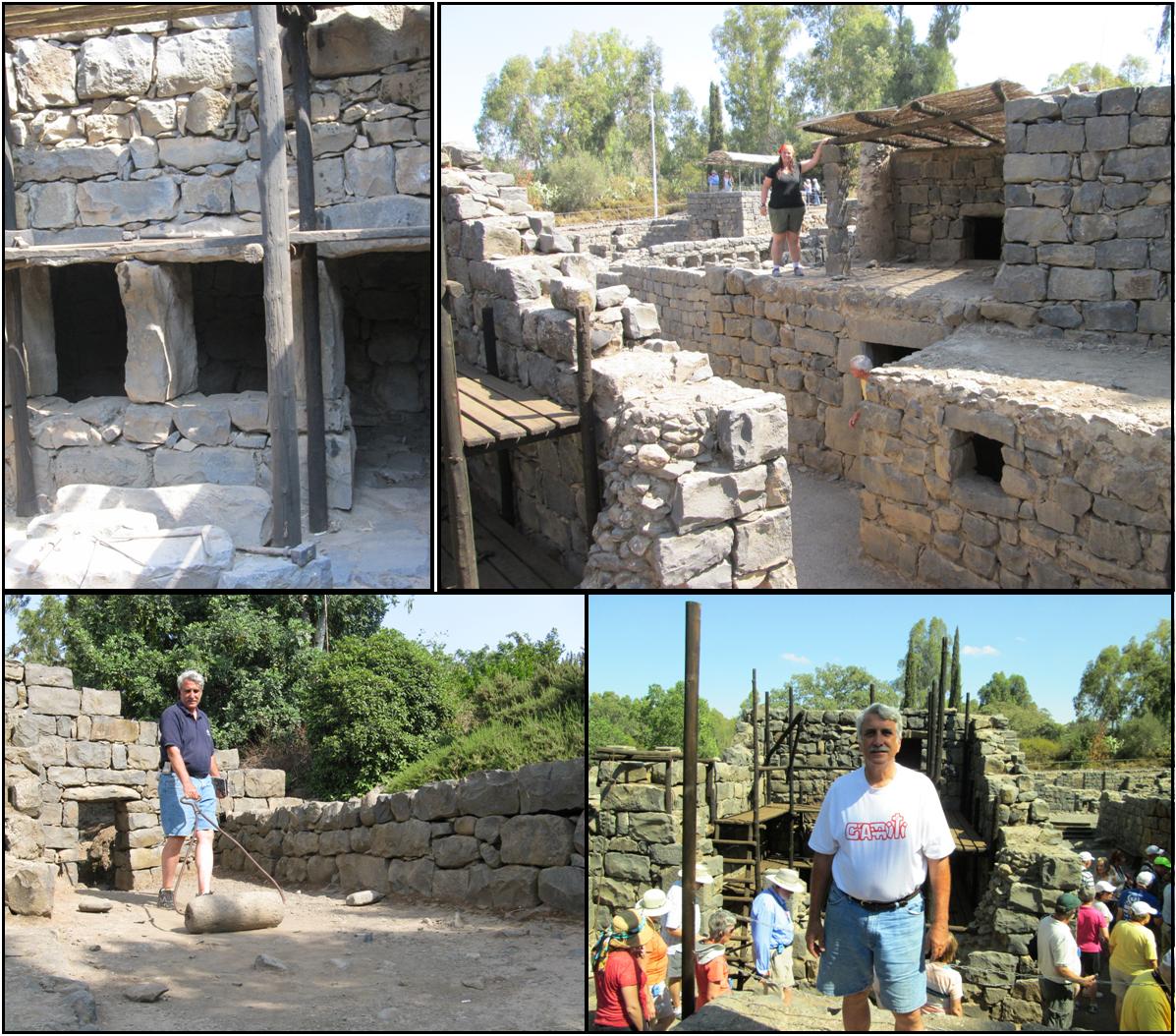
We will make our first stop along the road at a place where we can observe construction practices of ancient Galilee. A set of building scaffolding has been reconstructed so we can visualize early building practices. Nearby we will discover how roofs were built and see the tool used to compact the dirt and thatch so it holds together.
Next to the construction site we will enter a typical house of the New Testament era. We will see and be able to show respect for the Mezuzah on the doorway. This wooden box contains scripture passages from Deuteronomy 6:4-9 and 11:13-21 and remind all who enter a building that it is our faith in God which sets us apart as a people and brings blessings to our nation.
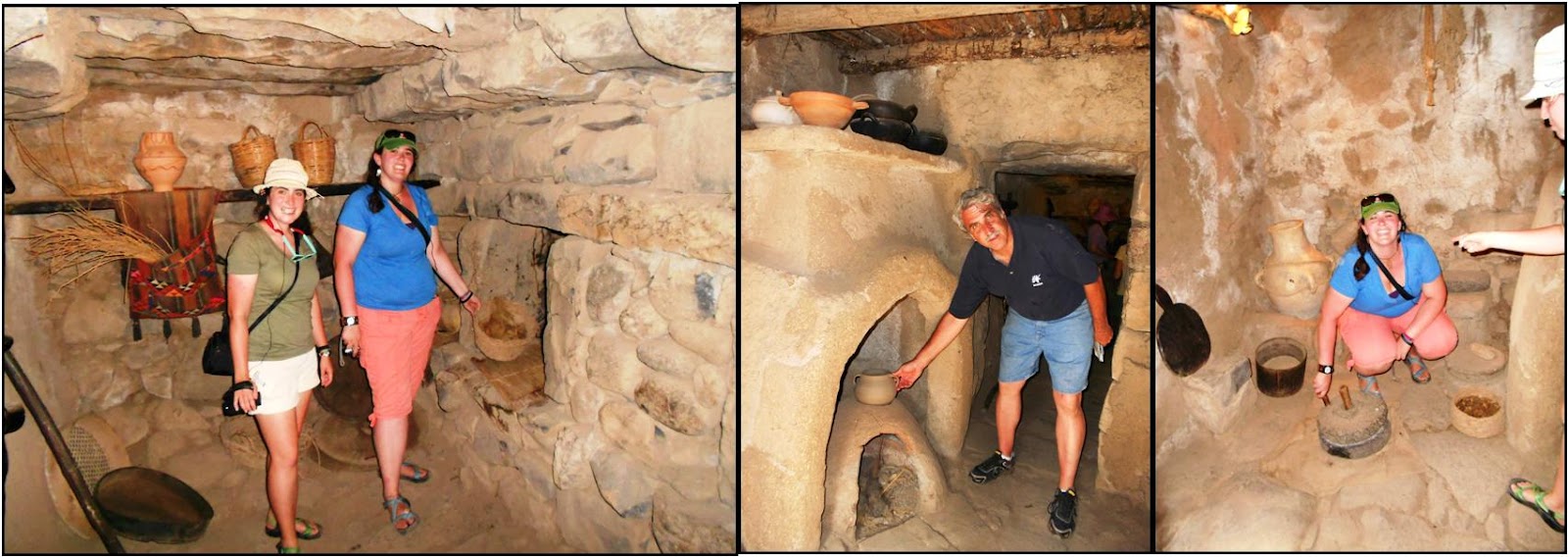
We will enter the house through the kitchen, the workspace of the home where meals are food is prepared and meals are cooked. We will see the oven and the dishes. We will be able to sweep the floor and step back into the days of our Bible, understanding what home life was like for the early disciples.
Beyond the kitchen is a dining area and the living room. It is in this space the family lived. We will observe the dining table, a couch/bed and the ladder which leads to the second level of the home.
On the wall of the home hangs an oil lamp, typical of lighting fixtures in Biblical times.
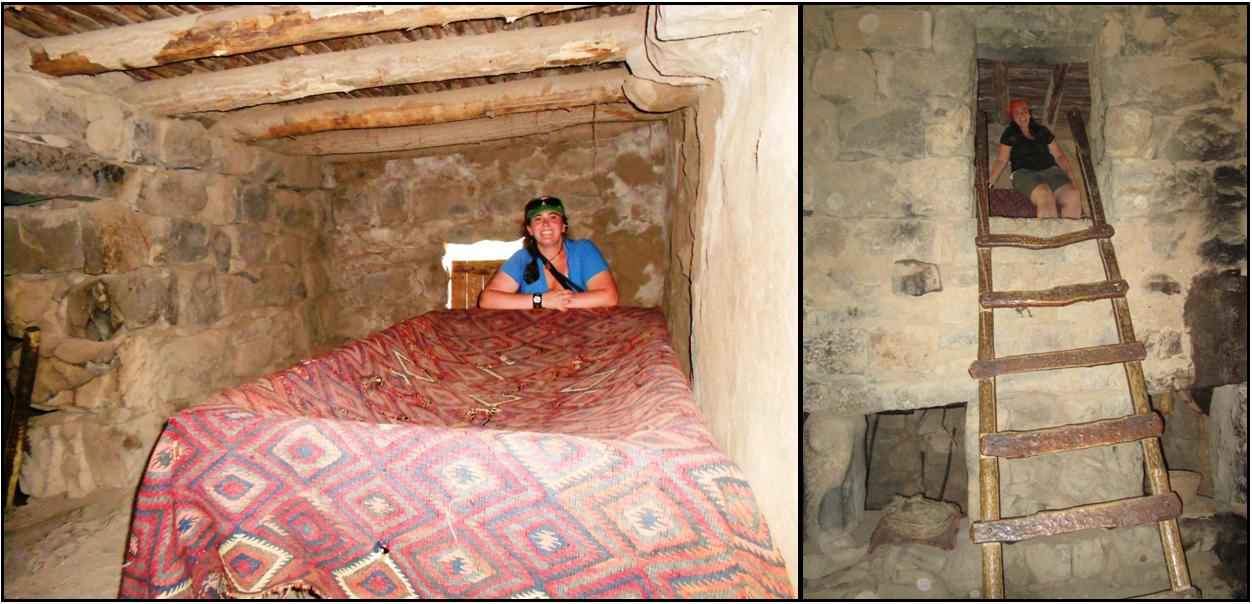
The family slept on the upper level of the home. We will see the large room where the family might have slept together. We will also be able to step out on the roof where the family slept when the weather was hot.
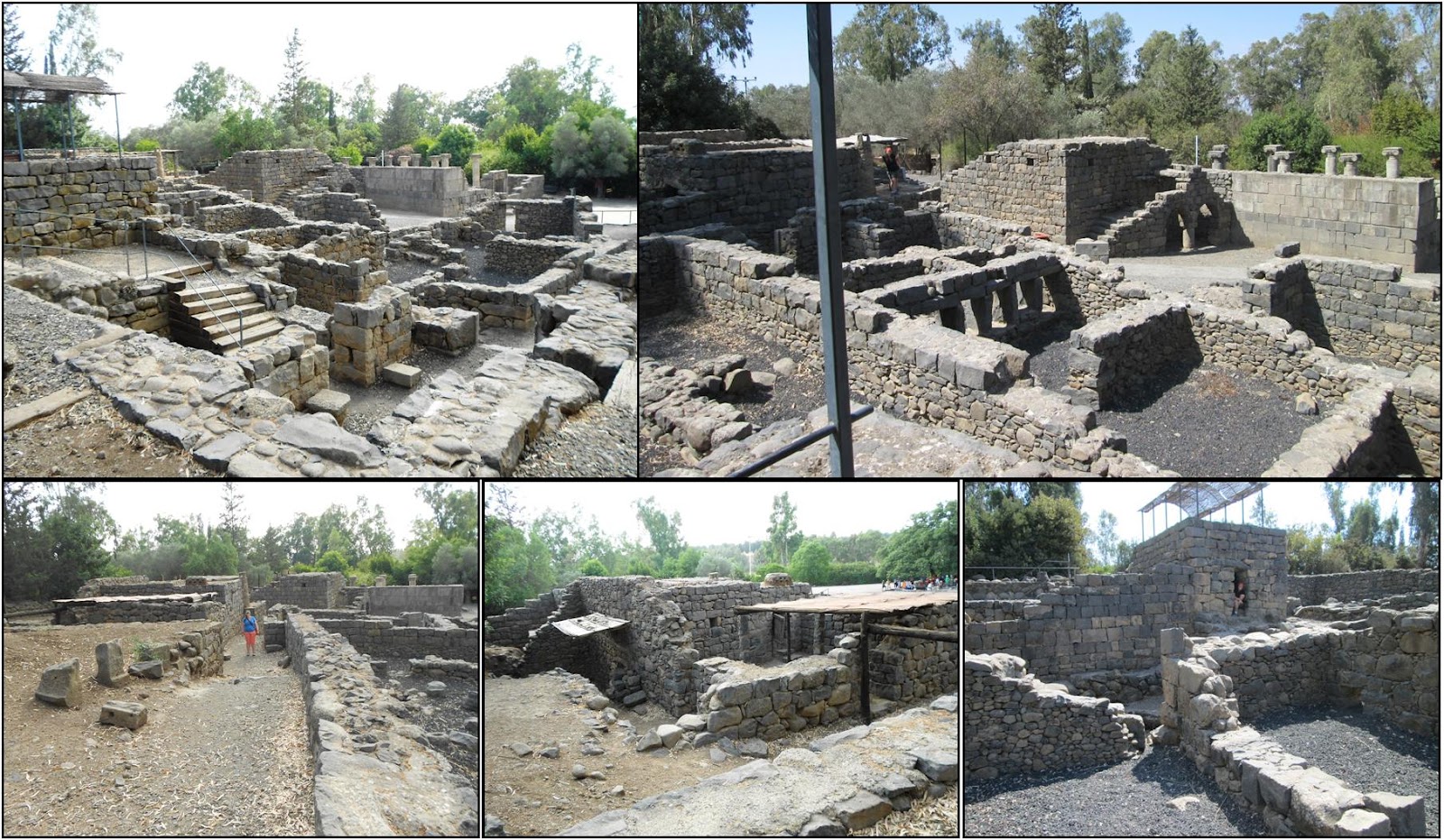
Beyond the house we will move into the rest of the town. We will see the remains of homes and businesses which were destroyed by an earthquake in 749 AD. The layout of the town is still detailed enough for us to understand the consistent architecture of every building. There is an overlook where we can see the layout of the town from a higher location.
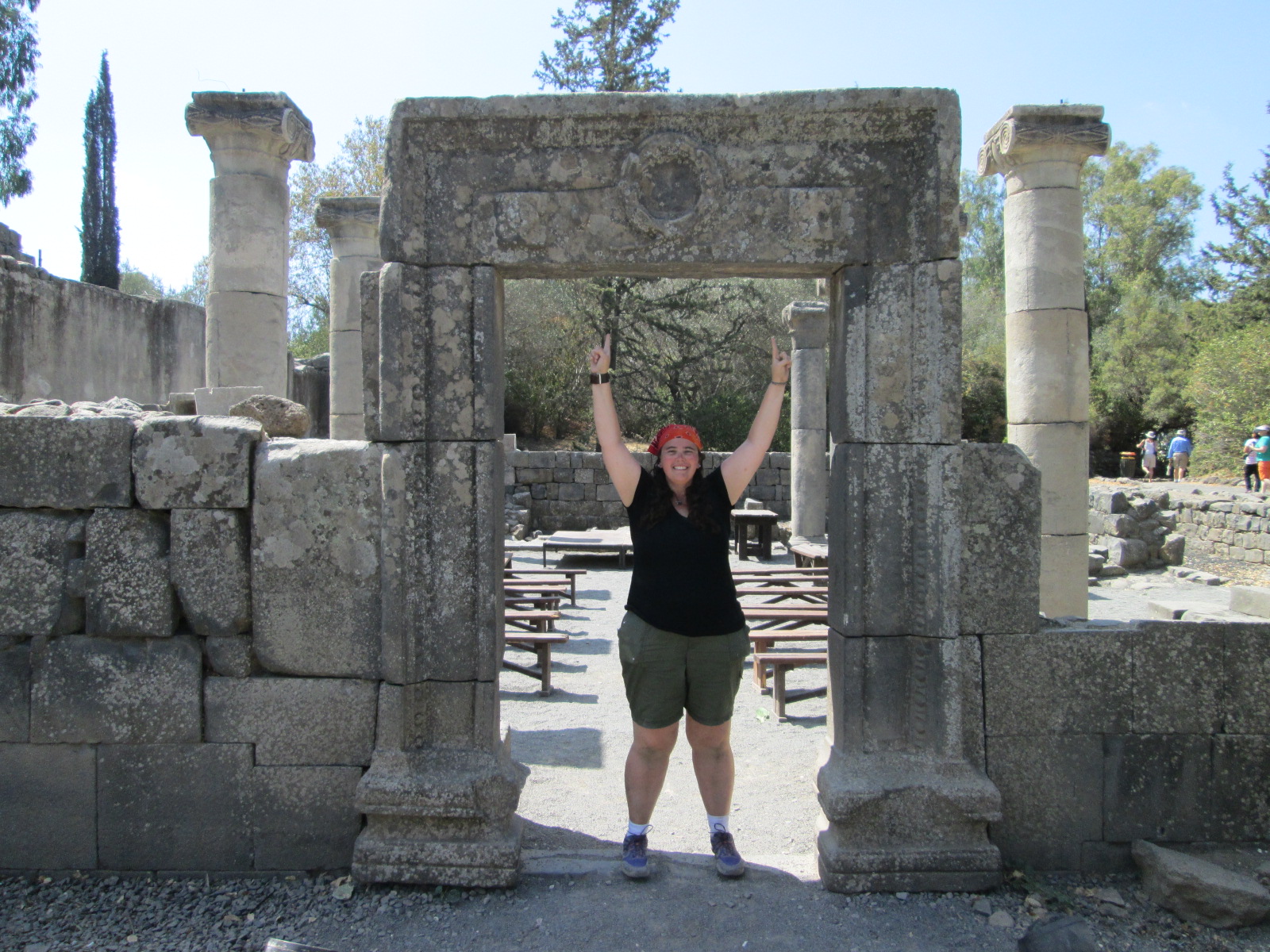
We will visit the synagogue near the exit of the city. We will step through the large doorway of the building and see the carved lintels and stonework. One of the lintels recovered in the area says, "This is the beit midrash (house of study) of Rabbi Eleazar ha Kappar." Rabbi Eleazar is recorded in the Mishnah as saying, “Envy, lust, and ambition shorten man's life." (Ab. 4.21)
We will see, experience and learn many things about the land of Israel and how people of the Bible lived during our 14 day trip to the Holy Land in May 2018. This trip can greatly expand your understanding of the Scripture and help you to visualize Bible stories you hear every week. To sign up, use the link to find more information at www.KosherCopy.com. You will also find links to the trip itinerary and for trip registration.

Monday, June 12, 2017

Traveling the West Bank

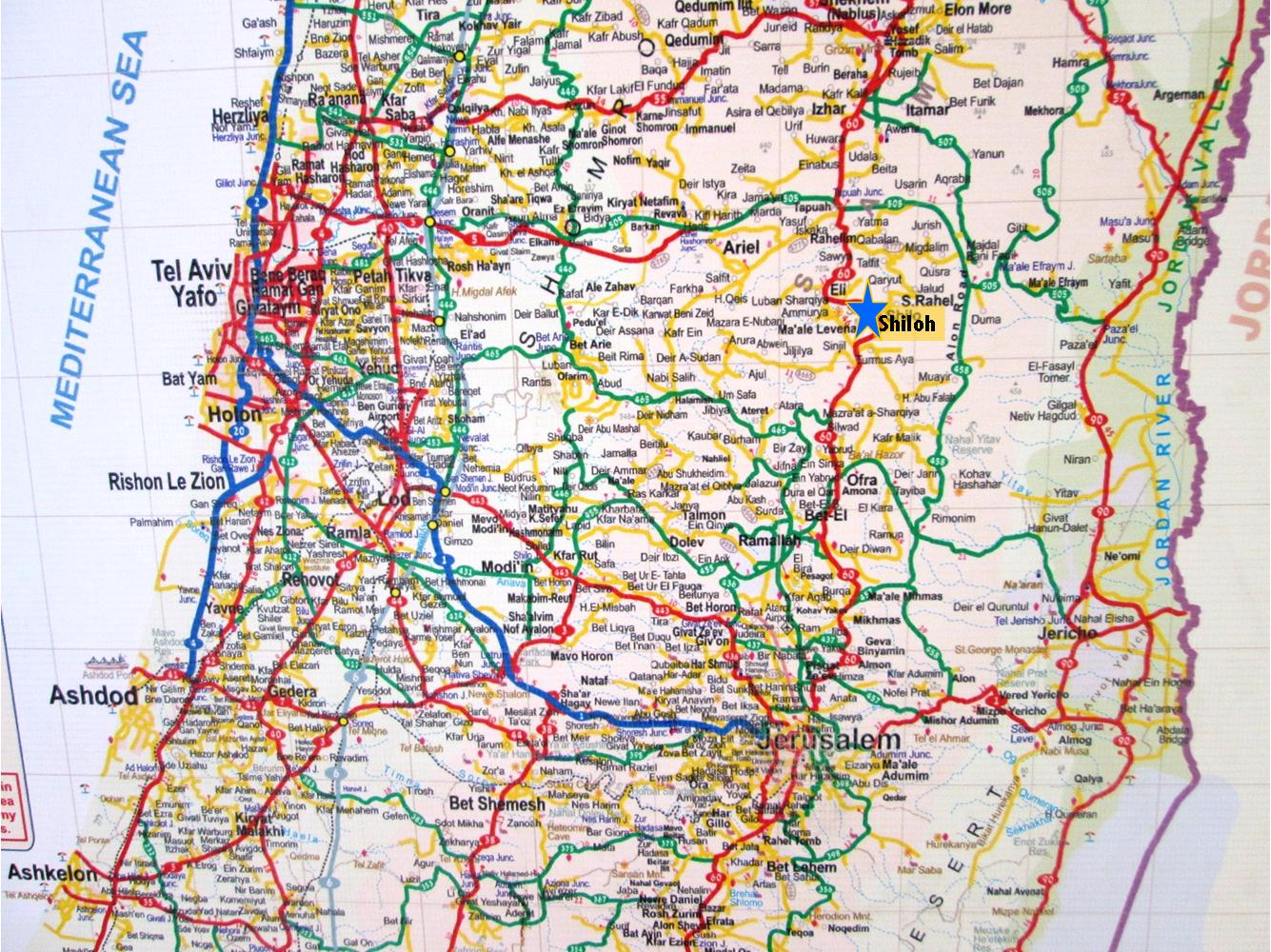
On this year’s 14 day trip to the Holy Land in May 2018, we will visit areas and sites not included on many tours. One of these areas is the West Bank north of Jerusalem. Our objective on the day we enter the West Bank is to see Tel Shiloh where the Tabernacle of Moses once stood. Along the way we will talk about the hill country of Judea, Benjamin and Ephraim.
We will travel the Central Ridge Highway (Israel Route 60) which goes through the heart of the land where the people lived, not along the coast or through the Jordan River Valley. We will be in proximity of GIlbeah, Rama, Mizpah, Bethel, Michmash, Ophrah on our journey to visit Shiloh, about 25 miles north of Jerusalem.
In the days of the Judges this area was the seat of government. Samuel traveled from Rama to “Bethel and Gilgal and Mizpah, and he judged Israel in all these places.” (1 Sam 7:16) Judges Ehud, Deborah, Gideon, Jair, Jephtah and Abdon were from the West Bank tribes of Benjamin, Ephraim and Manasseh. We will visit the land they protected and called home.
The road is called “the way of the Patriarchs” because it was traveled by Abraham, Isaac and Jacob. We know that Jesus used this road as he traveled from Jerusalem to Galilee, stopping at Jacob’s well in Shechem. For Joseph and Mary this route provided the shortest route to Bethlehem. I wrote Joseph’s travel journal in the book Advent Journeys. As our tour bus takes us along this route I will be interested in seeing the road for myself.
The trip from Jerusalem to Shiloh requires a group to go north. The first part of the journey will go through areas which were formerly independent towns, but became suburbs with the growth of Jerusalem. The first town of note is Gibeah which served for 38 years as the capital of Israel during the reign of King Saul. Today the town is called Pisgat Ze'ev and contains the unfinished Royal Palace at Tell el-ful which was to serve King Hussein of Jordan as his summer residence.
Israel Highway 60 goes around a curve to head north. Contained in or near this curve are two of the Levitical towns named in scripture Geba (modern Jeba’) and Anathoth (modern Anatot or Almon). The Bible tells how Jonathan freed Gaba from the Philistines. Later King Asa enlarged the city. Anathoth was the hometown of Jeremiah the prophet.
Continuing north we will pass Mizpah, a place translated “watchtower,” which is the first place on the Central Ridge Highway where Jerusalem can be viewed. Then we pass close to Ramallah, Bet-el and Et-Tel. Ramallah is a Palestinian administrative capital with a population close to 30,000. Beit-el is an Orthodox Jewish settlement placed at this location to honor Jacob, the grandson of Abraham who slept at this spot when he left home. Et-Tel is thought to be the site of the Biblical village of Ai which was destroyed by Joshua after the walls fell around Jericho.
Further north we pass Michmash (modern Mukhmas) where Saul and Jonathan fought the Philistines. Continuing north we pass Ophrah (modern Taybeh), a Christian village in the West Bank. It was near this village that Jesus spent time in hiding after he raised Lazarus from the dead.
Before reaching Shiloh we pass Mazra'a e-Sharkiya, an ancient farming community known as a farming community known for olive orchards, grape vineyards, fig trees and almond trees. As we travel we will learn the history past and present of these villages and the political situation of the West Bank. We will learn many interesting things to take home.

One of our objectives during our 14 day trip to the Holy Land in May 2018 is to see the West Bank and Shiloh. We will hear many stories from the Old Testament, the New Testament, Palestine and modern Israel as we travel this region. This trip to Israel will be unforgettable! Make sure you are included on this trip. For more details visit our our Israel Tour page at www.KosheCopy.com. Sign up today for a discount!

Tuesday, June 6, 2017

Jericho's Walls and more

How low can you go? Find out during a 14 day trip to the Holy Land in May 2018. While on our journey we will make several stops along the shores of the dead sea. We will visit Jericho, home town of King David’s grandmother, Rahab. We will spend the night at Al Mog, a Jewish Kibbutz on the Dead Sea.
Our trip agenda - www.KosherCopy.com
Tell es-Sultan, or Jericho, is reputed to be the lowest and oldest city on earth. And indeed many archeological digs confirm the antiquity of this site. The earliest remains belong to the Natufian people who established a hunting site near the ever flowing spring which supports settlement. In the Neolithic period round houses constructed of mud brick have been found in a village surrounded by a wall and a round tower. This is the earliest fortification system known on earth.
Walls and ancient housing in Jericho
We will visit the site of the excavation and see the walls surrounding the ancient city. During our tour we will re-tell the story of Joshua and how the walls crumbled on the seventh day when the trumpets sounded for the seventh time. In what amounted a a great victory Israel conquered the most powerful city in Canaan during the days of Joshua.
Ancient building and walls at Jericho
Outside of the Tell es-Sultan we will visit the spring which existed during the time of Elijah and Elisha. The two prophets visited this area as Elijah traveled toward his appointment with God on the far side of the Jordan River.
One of the springs at Jericho. Elijah visited here!
We will go near the area where Elijah was taken to heaven in a chariot of fire. We will celebrate baptism in this area for any who wish to be baptised in the Holy Land. This is the area where Jesus was immersed by John the Baptist.
Mount of Temptation at Jericho
We will see what is traditionally called the Mount of Temptation behind Jericho. A cable car climbs the mountain and a monastery is located in the area to commemorate the fact that Jesus overcame the temptations Satan put forth.
Looking across Jericho toward Jordan
We will also see sycamore trees while we visit in the city of Jericho. The modern city is home to about 18,000 people. We will drive through the city and around a city square. We will talk about Zacchaeus who was the chief tax collector in this region and how he climbed a tree like the trees we will see on our journey.
Jordan City square with Sycamore and Palm trees
We will observe and travel the roads which enter Jericho from every direction. There was a major travel route from Jordan, across the river, through Jericho, and up Wadi Quelt into Jerusalem and beyond to the Great sea. A trade route traveled by Jesus also came into Jericho from the north. Many travelers would use this route to avoid Samaria and travel on to Jerusalem. Others would continue south on the road through Jericho to visit the Dead Sea.
The north and south road near Jericho. Date Palm farm
Jericho is a desirable place to live with hot summers and mild winters. Many types of fruit grow in this area including date palms. Cleopatra fell in love with Jericho. Herod the Great gave her a palace to live in which was also visited by Mark Anthony. THe remains of this palace are visible today.
Looking across the City of Palms toward Moab
Al Mog is a Kibbutz located just north of the Dead Sea with views toward the heights of Moab from which Moses first saw the Promised land and views of the ascent to the Judean highlands. The Kibbutz is located in the oxygen rich Rift Valley and features a swimming pool which will be quite refreshing at the end of a warm day.
Take time to sign up for a unique trip - www.KosherCopy.com

During the time we spend along the Dead Sea and Jericho during our 14 day trip to the Holy Land many Bible stories and more recent history will be shared. Please check the brochure located at www.KosherCopy.com under the tab Israel Tour 2018. Sign up for the tour on the linked registration page. The trip to Israel will be unforgettable.  

Friday, May 5, 2017

Masada

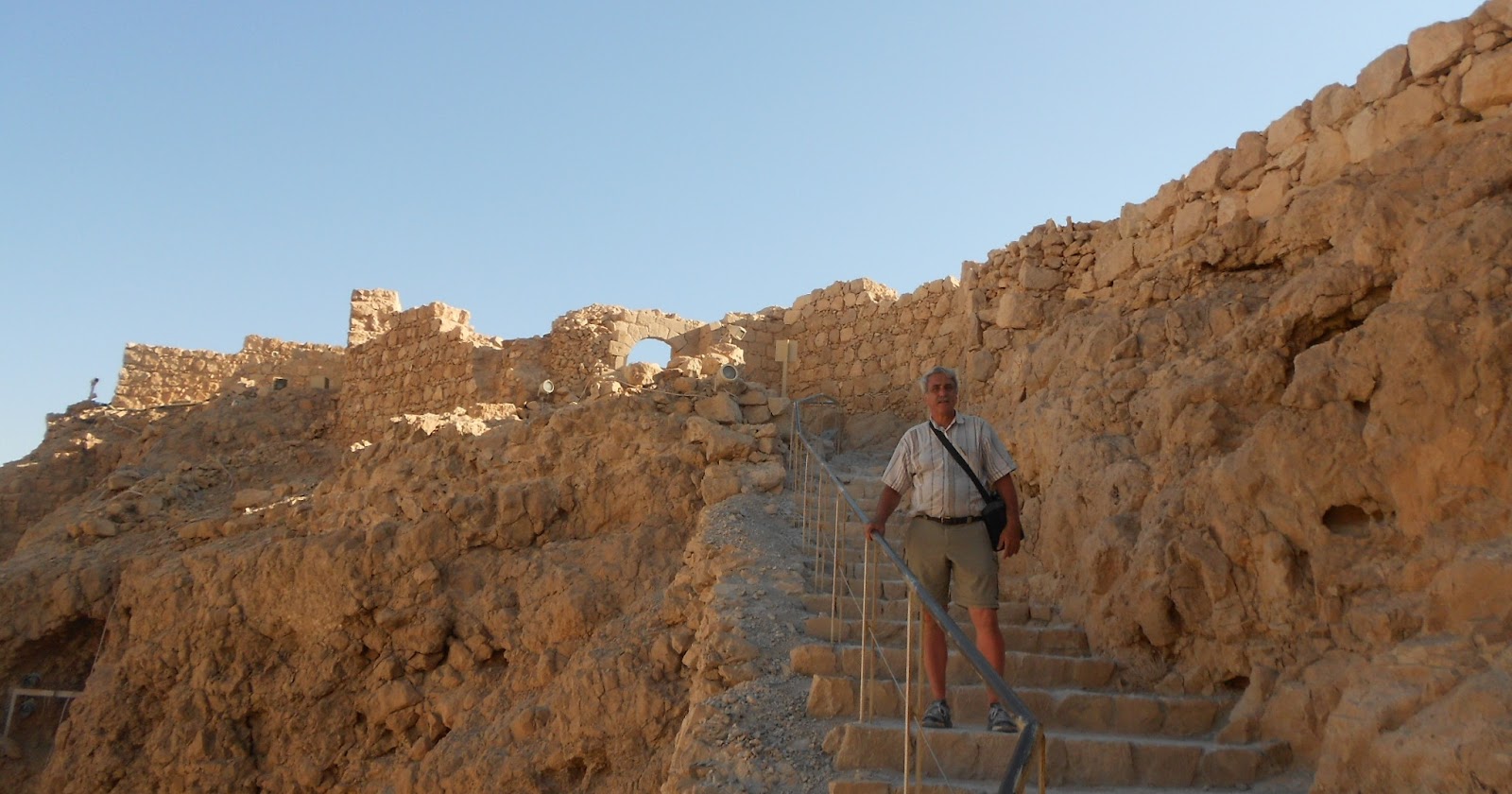
You will see many beautiful and historic sites if you join me during a 14 day trip to the Holy Land in May 2018. One of the fascinating places we will visit is Masada, a location first fortified by Hasmonean Alexander Jannaeus. The fortress was captured by Herod the Great and greatly expanded. We will see Herod’s fortress as we visit the top of Masada.
Masada is a geological formation called a horst, or a raised area which sits between two faults. Masada reaches more than a thousand feet above the Dead Sea of the Great Rift Valley fault zone. The top is a large mesa like plateau which contains palaces and housing for soldiers and staff. A large cistern system is contained within the mountain to collect and conserve water for the people who reside there.
We will approach Masada on our  14 day trip to the Holy Land from the east along the Roman siege ramp. We will see a Roman campground, catapult and a memorial to the Zealots who died in 73 AD.
At the top of the siege ramp we will enter through a gate, observing along the way guard walkways which were outside the walls. The gate is near the Western Palace, which we will tour and see the section of wall which was breached by Rome. Further south is a swimming pool, a southern fort and a mikvah pool.
Further north we will visit a barracks and the Synagogue which was used for worship. From this spot we will have an excellent view of the Dead Sea and the far shoreline. We will stop along the Northeastern side of the wall and hear a speech given to the Zealots in 73 AD just before the Romans breached the wall into Masada.
Beyond the Synagogue are storage areas, a bath house, the northern palace and administrative areas. We will have plenty of time to walk around Masada before descending either by the snake path or on a cable car. We will end up in the visitor center near the Dead Sea.
From Masada we will drive north along the Dead Sea to En Gedi, Qumran, and a beach where we will float on top of the water. The Dead Sea is lowest habitable place on earth. The air is very dry and oxygen rich. The water is mineral heavy which enables swimmers to float.
To sign up for the 14 day trip to the Holy Land in May 2018 use the link provided. Visit the Travel Brochure to see our schedule, then visit the registration page to claim a trip discount your initial deposit (details in the travel brochure).

Saturday, April 29, 2017

Riding Camels

One of the highlights of our 14 day trip to the Holy Land in May 2018 will be a camel ride. During our time in the Negev we will visit Beer Sheva, where Abraham settled, Sde Boker, where David Ben Gurion settled, and Arad, a town of the Nabateans. During our tour through the desert we will experience its vastness, isolation and beauty.
We will spend the first night of our time in the Negev at Be’er Sheva, the largest city in the area, boasting a population of over 250,000 people. We will drive past the large university and spend the night in a beautiful hotel. On the second night in the desert we will spend the night in a Bedouin village to experience the isolation and brilliance of nighttime away from city lights.
After our visit to Arad we will board our bus and drive to Kana`im valley. We will pull up outside a  Bedouin compound which overlooks Wadi T'zelim and Wadi Rahaf and see both asses and camels. In a display of Bedouin hospitality we will be offered a camel ride through the sands of the desert.
The camels will bring a wonderful conclusion to a day of traveling in the Negev. During our time in the Negev we will visit and spend the night at a Bedouin compound in the Kana`im valley. The camels will be settled and at the urging of a camel-puller so we can climb to the top of the hump and onto the saddle. The camels will then be encouraged to rise and in formation will be led across the sand. We will enjoy our camel ride and reminisce about earlier caravans and camel rides of the Bible.
After our ride we will proceed into Kfar Hanokdim where we will be directed to our lodging and to dinner. This compound is an upscale Arab village with permanent dwellings and bunk beds. We will lay out our bedding, wash our hands and enter a dining hall for a traditional Bedouin followed by stories of the desert and entertainment. Dinner will include Magluba, a rice and vegetable dish served on thin pita breads, a variety of salads and grilled meats, including Kebab and crispy chicken wings.
Following dinner we will go into the desert for a time of devotion. It should be a brilliant night as we will be close to the new moon. This will give us a great look at the stars overhead. The experience should be unforgettable.
You are invited to join us on our 14 day trip to the Holy Land in May 2018. For full details in a brochure visit this webpage. To sign up for the trip please use the form at this web page. I hope you will go with us to Israel. The experience is one of a lifetime. Many sites will be visited during our trip which are bypassed on other trips.

Friday, April 21, 2017

Hiking along En Avedat Canyon

Adventure as we hike in some of the most beautiful terrain is on tap for us on the fourth day of a 14 day trip to the Holy Land in May 2018. As we visit En Avedat National Park we will be walking on the edge of the Desert of Zin where Moses and the Israelites journeyed as they exited Egypt. We will traverse Wadi Zin from a wide valley below Sde Boker through the ravine to the Avadat heights.
Views from a hike through the lower Wadi Avedat
The Bible tells us the spies, “went up and explored the land from the Desert of Zin as far as Rehob, toward Lebo Hamath. They went up through the Negev and came to Hebron … When they reached the Valley of Eshkol, they cut off a branch bearing a single cluster of grapes. Two of them carried it on a pole between them, along with some pomegranates and figs.” (Nu 13) Ein Avedat is on a major road which leads from the south to the Judean hill country.
There are many modes of transportation in the Negev including Trains and Camels
We will follow the return route of the twelve spies as we travel from Beer Sheba to Sde Boker and Avadat. The road continues to Eilat on the Red Sea and then to the west (traditional site of Mt. Sinai) and to the east (south to Arabia and Midian). The road runs through the desert. Our stopping point is an oasis where surely the spies stopped to drink some water.
This is a picture and a map of ruins at Avadat
The Nabateans traversed this area in the first centuries BC and AD. They carried various types of merchandise along what is known as the incense route including myrrh and frankincense. Abdah or Obodat was built by the Nabateans and became their second most important city after Petra. Springs in the area allowed agricultural development which included diversion streams and dams. With the demise of the Nabateans other people continued to live and farm the area through the Roman and Byzantine eras. It is said Nabataean King Obodas I (96 to 85 BC) after whom the town is named was buried in the area.
This is the view of Wadi Zin from Sde Boker
We will approach Wadi Avadat by way of Sde Boker. The Kibbutz here is famous for carrying out the Zionist dream of making the desert bloom. David Ben Gurion, Israel’s first Prime Minister lived and was buried here in a grave that overlooks the wide valley through which the stream flows. From the gravesite we will look down on Wadi Zin where our hike will begin.
Ibex at Sde Boker with Wadi Zin in the background
We will also see Ibex and other wildlife native to the area. Psalm 104:18 could speak of animals in the area. It says, “The high mountains belong to the wild goats; the crags are a refuge for the hyrax.” We will see lizards, fish and some birds. Swifts, wheatears, partridges, chukars, babblers, desert swallows, rock doves and vultures fly above the valley. Vols and the desert dormouse wander the trail by night.
A lizard near En Avodot Springs
When we enter the valley for our hike we will see a topographic map. We will be taken by the chalk, white eocene limestone and thin seams of brown-black flint. We will walk along Avadot stream which is fed by En Mor, En Avadot and En Ma’arif springs.
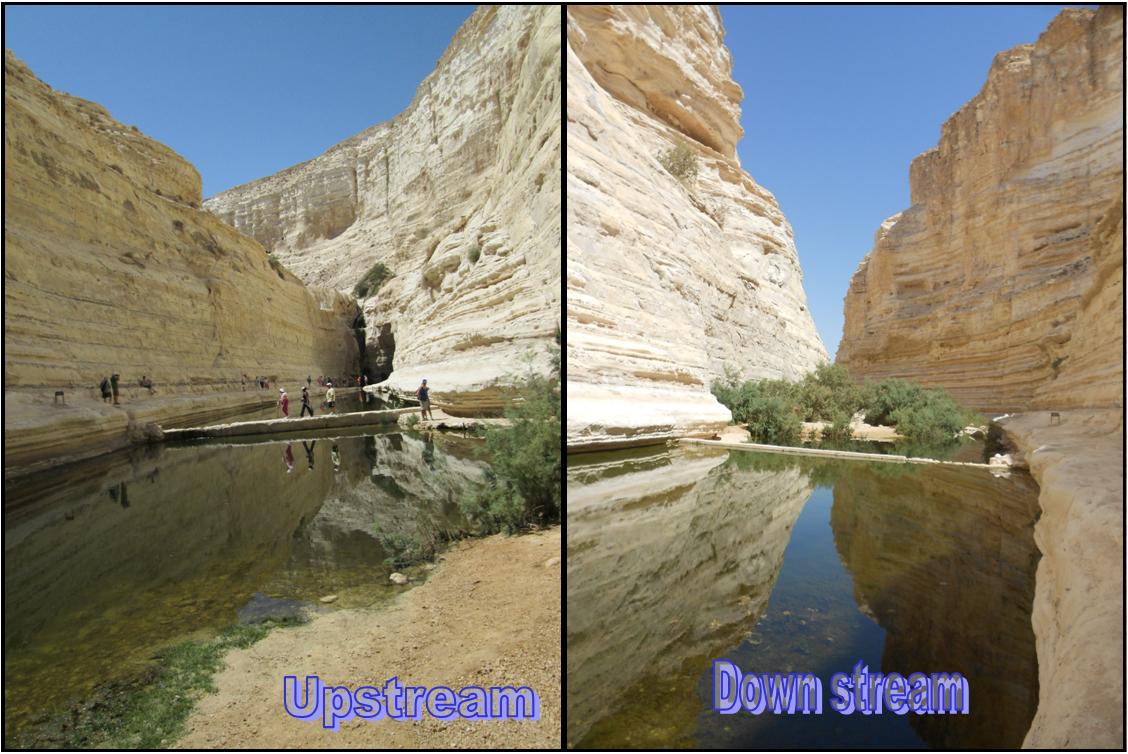
Looking upstream to the water fall and down stream at dam along Wadi Avodat
We will cross an agricultural earthen dam designed to contain water for irrigation purposes. At the end of the valley there is a waterfall where we will stop to take in the beauty. Then we will continue up a stairway hewn in stone and follow the creek on the upper level.
Getting ready to rest beneath the tamarask trees along Ein Avodat
We will admire the salt grass, reeds, bulrushes and nitraria retusa with its white flowers, red fruit and edible leaves with a salt taste. As we ascend the slopes to the top we will rest under tamarisk or salt cedar trees in order to see the route of our ascent.
Ruins at the top of En Avedat
We will come upon old buildings used by Bedouins who drew water from En Ma’arif springs when the village of Avedat ceased to be inhabited. Our bus will be waiting to pick us up as we continue our trip into the Judean desert.
Join us on a trip to the Holy Land by clicking the link below

Please join us on our 14 day trip to the Holy Land in May 2018. More information can be found at http://www.koshercopy.com/tour-of-israel/ . Links on this page lead to our itinerary and a page where you can sign up to join us on our journey. Our 14 day trip to the Holy Land in May 2018 will be an unforgettable experience, well worth the time and cost which is published.