Showing posts with label Moses. Show all posts

Monday, May 21, 2018

Shavuot, A Summer Festival

Today is Shavuot, the summer harvest festival celebrated in Israel from antiquity. God told Moses to command the Hebrews, “Count off seven weeks from the time you begin to put the sickle to the standing grain. Then celebrate the Festival of Weeks to the Lord your God by giving a freewill offering in proportion to the blessings the Lord your God has given you. And rejoice before the Lord your God at the place he will choose as a dwelling for his Name.” (Deut. 16:9-11)
Flowers in the Golan

The Jews have taken this celebration as a time as an opportunity for thanksgiving, remembering that God is the provider of all good things. Children wear wreaths of flowers around their heads to celebrate the beauty of nature during the days leading up to the festival of weeks. Christians, without realizing it, count the omer and call the day of first fruits Pentecost.
Pomegranate Tree with flowers and young fruit

The Mishnah relates that before the destruction of the Temple in 70 AD, the Festival of First Fruits was a community gala when people of Eretz Yisrael (the land of Israel) would make a pilgrimage to the Temple in Jerusalem bringing an offering from their agricultural produce at the time of their local harvest.
Banana Plantation in Galilee
A local official would cry out on the day after the first harvest in each local community, “Rise and let us go up to Zion, to the House of the Lord our God.”
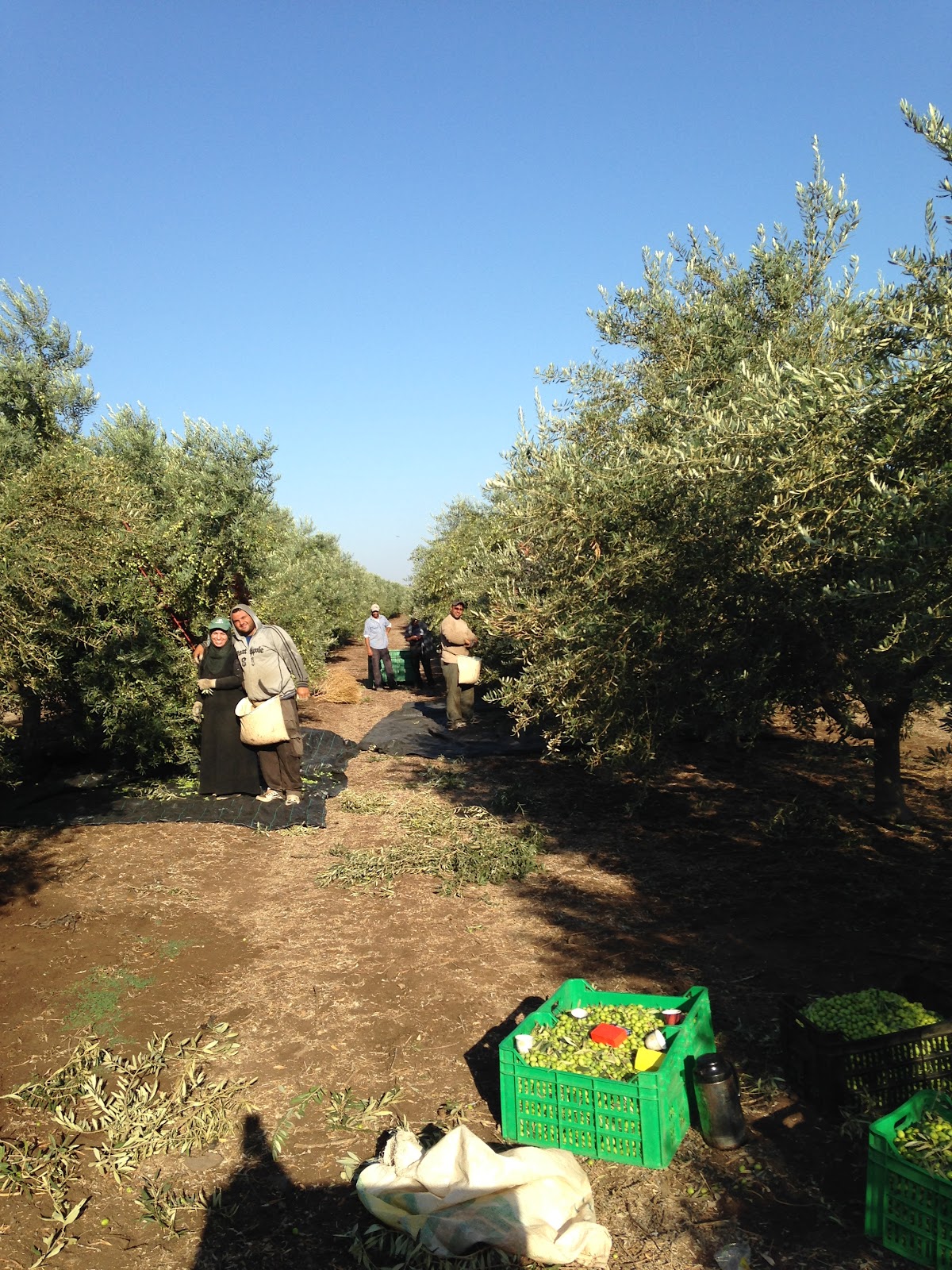
Olive Harvest in Israel
The offering of first fruits would be placed on a cart, drawn by an ox which was decorated for the occasion. Its horns were covered with gold, an olive crown was placed on its head, and fruits and wreaths adorned its back and the cart.
Flowers in Golan
The local official and a musician who played the halil (flute) would lead a procession, followed by the decorated ox who pulled the cart, which was followed by the people of the community until they reached the vicinity of Jerusalem. Along the road a team of greeters would join the procession and enlarge the music and joy of the celebration until the entire procession reached the gates of the city.
Damascus Gate, a main entry into Jerusalem from the north
At the gates of Jerusalem an important official met the procession and led them to Temple Mount. Along the streets of the city tradesmen would greet them with a welcome of peace, with singing, and probably with encouragement to examine their wares as the procession left town.
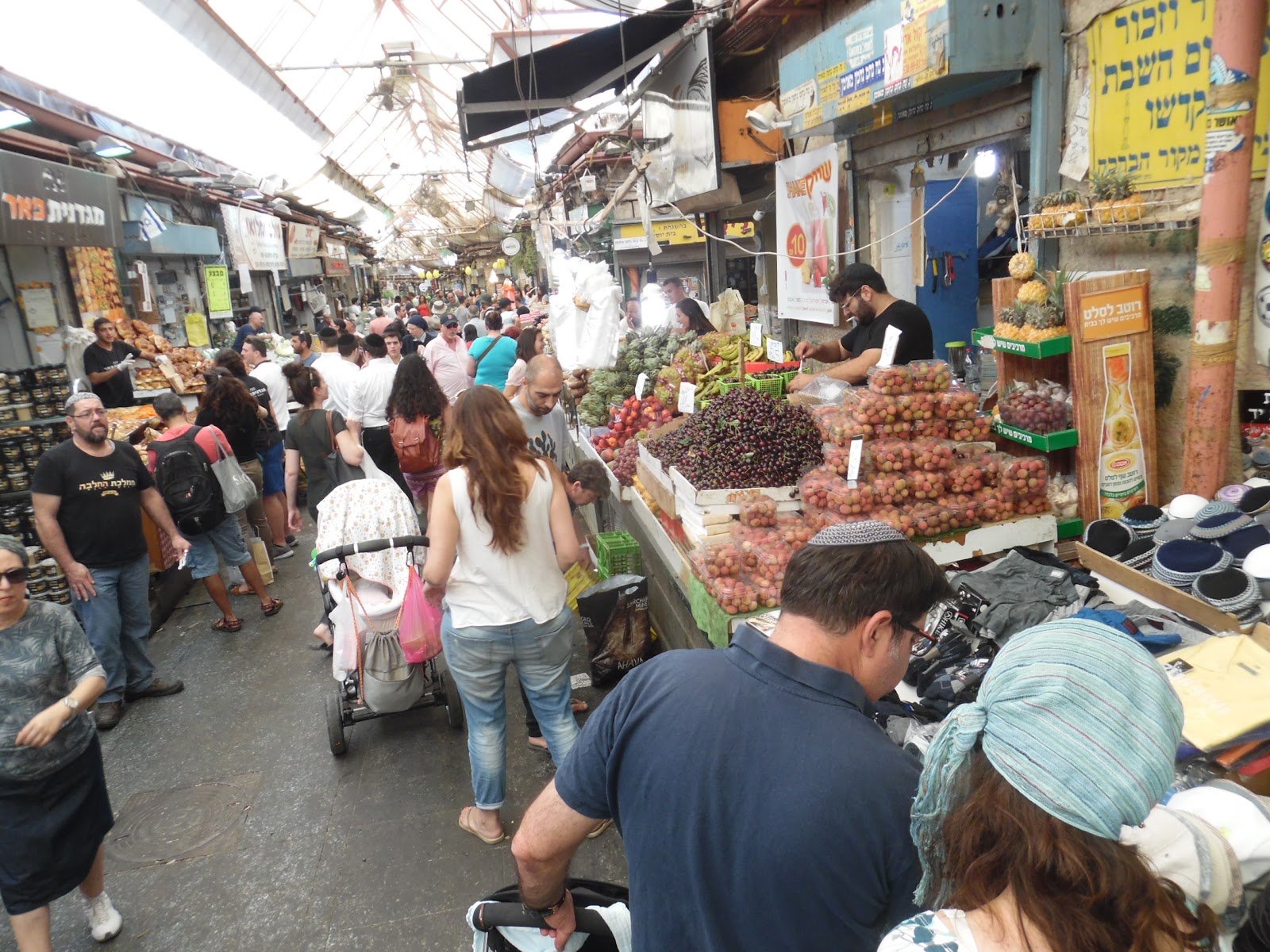
The Shuk, Mahane Yehuda Market
Following the destruction of the Temple, the Jewish people were faced with the dilemma as to how God should be honored without a designated meeting place to honor The Name. Rabbi Meir suggested (Exodus Rabbah, chapter 31) that the festival should be celebrated as the day the Torah was given on Mount Sinai. It has been noted that this event occurred about three months after Passover, which preceded the exodus from Egypt.
Shavuot Program in Haifa
In response, many Jews have added an all night study of Torah to the celebration of Shavuot. They also encourage partaking of dairy products (such as ice cream and cheesecake) to enhance the celebration.

Tuesday, April 18, 2017

Sde Boker

The desert blooms in Sde Boker, a kibbutz in the Northern Negev Mountains which was launched in 1952. A portion of the dream was to show that Israel, any part of the Holy Land could prosper. Many Zionists had the dream of making Israel, all of the land including the desert, bloom. Sde Boker is a prime example of what can be accomplished with proper care and technology in the desert. David Ben Gurion said, “It is in the Negev that the creativity and pioneer vigor of Israel shall be tested.”
On a 14 day trip to the Holy Land in May 2018 we will visit Sde Boker to see this green oasis with our own eyes, to visit the grave of David Ben Gurion and to walk through the Desert of Zin.  We will experience the contrasting landscape as we go from desert sand to the green vegetation of this kibbutz. We will walk through the trees and see the ibex which live in this oasis.
The word Negev, נֶגֶב, means parched. More than half of the land area of Israel is contained in the Negev. The area is desert and receives less than twelve inches of rain per year. The soil ranges from rocky to sandy and is interrupted by dry river beds (wadis) which blossom during the occasional rains. There are vast canyons in several areas and in one place a crater called Makhtesh Ramon.
David Ben Gurion along with his wife Paula loved this part of the desert. Ben Gurion retired early, and built his retirement home at Sde Boker. There is a library on the kibbutz which contained his personal books and housing used for the soldiers who protected the former Prime Minister. Today some of these buildings have been turned into a museum.
David Ben Gurion once wrote, “The desert provides us with the best opportunity to begin again. This is a vital element of our renaissance in Israel. For it is in mastering nature that man learns to control himself. It is in this sense, more practical than mystic, that I define our Redemption on this land. Israel must continue to cultivate its nationality and to represent the Jewish people without renouncing its glorious past. It must earn this—which is no small task—a right that can only be acquired in the desert.”
He lived at Kibbutz Sde Boker for twenty years. He and his wife are buried at a beautiful location near the Kibbutz. The gravesite is located on a high plateau with a view to a broad canyon below. The canyon below is known as the Desert of Zin where Israel camped during their years in the wilderness. We will walk through this beautiful area after visiting Sde Boker.
The desert is filled with wide open spaces. Its treelessness enhances a wide sky. The vastness and coloration of the sand enhances sunsets over this seemingly empty sphere. The sun shines bright in the day and the stars and the moon are brilliant at night. David Ben Gurion spoke often about the beautiful solitude of the desert. He said, “Wisdom goes with South. It is written: ‘Whoever seeks wisdom, south shall he go.’”

Wednesday, January 11, 2017

Discover Meaning in Israel

For all of my life, since the time I was quite young, I have heard stories about the land of Israel.  These stories have come from teachers in Sunday school, ministers and family friends. When I grew up, I taught Bible lessons shared out of quarterlies about what life must have been like for people we read about in the Bible. These stories had meaning, but they could have meant more.
Throughout my first thirty years of ministry opportunities came to visit Israel, but I stayed at home. Reasons I told myself I didn’t travel included: I did not have the money, I did not have the time, and my family would not want me to be away. But I wish I would have traveled to the Holy Land sooner.
On my first trip to Israel, I found I had many false impressions of the land. I identified too much of what the Bible said to what I had personally experienced. I saw the land as heavily wooded (as the eastern United States) and I believed travel in the Bible covered great distances. I found that neither of these perceptions were true.
The Bible has always been important to me, and so I always study to make sure I can share accurately the words of Scripture. When I journeyed to Israel, however, I discovered many new things. I saw first hand the places where people lived. I walked with a guide who pointed out how the land itself shaped events I had but read about. I tasted the food and experienced the life of the people.
I traveled along roads in Jerusalem used by Abraham, Isaac, Jacob, and King David. I hiked in the desert and rode a camel in regions traveled by Moses. I walked in the footsteps of Jesus along the shores of the sea of Galilee. In all of this, I thought about the people of the Bible and Bible lessons.
Then came the realization: it was here! That happens to almost everyone. At first they plan and go on a trip. People have their own preconceived notions of what it will be like, until the land and the Lord grips them. They realize for the first time: “this is the very place!” It happened to me and it is an indescribable experience.
Because of my trips to Israel, I am different. The people and stories have a fresh meaning. The words of scripture have taken on a new life. As I talk to people, whether telling about my trip or stories from the Scripture, I visualize the things I am saying. I teach and tell the stories I have known for a lifetime with new details because I have been there.
I love the land of Israel and its people. I want to share this passion with you on a journey I will take during the month of May 2018. Will you come with me? Please click the link to learn the details and to sign up.   

Wednesday, December 14, 2016

Shepherds of Greatness

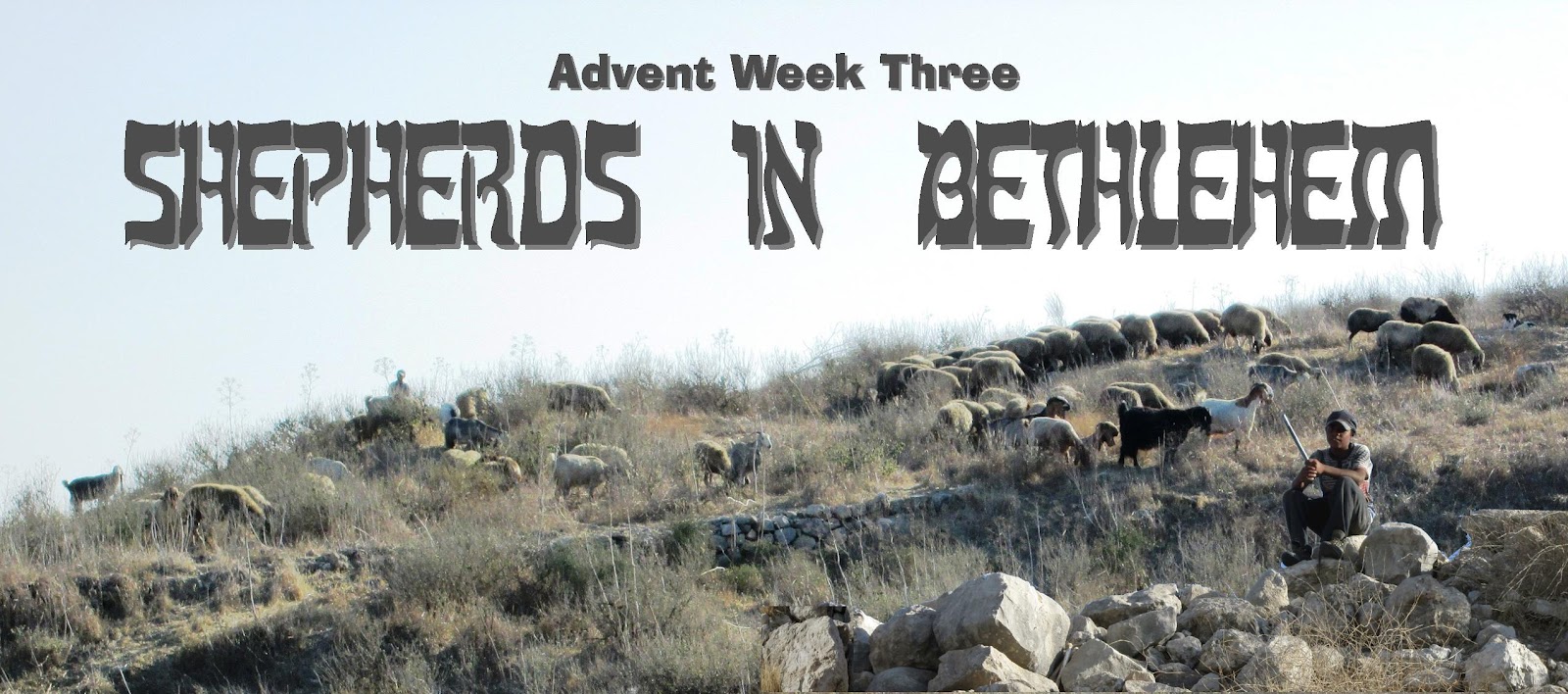
This week in the devotional Advent Journeys we move to the fields outside Bethlehem. Have you ever wondered what it would be like to live as a shepherd? There is more to the life than just following sheep. Take a look at the devotions this week, you can explore for free if you are an Amazon Prime member. I think you will enjoy the adventures of the Shepherds.
The Bible has a lot to say about shepherds. The first shepherd in the Bible (and we can assume the man who domesticated sheep) was Abel. His work, his heart of faith, and his offering pleased God. God’s love for Abel was seen by all (but there were not many people in the world at that time), and was displeasing to Abel’s brother Cain.
The Patriarchs: Abraham, Isaac, Jacob and Jacob’s sons were all shepherds. They developed large flocks, enjoyed great prosperity and developed quite a reputation as businessmen. Some of their neighbors were not too keen on their success. The Philistines stopped up their wells and attempted to get them to move, but God protected the Hebrew people.
Moses took up shepherding at the age of forty after a tragedy made a move necessary to sof ha’olam smola (סוף העולם שמאלה). Moses possibly learned the basics of shepherding through leadership training in Egypt in the school of Pharaoh. On the back side of the desert Moses met his wife, saw a burning bush and received his call to lead the people of Israel out of Egypt. (Who ever said Shepherding is boring?)
In an opposite way a shepherd boy named David received training to become King of all Israel through his leadership of sheep. (I wonder if there is a similarity between dumb sheep and a nation full of people). David learned bravery through protecting his sheep. He learned to sing and compose music either through necessity because of the vastness and emptiness of the Judean wilderness or through the constant bleating of the sheep. The solitude of the desert also taught David to worship God.
Shepherds are a unique group of people who carry a huge responsibility. This week we will join the shepherds as they live out their responsibilities and carry out their duties. Please, join the reading!

.

Friday, December 4, 2015

Courses of Priests & Retirement age

I find as I talk to people many do not understand the organization or the purpose of the Temple in Jerusalem.  We want to relate the Temple to something familiar in our world, to the church.  But the Temple was not the church. The Temple was the place of prayer and sacrifice.
In our world there are many churches and many denominations.  In the world of Jesus’ time there was one … and only one Temple.  The Temple was located in Jerusalem on Mount Moriah.  The Temple was the most important institution in Jewish life, instituted by God in the days of Moses, and built first by Solomon, and rebuilt by Zarubabel and then by King Herod.  While there were many synagogues, there was one … and only one Temple.
In our world we go to church on Sunday, or as the Jews refer to Sunday, the first day of the week.  We attend church on Sunday to worship God and to remember that Jesus arose from the grave on the first day of the week.  The Jews go to Synagogue on the seventh day (Sabbath).  They go to the Temple when needed.  The scripture specifically instructs, “Three times a year all your men must appear before the LORD your God at the place he will choose: at the Festival of Unleavened Bread, the Festival of Weeks and the Festival of Tabernacles. No one should appear before the LORD empty-handed:” (Dt 16:16)  The Jews also go to the Temple to make a desired or required sacrifice (See Leviticus 1-7).  Some would go regularly for prayer.
In our world we sing hymns and worship, and the same could be done in the Temple.  There was not a real song leader or time of singing, however, some of the priests who were musicians would stand between the Court of Israel and the Court of the Women to sins Psalms to the people.  There were prescribed Psalms people sang as they ascended to the Temple, prescribed daily psalms sung by the priests, and other psalms people would sing in worship.
In our world we hear a pastor or a priest give a sermon.  In the Temple there was no sermon, that is not what the Temple was about.  The Temple was a place of sacrifice.  People would come, and give their offerings to the priest.  They could not enter the Holy Place, only the priests could enter.  The people stayed outside.  The people prayed.  They heard music if the priests were singing.  Occasionally there were men, such as Peter, who came to the Temple courtyard and preached.  But it was a sideline activity.  The main purpose of the Temple was to give offerings to God and to pray.
In our world the pastor is called by the church or sent through the denomination.  In the days of Jesus there were no denominations.  We read of the Saducees, they served the Temple.  We read of the Pharisees, they were lawyers, and worshipped in the Synagogues.  The Essenes were a monastic group who lived in their own communities.  And there were the Jewish people who connected with the Temple (because the law of Moses ordered this), and the Synagogue, which was a community of faith near their home.
In our world pastors can and do move.  In the times of Jesus the Priesthood was by birth.  Men were not called to go to a church, they were born into their place of service.  Father passed on to son the traditions of the faith and the practice of the priesthood.  Men served between the ages of 25 and 50.  After 50, men retired and would mentor younger priests.
Through Advent Journeys you will visit a world which is very different that our world.  The world of Jesus is worth reading about and studying, for in so doing you understand Jesus, the people around him and the New Testament in a much fuller way.

Wednesday, May 13, 2015

Forty Days

Today is forty days, which is five weeks and five days of the Omer.
Forty is a significant number.  In the days of Noah it rained for forty days and forty nights.  Moses was on Mount Sinai forty days and nights; twice.  The twelve spies sent by Moses explored the Promised Land for forty days and nights.  Goliath tested the army of Israel for forty days.  Elijah traveled forty days in order to reach Mt. Horeb.  Jonah warned Nineveh their city would be destroyed in forty days unless they repented.
Jesus fasted in the wilderness for forty days and then he was tested by Satan.
And so it was that Jesus walked the earth for forty days following his resurrection.  That is forty days while the Jews counted the omer.
What is an omer you might ask ... it is a measure for grain.  And because it is a measure, its meaning can also be applied to a measure of days.  According to Exodus 16, it was the measure for manna.  In Leviticus 23:16 God tells the Hebrews to count count fifty days from Passover to Shavuot.  These same fifty days are traditionally the number of days it took Israel to travel from Egypt to Mt. Sinai, where Moses ascended to receive the law.  Fifty is the number of days from the resurrection to the giving of the Holy Spirit.
So, what about forty?  It is the number of days from the time Israel left Egypt until they camped at the foot of Mt. Sinai.  It is also the number of days from the resurrection until Jesus ascended into heaven.  The nation of Israel, and the twelve disciples (times ten) waited ten more days to receive God's promise.

Monday, March 9, 2015

Passover Preparation - Day 2 - Meeting God


Now Moses kept the flock of Jethro his father-in-law, the priest of Midian; and he led the flock to the back side of the desert and came to the mountain of God, even to Horeb. And the angel of the Lord appeared unto him in a flame of fire out of the midst of a bush; and he looked and, behold, the bush burned with fire, and the bush was not consumed. … Come now therefore, and I will send thee unto Pharaoh, that thou mayest bring forth My people, the children of Israel, out of Egypt.” And Moses said unto God, “Who am I, that I should go unto Pharaoh, and that I should bring forth the children of Israel out of Egypt?” (Exodus 3:1-2, 10-11)
     Moses was a person like us, with a few advantages. He was born during the time the family of Israel was crying out to God over the atrocities visited on their people. This included the male children of the Hebrew people being thrown into the Nile River. This fate would have been visited upon Moses, save for his mother’s quick thinking. She protected him with a basket boat and put him into a field of bullrushes near the place Pharaoh’s daughter went daily to bathe. She then stationed Moses’ sister Miriam to look after her new brother.
     In time, Moses was adopted by Pharaoh's daughter and taken into her father's palace. This adoption afforded Moses the best education possible in the world at that time. For many years he enjoyed the benefit of his placement - until two eventful days. On the first, he saw a Hebrew slave, one of his people by birth, being beaten by an Egyptian overseer, and Moses killed the perpetrator. On the second, he stopped a fight between two of the Hebrew slaves, and became fearful when one of them said, “Are you going to kill me, too?”
     Moses escaped to the wilderness, where he met Zipporah, the daughter of a Midianite Priest. They were married, and Moses became the shepherd of his father-in-law's flock.
     While Moses was watching the sheep, God appeared to him in a burning bush. God called Moses to a monumental task - to lead the people of Israel out of Egypt. Moses attempted to escape the call, but God's instruction is inescapable.
     God prepares each of us, giving us a spiritual gift so we can accomplish a task. Do you know your gift and calling? God will show us in His own time and way where we are to be involved, and in what kind of ministry. Can you describe how God called you? Is the calling something you attempted to escape? To avoid God’s call is to miss a blessing.
     When you answer a call, you will in a sense guide people from enslavement to God’s blessing and desire for their life. Pray today to find your calling.