Showing posts with label Eretz Yisrael. Show all posts

Monday, May 21, 2018

Shavuot, A Summer Festival

Today is Shavuot, the summer harvest festival celebrated in Israel from antiquity. God told Moses to command the Hebrews, “Count off seven weeks from the time you begin to put the sickle to the standing grain. Then celebrate the Festival of Weeks to the Lord your God by giving a freewill offering in proportion to the blessings the Lord your God has given you. And rejoice before the Lord your God at the place he will choose as a dwelling for his Name.” (Deut. 16:9-11)
Flowers in the Golan

The Jews have taken this celebration as a time as an opportunity for thanksgiving, remembering that God is the provider of all good things. Children wear wreaths of flowers around their heads to celebrate the beauty of nature during the days leading up to the festival of weeks. Christians, without realizing it, count the omer and call the day of first fruits Pentecost.
Pomegranate Tree with flowers and young fruit

The Mishnah relates that before the destruction of the Temple in 70 AD, the Festival of First Fruits was a community gala when people of Eretz Yisrael (the land of Israel) would make a pilgrimage to the Temple in Jerusalem bringing an offering from their agricultural produce at the time of their local harvest.
Banana Plantation in Galilee
A local official would cry out on the day after the first harvest in each local community, “Rise and let us go up to Zion, to the House of the Lord our God.”
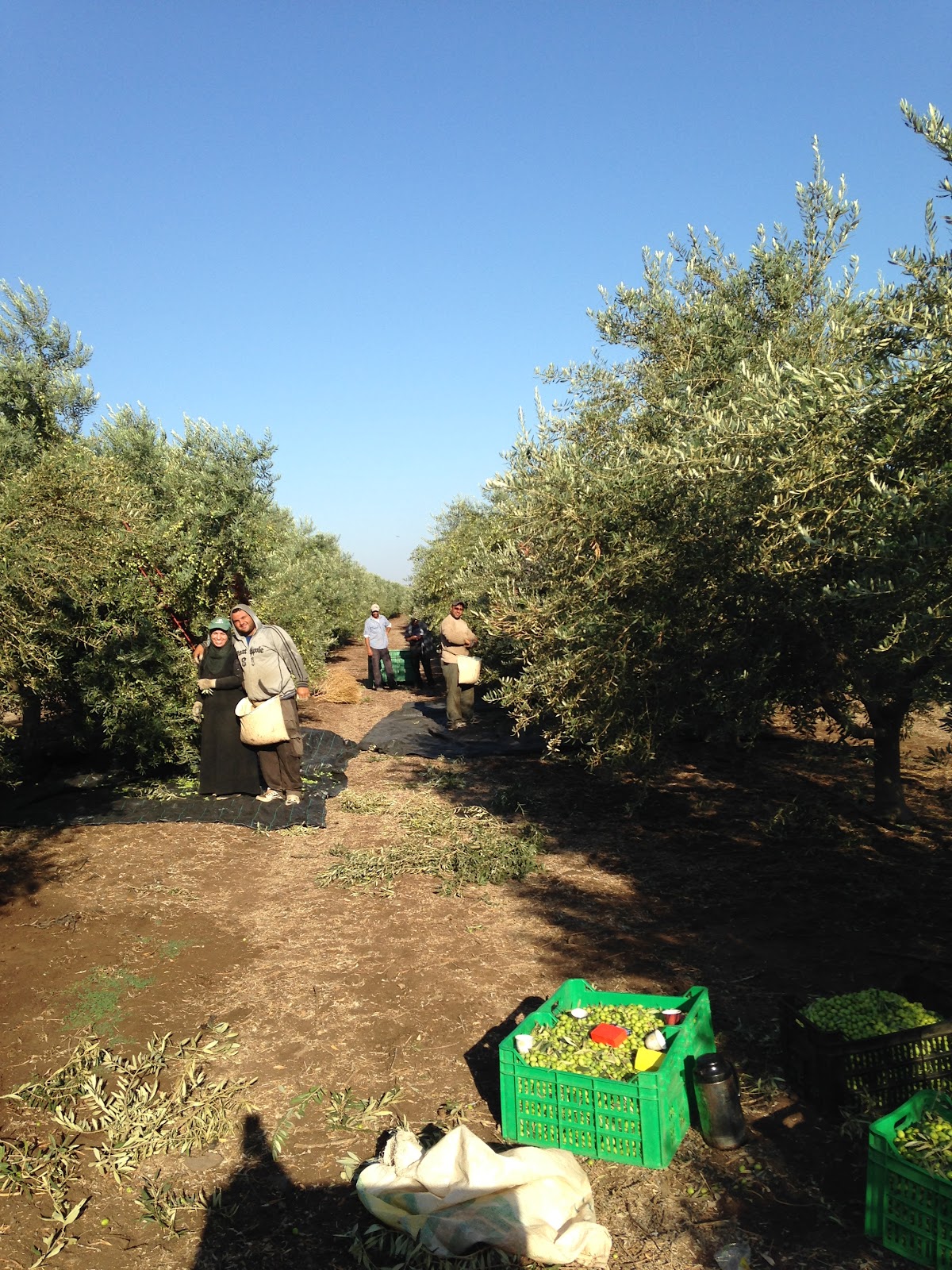
Olive Harvest in Israel
The offering of first fruits would be placed on a cart, drawn by an ox which was decorated for the occasion. Its horns were covered with gold, an olive crown was placed on its head, and fruits and wreaths adorned its back and the cart.
Flowers in Golan
The local official and a musician who played the halil (flute) would lead a procession, followed by the decorated ox who pulled the cart, which was followed by the people of the community until they reached the vicinity of Jerusalem. Along the road a team of greeters would join the procession and enlarge the music and joy of the celebration until the entire procession reached the gates of the city.
Damascus Gate, a main entry into Jerusalem from the north
At the gates of Jerusalem an important official met the procession and led them to Temple Mount. Along the streets of the city tradesmen would greet them with a welcome of peace, with singing, and probably with encouragement to examine their wares as the procession left town.
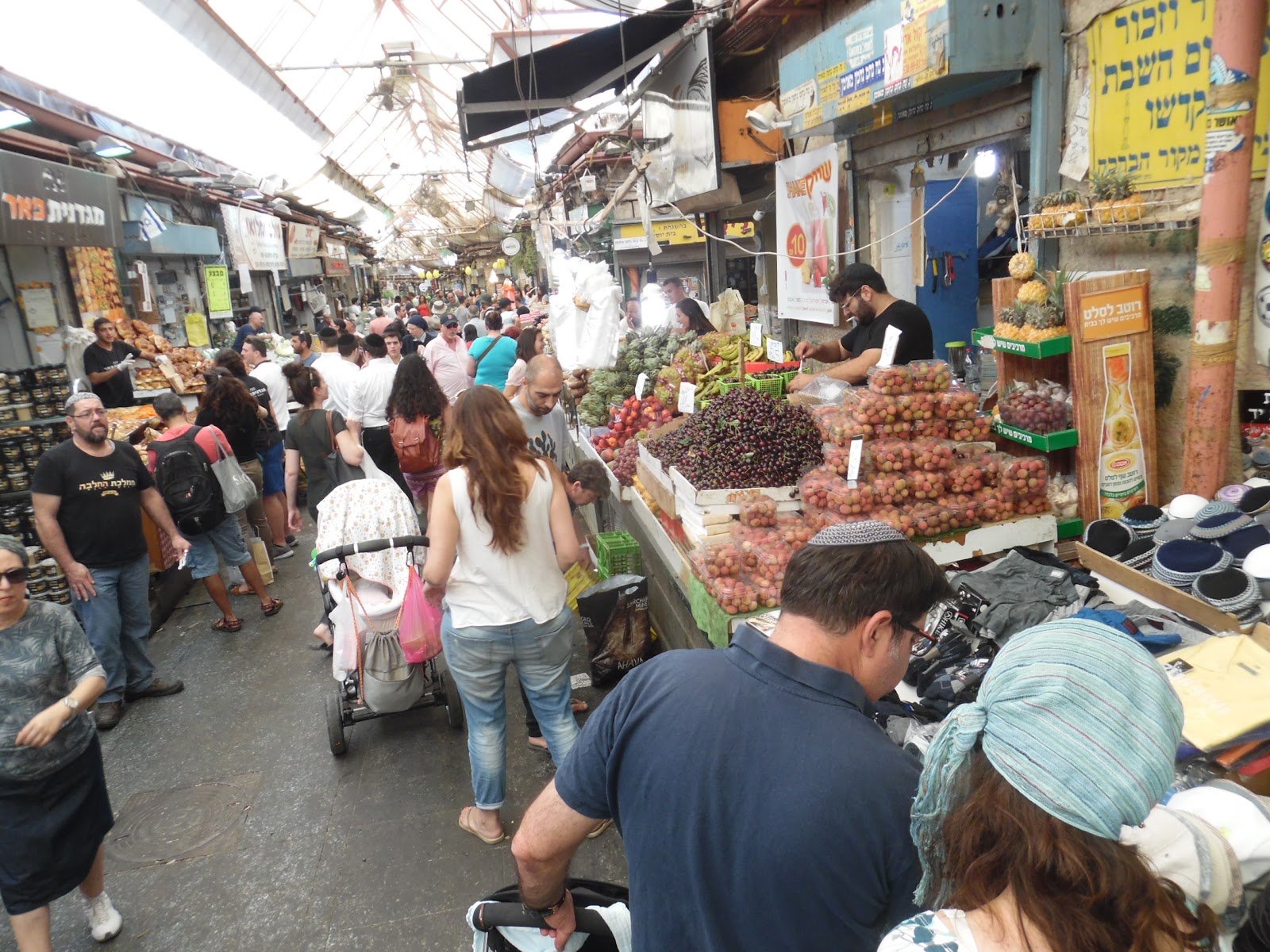
The Shuk, Mahane Yehuda Market
Following the destruction of the Temple, the Jewish people were faced with the dilemma as to how God should be honored without a designated meeting place to honor The Name. Rabbi Meir suggested (Exodus Rabbah, chapter 31) that the festival should be celebrated as the day the Torah was given on Mount Sinai. It has been noted that this event occurred about three months after Passover, which preceded the exodus from Egypt.
Shavuot Program in Haifa
In response, many Jews have added an all night study of Torah to the celebration of Shavuot. They also encourage partaking of dairy products (such as ice cream and cheesecake) to enhance the celebration.

Saturday, May 19, 2018

A Pool and a Monastery in Haifa

If a person gets off the beaten path in Israel and takes trails, the Eretz Yisrael is full of surprises.
Our trail of descent from Mount Carmel, Haifa
Yesterday we took a side trail off of Mount Carmel towards Carmel Beach. The path was steep at first, and full of dead branches as we deciphered the way to get to the marked trail.
An oak grove near where we joined the trail
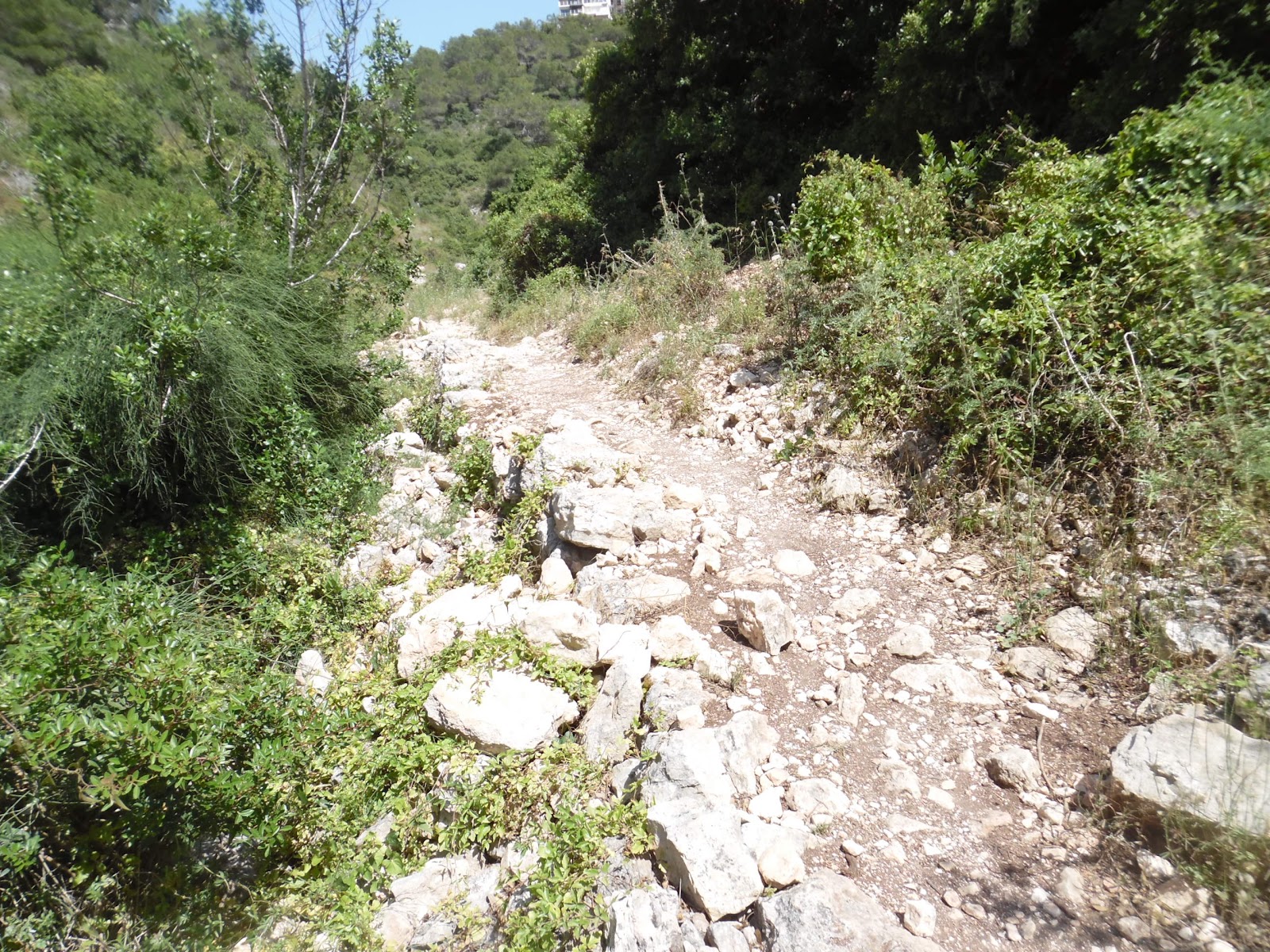
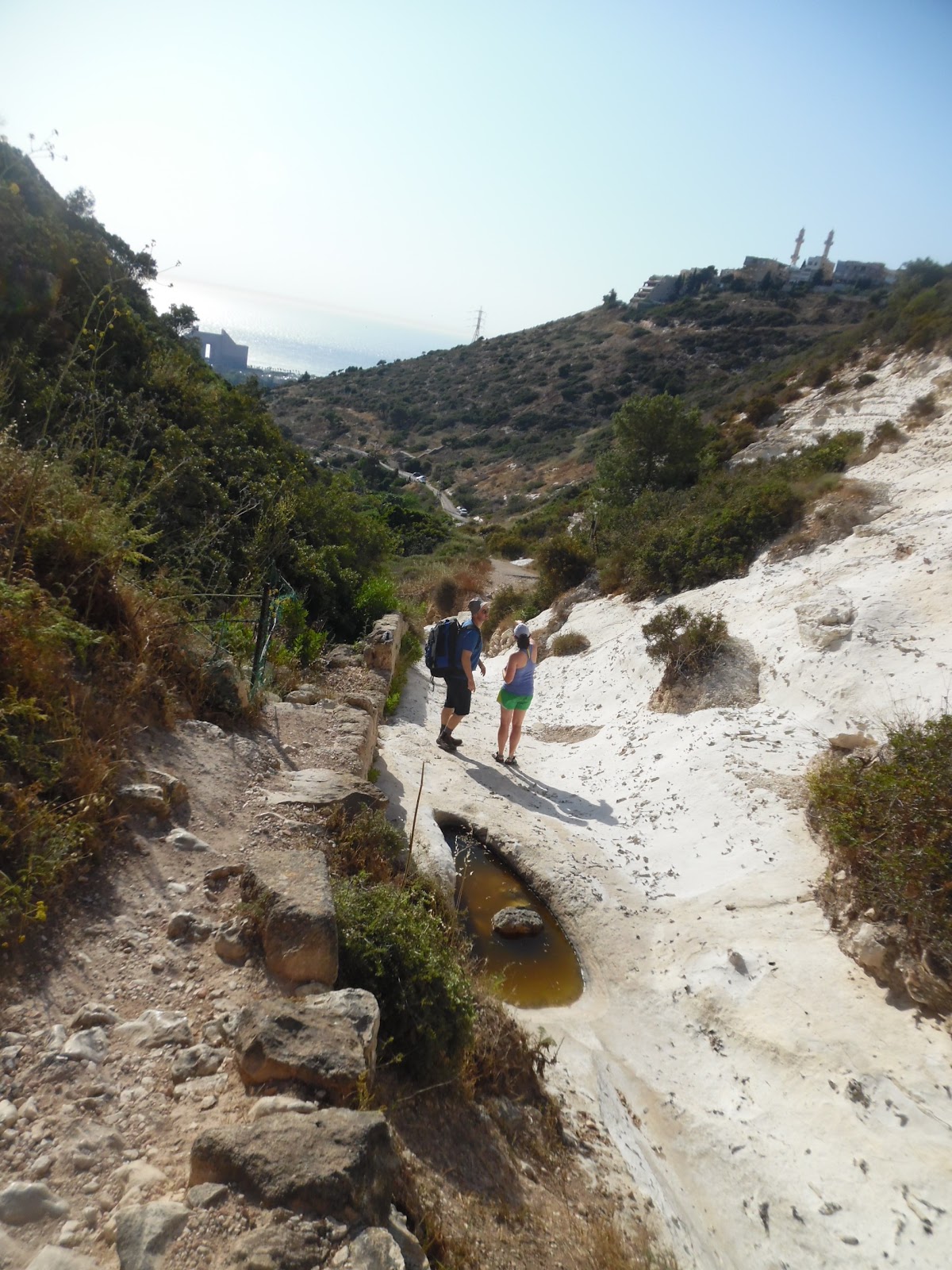
The marked trail took the course of a wadi, a dry riverbed that can quickly carry run-off during times of rain (not the place to be in wet weather). The stone gave us an easy descent.
The wadi we traveled along the first part of our trail
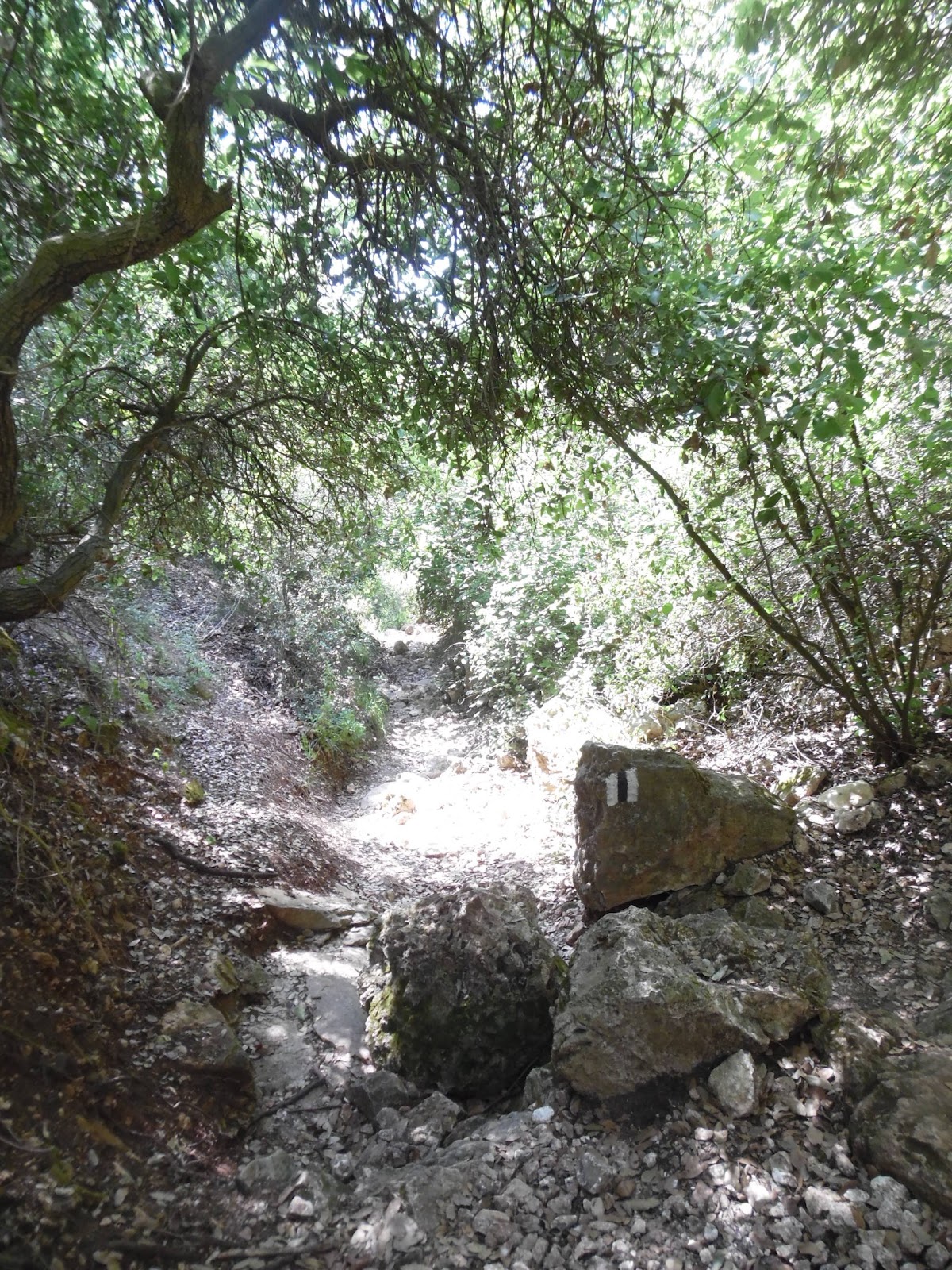
Along the way there were groves of oak trees and other plant life.
The trail marking under the oak trees
Eventually we found ourselves on an old developed roadbed. This made the traveling easier, as the route had been graded for easy and smooth descent.
Our trail follows an old road
The roadbed was old, and not maintained. What had once been a road had become a trail.
The road is old, and all smoothness is gone
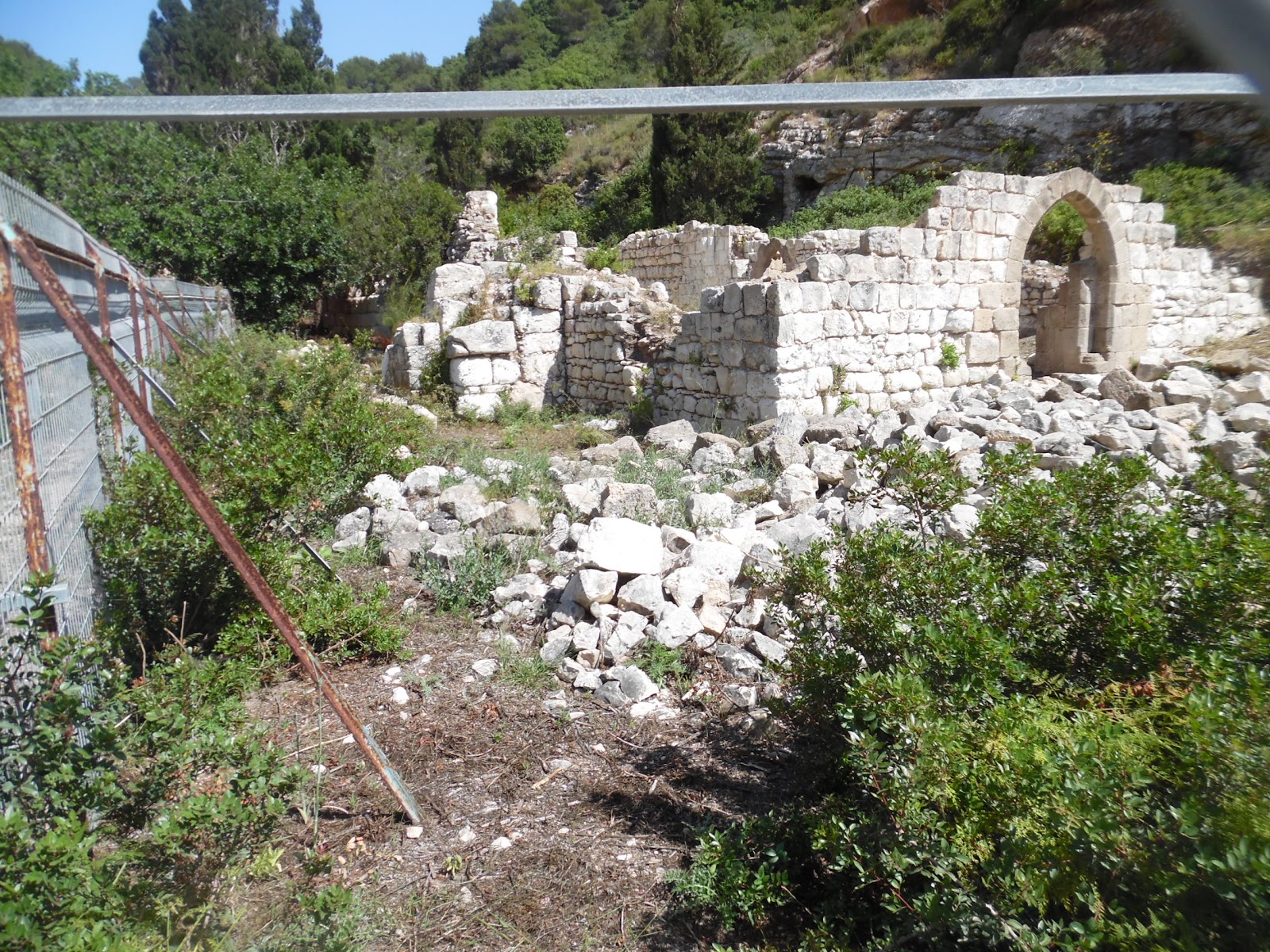
Along the way we ran into an antiquity. There are actually ancient ruins (and some newer ruins) all over Israel. This ruin was the remains of a center for Carmelite monks. The Carmelite Order is dedicated to contemplation and prayer. They find inspiration for their practice of faith from the prophet Elijah and Mary, the mother of Jesus. Both were people of prayer.
Antiquities marker for the Carmelite Church
There is an old monastery on the trail.
An old entrance to an old church
The monks needed a source of water, so they built a pool at a spring where water comes out of the mountain.
A cool place for a refreshing rest
This spring was actually our destination, and we spent time in the cool refreshing waters. Then we drank coffee, and talked to others who were hiking the trail. One of the men we talked to helped open facebook in Israel. We talked about many things, including politics. The Israelis are fascinated by our politics, especially as it influences Israel. We also talked about education, youth groups and the natural beauty of the land.
The path below the monistary
Beyond the monastery, an aqueduct took water downhill. There were many ponds along the way with other people bathing. We finally reached a road at the bottom and took a taxi to our home on top of the hill.

Monday, January 22, 2018

Israel's Long History

One of the amazing things about the Holy Land is their long history. In the United States, most historic sites tell stories from only a hundred or two hundred years ago, and the most ancient sites only go back five hundred years. It is therefore amazing when I go to Israel where “new” can be five hundred years old and it is common to stand at the location of events which go back 3,000 years or more.
The view from Old Joppa to New Tel Aviv
In my class about Israel this week I introduced people to the city of Joppa, which was an ancient port of arrival into the Holy Land. At least one history records that Joppa was founded and took its name from Japeth, the son of Noah. Japheth left home after the flood and founded this seaside community because of its beauty (Joppa means beautiful).

A New book on Israel
Upon thinking about Japheth’s founding of Joppa, I began to think of other stories I read about Israel for one of my latest books, Israel: Stories for Your Journey. The residents of Gezer, located only twenty miles from Joppa, claim that Noah lived on the hilltop of their city. It is claimed that Noah’s wife, his daughter, and also Adam’s wife Eve baked bread in an oven near the city.
The Cavernous water source at Gezer
Walks in Israel can be walks through history, if you listen to the stories. Everyone wants a piece of the action and to tell a familiar tale about the past. Did Japheth really found Joppa? Did Noah live in Gezer? Did Eve bake bread in the cavernous hole near Gezer’s city gate? Probably not, but the stories are fun, and the reality of the matter is that people have lived in Joppa and atop the hill at Gezer for a very long time.