Showing posts with label Mount Carmel. Show all posts

Friday, May 25, 2018

A Day at the Beach

One of our favorite places to visit in Israel is the seashore. The Mediterranean laps the western side of Israel along the western boundary of the country, from the Negev to the border with Lebanon.
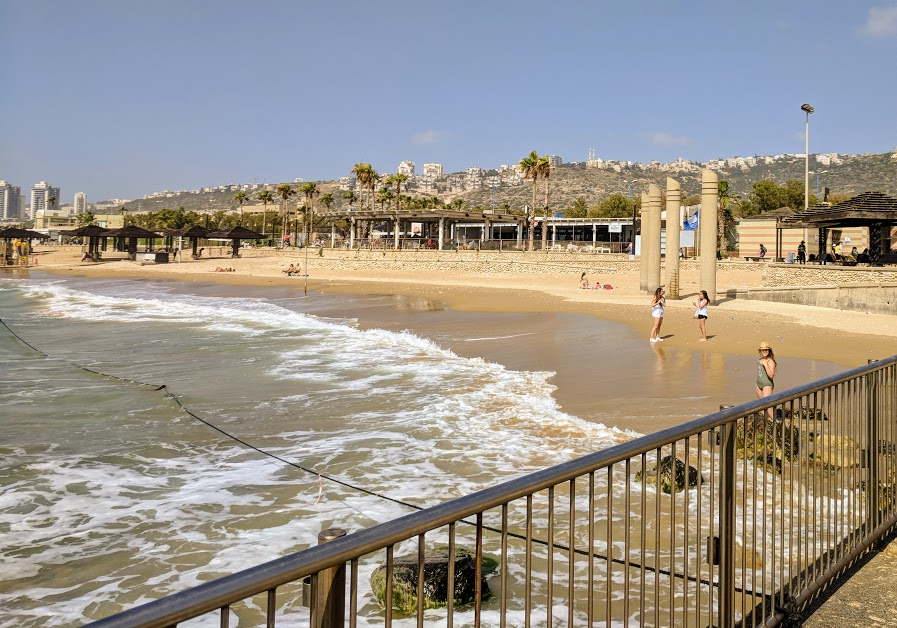
The Boardwalk in Haifa, Israel
The seacoast is enjoyed by many people because the climate of Israel is warm most of the year to encourage people to come out and enjoy the beach.
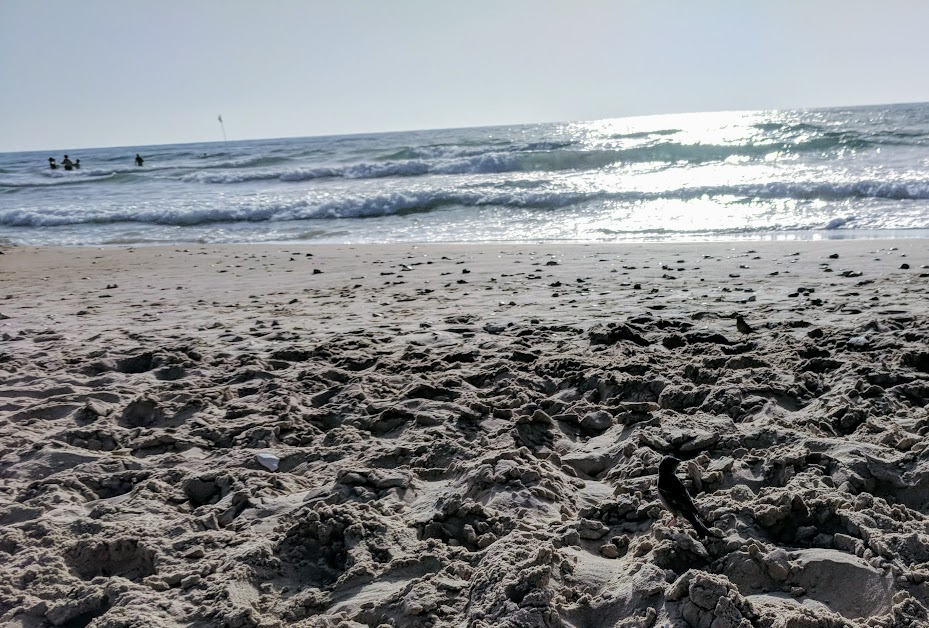
A Sparrow on the Beach
The beaches in Israel are of a light sand the length of the Mediterranean coast. Many shells can be found on the beaches, especially in the south. The northern beaches contain more smooth rocks. In the area around Caesarea it can be seen how some of the sand is brought from the trade winds over the Sahara Desert to build the beaches.
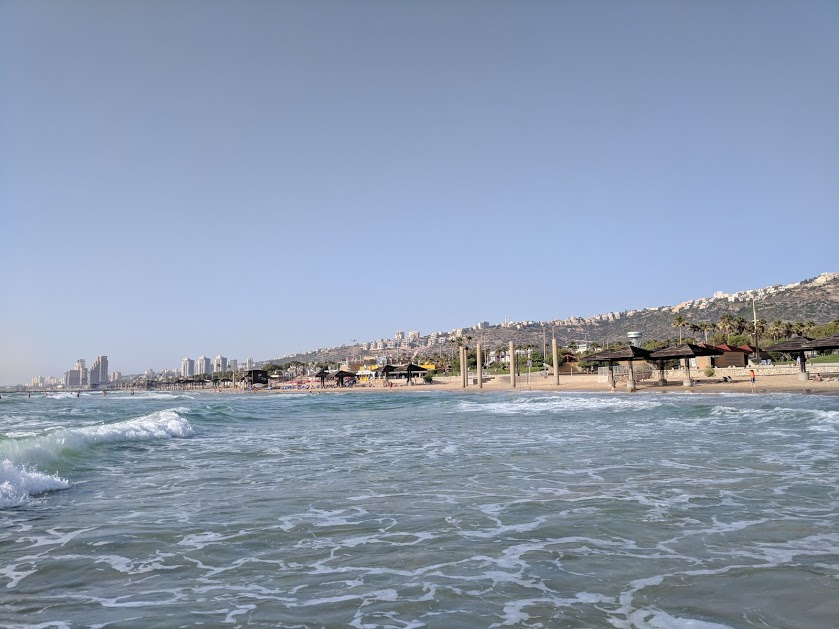
Mount Carmel rises above Dado Beach
The beach around Haifa rests beneath the heights of Mount Carmel. In all probability the Prophet Elijah not only came west on Mount Carmel to look for clouds, but he also dipped his feet into the Mediterranean. There is a cave in Haifa near the shore that is called Elijah’s Cave.
Information Sign at the Haifa Beach
Israel has several protective sea ports. The first and oldest of the parts is at Yafo (Joppa) where Jonah took a ship and went west to escape God. The port was created by a small indention in the coast, and a roc barrier to the south. The view across this inlet from Yafo to Tel Aviv is quite beautiful.
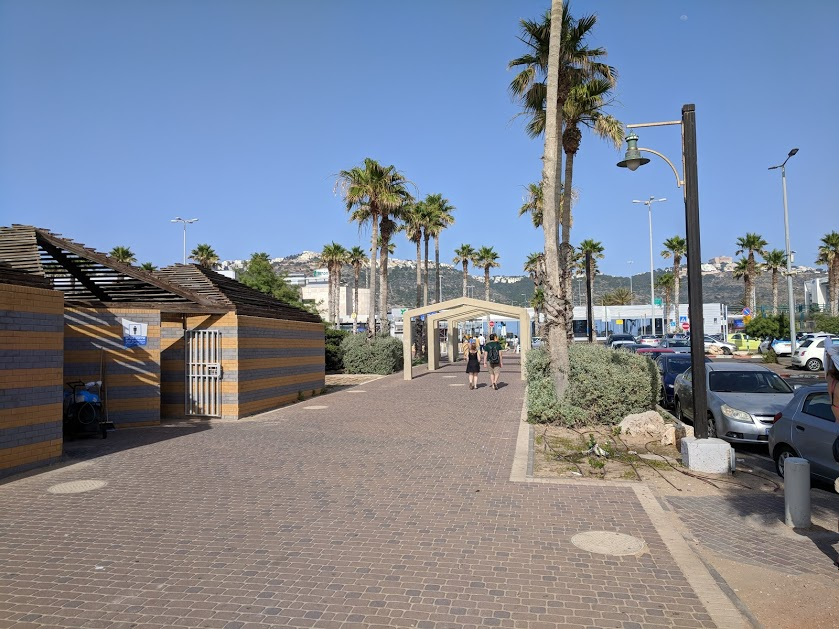
Entrance to the Carmel Beach in Haifa
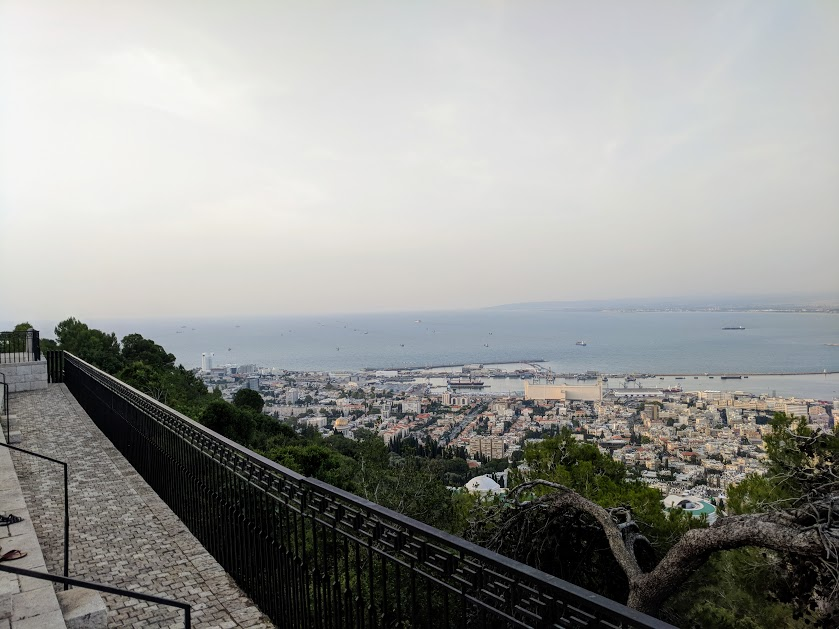
A sign at the top of Mt. Carmel says that the only place in Israel you can look north across the Mediterranean Sea is in Haifa. The seacoast in this part of Haifa is a huge seaport. From the top of the mountain cargo ships from around the world can be seen attempting to get in and to deliver their cargo.
Looking North from the top of Mount Carmel
The northern seacoast of Israel can be easily observed from the top of Mount Carmel from Haifa to Akhziv National Park, which borders Lebanon. This is a beautiful area which contains some rock crevices and underwater caves produced by the waves striking the limestone cliffs. The area is called Rosh Hanikra.
Shelters along the beach in Haifa
The main beaches in Israel like many other peaches around the world. There are wide boardwalks which divide the beaches from the shops. Along the beaches there are shelters, monuments, and plenty of space to spread a towel. There are many restaurants and other shops along the boardwalk, and also bathrooms where people can get changed.
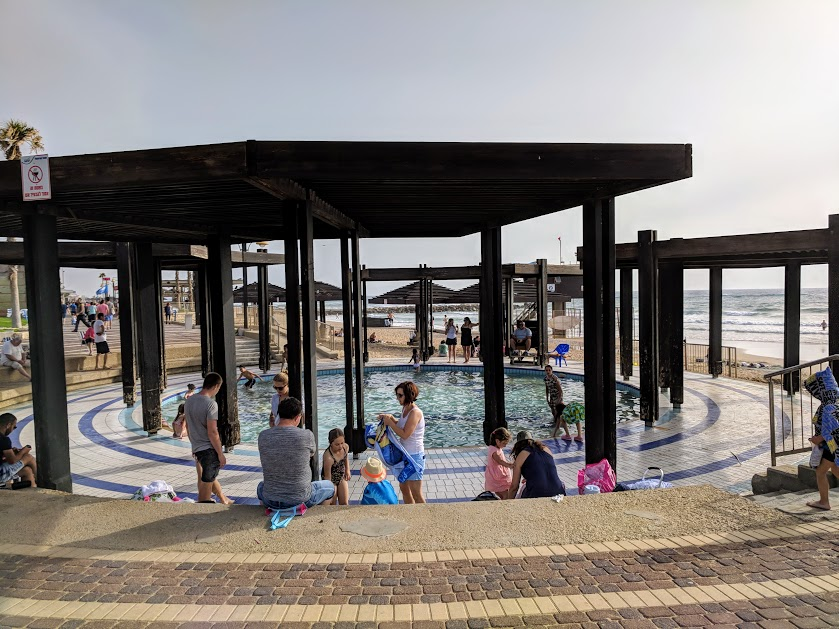
A Fresh water Swimming place
Israel’s beaches are filled with people of all ages from children to senior adults all playing in the waves strolling the beaches picking up seashells, surfing, and swimming.

Thursday, May 24, 2018

Among the Tombs

Today we went to Bet She’arim and climbed around the tombs of the deceased. Bet She’arim is an archeological site located just north of the slopes of Mount Carmel and south of the mountains of Galilee.
Tomb complex at Beit She'arim
Bernice, the daughter of King Agrippa I found the area so beautiful that she built an estate at Bet She’arim (called Besara in the life of Josephus) for her personal use. The land was filled with grain fields and also some orchards.
Pomegranates, Olives and fields of Grain
The wealth and beauty of the area drew the Sanhedrin move to this location for a period of time after the Temple in Jerusalem was destroyed (The court of 70 moved from Yavneh to Usha, Shefar’am, Bet She’arim, Sipporis, and finally to Tiberias).
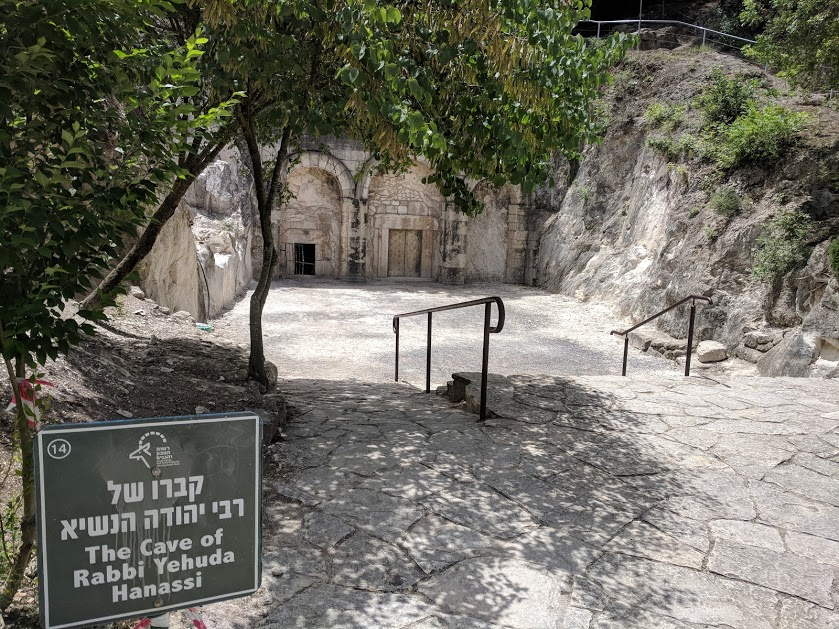
The tomb of Rabbi Hanassi
Rabbi Yehuda Hanasi established a school in Bet She’arim. Although this great rabbi and the compiler of the mishnah moved to Tiberias after seventeen years,.he chose to be buried in a cave at Beit She'arim.
A Decorative Menorah in the Tombs
Many people from around the world greatly respected Rabbi Yehuda Hanasi for his teachings, and desired to be buried close to his tomb.
One of the Tomb Complexes
The Talmud says, “Whoever is buried in the Land of Israel is deemed to be buried under the altar.” Some believed people buried elsewhere would need to roll underground all the way to Israel at the time of the great resurrection.
Cave of the Torah Ark
The tombs at Beit She'arim contain important people from Israel and beyond. People from Antioch, Palmyra, Byblos, Beirut, Sidon, Tyre, Yahmur, Phaena, Arabia, Caesarea, Himyar, and Etsion Gaber were buried at this site.
Grave of Rabbi Gamliel
Large complexes of caves were built under the hills at Beit She'arim during the first three centuries of the Common Era. Some people were buried in wooden coffins, some in stone containers, some laid on limestone and placed into ossuaries. There are many inscriptions over niches in the caves written in Hebrew, Aramaic and Greek.
Photographer of the Tombs

One inscription reads: “I, Justus, son of Leontius and Sappho, lie here dead / And after I had plucked the fruit of all wisdom / I left the light, the miserable parents, who mourn ceaselessly / and my brothers. Woe to me in Besara. / After descending to Hades, I Justus, lie here / with many of my people, for so willed stern fate. / Be comforted, Justus, no man is immortal.
Saturday, May 19, 2018

A Pool and a Monastery in Haifa

If a person gets off the beaten path in Israel and takes trails, the Eretz Yisrael is full of surprises.
Our trail of descent from Mount Carmel, Haifa
Yesterday we took a side trail off of Mount Carmel towards Carmel Beach. The path was steep at first, and full of dead branches as we deciphered the way to get to the marked trail.
An oak grove near where we joined the trail
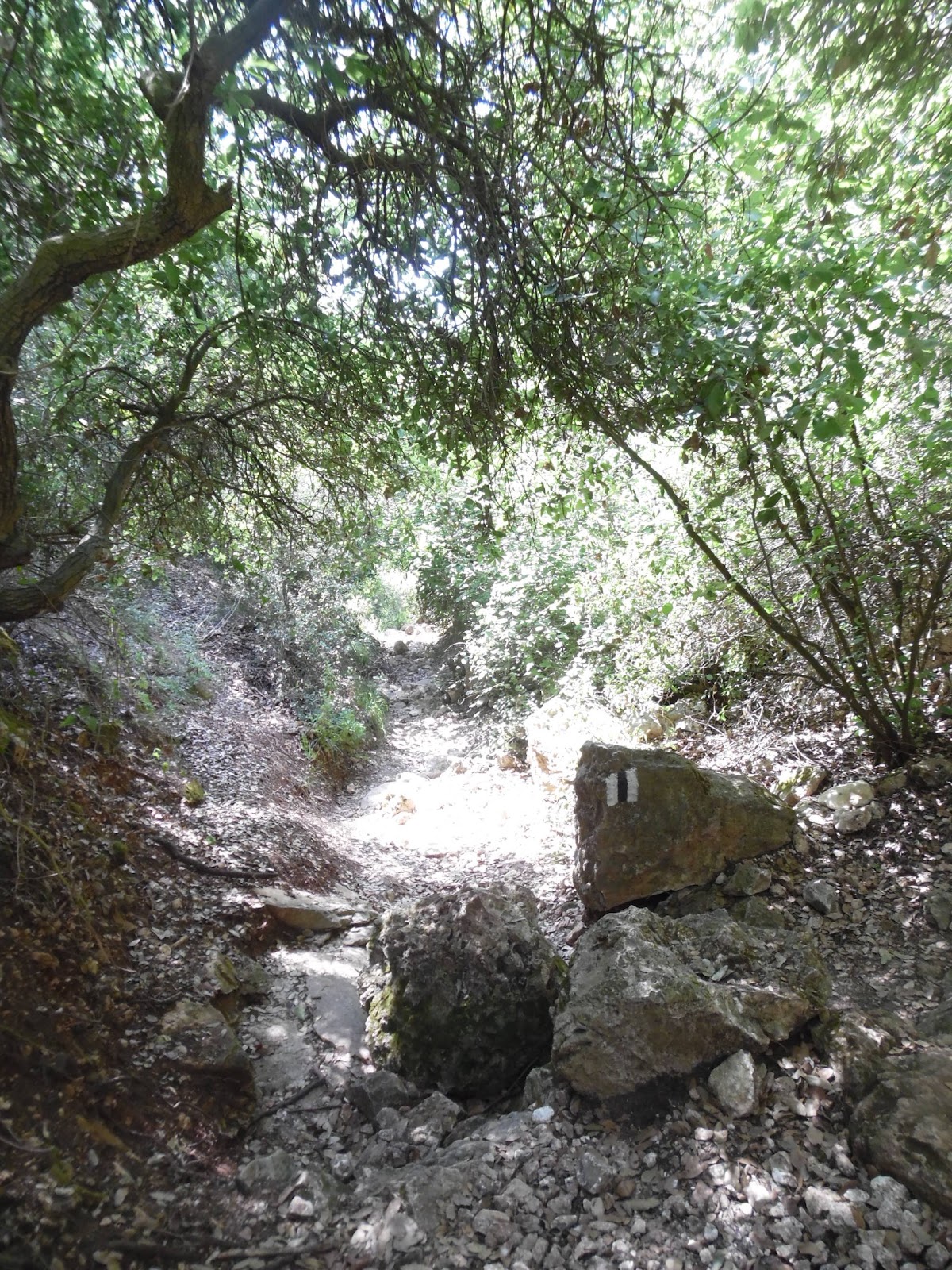
The marked trail took the course of a wadi, a dry riverbed that can quickly carry run-off during times of rain (not the place to be in wet weather). The stone gave us an easy descent.
The wadi we traveled along the first part of our trail
Along the way there were groves of oak trees and other plant life.
The trail marking under the oak trees
Eventually we found ourselves on an old developed roadbed. This made the traveling easier, as the route had been graded for easy and smooth descent.
Our trail follows an old road
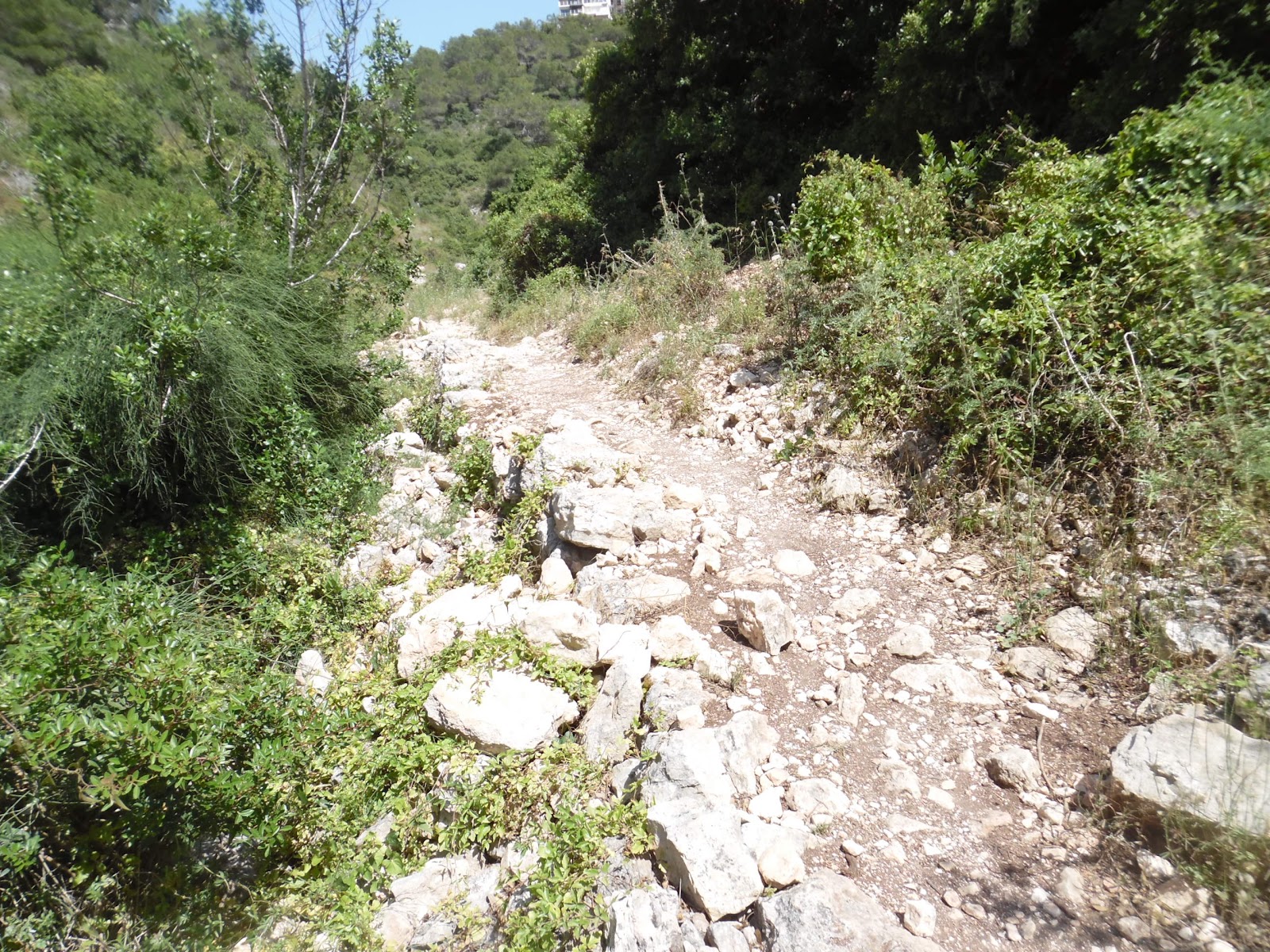
The roadbed was old, and not maintained. What had once been a road had become a trail.
The road is old, and all smoothness is gone
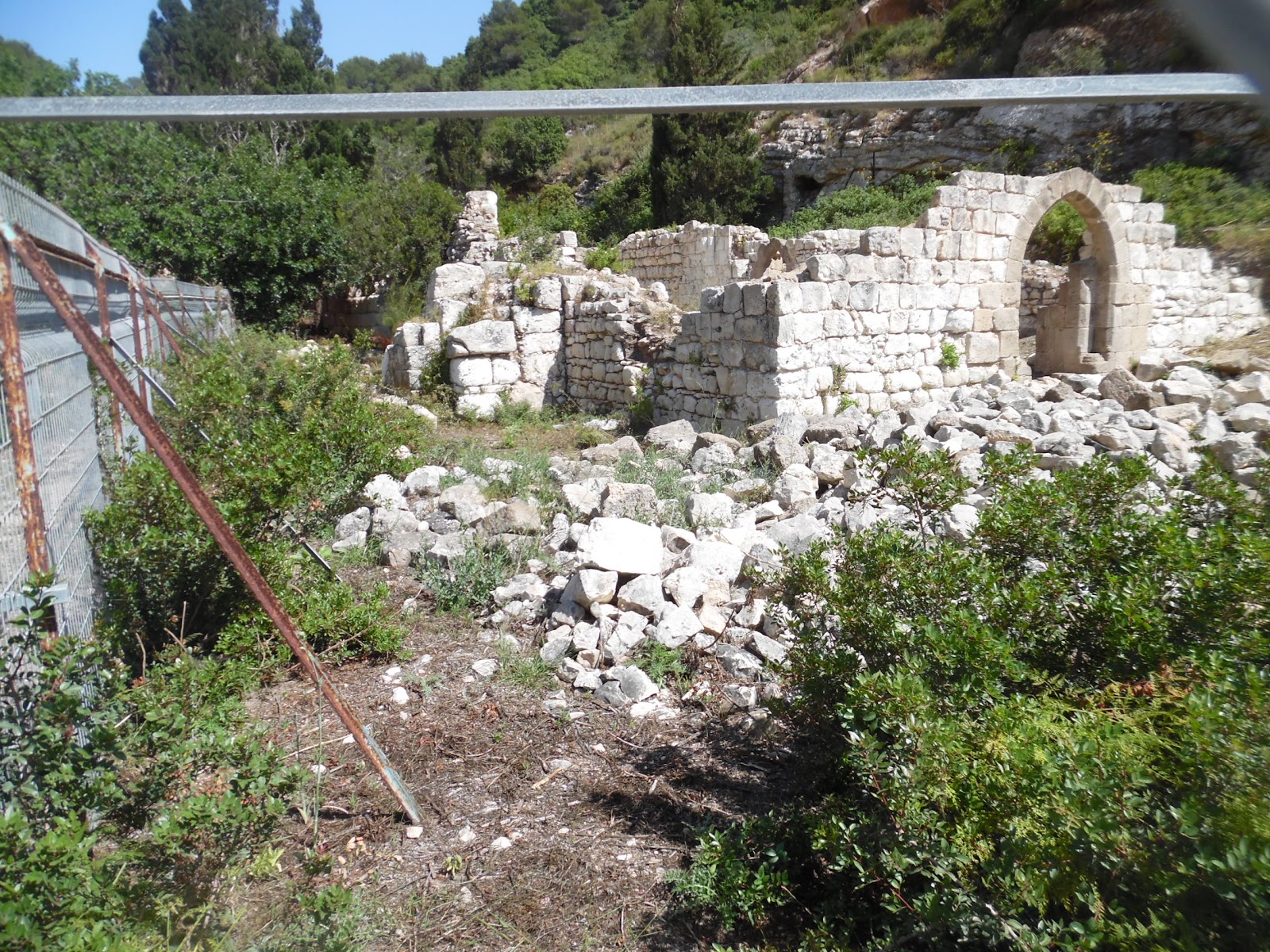
Along the way we ran into an antiquity. There are actually ancient ruins (and some newer ruins) all over Israel. This ruin was the remains of a center for Carmelite monks. The Carmelite Order is dedicated to contemplation and prayer. They find inspiration for their practice of faith from the prophet Elijah and Mary, the mother of Jesus. Both were people of prayer.
Antiquities marker for the Carmelite Church
There is an old monastery on the trail.
An old entrance to an old church
The monks needed a source of water, so they built a pool at a spring where water comes out of the mountain.
A cool place for a refreshing rest
This spring was actually our destination, and we spent time in the cool refreshing waters. Then we drank coffee, and talked to others who were hiking the trail. One of the men we talked to helped open facebook in Israel. We talked about many things, including politics. The Israelis are fascinated by our politics, especially as it influences Israel. We also talked about education, youth groups and the natural beauty of the land.
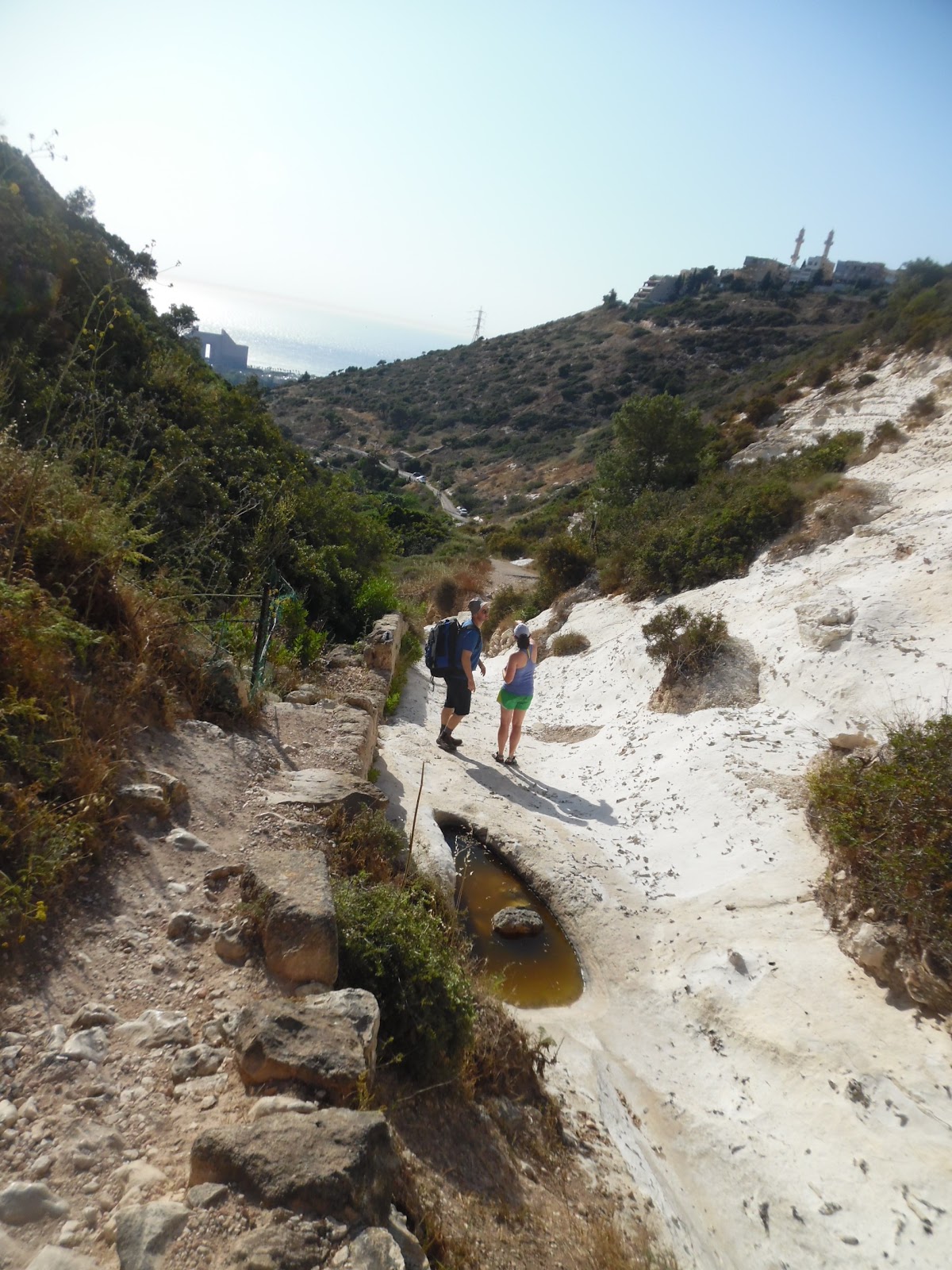
The path below the monistary
Beyond the monastery, an aqueduct took water downhill. There were many ponds along the way with other people bathing. We finally reached a road at the bottom and took a taxi to our home on top of the hill.