Showing posts with label Menorah. Show all posts

Saturday, December 1, 2018

Hanukkah, Is that in the Bible?

     I hear the title of this blog asked as a question again and again as I take out my dreydel to spin it, or as I say, “Happy Chanukah” as a holiday greeting to people I meet. There are some who do not know what Hanukah is, and I am glad to relate the meaning of the festival. There are some who are uncomfortable with anything that has religious connotation. For these I am sorry, because I am not trying to ‘convert’ them to Judaism, I am just sharing a festival that brings joy to many (a cultural note and a historic event). Then there are yet others who seem a bit perturbed that I would issue that greeting, because they are Christians and the Jewish holiday is not part of their chosen experience. There exists, among some, ‘if it isn’t in the New Testament, it doesn’t matter.’
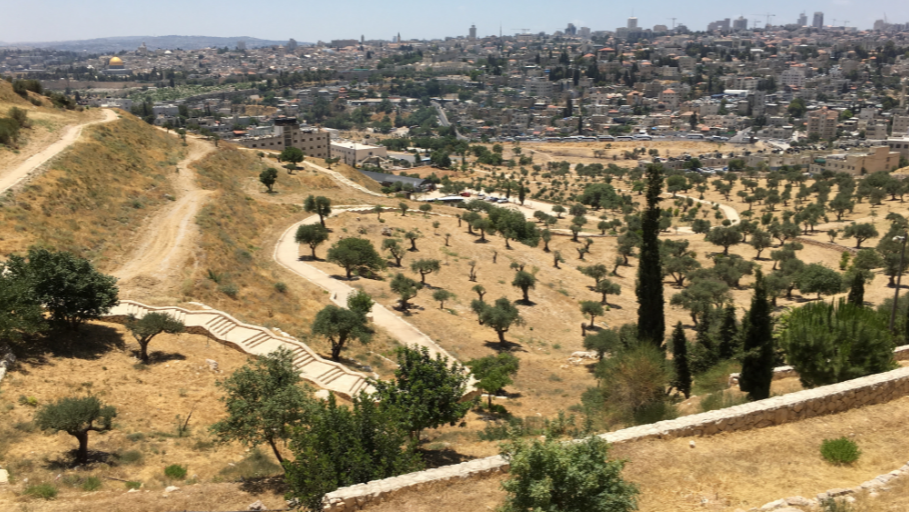
Jerusalem from Mt. Scopus (North)
     And here is where these “New Testament Only” Christians are mistaken. Hanukkah does exist in the New Testament (and even though it is a Jewish holiday, there are no references to this festival in the Old Testament). Here it is, from the Gospel of John 10:22-23, “Then came the Festival of Dedication at Jerusalem. It was winter, and Jesus was in the temple courts walking in Solomon’s Colonnade.” Beyond the Apocrypha, the only Biblical reference to this Jewish festival is in the Gospels.
Jerusalem from Haas Promenade (South)
     John’s Gospel points out that Jesus knew of and celebrated the festival of Hannukah. This festival is the Feast of Dedication, a holiday to remember when the Hebrew army under the command of Judah Maccabee defeated the Hellenistic forces in Jerusalem to recapture the Temple. As a matter of faith, religion and victory, Judah, his brothers, and the people of Israel were very quick (maybe too quick) to pull together the people and items necessary to re-start Temple worship and the practices of their faith. They rededicated the house of God (therefore the New Testament title for the holiday) with praise and palm branches, and with harps and cymbals and stringed instruments, and with hymns and songs.
Jerusalem from Pater Noster (East)
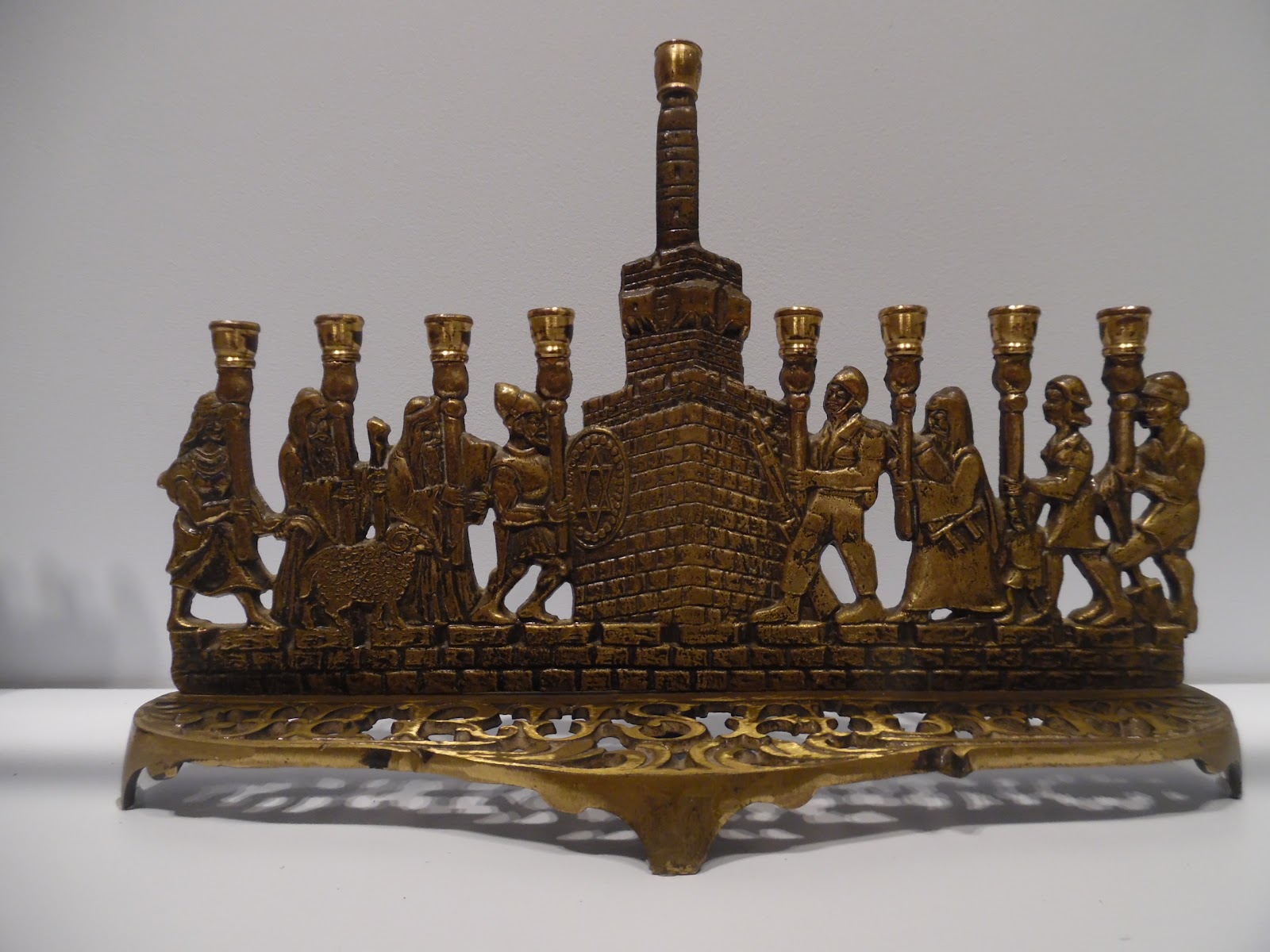
     There can be little doubt that Jesus would have lit a menorah for Chanukah. The Talmud (Shabbat 21b) relates that Hillel and Shammai argued about lighting the candles. Hillel believed that a light should be added for each night so the glow would grow throughout the festivities. Shammai believed eight candles should be lighted the first night, and then one less each night in order to remember the offering of bulls during the Feast of Tabernacles. The menorah was placed by the doorpost (as the Mezuzah was placed on the doorpost) in order to declare faith in the God who redeemed Israel.
Jerusalem from the Tower of David (West)
     The festival of Chanukah contains a story that people of faith can stand behind. It is the recitation of how the household of Mattathias, even when faced with punishment and death, did not neglect the practice of their faith. At the heart of the story is the command by a Hellenistic soldier for Mattathias and his village to bow down to an idol. The village priest and his family refuse to deny their faith.
A book worth reading!
     I have related some stories of the Maccabee rebellion in the book Advent Journeys, available as a book, as a Kindle e-book, and readable through Amazon Prime). If you want to become more personally involved with the Christmas … and the Chanukah story (week 6 of the book), I would encourage taking time to read Advent Journeys, as a book, on Kindle, or through Amazon Prime.

Monday, December 26, 2016

Its Not Over Yet!!

Well, the title might be misleading; Christmas is over, but Chanukah is not. We are in the second of eight days of the Festival of Lights (or Feast of the Dedication). The Jewish writings say one must rejoice every day of the festival.
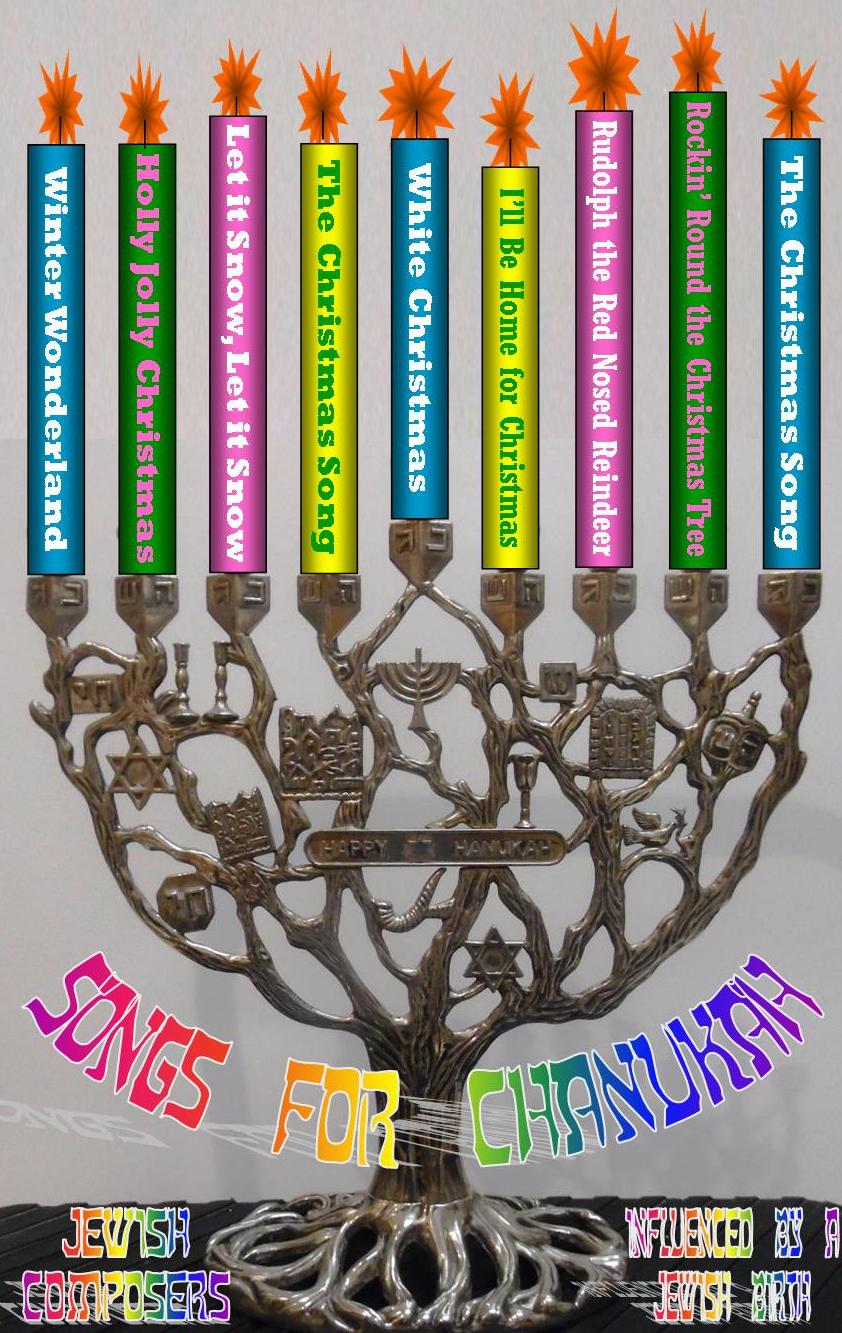
The Jews at one point argued over how to light the candles on the Menorah. Hillel thought we should begin with one candle on the first day, two on the second day, and so forth until there are eight candles lit (plus the servant candle) on the final day. Shammai said there should be eight (plus one) candles lit on the first day, and as the holiday wore on there should be one less candle each night. The Rabbis decided to support Hillel’s idea because the holiday should grow on us and not diminish.
Even so, this season, whether you celebrate Christmas, Chanukah or both, should grow in meaning and joy day by day into the New Year. And the spirit of the holiday should continue to grow day by day throughout 2017. (Unless there is a good reason, why should we worry or be sad next year?) So the point is to take one, two or three things which come out of the Christmas season (not material, but spiritual), and live them throughout the New Year. I have more about this in my book, Advent Journeys. There are devotions for all eight days of Chanukah.
I wrote in my last blog to “let your light shine.” Jesus said, “You are the light of the world. A town built on a hill cannot be hidden. Neither do people light a lamp and put it under a bowl. Instead they put it on its stand, and it gives light to everyone in the house. In the same way, let your light shine before others, that they may see your good deeds and glorify your Father in heaven (Mt 5:14-16).
In 2017 we should be a witness to others. People are drawn to joy (which is why we all like Christmas) and light (as moths are drawn to light). While many might complain about the state of our world, the economy or the government, as Christians we must realize we have and we need to be something more. The only real way to change this world is from the inside out. And that means we must share what is inside: faith.

Saturday, December 24, 2016

Jesus and Chanukah

The conversation comes up way too often. Someone says, “Merry Christmas.”
I reply, “Happy Chanukah.”
They say, “I thought you were a Christian. Christians don’t celebrate Chanukah.”
I reply, “Jesus did. When I celebrate Chanukah I think of Jesus.”
They reply, “Jesus did not. It was not even around then.” [Although I think they would rather say, “Why would Jesus do that, He wasn’t even Jewish.” But most know better or have enough doubt that they don’t want my answer on that one.]
The fact is, Jesus did celebrate Chanukah. It is recorded in John 10:22: “Then came the Festival of Dedication at Jerusalem. It was winter.”
The Festival of Dedication was a time Jewish people stopped to thank God for restoring the Temple from the desecration of Antiochus Epiphanes, which is recorded in the New Testament also. “When you see standing in the holy place ‘the abomination that causes desolation, spoken of through the prophet Daniel (9:27; 12:11) —let the reader understand…’” (Mt 24:15; Mk 13:14) The Abomination took place on the 25th day of Kislev (Jewish month), and Judas Maccabeus restored worship on Kislev 25 three years later. (The story is in our book Advent Journeys)
The problem which allowed the desecration of the Temple was not a mighty army entering Israel, but rather a people who blended with society. At first the people sought to dress and decorate their homes like Greeks (vases and colonnades, then the little figurines or idols). Then they blended more, with music and cultural habits. This extended to the family of the High Priest. The High Priest’s brother took a Greek name and then he took his brother’s office by deceit and bribery. The cultural shift opened the door for a tyrant to enter and take over.
Matthias (father of the Maccabees) was sickened by the cultural shift. He saw the things happening in Jerusalem and moved from the city to the country. Then, when he and his village were forced to bow down to an idol, he took his stand and refused to submit himself to the humiliation, to the soldiers or to the culture. A battle erupted, which the Jews won. Then worship was restored and the Jews were able to dedicate the Temple.
To remember the dedication, the Jewish people light a candelabrum called a menorah each night for eight nights (beginning tonight … Christmas Eve coincides with the first day of Chanukah this year). Jesus would encourage us, “let your light shine!”

Monday, November 30, 2015

Worship in the Tabernacle

During week one of Advent Journeys we walk with Zechariah as he serves in the Temple.  The Temple and its practices are an image of the Tabernacle Moses built in the wilderness.  The Tabernacle contains an important picture which will help us understand what God desires in our worship.
Approach: The Tabernacle of Moses was surrounded by a white linen fence symbolizing the purity of God’s holiness.  The whiteness of the linen stood out in sharp contrast against the dirty sand of the desert just as God’s righteousness stands out against man’s sins.  The white linen surrounds a compound of holiness.
The Tabernacle represents the place where we go to meet God to worship Him.  The first step in worship is to have a heart which desires to worship God.  While this step might not seem necessary to say, there are many who come out of tradition, because they are forced, or because they are going with someone who wants to worship.  Unless our hearts are desire worship, we will probably not meet God.
In a period of repentance, we are to see ourselves as God sees us. Because “all have sinned,” we should pray for understanding, and see forgiveness from our sin.  We should bring a gift to God because we love Him.  For the Christian, Jesus is our Sin Offering, so as we approach the altar of sacrifice, we should realize the price for sin has already been made.
When we come to the place of worship, our lives should be ready for worship.  This means if we have a problem with another person we will resolve the problem before we come to the Tabernacle.  Jesus said, “if you are presenting your offering at the altar, and there remember that your brother has something against you,24leave your offering there before the altar and go; first be reconciled to your brother, and then come and present your offering.
Entry: There is one door into the Tabernacle (there were more entries to the Temple).  Jesus said, “I am the door, and the person who enters through me will be saved.” (John 10:9).  Jesus explained that any who climb in over the fence are thieves or robbers.  There is but one way into the Tabernacle and into the presence of God.
Step One: As one enters the Tabernacle the first item seen is the Brazen Altar, the place where sacrifices are made.  Leviticus 1-7 describes five sacrifices.  The most important as we enter the place of worship is the sin offering.  We must come understanding we are sinners, confessing our sin, and receiving atonement for our sins.  This occurs on the Brazen Altar … and through the offering of Jesus on the cross.
Step Two: The next item we see in the Tabernacle is the laver, the place where the priests wash their hands and feet.  The lesson here is that as sin offerings are made the hands of the priest become blood covered and greasy, and they need to be cleaned.  The offering has been made, but there is a residual on the priest’s hands.  The connection to life is that often, even though people are forgiven of sin by God, they do not forgive themselves.  The laver is the place to remind us if God forgives us, we are truly clean.
The Holy Place: Once sin has been forgiven by God and we have forgiven ourselves, we can enter into the place of worship.  In the Holy place there are three items of furniture:
  1. The Menorah which symbolizes God is light and in Him is no darkness.  The Menorah of the Tabernacle also teaches us of God’s eternity because the light does not go out day or night.
  2. The Table of Shewbread shows the desire of God to have fellowship with man.  On the table are twelve loaves of bread symbolizing all twelve tribes of Israel.  There is also the cup of the drink offering.  With the bread and wine we enjoy communion with God.
  3. The Altar of Incense stands next to the veil of the Tabernacle.  This place is as close as a common priest can come to the Holy of Holies where symbolically God dwells.  The scent of the incense ascending to God represents the prayers of the saints.
The veil separating the Holy Place from the Holy of Holies was torn in two parts when Jesus died.  This renting of the cloth symbolizes our forgiveness and that fact that common man may now approach God.
Inside the Holy of Holies was the Ark of the Covenant.  This box, built by Moses, contained the Ten Commandments, the rod of Aaron, and a jar of manna God gave to feed Israel in the wilderness.  God gave each of these items to teach Israel His intentions.

On top of the Ark of the Covenant is the Mercy Seat, symbolically the throne of God.  On either side of the Mercy Seat stands an angel to accomplish God’s bidding.  Angels are God’s messengers.   More tomorrow.