Showing posts with label Angel. Show all posts

Tuesday, December 6, 2016

Why?

This week’s journal in the devotional Advent Journeys seeks to speak the words of Joseph as he travels with Mary from Nazareth to Bethlehem. Joseph and Mary were unique individuals of character, and for this reason they were chosen by God to become parents who would be remembered and who would serve as examples for other parents across two thousand years of history.
View from the Precipice near Nazareth 
Have you ever wondered why God chose this couple and how we can emulate their parenting methods with our own children?
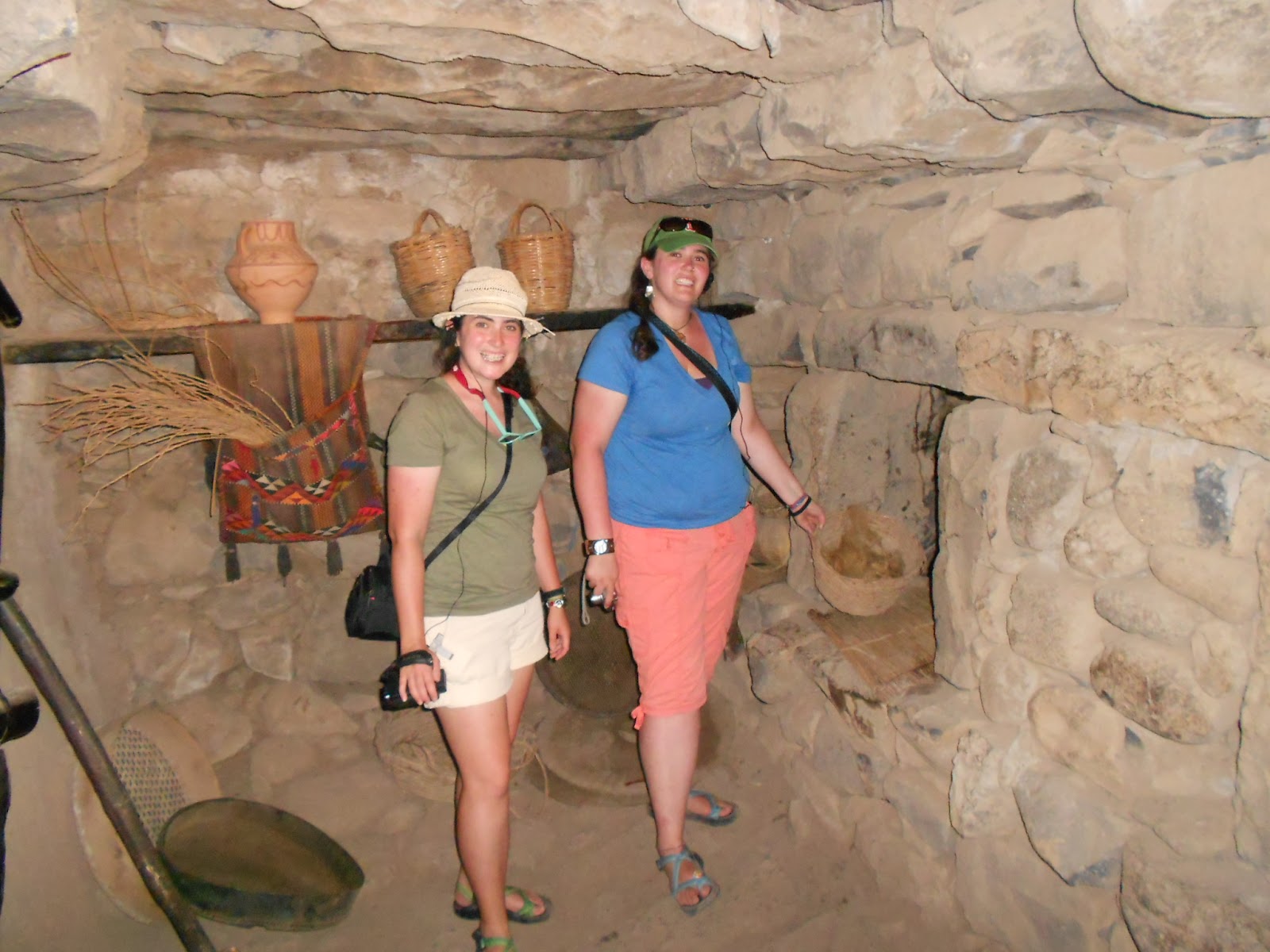
Kitchen at a home in Katzrin
The scripture teaches that Joseph and Mary were individuals with integrity. Each parent in their own way sought to honor God with all their hearts, minds and strength. (Deuteronomy 6:5) When Gabriel came to Mary in order to inform her that she was chosen to give birth to the one called “the Son of the Most High” (Luke 1:32), she responded by asking “How can this be since I am a virgin.” Mary wanted her faithfulness to be known by the angel, by her parents, by her community and by Joseph.
Village of Katzrin in the Galilee
Matthew 1 tells of Joseph’s concern when he found out that Mary was pregnant. He loved her, but he knew his integrity would be compromised when the community came to know Mary was with child. Joseph sought a way to end the betrothal in an extremely private manner. As he prayed and sought God’s wisdom on the matter, Gabriel visited Joseph as he had visited Mary. The heavenly being assured Joseph that Mary had done nothing wrong. And the Angel asked Joseph to complete the marriage and to adopt the child.
Village of Katzrin in the Galilee
Both parents had similar concerns and stepped out in faith to accept the child and God’s calling to become parents and teachers of a child who was well beyond them in intellect and righteousness.
Scaffolding at Katzrin
Joseph and Mary sought throughout the life of Jesus and of their other children (Matthew 13:55-56) to bring faith to their family. The holy parents taught their children the scripture at every opportunity. They stood as examples of faith through every trial (and there were many, such as the necessity of escape from Bethlehem and living as parents of faith in a foreign land). Joseph and Mary honored every Jewish tradition and honored the festivals with their family. Joseph taught Jesus the skills of his trade and Mary loved Jesus and lived her care for him to the day of his death and beyond.
Packing down a roof in Katzrin
Jesus’ parents willingly took on any hardship and sought in every way to bring their children up in the faith. Today as parents we must do the same. We must honor the Christmas season with more than presents, we must honor God by giving our children our presence to tell real story of our faith. Parents show God’s love through proper placement of priorities.


Thursday, December 3, 2015

The Place of Elijah in Jewish Tradition

Elijah is a favorite Bible character for every Jewish child and most adults.  He is often remembered most quickly as the person of the fifth Passover cup, for near the end of the Passover observance children get up from the dinner table, open the door of their home for the prophet to enter and when they return to the Seder table they find Elijah has come and drank a once full cup which was especially prepared for him.
In the process of this observance the Passover leader explains that Elijah is a Bible hero who never died, and he was one of only two people ever taken alive to heaven.  He rode to heaven, according to 2 Kings 2:11, with a chariot of fire and a whirlwind.  Because Elijah is alive, and never died, he can come back to earth.  And Elijah returns in order to alleviate poverty, save people from troubles, and to answer difficult questions for the Rabbis.
The Talmudic tractate Kiddushin [40a] that tells about the virtue and the poverty of a certain Rabbi Kahana. He told a powerful woman who had made advances toward him that he had to get himself ready for their tryst; instead he went up to the roof and hurled himself off to avoid sinning. Enter Elijah, who caught him and then reproached him: "You have troubled me to come a long distance to save you." When the rabbi replied, "I was forced to do it due to my poverty," Elijah gave him a basketful of dinars.
Elijah was a prophet who was not afraid to speak for God.  He spoke openly to King Ahab and Queen Jezebel about their sins.  As a result of their sins Elijah told them (and it was fulfilled) it would not rain in Israel for three and a half years.  He also challenged the prophets of Baal to call down fire from heaven.  Elijah won the challenge.  Elijah cared for the poor, feeding a poor widow.  He also raised the dead.  He was a great prophet.
At the end of the Old Testament in the book of Malachi there is a prophecy about Elijah which says, “But I will send you Elijah the prophet before that great and terrifying day of the Lord’s judging. Elijah will help parents love their children and children love their parents. Otherwise, I will come and put a curse on the land.”
It is through these traditions that the Jews and many Christians believe Elijah will return.  He will return to announce the Messiah, and it is believed he will return at the end of time.  As Moses is a representative of the law, Elijah is the representative of the prophets.
The tradition of Elijah was recognized in the New Testament, for Matthew 17 says,  “Jesus took Peter, James, and John, the brother of James, up on a high mountain by themselves. While they watched, Jesus’ appearance was changed; his face became bright like the sun, and his clothes became white as light. Then Moses and Elijah appeared to them, talking with Jesus.
Zechariah the priest of whom we are reading today in Advent Journeys was told by the Angel Gabriel that his wife would give birth to a son, and Zechariah was to name him John.  The angel further told Zechariah, “ He will help many people of Israel return to the Lord their God. He will go before the Lord in spirit and power like Elijah. He will make peace between parents and their children and will bring those who are not obeying God back to the right way of thinking, to make a people ready for the coming of the Lord.
Jesus says of John the Baptist: “Truly I say to you, among those born of women there has not arisen anyone greater than John the Baptist!  … And if you are willing to accept it, John himself is Elijah who was to come. He who has ears to hear, let him hear.” (Matthew 11)

Tuesday, December 1, 2015

Chosen by Lot: Isaiah 6

The Bible, New Testament and Old Testament, contains a wonderful mosaic of wonderful interconnected passages.  Many people miss these connections due to lack of familiarity with the wide scope of scripture passages, through skim over and get through reading style, or because of cultural or doctrinal limitations.  But God wants us to see where dots connect and stories correspond.  The interrelationship between Old and New Testament is a source of seeing the truth and authority of a book given by God.
The first chapter of Luke is a great example of an interconnected passage which is an easy skim over to an untrained eye; but a passage of great depth both culturally and spiritually to anyone who desires to dig deeper.
The passage begins with what appears to be a simple priest … but even with the first glance, the reader understands there could be more!  “There was a priest named Zechariah.” Yes, that name is familiar, for Zechariah is one of the final prophetic books of the Old Testament.  Zechariah the prophet tells of the future which includes the coming of the anointed one, the messiah.  Zechariah the priest forms the connection, for the name Zechariah means “God has remembered.”
Zechariah is of the order of Abijah, one of twenty-four courses into which the priesthood is organized.  Week one of the book Advent Journeys gives a bit more information on this organization and what it means for the New Testament story.  Abijah means “God is my Father.”
In the course of his work Zechariah is chosen by lot to tend the altar of incense.  What the reader does not understand is the uniqueness of the selection process.  Indeed there are at least six positions chosen daily by lot, but to serve the altar of incense is a special drawing for a task which is only allowed once in a lifetime.  (Tamid 5:2 of the Jewish Mishnah).  The posting for this work takes a common priest as close as possible to the Holy of Holies.  A point made (and highlighted between the lines) is how God (“God is my Father”) waited until just this moment to call Zechariah (God has remembered) to this important appointment.
Zechariah approaches the altar of incense, and as Isaiah (“God saves”) sees God “on a very high throne. His long robe filled the Temple.”  He is met by an angel (Gabriel) who announces his wife’s pregnancy.  Zechariah’s lips question God, “How can this be?” [He probably should have said, “Here am I, send me.”]  And Zechariah is struck dumb.
But the message was heard, and Zechariah names his son John (“God shows mercy”).  In a symbol reflecting Isaiah 6:6-7 Zechariah’s lips are healed, and he begins to talk again.

Thus begins the Christmas story in Luke.  The story, and the entire Gospel are a continuation of the Old Testament inspiration which brings Immanuel (God with us) into the picture with spiritual forgiveness and healing.  The story goes on, as can be seen through the prophetic quotes of Zechariah, Mary, Simeon and Anna.