Showing posts with label Altar of Incense. Show all posts

Wednesday, November 28, 2018

The Holy Place

     The Holy Place is close to God. It is a room within the early Tabernacle of Moses and was enlarged when Solomon built the Temple. The room is situated to the east of the Holy of Holies, separated only by the veil. This space was designed for personal time with God as evidenced by the fact that when priests entered to do their service they came one at a time and departed before the next person entered.
     The Holy Place of the Temple contained three (or as enlarged by Solomon three types of) items: the seven branched menorah, the table of shewbread and the altar of incense. These three items speak of God’s personal care for His people and the desire for relationship. The room is designed to convey God’s desire care and desire for fellowship with every individual, whether in the actual Temple or elsewhere.
The Menorah from the cover of a prayer book
     The menorah casts light within what would otherwise be a dark room. The seven candles help people recall God’s establishment of light on the first day of creation. The first chapter of the Bible contains the words, “God said, ‘Let there be light,’ and there was light. God saw that the light was good.” The seven lamps recall the seven days of creation, and of each week. We are to allow God to shine into our lives seven days a week.
     King David said, “You, Lord, keep my lamp burning; my God turns my darkness into light.” (Psalm 18:28) Isaiah wrote, “the Lord will be your everlasting light, and your God will be your glory.” (60:19) God desires that we allow Him to shine through us, and for the Priest to be guided by God’s light.
Unleavened bread - 12 loaves were on the table
      The Table of the Shewbread is a reminder of God’s fellowship with us. People who eat together have stronger ties because of the conversation that goes on around the table. God desires to be at our table and in our lives. We must allow God to dwell with us and abide in us. “Man does not live on bread alone, but on every word that comes from the mouth of the LORD.” (Dt 8:3; Mt 4:4)
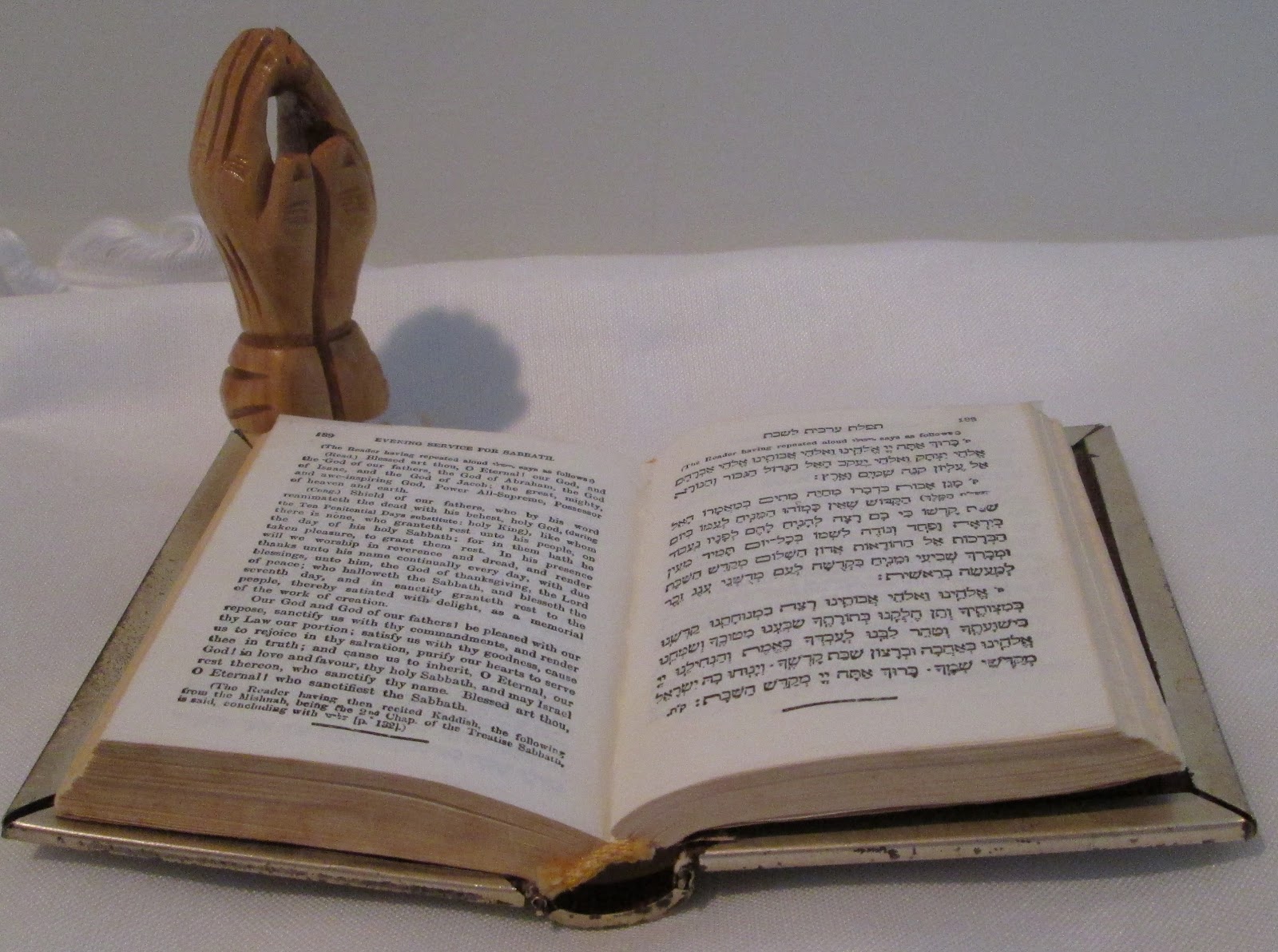
A prayer book and praying hands
     The altar of incense represents prayers that rise up to God. The fuel for the altar comes from figwood that burns on the brazen altar each day. This absorbs the sacrifices made during the day, and intermingles them with the incense that rises through the veil to the Holy of Holies. God loves it when we pray, and speak to Him. As Zechariah tended the Altar of Incense, he sensed God’s presence, and was in prayer. It was at this place that the Angel Gabriel entered the room and told John that Elizabeth would have a son.
      The Holy Place is where the priest could meet with God as he served in the Temple. A meeting with God depends on open hearts and the personal desire to be in fellowship with God.
Order this book at Amazon.com
     You can read more about the meeting between Zechariah and Gabriel in the book Advent Journeys, available as a book, as a Kindle e-book, and readable through Amazon Prime)

Tuesday, December 1, 2015

Chosen by Lot: Isaiah 6

The Bible, New Testament and Old Testament, contains a wonderful mosaic of wonderful interconnected passages.  Many people miss these connections due to lack of familiarity with the wide scope of scripture passages, through skim over and get through reading style, or because of cultural or doctrinal limitations.  But God wants us to see where dots connect and stories correspond.  The interrelationship between Old and New Testament is a source of seeing the truth and authority of a book given by God.
The first chapter of Luke is a great example of an interconnected passage which is an easy skim over to an untrained eye; but a passage of great depth both culturally and spiritually to anyone who desires to dig deeper.
The passage begins with what appears to be a simple priest … but even with the first glance, the reader understands there could be more!  “There was a priest named Zechariah.” Yes, that name is familiar, for Zechariah is one of the final prophetic books of the Old Testament.  Zechariah the prophet tells of the future which includes the coming of the anointed one, the messiah.  Zechariah the priest forms the connection, for the name Zechariah means “God has remembered.”
Zechariah is of the order of Abijah, one of twenty-four courses into which the priesthood is organized.  Week one of the book Advent Journeys gives a bit more information on this organization and what it means for the New Testament story.  Abijah means “God is my Father.”
In the course of his work Zechariah is chosen by lot to tend the altar of incense.  What the reader does not understand is the uniqueness of the selection process.  Indeed there are at least six positions chosen daily by lot, but to serve the altar of incense is a special drawing for a task which is only allowed once in a lifetime.  (Tamid 5:2 of the Jewish Mishnah).  The posting for this work takes a common priest as close as possible to the Holy of Holies.  A point made (and highlighted between the lines) is how God (“God is my Father”) waited until just this moment to call Zechariah (God has remembered) to this important appointment.
Zechariah approaches the altar of incense, and as Isaiah (“God saves”) sees God “on a very high throne. His long robe filled the Temple.”  He is met by an angel (Gabriel) who announces his wife’s pregnancy.  Zechariah’s lips question God, “How can this be?” [He probably should have said, “Here am I, send me.”]  And Zechariah is struck dumb.
But the message was heard, and Zechariah names his son John (“God shows mercy”).  In a symbol reflecting Isaiah 6:6-7 Zechariah’s lips are healed, and he begins to talk again.

Thus begins the Christmas story in Luke.  The story, and the entire Gospel are a continuation of the Old Testament inspiration which brings Immanuel (God with us) into the picture with spiritual forgiveness and healing.  The story goes on, as can be seen through the prophetic quotes of Zechariah, Mary, Simeon and Anna.