Showing posts with label Traditions. Show all posts

Friday, April 3, 2020

A Passover in forced Diaspora

There is no doubt about it, this Pesach will be different than any other. The joyous festivity that comes from interaction as a family, following of traditions, the telling of the story, and a great dinner will not be the same this year. The family will be separated and the fantastic feast will be downsized. BUT it can be more that what we think, just different.

As an educator and a participant of many Seders, I want to bring us as close to normal as possible. I think many of us are already understand that one solution is a video app on social media. I want to lay out some ideas on how to use this tool to bring a degree of normalcy to our Passover eve.

Two days ago, I made a list of questions to help us in re-creating a quality Seder in the midst of troubling times. In the answers of these questions, I hope to pull out usable ideas to bring togetherness even when we are separated from extended family. If you have other ideas, please use comment section to share with others, and help us all do a better job this year at our Seders. Also, read the ten questions from April 1, and five following days for answers (two per day).

2. On all other Passovers we light one candle or two … why on this night of Passover do we light many candles, and who says the blessing?

One of the important things that needs to happen this year at our Seders is duplication. Don’t try to take shortcuts … it will lead to loss. When you use Social Media to guide Passover Seders in multiple homes, each home needs to have all the accompanying props. This begins with the candles.

As the Seder gets underway, one person (the person who normally does this) should say the blessing and light the candle. That is, on the main computer for Passover eve (see yesterday’s blog).

Each home represented during the evening also needs candles, as close as possible to what is normally used. Virtual candles are … virtual. There is something about the presence of an actual flame that fascinates us. The flame wavers with the environment of the room, and we are fascinated by its dance. Each clandle burns on its own time table. One of the games we played at a Shabbos dinner was to notice when each person’s candle went out, and watched the smoke. Don’t shortchange the props. Every house needs to have them.

The candles can be lighted with one blessing (given on the main computer), and lighted simultaneously.

6. On all other Passovers we each take a nosh from a big fancy Seder plate set by the big fluffy matzoh tosh … Why on this night must we set our specialty foods on a dainty side dish?

The thought on the candle needs to continue with the Seder plate and Matzoh. Each prop and item needs to be duplicated. Although the Seder can be led from across the street, or from thousands of miles away, the food must be tasted by our tongues. Each home should have a Seder plate with all the elements. If there is a family recipe (for the Charosis), it should be shared. Each family needs its own shank bone and Matzoh, also. Wine should be available on all tables, and refilled at appropriate times.

The tastes and sounds of the Seder creates the proper environment. The secret for today is, don’t take shortcuts.

While each family should use its normal Haggadah (and have a copy for each person, like normal), I developed a Haggadah from Psalms (a New Haggadah in an older format than what we use today). I would appreciate you taking a look in the preview mode on Amazon, and maybe even buing a copy, just to see what it is. Please look up the Psalmatic Seder on Amazon.com


Friday, March 17, 2017

Passover Glue

In today’s world Passover is perhaps the most celebrated observance of the Jewish people - and this is not surprising. The celebration takes place in the home, extended family is included, and the meal is a banquet. The worship element of Passover is so familiar to Jews that they can quote lines by heart, and some families have a lot of fun ad-libbing or adding their own twist to an old story. Over the years each family builds their own traditions, making Passover an occasion to which everyone looks forward.
Our Passover Haggadah with Explanations
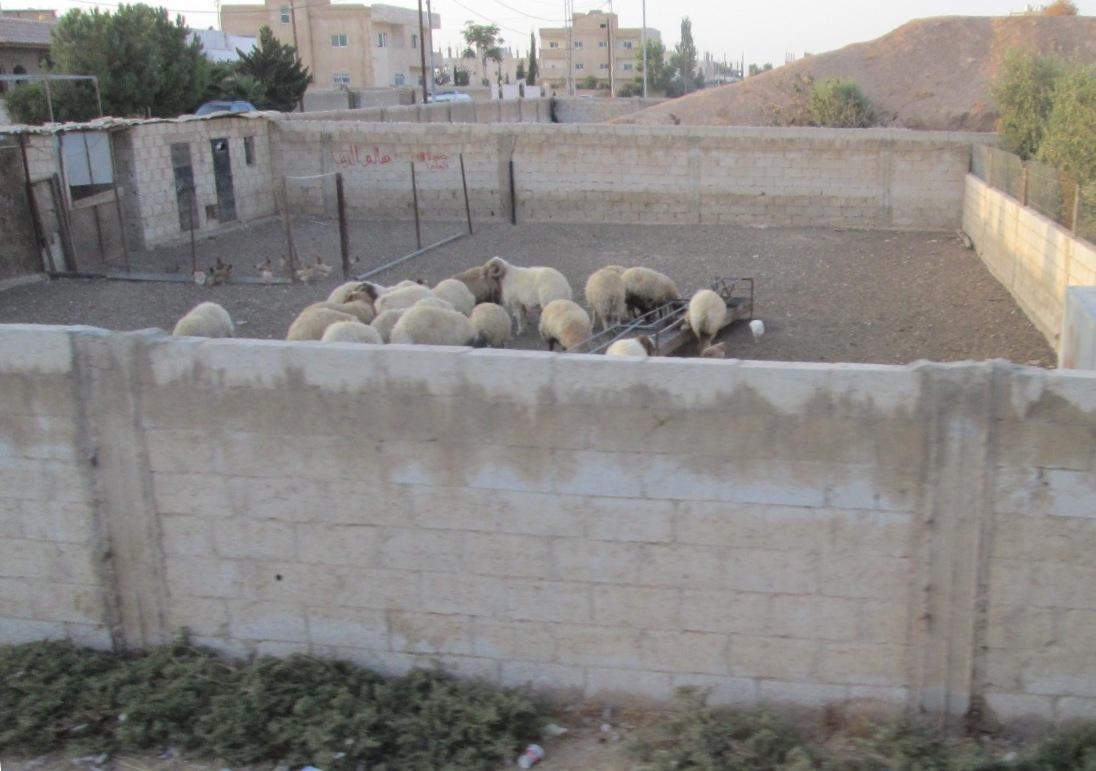
The foundations of our modern family meal are recorded in Exodus 12-13, where Israel is commanded to select a lamb, care for the animal as a pet for three and a half days, then kill the lamb, place the blood on the doorpost, roast the animal, and eat it.
Sheep pen in Jordan
The holiday could have arisen from earlier spring harvest celebration where a thank offering was given to God with unleavened cakes cooked in oil (Lev. 7:12). The timing of the Hebrew Exodus would have called for an expansion of the event with added meaning.
Our book on Passover Backgrounds
In my book Spring: Connecting with God, I tell how the festival has been celebrated or avoided throughout Biblical times. What began as a home celebration became a Temple activity, for which tens of thousands of people each year made the pilgrimage to Jerusalem, after Solomon built the worship center. (By the time Jesus was alive, millions of people were visiting the Temple Herod had renovated.) During the Babylonian exile the practice returned to the home, and is part of what kept the Jewish faith alive. Ezra reinstituted the Temple practices, which continued to be observed, and eventually were held by Jesus and his family.
Great spot for a picnic on the Mount of Olives
The New Testament gives various hints that people looked forward to Passover as an annual event. Entire communities would travel together and camp inside or on the outskirts of Jerusalem. Jesus’ family probably camped near the base of the Mount of Olives, atop which he later prayed the night before he was crucified. Families from the Galilee were able to meet together with families who lived in Judea. This is why Mary was so familiar with her relative Elizabeth. People in Biblical times enjoyed the week-long opportunity to take a break from the regular routine of life and live in a different setting.
Dome of the Rock where the Temple once sat
After the Temple was destroyed in 70 A.D. many of the Jewish holidays lost meaning, yet Passover grew in importance. Holy days such as Yom Kippur (the Day of Atonement) and Shavuot (the Feast of Weeks, or Pentecost in Greek) are based on the existence of the Temple for sacrifice and receipt of an offering. Chanukah (the Feast of Dedication or Winter - if you’ve read your gospels well, you’ve seen this terminology there!) became a day of mourning because the Temple sat in ruins as it had been during the destruction of Antiochus Epiphanes. Sukkot (the Feast of Tabernacles) remembered the journey from Egypt toward Israel, particularly the long years living in booths in the desert. The festival of Pesach (Passover) took on added importance as the Jewish people prayed once again that an evil Pharaoh (ruler) would be removed and they would be granted another exodus to their homeland.
A Home Passover Celebration in Saluda, NC
The elements of families coming together and dining at a banquet, the prayer for the restoration of Jerusalem, and the retelling of the ancient story built Passover into a favorite holiday. During the Middle Ages, European Jews developed ornate Haggadot in order to aid the head of the household in remembering from year to year how to share the elements of faith and tell the story. These books also reminded a literate society of how they were to participate in the telling of the story. Rabbis reinforced family gatherings for Passover in order to bolster Jewish identity within the scattered communities of Europe.
My family getting ready for Passover
Today’s Jewish families still gather to remember the ancient story, to pray for Jerusalem, and to strengthen relationships with each other and with God. My family went to Uncle Stuart’s home for the holiday. I still remember fun activities with my cousins as our parents talked and cooked together. I also remember much of the liturgy shared from the Chase & Sanborn Coffee Haggadah. My cousins and I carry many memories from these times together.
Other memories have been created over the years as my sister and I created a spontaneous Passover from memory (because we were unprepared, the shankbone was a milkbone biscuit!), Seders I have put together to teach friends in college and seminary, meals of the Jewish community in Louisville, KY, and celebrations with my wife and daughters add to the yearly Seders I remember. Presentations of the Seder given to churches have also provided fun stories (like the time I wore one black and one brown shoe). These happy memories build faith and family.
Passover Seder Plate

The Passover celebration has provided a glue for Jewish society. The elements of faith celebrated in the home with extended family and a lot of fun could help Christians in today’s world. We live in an era where we are letting life (work and school) swamp our time at home. We are letting the “experts” at church direct our faith. Worship is becoming more and more leader-led and non-participatory. Children are separated from parents so they can have “fun,” which dilutes historic religious teachings because they are perceived as “boring.” In this process family memories have been displaced and the Christian faith becomes ever more secular…and lost.

Monday, November 2, 2015

Advent Traditions

   The Advent traditions of my family began almost thirty years ago in a young adult Sunday School class at University Baptist Church in Wichita, KS.  Our study for December included four lessons: Zechariah, Joseph, Shepherds and Magi.  In preparation for these lessons I picked up a book from our church library, the title of which I have long forgotten.  The book said the Christmas season is a great time to teach on spiritual things because people were more attune because it was the time of Jesus' birth.
   Members of the class I was teaching had young children, three of them born the same month as my oldest daughter, Chelsea.  The lessons I prepared that year included not only the scripture but also ideas for teaching our children the Bible stories on a preschool level.  I made a notebook for each member of the class (color coded by week).  The ideas presented in the notebook I continued to use and improve each year.
   As my daughters aged from preschool to young child to older elementary and then on into middle school I continued to develop the idea of Advent scripture and stories.  I added activities according to their age.  I picked up the idea of sharing finger plays from the Hutchinson, KS library.  Those were included in a new Advent schedule.
   I began to develop other activities in the schedule as my daughters reached five years of age and beyond.  These included a weekly family time with dinner, songs, a skit and the story.  One of the favorite stories was the trip of Joseph and Mary to find a room in Bethlehem.  One of the girls was Joseph, the other Mary.  I was the donkey (many people told me that was a good role for me) and Denise was the innkeeper.
   When the children entered elementary school in Apex, NC, I added more activities.  We prepared Christmas cards on the week the angels told the Shepherds of Jesus' birth.  We drew wrapping paper in the week we told of the gifts brought by the Magi.  We made care packages for our neighbors to minister to them.  We also saw a sheep farm (or sheep at the zoo), and Christmas programs.  Christmas grew to be a season we loved.
   When my daughters entered Middle School, I stopped reading the story as much, because I wanted them to be more self disciplined.  I put a story with their lunch each day, along with thought questions, activities we would do when they came home, and also with a game: word search, crossword, maze, or similar, which they could solve as they ate lunch.  We still have a notebook of these pages.
   The devotions came full circle as Sarah helped me write Advent Journeys, a Christmas devotional.  We had fun, and talked about some of the activities of the past.  I put out a pamphlet for others to enjoy for many years.  I will be putting the same ideas on our website in the very near future (this week I hope) so others can enjoy celebrating Advent with their families.
   To celebrate a fun Advent will bring families closer to the true meaning of the Christmas season.  I have found these activities to be the perfect antidote for consumerism so prevalent at this time of year.  Keep an eye out for the list ... and if you have other ideas, please share them.