Showing posts with label Via Maris. Show all posts

Wednesday, May 23, 2018

A Trip to Tel Aviv

Yesterday we made a trip from Haifa to Tel Aviv. Transportation along the coast, the “Via Maris” or the “Plain of Sharon,” as it is variously called in different places, is quite easy. We took the bus down the mountain in Haifa to the connected Bus and Train stations near Carmel Beach. Then we went south along the sea.
Rav Card Reader on a Bus
We purchased a Rav Card, which connects all transportation. We paid a few sheckles each way for the train and a few for daily unlimited rides in Tel Aviv. The coast and the cities are places which are connected by mass transit. That is a good thing, because after driving our rental car in the congestion of Tel Aviv the first few days in Israel, I am glad to let someone else do the driving. After attempting to park in Haifa, I am glad to get off the bus, and not have to look for a place and walk up the hill back to our lodging.
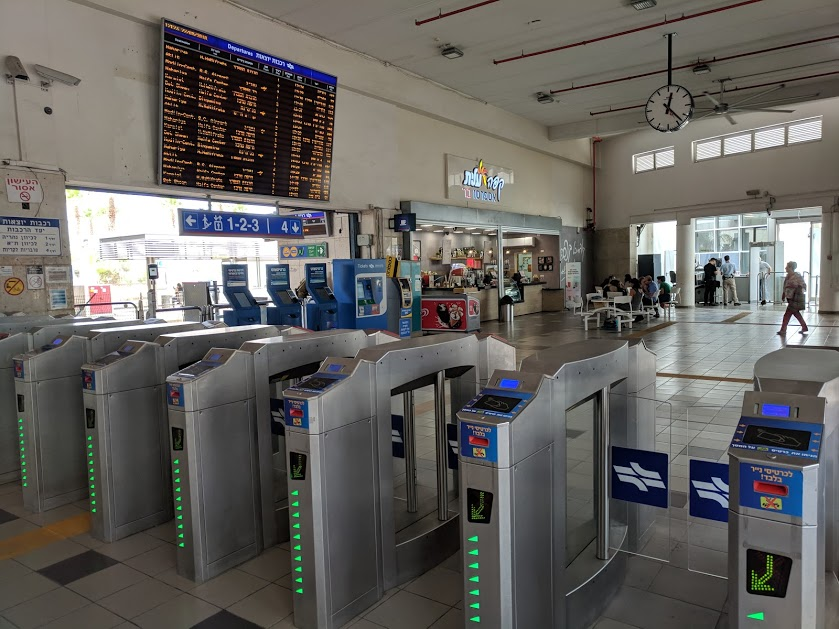
Entry to the Train Station
The drive down the coastal plain was beautiful. The ground is mostly level, but with some rock hills or desert sand dunes in places. There are a few rivers, swamps and lots of land which was drained a hundred years ago and is now used for agriculture. There are fields of cut grain, citrus groves, banana plantations and other farms along the plain. Before the nineteenth century, this land contained enough swampy areas that transportation could be controlled by fortresses.
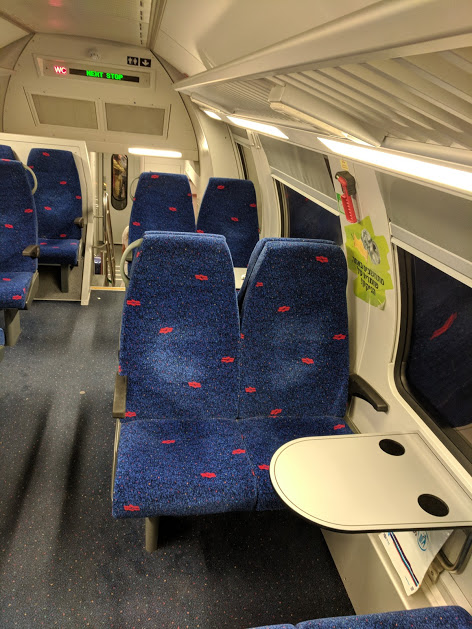
Comfortable interior of the Train Car
The train cars can be one level or two. Of course as a visitor to Israel, and because we like to look out the window, we go to the upper level (the morning train was only one level). The trains were crowded, and on the morning train I had to stand the full ride, of about an hour. Chelsea and I read some of Al-Khazari.
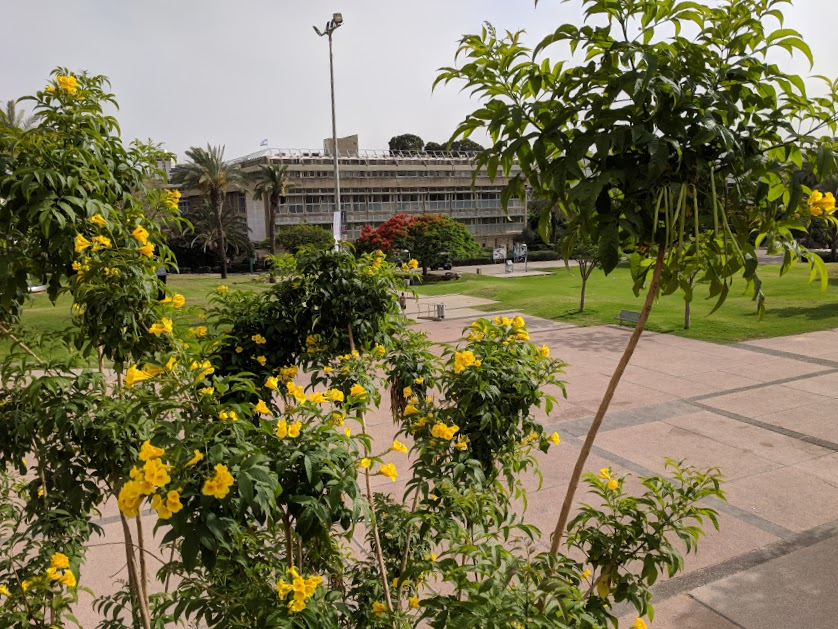
Flowers at Tel Aviv University
We arrived in northern Tel Aviv and took the bus to Tel Aviv University. This is a large, multidisciplinary state college. Several museums on the campus afford visitors great experiences. We have visited the Eretz Israel and Palmach Museums in the past.
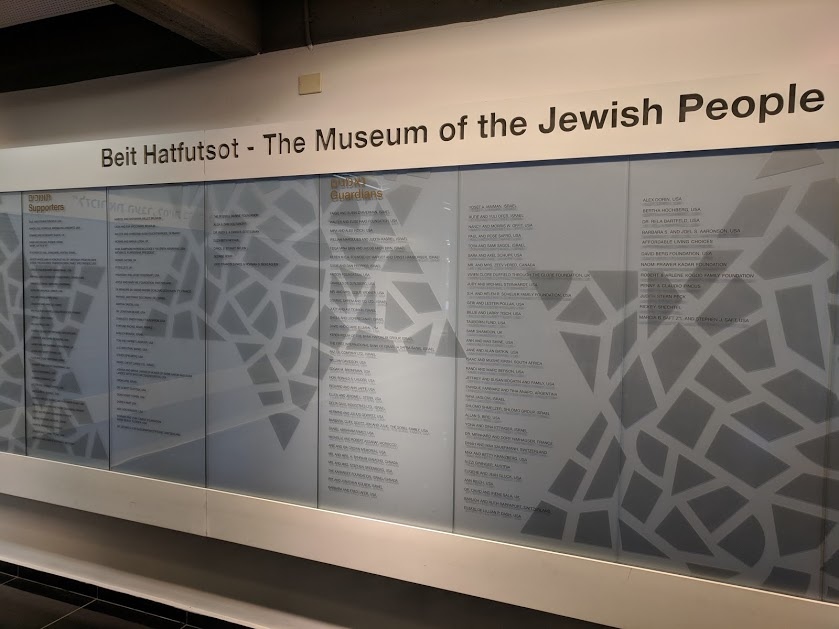
Museum of the Jewish People
Yesterday we visited the Museum of the Jewish People. We enjoyed three different types of exhibits. The entry exhibit is on Jewish Humor. In the early 20th Century about 75% of the comedians in the United States were Jewish. Cultural humor comes from Eastern European communities where Jewish populations were congregated and often relate to the trials of our people.
Museum of Jewish Humor
One source of Jewish humor is the Bible. There are many funny expressions in the Bible, and even books like Esther which are meant to provide relief in life through jest. The festival of Purim, built on the book of Esther, is totally about carnivals and fun.
Fishing for Matzo Balls in Soup
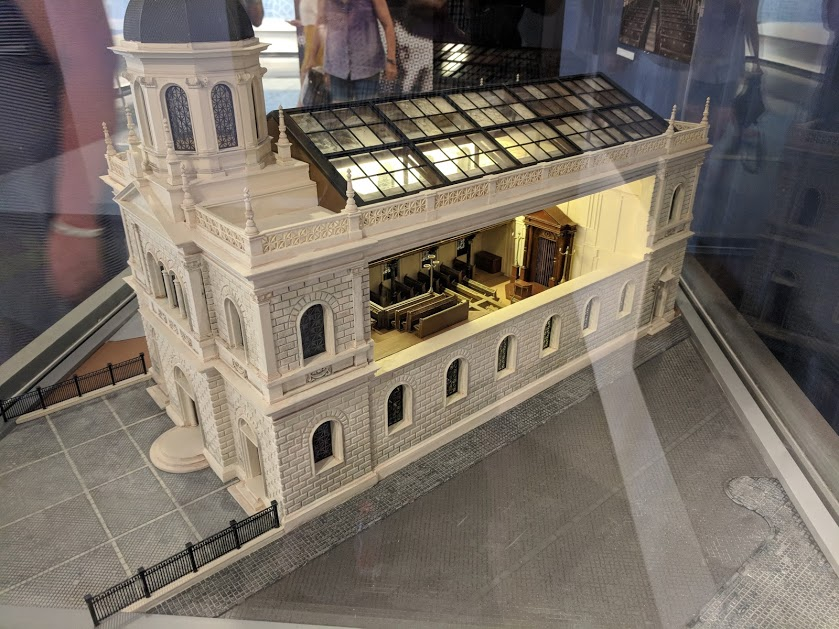
A second, more serious room in the museum was dedicated to places of worship. Detailed scale models, including interior rooms, were on display, showcasing major synagogues in Europe, the Middle East, and Asia.
Synagogue in Vienna, Austria
The Synagogue room also showed videos of Jewish worship.
Capernaum Synagogue
The final room was on photography. It showed early photographs of Israel, and also photography from battle zones in Europe and Central America.

Saturday, May 5, 2018

A Trip to Haifa

Today’s trip started in Joppa, where we are staying. We walked over the hill to get the car, and found a couple of places to stop and get pictures. Yafo is a beautiful Mediterranean city with narrow streets, interesting houses, and great views along the coast. I have several stories in a book compiled for our tour group (and any other tour group going to Israel), Israel: Stories for Your Journey.
A Talmudic School on Street that leads to the Yafo Shoreline
This of course is near the place where Peter went in the morning to enjoy the breeze and view, and saw a sheet coming down from heaven with various kinds of unclean animals.
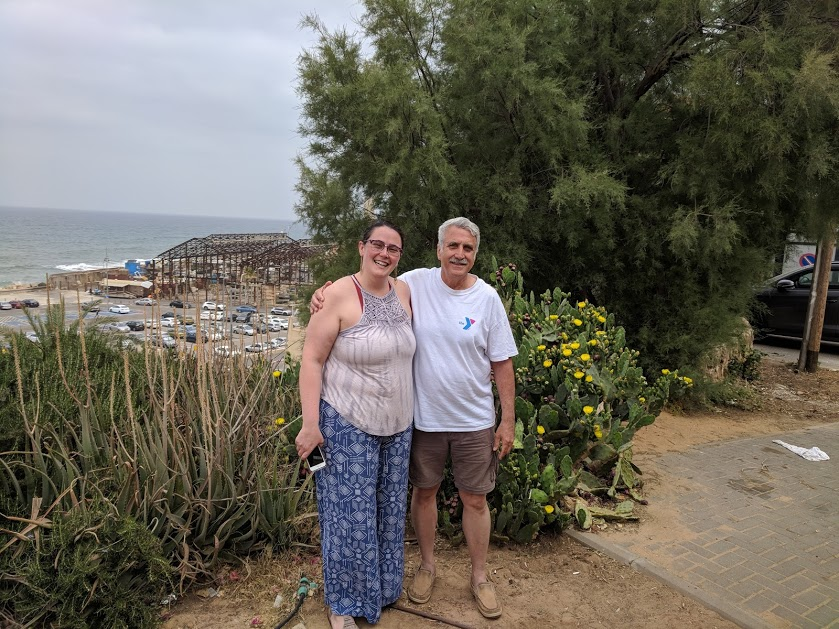
Cactus Flowers on the top of the hill by the beach
After breakfast, we traveled north. 
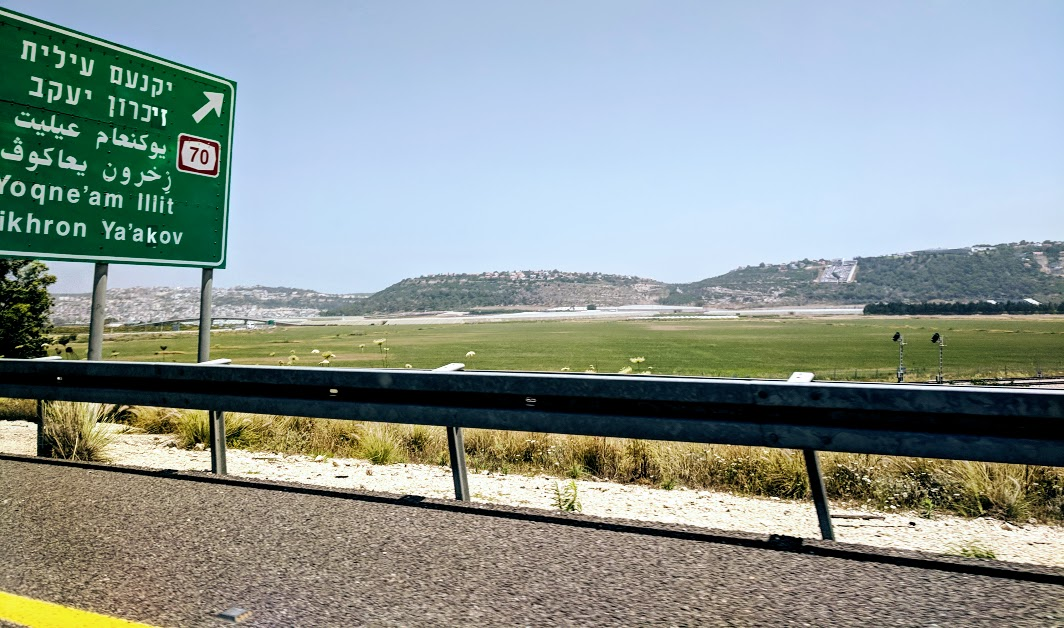
Yokenan Pass, which leads from the Via Maris to Jezreel Valley
Our objective for the day was Haifa. Our first stop was at Sarah’s apartment.
Housing in Haifa
She has a great view from her back window.
Looking North across Mount Carmel
From the top of the hill Elijah was able to watch for rain over the sea. Many people live on the hill now. This was also the place where the Giro d’Italia was run today. We saw some of the closed off streets.
Mount Carmel from the beach
The beach where we ate lunch was along the beach.
Places to eat along the beach near Haifa
And then walked down the beach to enjoy the cool water and the views.
A rocky place along the Seashore

Then we headed back to Tel-Aviv. We took a local road because there was a wreck on the main road as people were returning from Shabbat and coming to Tel-Aviv during the race.

Sunday, December 20, 2015

The prophecy of Balaam

We live in a small world.  With modern transportation we can easily travel to almost anywhere.  We read and share traditions from around the world in our stories, merchandise, and food.  We enjoy furnishings from the orient, art from Italy and carvings from Africa.  We eat at Chinese, Italian, German, and Mexican foods.  We tell stories from Greek, Roman and Norse mythology, and we share the tales of King Arthur and Shakespeare.
The sharing of stories, merchandise and food between nations is not new. World empires of Babylon, Persia and Greece began a mixing process.  People in the Middle East and also in Europe gained a taste for products from India and even China.  Stories, pottery and foods were also shared from the west to the east via Hellenistic culture.  
In the middle of the world both in ancient times, and now, is the land of Israel.  Israel is the link between east and west, north and south.  The via Maris is the main road to Egypt.  The King’s Highway is the main road to the sea which leads to Africa.  All armies and cultures in times past have passed through Israel.
And Israel has given to the world its stories and its God.  The stories came at first through bondage to Egypt and as the people of Israel were conquered by Assyria and Babylon.  Through the passing of time and the mixing of cultures stories were shared by people on three continents.
One of the stories which successfully passed from one culture to another was the prophecy that a king would come when an unusual star was seen in a certain constellation.  The story springs from the prophecy of Balaam (possibly from Ammon) which states: “I see him, but not now; I behold him, but not near: a star shall come out of Jacob, and a scepter shall rise out of Israel; it shall crush the forehead of Moab and break down all the sons of Sheth.” (Nu. 24:17)
It is thought that the Hebrew prophet Daniel who was born in Israel, lived in Babylon, and possibly died in Persia, informed the magi of Babylon and Persia of this prophecy.  He also shared a connection between this prophecy and Genesis 49:10, “The scepter will not depart from Judah, nor the ruler's staff from between his feet, until he to whom it belongs shall come and the obedience of the nations shall be his.
Strabo the geographer writes about the time Jesus was born: the prophets too were held in so much honour that they were deemed worthy to be kings, on the ground that they promulgated to us ordinances and amendments from the gods, not only when they were alive, but also when they were dead, as, for example, Teiresias, ‘to whom even in death Persephone granted reason, that he alone should have understanding, whereas the others flit about as shadows.’ Such, also, were Amphiaraüs, Trophonius, Orpheus, Musaeus, and the god among the Getae, who in ancient times was Zamolxis, a Pythagoreian, and in my time was Decaeneus, the diviner of Byrebistas; and, among the Bosporeni, Achaecarus; and, among the Indians, the Gymnosophists; and, among the Persians, the Magi and the necromancers, as also the dish-diviners and water-diviners, as they are called; and, among the Assyrians, the Chaldaeans; and, among the Romans, the Tyrrhenian nativity-casters. Moses was such a person as these, as also his successors, who, with no bad beginning, turned out for the worse. (Geographica XVI, ii, 39)
Our Bible tells us Magi saw movements or changes in a star in the east (possibly Aldebaran) and put it together with prophecies from the west they understood a new king was to be born.  They gathered gold, frankincense, and myrrh and traveled down what is called the silk road in search of the king foretold in their prophecies.
This week we will travel with the Magi in the book Advent Journeys. I hope your reading is going well, and spending time with the people of the Christmas story is bringing joy to your Christmas.