Wednesday, December 14, 2016

Shepherds of Greatness

This week in the devotional Advent Journeys we move to the fields outside Bethlehem. Have you ever wondered what it would be like to live as a shepherd? There is more to the life than just following sheep. Take a look at the devotions this week, you can explore for free if you are an Amazon Prime member. I think you will enjoy the adventures of the Shepherds.
The Bible has a lot to say about shepherds. The first shepherd in the Bible (and we can assume the man who domesticated sheep) was Abel. His work, his heart of faith, and his offering pleased God. God’s love for Abel was seen by all (but there were not many people in the world at that time), and was displeasing to Abel’s brother Cain.
The Patriarchs: Abraham, Isaac, Jacob and Jacob’s sons were all shepherds. They developed large flocks, enjoyed great prosperity and developed quite a reputation as businessmen. Some of their neighbors were not too keen on their success. The Philistines stopped up their wells and attempted to get them to move, but God protected the Hebrew people.
Moses took up shepherding at the age of forty after a tragedy made a move necessary to sof ha’olam smola (סוף העולם שמאלה). Moses possibly learned the basics of shepherding through leadership training in Egypt in the school of Pharaoh. On the back side of the desert Moses met his wife, saw a burning bush and received his call to lead the people of Israel out of Egypt. (Who ever said Shepherding is boring?)

In an opposite way a shepherd boy named David received training to become King of all Israel through his leadership of sheep. (I wonder if there is a similarity between dumb sheep and a nation full of people). David learned bravery through protecting his sheep. He learned to sing and compose music either through necessity because of the vastness and emptiness of the Judean wilderness or through the constant bleating of the sheep. The solitude of the desert also taught David to worship God.
Shepherds are a unique group of people who carry a huge responsibility. This week we will join the shepherds as they live out their responsibilities and carry out their duties. Please, join the reading!

.

Sunday, December 11, 2016

Christmas Sunday School

For many years I have served as a Minister of Education at churches in Wyoming, Kansas and North Carolina. As a Minister of Education I developed educational programs for all age levels from Preschool to Adults. I found and trained workers to staff these programs.
As a retired minister, I continue in my life’s work, but at a slower pace. One area where I continue to serve is in the Preschool. During my time of service I encouraged everyone to volunteer with Preschoolers once per month during the time of the worship service (we called this “extended session.”) As an example (because I must do as I said) I serve in the Kindergarten class (our Minister of Children finagled a way to get me to serve twice a month), and develop my lesson plans where the curriculum is weak.
I have observed across the years that faith development in children is not automatic and a guide is required both at home and in church to to help children find the right path. I have shared in previous posts how I developed and carried out a lesson plan for the Christmas season each year with my family and in church. During the two weeks of teaching this month I drew upon my plan for Sunday’s lessons.
Last week’s lesson for children, and the journal in the devotional Advent Journeys, was about how the Angel Gabriel met Zechariah at the Altar of Incense in the Temple. My activity as I taught children was to have them lay down on a large sheet of paper with a crayon in each hand in order to draw angel wings snow-angel style. After the wings were drawn my helpers and I made an outline around the child’s body and let them color in the picture. As they colored, we taught the lesson.
This week’s lesson for children and the journal in the devotional Advent Journeys is about Joseph and Mary as they travel from Nazareth to Bethlehem and give birth to a Child. The birth of Jesus is the reason for the Christmas season, so it is with great joy that I look forward to teaching the children in our church tomorrow.
As I thought about what to do (more than just crayons and paper), I decided to give them something that hopefully will last a lifetime: a nativity scene.
In our family we proudly display a nativity scene made of clay by my daughters and myself many years ago. Although rough and misshapen, the set contains many memories, and is hand made. The scene brings back memories of the class, my daughters' childhoods, Christmases of the past and the Christmas message. It is a keepsake which is the springboard to stories and sharing as people visit our home (and as I write this blog).
I decided to give the Kindergarten children in my class a gift. I bought air-dry clay and took it to breakfast this morning, where I practiced (and got it right the first time!) One pinch of clay rolled between my fingers to make the head. Three pinches of clay shaped like a bell to make the body. A coffee stirrer (I will use toothpicks in class) for the arms, and another pinch made the body and head for the baby. I cut small mangers out of pressed wood (looks like hay), and will put it in a box for a stable.

Tuesday, December 6, 2016

Why?

This week’s journal in the devotional Advent Journeys seeks to speak the words of Joseph as he travels with Mary from Nazareth to Bethlehem. Joseph and Mary were unique individuals of character, and for this reason they were chosen by God to become parents who would be remembered and who would serve as examples for other parents across two thousand years of history.
View from the Precipice near Nazareth 
Have you ever wondered why God chose this couple and how we can emulate their parenting methods with our own children?
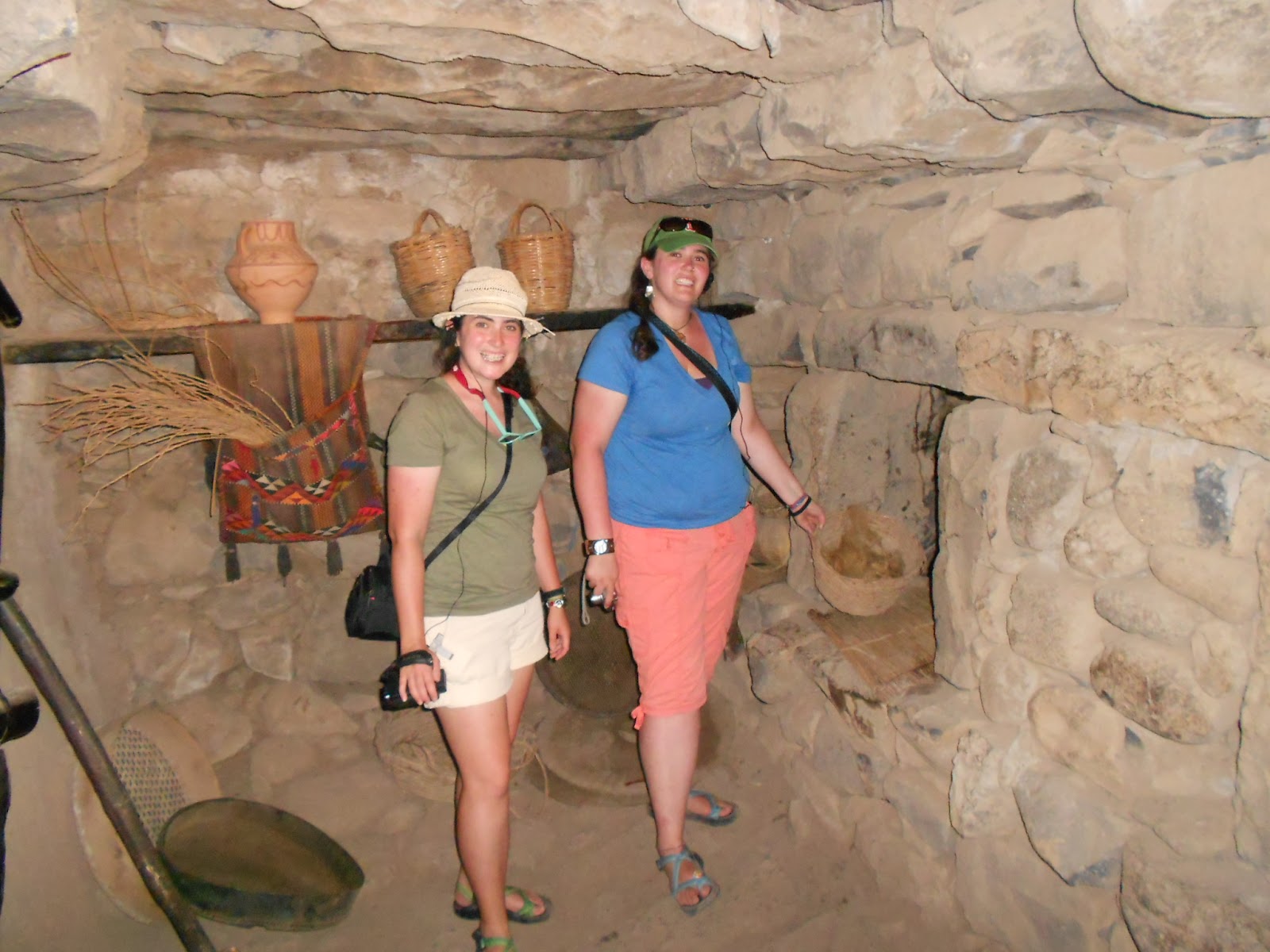
Kitchen at a home in Katzrin
The scripture teaches that Joseph and Mary were individuals with integrity. Each parent in their own way sought to honor God with all their hearts, minds and strength. (Deuteronomy 6:5) When Gabriel came to Mary in order to inform her that she was chosen to give birth to the one called “the Son of the Most High” (Luke 1:32), she responded by asking “How can this be since I am a virgin.” Mary wanted her faithfulness to be known by the angel, by her parents, by her community and by Joseph.
Village of Katzrin in the Galilee
Matthew 1 tells of Joseph’s concern when he found out that Mary was pregnant. He loved her, but he knew his integrity would be compromised when the community came to know Mary was with child. Joseph sought a way to end the betrothal in an extremely private manner. As he prayed and sought God’s wisdom on the matter, Gabriel visited Joseph as he had visited Mary. The heavenly being assured Joseph that Mary had done nothing wrong. And the Angel asked Joseph to complete the marriage and to adopt the child.
Village of Katzrin in the Galilee
Both parents had similar concerns and stepped out in faith to accept the child and God’s calling to become parents and teachers of a child who was well beyond them in intellect and righteousness.
Scaffolding at Katzrin
Joseph and Mary sought throughout the life of Jesus and of their other children (Matthew 13:55-56) to bring faith to their family. The holy parents taught their children the scripture at every opportunity. They stood as examples of faith through every trial (and there were many, such as the necessity of escape from Bethlehem and living as parents of faith in a foreign land). Joseph and Mary honored every Jewish tradition and honored the festivals with their family. Joseph taught Jesus the skills of his trade and Mary loved Jesus and lived her care for him to the day of his death and beyond.
Packing down a roof in Katzrin
Jesus’ parents willingly took on any hardship and sought in every way to bring their children up in the faith. Today as parents we must do the same. We must honor the Christmas season with more than presents, we must honor God by giving our children our presence to tell real story of our faith. Parents show God’s love through proper placement of priorities.


Sunday, December 4, 2016

Joseph the Builder

The Bible tells us Joseph, the father of Jesus was a carpenter (Mark 6:3). To most of us that means Joseph build things with wood, such as chairs, tables, homes, stables, and feeding troughs. This week as we read the book Advent Journeys we will come to know Joseph and Mary much better.
The Greek word for carpenter, τέκτων could also mean he was a craftsman or builder. After visiting Israel this definition seems much more reasonable, as wood is scarce in the land and most homes and buildings are made of stone. The term could also mean that Jesus’ father was a creator. We know that Jesus’ father in heaven was the real Creator (Genesis 1).
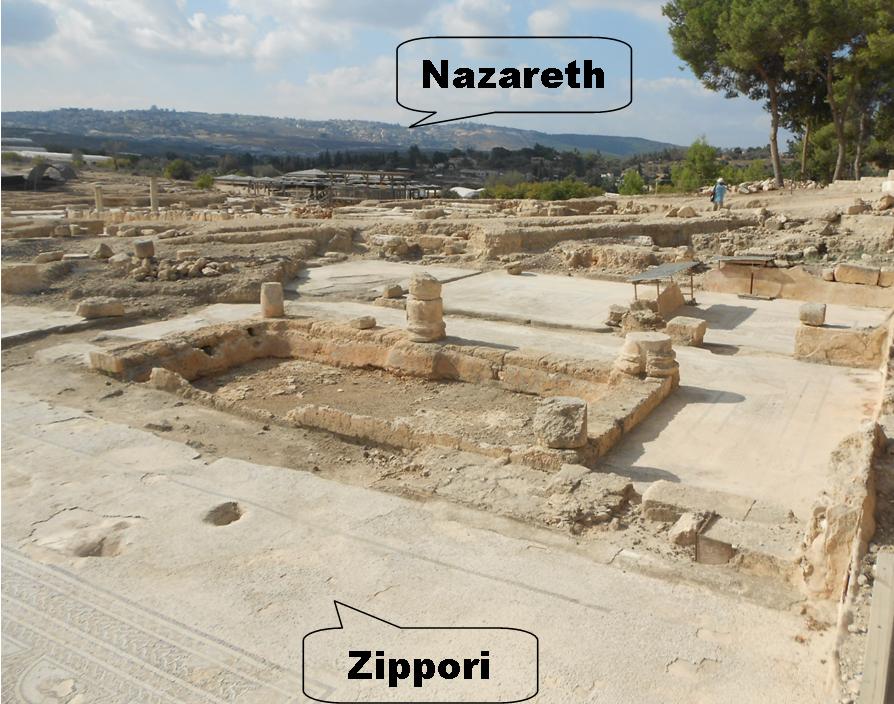
There has been a lot of discussion about what Joseph built. He and Mary both lived in the small Jewish town of Nazareth. Joseph could have repaired homes and objects in this small town. Certainly there were not a lot of new buildings or construction in Nazareth.
It is more probable that Joseph worked in the gentile city of Zippori, about three miles away (an easy 45 minute commute for someone used to walking). Zippori was an older town which was revitalized by Herod the Great as one of his building projects. Herod quartered an army at this location which was half way between the Mediterranean and the Sea of Galilee. The city was perched on top of a hill with excellent visibility and for that reason the Talmud tells us it was given it’s name which in Hebrew could mean a bird.
Joseph could have worked on minor projects, for there were homes and objects to create for the homes and businesses in the community. It is hard for me to think of the father of a great person like Jesus as the creator of menial things. I believe there are great objects which still exist today which were built by Joseph (which means “God adds”).
Joseph could have built the gigantic walls which were part of Zippori. Within this Roman city there are theaters, amphitheaters, hippodromes, palaces, government buildings and other huge projects. There were also fortified walls in order to provide protection for the troops. Some think Joseph was killed in a construction accident at an early age (before Mark 6:3 was written) because he does not appear during Jesus’ adult life. Accidental movement of massive rocks could certainly cause a person’s death.
Joseph could have built roads which connected Zippori with Nazareth and places beyond, for the Romans were great road builders. The Roman roads helped make the world a place where the Gospel could be easily spread by traveling apostles and missionaries. The roads were made of huge blocks which were trimmed to be thin and flat.
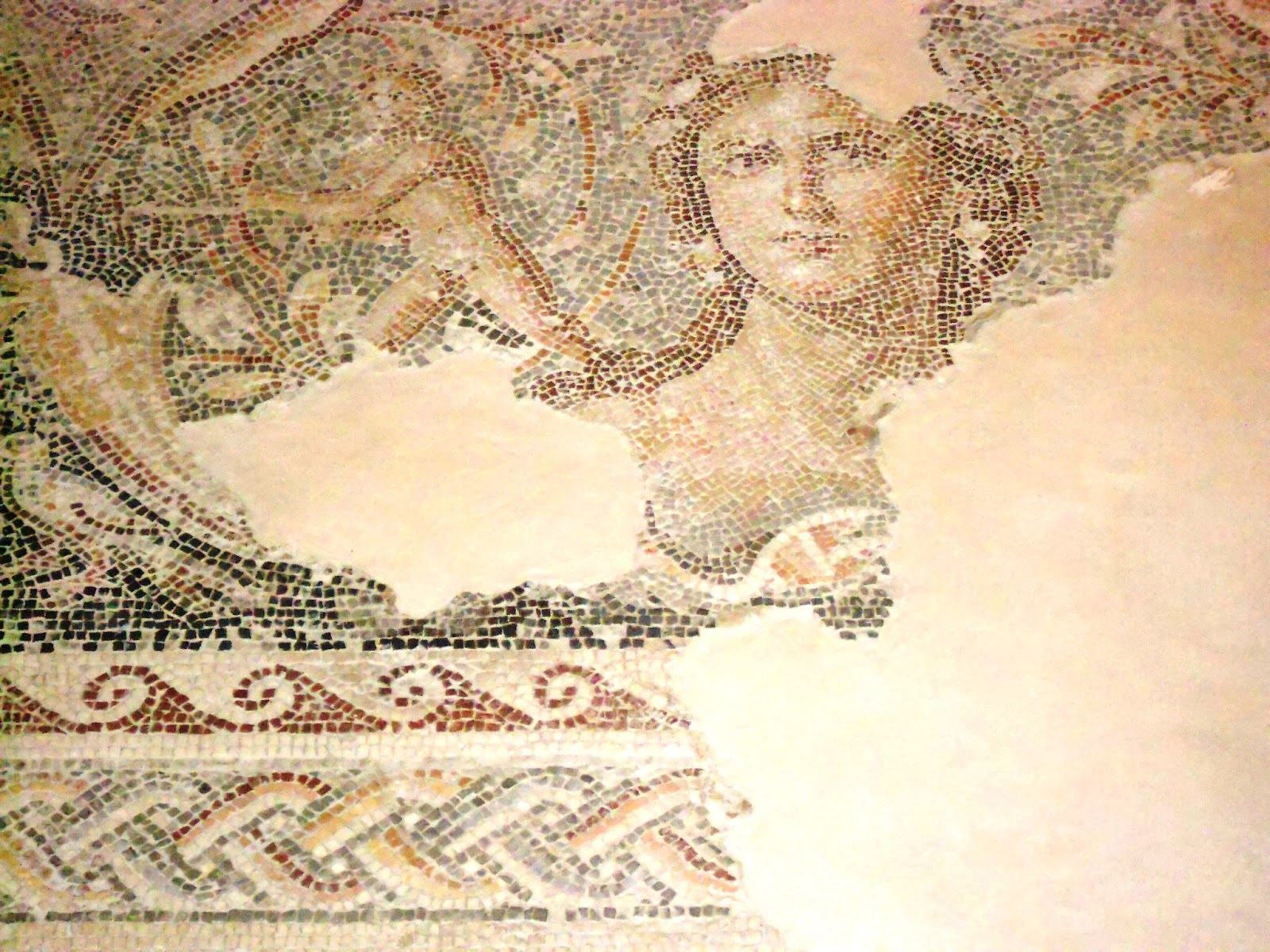
Zippori is known for it’s beautiful mosaics. Some people called this town the “Ornament of Galilee.” Mosaics are in many of the homes and are objects of great beauty. Mosaics are made of small square stones of different colors which create pictures. It could be that Joseph, and his son Jesus were creators of some of these Mosaics. One of the pictures is of such beauty it is called the Mona Lisa of Israel.

If you want to learn more about Israel or the mosaics of Zippori, or the travels of Joseph, I will be taking a group to Israel in June 2018. Watch for more details on my website (Israel Trip) www.KosherCopy.com

Thursday, December 1, 2016

The Temple’s Missing Item

The priests performed many tasks in the Temple. We attempt to relate these tasks as Zechariah might have perceived them in our book Advent Journeys. Zechariah served many roles during his twenty-five years of active service before retirement. In all, and even with even with the politics and toil which comes with a heavy work cycle, Zechariah never lost his zeal.
Looking int the Tower of David Museum
With all of its magnificence (see the previous two blog posts) and all of its organization, the Temple of Zechariah lacked one thing. The most important piece of furniture, the throne of God, the box which was called the Ark of the Covenant, was missing. This box which held Israel’s treasures: the Ten Commandments, Aaron’s rod and a jar of manna, was sacred and the place where in history God had resided. The Ark of the Covenant had gone before Israel in battle and it was the first item brought to Jerusalem for Solomon’s Temple.
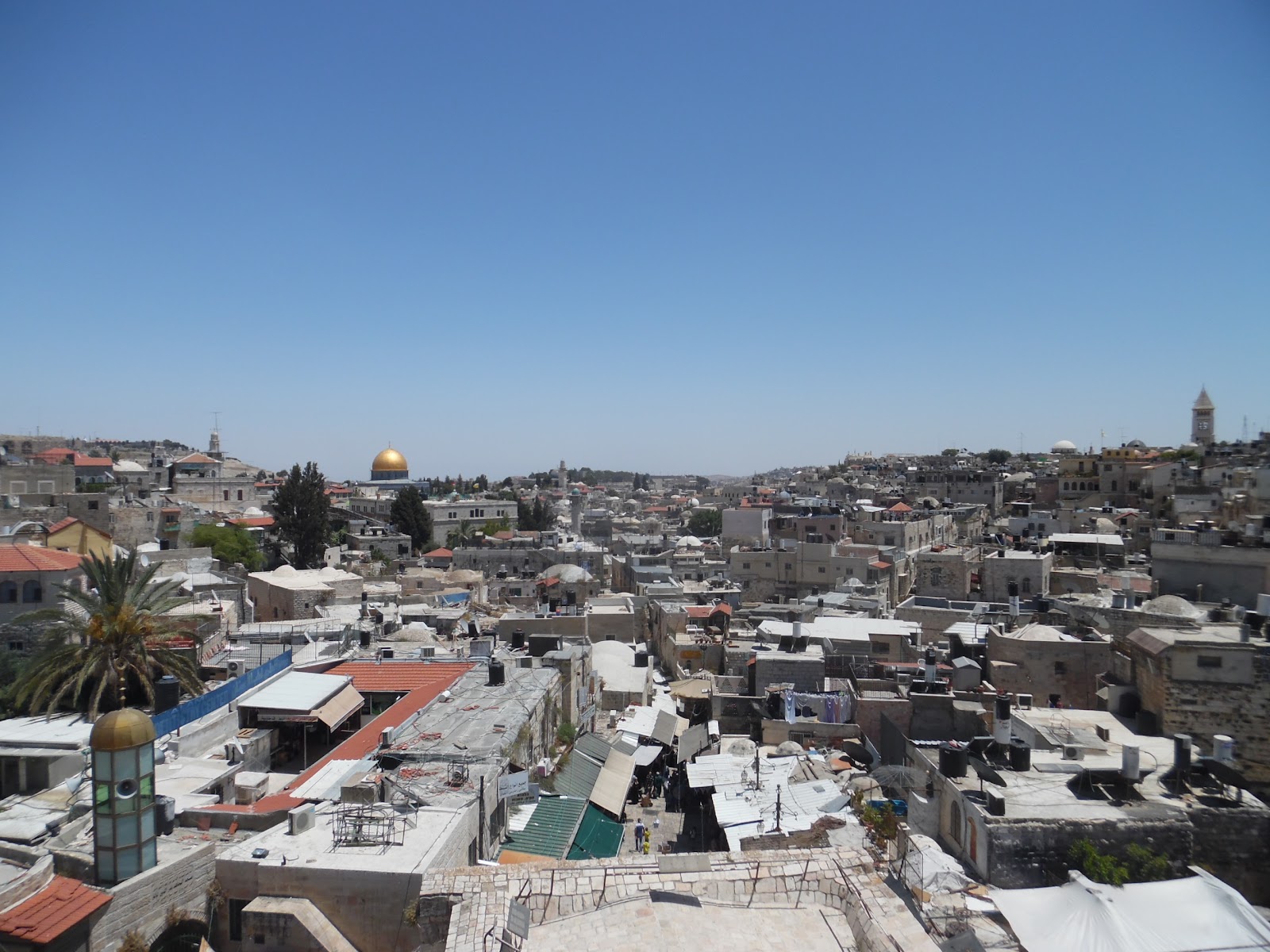
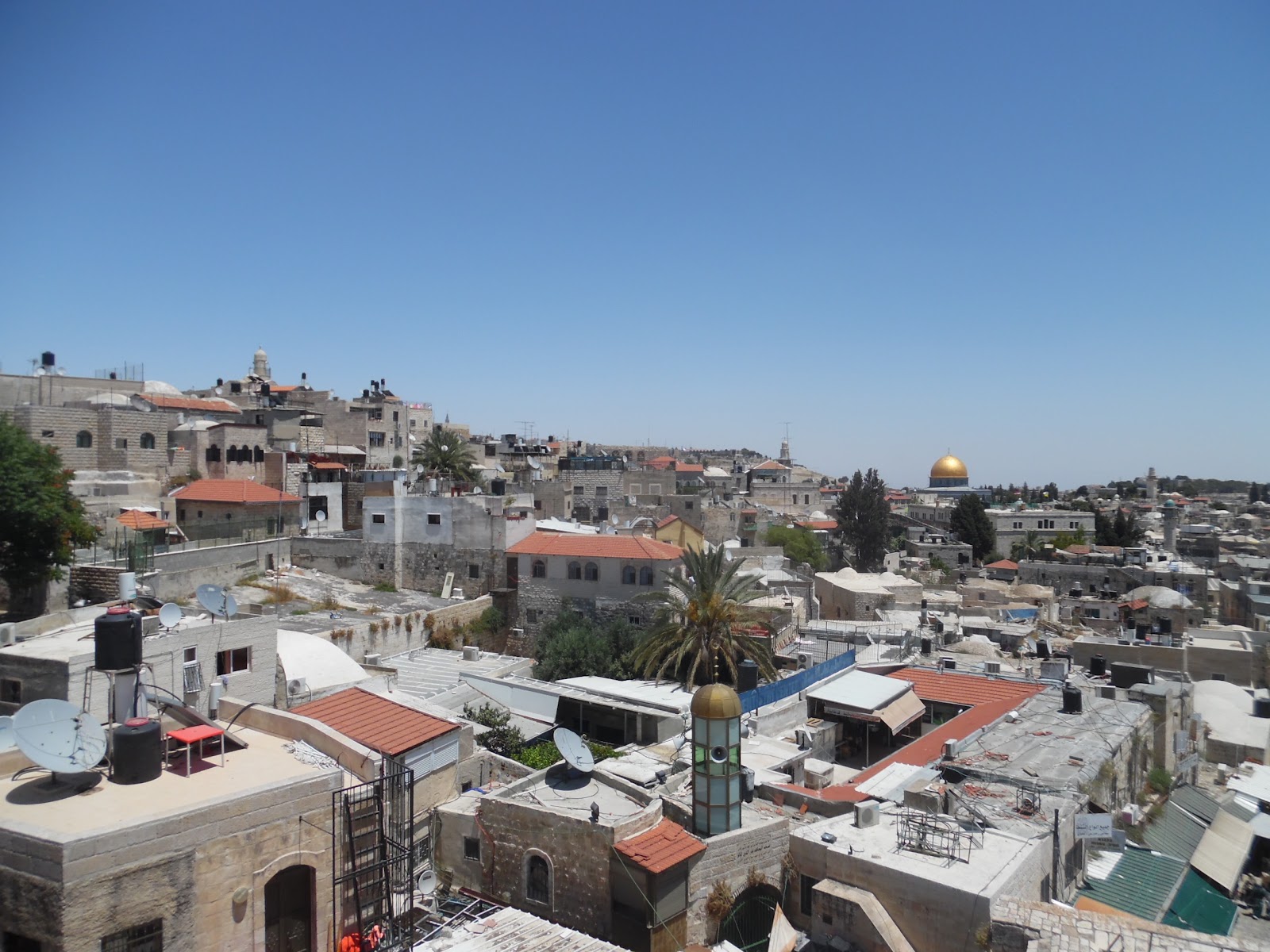
Jerusalem from the Ramparts Walk
The Ark of the Covenant with the Mercy Seat upon it was the place where the High Priest was to place the blood from Israel’s atonement offering each Yom Kippur. But in the days of Zechariah it was missing, and every priest was aware of this fact. One priest wrote: “After the Ark was taken away a stone remained there from the time of the early Prophets,” and it was called ‘Shetiyah’. It was higher than the ground by three fingerbreadths.”
Temple Mount from Ramparts Walk
Another priest said: “Once when a priest was occupied he saw a block of pavement that was different from the rest. He went and told it to his fellow, but before he could make an end of the matter his life departed. So they knew assuredly that there the Ark lay hidden.”
Jerusalem from Tabtznik Park
The Holy of Holies remained important even without the Ark of the Covenant. The High Priest continued to go in every year on the Day of Atonement. He would sprinkle the blood on the place where the Ark of the Covenant had been placed before. To a priest of a lower level, like Zechariah, the Altar of Incense was the closest he could come to the Holy of Holies. It was at this place that the Angel met him and announced that he and Elizabeth would have a son.


Tuesday, November 29, 2016

Temple Days of Service

Zechariah the Priest looked forward to serving the Lord at the Temple each time the opportunity afforded itself, which was about five weeks per year. The journals in the book Advent Journeys attempts to share Zechariah’s passion and dedication for the Lord’s work.
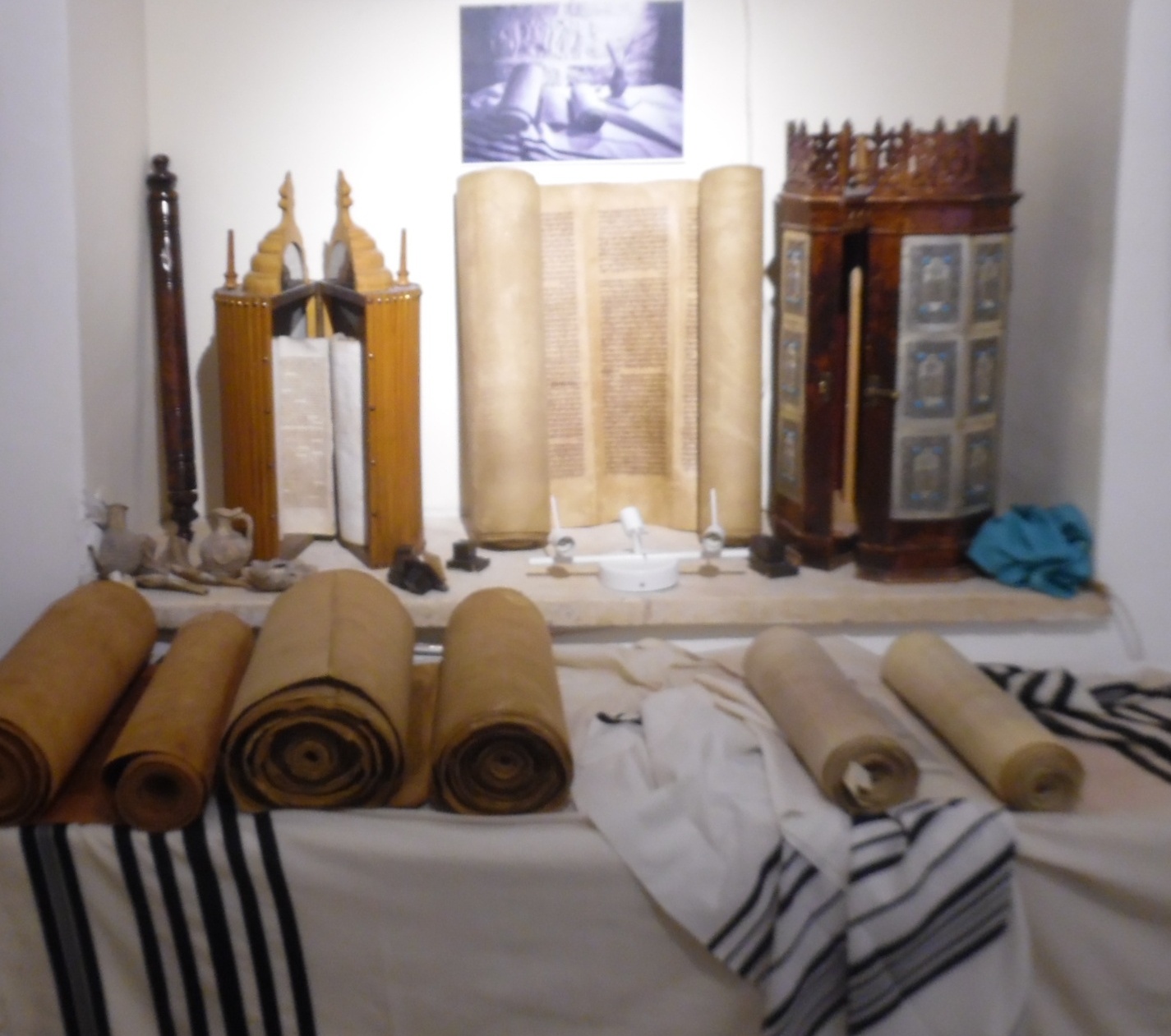
Scrolls inscribed by a Sofer
The scripture relates to us as background the manner in which Israel’s priesthood is organized. At first, in the days of Moses, there were four divisions created in order to setup, tear down and carry the Tabernacle as it traveled across the wilderness. Once the Tabernacle became a permanent fixture in Shiloh, the priests were not needed for transportation. We can almost sense in 1 Samuel that common priests ceased to serve in the Tabernacle under Eli and his sons.
Temple Mount with Mount of Olives behind
In the establishment of the Temple in Jerusalem by King David, the orders of Priesthood were reestablished, and increased to twenty-four orders. The names of each of these orders can be seen in 1 Chronicles 24-26.
Home of one of the High Priests
King David assigned some priests as gate-keepers: some to give the offering, some to cook meals and some for administration. David also organized Temple musicians, who shared their gift of music for generations.
Home of one of the High Priests
As the population of Israel grew, so did the priesthood. With the establishment of a permanent structure, all priests were not needed every week, so a system of rotation called Mishmarot and Ma’amadot was set up. All priests would serve during the three harvest festivals, and then in rotation once every twenty-four weeks. The scripture tells us Zechariah was a Priest of the order of Abijah.


Sunday, November 27, 2016

Zechariah in the Temple

The Temple of the first century is a fascinating place! The Temple itself was the center of activity, serving thousands of people each day. The plaza around the Temple was a meeting place of pilgrims who came from long distances to bring an offering and merchants who were selling the offering to the pilgrims. It was a place of contention for Sadducees, Pharisees, Essenes, Herodians, Zealots, and others who came to argue politics and religion. It was also a place for locals, who came to watch the commotion.
The Robinson Arch entrance to the Temple
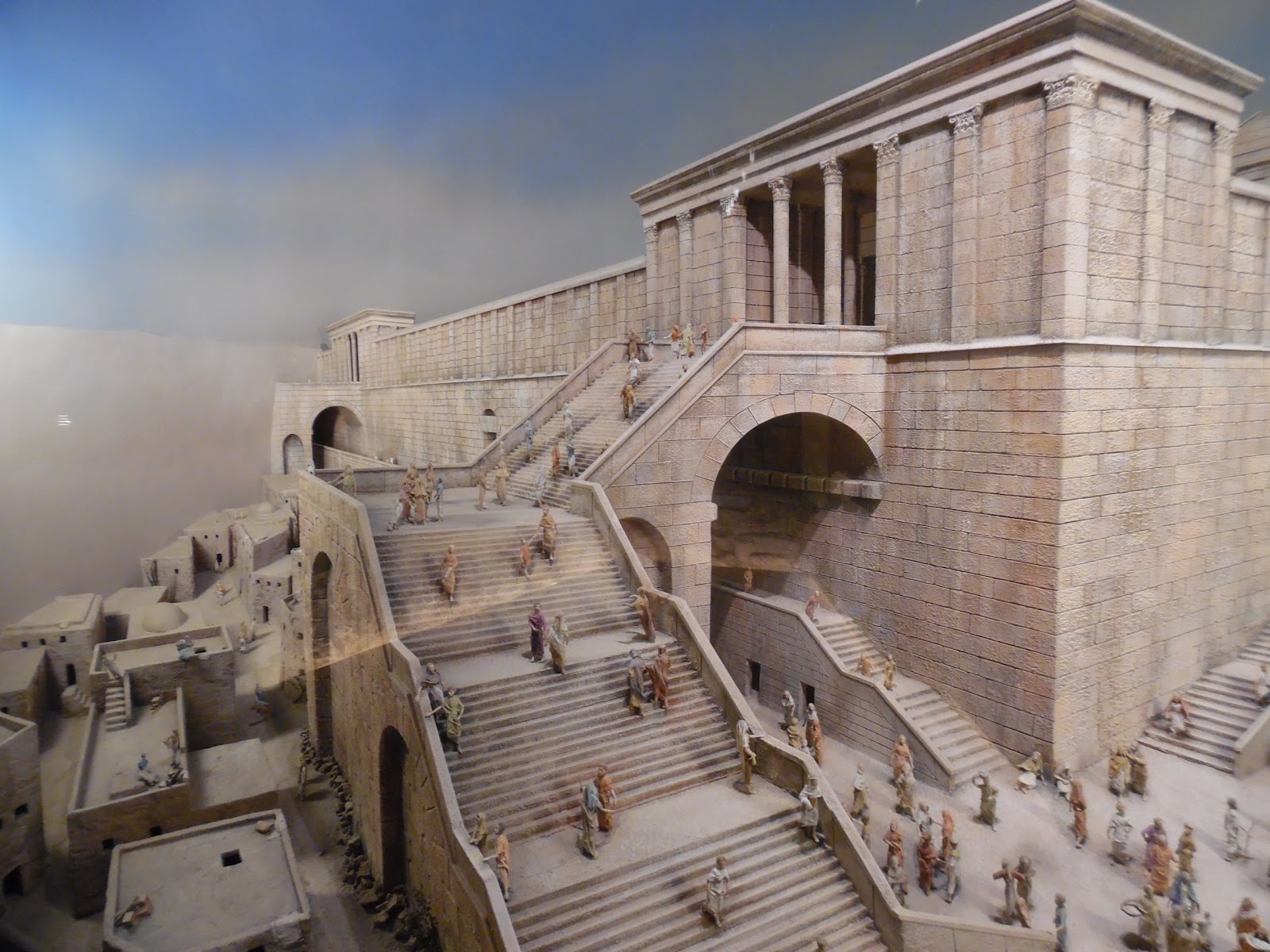
The Temple itself was a modern building, having been totally reconstructed by King Herod the Great. The magnificent Sanctuary was a hundred cubits square and a hundred cubits in height. The Temple Mount measured five hundred cubits by five hundred cubits. Its largest open space was to the south, the next largest to the east, the third largest to the north, and its smallest was to the west. The King had erected the monstrous edifice in order to claim bragging rights (it was a third larger than Solomon’s Temple) and hopefully to appease the Jews who could be a rebellious and obstinate people.
Jerusalem at the time of Jesus
Zechariah, the father of John the Baptist and the subject of this week’s readings in Advent Journeys, was of the generation of priests who had served in both the old Temple and the new facility. The priests enjoyed the spaciousness and modernalities of the new superstructure. The priests enjoyed the tables of marble upon which the sacrifices were prepared. They talked about parading down the colonnades on the east and west of the Temple itself early in the morning. They bragged about the wooden device which Ben Katin had made for the laver. They knew that no expense had been spared in the construction of the new Temple.
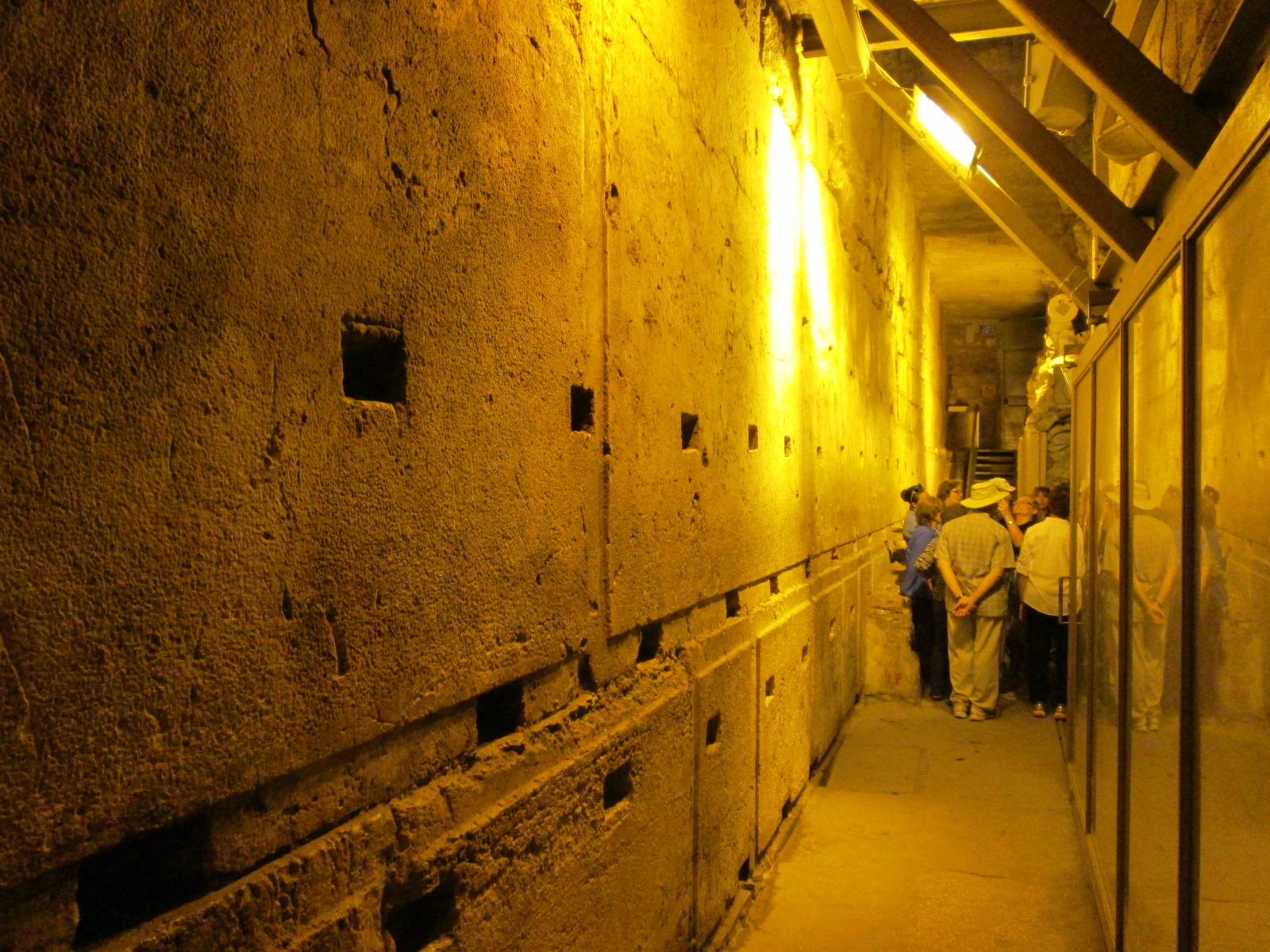
Underground tour shows large stones of Temple Mount
The magnificence and wonder of the construction can still be seen on the underground tour of the Western Walls. If you would like to see and touch the stone structure, please accept this as an invitation to join our family on a June 2018 tour of the Holy Land. More information can be found on our website.
Marker for location closest to Holy of Holies
Around the Temple were service buildings constructed to facilitate every portion of the work. There were six chambers in the Temple Court, three to the north and three to the south. Those to the north were the Salt Chamber, the Parwah Chamber, and the Rinsing Chamber. To the south were the Wood Chamber, the Golah Chamber, and the Chamber of Hewn Stone. There were seven gates to the Temple Court: three to the north, three to the south, and one to the east. Those to the south were the Kindling Gate, next to it the Gate of the Firstlings, and the third was the Water Gate. The one to the east was the Nicanor Gate, beside which were two Chambers, one to the right and one to the left; the one was the Chamber of Phineas, the keeper of the vestments, and the other the chamber of them that made the Baken Cakes.

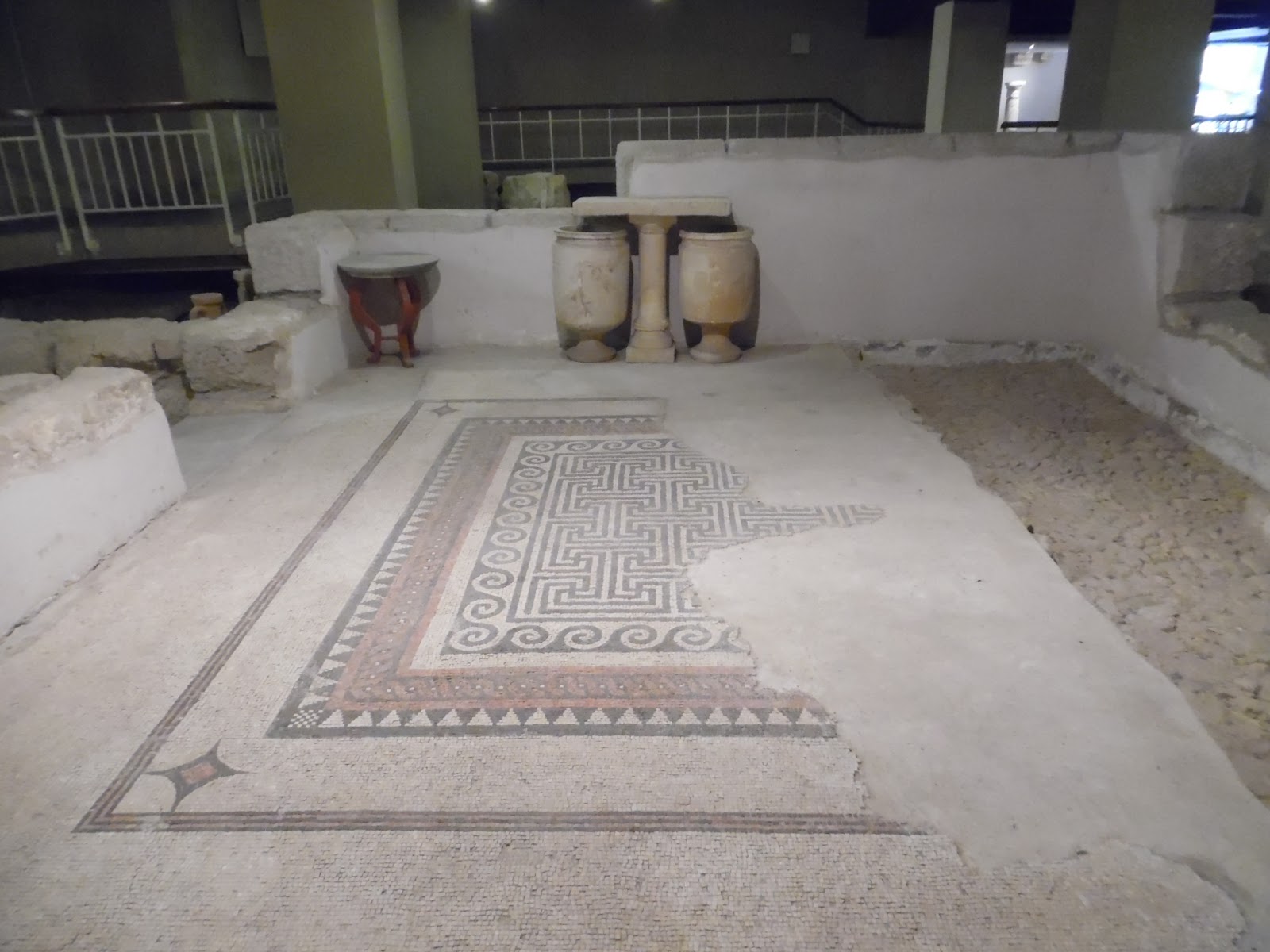
Archaeological finds south of original Temple Mount
The new Temple was in every way a stark contrast to the Temple built under the leadership of Ezra, Joshua, Zerubbabel and Nehemiah. Zechariah approached the Temple with a sense of awe each week of his service.