Friday, March 22, 2019

Why don’t Christians celebrate Passover

   Passover is a wonderful festival of faith! The celebration includes great food, lots of company (invite everyone!), and a fantastic story. The evening spent commemorating the events surrounding the Exodus from Egypt are informative, entertaining and quite fulfilling. For the Jewish people this is an event that binds our families together. For Christians this is the background story of to the life of Jesus. (see more in my book Spring: Connecting With God).
   Often when I talk to Christians about the Passover I am met with a blank response. Most Christians know that Passover is a Jewish holiday, but they have no idea what it is (although sometimes they know it relates to the Exodus from Egypt). I am amazed at how many people I talk do not know the Last Supper of Jesus was a Passover meal. The vast majority of church members have never participated in a Passover Seder, and are therefore totally ignorant of this important foundation of their faith.
   The lack of information provided to most Christians by the church regarding the Passover is sad, because the story told at this Jewish celebration is at the heart of the entire Bible. In my book, Spring: Connecting With God, I relate with some detail how the gospels related Jesus’ participation in the Passover during every year of his life, including each of the three years of his ministry. It is clear from the New Testament that Jesus and his disciples wanted the church to include the Passover Seder, along with it’s Jewish and Christian symbols as part of the annual calendar.

   The early church developed a weekly meal, similar to the Passover Seder, which it called the Agape (or Love) Feast. This meal, which was often held before worship services included stories of faith and the Lord’s Supper (Communion, Eucharist). But the meal did not last, because Christians forgot a central commandment of their faith, “Love your neighbor as yourself,” or in the words of the Apostle John, “Dear friends, let us love one another, for love comes from God. ... Whoever does not love does not know God, because God is love.” (1 John 4)
   Paul, Luke, Jude and Peter very early in the church’s history relate that there are problems in the Agape (or Love) feast. (1 Corinthians 11:17–34; 2 Peter 2:12-14; Jude 1:12) These problems were similar to those that divide people today. In Corinth the wealthy people did not like to associate with the poor. In Jerusalem, the people who lived in the land were prejudiced against those that came from surrounding Greek territories (Acts 6:1-7). In Antioch of Syria, racism became a major problem in the congregation. (Acts 11:19-27) Jewish believers were causing divisions against the Gentiles (Acts 15:1), and Gentile believers developed a resistance to the Jews.
    Ignatius, an early bishop who led the church at Antioch forbid Jewish practices, including the Passover, in Antioch and beyond. He wrote in his letters to the Philippians and to the Tarsians, “If any one celebrates the passover along with the Jews, or receives the emblems of their feast, he is a partaker with those that killed the Lord and His apostles.” Ignatius did this to increase the power of the early Gentile church. Ignatius helped to build the political power structure within early Christianity. Other early church fathers followed in the practices of antisemitism in order to gain power, leaving behind fears and prejudicial beliefs toward Biblical Jewish practices that remain to this day.
   The Apostle Paul wrote, “Christ, our Passover lamb, has been sacrificed. Therefore let us keep the Festival, not with the old bread leavened with malice and wickedness, but with the unleavened bread of sincerity and truth.” (1 Cor 5:7-8) Paul, who grew up in a Jewish home, always maintained the Jewish traditions, even visiting the Temple in Jerusalem. He understood and taught the Jewish - Christian connection.
   In our modern era, it is sad to loose the Jewish foundations of the Christian faith, because the loss makes the church shallower … and less like Jesus. We need to learn the lesson of the Wise Son, who desires to know everything about the Passover and his faith. We should ask questions, as the eldest child at the Passover Seder, in order to learn. We should learn the meanings of the food and how they relate to the Spring harvest, the Exodus from Egypt, and the life and ministry of Jesus. In a world of refugees, we need to hear these words, “When a foreigner resides among you in your land, do not mistreat them. The foreigner residing among you must be treated as your native-born. Love them as yourself, for you were foreigners in Egypt. I am the Lord your God.” (Ex 22:21; Lev 19:33-34; Deut 10:19; Ps 146:9)

   Every Christian congregation should celebrate the Passover on a regular basis. There are many good leaders who can guide the church (contact me at KosherCopy@gmail.com if you live in the eastern US), or you can use my book “A Christian Passover in the Jewish Tradition” to put together your own Passover Seder.

Friday, March 15, 2019

Spring: Connecting with God

     Praise the Lord, my soul.
     Lord my God, you are very great;
          you are clothed with splendor and majesty.


     In North Carolina, Spring is finally here. We have enjoyed, and will have enough days in the 60’s or above, along with frost free nights, that I have planted kale in the garden, and will trust the Lord for its growth (and the wire fence to keep the rabbits out, which I know observe hopping around!)
     This is the season God puts on a full display of beauty. The forsythia and daffodils are in full display with yellow coloring, early annuals are blooming and I have a camellia still showing its colors. Cherry trees are budded out and my redbuds have begun to pop, and there are other flowers which will soon show their colors.
      The weather outside goes from cloudy to sunny. Last night was a display of thunder … God’s power. Today is cloudy, yesterday overcast, tomorrow will probably be sunny. Every day is new and fresh, and the temperature is about perfect.

     He makes the clouds his chariot
          and rides on the wings of the wind.

     In the spring (and any time of the year) it is appropriate to give praise and thanks.

Spring: Connecting With God
     In the past week, I attempted an experiment. I brought flowers and left them at desks of people I see on a regular basis. One person put their flowers in a vase and displayed it. Two others totally ignored the flowers, one brushing them aside (because I put one flower on the keyboard), and was busy typing. It always amazes me when people brush aside the things of God and ignore, without so much as a look. Are we really like that with the things of God?
     We want God to answer our prayers, but we totally ignore the part of the relationship called Praise. We also often ignore Thanksgiving. Both are important aspects of our prayer life.

     He makes the clouds his chariot
          and rides on the wings of the wind.

     God wants us to notice! Especially this time of year, when everything goes on display.
     And then there are the festivals.
PURIM - a season of thanksgiving for God’s rescue of His people
PASSOVER - again a time of thanksgiving for God’s rescue
GOOD FRIDAY - ditto … Let us give thanks to God for what has been done!
     Jesus said, “Very truly I tell you, unless a kernel of wheat falls to the ground and dies, it remains only a single seed. But if it dies, it produces many seeds. Anyone who loves their life will lose it, while anyone who hates their life in this world will keep it for eternal life. Whoever serves me must follow me; and where I am, my servant also will be. My Father will honor the one who serves me.” (John 12:24-26)
EASTER - more than Easter lilies, God conquered death, and gave life
     “I have come that they may have life, and have it to the full.” (John 10:10) God takes care of us like a shepherd, and leads us to green pastures (Psalm 23).

     How many are your works, Lord!
          In wisdom you made them all;

     This season, let us take time to give thanks … and let us take time to bring thanksgiving to the heart of others. 

     May the glory of the Lord endure forever;
          may the Lord rejoice in his works—

      The book - Spring: Connecting with God is about our relationship with God, noticing. I would commend it to you at this time of year. It is available in paperback, on kindle, and it can be read for free through Amazon Prime.

Saturday, December 1, 2018

Hanukkah, Is that in the Bible?

     I hear the title of this blog asked as a question again and again as I take out my dreydel to spin it, or as I say, “Happy Chanukah” as a holiday greeting to people I meet. There are some who do not know what Hanukah is, and I am glad to relate the meaning of the festival. There are some who are uncomfortable with anything that has religious connotation. For these I am sorry, because I am not trying to ‘convert’ them to Judaism, I am just sharing a festival that brings joy to many (a cultural note and a historic event). Then there are yet others who seem a bit perturbed that I would issue that greeting, because they are Christians and the Jewish holiday is not part of their chosen experience. There exists, among some, ‘if it isn’t in the New Testament, it doesn’t matter.’
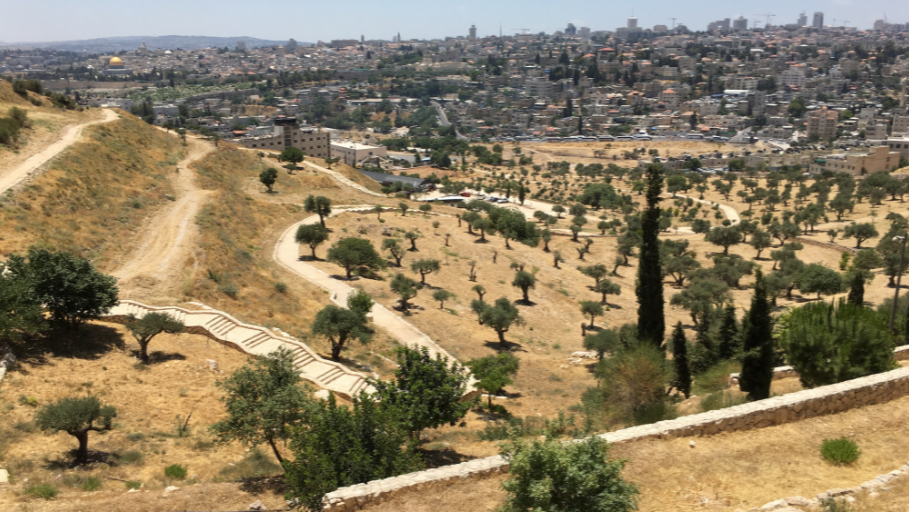
Jerusalem from Mt. Scopus (North)
     And here is where these “New Testament Only” Christians are mistaken. Hanukkah does exist in the New Testament (and even though it is a Jewish holiday, there are no references to this festival in the Old Testament). Here it is, from the Gospel of John 10:22-23, “Then came the Festival of Dedication at Jerusalem. It was winter, and Jesus was in the temple courts walking in Solomon’s Colonnade.” Beyond the Apocrypha, the only Biblical reference to this Jewish festival is in the Gospels.
Jerusalem from Haas Promenade (South)
     John’s Gospel points out that Jesus knew of and celebrated the festival of Hannukah. This festival is the Feast of Dedication, a holiday to remember when the Hebrew army under the command of Judah Maccabee defeated the Hellenistic forces in Jerusalem to recapture the Temple. As a matter of faith, religion and victory, Judah, his brothers, and the people of Israel were very quick (maybe too quick) to pull together the people and items necessary to re-start Temple worship and the practices of their faith. They rededicated the house of God (therefore the New Testament title for the holiday) with praise and palm branches, and with harps and cymbals and stringed instruments, and with hymns and songs.
Jerusalem from Pater Noster (East)
     There can be little doubt that Jesus would have lit a menorah for Chanukah. The Talmud (Shabbat 21b) relates that Hillel and Shammai argued about lighting the candles. Hillel believed that a light should be added for each night so the glow would grow throughout the festivities. Shammai believed eight candles should be lighted the first night, and then one less each night in order to remember the offering of bulls during the Feast of Tabernacles. The menorah was placed by the doorpost (as the Mezuzah was placed on the doorpost) in order to declare faith in the God who redeemed Israel.
Jerusalem from the Tower of David (West)
     The festival of Chanukah contains a story that people of faith can stand behind. It is the recitation of how the household of Mattathias, even when faced with punishment and death, did not neglect the practice of their faith. At the heart of the story is the command by a Hellenistic soldier for Mattathias and his village to bow down to an idol. The village priest and his family refuse to deny their faith.
A book worth reading!
     I have related some stories of the Maccabee rebellion in the book Advent Journeys, available as a book, as a Kindle e-book, and readable through Amazon Prime). If you want to become more personally involved with the Christmas … and the Chanukah story (week 6 of the book), I would encourage taking time to read Advent Journeys, as a book, on Kindle, or through Amazon Prime.

Friday, November 30, 2018

Angel Messengers

   Throughout history God has sent his messengers (Angels) to make announcements of great importance to people. Sometimes these messengers are seen as heavenly beings, at other times they appear as normal men, but the message is just the same, moving.
Abraham met three men at his tent
     Take for instance the day that three men show up at Abraham’s tent in Genesis 18. In traditional Bedouin hospitality, Abraham says, “Let a little water be brought, and then you may all wash your feet and rest under this tree.” after the traditional informalities, one of the men asks, “Where is your wife Sarah?” and follows up with the statement, “I will surely return to you about this time next year, and Sarah your wife will have a son.”
Farm fields in Israel
     In a more dramatic fashion a man of God who looked like an angel of God came to Manoah’s wife in Judges 13. He likewise announced the birth of a son who would “be a Nazirite, dedicated to God from the womb. He will take the lead in delivering Israel from the hands of the Philistines.”
     The Bible says, “the angel of the Lord appeared to him in flames of fire from within a bush.” (Ex 3:2) Joshua “looked up and saw a man standing in front of him with a drawn sword in his hand.” (Josh 5:13) “The angel of the Lord came and sat down under the oak in Ophrah that belonged to Joash the Abiezrite, where his son Gideon was threshing wheat.” (Judges 6:11) “David looked up and saw the angel of the Lord standing between heaven and earth.” (1 Chronicles 21:16) and the Angel of the Lord met Elijah the Tishbite. (1 Kings 1:3)
     When an angel speaks to a person, it is always life changing. But, beware, “do not believe every spirit, but test the spirits to see whether they are from God.” (1 John 4:1; 1 Kings 13:18; Jer 14:14; 23:16; Mt 7:15). Paul said, “even if we or an angel from heaven should preach a gospel other than the one we preached to you, let them be under God’s curse!” (Galatians 1:8) Check the message before you believe it!
     John did check the message of the Angel. He asked, “How can I be sure of this?” And even though the angel replied, “I am Gabriel. I stand in the presence of God,” John dubious until the baby, John the Baptist, was born. But history records he was born, and all things occurred according to the word of God. (Deut 18:18)
Advent Devotions, Walk the Bible
     You can read more about the meeting between Zechariah and Gabriel in the book Advent Journeys, available as a book, as a Kindle e-book, and readable through Amazon Prime) Order, or read the book today!

Wednesday, November 28, 2018

The Holy Place

     The Holy Place is close to God. It is a room within the early Tabernacle of Moses and was enlarged when Solomon built the Temple. The room is situated to the east of the Holy of Holies, separated only by the veil. This space was designed for personal time with God as evidenced by the fact that when priests entered to do their service they came one at a time and departed before the next person entered.
     The Holy Place of the Temple contained three (or as enlarged by Solomon three types of) items: the seven branched menorah, the table of shewbread and the altar of incense. These three items speak of God’s personal care for His people and the desire for relationship. The room is designed to convey God’s desire care and desire for fellowship with every individual, whether in the actual Temple or elsewhere.
The Menorah from the cover of a prayer book
     The menorah casts light within what would otherwise be a dark room. The seven candles help people recall God’s establishment of light on the first day of creation. The first chapter of the Bible contains the words, “God said, ‘Let there be light,’ and there was light. God saw that the light was good.” The seven lamps recall the seven days of creation, and of each week. We are to allow God to shine into our lives seven days a week.
     King David said, “You, Lord, keep my lamp burning; my God turns my darkness into light.” (Psalm 18:28) Isaiah wrote, “the Lord will be your everlasting light, and your God will be your glory.” (60:19) God desires that we allow Him to shine through us, and for the Priest to be guided by God’s light.
Unleavened bread - 12 loaves were on the table
      The Table of the Shewbread is a reminder of God’s fellowship with us. People who eat together have stronger ties because of the conversation that goes on around the table. God desires to be at our table and in our lives. We must allow God to dwell with us and abide in us. “Man does not live on bread alone, but on every word that comes from the mouth of the LORD.” (Dt 8:3; Mt 4:4)
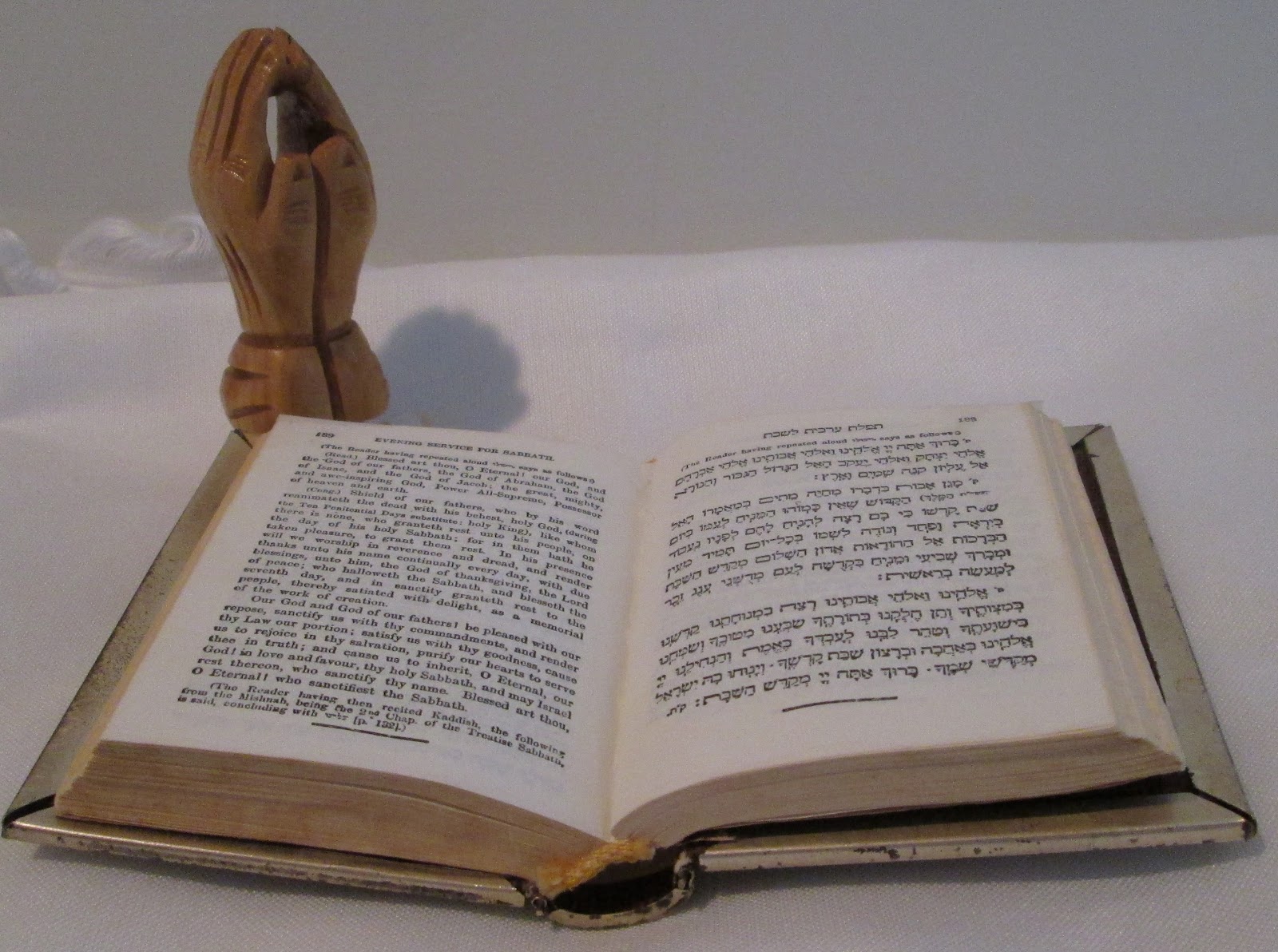
A prayer book and praying hands
     The altar of incense represents prayers that rise up to God. The fuel for the altar comes from figwood that burns on the brazen altar each day. This absorbs the sacrifices made during the day, and intermingles them with the incense that rises through the veil to the Holy of Holies. God loves it when we pray, and speak to Him. As Zechariah tended the Altar of Incense, he sensed God’s presence, and was in prayer. It was at this place that the Angel Gabriel entered the room and told John that Elizabeth would have a son.
      The Holy Place is where the priest could meet with God as he served in the Temple. A meeting with God depends on open hearts and the personal desire to be in fellowship with God.
Order this book at Amazon.com
     You can read more about the meeting between Zechariah and Gabriel in the book Advent Journeys, available as a book, as a Kindle e-book, and readable through Amazon Prime)

Tuesday, November 27, 2018

Special Christmas

     Christmas is a special season, filled with great joy for most Christians. The holiday is infused with faith, social gatherings, worship services, special events, music, decorations, communication from friends who live far away, good food, helping others, giving gifts, and receiving presents. Some Christmasses are just what you expect, and others are memorable. Special Christmases I remember include some when I was young, my daughter’s first Christmases, and a Christmas out west when we got snowed in and built snow tunnels. I remember Christmas Eve worship in Kansas, with my wife’s family, and the privilege of bringing her grandmother to church when she was in failing health.
Christmas in Denver with 34" of snow
     I have fond memories of the plays and musicals I participated in during the Christmas season. These events ministered to others, and built friendships as I worked with others on the production. I worked with Ronda and Brent Hart to decorate our church and mask the hallway for “Follow the Star.” I also work with them as the Bethlehem Rabbi in a production entitled Walk Thru Bethlehem. I have watched with great joy as God grew a small youth production in Apex, NC, entitled Journey to Bethlehem into a production that ministers to thousands of people each year.
Bethlehem Rabbis at Walk Thru Bethlehem
     In the first century, in a time when there was not yet Christmas, there was a village priest by the name of Zechariah, who served on rotation at the Temple in Jerusalem. (That means he worked each of the three harvest festivals and two other weeks annually, for a total of five weeks per year). The man Zechariah was an older priest, almost ready for his time of retirement.
     To be sure, there were special times of service in the Temple, and then there were times when the duties overtook him. On days when work was light, Zechariah was full of joy. At times when the tasks were great and the stress level was high, the village priest forced joy into his heart, because he knew that this pleased God.
Temple model at the Israel Museum
     Zechariah had learned to be joyful at all times. He had faced various problems in life, and with God’s help, they had all been overcome. All except one, and that was OK, because God is always in control. Zechariah and his wife Elizabeth desired a child, but while they were young, and even in middle age, when it is still possible to have children, none were born. Elizabeth was barren. Zechariah found joy in his wife and in life.
Birth of Jesus
     In Zechariah’s final year of service, possibly in the week of his retirement, was an amazing week for the village priest (which I share in my book Advent Journeys, available as a book, as a Kindle e-book, and readable through Amazon Prime) and his wife Elizabeth. God chose Zechariah for a special place of service, tending the altar of incense. And while at the altar God sent the angel Gabriel to communicate that Zechariah's wife Elizabeth would give birth to a child. The priest was shocked! This was a story like that of Abraham and Sarah, Isaac and Rebekah, Jacob and Rachel, Elkanah and Hannah, and Boaz and Ruth. The retiring priest was amazed!

Monday, November 26, 2018

Priestly Duties

     Today is the second day of Advent, a season of the year when Christians prepare their hearts by focusing on the wonder of God’s gift, Jesus, that was given to mankind on Christmas morning. It is all too easy to get caught up in the things of the world, such as commercialism, and totally miss the real meaning of Christmas. For that reason, I am encouraging people to spend at least five minutes a day to focus on the real reason for the season.
     I have provided two or three resources to help people accomplish this task. First, I have developed an calendar of Bible readings (one prophetic Old Testament reading, and also a New Testament reading) that I have placed on a calendar to be found under the Advent tab on my website, www.KosherCopy.com
Advent Calendar from www.KosherCopy.com
     The second resource is a devotion book entitled Advent Journeys, into which the bible readings are incorporated. My writings on this blog will come from the readings in Advent Journeys each day this season.
     The third resource is a guide to help children understand and enjoy the Christmas season. When my children were young we planned at least one Advent related activity every day in order to counteract the commercialization seen everywhere in society. It is not that I am against gifts, it is just that I desire the real Christmas to overpower the world’s Christmas. If you have children, try some of the activities, you will see how this works!
Advent Devotion book
     Some might wonder about the detailed Temple ceremonies I described on the second day of Advent in my book. The fact is that Jesus was born at a unique time in history, and we actually know what priests like Zechariah did during their daily activities in the Temple in Jerusalem. The historian Flavius Josephus wrote several books that detail historic events which took place during the life of Jesus. The Rabbis of the Sanhedrin collected sayings, laws and procedures of Temple worship into a collection of books known as the Mishnah. The Mishnah was put together after the destruction of Jerusalem in 70 AD, so the priests would not forget what to do after (or when) the Temple and its worship were restored.
Model of the Temple at the Israel Museum in Jerusalem
     The Mishnah contains six sections: 1) Tithes, 2) Feasts and holy days, 3) Women, marriage and divorce, 4) punishments for wrongdoing, lawsuits, punishments, 5) holy things of the Temple, and 6) cleanness (kosher) laws, which include prevention of illness, how to take a bath, and more. Within each of the six volumes of the Mishnah there are innumerable details that tell us about life in the first century. The details of the morning routines that I share in Advent Journeys are contained in a section of the Mishnah called Tamid or The Daily Offering.
Moses ben Maimon "Maimonides" was a Torah Scholar
     I share these things, not because we will repeat these ceremonies, but because I think it is important to get a behind the scenes view of real life in the first century. I want my readers to understand the Bible is a book about real people. The events we read about really happened. Zechariah the priest participated in the daily activities of the Temple. Although we can not know exactly what duties Zechariah performed each day, the stories I present gives a sense of what life must have been like for the father of John the Baptist.
Worshipers at the Western Wall in Jerusalem
     I am sure there were priests serving in Jerusalem that came just because of family expectations or because they were legally bound to serve in the Temple. One of the things I worked hard to place in the story I tell during week one of Advent is that Zechariah the Priest loved God. The type of love God desires can be seen in Deuteronomy 6:5, Psalm 19 and 119. God desires pure love from believers today. As you read the words of in Advent Journeys, I pray that your love for God grows day by day.