Saturday, May 26, 2018

Lodging at Neve Shalom

Today we made the transition from Haifa to the Ayalon Valley, half way between Tel Aviv and Jerusalem. We are lodging at a Hotel called Neve Shalom, which means “New Peace.”
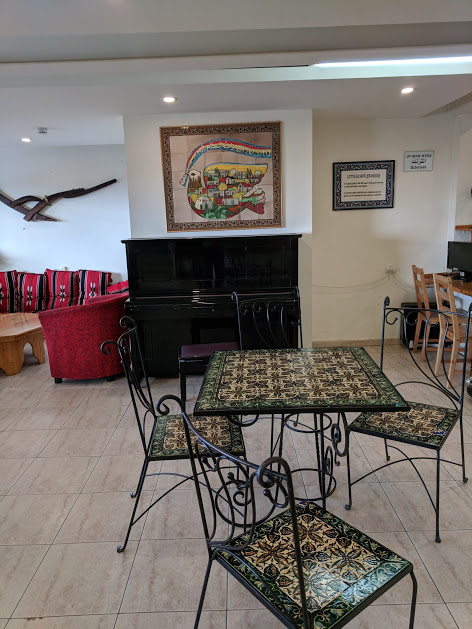
Lobby at Neve Shalom
The hotel sits in a community intentionally founded in 1970 in order to bring Jews and Arabs together in a place of peace. About 150 families live in the village, which has schools, a youth center and an art museum.
Lobby Patio at Neve Shalom
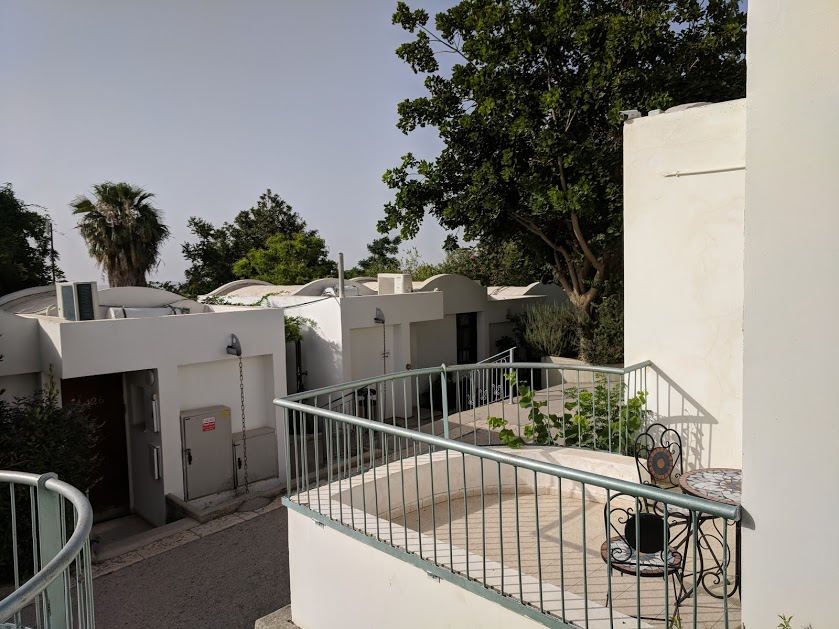
The rooms are small connected cottages which are arranged along the hillside. Each room has a private entrance and a patio. Steps lead from one set of apartments to the next.
Cottage style rooms at Neve Shalom
Middle Eastern cuisine in the dining room for both breakfast and supper. There is a small cafe and a gift shop located in the village. We ate lunch there and the food was quite tasty.
Swimming Pool at Neve Shalom
The community of Neve Shalom has a swimming pool, which we will visit each day after our work in this area, an archeological dig at Tel Gezer.
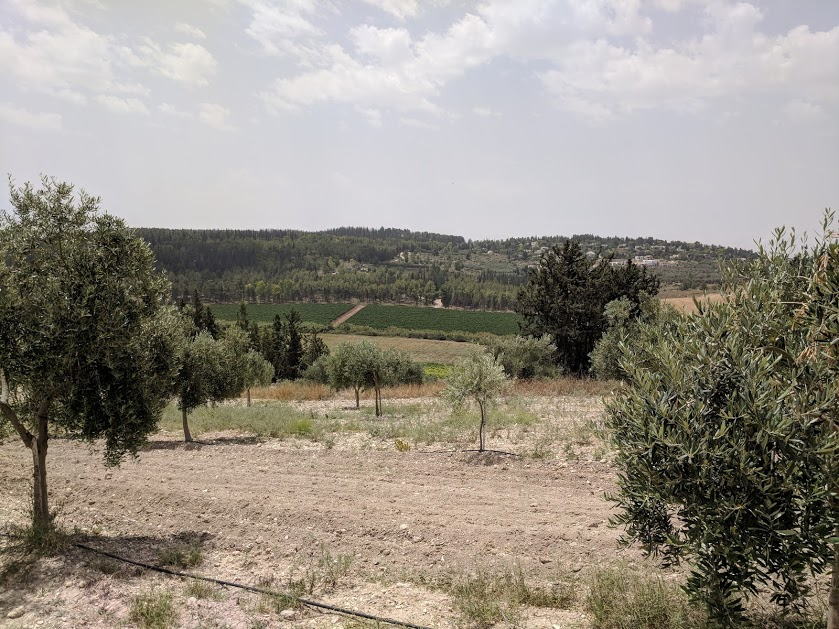
Olive Grove at Neve Shalom
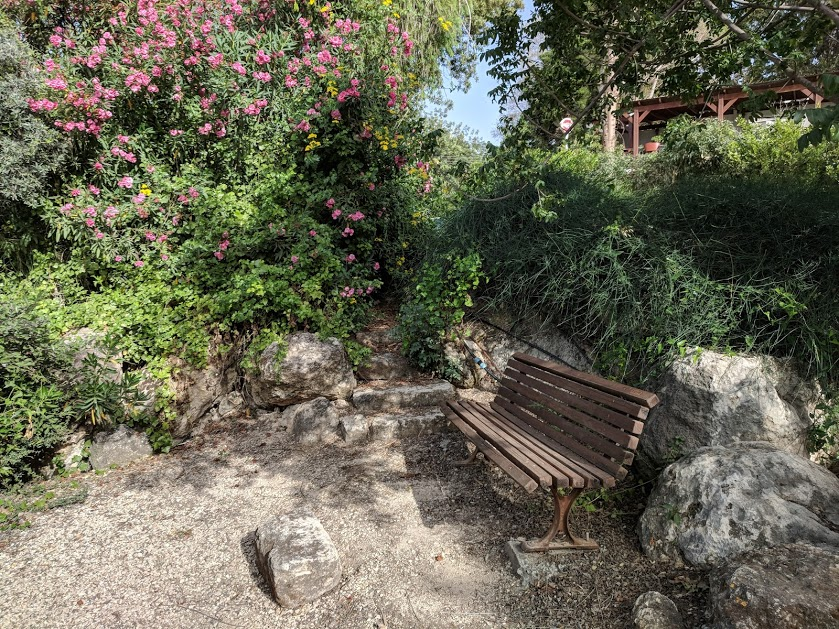
There are seating areas located around the facility which are designed to allow for meditation.
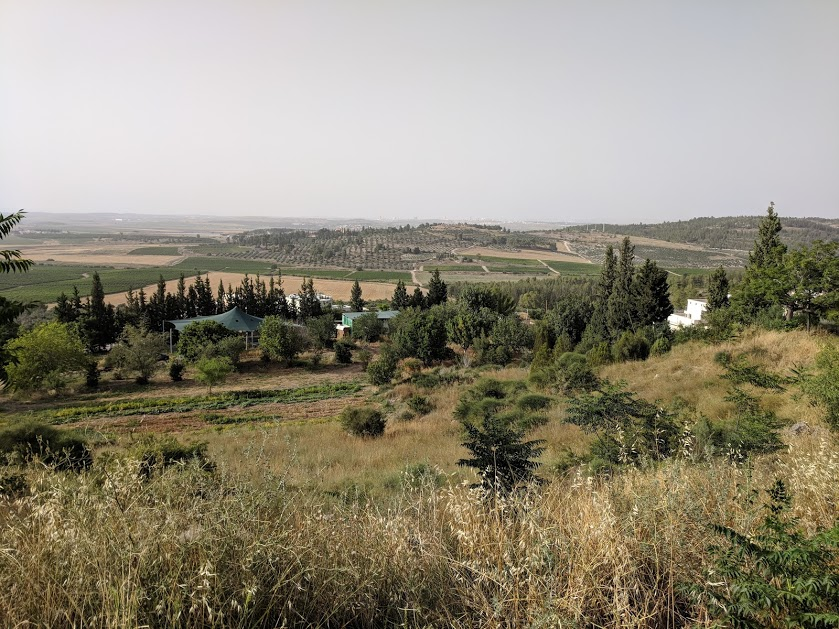
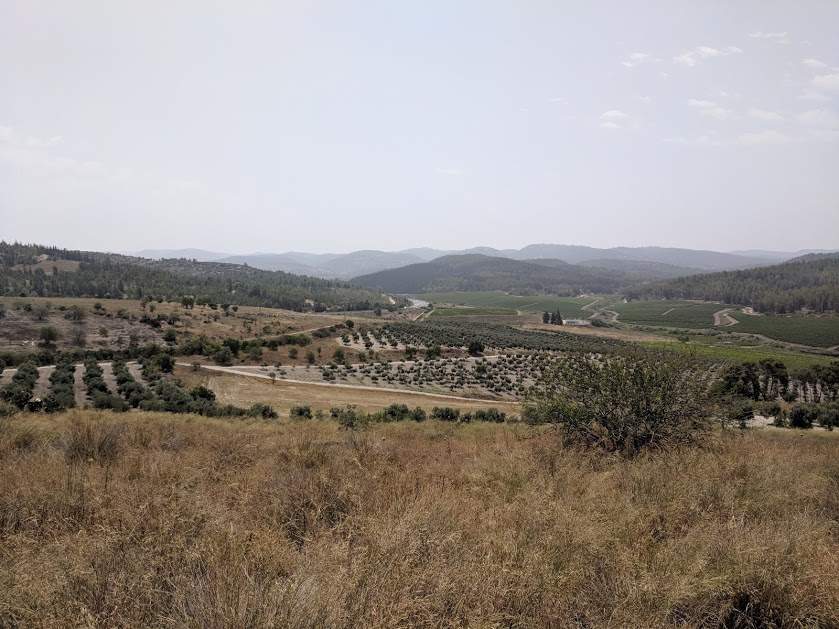
The View from Neve Shalom to the the Trappist Monastery and Modi'in
The hotel is on a hill which overlooks the Ayalon Valley. Across the valley is a Trappist Monastery, and beyond the church the highrises of Modi’in are visible in the background.
Looking across the valley to Neve Shalom
The team which digs a Tel Gezer, along with many other teams stay at Neve Shalom. Several tem members have spent three weeks at this hotel every summer for more than ten years.
Looking up to Jerusalem
Neve Shalom is located in a place in Israel with a history of border disputes. The Ayalon valley narrows as it leads up into the hills. This is the place where the sun stood still for Joshua. In 1949, the land on which the hotel sits was “no man’s land,” part of the demilitarized zone between Israel and Jordan.
A Fortress with Neve Shalom in the background

The most difficult battles of the six day war in 1967, were fought around this location. Once the battle was over and the land was secured for Israel, the hotel was built.
A Bench for Prayer at Neve Shalom

There were both Arab and Jewish communities in the area. It was the dream of Father Bruno Hussar to see Arabs and Jews living in peace. His goal is accomplished through the community called Neve Shalom.

Friday, May 25, 2018

A Day at the Beach

One of our favorite places to visit in Israel is the seashore. The Mediterranean laps the western side of Israel along the western boundary of the country, from the Negev to the border with Lebanon.
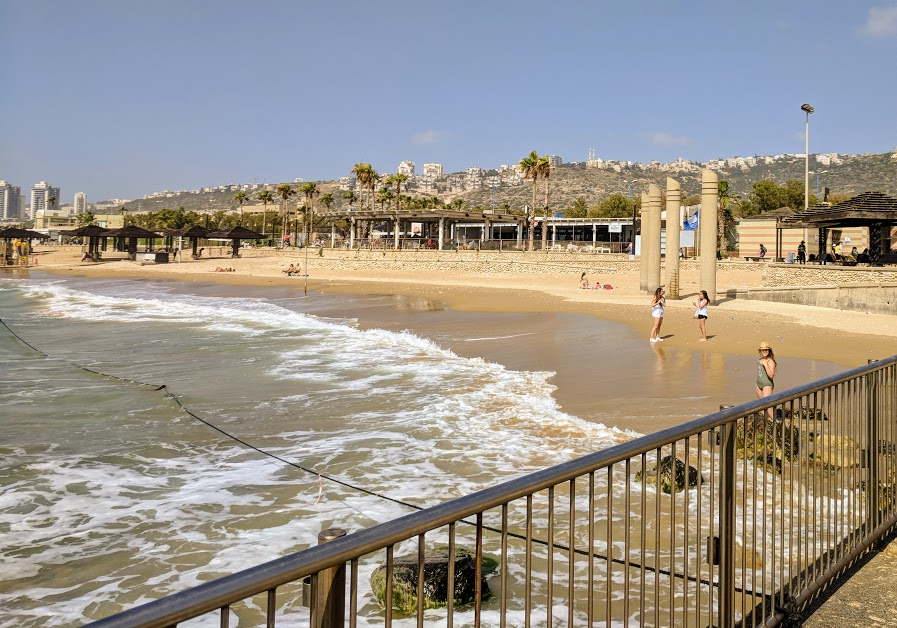
The Boardwalk in Haifa, Israel
The seacoast is enjoyed by many people because the climate of Israel is warm most of the year to encourage people to come out and enjoy the beach.
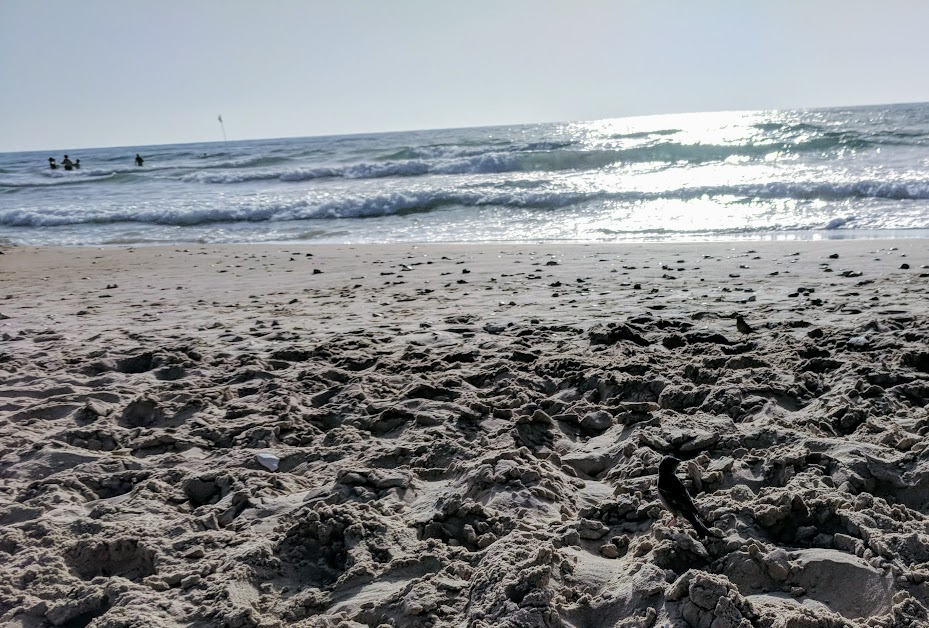
A Sparrow on the Beach
The beaches in Israel are of a light sand the length of the Mediterranean coast. Many shells can be found on the beaches, especially in the south. The northern beaches contain more smooth rocks. In the area around Caesarea it can be seen how some of the sand is brought from the trade winds over the Sahara Desert to build the beaches.
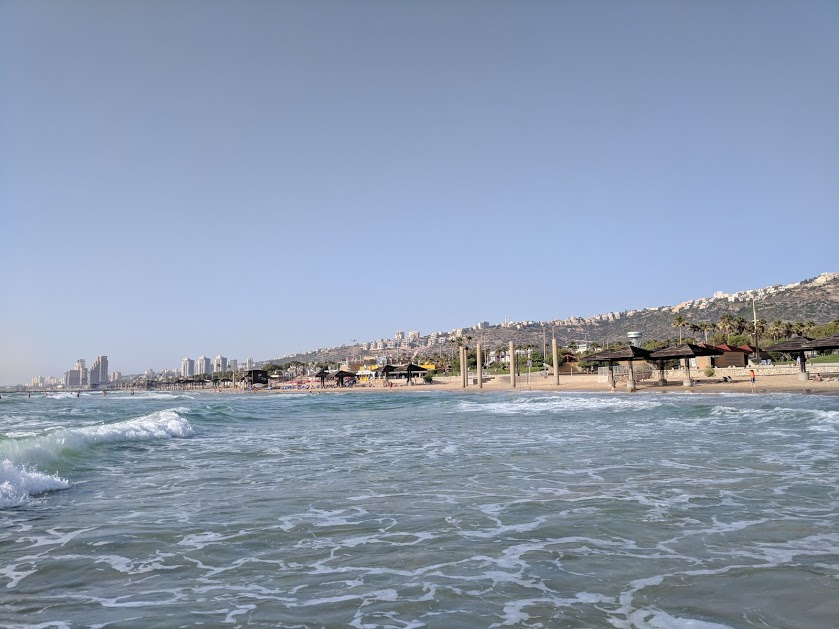
Mount Carmel rises above Dado Beach
The beach around Haifa rests beneath the heights of Mount Carmel. In all probability the Prophet Elijah not only came west on Mount Carmel to look for clouds, but he also dipped his feet into the Mediterranean. There is a cave in Haifa near the shore that is called Elijah’s Cave.
Information Sign at the Haifa Beach
Israel has several protective sea ports. The first and oldest of the parts is at Yafo (Joppa) where Jonah took a ship and went west to escape God. The port was created by a small indention in the coast, and a roc barrier to the south. The view across this inlet from Yafo to Tel Aviv is quite beautiful.
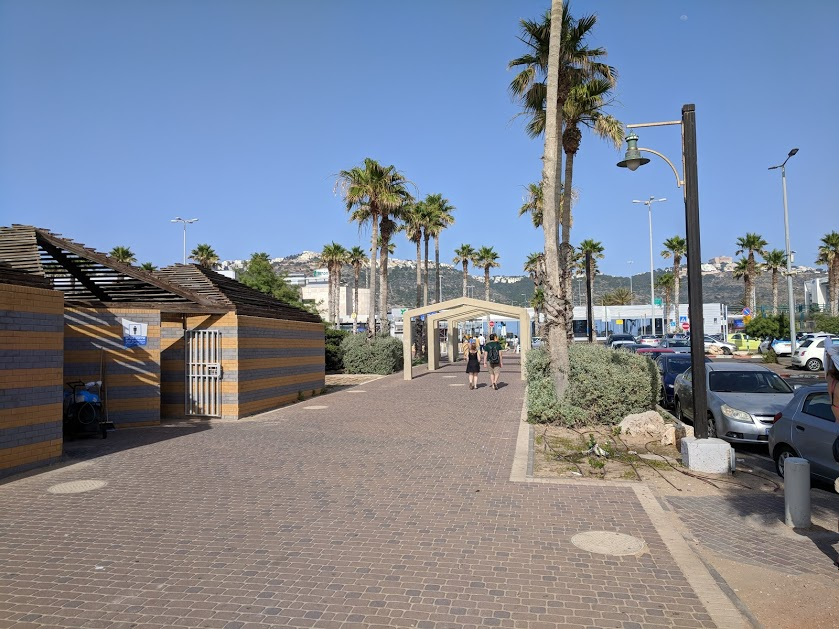
Entrance to the Carmel Beach in Haifa
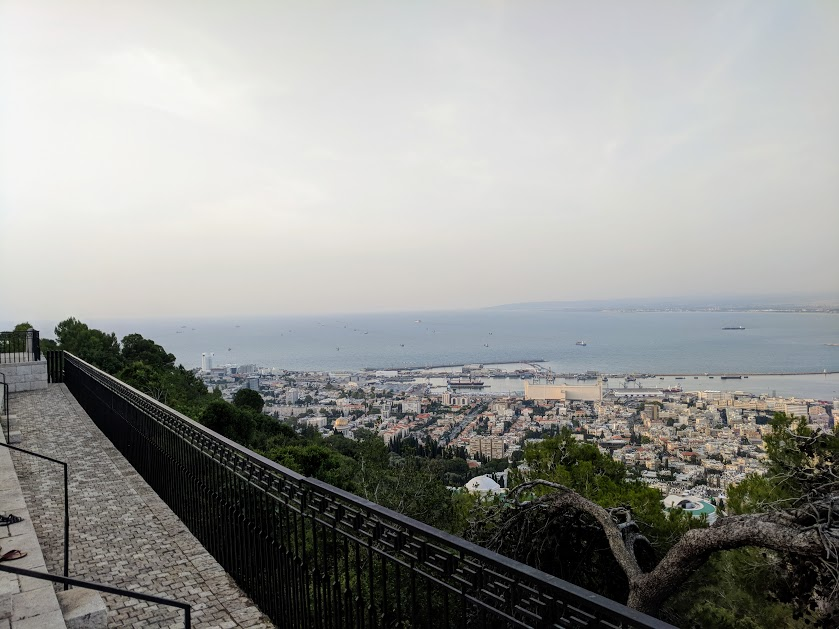
A sign at the top of Mt. Carmel says that the only place in Israel you can look north across the Mediterranean Sea is in Haifa. The seacoast in this part of Haifa is a huge seaport. From the top of the mountain cargo ships from around the world can be seen attempting to get in and to deliver their cargo.
Looking North from the top of Mount Carmel
The northern seacoast of Israel can be easily observed from the top of Mount Carmel from Haifa to Akhziv National Park, which borders Lebanon. This is a beautiful area which contains some rock crevices and underwater caves produced by the waves striking the limestone cliffs. The area is called Rosh Hanikra.
Shelters along the beach in Haifa
The main beaches in Israel like many other peaches around the world. There are wide boardwalks which divide the beaches from the shops. Along the beaches there are shelters, monuments, and plenty of space to spread a towel. There are many restaurants and other shops along the boardwalk, and also bathrooms where people can get changed.
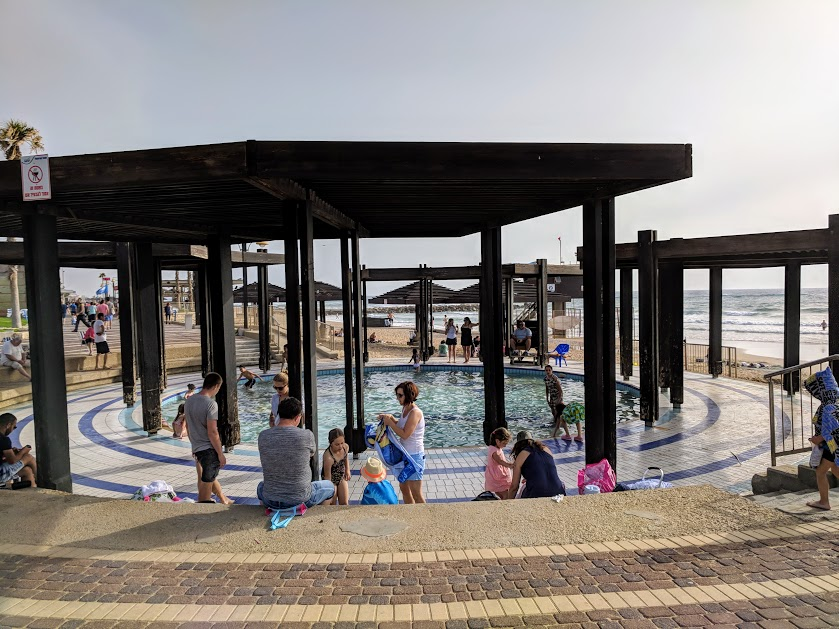
A Fresh water Swimming place
Israel’s beaches are filled with people of all ages from children to senior adults all playing in the waves strolling the beaches picking up seashells, surfing, and swimming.

Thursday, May 24, 2018

Among the Tombs

Today we went to Bet She’arim and climbed around the tombs of the deceased. Bet She’arim is an archeological site located just north of the slopes of Mount Carmel and south of the mountains of Galilee.
Tomb complex at Beit She'arim
Bernice, the daughter of King Agrippa I found the area so beautiful that she built an estate at Bet She’arim (called Besara in the life of Josephus) for her personal use. The land was filled with grain fields and also some orchards.
Pomegranates, Olives and fields of Grain
The wealth and beauty of the area drew the Sanhedrin move to this location for a period of time after the Temple in Jerusalem was destroyed (The court of 70 moved from Yavneh to Usha, Shefar’am, Bet She’arim, Sipporis, and finally to Tiberias).
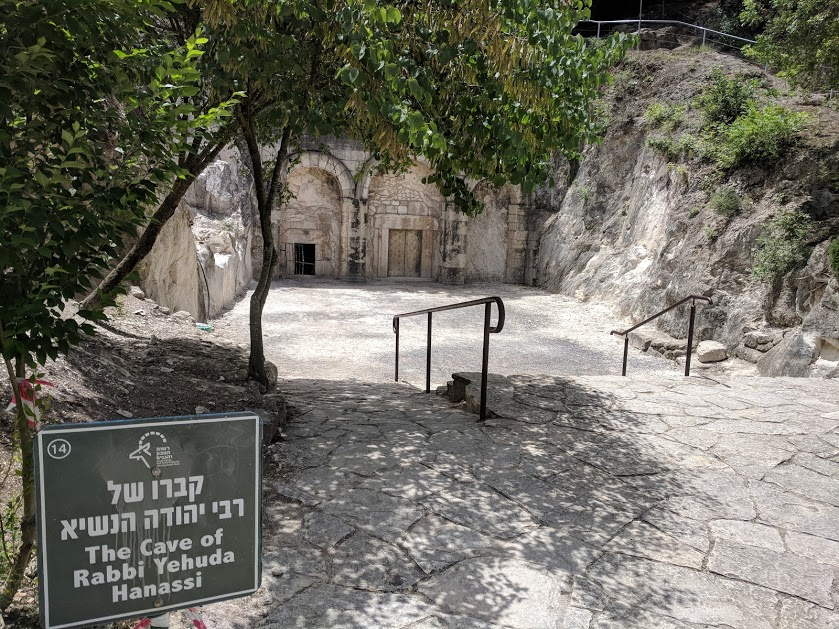
The tomb of Rabbi Hanassi
Rabbi Yehuda Hanasi established a school in Bet She’arim. Although this great rabbi and the compiler of the mishnah moved to Tiberias after seventeen years,.he chose to be buried in a cave at Beit She'arim.
A Decorative Menorah in the Tombs
Many people from around the world greatly respected Rabbi Yehuda Hanasi for his teachings, and desired to be buried close to his tomb.
One of the Tomb Complexes
The Talmud says, “Whoever is buried in the Land of Israel is deemed to be buried under the altar.” Some believed people buried elsewhere would need to roll underground all the way to Israel at the time of the great resurrection.
Cave of the Torah Ark
The tombs at Beit She'arim contain important people from Israel and beyond. People from Antioch, Palmyra, Byblos, Beirut, Sidon, Tyre, Yahmur, Phaena, Arabia, Caesarea, Himyar, and Etsion Gaber were buried at this site.
Grave of Rabbi Gamliel
Large complexes of caves were built under the hills at Beit She'arim during the first three centuries of the Common Era. Some people were buried in wooden coffins, some in stone containers, some laid on limestone and placed into ossuaries. There are many inscriptions over niches in the caves written in Hebrew, Aramaic and Greek.
Photographer of the Tombs

One inscription reads: “I, Justus, son of Leontius and Sappho, lie here dead / And after I had plucked the fruit of all wisdom / I left the light, the miserable parents, who mourn ceaselessly / and my brothers. Woe to me in Besara. / After descending to Hades, I Justus, lie here / with many of my people, for so willed stern fate. / Be comforted, Justus, no man is immortal.

Wednesday, May 23, 2018

A Trip to Tel Aviv

Yesterday we made a trip from Haifa to Tel Aviv. Transportation along the coast, the “Via Maris” or the “Plain of Sharon,” as it is variously called in different places, is quite easy. We took the bus down the mountain in Haifa to the connected Bus and Train stations near Carmel Beach. Then we went south along the sea.
Rav Card Reader on a Bus
We purchased a Rav Card, which connects all transportation. We paid a few sheckles each way for the train and a few for daily unlimited rides in Tel Aviv. The coast and the cities are places which are connected by mass transit. That is a good thing, because after driving our rental car in the congestion of Tel Aviv the first few days in Israel, I am glad to let someone else do the driving. After attempting to park in Haifa, I am glad to get off the bus, and not have to look for a place and walk up the hill back to our lodging.
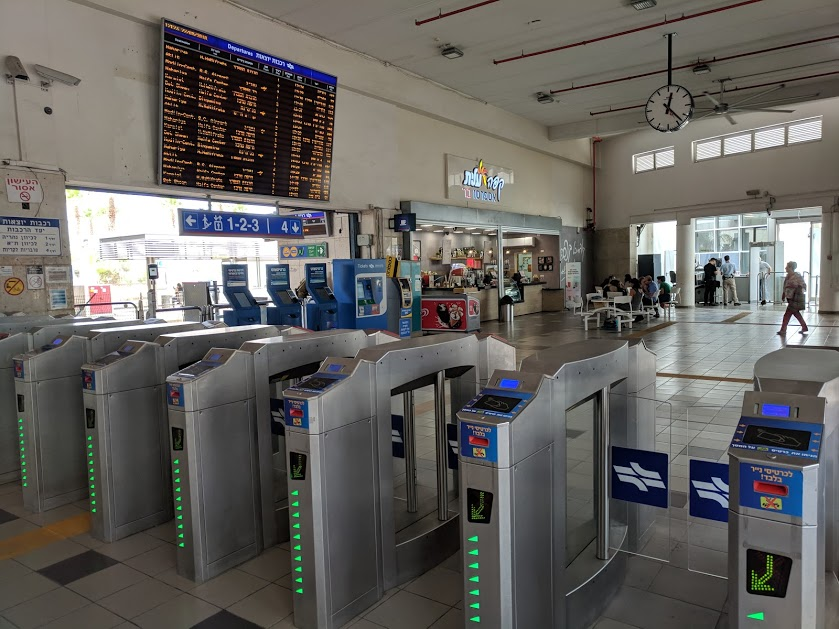
Entry to the Train Station
The drive down the coastal plain was beautiful. The ground is mostly level, but with some rock hills or desert sand dunes in places. There are a few rivers, swamps and lots of land which was drained a hundred years ago and is now used for agriculture. There are fields of cut grain, citrus groves, banana plantations and other farms along the plain. Before the nineteenth century, this land contained enough swampy areas that transportation could be controlled by fortresses.
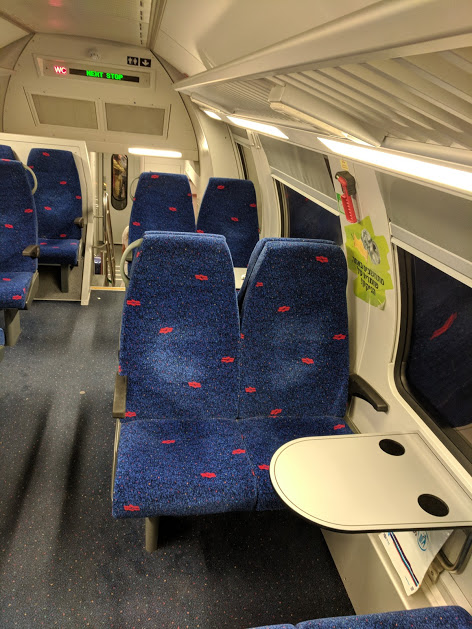
Comfortable interior of the Train Car
The train cars can be one level or two. Of course as a visitor to Israel, and because we like to look out the window, we go to the upper level (the morning train was only one level). The trains were crowded, and on the morning train I had to stand the full ride, of about an hour. Chelsea and I read some of Al-Khazari.
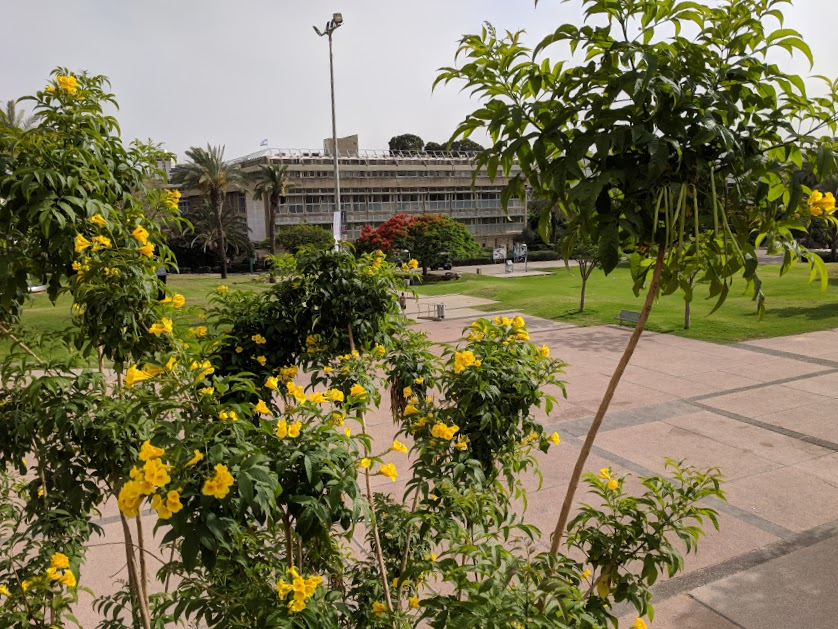
Flowers at Tel Aviv University
We arrived in northern Tel Aviv and took the bus to Tel Aviv University. This is a large, multidisciplinary state college. Several museums on the campus afford visitors great experiences. We have visited the Eretz Israel and Palmach Museums in the past.
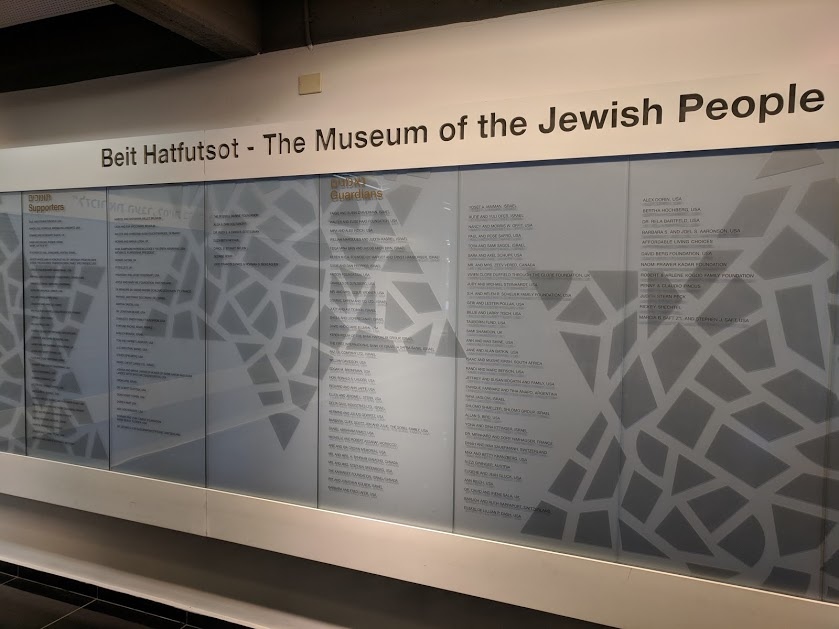
Museum of the Jewish People
Yesterday we visited the Museum of the Jewish People. We enjoyed three different types of exhibits. The entry exhibit is on Jewish Humor. In the early 20th Century about 75% of the comedians in the United States were Jewish. Cultural humor comes from Eastern European communities where Jewish populations were congregated and often relate to the trials of our people.
Museum of Jewish Humor
One source of Jewish humor is the Bible. There are many funny expressions in the Bible, and even books like Esther which are meant to provide relief in life through jest. The festival of Purim, built on the book of Esther, is totally about carnivals and fun.
Fishing for Matzo Balls in Soup
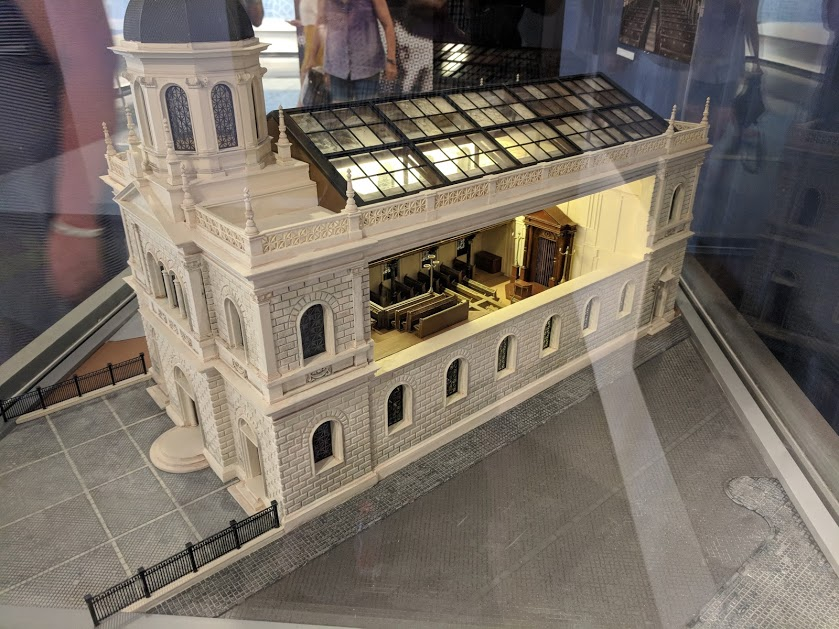
A second, more serious room in the museum was dedicated to places of worship. Detailed scale models, including interior rooms, were on display, showcasing major synagogues in Europe, the Middle East, and Asia.
Synagogue in Vienna, Austria
The Synagogue room also showed videos of Jewish worship.
Capernaum Synagogue
The final room was on photography. It showed early photographs of Israel, and also photography from battle zones in Europe and Central America.

Monday, May 21, 2018

Art in Haifa

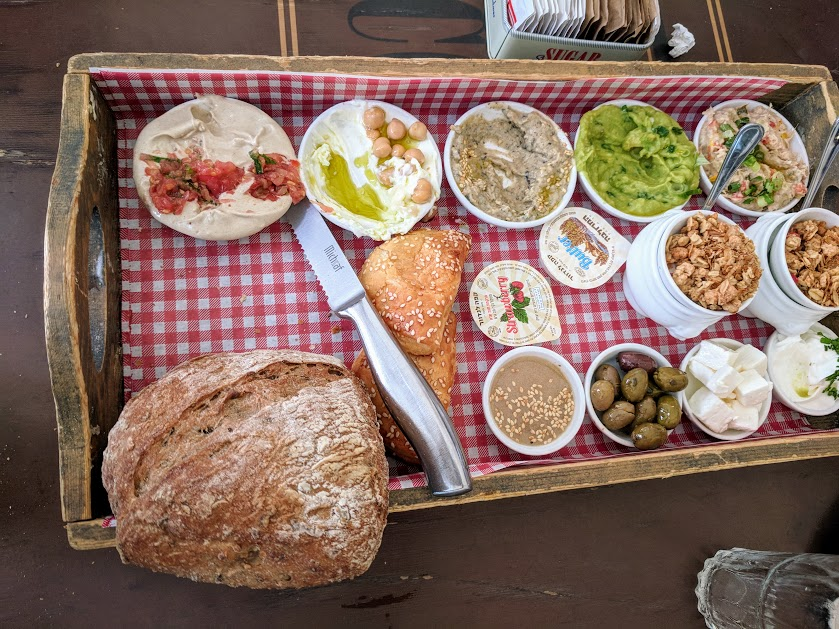
Today’s journey began with an Israeli Breakfast. The food here is different. We did have scrambled eggs and a farmer’s omelet, but because this is Israel our fare also included a morning salad, Israeli salad, tuna salad, cream cheese, feta, olives, labnah and chickpeas, eggplant cream, tomato salsa with tahini, guacamole, yogurt with granola and honey, halva spread, fruit jam, butter and two small loaves of fresh, warm, whole-grain bread. We also ordered a regular shakshouka, and received coffees, water and juice.
Breakfast for 2 includes a condiment tray
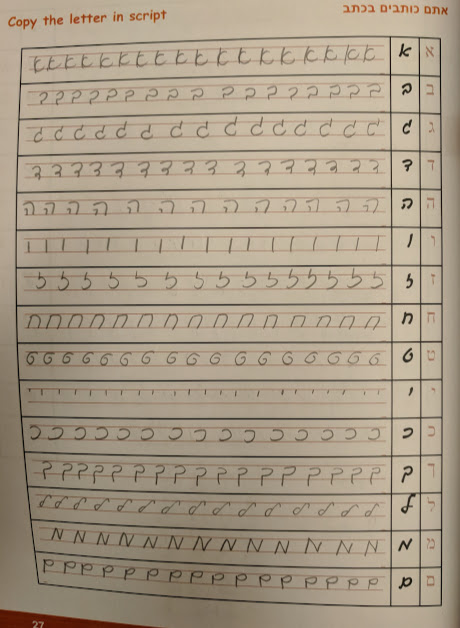
After breakfast we went to Ulpan, Hebrew lessons for new Israelis. Because this new nation desires to incorporate all people into society, these classes are provided by the government for all new immigrants who desire to learn the Hebrew language. Why the Hebrew language?? Because it is the language of the Bible, so who would not want to learn.
Ulpan teaches both block and cursive writing
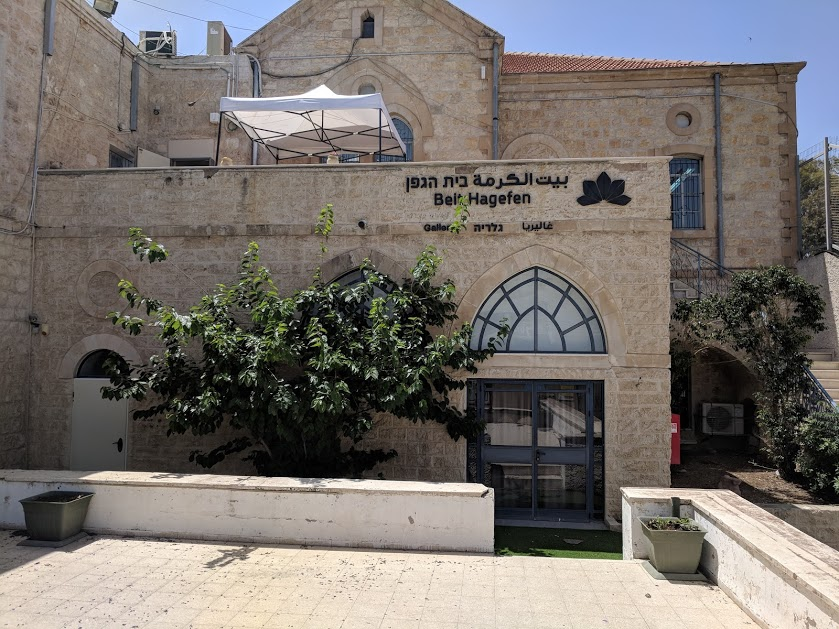
In the afternoon we took a bus to the port area of Haifa to visit a museum (and cultural center), Beit Hagefen which sponsors an art project called Art Without Borders. The goal of the center is to develop good relations between Arabs, Jews and all other people.
The cultural center includes two or three buildings
The organization uses the arts to bring people together. They have a theater where they produce dramas.
The mosaics were given during the 'Holiday of Holidays'
They also enable artists to place work throughout the neighborhood that surrounds the Beit Hagefen center.
An artist celebrates a family that lived in the neighborhood for several generations.
The area surrounding the cultural center is the oldest in Haifa. It contains a mixture of Arabs, Jews, Bahai and Christians.
This artist will return to close the Mediterranean shaped safety pin when there is peace!
The art museum is without borders because artwork is placed on homes in the neighborhood.
Artwork from all cultures to promote living together in peace
Each piece attempts to bring factions of people together and build peace.
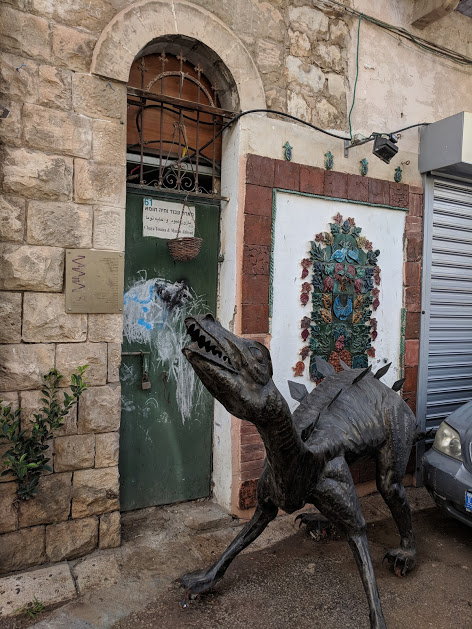
The Dinosaur is a moving exhibit
Horizon says in the exchange between the Hooves and Grass,
“The Hooves will not have the last word / Through the succession of the seasons,
Spring will always make the grass green,/ as generations come and go.”
Echo says, “I wish to be the hooves, not the forlorn grass./ I loathe the blessed lowliness / and the kindness of feeble sympathy / I wish to be the hooves / not the sturdy grass.”
Horizon says, “You realize that hooves are the shoes of horses!”
Echo says, “All the grass is the insole of the horses’ shoes”
Horizon adds: “Likewise, the spurs are the insoles of the knights / to be lunged into horses’ soft waist!”
Echo insists: “I would rather be the hooves than the sturdy grass!”
Horizon says: “And you would not mind the snake-like image of the victim's face eternally poised on your chest?”
Bewildered Echo fell silent! in the horses’
Many pieces of art are located throughout the neighborhood
The artwork is scattered around a vibrant neighborhood filled with people and small shops,
The vegetables are always fresh at these markets

Such as vegetable stands and bakery outlets.
A Garden for the Bab

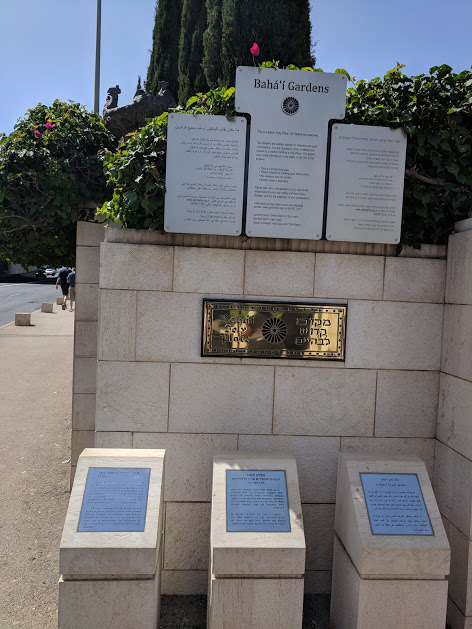
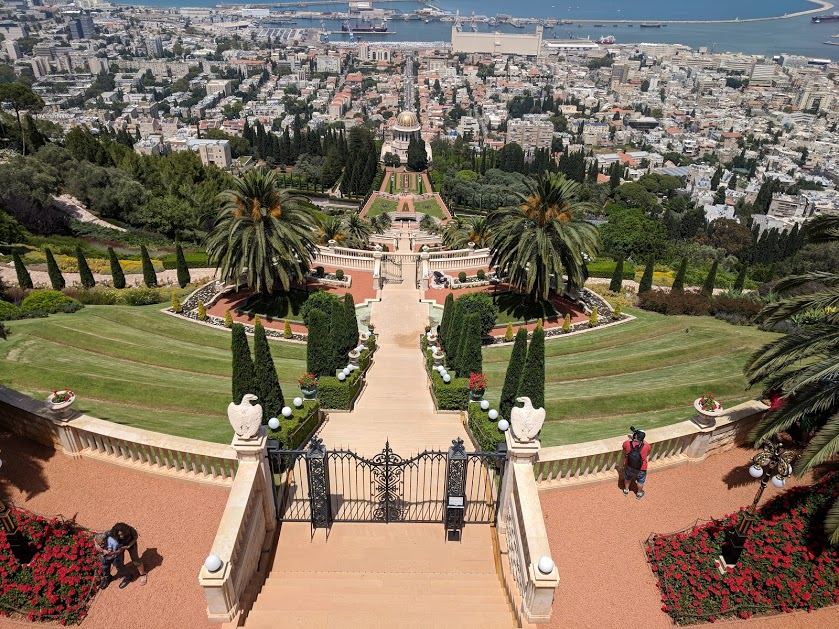
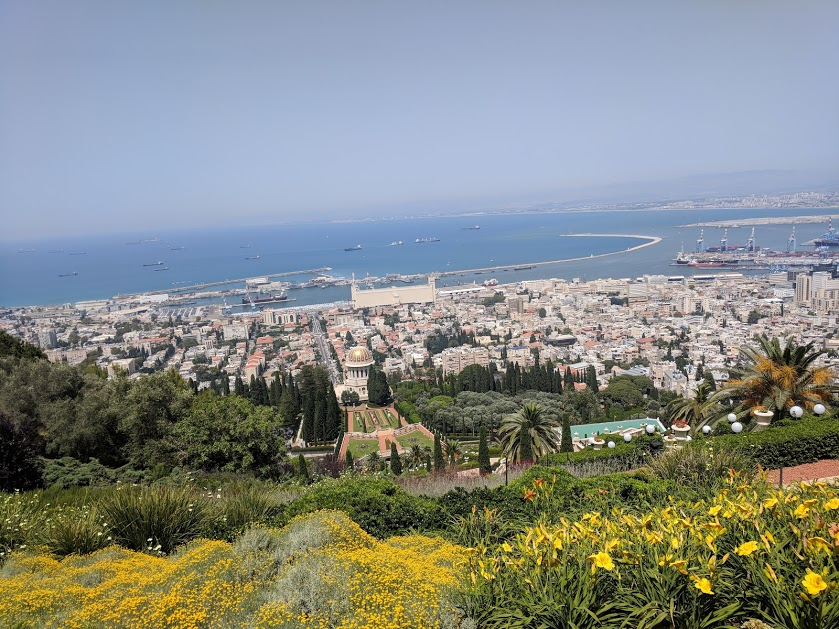
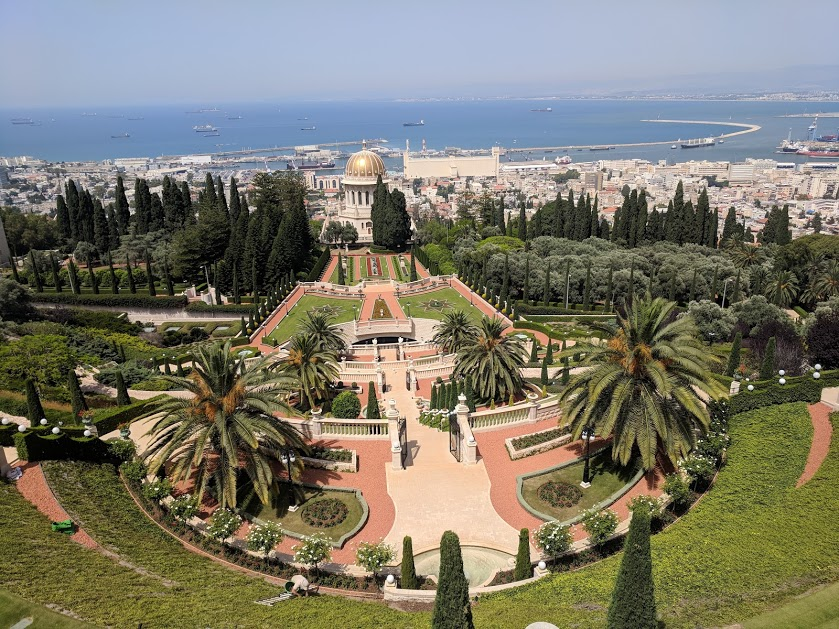
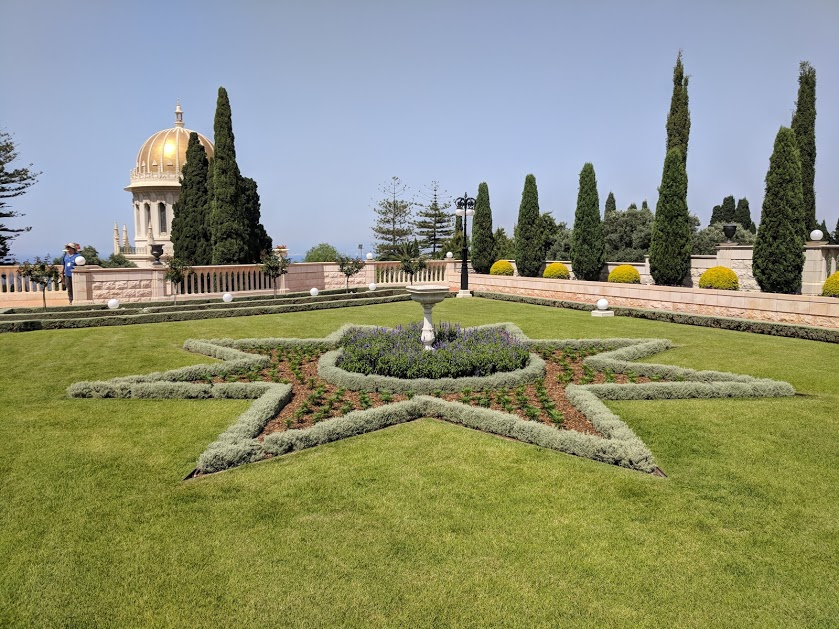
Today’s hike took me to the Baha’i Gardens a beautiful garden in Haifa which spreads from the bottom to the top of Mount Carmel. The green space which is enjoyed today by thousands began with vegetable plantings in the early 1900’s. Baha’u’llah, the chief prophet of the Baha’i faith shared dreams of something more while he was still alive. In 1987, Canadian Fariborz Sabba stepped forward with plans for today’s beautiful place of meditation, and the garden which is seen today was soon created.
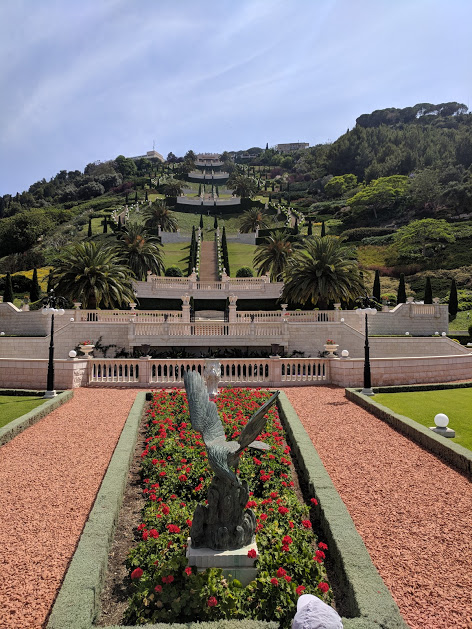
Two entrances to the garden exist on top of Mount Carmel. The most obvious is only an observation point. All who wish to enjoy can walk down one level in order to enjoy a bit of quiet and a phenomenal view through the middle of the garden from top to bottom.
About a hundred meters west of the central terrace the Baha’i offer free guided tours through the garden.  Most tours are in Hebrew, but if most (or all) of the participants on a tour speak English, the guide will give the tour according to preference.
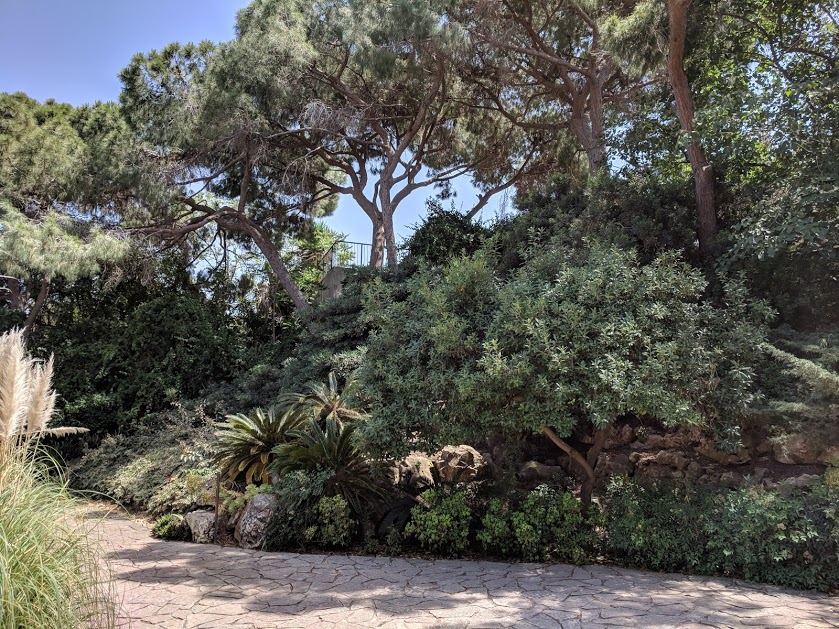
The waiting area for the tour contains several succulents, aloe, pines, cacti, pampas grass, and various flowers.
The guide takes guests down several levels at a time, giving a lecture at appointed areas, where there is shade. He tells the history of the garden and the history of the church.
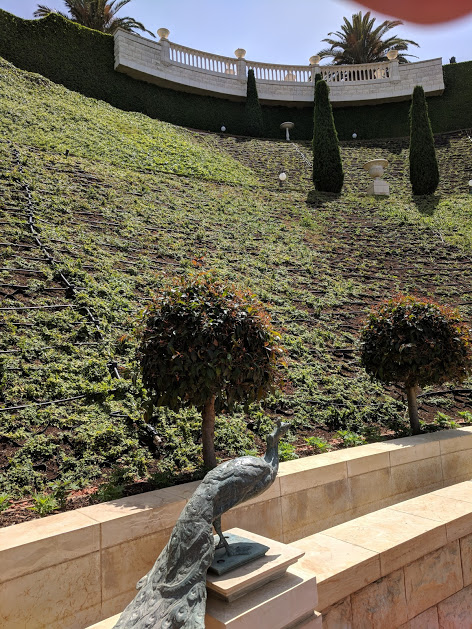
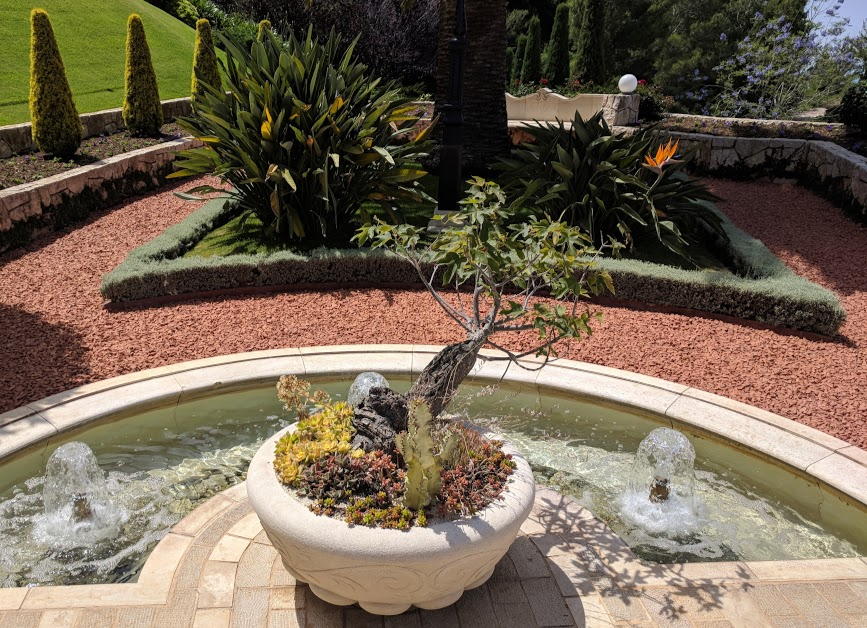
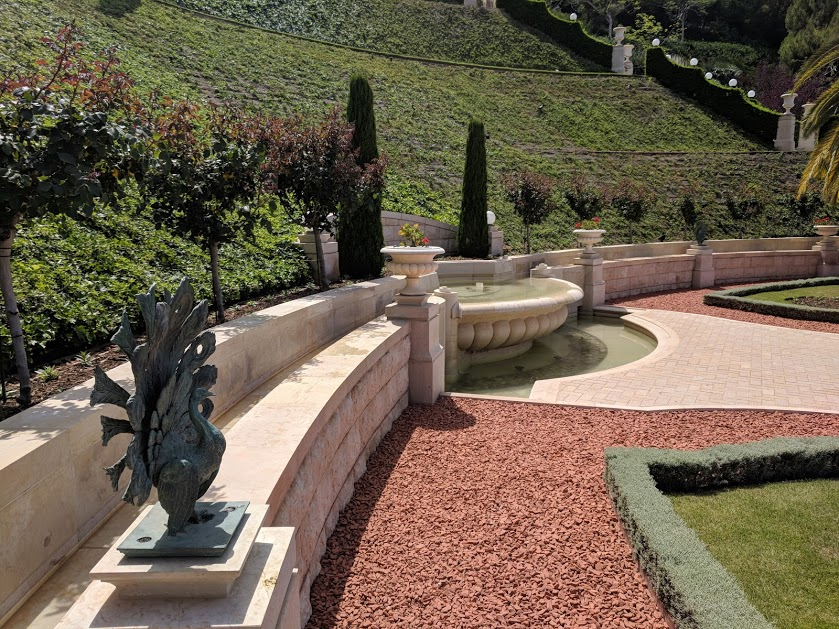
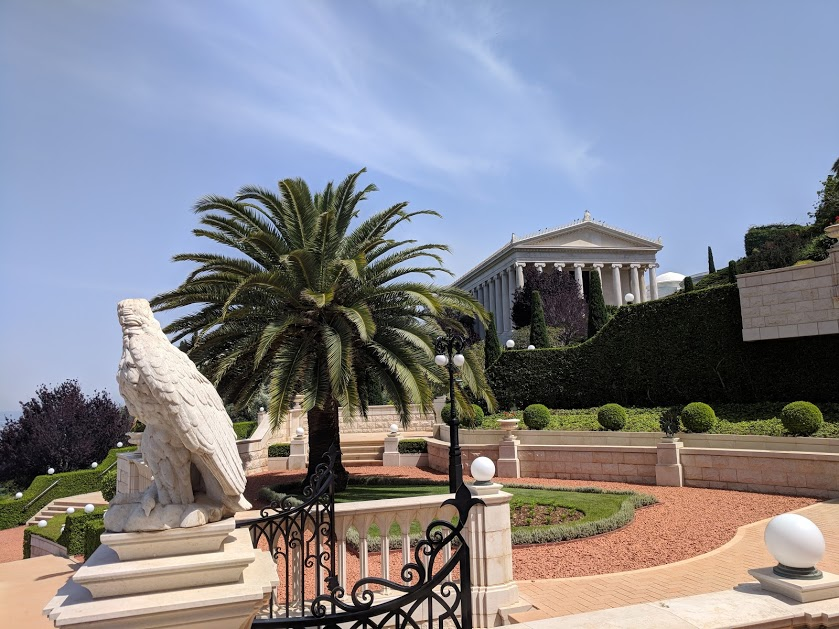
The terraces on each level contain similarities, but are different. There are palm trees, fountains and bronze peacocks. On some terraces they are at rest, on others their tail feathers are spread in display.
The birds, plantings and fountains are not religious objects, only items of beauty. Baha’u’llah and the Bab enjoyed were admirers of the beauty which God created across the earth.
The Baha’i faith began with the teachings of the Bab, born as Siyyid ‘Ali Mohammad in 1819. When yet a young merchant of Persia in 1844, he announced that he received a vision, sent by God, to prepare mankind for a new era and the imminent appearance of a Messenger greater than himself.
At a time when equality, unity of religions and peace were not commonly accepted, the Bab pushed these values in an Islamic world. Within the first year he had eighteen followers, and the movement grew. The Bab told the faithful that he was a herald, and his mission was to announce a coming teacher. He was rejected and martyred in 1850. His body was thrown outside the city without a burial, but his followers retrieved the corpse and hid it away, trusting there would be a time the Bab would receive a proper burial.
Baha’u’llah, born Mirza Husayn-’Ali in 1817, was the son of a Persian nobleman. His assumed name means “the Glory of God,” and he continued proclaiming the teachings of the Bab more forcefully, and drew more followers.
Baha’u’llah could not be killed, because of the power of his father, so he was imprisoned in Baghdad. While in jail he continued to preach, drawing inmates and guards to his new faith. He also shouted out the windows of his cell and reached drew many followers from the city.
He was sent away to Constantinople and then to Akko where others followed the movement. He gained favor of his jailor and the local governor, who soon allowed him to travel about.
He redeemed the body of the Bab, and buried it in Haifa. He also shared the dream of building a garden around the tomb as a place for people to meditate. The garden was completed in the late 20th century, and people come from across the globe to enjoy its beauty.
The gardens contai the gold domed tomb of the Bab, a  Universal House of Justice fro which members of the Baha'i faith are ruled, a center for study of the original texts of the Baha'i faith, and a teaching center.
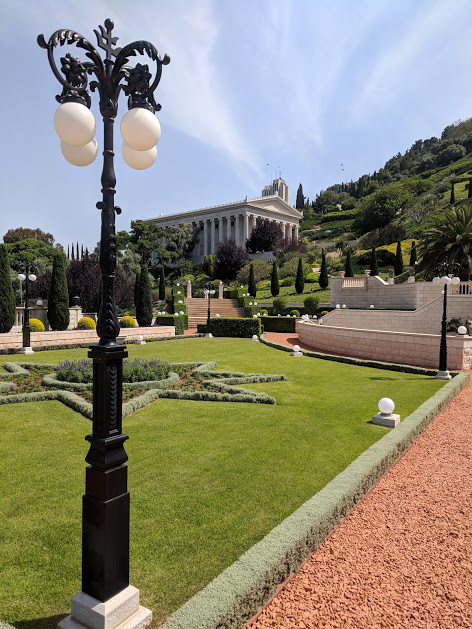
The archives are built in a manner identical to the Parthenon in Greece, and of the same marble.

The Bahai teach that their mission is to combine all faiths of the world into one body. They are rejected by other religious groups because there are inconsistencies which will not allow unity between world religions.