Showing posts with label Tel Gezer. Show all posts

Friday, June 1, 2018

Archaeological Digs

In the past week I have participated in two archaeological projects.
The Water Project at Tel Gezer
The first was at Tel Gezer, where I was asked to clean the steps leading down into what is known as the water project.
Cleaning the steps going into the earth
The steps, which are over 4,000 years old are made of soft limestone, and chip easily. The work involved careful brushing or lifting dirt with a mini mattock to remove all but surface level dirt, or to reveal the limestone step.
Looking up the steps into the city
The second project was at the first century Arches Reservoir at Sippori.
Information about Arches Reservoirs
Our project at Tsippori began with trash removal and then sweeping surface areas which had been recently excavated in order to obtain archaeological photographs.
Looking into the Cistern when we arrived
These pictures were taken in the early morning to lessen shadows created when the sun is high in the sky.
Archaeological Photography
After the pictures were taken, a tarp was spread and tied over the Arches Reservoir to provide shade as we worked.
Spreading a tarp for the workers
I was asked to remove dirt from a basin in the southern room of the central section of the former cistern (tank which was built for holding the community’s water).
Two Cisterns, our dig is to the left
It is thought that water was brought through channels (or aqueducts) from springs along the ridge of the Nazareth Mountains. When the Arches Reservoirs were first built in the days of Herod Archelaus, the cisterns were filled with water for the population of Sipporus.
The dig is a project of Moskau Institute of Archaeology
For the work in the bowl like hole in the floor I used a trowel to lift dirt, inspect its contents and put it in a bucket for removal. Some of the fill dirt in this project was rich in pottery, which, when found, we placed in a special pottery bucket.
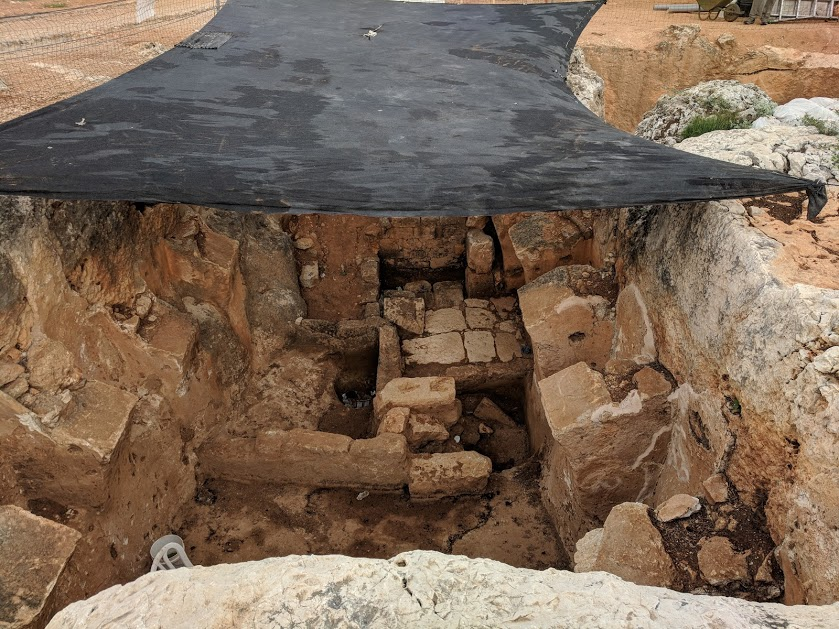
The room under the tarp
When the bowl was cleaned, was moved into a room on the northern side of the central area of the cistern. This small room (perhaps 6’ x 6’) was one of the areas of major focus for our dig. I worked my way down through the dirt between large rocks which had collected into the square.
A picture taken to the west in the cistern
Late in the morning Dr. Tsvika Tsuk, chief archaeologist at the Israel Nature and Parks Authority looked at the room and identified the large rocks as blocks of the arches which had fallen. The roof structure was held up by Roman arches with stone crossmembers. These collapsed at some time during the cistern’s 2,000 year history.
Removing large rocks in the Cistern
The large blocks used for arch construction were salvaged and moved into the southern room of the cistern. They will be numbered and removed at a later date by crane. The other rock in the hole was demolished so it could be put into buckets and lifted to a ground level area designated for rock removal.
Rocks labeled for reconstruction of the Arches
When the rocks were removed (and when subsequent rocks were removed), each of the diggers in turn removed more dirt from the room. Eventually we went down four or five feet below the beginning surface and revealed two steps into the room.
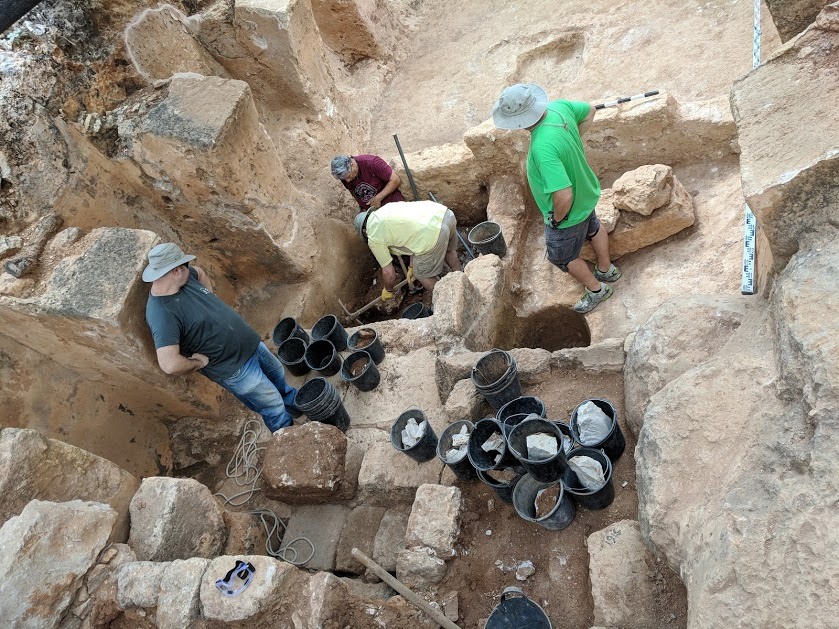
The dig in progress
We also worked on dirt removal in an area on the western end of the cistern. The dirt was sandwiched between a newer wall and the original southern end of the water reservoirs. Six to eight feet of dirt was removed from this area, and we found (after three days of digging) the original cistern floor.
A group visiting from Atlanta, GA
During one afternoon at the dig, a tour group (known to our leaders) came and participated in the dig. All enjoyed the activities and the finds.
Close-up of central rooms in the Cistern
Picks (called a mattock) and digging hoe were used to loosen large amounts of dirt and to scoop it into the little black buckets. As the work progressed, I became part of a chain which lifted dirt out of the hole. After the dirt reached the surface area it was placed in a wheelbarrow, and dumped into areas designated for each part of the dig. During the last two days of the dig I was the designated carter and dumper.
A new use for black archaeological buckets
After the dirt was dumped, one of the archaeologists would come to each pile of dirt and examine it for metal. He discovered lots of nails and a few coins.
Workers near the end of the project
We also found Roman glass, roofing tiles, a mosaic block, and plaster.
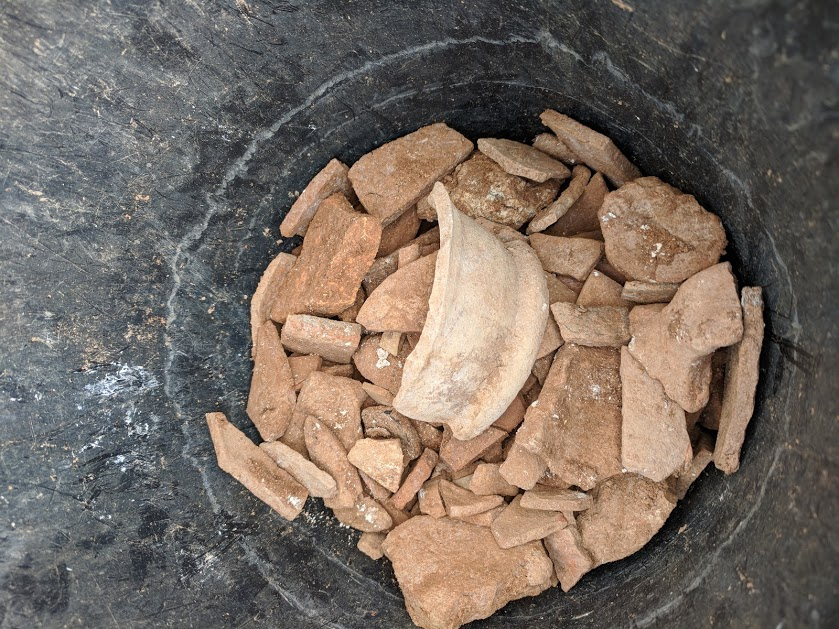
Bucket of recovered pottery
Each day the archaeologists would speak about findings. They continued to think about what was found after they went home, and shared developed ideas each morning.
Coin from the Arab period
There were two layers of plaster in the cistern. The first was grey and the second was pink. Some of the stones were placed in front of the first century grey plaster for a later use. The new wall of rocks at the southern end of the cistern had no plaster.
Measuring the depth of the hole
The concept that emerged was that the Arches Reservoir had three uses. The first was to hold water (first century). After new cisterns were developed for a growing population, the cistern developed into a wine press. Grapes were stomped in the square box in the floor on the eastern room of the cistern.
The "new" second century cistern
A drain was found leading into the square box into the central room (northern side with two steps) that drained and retained the grape juice.
Surveying the dig
In the fifth century (dated by coins we found) stairs were built down the western wall of the cistern. The underground room became a prison, house or was used for some other purpose. Tiles were placed on top of the cistern plaster in the western room by the stairs.
A final picture of our dig at Tsippori
At the end of the project surveyors came to document everything, a coin specialist visited, the pottery was washed, and the Arches Reservoirs were photographed.
Washed Pottery

All of the findings will be studied and documented. Eventually a report will be written and shared so other archeologists can understand and use the findings.

Monday, May 28, 2018

Working in a Cave

Yesterday we began our dig at Gezer, a major archeological site going back to the Bronze Age and earlier.
Canaanite area at Tel Gezer. Canaanite house under tarp, Gate to left, the tower is to the right of the bridge.
We are working in an area which that was developed during the Canaanite period.
The water project is the large hole in front
Dr. Warner, who has been working at Gezer for more than a dozen summers walked us around the site pointing out different areas. He pointed out various features of the site. One area was the Canaanite Gate with its massive entrance and mud bricks.
The Canaanite Gate at Gezer
Another area he highlighted was a massive tower for the protection of the city. The base of the tower is at least 45’ by 55’ in area. The tower probably stood 40’ tall with an additional mud brick structure above that.
The remains of the huge tower at Gezer
During a 150 year period of peace, the Canaanite cities launched aggressive building programs. City walls became massive, with large gates and watchtowers. Other projects were also undertaken.
Canaanite Tower from above

One of these was the huge water project.
The inside of the tunnel with hand carved arches above
The hand carved tunnel goes 180 feet under the ground, and then laterally.  
The team cleaning the steps of the Tunnel
My project the first two days is to clean steps. After 4,000 years without maid service, needless to say, they are a bit dirty. The pigeons and bats who live in the cave also leave reminders of their presence.
Safety features included the ladder and the hand rope
As we cleaned the steps, we learned that various critters live in the cave. We heard the singing of pigeons, who fluttered in and out of the cave. We met some of their offspring.
Young pigeons waiting for food
The singing of the doves was accompanied by music from the bats who roosted overhead. We cleaned out high quality fertilizer, which was a byproduct of both the doves and the bats.
Bats hanging in a ceiling creavice
We also met millipedes, slugs, various kinds of beetles and rolly-pollies.
The visitor with a hundred feet
There is a Canaanite period house which was built between the city walls and the water project, which retains (after 4,000) walls which remain standing almost the original height
The Canaanite House
The city also contains a Solomonic era gate,
The city gate with water drainage in the middle
And an 8th century BC house.
Typical four room Semetic House of the 8th Century

We have a team of about 25 people working in two areas at Gezer and one area at Tel Hadid.

Saturday, May 26, 2018

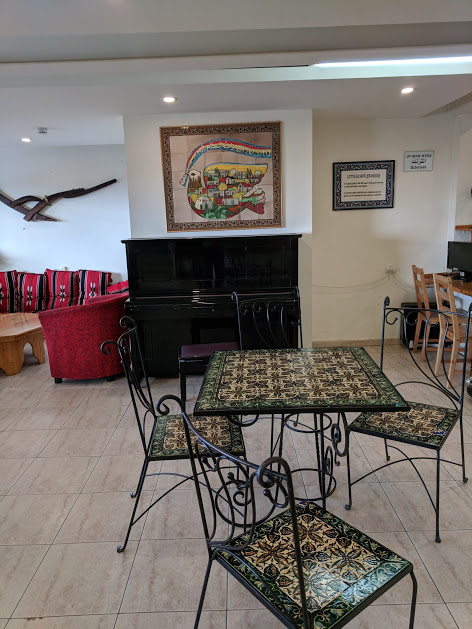
Lodging at Neve Shalom

Today we made the transition from Haifa to the Ayalon Valley, half way between Tel Aviv and Jerusalem. We are lodging at a Hotel called Neve Shalom, which means “New Peace.”
Lobby at Neve Shalom
The hotel sits in a community intentionally founded in 1970 in order to bring Jews and Arabs together in a place of peace. About 150 families live in the village, which has schools, a youth center and an art museum.
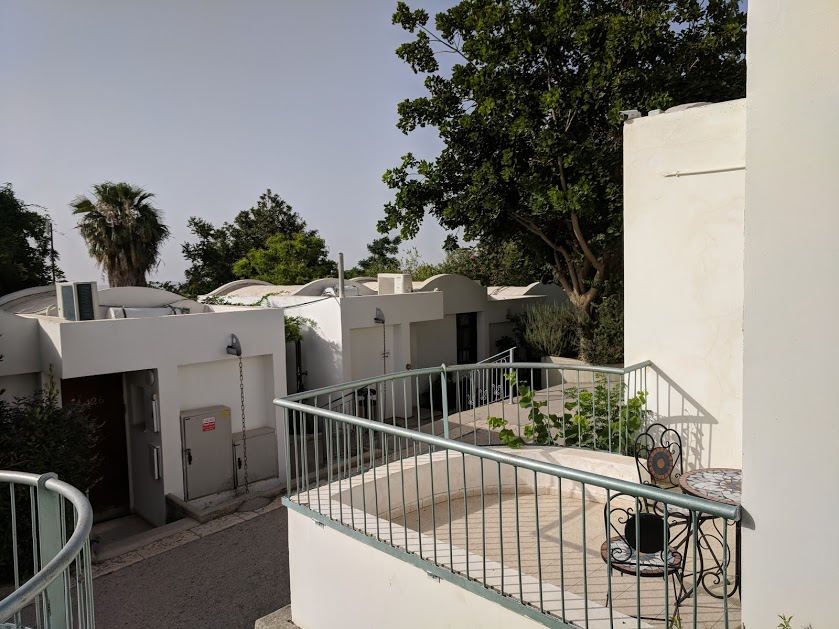
Lobby Patio at Neve Shalom
The rooms are small connected cottages which are arranged along the hillside. Each room has a private entrance and a patio. Steps lead from one set of apartments to the next.
Cottage style rooms at Neve Shalom
Middle Eastern cuisine in the dining room for both breakfast and supper. There is a small cafe and a gift shop located in the village. We ate lunch there and the food was quite tasty.
Swimming Pool at Neve Shalom
The community of Neve Shalom has a swimming pool, which we will visit each day after our work in this area, an archeological dig at Tel Gezer.
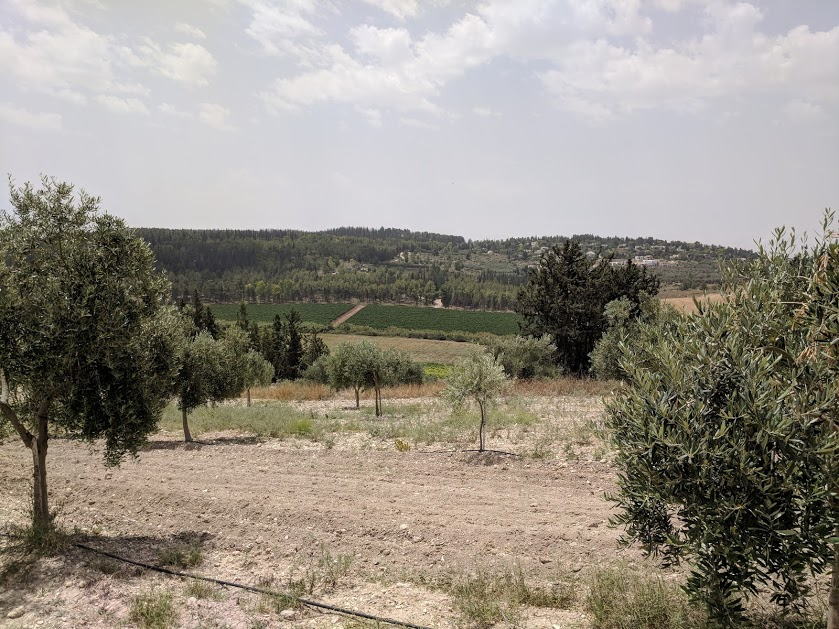
Olive Grove at Neve Shalom
There are seating areas located around the facility which are designed to allow for meditation.
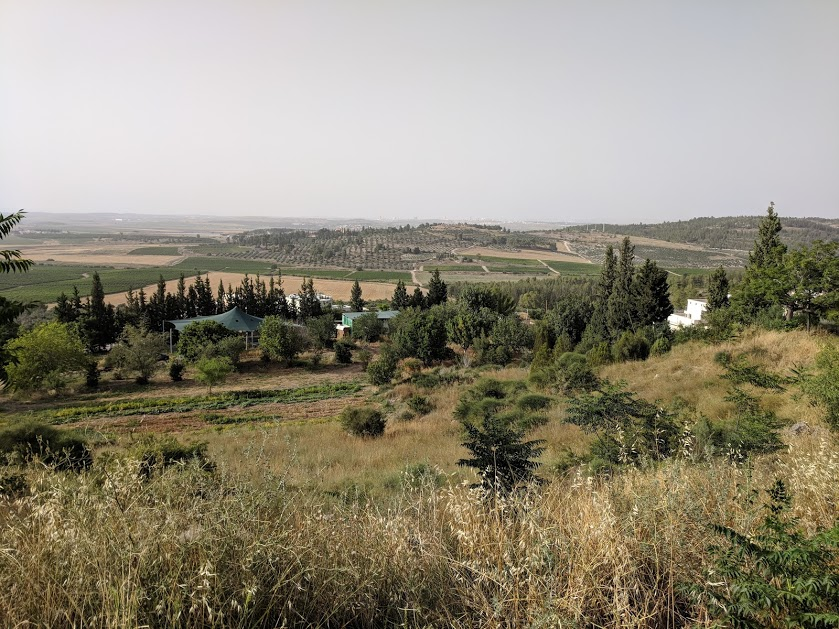
The View from Neve Shalom to the the Trappist Monastery and Modi'in
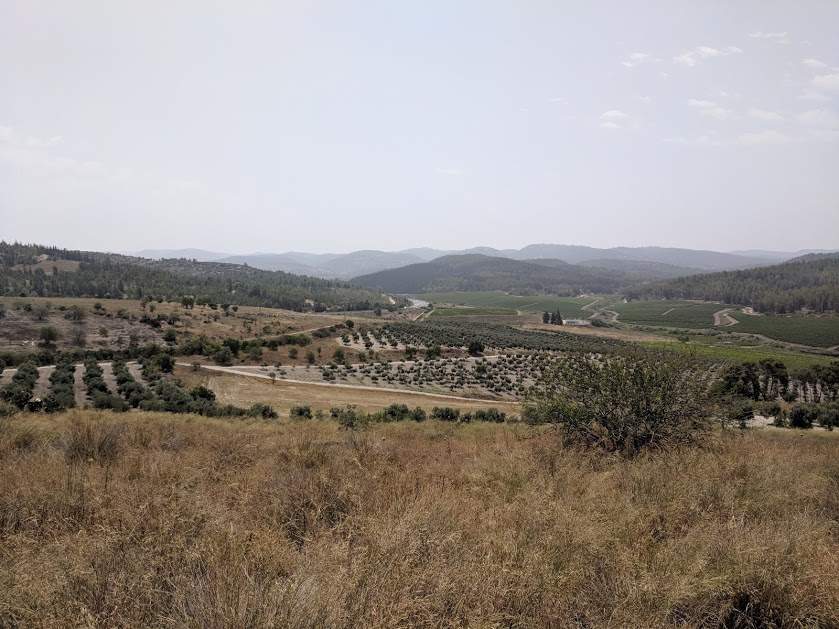
The hotel is on a hill which overlooks the Ayalon Valley. Across the valley is a Trappist Monastery, and beyond the church the highrises of Modi’in are visible in the background.
Looking across the valley to Neve Shalom
The team which digs a Tel Gezer, along with many other teams stay at Neve Shalom. Several tem members have spent three weeks at this hotel every summer for more than ten years.
Looking up to Jerusalem
Neve Shalom is located in a place in Israel with a history of border disputes. The Ayalon valley narrows as it leads up into the hills. This is the place where the sun stood still for Joshua. In 1949, the land on which the hotel sits was “no man’s land,” part of the demilitarized zone between Israel and Jordan.
A Fortress with Neve Shalom in the background

The most difficult battles of the six day war in 1967, were fought around this location. Once the battle was over and the land was secured for Israel, the hotel was built.
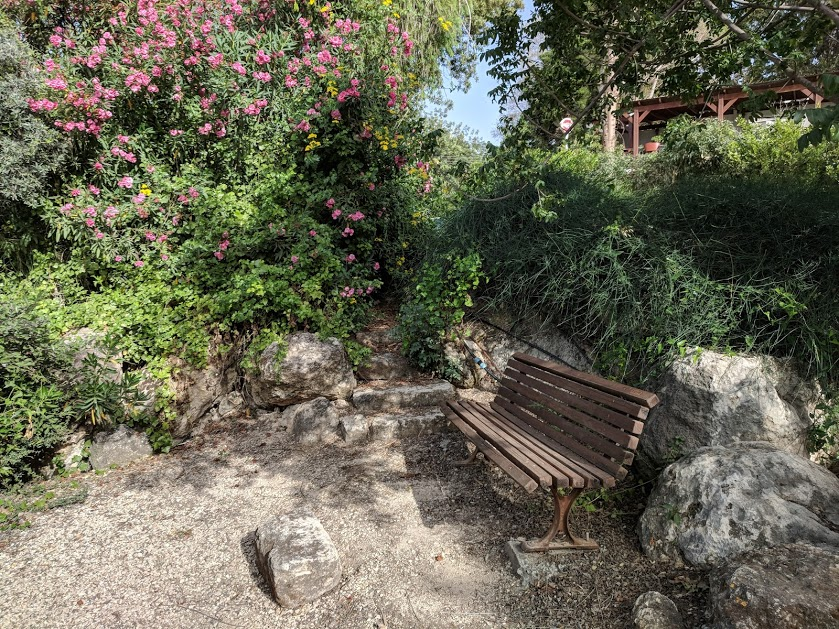
A Bench for Prayer at Neve Shalom

There were both Arab and Jewish communities in the area. It was the dream of Father Bruno Hussar to see Arabs and Jews living in peace. His goal is accomplished through the community called Neve Shalom.

Monday, May 7, 2018

The Shfela

Today’s journey took us through the Shfela, or the low foothills between the Via Maris (way of the sea) and the Judean highlands. This would be similar to the foothills leading up to the mountains in North Carolina. All roads leading up to the interior highlands follow streams and valleys. Strong walled cities guard the entrance to each valley in order to control the travel corridor.
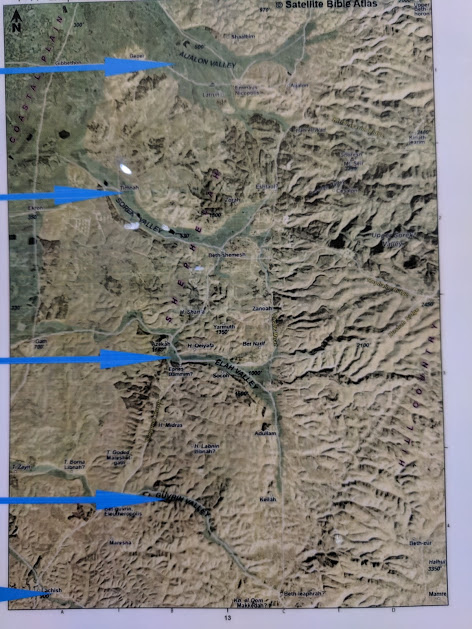
Five Valleys in Israel
The five valleys from north to south are the Ayalon, Sorek, Elah, Guvrin and Lachish valleys. The map above will show these clearly.
The Canaanite section of Tel Gezer
Our first stop of the day was at Tel Gezer, a site we are familiar with because Sarah participated in the dig for two years. (Video). Tel Gezer has a long history, with more than twenty levels within the tel. Gezer controls the Ayalon Valley. Excavations include a Middle Bronze period gate and water tunnel, and also a portion of the city from Solomonic times, when Pharaoh of Egypt gave the city to his daughter and his new son-in-law Solomon.
The Solomonic Gate at Gezer
From Gezer we traveled to Beit Shemesh in the Sorek Valley. This was the area where Samson lived. It is also the place where God returned the Ark of the Covenant to Israel after its capture by the Philistines. There is a new archeological dig at this site.
New Digs at Beit Shemesh
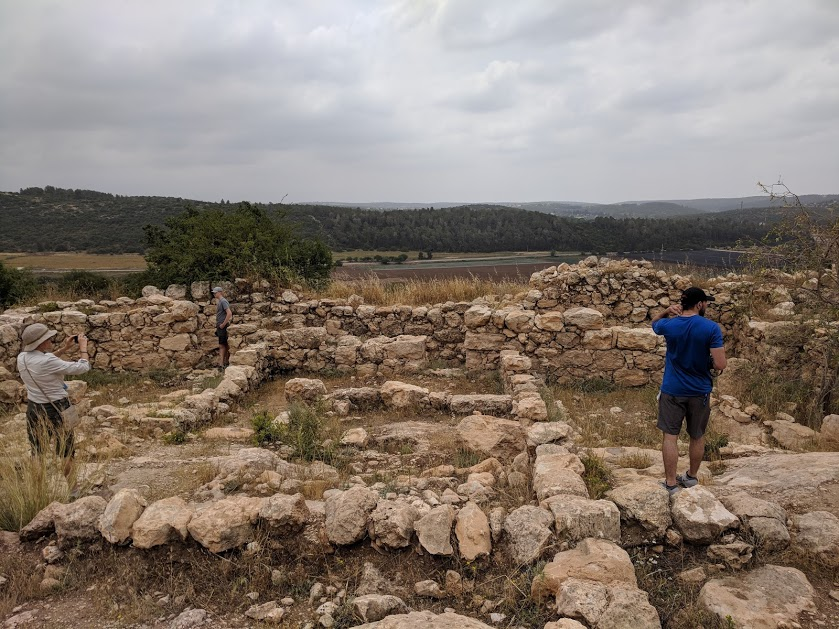
We then visited the Elah Valley, where a boy named David fought the giant Goliath. We were able to get a good view of the valley from Shaaraim or Shaaraim, a city with two gates which dates to the time period of King David. Our guide laid out the entire battle plan so we could see exactly where events took place.
Shaaraim, a village of Two Gates
We visited Gath, the city protecting the Elah Valley. This city is also the hometown of Goliath. It is a massive tel with a long history.
The Philistine Village of Gath
Our journey continued with a stop at Beit Guvrin, this is were King Herod grew up. There are multiple columbarium (caves for doves) that are carved out of the chalk to produce underground caves.
Dove Housing at Beit Guvrin
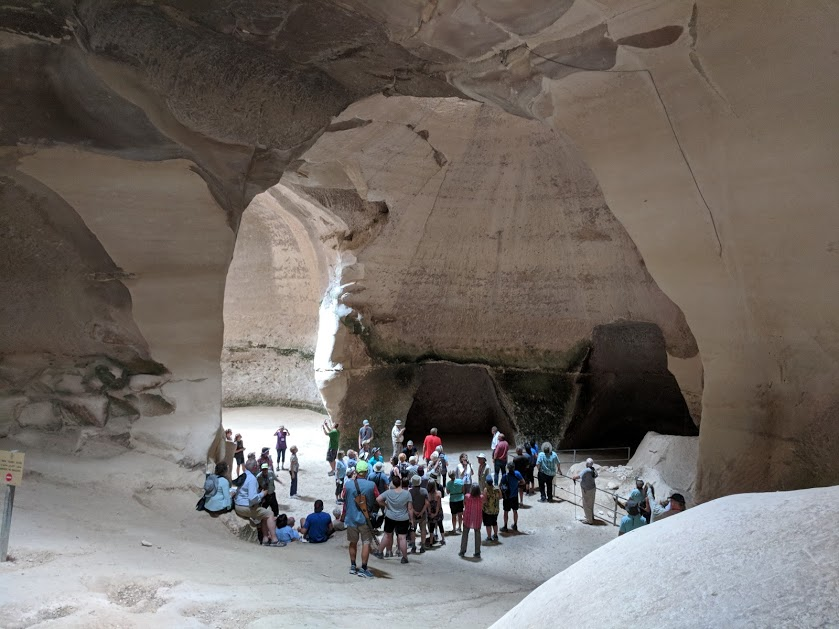
There are also massive caves left behind from the mining of chalk. These bell shaped caves are very beautiful and have great acoustics.
The Bell Caves at Maresha

We finished the day at the motel in Beer-Sheva.