Sunday, January 15, 2017

Dream like a King

The year was 1976 and I remember angry crowds filled the streets. The courts had ordered desegregation of Jefferson County schools and many people were protesting court ordered bussing. It was the same story across the country. I remember the racially motivated separation and hatred.
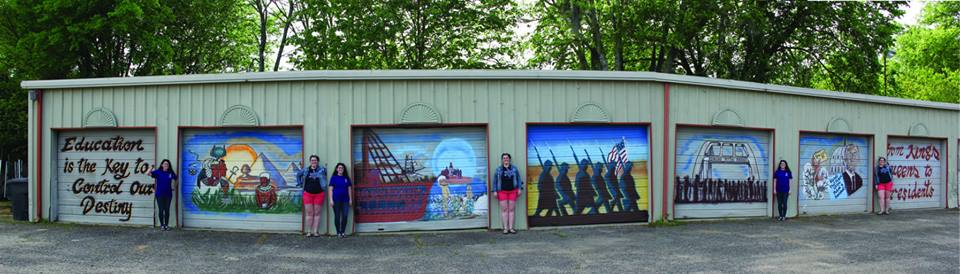
Pettus Bridge in Selma, Alabama
It was ten years earlier that Dr. Martin Luther King Junior sealed a movement with a speech entitled “I have a Dream.”  Within the speech he said, “I have a dream that one day this nation will rise up and live out the true meaning of its creed: "We hold these truths to be self-evident: that all men are created equal."
The dream comes from a scripture in the Bible, “God created man in his own image, in the image of God he created him; male and female he created them. (Genesis 1:27)” God created humans. The scripture shows us we are all humans regardless of gender. The scripture does not put limits on how human we are according to age, race, hair color (or quantity of hair), eye color, economic status, mental ability, physical limitations, nationality, the clothing we wear, religion, or any other qualifier. We are all humans. We are all of equal value to God, and by implication we should all be of equal value to each other.
Unfortunately, Martin Luther King’s dream is still not a reality, and probably never will be. As long as people exist some individuals will put down other individuals based on their own biased viewpoint. This goes for people of faith as well as people of no faith, although as people of faith we should know better.
The Bible tells us we should care for each other.  Zechariah wrote (quoting Moses from Dt. 10:18), “The LORD of hosts said, 'Dispense true justice and practice kindness and compassion each to his brother; and do not oppress the widow or the orphan, the stranger or the poor; and do not devise evil in your hearts against one another.'” (Zech 7:9-10) He pronounced a punishment because, “But they refused to pay attention and turned a stubborn shoulder and stopped their ears from hearing. They made their hearts like flint so that they could not hear the law and the words which the LORD of hosts had sent by His Spirit through the former prophets; therefore great wrath came from the LORD of hosts.” (Zech 7:11-12)
During the recent election hatred of others came to the forefront. This hatred was spoken not only through the rhetoric of politicians (which is inexcusable because they are asking us to make them our leaders {and therefore examples!}), but words of hate were also spoken by Christians. I saw these words on facebook, but not only there, I have heard the words from the mouths of those I know. When I confront them they arch their backs and tell me they are right for putting others down.
This makes me uncomfortable in church. Can I trust the words of those leaders who spoke hatred against others? Zechariah would advise me, “they refused to pay attention and turned a stubborn shoulder and stopped their ears from hearing,” so why should I listen to the advice of leaders who show hatred. (Some have explained it is not hatred, it is fear of people different than them.) I remember when Baptists (and I can, even 40 years after the fact, tell you what church they attended) persecuted me and thre things at me for being Jewish during my Middle School years. I can name people who even yet show prejudice, although life has taught me to ignore their words and acts.
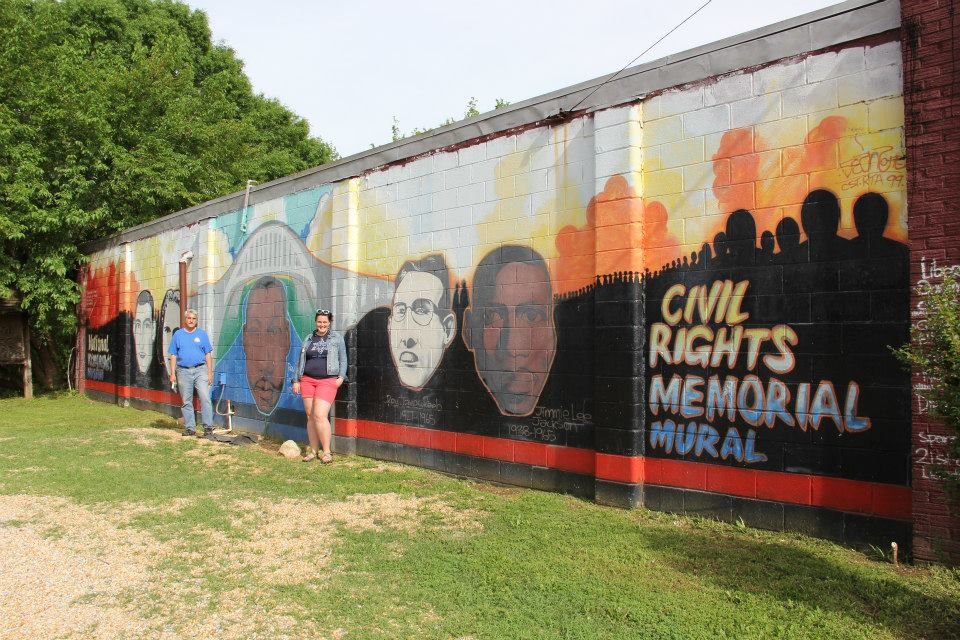
As Martin Luther King, I have a dream that all people would be treated as equals. That women would not be put down for being females (receiving the same respect and the same pay), that lanes would not be blocked off for the rich in the extremely tight and congested lanes of the Charlotte airport (and I am sure others), that public roads would not be designated for those who can afford the toll (at the expense of those who can not), and that people of different faiths would learn about each other and speak with one another with respect. I pray we would treat people as people, and come to know them well enough to see the gifts God has placed within them, and then open doors so they can use those gifts. I pray that a spirit of community and care would return to our country and we would come to know our neighbors by name and tend to their needs.

I share the dream with Dr. King and the founders of our nation that all people would “live out the true meaning of its creed: "We hold these truths to be self-evident: that all men are created equal."

Wednesday, January 11, 2017

Discover Meaning in Israel

For all of my life, since the time I was quite young, I have heard stories about the land of Israel.  These stories have come from teachers in Sunday school, ministers and family friends. When I grew up, I taught Bible lessons shared out of quarterlies about what life must have been like for people we read about in the Bible. These stories had meaning, but they could have meant more.
Throughout my first thirty years of ministry opportunities came to visit Israel, but I stayed at home. Reasons I told myself I didn’t travel included: I did not have the money, I did not have the time, and my family would not want me to be away. But I wish I would have traveled to the Holy Land sooner.
On my first trip to Israel, I found I had many false impressions of the land. I identified too much of what the Bible said to what I had personally experienced. I saw the land as heavily wooded (as the eastern United States) and I believed travel in the Bible covered great distances. I found that neither of these perceptions were true.
The Bible has always been important to me, and so I always study to make sure I can share accurately the words of Scripture. When I journeyed to Israel, however, I discovered many new things. I saw first hand the places where people lived. I walked with a guide who pointed out how the land itself shaped events I had but read about. I tasted the food and experienced the life of the people.
I traveled along roads in Jerusalem used by Abraham, Isaac, Jacob, and King David. I hiked in the desert and rode a camel in regions traveled by Moses. I walked in the footsteps of Jesus along the shores of the sea of Galilee. In all of this, I thought about the people of the Bible and Bible lessons.
Then came the realization: it was here! That happens to almost everyone. At first they plan and go on a trip. People have their own preconceived notions of what it will be like, until the land and the Lord grips them. They realize for the first time: “this is the very place!” It happened to me and it is an indescribable experience.
Because of my trips to Israel, I am different. The people and stories have a fresh meaning. The words of scripture have taken on a new life. As I talk to people, whether telling about my trip or stories from the Scripture, I visualize the things I am saying. I teach and tell the stories I have known for a lifetime with new details because I have been there.
I love the land of Israel and its people. I want to share this passion with you on a journey I will take during the month of May 2018. Will you come with me? Please click the link to learn the details and to sign up.   

Friday, January 6, 2017

Israel Settlement Worries

Winds in the east, there’s a mist coming in, like something is brewin’ and ’bout to begin,” a popular quote from the movie Mary Poppins, can be used to speak about potential changes and results which could occur this year within the boundaries of Israel and the West Bank. Long-standing policies which have been in place from the 1970s and before could be overturned and reversed. Will the results be good or disastrous? - That remains to be seen.
Many have asked me for my opinion on Israeli politics and United States policies concerning Israel because I was raised in a Jewish home. To be sure, there is a love for the land and the nation which goes back to the fact that I was inculturated with the pride bursting forth from my people during the early years of Israel’s new-found independence. I learned about the land in Temple, I planted trees every year, and I heard glowing testimonies from people who visited the new nation.
As an adult I have studied and taught stories from the Bible and researched the associated geography, history, and current events. In 2012, 2014, and 2016 I visited Israel.  My love for the land has grown.  And as my love and learning have grown, I have come to recognize that Israeli-Palestinian relations are intricate and complex. Too many people think solutions are easy, but history should teach us otherwise.
I have watched and prayed during many of the hardships Israel faced in its early years. There were wars in 1948, 1956, 1967, and 1973. The nation has faced many other threats beyond the actual wars including shelling from the Golan Heights, Intifada, Palestinian uprisings, Lebanese and Syrian civil wars, and shellings from the Gaza Strip and from Iraq. The hostilities seem to be endless and continuing.
As I studied the journey of Joseph and Mary through Israel and the Palestinian territories by virtually traveling Israeli Highway 60, I listened to the voices of many people. One was a Palestinian reporter leading a donkey from Jenin to Bethlehem. He reported the trials of each border crossing. Second were the voices of Orthodox Jews and other Hebrew settlers in the occupied territory. I heard their voices of pride and commitment advocating their right to live on the land. I also heard the fear they feel by living within fenced compounds which can be attacked at any time. I read West Bank community blogs, Facebook groups, and municipal pages conveying the animosity they felt toward the perceived occupiers of their land. Proponents from each side are openly speaking their feelings toward each other and the outside intruders who are attempting to sway the politics of the region.
Peace and harmony will not come easily to Israel or the Palestinian territories.
And I keep getting asked, “Do you think” Obama, or Trump, or someone else “has the solution.” I do not think any of the “solutions” offered today by politicians will solve the problem. I think some forced solutions will make things worse.
In my studies I have read journals from pilgrims who traversed the “Promised Land” during the eighteenth and nineteenth centuries. The hostilities which we see today were either nonexistent or minimal during these former times. I wish we could return to more peaceful times when a traveler could visit the land. But during my lifetime, I am sure that we will not.
Some of the problems are racial or cultural. Other problems are political, created when artificial lines have been drawn giving this group or that group primary rights over a region of the land. The problems are compounded when outsiders pit the people of the land against one another.
Can peace come to Israel? I believe it can. But it will not come quickly.
Peace between groups with differences comes through the passing of time, often many years, decades, or generations. It comes when opposing parties begin to talk, learn names, listen to and comprehend the other party's ideas, and when they begin to see the other side as actual people rather than faceless and nameless opponents. During the first stage of interaction, solutions are not put forth. The agenda is for opposing parties to begin talking and then to understand that they are talking to people who have families, desires, and emotions just like them.
We experimented with such a solution to similar problems within the United States during the Civil Rights era. Racial groups met and worked alongside members of another race. Their children went to school together, and in time they moved into communities together. Change did not come easily, but it did come. Today people of different races are friends with one another and care for each other.
The same model can be used in Israel. As Palestinians, Orthodox Jews, secular Jews, and other interested parties begin to communicate and know and respect one another, they can open the “can of worms” and talk about problems. They can take baby steps and then bigger steps until harmony appears between groups. Then they can teach others and repeat the process.
The process takes a generation or two, because animosity and hatred are not easily removed. Over time, however, people can be intentionally moved and acceptance of the other can come.

We must always be vigilant because peace is easily shaken. Animosities can surface whether it is the result of racial tensions in the United States or distrust overseas.

Wednesday, January 4, 2017

Travel to Israel: Are there Security Concerns?

I am going to Israel again. This will be my fourth trip to visit, walk and see the land of the Bible. These trips are always exciting, and I am inviting you to go with me this time. The date of the trip is May 5-18, 2018 (which gives enough time to plan and to save). For details about the trip (a brochure) you can click on the link, or visit my website www.KosherCopy.com.  
Elevator at Ben-Gurion Airport where we enter Israel
Each time I go to Israel, and every time I return home, people say to me, “I would like to go to Israel but I am scared of terrorists.” They often add, “Were you afraid when you were over there?”
Golan Heights looking at the Damascus Road
I reply to them, “Not at all,” because on my three journeys to the Promised Land I have neither been fearful nor have I felt any concern. On the contrary, I have felt a sense of joy and renewal as stories of the Bible come alive for me when I walk the land where the events recorded in scripture occurred. I feel sorry for those who avoid travel to Israel due to their own trepidation.
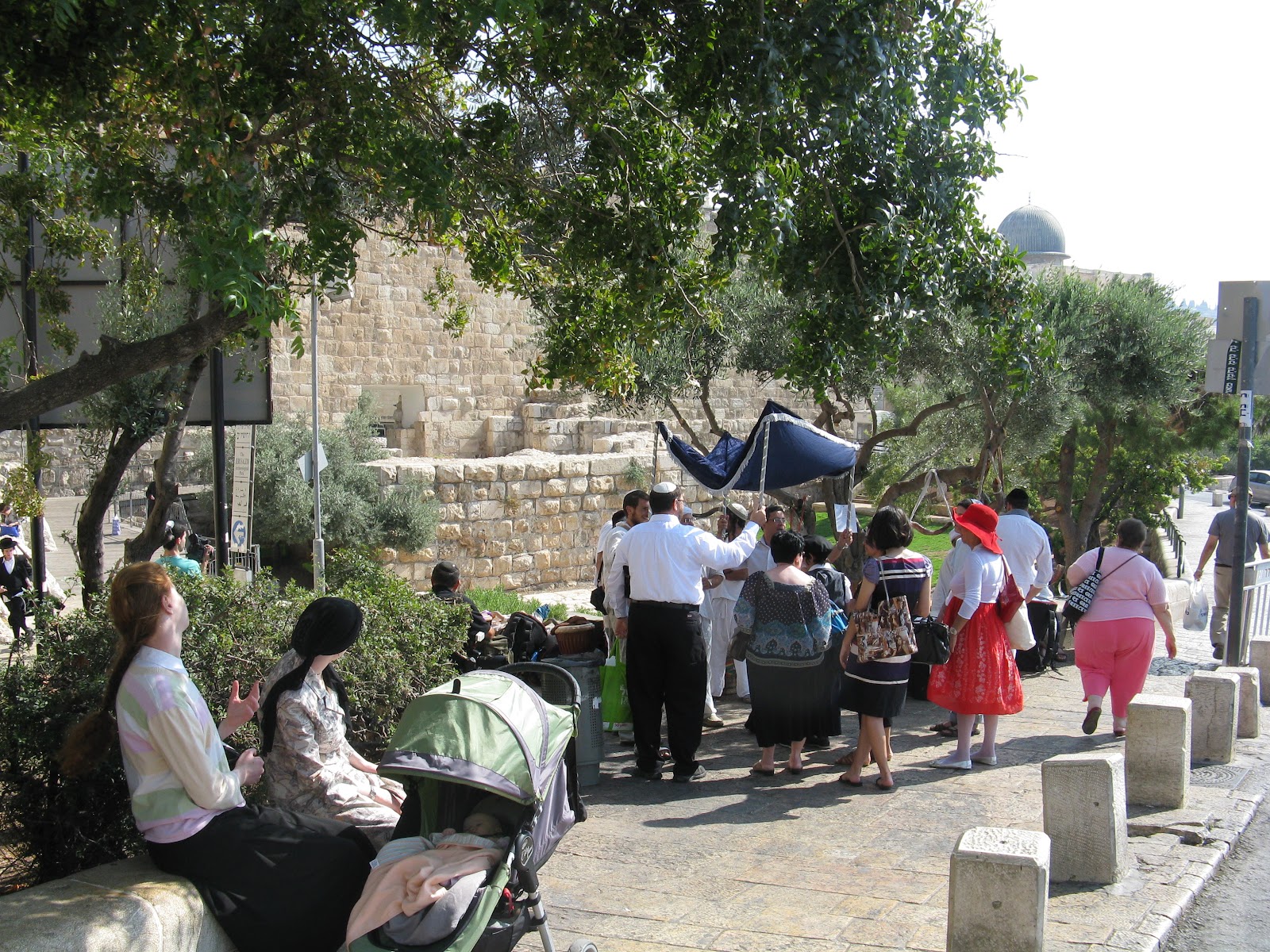
Bar Mitzvah
In preparation for each trip to Israel, I spend time in prayer. I make sure the time is right for me to go (as I do with many other events in my life). I seek out the things the Lord would want me to learn about Israel as I go, for if the trip is dedicated to the Almighty, I will be under His protection. I go with the knowledge that if God wants me to share testimony to His protection and love, I will return home safely.
Temple Mount and Jerusalem
I remark to people that there is a greater chance of being harmed here at home (at the mall, due to road rage or just by chance) than there is with a tour group in Israel. Terror attacks occur randomly both in the United States and around the world.  Assaults happen most often in unprotected areas because they are unexpected. The nation of Israel is on guard and well rehearsed in order to prevent actions of hatred.
Scary thing crawling out of the sea
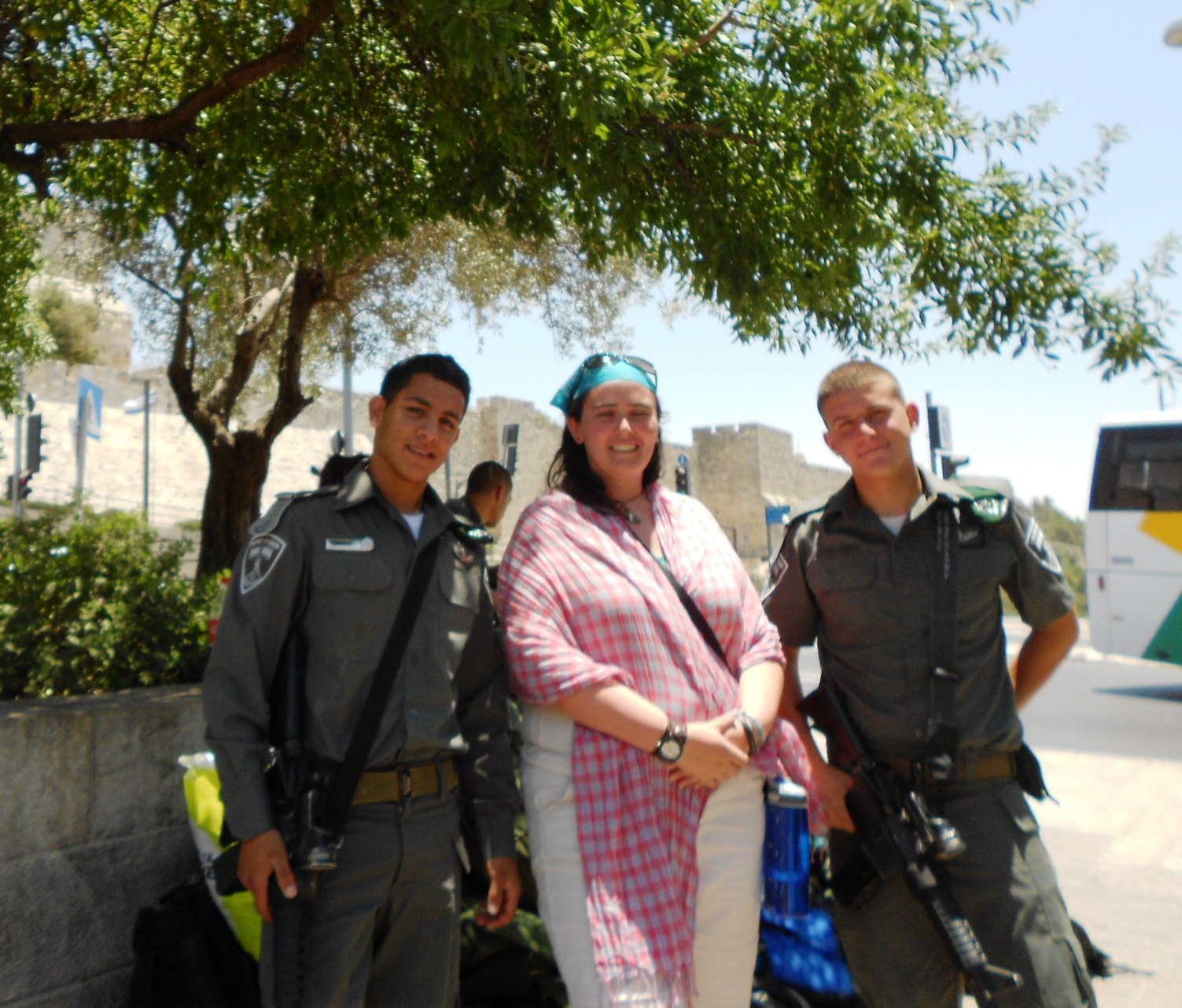
I have been pleased with the great protection offered by Israel’s army, which has alleviated any threat or fear. The truth is, wherever I look in the tourist areas there is a military presence. The country of Israel enlists all young adults for a period of two years for women and almost three years for men. These recruits are trained and stationed in the areas where conflict could occur if not guarded. The security forces also include local police who keep an ear out for any potential problems.
Chelsea with new friends near Jaffa Gate, Jerusalem
As I approach my next trip to Israel during the month of May 2018, I plan in prayer and look forward to the presence of God who will protect the group. I look forward to the experiences God has planned for me while I am in the land. And I look forward to sharing those experiences upon my return to the United States. I hope you will sign up to go with me, and do the same.

Monday, January 2, 2017

A Few Mustard Seeds

What began as a few comments in a Bible study has now turned into a project. We were studying Luke 17 and verse six entered our study. The verse starts, “‘If you have faith as small as a mustard seed...“ We began to talk about mustard seeds.
These seeds are small (Mt 17:20), but from them a tree grows which is large enough for birds to roost. (Mt 13:31-2). We wondered, “how small are these seeds?” A few of us who are gardeners then asked, “Will these seeds grow here?” None of us had ever tried to grow mustard before. We had never seen a mustard seed. And we just wondered.
So, I looked it up (step one of my project). There are several types of mustard seed. White Mustard (Sinapis alba) and mild white mustard (Sinapis hirta) grow around the Mediterranean Sea, oriental mustard (Brassica juncea) originally comes from the foothills of the mountains in India, and black mustard (Brassica nigra) which can grow up to eight feet tall. Several references told me the plant mentioned in the Bible is black mustard.
I dug deeper and found that black mustard seeds can be grown in North Carolina. Several nursery sites said these annuals do quite well in our climate. So I ordered a packet (step two of my project).
The seeds came last week. Indeed the seeds are small. One thousand seeds have been packed into a small plastic bag measuring one inch by one inch, with room to spare. There were no instructions with the packet, just the seeds, so I don’t know when to plant them. I will look that up (step four of the project).
But first I will distribute some seeds (step three of my project). A thousand is too many for me to plant, and it was the men’s Bible study which originally brought me to this project. I am giving several men packets as New Year's gifts. If we all plant them, I have faith someone in our group will succeed in growing them.
Black mustard is from the same genus of plants as cabbage, so they are planted in early Spring, about three weeks before frost. The Brassica juncea is also used in our area to produce mustard greens, so they can also be planted in the fall. For our usage of the plant we will let it go to seed, because it is the seed stalk which gives height and produces the seeds we desire.
It is said that black mustard seeds produce other seeds abundantly. They are used as the base for spicy mustard on our table. One recipe says to 1) grind the mustard seed; 2) add cold water and let stand for 10 minutes; 3) add vinegar (could be pickle juice) to seal in the flavor which starts as a reaction with cold water; 4) complete the mixture with a little salt, turmeric, paprika and garlic powder. Let the mustard sit in a refrigerator for at least a day to remove bitterness. The resulting condiment will keep forever.
I will sow my seeds indoors in mid-March (unless someone tells me differently, and I have enough seeds I can attempt to plant them several ways). I will move them outside once they are high enough, hardening them first, then planting them in my garden. I will plant them in faith they will produce.

I will also plant my seeds to teach me about faith in this new year. The year starts small, but within seven days it will turn into a week, and it will last for three hundred sixty five days (or 52 weeks). There are many things I hope to do in this new year. I will start several projects in faith this week, during the first few days of 2017, and pray they will be successful. I pray this year will produce abundantly for you (the reader) also.

Friday, December 30, 2016

Five Goals for the New Year

Pray More
God desires that we offer several types of prayer, including prayers of adoration, thanksgiving, confession, and supplication (prayers for others and ourselves). A balanced prayer plan for the new year should include each area (A.C.T.S.) of prayer.
1. Adoration: Read a Psalm a day and give praise to God from the prompts found in the Psalm.
2. Thanksgiving: Make a list of ten things you are thankful for each day. These can be for answered prayer, kind acts of people toward you, or kind acts from God (sunsets, “coincidences,” discoveries, and much more). Keep these in a small journal which will be reviewed the day before Thanksgiving.
3. Confession: Each day I need to check my behavior several times. A good way to do this is each time I get in the car I can ask if I have spoken unkindly, taken advantage of things I should have shared with other people, promoted myself more than I should have, or forgotten to praise the Lord for something in front of others.
4. Supplication: I need to make lists which I will check regularly. These include a prayer list of ongoing needs, relatives, leaders (including national leaders, those who guide me at work, or those who guide the people I care for), and friends (besides actual friends who you spend time with in person or talking to on the phone, you can pray through your friends on Facebook and other social media lists), and neighbors (those who live in your neighborhood and your community). Set a day when you will pray for each group and keep lists as necessary.
Read the Bible every day
Set one or two times and places where you will read your Bible.
  1. The first could be in the morning before you get out of bed as you read a Psalm in order to prompt prayers of adoration and praise.
  2. The second time of scripture reading will be determined by your daily schedule. You can also jot down a reading plan which will promote balanced Bible reading. Rather than Bible snippets or tweets I will read an entire chapter or section of the Bible daily.
  3. You can read other passages as they are shared with you or as they come to mind every day.
Advance your work
Many people have jobs. A job can be paid or life callings (such as parenting) which are performed without pay. A new year offers a great time to review goals and accomplishments in each job. Make a list of jobs in which you are involved. Place on this list things which need to be accomplished in 2017. What were your accomplishments and failures in 2016? Place on your list how you will build on these or fix these in 2017. Set some timetables and check-up points through the year.
Exercise
The Bible says our bodies are the Temple of the Holy Spirit. We need to take care of ourselves. I need to enforce several areas of personal care including eating correctly and a daily exercise plan. Sometimes this means doing things I hate (like calisthenics first thing in the morning, drinking more water).
Do Good for Others

Speak kind words daily and spread good deeds weekly. At least once a week during the new year, plan how you can share good beyond words in our world. This can include visiting the elderly (especially shut-ins or nursing homes), baking and taking cookies to neighbors, serving in your church, writing notes of encouragement (and sending by old fashioned postal mail), mentoring someone (perhaps younger than you), joining a co-worker to help them in a difficult project, raking leaves for a neighbor, paying it forward for a random person, or a multitude of other “good deeds.”

Wednesday, December 28, 2016

Life in a Twitter World

A New Year is rushing upon us. What will it bring? Sanity, civility, and satiety in our lives or confusion, conflict and scarcity?
Will the New Year rush upon us, or will we rush upon the year? Will we find time for things of meaning? In 2016 a few things stood out to me. There are fewer book stores and they do not stock as many books. People are reading less and surfing more. In the National Gingerbread Competition the homes were noticeably less detailed, which means people who normally spend time on their hobbies did not put as much into the thing they love.
We allow our minds to twitter between topics skimming the surface and digging deeply in nothing.  We flit from topic to topic, activity to activity and thing to thing. People act on flashes of fake news tweeting threats and ramifications. The tenor of our civilization today is to tweet out mean statements, anger, ultimatums and not niceness. Our twitting has produced an uptight and defensive society.
There are more twits in our society than ever. Stop! Think! What is a twit? Merriam-Webster says, “a silly annoying person : fool.” Urban Dictionary says, “The kind of person that makes a retarded chimp look smart.” The Free Dictionary says, “A foolishly annoying person. A reproach, gibe, or taunt. To taunt, ridicule, or tease, especially for embarrassing mistakes or faults.” Oxford Dictionaries say the word in 1930 described a talebearer.
 Some have chosen to counteract taunting tweets with Bible tweets. Here are the top Bible Tweets. Here are Twitter recommended Bible Tweets. And this site gives Chapterized Tweets, now available in paperback.
But is this what God wants? Beyond the tweet “With my lips I recount all the laws that come from your mouth,” (Ps 119:13) an oft quoted passage goes on to say, “I meditate on your precepts and consider your ways.” To meditate means: “think deeply or focus one's mind for a period of time, in silence.” The Bible tells us to slow down.
The Bible tells us to take time to “delight” in God’s decrees (Psalm 119:16) and to “rejoice” in following the “statutes” contained in scripture “as one rejoices in great riches.” (Psalm 119:14) The Psalmist asks, “How can a young man keep his way pure?” The Bible says by taking time to memorize God’s word and by taking time to recount all the laws that God gives us.
The book of Psalms opens by saying, “Blessed is the one … whose delight is in the law of the Lord, and who meditates on his law day and night. That person is like a tree planted by streams of water, which yields its fruit in season.”
Will the New Year bring a rush for us or will it allow time to meditate on God’s law. Will this meditation bring tweets or the actions which bring real good to others? Let us make the most of the New Year and bring glory to the Great Name of God.