Showing posts with label Faith. Show all posts

Wednesday, March 18, 2020

Self Quarantine in the Bible

Self Isolation orders are being imposed in the United States and around the world. This methodology is being used to fight a terrible disease. This is not the first time social distancing has been used for protection of society and personal safety. Self and community imposition of restricted movement can be found in many places and for many reasons in Scripture.
The Desert of Zin, a place Israel might have visited when distanced.

Government ordered restrictions for health reasons were imposed by Moses in the Bible. The disease of the day that brought about the need for isolation was leprosy. This highly communicable disease begins with “a swelling or a rash or a shiny spot” on the skin. Anyone infected must go to the Priest for testing. If the test is positive, “the priest is to isolate the affected person” for fourteen days, with a visit for observation in the middle. (Numbers 13)

Social distancing was imposed on people with confirmed leprosy until they were either cured or died. There were enough people with the disease in Israel that colonies were formed. (2 Kings 7:3) The diseased person was ordered to “wear torn clothes and let his hair hang loose, and he must cover his mouth and cry out, 'Unclean, unclean!'” (Leviticus 13:45) The quarantined person was forced to live outside the city. Some of these people eventually came together and formed a community of illness.

Forced quarantine was imposed on people for a multitude of reasons in the Bible. One interesting case is that of Noah and his family (Genesis 6-9). God placed Noah and his family into isolation in an ark in order to prevent an infection from evil that had become rampant in the world. The healthy family was placed in an Ark, so they would not be infected. They were confined for almost a year before they were released.

In a similar fashion, the Hebrew people were isolated from the world during their forty year journey in the wilderness. Through Israel’s social distancing God was able to create a nation of people who were taught about healthy living while in the desert. Moses instructed this band of former slaves in all matters of wellness: spiritual, mental, social and physical health.

The Bible tells of many people who choose to self-isolate for wellness and betterment in life. It should be noted that these people had a plan when they went into seclusion. They had a dream of using their time apart from others that would better them. The Bible tells of how Jesus socially distanced himself (and sometimes his disciples) many times. These were to prepare the teacher for times of trials, or when strength is needed.

It appears to me that troublesome days are upon our nation. Many have gone into isolation (by force or by choice). We could all use a plan that will help us come through these days of trial for the better and not for the worse. Spring: Connecting with God tells about things that will make a nation strong in times of crises.

Sunday, January 15, 2017

Dream like a King

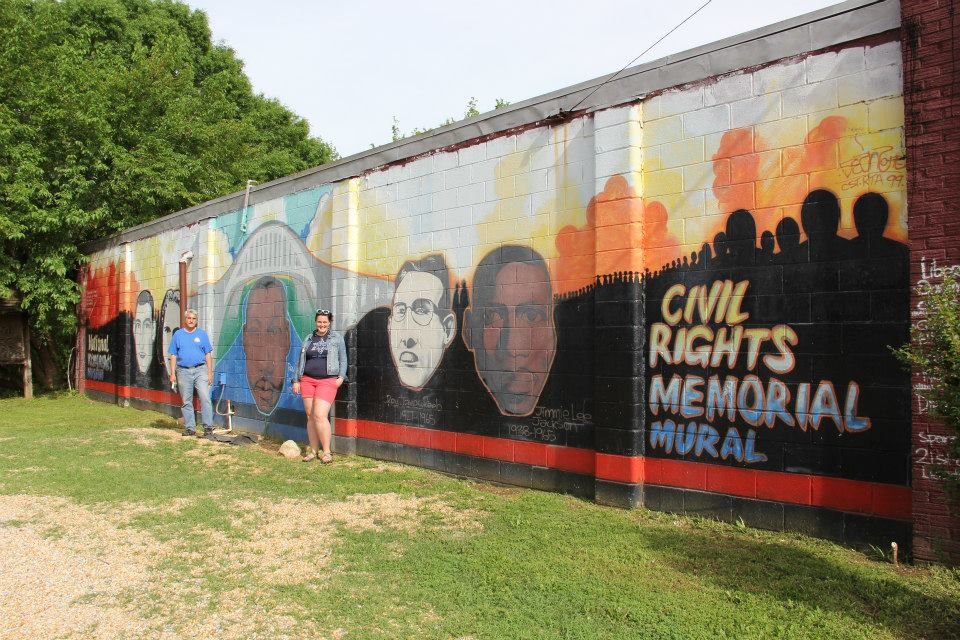
The year was 1976 and I remember angry crowds filled the streets. The courts had ordered desegregation of Jefferson County schools and many people were protesting court ordered bussing. It was the same story across the country. I remember the racially motivated separation and hatred.
Pettus Bridge in Selma, Alabama
It was ten years earlier that Dr. Martin Luther King Junior sealed a movement with a speech entitled “I have a Dream.”  Within the speech he said, “I have a dream that one day this nation will rise up and live out the true meaning of its creed: "We hold these truths to be self-evident: that all men are created equal."
The dream comes from a scripture in the Bible, “God created man in his own image, in the image of God he created him; male and female he created them. (Genesis 1:27)” God created humans. The scripture shows us we are all humans regardless of gender. The scripture does not put limits on how human we are according to age, race, hair color (or quantity of hair), eye color, economic status, mental ability, physical limitations, nationality, the clothing we wear, religion, or any other qualifier. We are all humans. We are all of equal value to God, and by implication we should all be of equal value to each other.
Unfortunately, Martin Luther King’s dream is still not a reality, and probably never will be. As long as people exist some individuals will put down other individuals based on their own biased viewpoint. This goes for people of faith as well as people of no faith, although as people of faith we should know better.
The Bible tells us we should care for each other.  Zechariah wrote (quoting Moses from Dt. 10:18), “The LORD of hosts said, 'Dispense true justice and practice kindness and compassion each to his brother; and do not oppress the widow or the orphan, the stranger or the poor; and do not devise evil in your hearts against one another.'” (Zech 7:9-10) He pronounced a punishment because, “But they refused to pay attention and turned a stubborn shoulder and stopped their ears from hearing. They made their hearts like flint so that they could not hear the law and the words which the LORD of hosts had sent by His Spirit through the former prophets; therefore great wrath came from the LORD of hosts.” (Zech 7:11-12)
During the recent election hatred of others came to the forefront. This hatred was spoken not only through the rhetoric of politicians (which is inexcusable because they are asking us to make them our leaders {and therefore examples!}), but words of hate were also spoken by Christians. I saw these words on facebook, but not only there, I have heard the words from the mouths of those I know. When I confront them they arch their backs and tell me they are right for putting others down.
This makes me uncomfortable in church. Can I trust the words of those leaders who spoke hatred against others? Zechariah would advise me, “they refused to pay attention and turned a stubborn shoulder and stopped their ears from hearing,” so why should I listen to the advice of leaders who show hatred. (Some have explained it is not hatred, it is fear of people different than them.) I remember when Baptists (and I can, even 40 years after the fact, tell you what church they attended) persecuted me and thre things at me for being Jewish during my Middle School years. I can name people who even yet show prejudice, although life has taught me to ignore their words and acts.
As Martin Luther King, I have a dream that all people would be treated as equals. That women would not be put down for being females (receiving the same respect and the same pay), that lanes would not be blocked off for the rich in the extremely tight and congested lanes of the Charlotte airport (and I am sure others), that public roads would not be designated for those who can afford the toll (at the expense of those who can not), and that people of different faiths would learn about each other and speak with one another with respect. I pray we would treat people as people, and come to know them well enough to see the gifts God has placed within them, and then open doors so they can use those gifts. I pray that a spirit of community and care would return to our country and we would come to know our neighbors by name and tend to their needs.

I share the dream with Dr. King and the founders of our nation that all people would “live out the true meaning of its creed: "We hold these truths to be self-evident: that all men are created equal."

Wednesday, November 4, 2015

Finding Jesus of the First Century

   I was destined to be different.  I could not help it, for you see I was born into a Jewish home.  And while Heinrich Heine said, "The Jews are like everybody else only more so," we all know this is not exactly true.  While I was raised in a home of faith I was always taught to question and examine the beliefs of my people in order to fully understand each concept.  In this way I learned my faith.
   One point in my faith which escaped me was how to know 100% for sure that my name was written in the book of life.  I learned a process of seeking to be right with man and with God, but still, assurance was lacking.  Christian friends tried to tell me of how Jesus died for my sins, but I pushed them away ... until ... I read Psalm 22.  Within the words of this Psalm I saw Jesus on the cross in my scriptures.  Then I understood His sacrificial death and resurrection were the assurance of forgiveness and acceptance by God that I sought.
   At the age of 17 I condemned myself to really be different: I joined (and remained in) the Baptist church.  It should be fairly obvious that Reform Jews and Southern Baptists are both different.  And while on the surface I created an image to seem like a Southern Baptist, I continued to follow in the pattern developed in me since childhood: question and examine to fully understand each concept.
   It is not that I lived two lives, I simply learned to fit into the culture of the people with whom I lived, whether Jewish or Baptist, or Floridian, or Midwestern, or Western or Southern.  Even when I go on mission assignments, I seek to relate to people according to their preferred style so as not to create barriers.  I listen a lot (in order to learn), and seek to communicate so people can understand.
   In matters of faith I sought to put together the parts of my old faith and my new faith.  I learned from the people I was around, so I could share in a relevant way as a Baptist, and understand both Old and New Testament against the background of my Jewish heritage.  I met many people along the way who sought to break out of their faith by destroying all they had learned in order to come to something new.  I continued in my faith, never really finding a reason to destroy the faith because it worked for me.  Both Jewish and Baptist where they agree and disagree, I continued to question and examine and learn.
   In the process of my learning I checked a book out of the library called the Mishnah.  This volume could be called a preservation of Jewish tradition from the times in which Jesus lived.  The book contains quotes of the Rabbis and detailed instructions for carrying out the rituals and traditions of the Jews. 
   I began to explore, for my faith is a twenty-first century faith, and their faith was a first century faith.  Some things from both parts of my faith practices I took for granted, like dreidels and latkes at Chanukah did not exist in the first century; neither did yarmulkes, or the hymns in the Baptist hymn book.  I saw in the pages of the Mishnah details I had never seen about the faith of Jesus.  I was fascinated.
   Through reading about the practices of the Levites in the Temple and the Pharisees in the Synagogues I began to enter the world where Jesus lived.  Jesus was Jewish, and the foundation of the Christian faith.  To Him they were not different, but the same.  Jesus came to provide the path of salvation and to lead us to become closer to God.  The words of our New Testament had their origins in the first century faith of Jesus.  As I questioned and examined the words of the New Testament against the culture traditions in which Jesus lived they became even more real.
   I write books to help people understand the world of the first century, and the faith of Jesus.  I want Jesus to become alive for people so they can share in the reality of His love.