Friday, February 9, 2018

The President's One Big Mistake

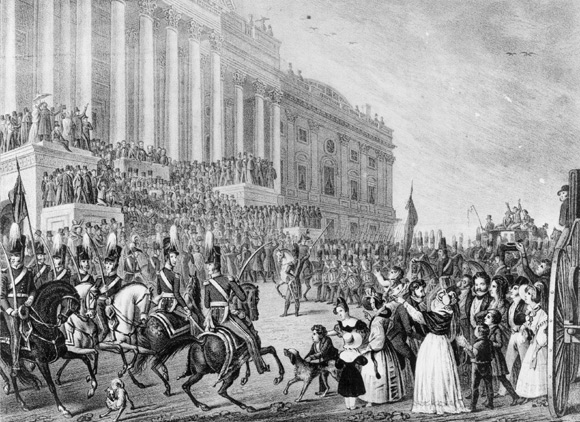
In the past year I have learned a lot about William Henry Harrison. For years I told people he was our most perfect president, “he only made one mistake while in office, he went to his own inauguration.” The fact is that Thursday, March 4, 1841 was a very cold day. Sixty-eight year old “Tippecanoe” did not wear a hat, overcoat, or gloves, and stood outside to deliver the longest inauguration speech on record. As a result he caught pneumonia and died thirty-one days into his term of office.
William Henry Harrison Inauguration 
Quite by accident this year, my family has traveled in the areas where William Henry Harrison lived. He was born at Berkeley Plantation between Williamsburg and Richmond, Virginia in 1773. He was the son of Benjamin Harrison V, a Burgess who signed the Declaration of Independence and participated in the ratification of the Constitution. The Harrison family was well acquainted with national leaders of his day, and William Henry Harrison personally knew every man who served as President of the United States before him. He was the ninth President of the United States.
Berkeley Plantation in Virginia
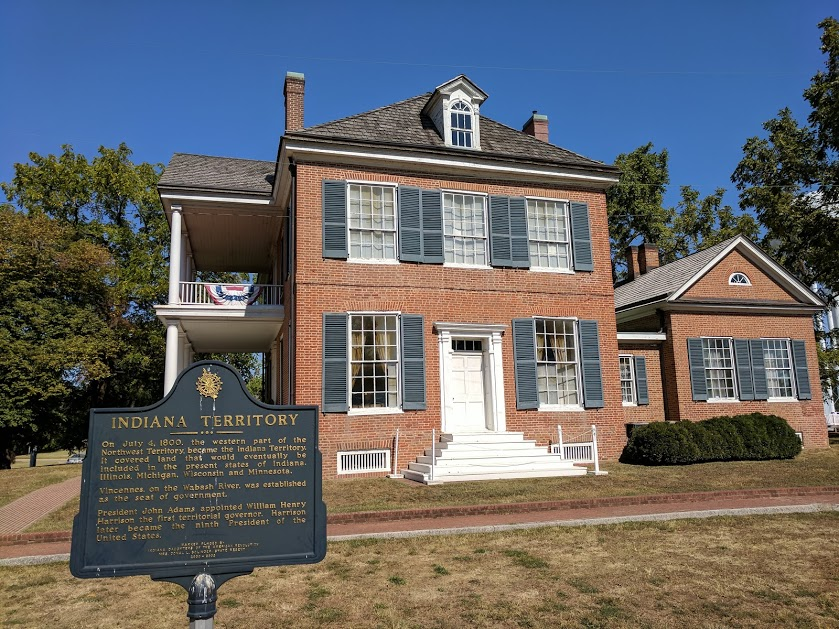
William Henry Harrison served a distinguished career in the military, served as the first governor of Indiana Territory, defeated Tecumseh at the battle of Tippecanoe, served in the United States House of Representatives. the United States Senate and as foreign minister to Columbia where he worked to point president Simón Bolívar, toward formation of a democracy. We visited Grouseland, Harrison’s home in Vincennes, Indiana this year in our travels, which holds many mementos of this remarkable man.
Grouceland Plantation in Indiana
Today is William Henry Harrison’s Birthday. If he were alive it would be number 245. I will be attending a wreath hanging ceremony in North Bend, Ohio. Tomorrow I hope to post some pictures from the event.

Thursday, February 8, 2018

Our Most Perfect President

For years I have told people our most perfect president was William Henry Harrison. Teasingly I tell them that he only made one mistake during his term in the White House .... he did not wear a hat to his inauguration. It was cold and he caught pneumonia and died about a month after taking office. This man, known as Tippecanoe, spoke for an hour and forty five minutes on the cold day, the longest inauguration speech on record, He was also the oldest president until Ronald Reagan and Donald Trump.
William Henry Harrison built a home near North Bend, Ohio
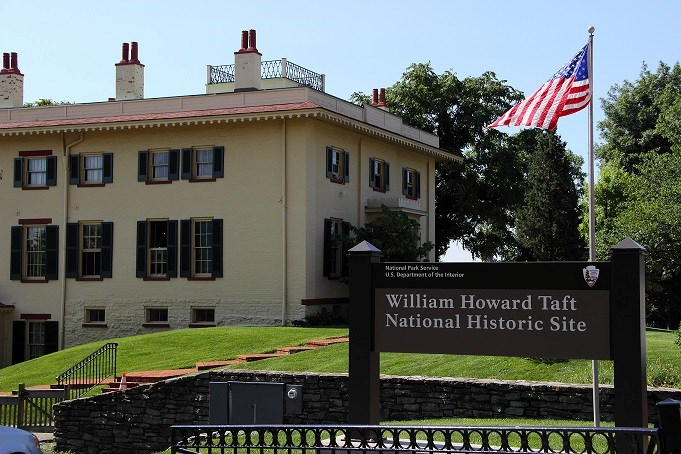
After years of talking about the man, I decided to learn something about him. William Henry Harrison is buried in the county where my oldest daughter goes to school, Hamilton County, Ohio. Four of our presidents have ties to this area: William Howard Taft was born in Cincinnati; Ulysses S. Grant was born one county east; William Henry Harrison is buried in North Bend; and his grandson, Benjamin Harrison, was born in Hamilton, County. Because I am interested in history, I have visited sites related to these men when I visit my daughter.
William Howard Taft was born in Cincinnati
My visit to the gravesite of William Henry Harrison occurred on a cold day in March of last year. We attempted to visit a museum near his home first, but the facility was closed. It seems the curator was on vacation in Europe (I know because I wrote to ask why the museum was closed during opened hours). We went on to the grave, which is close to where he built his home. It was an enjoyable day seeing the countryside and learning a bit about the man who served as our president for thirty-one days.
Tippecanoe built a home with a view!!

When I inquired about why the museum was closed, the people I talked to told me about a wreath hanging program instituted by Gerald Ford when he was president. Every year a president’s birthday, a representative of the current president hangs a wreath at the grave site. I decided to visit the tomb of Tippecanoe once again this year to participate in the ceremony. The event happens on February 9.

Wednesday, February 7, 2018

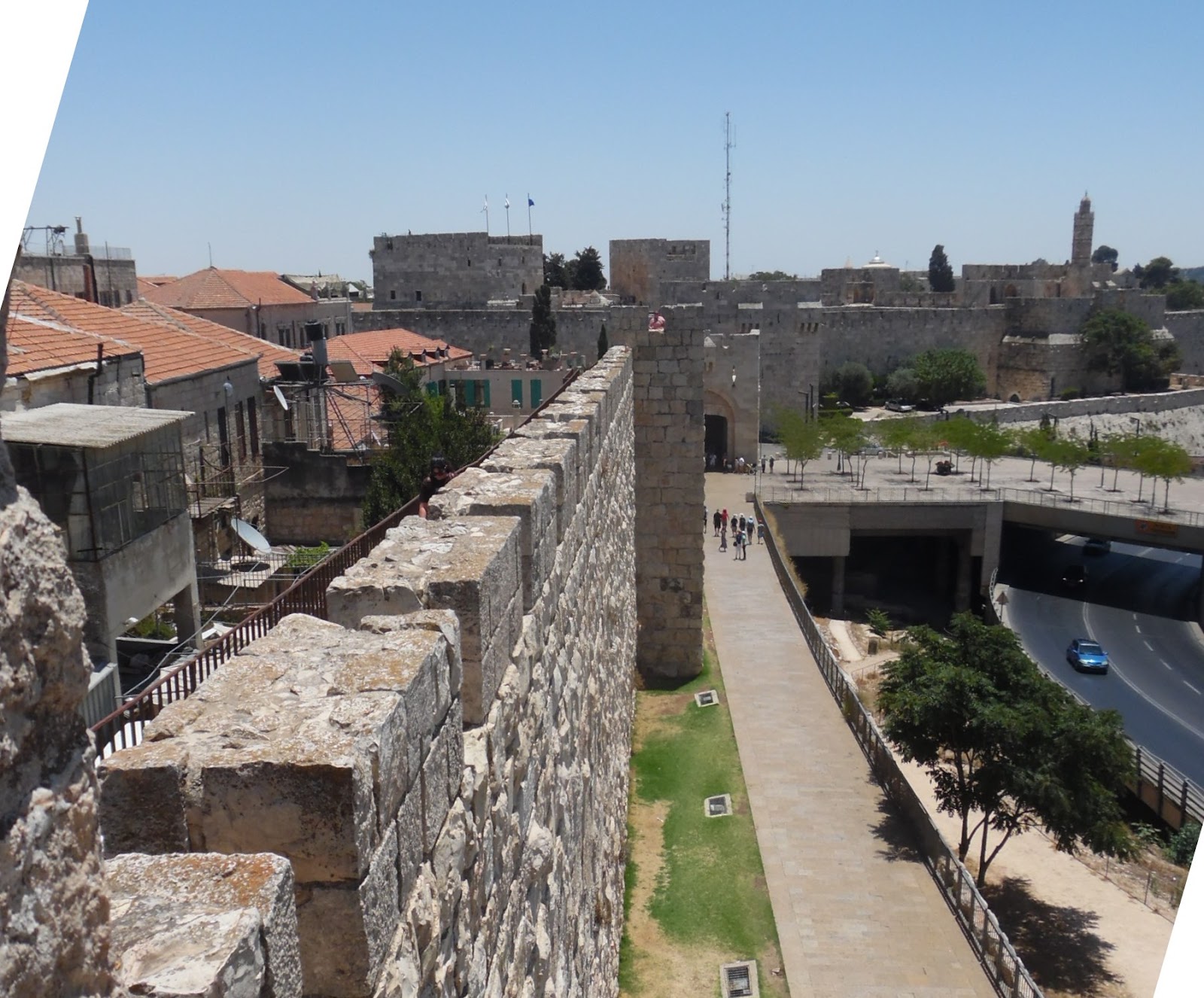
Joppa Gate

Pass through, pass through the gates! Prepare the way for the people. Build up, build up the highway! Remove the stones. Raise a banner for the nations. (Isaiah 62:10)
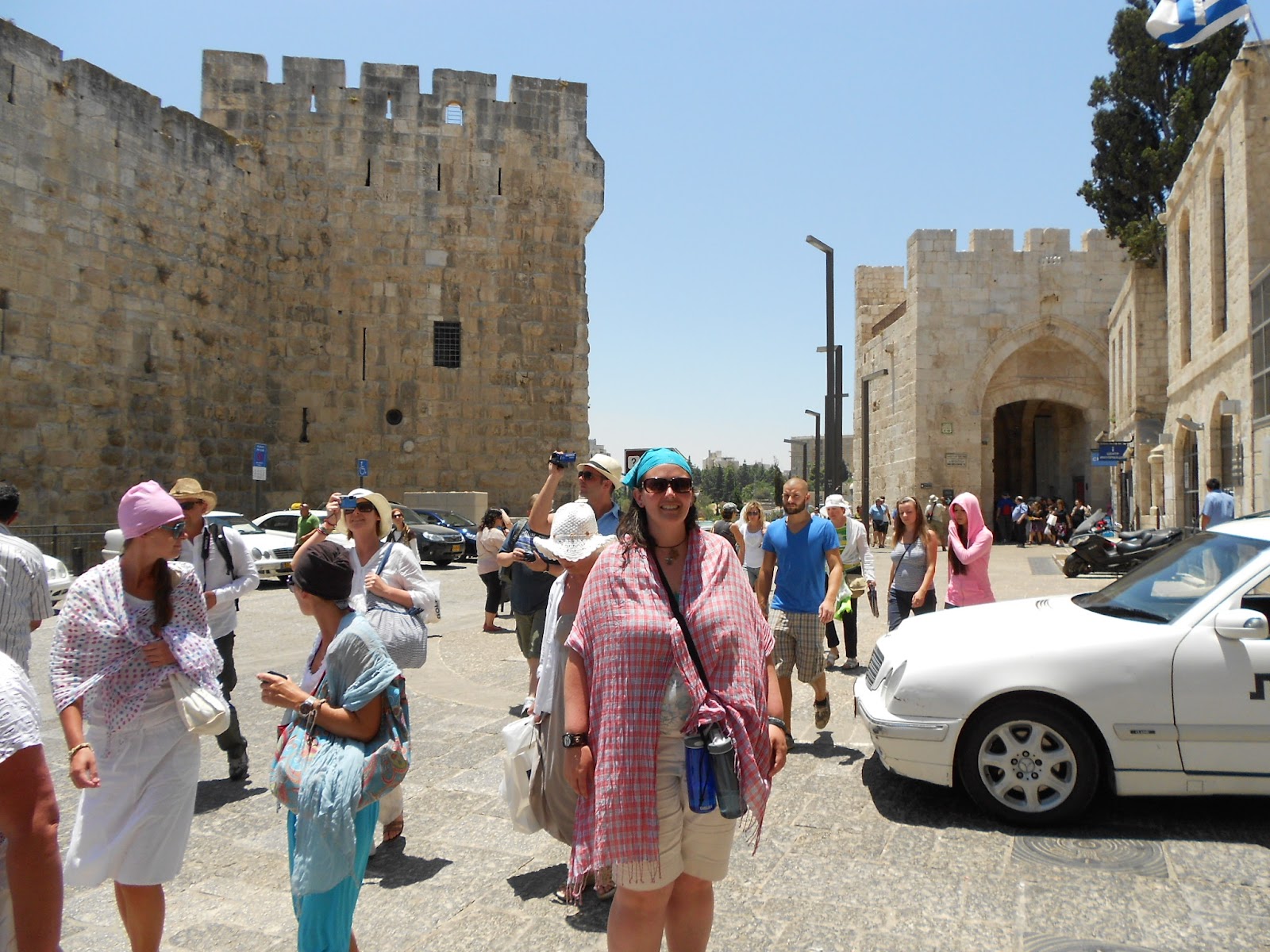
Jaffa Gate from inside the walls of Jerusalem
The Jaffa Gate is, in a way, the international gate of Jerusalem. The name shared most often today motions away from the city to the port city of Jaffa (and beyond that to Caesarea), from which travelers arrive into Eretz Yisrael from all over the world. From the days of King David, when King Hiram of Phoenicia passed by this gate, even until today travelers and others have written about the beautiful Jaffa Gate.
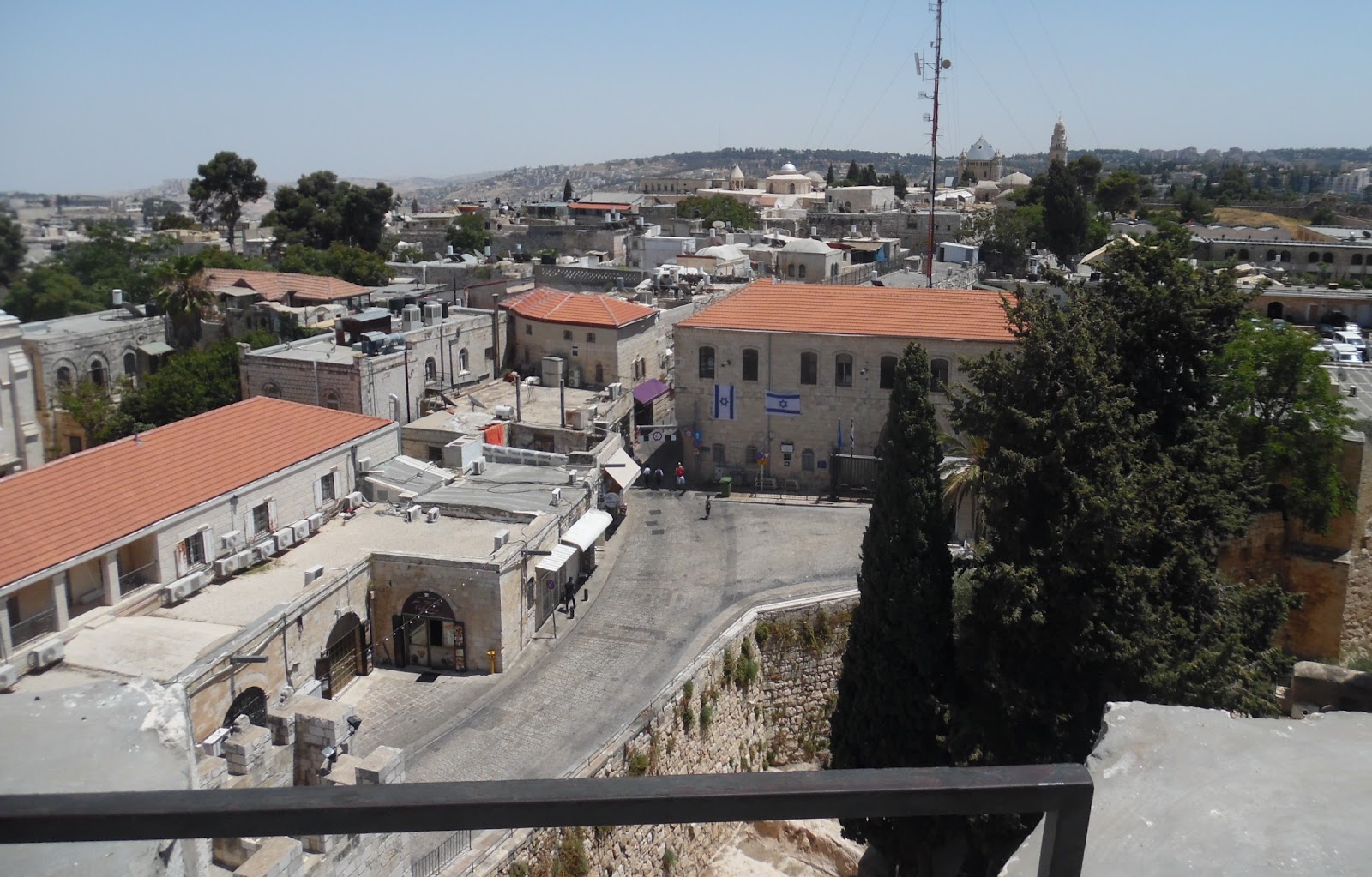
Looking down from the top of the Rampart Walls
At one time the gate was heavily guarded, with a double entry and heavy wooden doors which sat upon bronze hinges. Towers guarded this entrance, portions of which still stand today. King Herod named these towers Phasael (145’ high), Hippicus (132’) and Mariamne (74’) after his brother, a friend, and his favorite wife. Of these, only a portion of the Phasael tower stands today, and the gates were removed to allow Kaiser Wilhelm II easier access to the city in 1898. (More in my book, Israel: Stories for Your Journey)
A must for tourists to Israel
Most of the walls and gates of Jerusalem, which we see today, were ordered to be constructed by Sultan Suleiman the Magnificent who ruled the Ottoman Empire in the sixteenth century. A story is told of how he found the walls of Jerusalem in ruins after being visited by four lions in a dream. He sent two architects to build a wall following the original course of the city’s protective enclosure. When completed the Sultan visited the city, and when inspecting the work found it satisfactory with one exception. The Tomb of King David was left outside the walls. The two architects were hanged and put to rest in graves outside the Jaffa Gate.
The outside of Jaffa Gate from the top of the walls
Most people pass in and out of the wide Jaffa Gate with no notice of these two graves, for this international gate is the portal into Jerusalem’s oldest and one of it’s newest marketplaces. The walls of Jerusalem contain a vast marketplace spreading out from David Street which leads toward Temple Mount. An entrance to the Mamilla Mall can be found when exiting the old city through the Jaffa Gate. Below the mall visitors will enjoy the fountains, shops and sights of Teddy Park.
Join me for a great tour of Israel

Jerusalem with its gates and holy sites is worth a visit. Please join me on my next trip May 5-18, 2018 (click this link for more details). If you can not go, please order my $2 book, Israel: Stories for Your Journey.

Friday, February 2, 2018

A Jewish Dinner … in Church?

The title of this blog leads us to a dilemma with a long history. The Bible records that the church was started by a Jewish teacher named Jesus, who came from heaven to provide salvation for all who believe. This Rabbi taught the world about God through the context of his Jewish faith. He used the Jewish Bible, observed Jewish customs and participated in the Jewish festivals. His final meal before he died was a Passover Seder. (Mt 26:17-19; Mk 14:12-16; Lk 22:7-16; Jn 13:1)
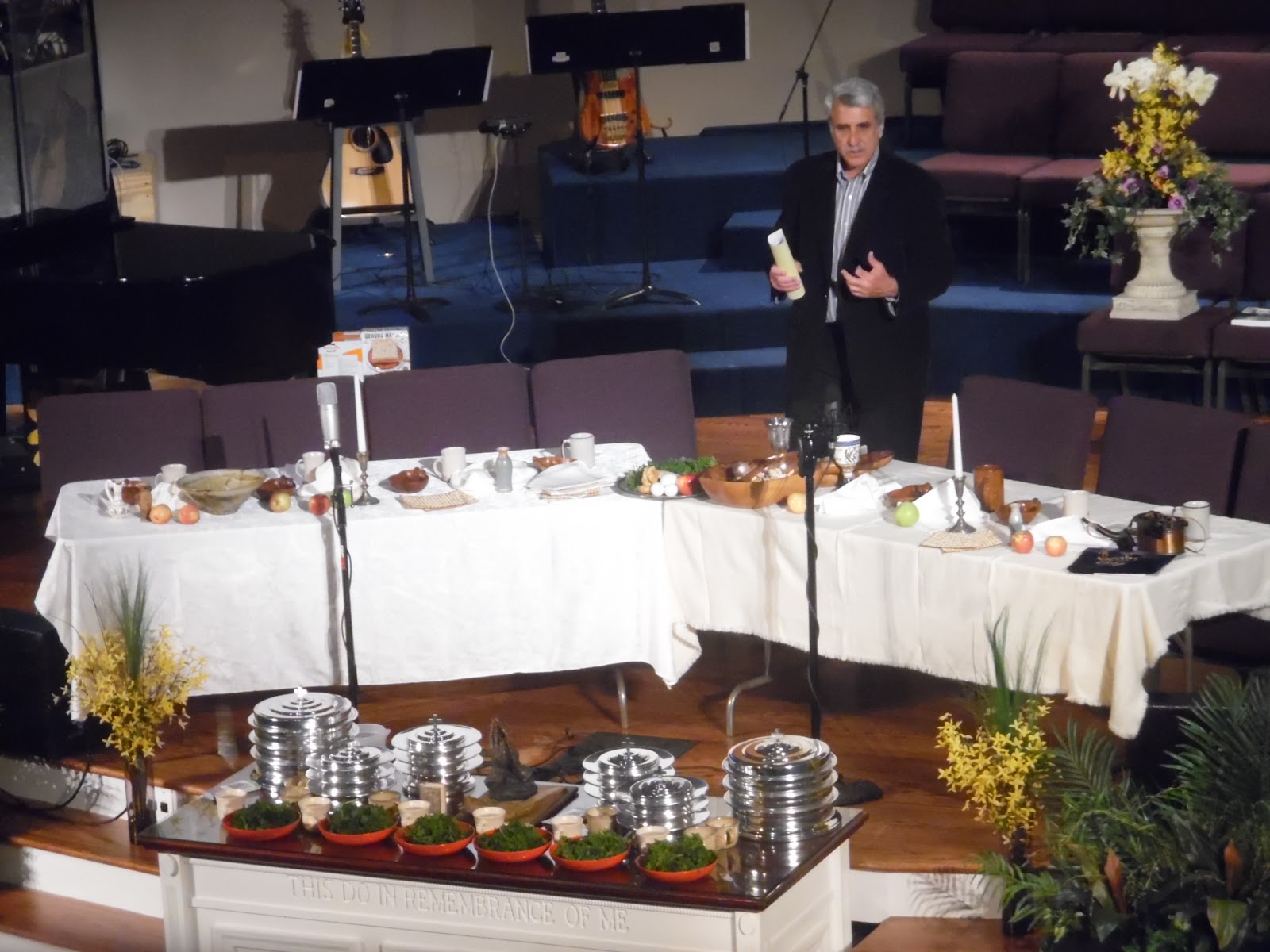
The Last Supper of Jesus was a sit down event
Following the death, burial and resurrection of Jesus, the early disciples, who were all Jewish, began to teach the message of their Lord to the Jew first and also to the Greeks. A large number of gentiles came to believe the message of Jesus, and in time, these people called their faith in Jesus, Christianity. The early church ate a dinner similar to the Passover called the Agape Feast. (Ro 14:13-21; 1 Cor 10-11; Col 2:16; Jude 1:12)
A drama about the Resurrection
In the beginning, many Jewish traditions were followed among believers in Jesus. But as the church grew and spread to the ends of the world, things changed. A largely gentile world developed new traditions and the Jewish ways were no longer followed. By the end of the first century, Ignatius, the bishop of Antioch wrote letters to churches across Asia Minor and told them, “If any one celebrates the passover along with the Jews, or receives the emblems of their feast, he is a partaker with those that killed the Lord and His apostles.” (Letter to the Philippians 14)
Passover builds relationship with God
The celebration of the Passover as a common meal was the practice of Jesus and of the early church. Sharing this festival as a teaching in the home and as a celebration of the church fell out of practice in the second century, and as it did weakened the congregants of the church. The format of the dinner “feels strange” among people used to attending a service rather than participating in a teaching event.
Passover in the home
The church replaced Jewish traditions which sought to teach faith in the home with ceremonies developed in order to empower the bishop. People began to place their loyalties in the priest rather than God. The historic ways which were practiced by Jesus and his family in their home and community were discarded to fuel an organized religion.
Passover shared with a large group
A Passover dinner led in the traditional format (not from the pulpit), can teach a number of things to a church congregation. The dinner teaches the age old story of how God freed His people from Egyptian slavery. It displays the background in which Jesus shared His message of redemption on the very night He was betrayed. If presented correctly the Passover Seder will teach parents how to instruct their children in the faith at home, which will result in stronger and more self sustaining churches.
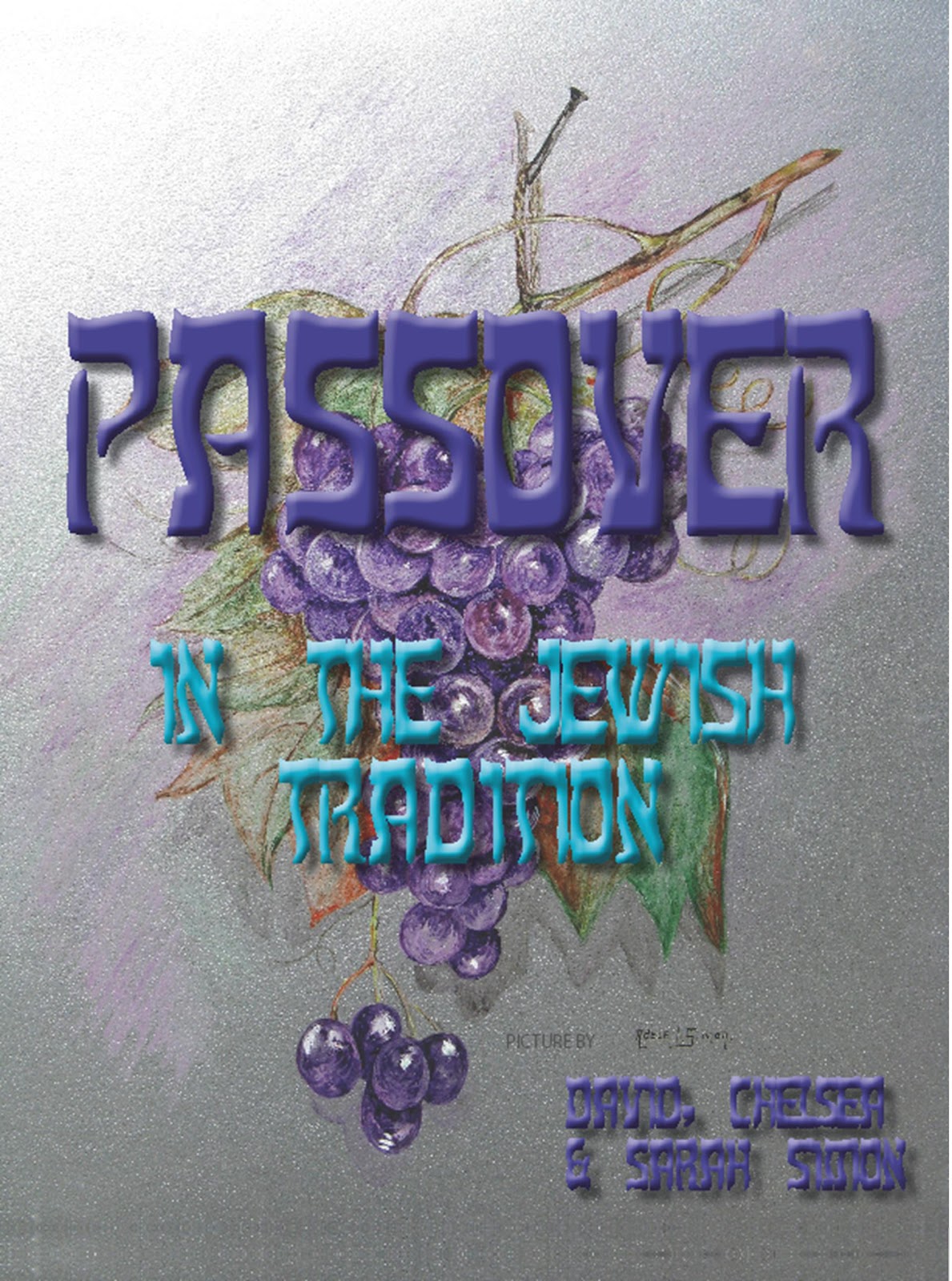
A Passover resource that explains everything

I have written a book to help pastors, churches and families to present a Passover Seder in its original context. I sought to re-created the meal enjoyed every year by my extended family so it could become a looked-forward-to tradition in Christian homes and churches. A Christian Passover in the Jewish Tradition will equip parents to lead the dinner at home (as it was in the time of Jesus) and pastors to model the dinner for their congregations. I have produced a $1 Kindle book so families and congregations can read along and join in the Passover celebration. My book Spring: Connecting with God shows how celebrating the Passover as families gave strength to the people of Israel. And this tradition can bring strength to churches today.
Monday, January 29, 2018

When King Herod was Little

While Beit Guvrin and Maresha, towns not familiar to most people who study the Bible, knowing what happened in these towns will give clues to the formation of King Herod’s personality. In all probability King Herod the great was born and grew up in the region of these cities. Josephus contains a reference to this fact in the Antiquities of the Jews 14.13.9. The town of Maresha is very ancient, Joshua makes a note that this village was part of the inheritance of the tribe of Judah. (15:20, 44). Rehoboam fortified the city (2 Chronicles 11: 5-8) and later Nebuchadnezzar depopulated the region.
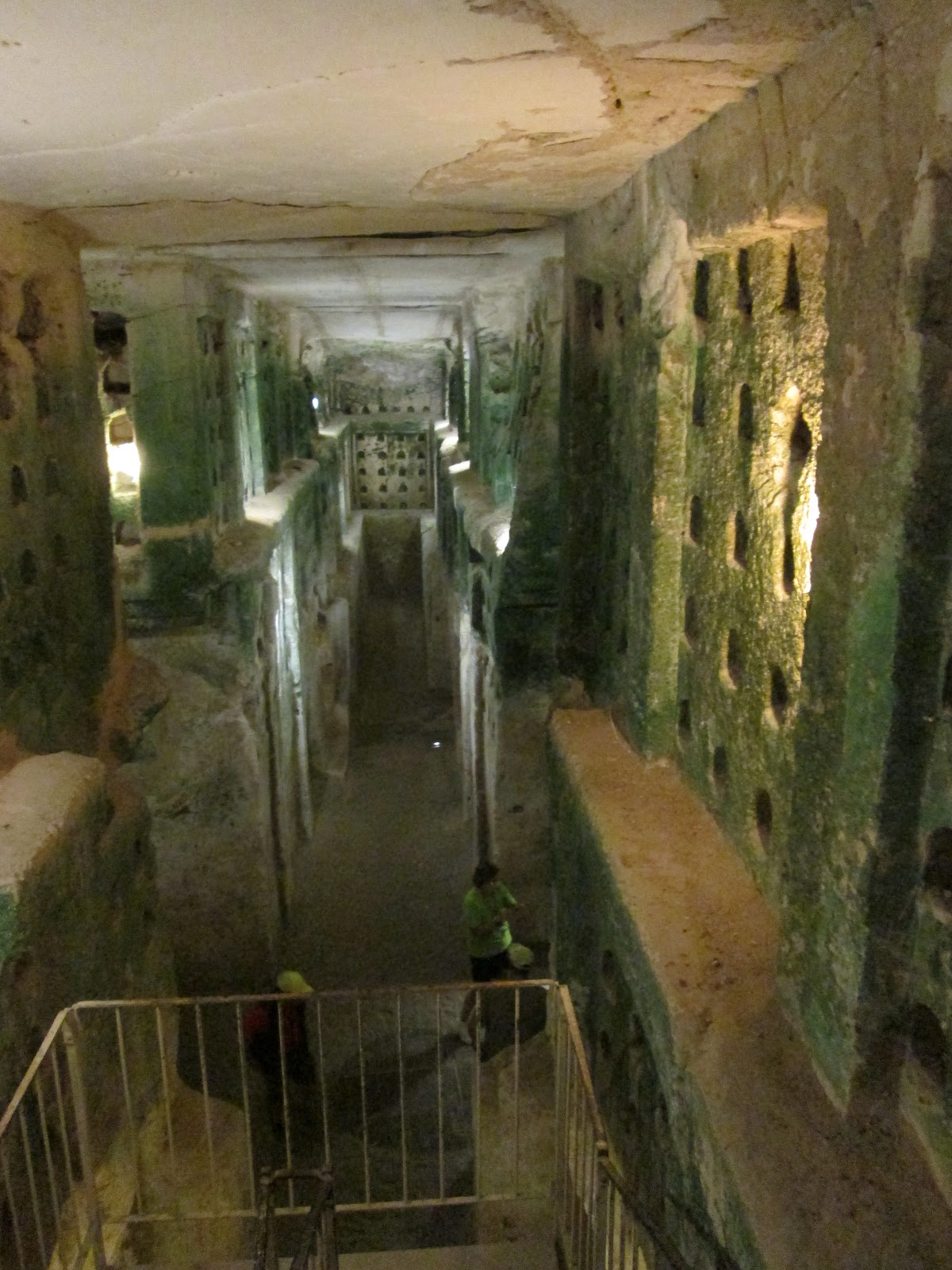
The Dove Farm at Beit Guvrin
When the people of Judah were away in captivity to Babylon, Nabateans, then Edomites (Idumeans), and finally Greeks entered the land in the Guvrin valley. These new people adopted the vacated olive groves (which originally drew them to the land), and brought with them textile and dove breeding industries which prospered in the valley.
   After the Maccabees came to power, Beit Guvrin and Maresha became a target for their new Hebrew state, because it was in the former territory of Judah. In battle they defeated the people who lived in the valley and once captured, Maresha became a regional capital for the Jews, who forcibly converted its inhabitants to Judaism. One of the Idumean inhabitants, Antipater, posed a challenge to the new Jewish rulers.
The Dove industry was large when Herod was a boy
Antipater was Herod’s father. History records he was a very rich, politically active, and seditious man who owned a great amount of property in Maresha (which is what the village was called at that time). He inherited these from his father, who carried the same name. Josephus wrote; ‘’Tis true, that Nicolaus of Damascus says, that Antipater was of the stock of the principal Jews who came out of Babylon into Judea. But that assertion of his was to gratify Herod, who was his son; and who, by certain revolutions of fortune, came afterward to be King of the Jews.” (Ant. 14.1.3)
The short stories in this book illustrate Herod's childhood

In my new book I develop a story about how the young boy Herod grew up in Maresha and received early training from his father in the textile and then the dove industry. He learned valuable lessons in leadership when his father placed in in management. The future king learned his cruelty by observing personality types while tending the doves his father owned. I share stories about how Herod’s childhood in Beit Guvrin and Maresha shaped events of the New Testament in my book, Israel: Stories for Your Journey, available on Amazon.com.

Friday, January 26, 2018

Jaffa and History


Joppa, Jaffa, Yafo, Yaffe, however you spell the name, is a city with a history. Last week in my class we looked at the events which occurred in or around this city, which was built on a hill overlooking the Mediterranean Sea.
The view from Joppa

Some of the most popular stories claim that Jaffa was founded by Japheth, the son of Noah. Although there is no proof of this matter, we do know that people (probably Canaanites) lived upon the hill of Jaffe by 2018 BC (not AD!) these people sought the hillside location for safety, and eventually built a wall around their community in order to defend themselves from attacks. By day they would grow crops, hunt, or go out fishing, and by night they would sleep safely inside the closed city gates.
A historic picture of Joppa

But history was not kind to Jaffa, because neither their hill nor their walls were high enough to keep intruders away. Pharaoh Thutmose III captured the city in about 1600 BC. It is said that he orchestrated an “inside attack” by offering the citizens 100 baskets of Egyptian “treasure,” carried in by 200 Egyptian “porters.” Both the “treasure” and the porters” were really Egyptian soldiers, and once inside the city gates, the city was an easy capture. Ramesses II was there in 1258 BC, as evidenced by a lion scarab and other archaeological finds. Both before, after and in between these two Pharaohs, other Egyptian rulers also called this city a possession and collected tribute from the people in Joppa.
Pharaohs visited Joppa
Along history’s path, the Bible tells of others who visited Joppa over the course of the centuries. It is recorded that Joshua and the army of Israel marched toward the sea along the Aylon River in Israel. This river used to empty into the Mediterranean near Joppa (it has been rerouted). From this march, Joshua turned south and captured other Canaanite villages, including Gezer and Lachish. King Solomon, likewise visited Jaffa in order to retrieve Cedar for the Temple which entered Israel at the port of Joppa.
The Harbor at Joppa

Joppa saw action as Assyrian kings Shalmaneser III, Tiglath Pileser III, Shalmaneser V, and Sargon II conquered Israel and fought against Egypt along the coastal highway. The prophet Jonah sought to escape a preaching assignment to Assyria during this period by taking the first ship out of Joppa to Tarshish. The prophet’s escape did not last long, because God brought up a storm which forced Jonah to be thrown from the boat, where he was saved by a fish who safely returned him to the beach near Yafo.
The story of Andromeda
In 412 BC, another story is told of a young woman who was saved from the sea. As the story goes, King Cepheus and his wife Cassiopeia, who ruled the city of Joppa, used to brag to everyone about the beauty of their daughter, Andromeda. They once said she was even more beautiful than the daughters of Poseidon. This angered the sea king, who demanded that Andromeda be chained to a rock in the harbor in order to save King Cepheus’s city from destruction. Andromeda would have been eaten alive by a giant sea creature, had not Greek god Perseus saved her.
A New Book on Israel

Over the years, Joppa has never been out of the limelight, and many other stories could be told. I have written a few more in my book, Israel: Stories for Your Journey. I will tell and learn others on a future trip to Israel. For more information, check out my webpage at www.KosherCopy.com.

Monday, January 22, 2018

Israel's Long History

One of the amazing things about the Holy Land is their long history. In the United States, most historic sites tell stories from only a hundred or two hundred years ago, and the most ancient sites only go back five hundred years. It is therefore amazing when I go to Israel where “new” can be five hundred years old and it is common to stand at the location of events which go back 3,000 years or more.
The view from Old Joppa to New Tel Aviv
In my class about Israel this week I introduced people to the city of Joppa, which was an ancient port of arrival into the Holy Land. At least one history records that Joppa was founded and took its name from Japeth, the son of Noah. Japheth left home after the flood and founded this seaside community because of its beauty (Joppa means beautiful).

A New book on Israel
Upon thinking about Japheth’s founding of Joppa, I began to think of other stories I read about Israel for one of my latest books, Israel: Stories for Your Journey. The residents of Gezer, located only twenty miles from Joppa, claim that Noah lived on the hilltop of their city. It is claimed that Noah’s wife, his daughter, and also Adam’s wife Eve baked bread in an oven near the city.
The Cavernous water source at Gezer
Walks in Israel can be walks through history, if you listen to the stories. Everyone wants a piece of the action and to tell a familiar tale about the past. Did Japheth really found Joppa? Did Noah live in Gezer? Did Eve bake bread in the cavernous hole near Gezer’s city gate? Probably not, but the stories are fun, and the reality of the matter is that people have lived in Joppa and atop the hill at Gezer for a very long time.