Showing posts with label tour Israel. Show all posts

Monday, May 28, 2018

Working in a Cave

Yesterday we began our dig at Gezer, a major archeological site going back to the Bronze Age and earlier.
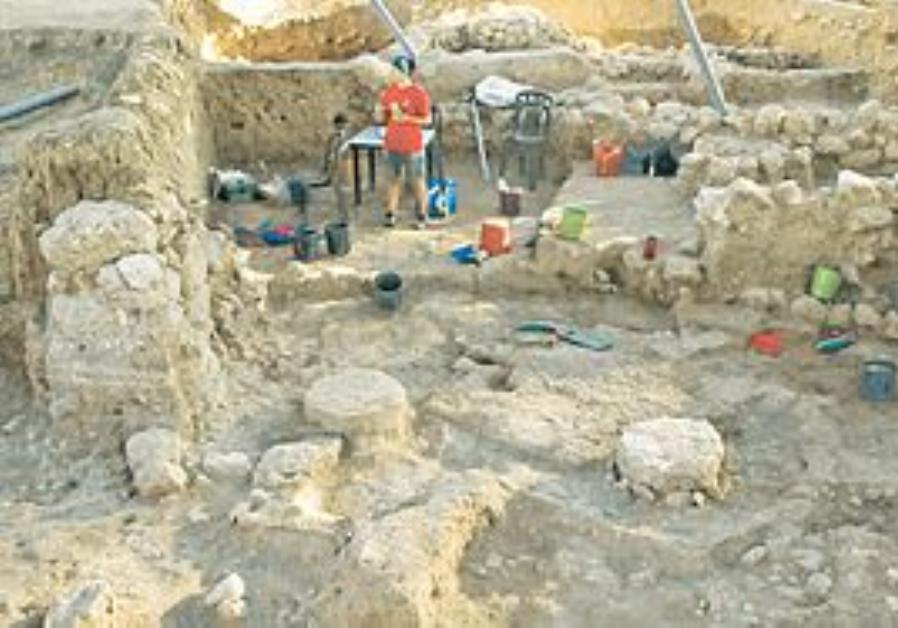
Canaanite area at Tel Gezer. Canaanite house under tarp, Gate to left, the tower is to the right of the bridge.
We are working in an area which that was developed during the Canaanite period.
The water project is the large hole in front
Dr. Warner, who has been working at Gezer for more than a dozen summers walked us around the site pointing out different areas. He pointed out various features of the site. One area was the Canaanite Gate with its massive entrance and mud bricks.
The Canaanite Gate at Gezer
Another area he highlighted was a massive tower for the protection of the city. The base of the tower is at least 45’ by 55’ in area. The tower probably stood 40’ tall with an additional mud brick structure above that.
The remains of the huge tower at Gezer
During a 150 year period of peace, the Canaanite cities launched aggressive building programs. City walls became massive, with large gates and watchtowers. Other projects were also undertaken.
Canaanite Tower from above

One of these was the huge water project.
The inside of the tunnel with hand carved arches above
The hand carved tunnel goes 180 feet under the ground, and then laterally.  
The team cleaning the steps of the Tunnel
My project the first two days is to clean steps. After 4,000 years without maid service, needless to say, they are a bit dirty. The pigeons and bats who live in the cave also leave reminders of their presence.
Safety features included the ladder and the hand rope
As we cleaned the steps, we learned that various critters live in the cave. We heard the singing of pigeons, who fluttered in and out of the cave. We met some of their offspring.
Young pigeons waiting for food
The singing of the doves was accompanied by music from the bats who roosted overhead. We cleaned out high quality fertilizer, which was a byproduct of both the doves and the bats.
Bats hanging in a ceiling creavice
We also met millipedes, slugs, various kinds of beetles and rolly-pollies.
The visitor with a hundred feet
There is a Canaanite period house which was built between the city walls and the water project, which retains (after 4,000) walls which remain standing almost the original height
The Canaanite House
The city also contains a Solomonic era gate,
The city gate with water drainage in the middle
And an 8th century BC house.
Typical four room Semetic House of the 8th Century

We have a team of about 25 people working in two areas at Gezer and one area at Tel Hadid.

Saturday, May 19, 2018

Haifa's Panarama

Today is Shabbat, a special day in Israel, a definite necessity after our overseas flight, time in Yafo and two weeks of traveling. Today is a gift, a day to slow down and enjoy the gift of life and God’s creation.
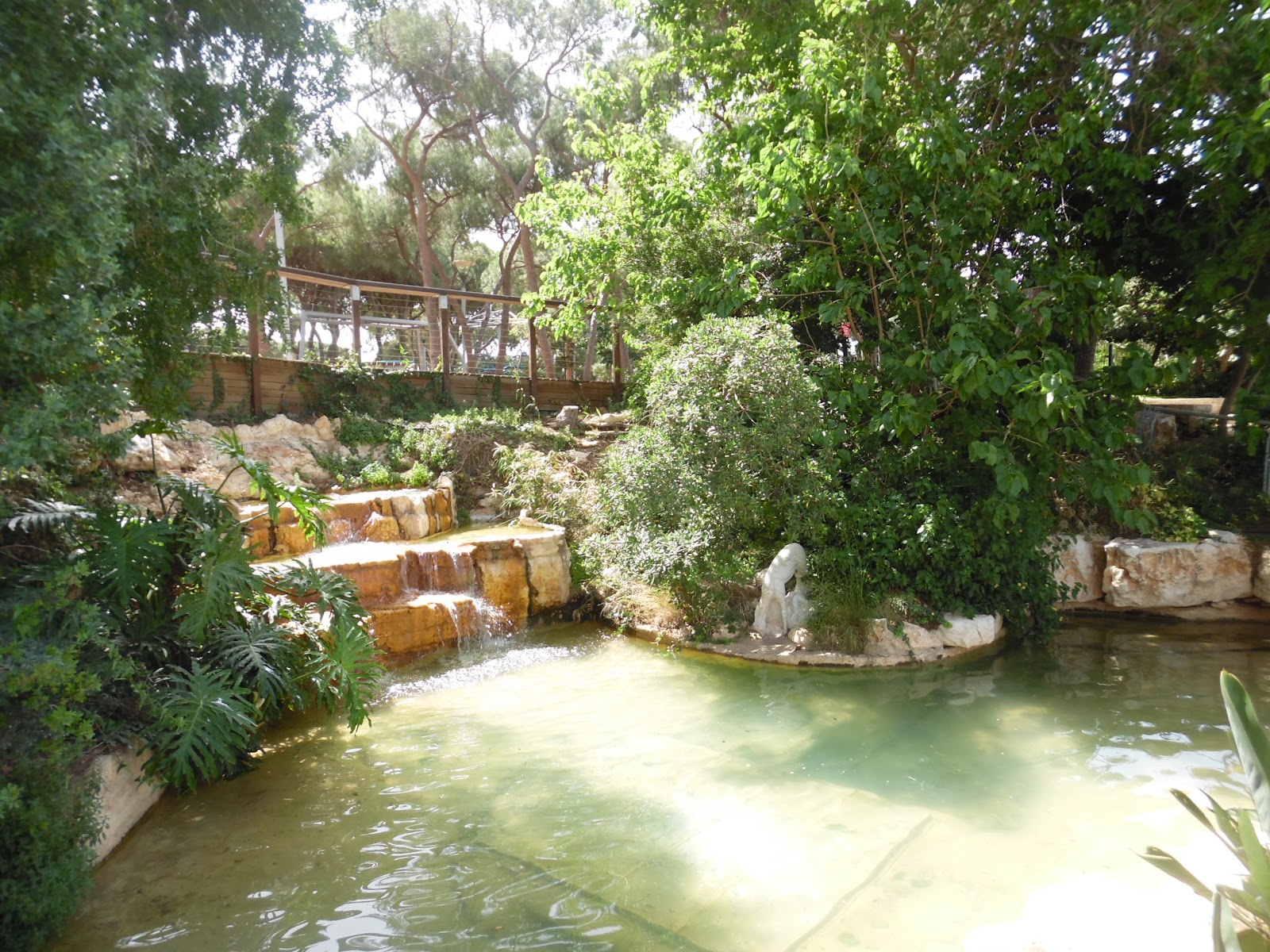
A pool along the Dan Panorama, Haifa
We began the day with a great supper at Burgus Burger Bar, a short walk through a garden and past a fountain, about two blocks from where we are staying. We had a leisurely dinner with our new friends from the afternoon’s hike. I should note that the Jewish day starts at Sunset, “And there was evening, and there was morning…”
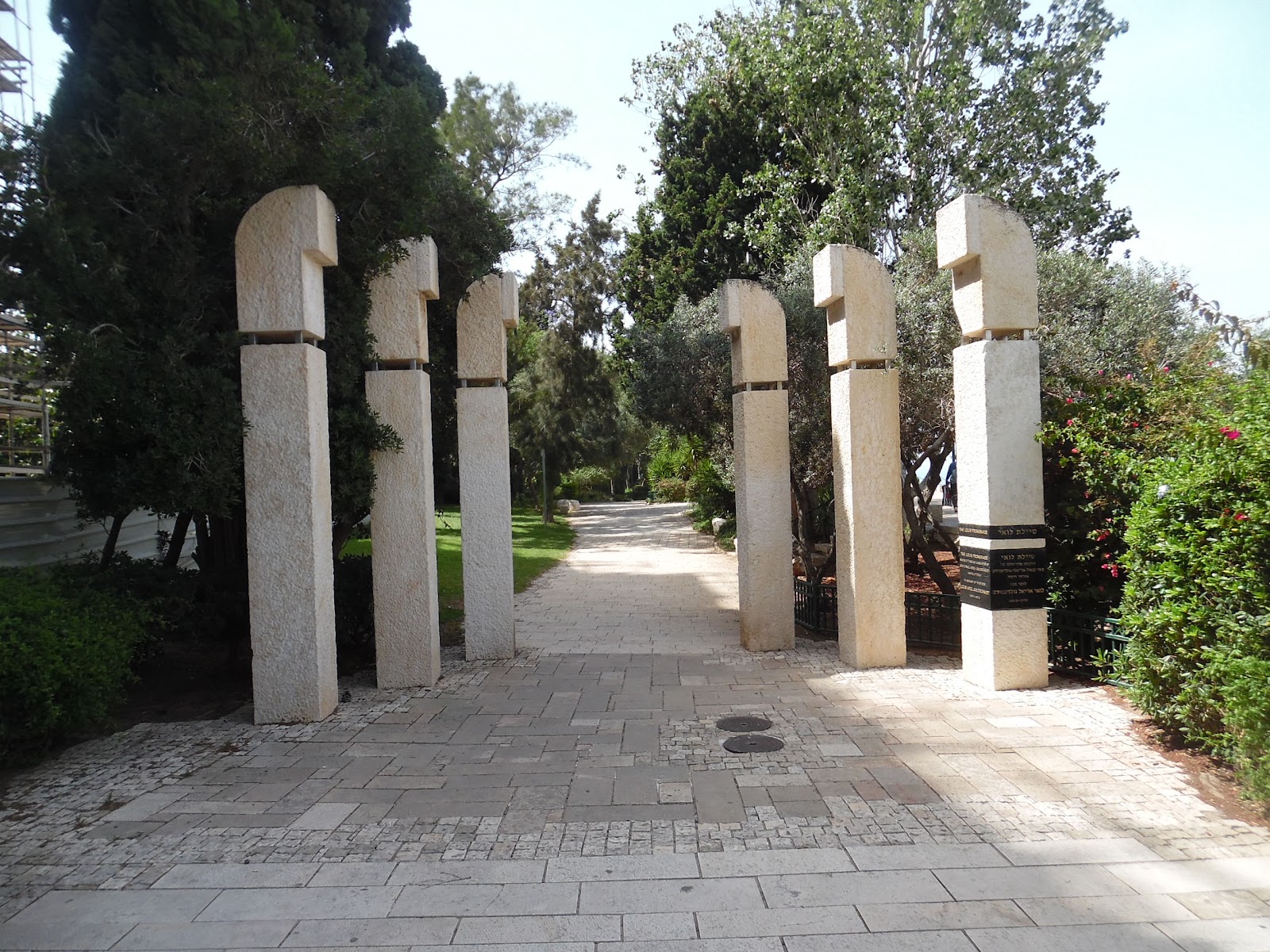
Dan Panorama Promenade in Haifa, Israel
After a fitful rest, we awake to a bright new day. Some of the family slept in, because it was the Sabbath. There is no rush, and the day was created to enjoy. We walked through the garden again to Landwer for an Israeli breakfast: a farmer’s omelette (with mushroom, spinach, leek and goat cheese), scrambled eggs, shakshouka, Israeli salad, tuna salad, cream cheese, feta, olives mix, labnah and chickpeas, eggplant cream, tomato salsa with tahini, guacamole, sweet yogurt with granola and honey, halva spread, fruit jam, whole-grain wheat bread. and coffee. We took our time.
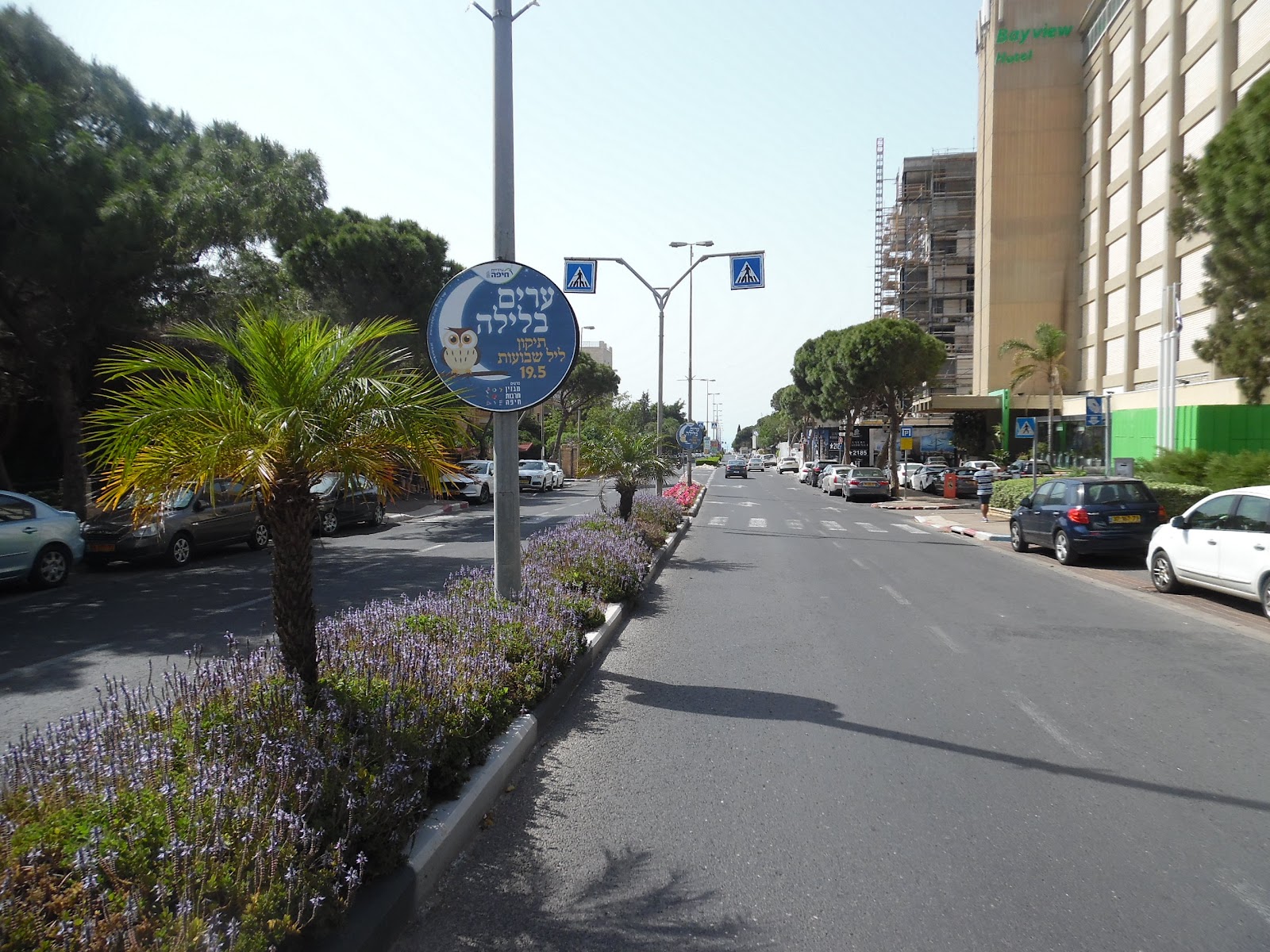
No traffic on the normally crowded main street!
The city of Haifa is at rest on Saturday. Offices are closed, public transportation comes to a stop, and the hustle bustle of daily live comes to a halt. We took a walk in the afternoon along the Dan Promenade.
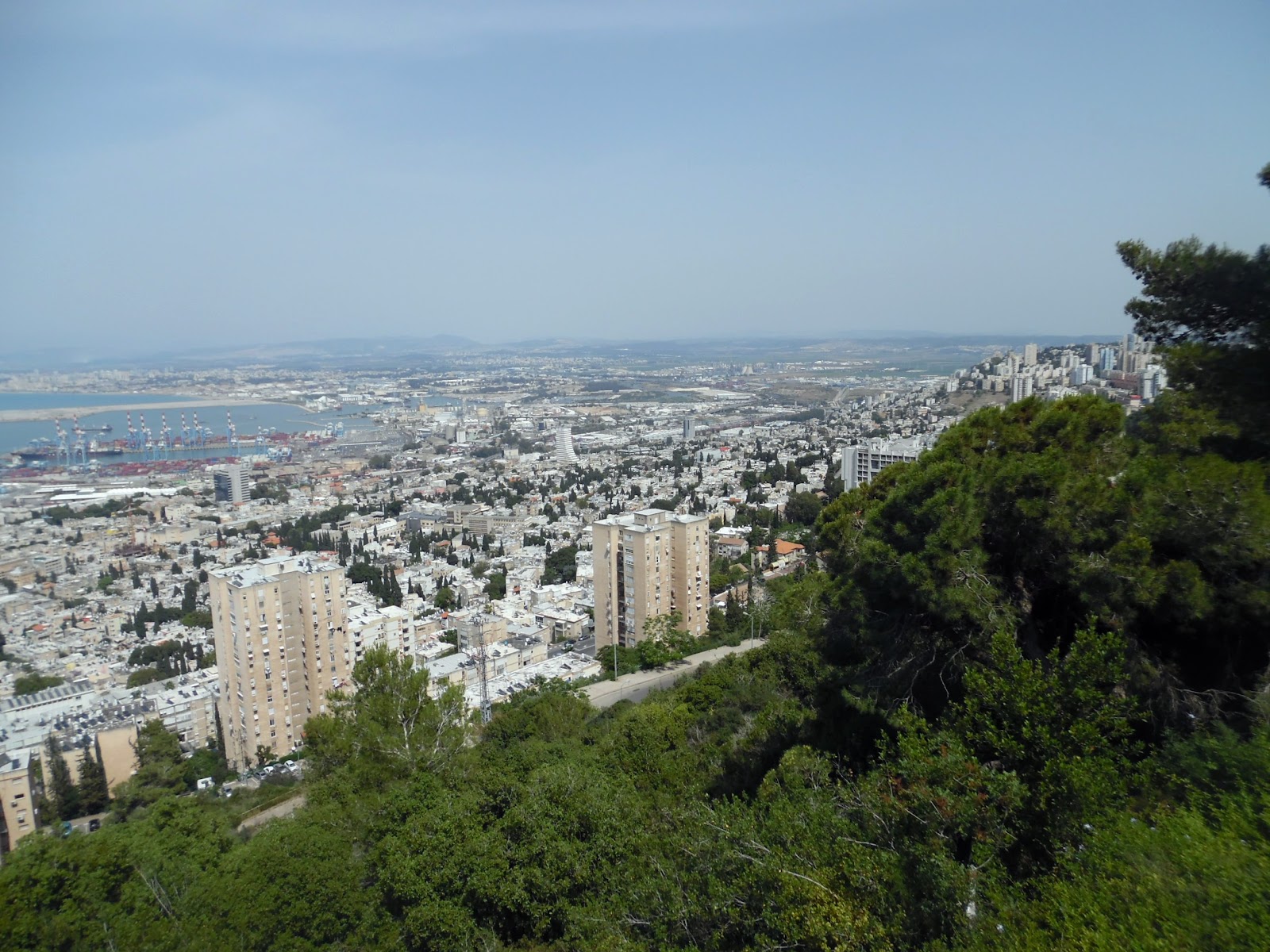
Downtown Haifa at the bottom of Mount Carmel.
We took a hike along the top of Mount Carmel, overlooking the Mediterranean Sea. We could see downtown Haifa and ships entering the port.
Ships entering Haifa Harbor. Also Bahai Gardens

Bahai Gardens spread out below, and the Jezreel Valley opened to the east. Akko could be seen to the north, and I was told that on a clear, dry day, it is possible to make out Cyprus. Our day is ending with strawberry mint tea and awaiting Shavuot to arrive this evening.

** Today's post is from Haifa looking north; Yesterday I wrote about a trail going west. Both overlook the Mediterranean where Mount Carmel projects into the sea. This is probably the place Elijah came to find the drought breaking rain in 1 Kings 18.

Wednesday, February 7, 2018

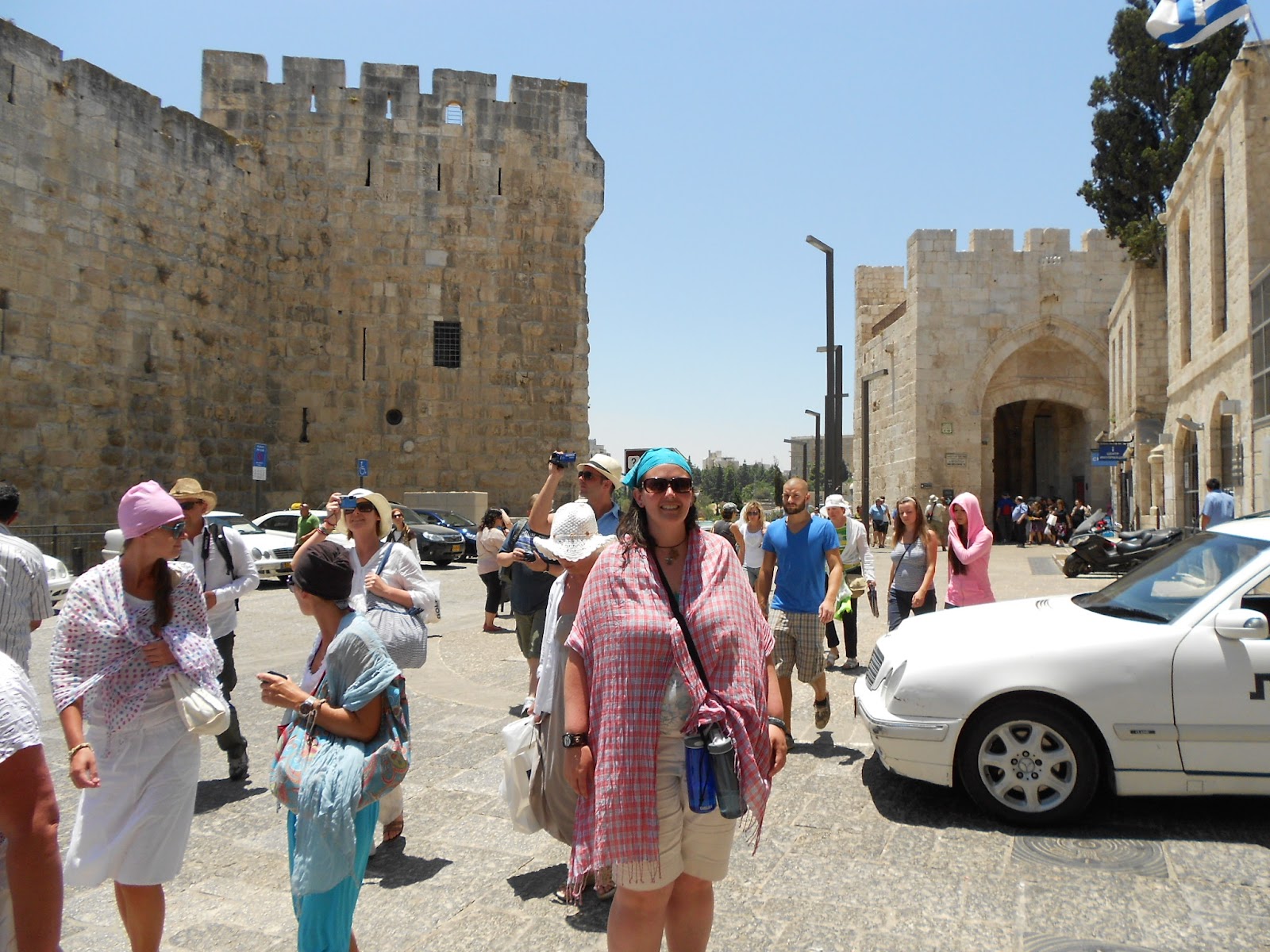
Joppa Gate

Pass through, pass through the gates! Prepare the way for the people. Build up, build up the highway! Remove the stones. Raise a banner for the nations. (Isaiah 62:10)
Jaffa Gate from inside the walls of Jerusalem
The Jaffa Gate is, in a way, the international gate of Jerusalem. The name shared most often today motions away from the city to the port city of Jaffa (and beyond that to Caesarea), from which travelers arrive into Eretz Yisrael from all over the world. From the days of King David, when King Hiram of Phoenicia passed by this gate, even until today travelers and others have written about the beautiful Jaffa Gate.
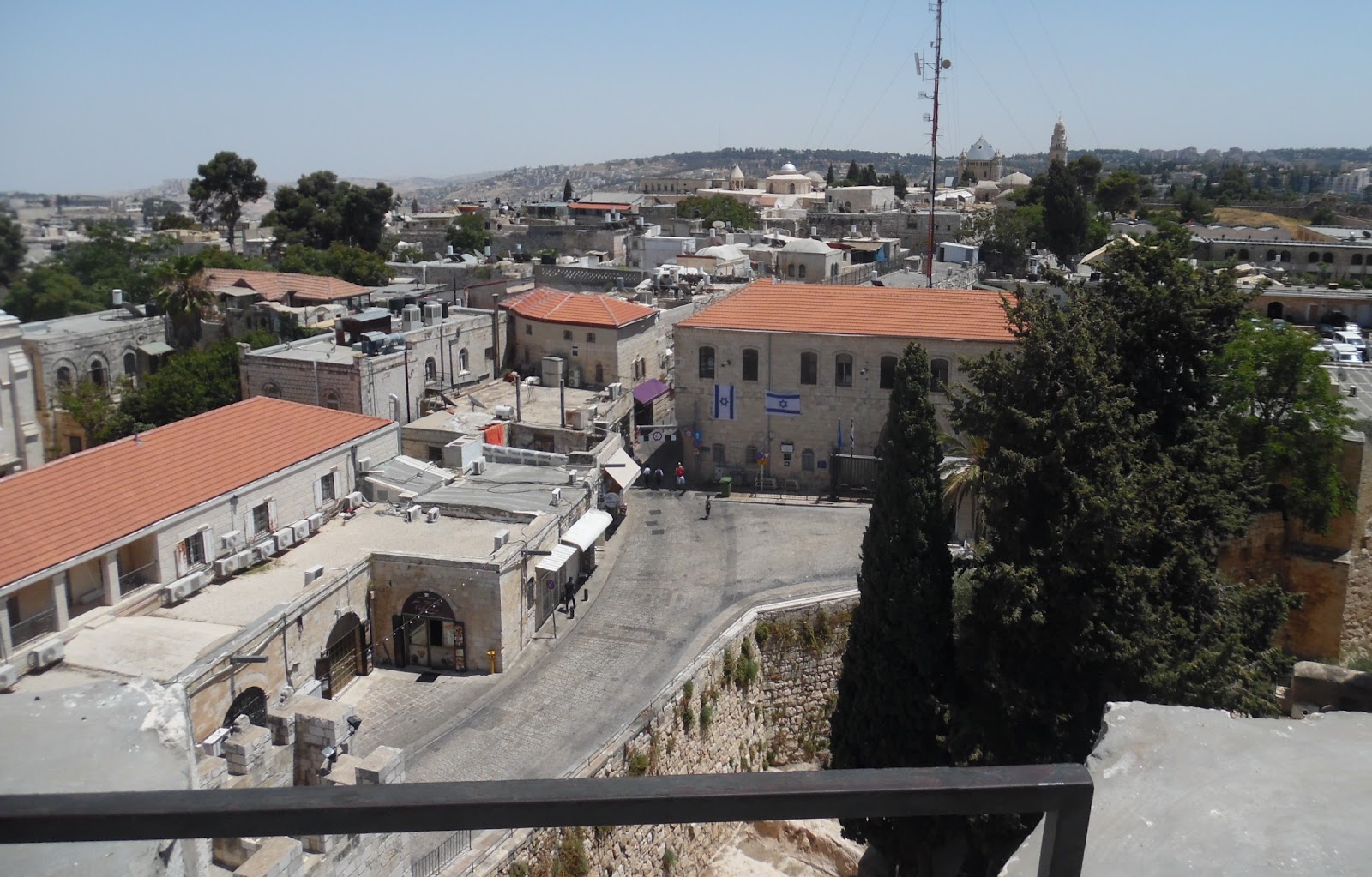
Looking down from the top of the Rampart Walls
At one time the gate was heavily guarded, with a double entry and heavy wooden doors which sat upon bronze hinges. Towers guarded this entrance, portions of which still stand today. King Herod named these towers Phasael (145’ high), Hippicus (132’) and Mariamne (74’) after his brother, a friend, and his favorite wife. Of these, only a portion of the Phasael tower stands today, and the gates were removed to allow Kaiser Wilhelm II easier access to the city in 1898. (More in my book, Israel: Stories for Your Journey)
A must for tourists to Israel
Most of the walls and gates of Jerusalem, which we see today, were ordered to be constructed by Sultan Suleiman the Magnificent who ruled the Ottoman Empire in the sixteenth century. A story is told of how he found the walls of Jerusalem in ruins after being visited by four lions in a dream. He sent two architects to build a wall following the original course of the city’s protective enclosure. When completed the Sultan visited the city, and when inspecting the work found it satisfactory with one exception. The Tomb of King David was left outside the walls. The two architects were hanged and put to rest in graves outside the Jaffa Gate.
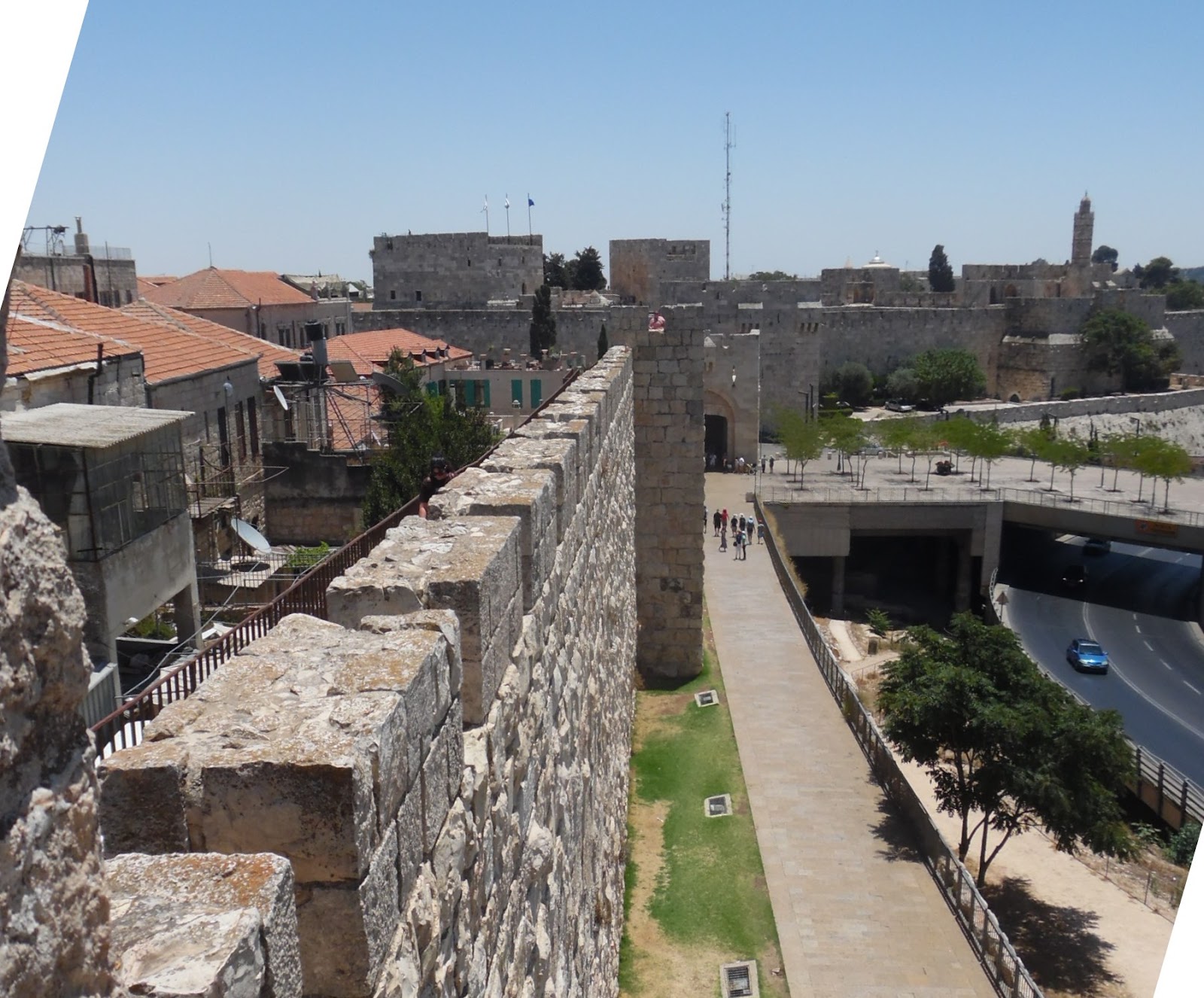
The outside of Jaffa Gate from the top of the walls
Most people pass in and out of the wide Jaffa Gate with no notice of these two graves, for this international gate is the portal into Jerusalem’s oldest and one of it’s newest marketplaces. The walls of Jerusalem contain a vast marketplace spreading out from David Street which leads toward Temple Mount. An entrance to the Mamilla Mall can be found when exiting the old city through the Jaffa Gate. Below the mall visitors will enjoy the fountains, shops and sights of Teddy Park.
Join me for a great tour of Israel

Jerusalem with its gates and holy sites is worth a visit. Please join me on my next trip May 5-18, 2018 (click this link for more details). If you can not go, please order my $2 book, Israel: Stories for Your Journey.

Saturday, April 1, 2017

Jesse’s Sons: Part 2

Eliab and his father Jesse spent the month descending the steep slopes below Bethlehem and then another month guiding their herd through the rich agricultural lands along the Elah river allowing the sheep to graze on the barley stubble. The valley was greener and the trees were taller than around Bethlehem, which he called home. The people of this region were odd, not like his friends in Bethlehem. They spoke with a different accent, ate unclean foods and paid homage to strange gods.
Early picture of the tel at Gath
As the shepherds and their sheep rounded the bend past Azekah the Valley began to widen and Eliab was amazed at the large city and the fortress which appeared before him. The hill was at least 300 feet tall with a white coloration, and even from what would normally be a two hour walk (if he and his dad were not slowed by the pace of the sheep) he could see high walls along the ridge upon which the city sat. His father told him this was the powerful city of Gath (Tell es-Safi), a stronghold of the Philistines and the sons of Anak. Jesse saw the look of amazement on his son’s face and stopped him to explain.
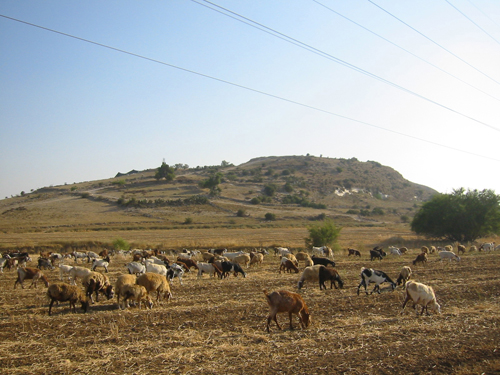
Sheep below Gath - Aren Maeir, Bar-Ilan University
“You will find these people different than our people, and they are unlike the Canaanites we have seen in the valley. These are the Sea Peoples, a strong civilization of warriors who feel that they should own the world. The Philistines rule their territory from five strong cities, Ekron is five miles north. Ashdod, Ashkelon and Gaza are to the south and closer to the coast. Gath ruled by King Achish who is the guardian of the Valley of Elah and the coastal plain below his city. He will allow us to graze our sheep in his territory because the people need meat and wool which comes from our animals. But do not trust anyone, and do not go out of your way to talk with them. Answer when spoken to, but keep your conversations short.”
Gath from the air - from Ferrell Travel Blog
Jesse explained to Eliab, and to his other sons when they first beheld this city, that the people were as strong as their city walls. They had developed a metal called iron, which was far greater in strength than any material which the Hebrews could use. If confronted in a fair face to face, hand to hand, strength to strength battle the Philistines would probably win because their weapons and training were superior to anything Jesse or his people possessed. There were giants in the city, which Jesse had seen. Several were at least eight feet tall, and probably larger. Eliab was to keep his distance from these people, and he was to let his father deal with them as they sold food and cloth.
Jesse had been in the city which was very large, loud and cosmopolitan. The gates of Gath were formidable. The ramparts atop the wall were expansive, and the King’s palace was elaborate. The market was several times larger than any village in the Judean highlands and the dwellings were several stories tall. The city was a busy place in which a person could easily get lost, and if not careful a man could get hurt or killed by these warrior people.
Area F staff and the Early Bronze fortification wall at Tell es-Safi/Gath
The people were especially proud of their great temple to dagon, a god of grain. Jesse told the story of how the Hebrew people battled with them during the settlement of the land and how at one time they captured the Ark of the Covenant. He said, “It was only by the strength of our God that we got it back.”
Jesse told the story of Samuel who was called a judge by the Hebrew people. “In the end,” he said, “Samson was betrayed by Delilah and taken captive by the Philistines who put his eyes out and made him tread grain like an oxen before their god dagon.”
Temple of dagon with its two pillars
Eliab remembered the story and added, “But when the Philistines tried to show the power of their god over our people by chaining Samson to the twin pillars in their temple this strong man was able to shove the supports apart and crush the heathen through the destruction of their temple and their god.