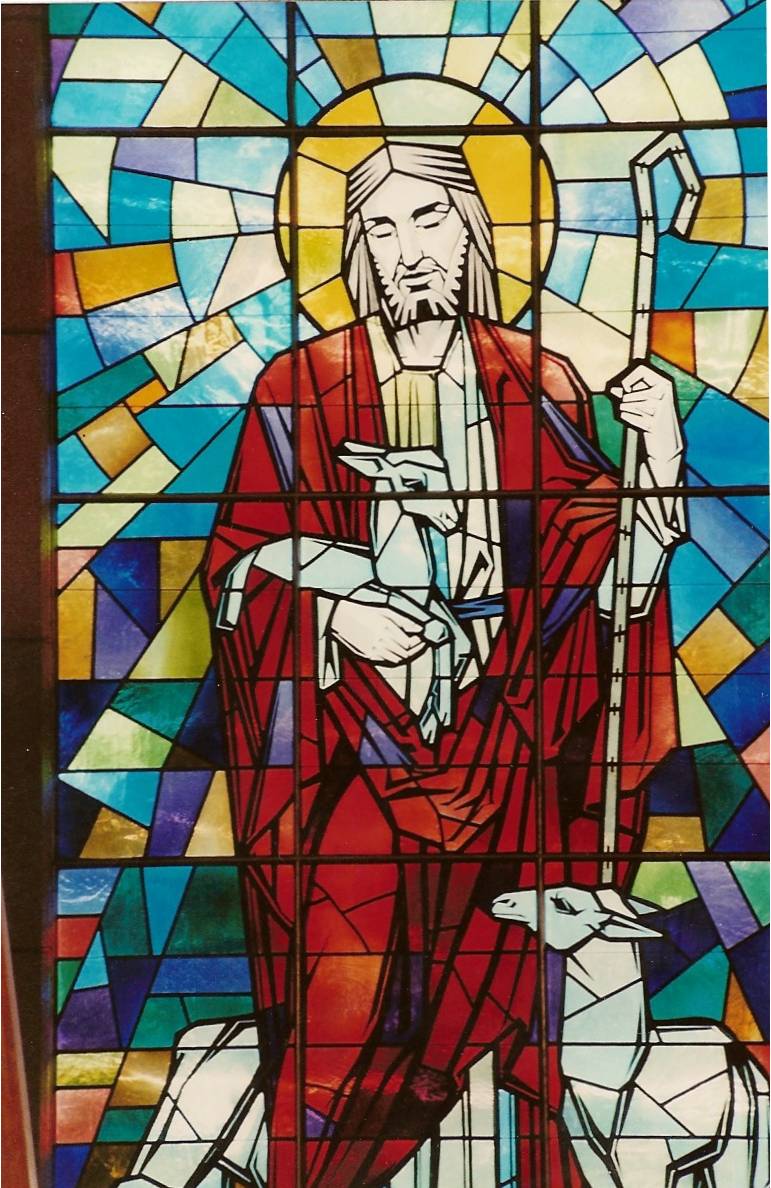
Wednesday, February 8, 2017

Visiting Tel Aviv

Please take this as in invitation to join me on a 14 day trip to the Holy Land. To see the full agenda or to sign up, click the links. You will be rewarded through personal discoveries and experiences by going on this journey.
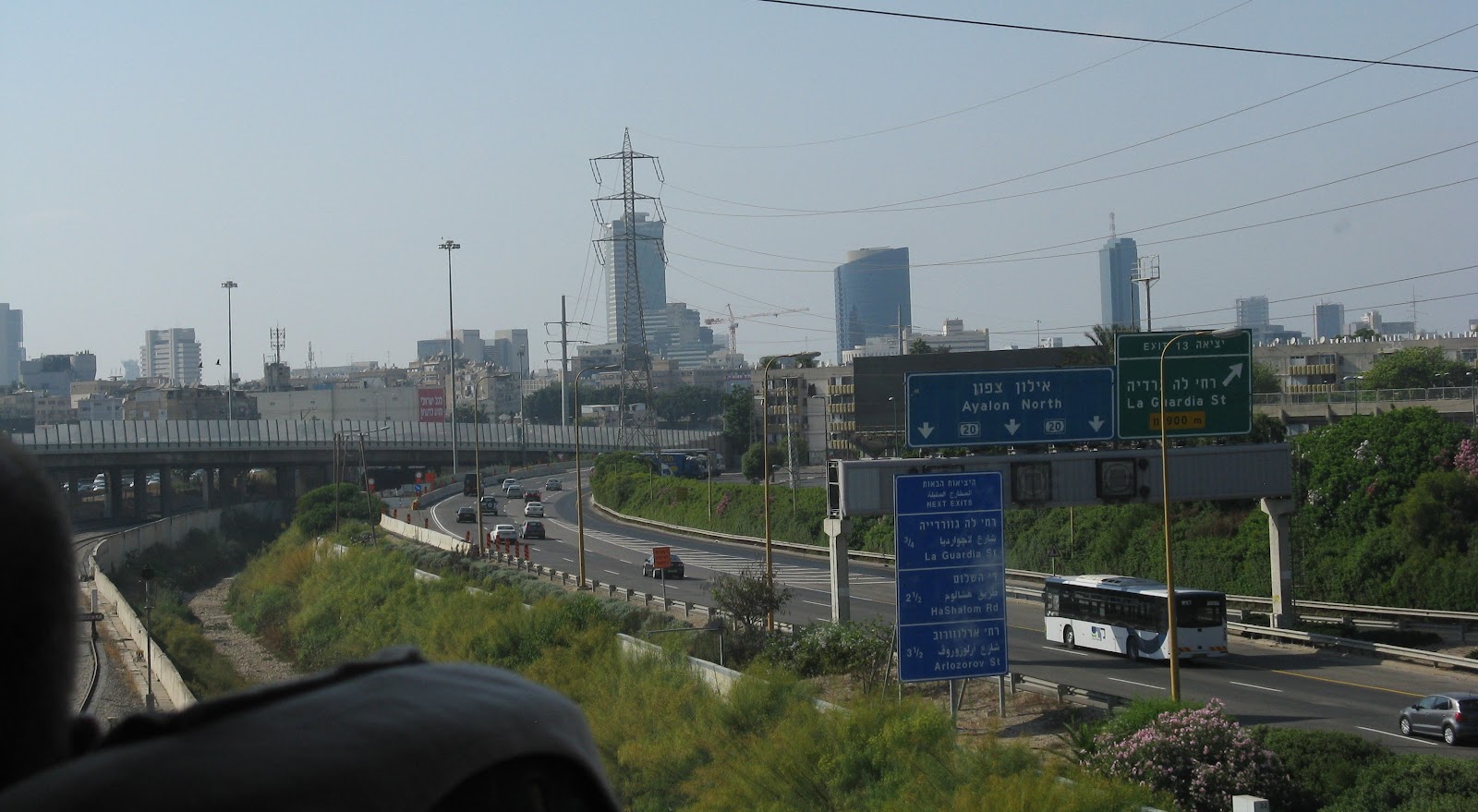
On our first day in Israel, after leaving the airport, we will drive into Tel-Aviv on Israel Highway 1. This is a popular, well-traveled highway which runs from Jericho to Jerusalem past Ben Gurion airport to Tel-Aviv..
The road system in Israel is modern and much like our road system in the United States. Roads, where possible, avoid cities and towns. People drive on the right side of the road, and speeds are comparable (signs say 100, 110 or 120 on limited access highways, but these are kph, not mph) Road signs are in Hebrew (not English). Fortunately, our bus driver will know where to go so we do not need to figure this out.
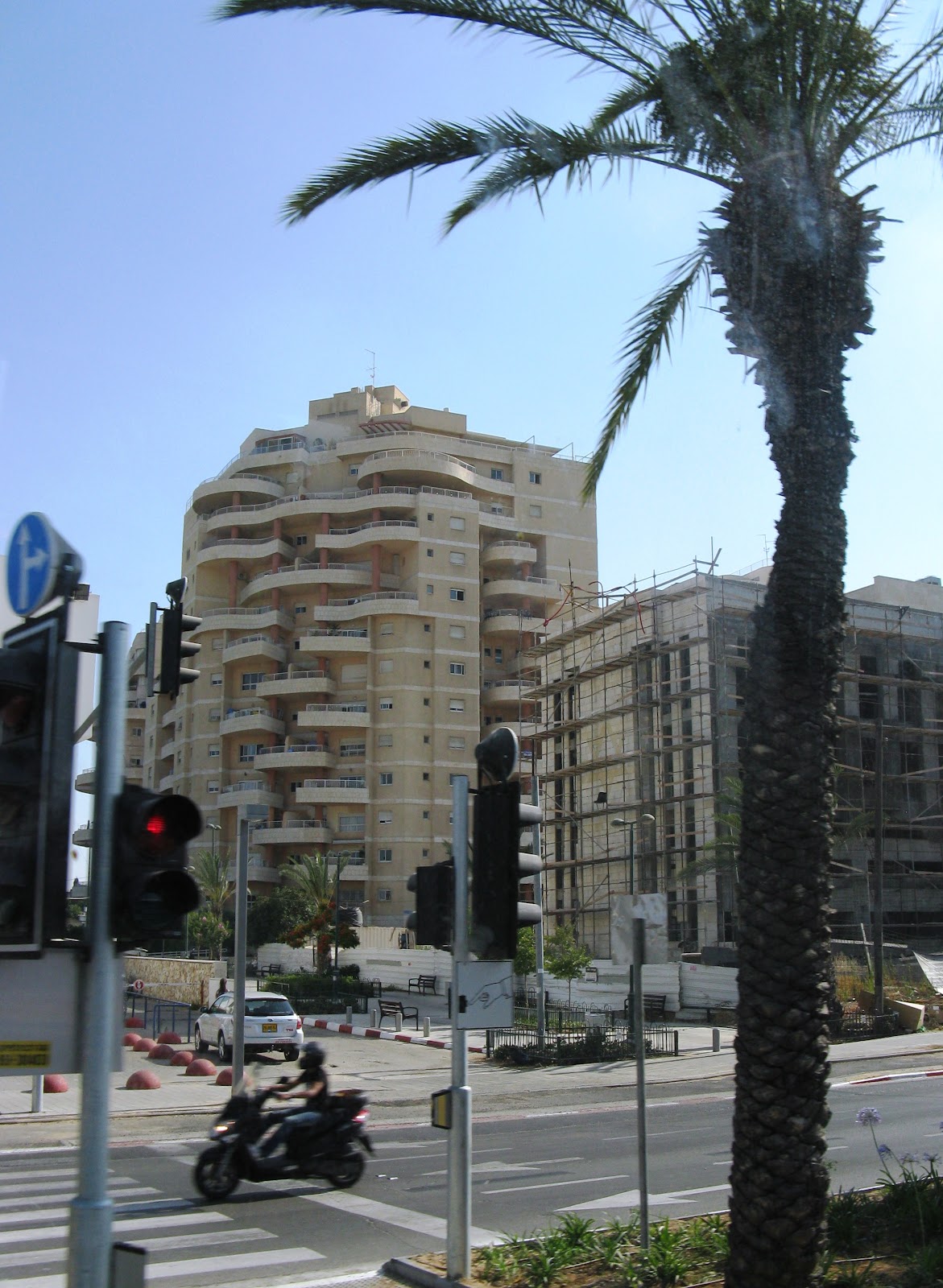
Inside the city there are a mixture of old and new buildings. Many buildings are highrises in order to house more people on the available land. On modern buildings, balconies alternate on each floor in order to allow tall Sukkot (shelters) to be constructed outside during the annual Feast of Tabernacles.
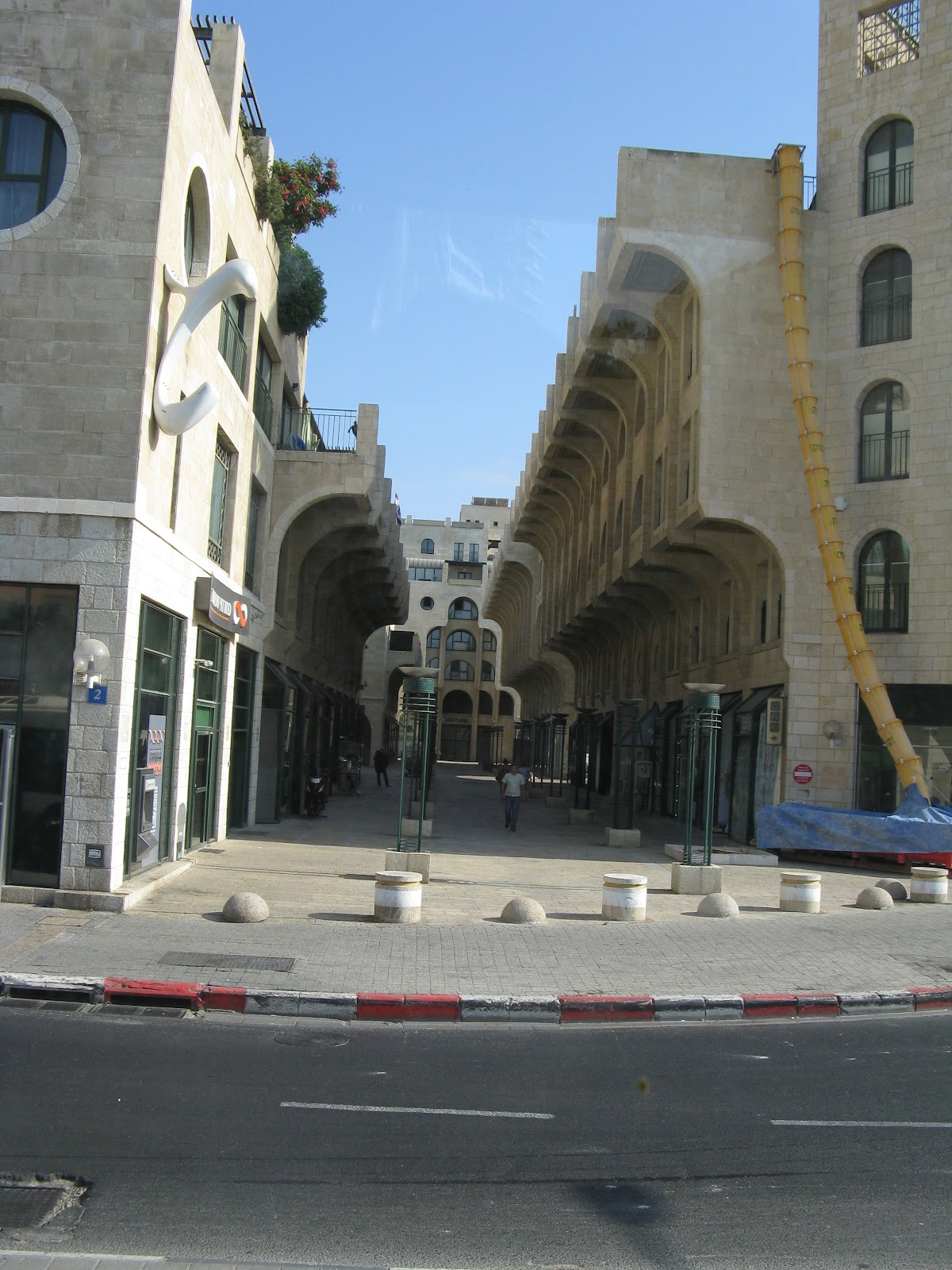
Some of the buildings are symmetrical or decorative.
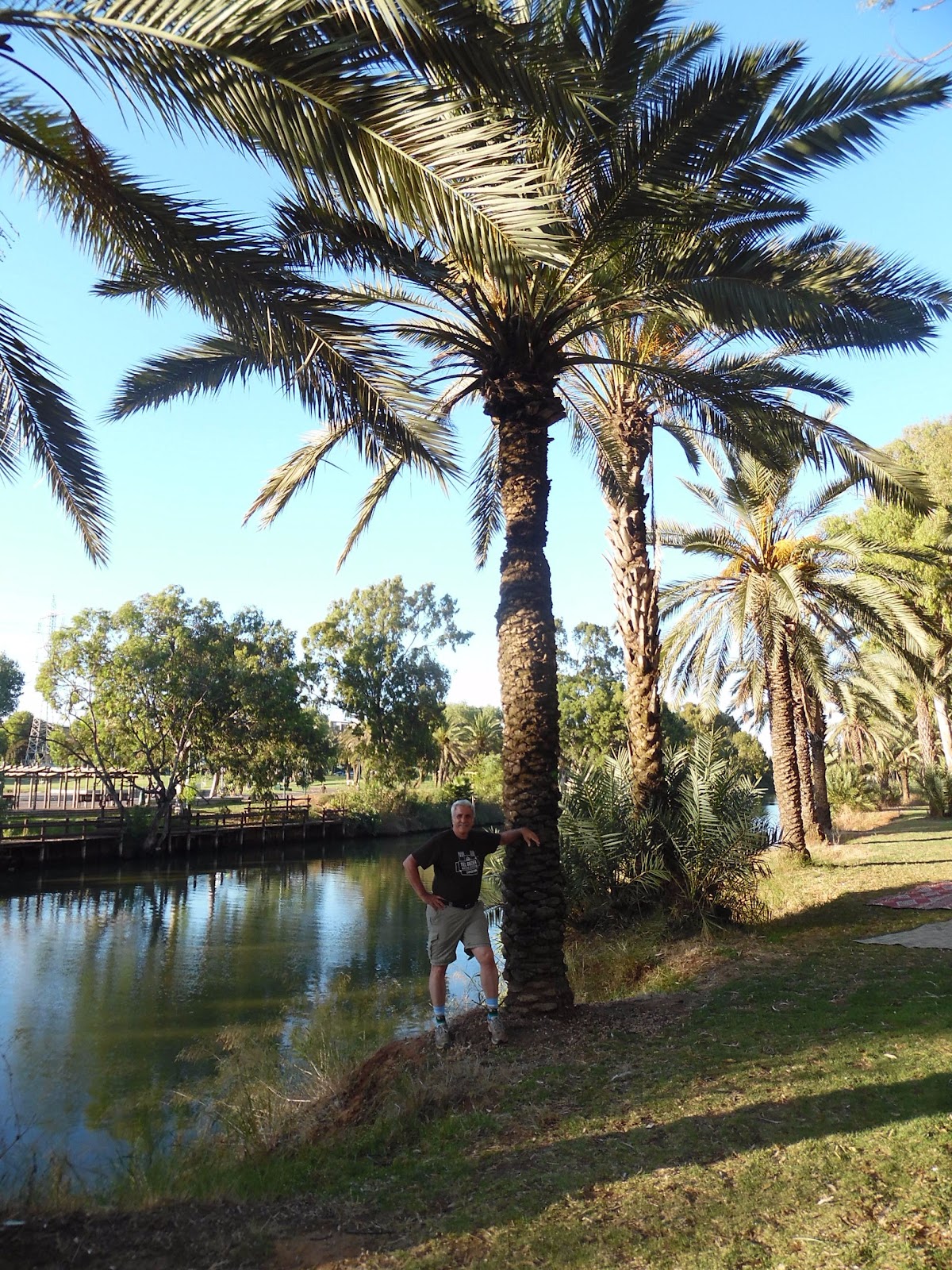
We will cross the Yarkon River while we travel in Tel-Aviv. The Yarkon River forms the heart of a park which is comparable to New York City’s Riverside Park. There are walking trails along the river and a generous amount of green space has been created in one of Israel’s largest cities.
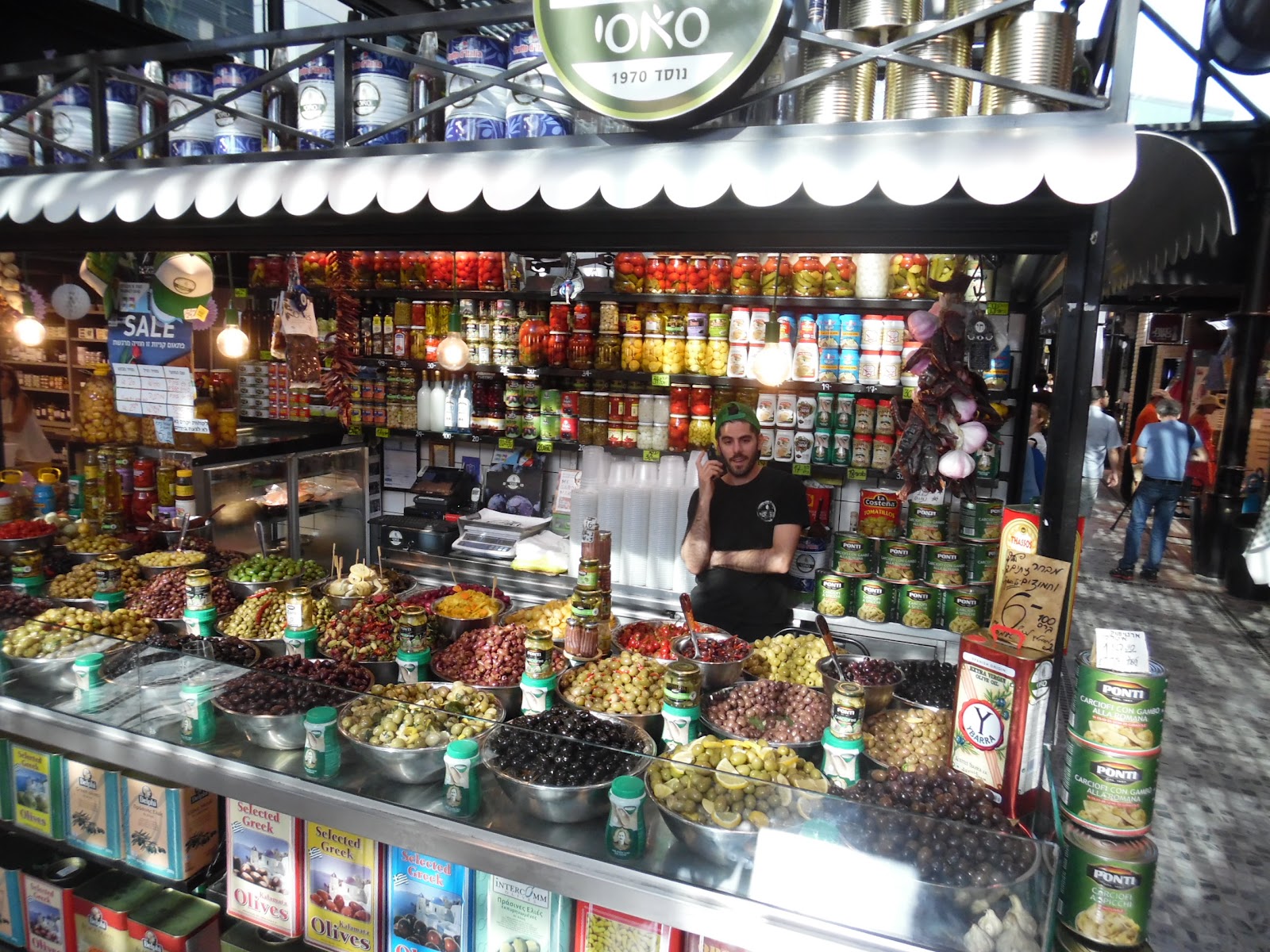
The Jewish market is called the shuk. Shops in the grocery shuk contain fresh fruits and vegetables. The picture above shows an olive stand within the market. There are also stands for fresh fruit, sandwiches, and ice cream.
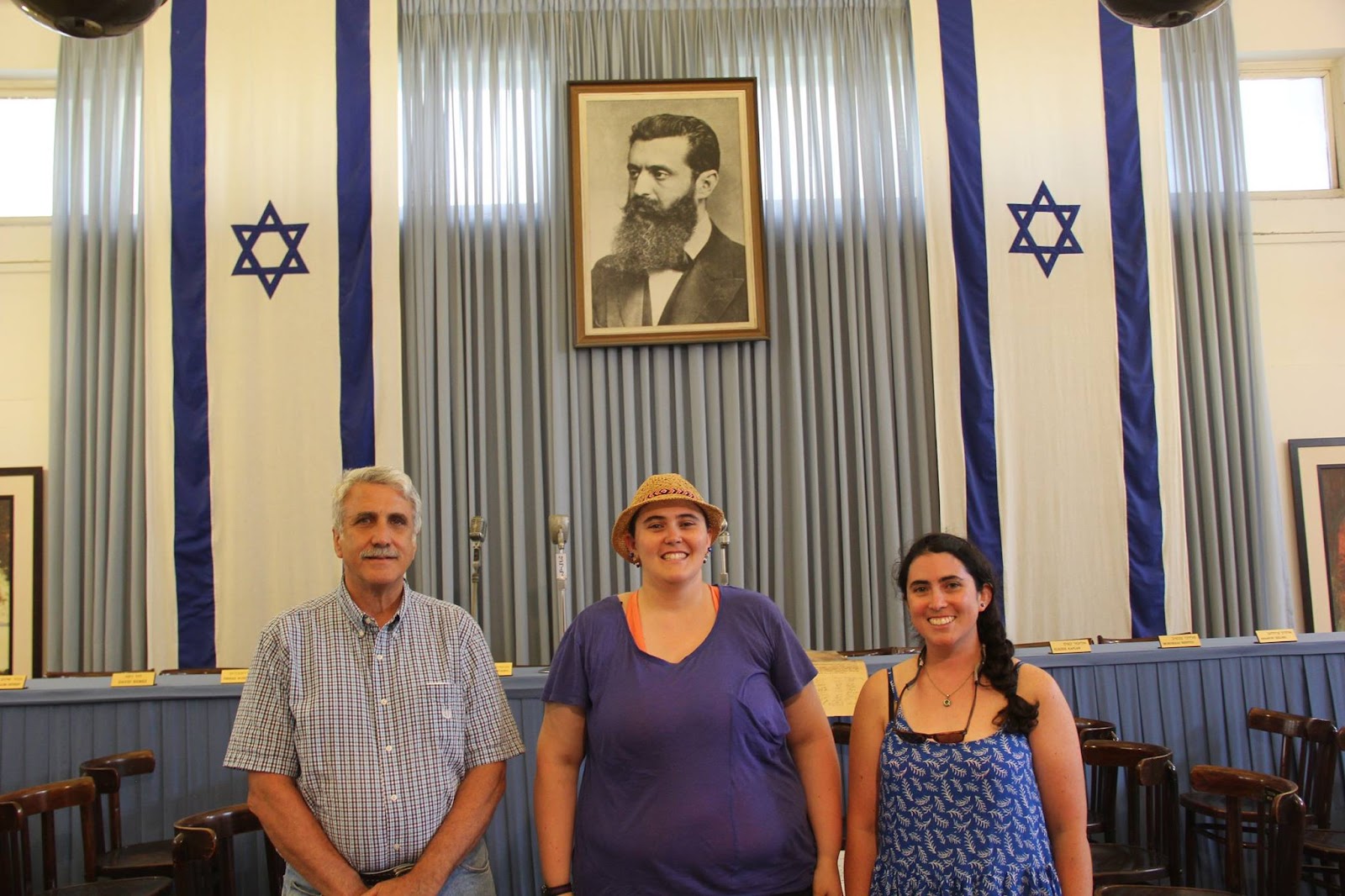
While in Tel-Aviv we will visit Israel’s Independence Hall. We will learn how the country was “born in a day.” Many amazing stories will be shared about Israel’s Day of Independence while we visit the Dizengoff home and see the room pictured above.
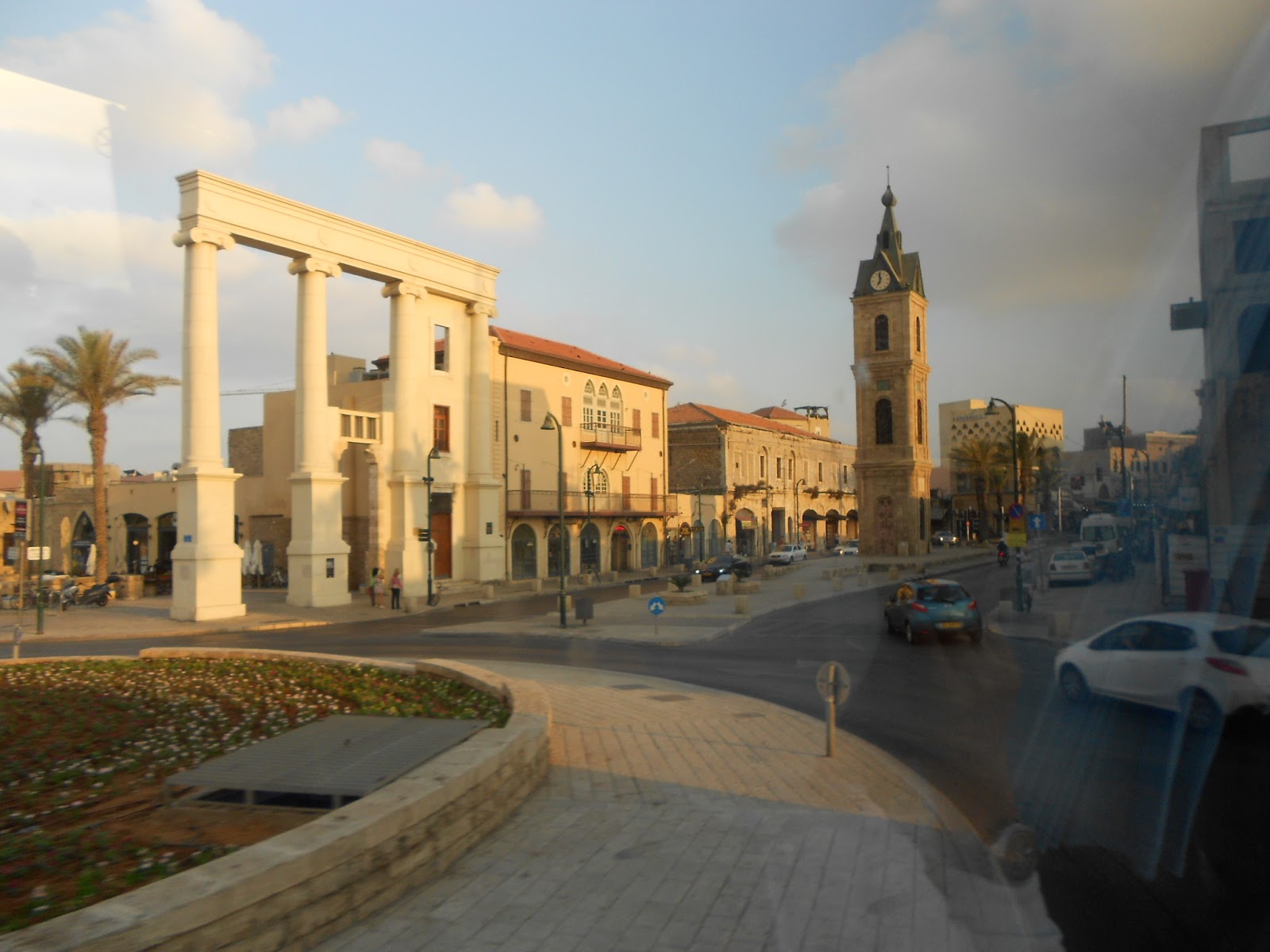
After visiting Independence Hall we will drive to the old city of Yafo. We will see the area pictured above along our route. The clock tower was built during the Ottoman period in 1900.
Old Yafo has many unique features. The historic area dates to the 19th century.
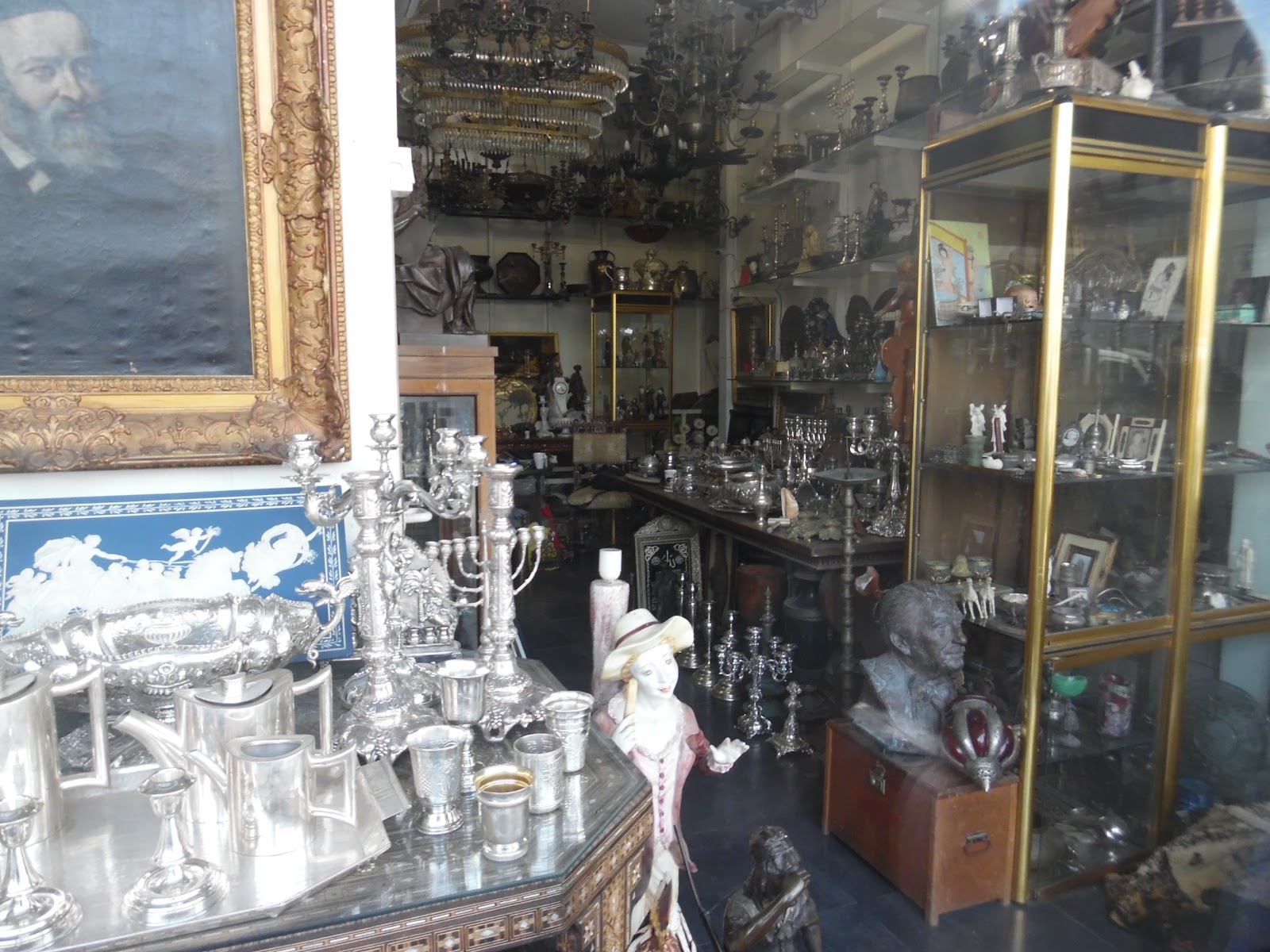
We will see local markets along the way. I bought a menorah in this shop located in the flea market district of Yafo. The shopkeeper’s name is David.
The flea markets of Israel contain many treasures. During our trip to the Promised Land we will be able to see some of the shops on the street while touring and stop in those which are still open during night walks.
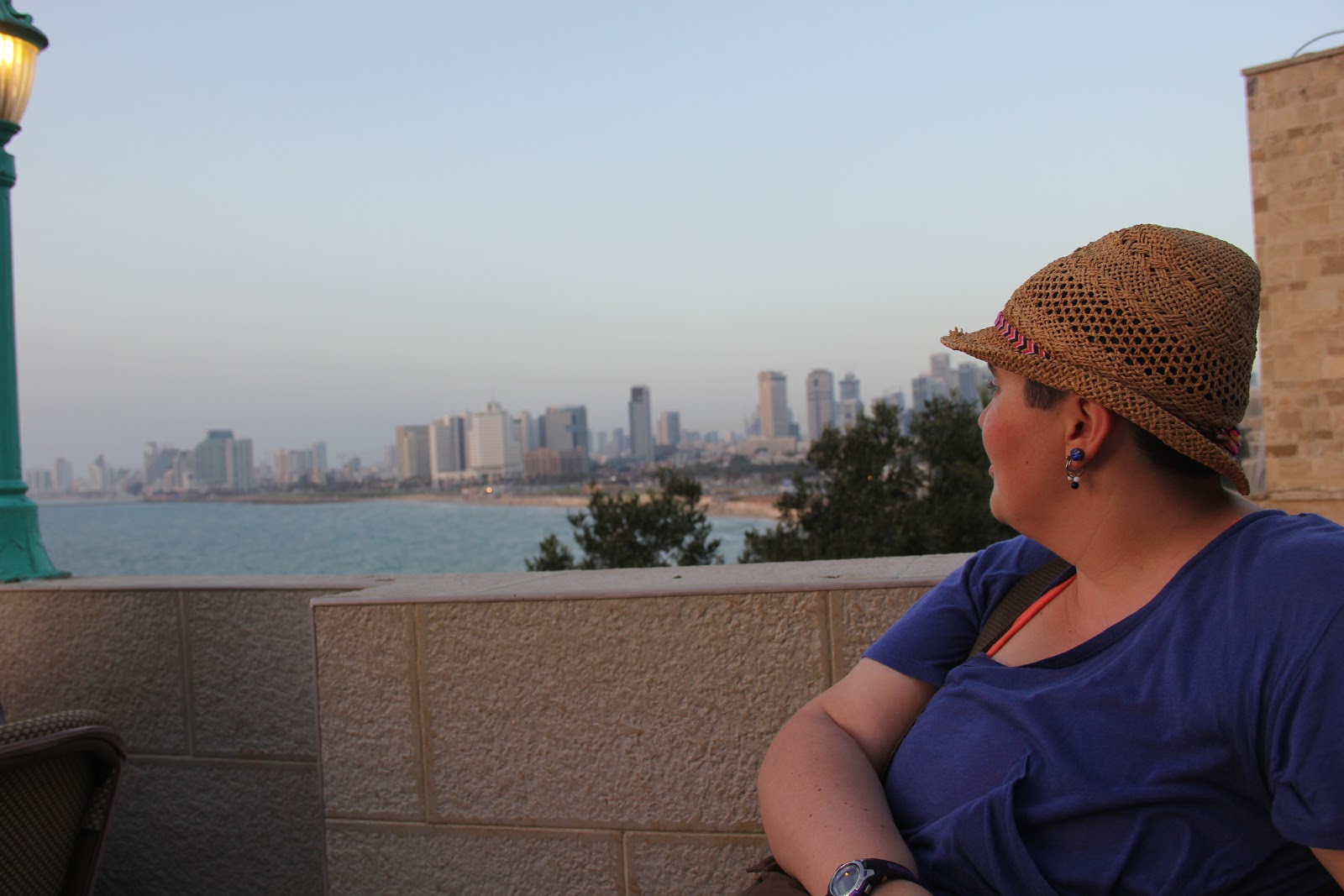
The old city of Yafo is within sight of Tel-Aviv’s modern downtown and beachfront. The old and new cities coexist together.
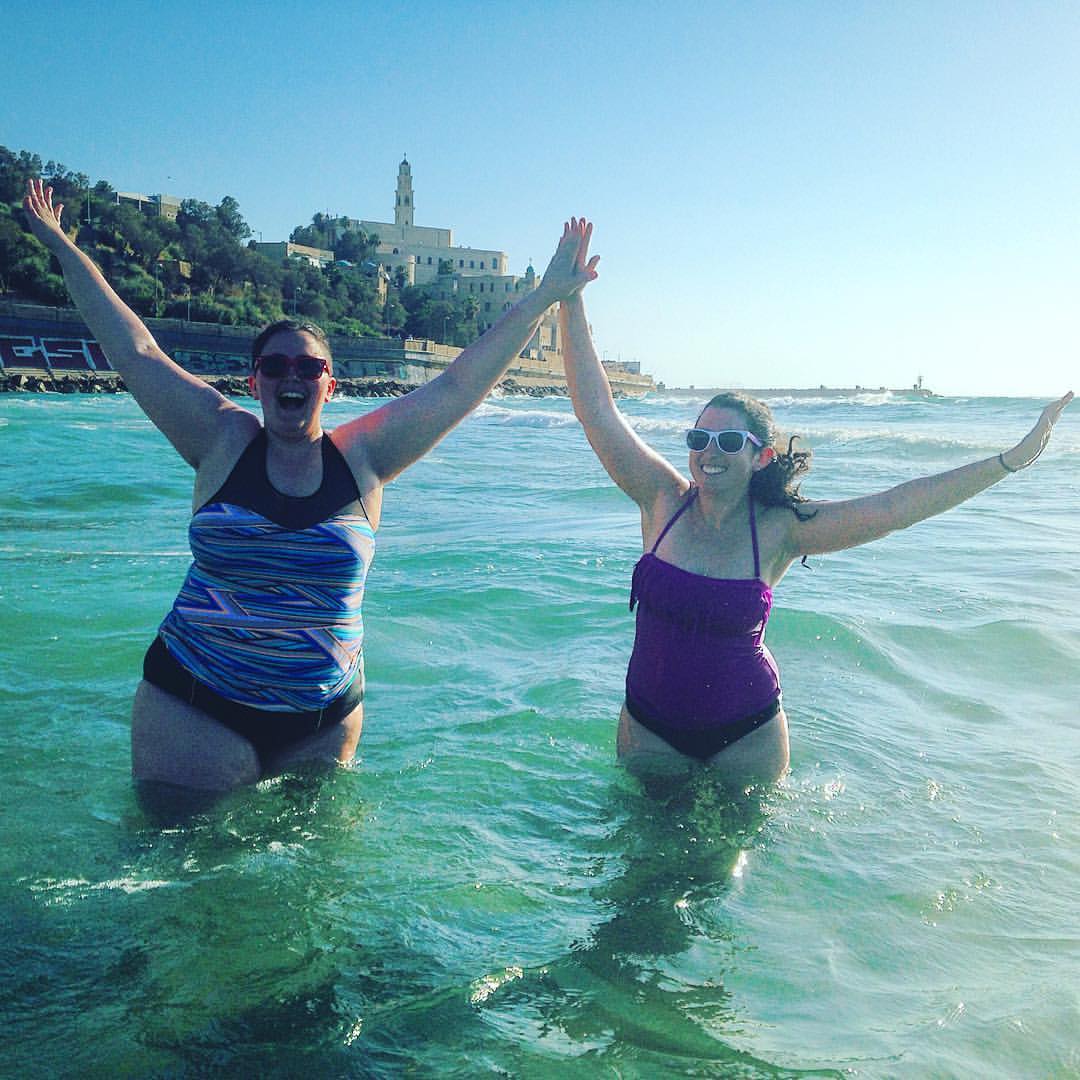
While in Israel we will have an opportunity to take a swim into the Mediterranean, take a plunge into the Jordan, float on the Dead Sea, swim in the cool streams of En Gedi and the Sea of Galilee, and slosh through the fountains of Jerusalem and Hezekiah’s Tunnel.

Monday, February 6, 2017

Executive Orders and Legal Laws

None can doubt the winds of change are blowing and our government is at work. Cabinet members for the new Trump administration have entered their positions through a contentious votes. Our new President is working hard in order to keep campaign promises. One of those promises was to install a Supreme Court justice who would uphold the Constitution. The masses hope the era of creating legal social (and moral) change through court system is over.
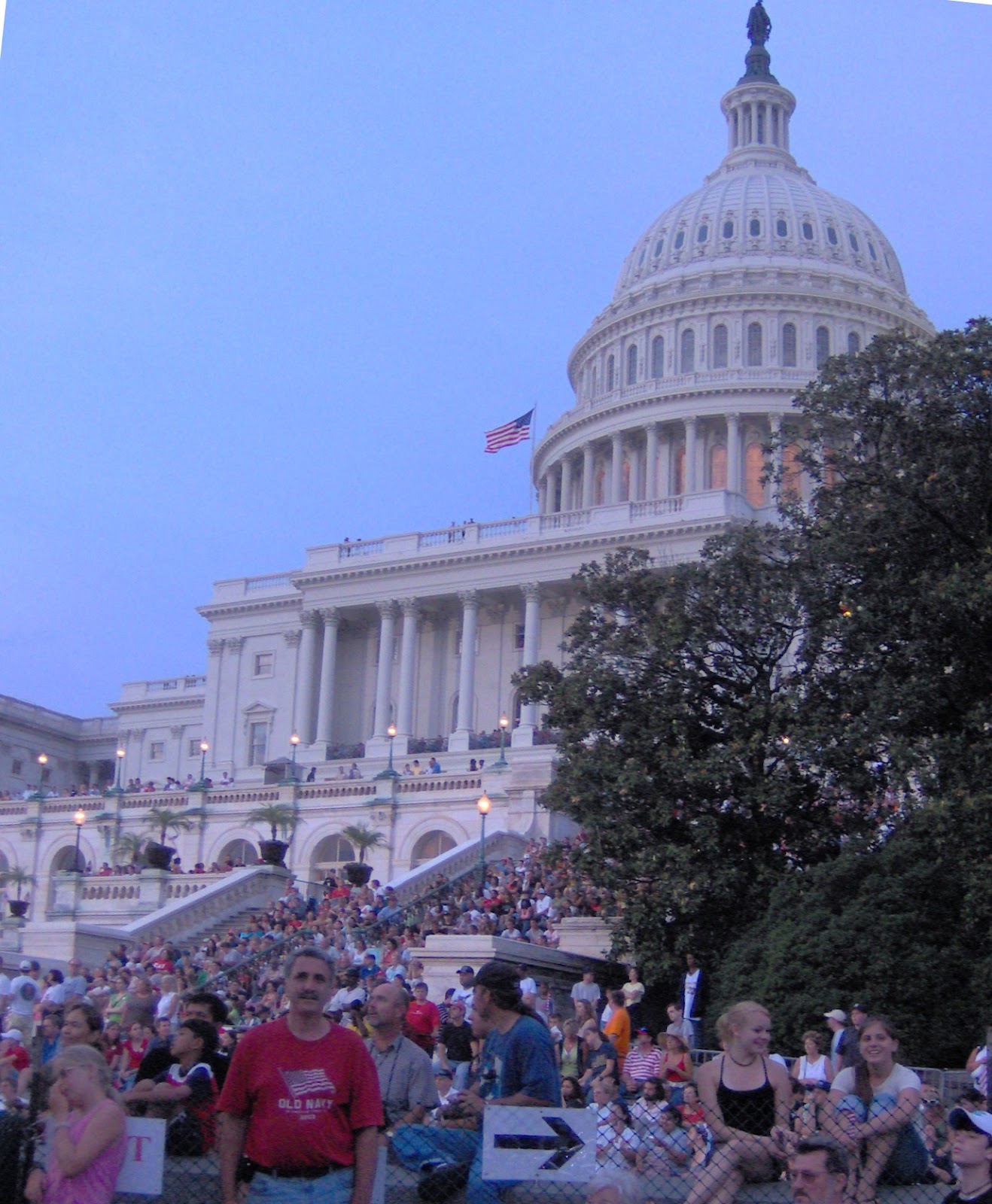
The United States Capitol
The cry has gone out for a justice who would honor the constitution. Our founding fathers wrote, “The judicial power of the United States, shall be vested in one Supreme Court, and in such inferior courts as the Congress may from time to time ordain and establish.” The courts are to judge cases from existing laws and  test the validity of new laws through the constitution and its amendments. The Courts are not to create new laws and because justice is blind they are not to become caught up in social issues.
In like manner the President is to “shall take care that the laws be faithfully executed” being careful to enforce existing laws. He shall “have power, by and with the advice and consent of the Senate, to make treaties, provided two thirds of the Senators present concur.” Neither the courts nor the President of the United States are to create laws. They are guided by existing laws made by congress.
Loading a canon in Yorktown, VA
But in recent years the Presidents have sought to create laws, just like kings. They issue “executive orders,” just like kings (such as King George III). A simple reading of the Declaration of Independence will lead to the discovery that our founding fathers would be horrified to discover our president is making laws (like King George III). There is no constitutional provision or statute that explicitly permits executive orders.
Executive Orders signed by the President are are growing phenomena. Franklin Roosevelt ordered over 3,000 executive orders. Theodore Roosevelt and Calvin Coolidge each ordered over 1,000. Ronald Reagan 381, George HW Bush 166, Bill Clinton 308, George W. Bush 291, and Barack Obama 276. Donald Trump is issuing orders almost every day.
At first executive orders were not laws at all, they clarified laws or helped people understand the purpose of existing laws. George Washington issued an executive order in 1789 recognizing Thanksgiving Day. Other orders asked citizens to recognize treaties with the Indians, pay taxes on liquor, and urged citizens not to interfere in foreign wars.
Independence Day Parade in Washington DC
Today the issuing of an executive order is different. The purpose is often to bypass congress, which is charged by the Constitution “to make all laws which shall be necessary and proper for carrying into execution the foregoing powers, and all other powers vested by this Constitution in the government of the United States, or in any department or officer thereof.” Congress is called to establish a uniform rule of naturalization.” The Constitution also says (catch the spirit of the document here) “The migration or importation of such persons as any of the states now existing shall think proper to admit, shall not be prohibited by the Congress prior to the year one thousand eight hundred and eight, but a tax or duty may be imposed on such importation, not exceeding ten dollars for each person.”
Presidents see the signing of an executive order as a way to push issues which would fail in congress (this is the problem so many have with the Supreme Court) such as executive order 11478 which was written to prohibit discrimination based on sexual orientation and gender identity (the bathroom law). Executive orders can also be used as a means to appear efficient and expedite campaign promises, such as the executive order imposing a 120-day suspension of the refugee program and a 90-day ban on travel to the U.S. from citizens of seven terror hot spots: Iraq, Iran, Syria, Libya, Yemen, Somalia and Sudan.
Militia Drummers in Williamsburg, VA
When Presidents bypass congress we lose a strength which comes from collective wisdom. Congress was created to include people with opposing views (such as northerners and southerners; republicans and democrats). They work through negotiation and compromise, examining every aspect of every bill so mistakes will not be made.  The process, though slow and at times messy creates stronger and more lasting laws. Executive Order 13770 brought cost and inconvenience to thousands of people with the stroke of a pen by causing the State Department to cancel 60,000 visas. It has also led to a fight between the President and the Courts which could have been avoided by following due process when laws are created.

The Constitution gives the following process for making laws, “Every bill which shall have passed the House of Representatives and the Senate, shall, before it become a law, be presented to the President of the United States.” We need to return to the process which made America Great, even if it is slower and less convenient because the process outlined by our forefathers helps prevent mistakes and has the power to bring stability and unity.

Friday, February 3, 2017

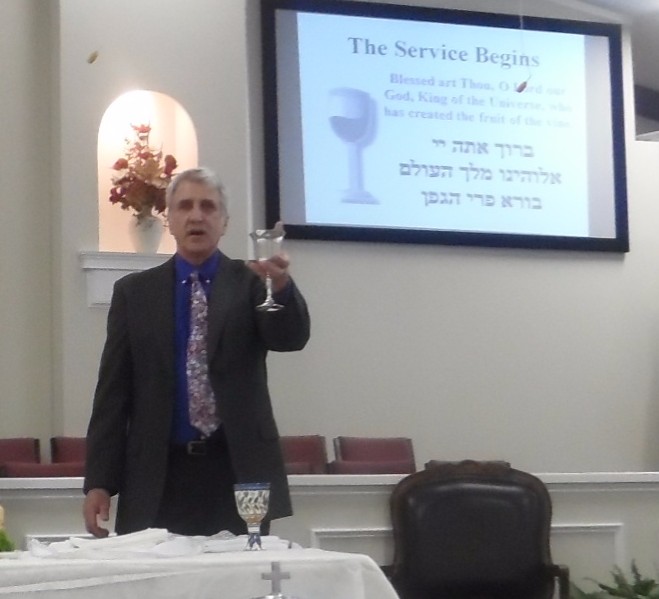
Passover and the Lord's Suppper

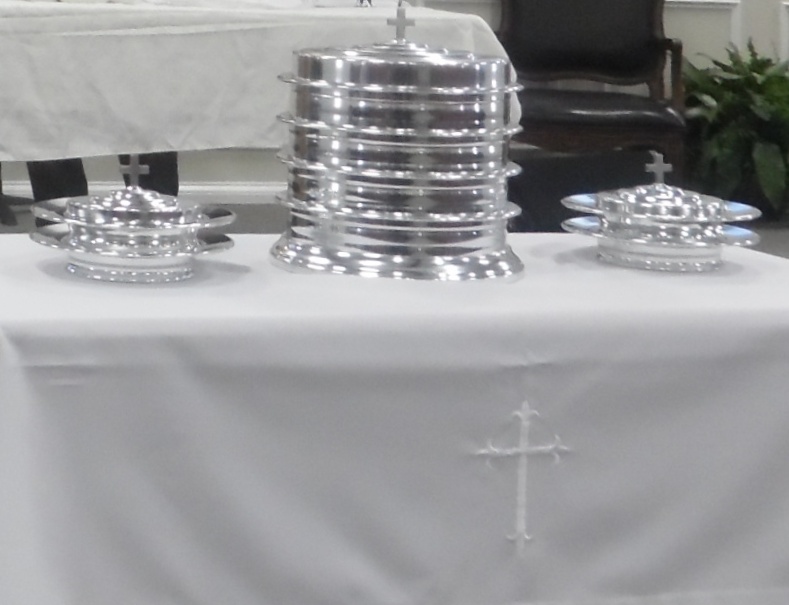
The least changed and most celebrated moment in Christian worship is called Communion, the Lord’s Supper or Holy Eucharist. A simple piece of bread and a sip of wine or grape juice open to the believer a moment with the Lord and bring to the forefront of heart and mind the teachings of Jesus Christ. In the Catholic church the entire worship service moves toward the Holy Eucharist. In Christian and Disciples of Christ congregations communion is served every week. In Baptist and other non-liturgical assemblies the Lord’s Supper can be a regulatory add-on to a meeting with another focus. Participants of all churches look forward to the moment they partake of the bread and the wine.
Communion services bring to remembrance a moment in the final supper Jesus ate with his disciples on the evening before he was crucified on the cross. The book of Mark captures the moment this way: “While they were eating, He took some bread, and after a blessing He broke it, and gave it to them, and said, "Take it; this is My body." And when He had taken a cup and given thanks, He gave it to them, and they all drank from it. And He said to them, ‘This is My blood of the covenant, which is poured out for many.’”
The Bible tells us in this verse that something is missing from many communion services, and in the hearts and minds of many participants who regularly partake of the Holy Eucharist. The hint in Mark’s gospel says, “While they were eating.” Luke shows two cups in his look at the supper. Matthew states: “On the first day of Unleavened Bread the disciples came to Jesus and asked, ‘Where do You want us to prepare for You to eat the Passover?’ ... The disciples did as Jesus had directed them; and they prepared the Passover.” Paul references the Lord’s Supper as a meal and an important teaching several times in his letters to the Corinthians.
Most Christians know that the Eucharist was a portion of Jesus’ Last Supper, but they have never experienced the Passover observance from which the practice of Communion arose. The teachings and symbols of the Passover Seder (order of teaching) contain much which will contribute to Christian practice and understanding of the Lord’s Supper.
Passover is a celebration of freedom from slavery. The story which is told in the Passover Haggadah begins with the call of Abraham, who was a man of faith who live a life of obedience towards God. It tells how the family of Jacob came to sojourn in Egypt and were enslaved as the enemy of Egypt. The Haggadah teaches how when the people of Israel cried out to God in prayer their voices were heard. God brought miracles (we call them plagues which came about to punish Pharaoh and change his mind, the Haggadah calls them miracles which came in order to show the strength and power of God) in order to free His people. Then the Hebrews were commanded to gather as families, to place the blood of a lamb upon the doorposts of their homes, to roast the animal and to eat their last meal in readiness as God granted them the freedom they sought.
The Passover meal walks the participant through stages of preparedness from the cleansing of hands to the purification of the heart. It teaches observers about God's mercy through experiential lessons of tasting particular foods. The service calls upon the voices of each person present to give praise to God through the Hallel Psalms. It teaches us to savor the love of God who continually shows His love for His people.
The Passover Seder is led by the head of the household, not the priest (or pastor). The celebration is today as it was at the beginning (Ex 12:3) a home (not a church) celebration. This realization should call all believers to imbue the home with teaching and the practice of faith. It is belief which is actively lived out in the home which passes from generation to generation.
If you would like to celebrate a Passover Seder in your church (or receive coaching to lead it yourself) send an e-mail to KosherCopy@gmail.com. My family and I regularly lead Passover Seders in North and South Carolina, New Orleans and the Cincinnati area.

Wednesday, February 1, 2017

A Flight to Israel

Please take this as in invitation to join me on a 14 day trip to the Holy Land. To see the full agenda or to sign up, click the links. You will be rewarded through personal discoveries and experiences by going on this journey.
Our entry into Israel during our 2018 visit will take place near Lod, a modern city of 72,000 citizens. Ben Gurion Airport is located near the city in a compound just off Israeli Highway 1. The location of the airport and the surrounding cities provide a beautiful entry as we begin our tour of Eretz Yisrael (the land of Israel). This airport has served as the arrival point for tourists, businessmen, world leaders and Israelis who are returning home.  Egyptian pharaoh Thutmose III recorded the existence of a city at this location in 1465 BC.
Awaiting our flight to Israel
Our flight will depart in the evening, taking us across the Atlantic Ocean and most of Europe during the nighttime hours. We will try to sleep (some successfully) before being served a meal as we fly near the Mediterranean  Sea. The blue waters of this sea are beautiful from above, and we will enjoy their peacefulness from the sky.
View of modern housing as we fly into Israel
After the meal we will approach the coastline of Israel. We will notice the tan coloration of a semi-arid paradise. As we cross the coastline and beaches we will notice high-rise apartments starting near the coast and expanding toward the hill country which lies in front of us. This is the architecture of modern in Israel. Many immigrants from around the world inhabit apartments which are built over much earlier communities. Lod and the plane of Sharon are noted in the BIble for several events which happened there.
Lod from Ben-Gurion Airport, Israel
Lod, which also carries the Greek name Lydda is located about twelve miles east of Tel-Aviv. It is formerly and currently on one of two major roads leading from the seacoast up to Jerusalem. Joshua, David, Solomon, and many others are known to have visited this city. The apostle Peter visited a man named Aeneas, who was paralyzed and had been bedridden for eight years and healed him.
View from Ben Gurion Airport, Israel
We will disembark from the plane, walk down a long hallway (with glass windows offering some visibility to the area) and then down a spiral ramp towards the main terminal. We will know we arrived at the main part of the building when we see the Mezuzah.
Mezuzah, Ben Gurion Airport, Israel
Mezuzahs are attached to doors on most Jewish homes as a reminder for all who enter to honor God. The Mezuzah which is made up of two parts, an outer decorative box and an inner parchment scroll containing scriptures from Deuteronomy 6:4-9 and 11:13-21. The placement of the box on the doorpost reminds the Jewish people of a sign commanded by God during the exodus from Egypt (Exodus 12:7), Upon entering the main terminal of the airport we will see one of the largest Mezuzahs in the world.
Entry area Ben Gurion Airport, Israel
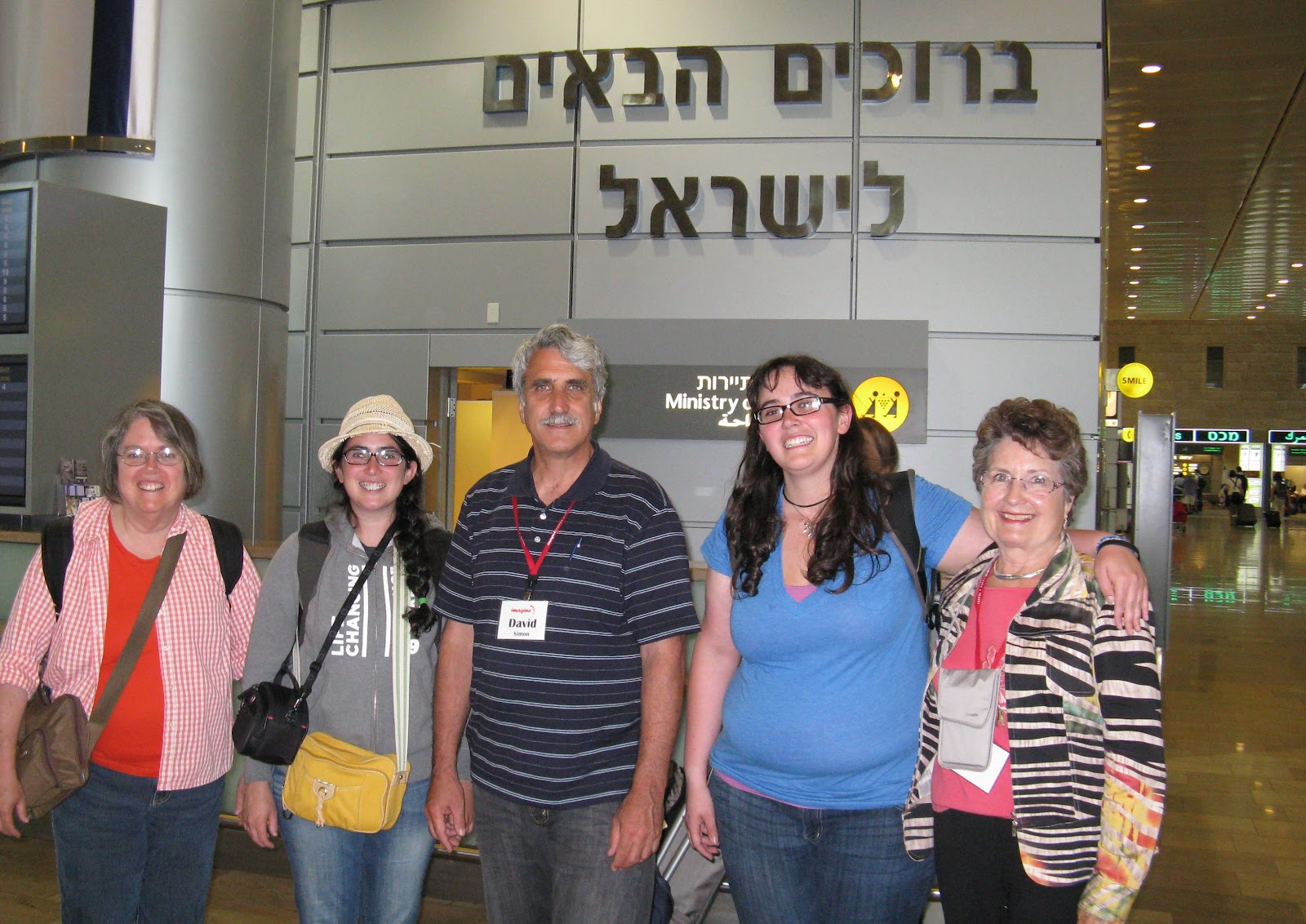
Once in the airport we will pass through customs, pick up our baggage and meet our guide. Once we clear customs we will be off on our adventure.

Monday, January 30, 2017

Remembering U.S.

I have written several times about my ancestry on this blog. I am from eastern European and Jewish ancestry and a third generation American. From time to time (often in January) I look back into my ancestry to see if there are any new records or discoveries. The stories of my family are interesting as they capture the difficulty of immigration and assimilation into a new country. The United States is built on the strength and determination of immigrants.
Immigration Hall at Ellis Island in New York
I am amazed at how often people in our nation forget (or do not care) about the heritage of our nation. Foreigners face many problems including intense persecution and vetting. I have personally faced some of this and hear stories about discrimination from within my family. But my family was strong and we survived and have did well in a new land despite, or possibly because of the hardships. Because when you face difficulty it forces you to work harder in order to overcome.
Ellis Island in New York Harbor
The first immigrants to this nation faced many difficulties. These difficulties are recorded in history. The Pilgrims (of Thanksgiving fame) immigrated to a new land in order to escape systematic persecutions and imprisonments. Many of the first settlers in Virginia were tradesmen who sought to better themselves by finding either treasure or a new life. The colony of Georgia was founded by debtors who came to America for a fresh start. In all three cases most of the settlers died in the first two years. The persistence of those who died and those who lived have encouraged Americans for generations. These founders of our nation worked hard to established strong communities which survive even to this day.
My Grandfather saw these buildings in the lat 1890's
As I researched my family I visited the Tenement Museum in New York City. We learned how lower Manhattan was populated by waves of Italian, Irish, German, Jewish and Chinese immigrants. These families were poor. Some were persecuted. All of them were able to find a way to cross the ocean to America. And once in the United States they contributed to our greatness as a nation. These poor immigrants, many from non-Christian faiths became leaders in the real estate, food, energy, space, education and banking industries.
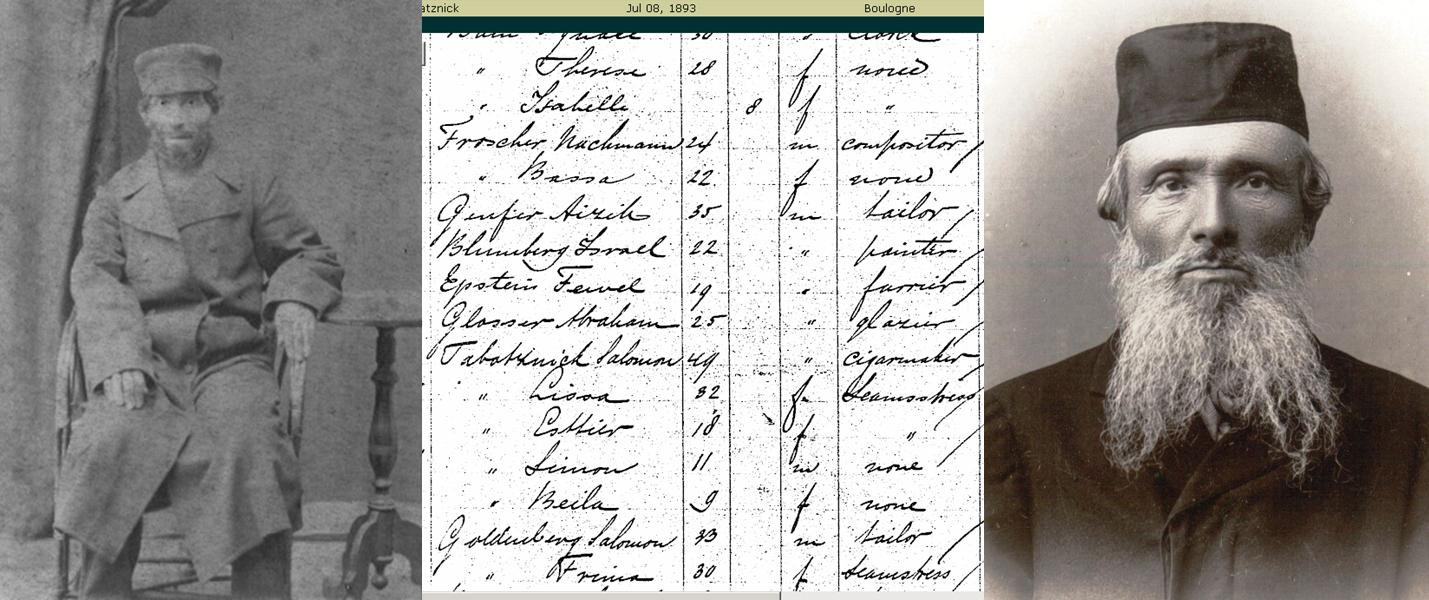
Solomon Tobachnikof and ship log. Also Yankel Levine
My grandparents came to the United States in this time period. Simon Tobachnikof sold clothing and later was involved in the real estate market (as was uncle Abe). Ben Finkelstein was worked in the garment industry. The Schulmans were leather workers and later owned restaurants in Cincinnati.
Many immigrants have come to escape hardship or to find a new life. Our President’s grandfather came from Germany in this time period. Ivanka Kushner’s in-laws were eastern European survivors of the concentration camps. The United States of that time welcomed refugees.
The New Testament teaches God is love - 1 John 4:8
Because of my connection with the past I have been given opportunity to connect with immigrants of the present. I have ministered to people from Mexico, El Salvador, Nicaragua, Guatemala and Colombia. Some of these people are legal, others illegal. All of these people contributed to our economy, many I knew worked in agricultural and construction. I have attempted to assist the illegal internationals in their effort to become legal, only to find the wall insurmountable for many who have helped the state of North Carolina prosper.
Many immigrants have lived in lower Manhattan
I have worked with Chinese and South Korean immigrants. I also know Palestinians who seek to live peaceful lives with all others in the United States. The struggles and dreams of many immigrants are similar to my grandparent’s struggles and dreams.
The Statue of Liberty welcomes immigrants to our shores

In time periods when our doors are open to immigration the United States flourishes. During times of isolation our economy suffers. Immigrants are the new customers who shop at our stores, join our workforce and purchase homes in our communities. They proudly desire to join our ranks through the immigration and naturalization process if we provide them opportunity through a well planned pathway. When we make the process difficult or impossible through poor planning, spontaneous decisions (or orders) the result is confusion, closed doors, distrust and illegalities. I pray for our government and a plan that will bring clarity rather than confusion. I look forward to a time when we will help persecuted peoples assimilate rather into our land with an absence of hate. From the very beginning every wave of immigrants has brought greatness. I look forward to the next wave which will make us great … again.

Friday, January 27, 2017

A trip to Israel, How hard will it be?

Many people fear overseas travel, lots of walking on tours, odd foods, strange customs, foreign languages, attacks, or various other types of hardships that will face them on foreign soil. They quote a line from the Wizard of Oz, “There’s no place like home,” and choose to remain at home.
A view of Jerusalem from the Mount of Olives
While there is nothing wrong with home (there are a lot of built in comforts created by the homeowner), the person who refuses to travel also robs themselves of great experiences. The person who chooses to stay at home will miss out on a fantastic opportunity offered through a 14 day trip to the Holy Land in May 2018. People who chooses to travel to Israel will enjoy a great adventure, will see where Abraham, Isaac, Jacob, Jesus, and almost every other person listed in the Bible walked and lived, and will come away with new understanding of what they hear at Church every Sunday.
The Synagogue at Migdal where Jesus taught
But will the trip be hard people ask. And I answer, except for a long flight across the Ocean and Europe, the trip will not be hard. And any hardship in the flight is well rewarded on the ground as we walk the Bible, hear history, and see the events of the Bible come to life.
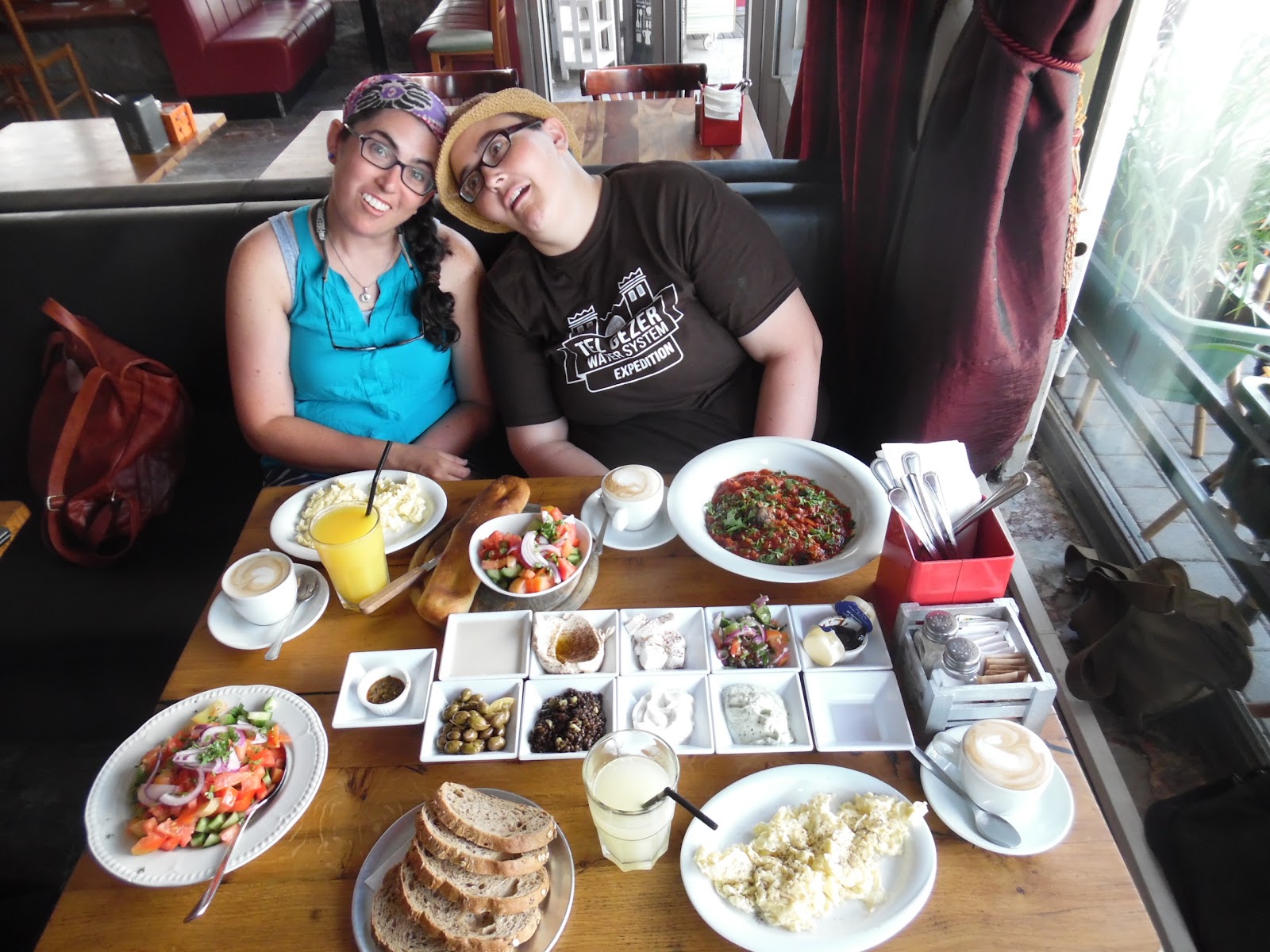
One choice on the Israeli Breakfast menu
Our daily schedule on our 14 day trip to Israel begins with a breakfast banquet with fruits, different egg dishes, cereal, cheeses and many other items. In some places we will discover new dishes like shakshuka. The one thing many people will note is that there are not many meats. Orthodox Jews who keep a kosher diet do not mix meat and milk. Breakfast is a dairy meal. We will have time to eat, and to talk with others around the breakfast table.
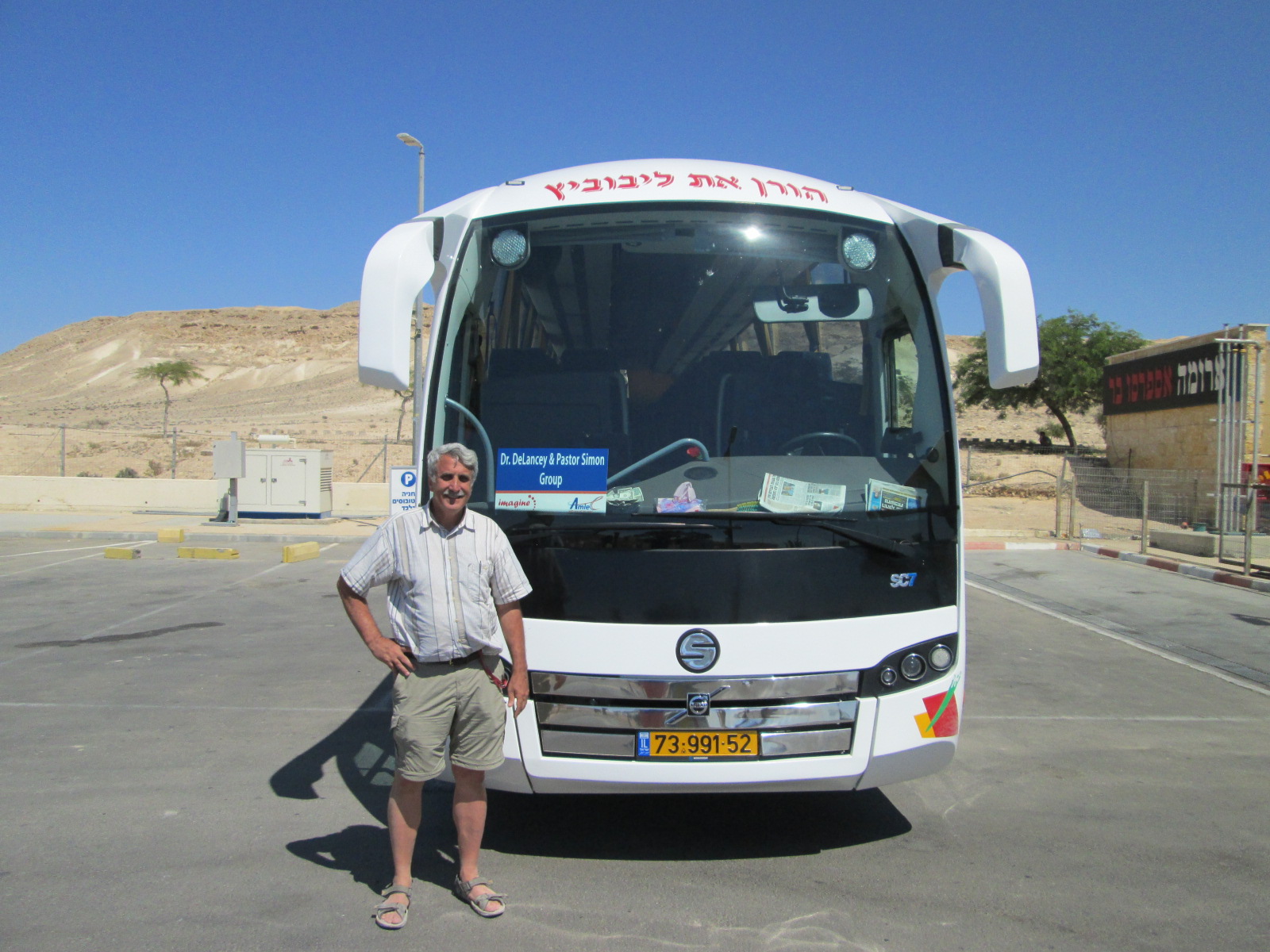
Comfortable buses for traveling
Following breakfast we will board the bus. Our trip is arranged in a way that many nights we stay in the same hotel for several nights. On days when we move to different lodgings, we will leave our luggage outside the door of our room, and porters will pick up the luggage and have it at the bus to load (and for us to check) before we board. Tips to the hotel workers are included in the trip payment.
Some people take naps while riding the bus between stops
The bus which we will enjoy during the entire length of our trip has comfortable seats which recline. On longer drives some people will go to sleep. The windows are large so we have good visibility as our driver navigates the smooth roads of Israel and the West Bank. There is a shelf above the seat to store any items (like water, hats and souvenirs) which we carry with us.
After the bus drops us off in Joppa, it parks here
We exit the bus close to most attractions. When there is a walk the tour is planned in a loop so those who tire can sit down and the group will return. Extra time is included on each stop so those who are more adventurous and can go further. Those who are limber will have a chance to climb into the caves in Qumran. On lengthier hikes, such as on Mount Arbel our through the Wilderness of Zin non-climbers can wake up a little later and meet us at the top of the mountain, or ride the bus to the end of the hike.
Hiking Zin Canyon where Moses and Israel camped
While on our trip we will see and hear the customs of the people in Israel. We will learn the differences between Secular Jews and the Orthodox. We will also learn and talk about different groups of Muslims, Palestinians, the devout, the secular and the Druze. We will talk about clothing, traditions, prayers and lifestyle. We will learn about the culture of the people historically, traditionally and currently. We will see and experience the people within the protective bubble of our tour group, which is large enough to prevent culture shock.
Shopping in Jerusalem - there are always people
We will hear and learn foreign languages of the people in Israel. We will gain new words in Hebrew and Arabic. We will learn greetings like “good morning” and words of appreciation like “thank you.” The new words are not required, just interesting.
These new friends in Joppa know how to speak our language
Many people fear violence while in Israel. On my tours to Israel, and the trips taken by millions of other pilgrims not one single incident of fear has occurred. Israel depends on the tourist industry, so we will find we are protected by the Israeli military in any area which could be high risk. We will find we are protected from areas where violence might occur. The nation of Israel sends out warnings and schedules which help us avoid any problems which could occur. Our Israeli tour guide and bus drivers are well acquainted with protocol and have been hired to keep us safe.
There is always protection around when you need it
While we are traveling we will be given time for lunch. The normal day will end with a generous supper banquet. At supper we will be able to choose between various salads, meats, vegetables and desserts. There will also be fruits, there are always locally grown fruits in Israel. I love the fresh dates.
Our lodging on the Sea of Galilee. Date Palms in background
In the evening people can go to bed early, or take a nighttime side trip.  In the desert or in Galilee these evening gatherings or often devotionals or teachings. There will be opportunities to meet interesting people at our kibbutz in rural areas. In Jerusalem we will walk to the Western Wall (Kotel), to overviews of the city, to interesting shops and to sights not seen by many tourists.
Travel brochure. Check it out on the link below!

Our trip to Israel will be taken in luxury. We will see the sites and sights but we will avoid most of the hardships people fear in a foreign land. We will be with people who are very familiar with customs of the people and American needs. Any issue will be navigated without difficulties faced by those who must go it alone. The customs and culture created for our tour group will result in an enjoyable and informative trip filled with many memorable experiences. The 14 day trip to the Holy Land in May 2018 is something you do not want to miss! Sign up today and receive a discount.