Showing posts with label learning. Show all posts

Friday, February 23, 2018

The Four Sons for Daughters

February is a month of birthdays for our family, both of my daughters were born in the month of February. We celebrate their birthdays no matter where they are in the world. Families are support systems and birthdays are supposed to be fun. Because Purim is next week, I must add that I am sure Mordecai would never forget Esther’s birthday, and probably made sure she had fun.
Spiritual Life and a Relationship with God
In my blog I often write about Passover during this time of year. That is partially to promote the fact that I lead Passover Seders, and partly to promote two books I have written with my daughters. (They are available in print and on kindle). The Passover was instituted in order to help our children learn about God’s care for His people. Various instruments are used during the Pesach celebration to share God’s desires.
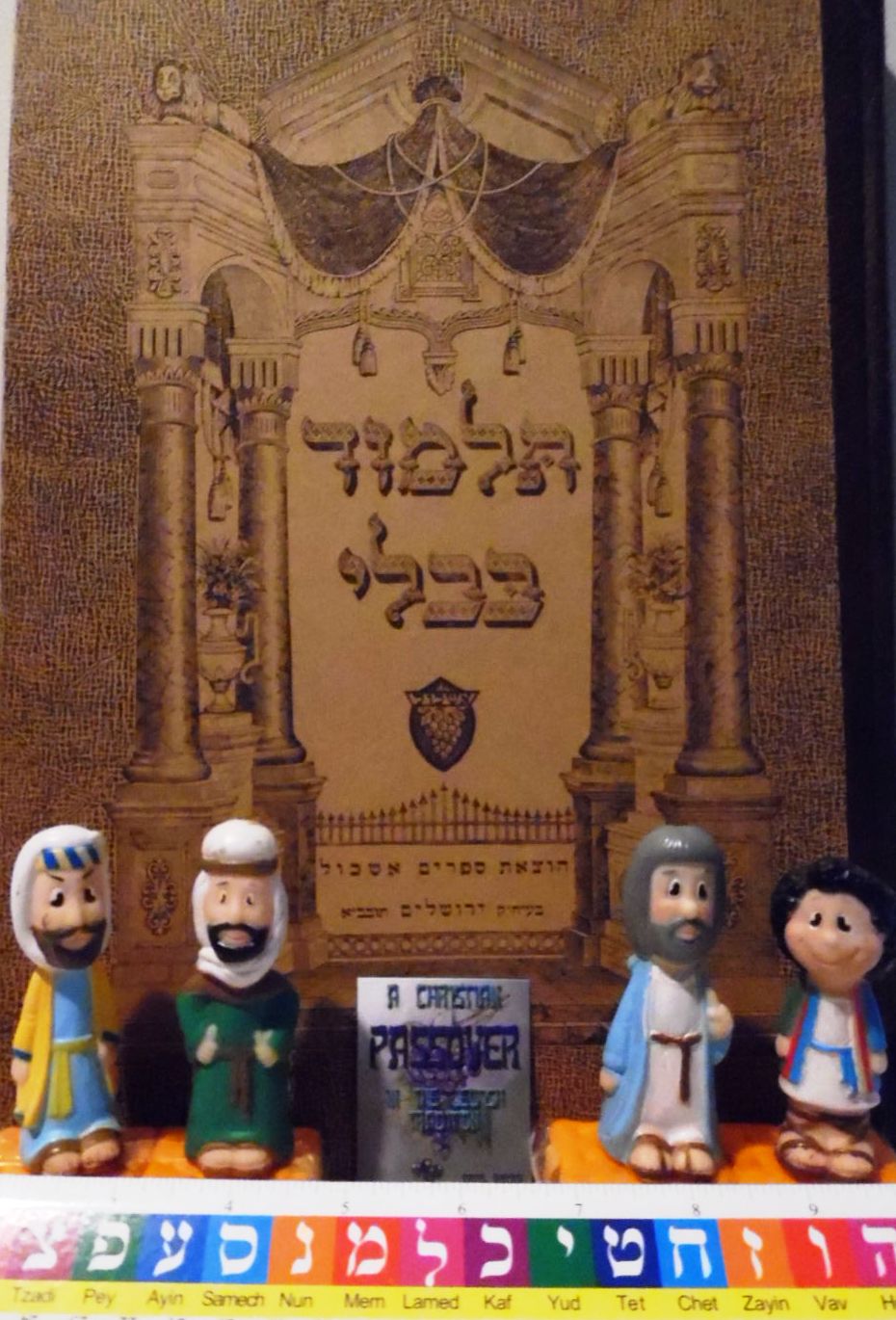
Passover Seder participant Haggadah
The Passover Haggadah tells about four sons through four questions and answers given to children in the Torah. The Rabbis use the questions to teach about four types of people in the world: The wise, the wicked, the simple and the young.
Four Sons and Four types of people


The fourth son of the Seder is the young child. From Exodus 13:8, we discern that this son is very young, too young to ask a question, because. Moses instructed the fathers to answer their child without a question ever being asked. The Bible tells us, “You shall tell your son on that day, ‘It is because of what the Lord did for me when I came out of Egypt.’”

The message of Exodus 13:8 is very important for parents of today. Our children are always learning, and we should always be teaching. When my children were very young, even a few days old, I enjoyed holding them and teaching them. My teaching at that age was mostly in songs I sang to my daughters. They did not ask questions, they did not speak back. They only girlgled, smiled or, sometimes, cried.
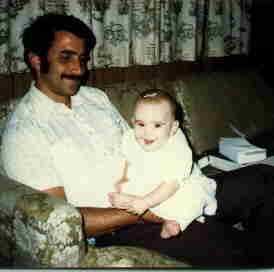
Dad and Daughter
But as I sang and as I spoke, my children learned. Their minds were opened, and they understood the language of love, and they were learning the words I shared with them. On the day of a child’s birth we begin to teach them about life, and hopefully about God. I shared with my daughters “because of what the Lord did for me when I came out of Egypt.”
Story time and then nap time


As my children grew older, they learned to ask simple questions. About two or three years old they constantly asked, “Why?” THe question is only one word long, but it can be applied in so many ways. The natural inclination is to push a child aside, because, as a parent, you get tired of hearing the constant, “Why?” and then when you answer the question, another “Why?” And another and another.

For the child who asks lots of “Why?” or other simple questions, Moses wrote, “when in time to come your son asks you, ‘What does this mean?’ (or ‘Why?’) you shall say to him, ‘By a strong hand the Lord brought us out of Egypt, from the house of slavery.” (Exodus 13:14)
Chelsea and her Grandmother
The Bible tells me never to tire of my children’s questions, for they are a source of learning. In my educational courses, I learned to use teachable moments with my classes. Whenever a child asks a question, they are sharing a teachable moment. The child’s intention is to be discerned so their question can be answered. (Sometimes the question is so simple it is ambiguous. It is up to the parent to know their child and the situation well enough to give an applicable answer). As questions are appropriately answered and as teachable moments are used to instruct children, they learn and grow, and come to know God’s love more clearly.
A Grandmother's Bedtime Routine


The second son in the Passover Seder asks the question, “What do YOU mean by this service?” (Exodus 12:26) The child who asks this question is called ‘the wicked son,’ because he wishes he could be excluded from the Passover and from his family's teachings. This indeed is a sad situation, for it means the teachings did not take. Fortunately, I did not have to deal with this type of child. Because I started to teach my children when they were young, and because I was patent when they got older, and because I sought to bring ‘the joy of the Lord’ into our faith, my children grew up to adopt our religion, rather than to reject it.

If I were asked, “Do your children believe and practice exactly as you do?” I would have to answer no, because each person’s faith walk will be a bit different. But certainly we worship the same God, and hold to the same faith, and there is a bond. My daughters have now passed the three decade mark, and therefore we can have discussions about religion. I can learn from them, as they have learned from me.

My daughters are now like the wise son, who asks, “What is the meaning of the testimonies and the statutes and the rules that the Lord our God has commanded you?” (Deut 6:20) They have gone to school, become learned, and now they teach others, and sometimes they teach me.

I recently read on a Chabad website: “Since all of Torah addresses all of Israel, we must say that all four messages of the Torah are applicable to all of us, since we all possess the “four children” within ourselves. We are therefore all required—even one who does not have children—to recite all four answers, since we are in essence speaking to the wise, wicked, simple, and “unable to ask” elements that exist within every one of us.”


Tuesday, December 6, 2016

Why?

This week’s journal in the devotional Advent Journeys seeks to speak the words of Joseph as he travels with Mary from Nazareth to Bethlehem. Joseph and Mary were unique individuals of character, and for this reason they were chosen by God to become parents who would be remembered and who would serve as examples for other parents across two thousand years of history.
View from the Precipice near Nazareth 
Have you ever wondered why God chose this couple and how we can emulate their parenting methods with our own children?
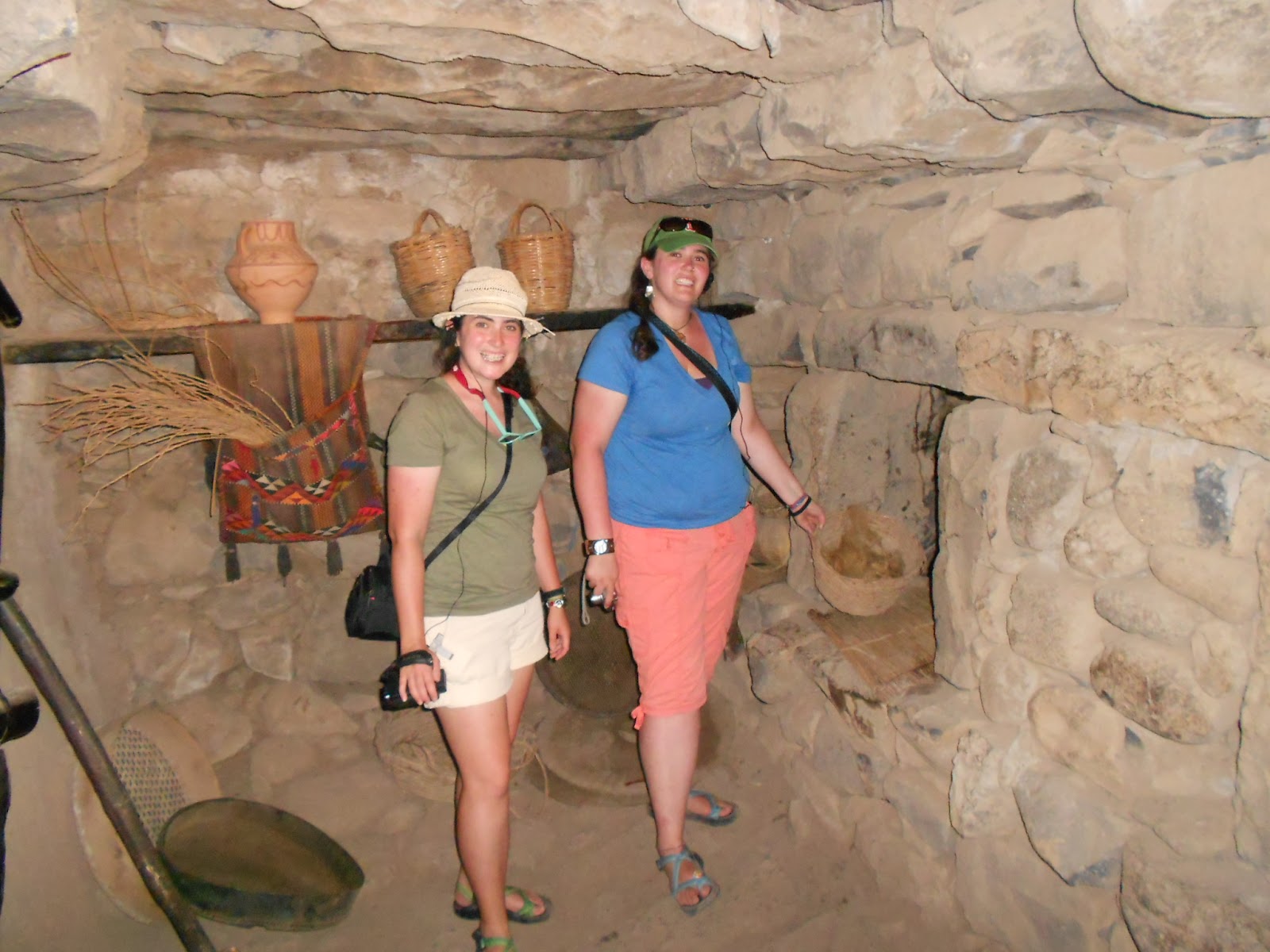
Kitchen at a home in Katzrin
The scripture teaches that Joseph and Mary were individuals with integrity. Each parent in their own way sought to honor God with all their hearts, minds and strength. (Deuteronomy 6:5) When Gabriel came to Mary in order to inform her that she was chosen to give birth to the one called “the Son of the Most High” (Luke 1:32), she responded by asking “How can this be since I am a virgin.” Mary wanted her faithfulness to be known by the angel, by her parents, by her community and by Joseph.
Village of Katzrin in the Galilee
Matthew 1 tells of Joseph’s concern when he found out that Mary was pregnant. He loved her, but he knew his integrity would be compromised when the community came to know Mary was with child. Joseph sought a way to end the betrothal in an extremely private manner. As he prayed and sought God’s wisdom on the matter, Gabriel visited Joseph as he had visited Mary. The heavenly being assured Joseph that Mary had done nothing wrong. And the Angel asked Joseph to complete the marriage and to adopt the child.
Village of Katzrin in the Galilee
Both parents had similar concerns and stepped out in faith to accept the child and God’s calling to become parents and teachers of a child who was well beyond them in intellect and righteousness.
Scaffolding at Katzrin
Joseph and Mary sought throughout the life of Jesus and of their other children (Matthew 13:55-56) to bring faith to their family. The holy parents taught their children the scripture at every opportunity. They stood as examples of faith through every trial (and there were many, such as the necessity of escape from Bethlehem and living as parents of faith in a foreign land). Joseph and Mary honored every Jewish tradition and honored the festivals with their family. Joseph taught Jesus the skills of his trade and Mary loved Jesus and lived her care for him to the day of his death and beyond.
Packing down a roof in Katzrin
Jesus’ parents willingly took on any hardship and sought in every way to bring their children up in the faith. Today as parents we must do the same. We must honor the Christmas season with more than presents, we must honor God by giving our children our presence to tell real story of our faith. Parents show God’s love through proper placement of priorities.