Showing posts with label Tabernacle. Show all posts

Wednesday, November 28, 2018

The Holy Place

     The Holy Place is close to God. It is a room within the early Tabernacle of Moses and was enlarged when Solomon built the Temple. The room is situated to the east of the Holy of Holies, separated only by the veil. This space was designed for personal time with God as evidenced by the fact that when priests entered to do their service they came one at a time and departed before the next person entered.
     The Holy Place of the Temple contained three (or as enlarged by Solomon three types of) items: the seven branched menorah, the table of shewbread and the altar of incense. These three items speak of God’s personal care for His people and the desire for relationship. The room is designed to convey God’s desire care and desire for fellowship with every individual, whether in the actual Temple or elsewhere.
The Menorah from the cover of a prayer book
     The menorah casts light within what would otherwise be a dark room. The seven candles help people recall God’s establishment of light on the first day of creation. The first chapter of the Bible contains the words, “God said, ‘Let there be light,’ and there was light. God saw that the light was good.” The seven lamps recall the seven days of creation, and of each week. We are to allow God to shine into our lives seven days a week.
     King David said, “You, Lord, keep my lamp burning; my God turns my darkness into light.” (Psalm 18:28) Isaiah wrote, “the Lord will be your everlasting light, and your God will be your glory.” (60:19) God desires that we allow Him to shine through us, and for the Priest to be guided by God’s light.
Unleavened bread - 12 loaves were on the table
      The Table of the Shewbread is a reminder of God’s fellowship with us. People who eat together have stronger ties because of the conversation that goes on around the table. God desires to be at our table and in our lives. We must allow God to dwell with us and abide in us. “Man does not live on bread alone, but on every word that comes from the mouth of the LORD.” (Dt 8:3; Mt 4:4)
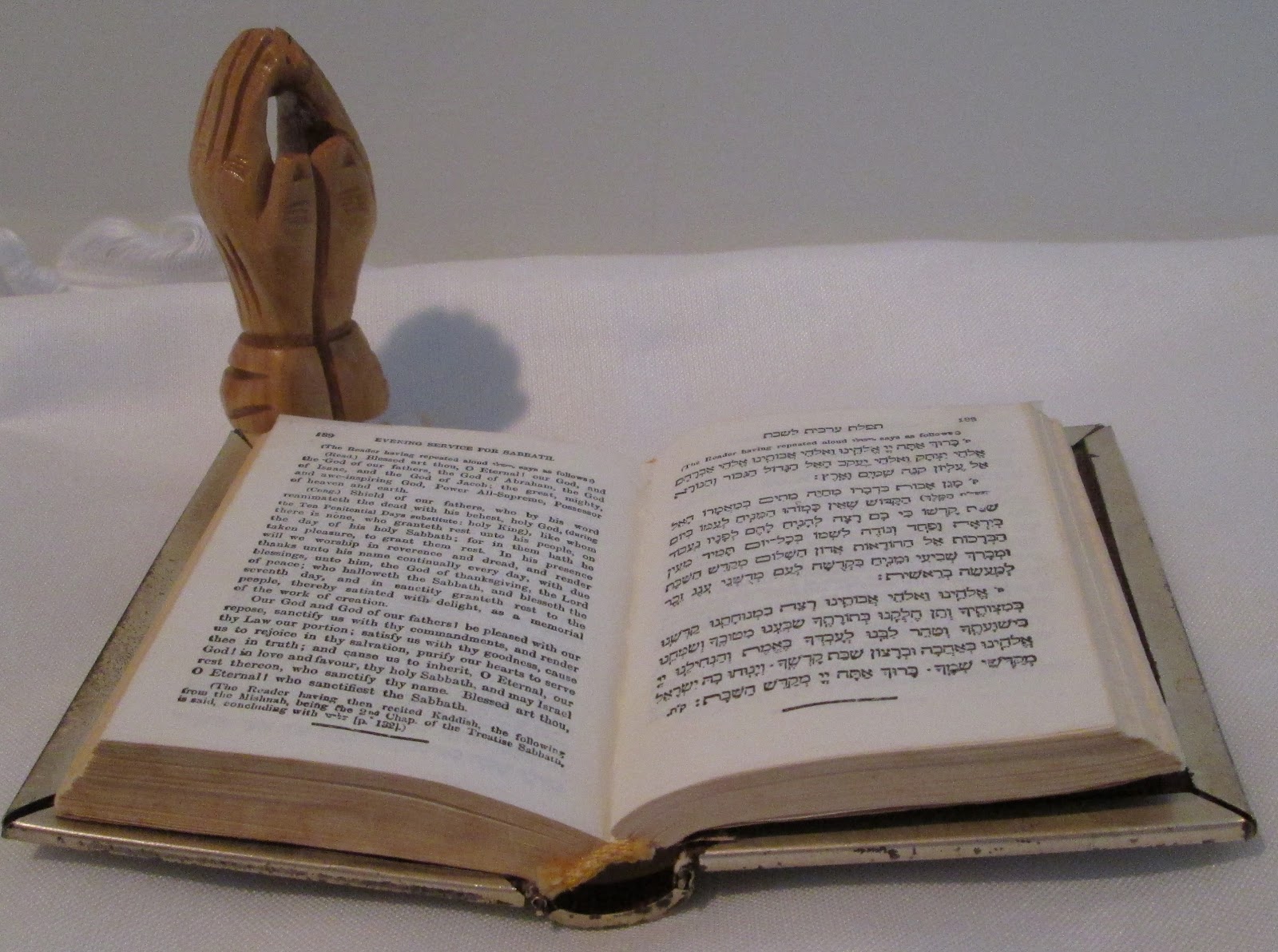
A prayer book and praying hands
     The altar of incense represents prayers that rise up to God. The fuel for the altar comes from figwood that burns on the brazen altar each day. This absorbs the sacrifices made during the day, and intermingles them with the incense that rises through the veil to the Holy of Holies. God loves it when we pray, and speak to Him. As Zechariah tended the Altar of Incense, he sensed God’s presence, and was in prayer. It was at this place that the Angel Gabriel entered the room and told John that Elizabeth would have a son.
      The Holy Place is where the priest could meet with God as he served in the Temple. A meeting with God depends on open hearts and the personal desire to be in fellowship with God.
Order this book at Amazon.com
     You can read more about the meeting between Zechariah and Gabriel in the book Advent Journeys, available as a book, as a Kindle e-book, and readable through Amazon Prime)

Wednesday, October 24, 2018

Two Months in Israel

This year I had the privilege of spending two months in the land of Israel. The time was enjoyable and educational. While in the land I participated in a two week tour, four archaeological digs and also wandered various historic sites, shopping areas, recreational parks and various places to eat.
Some of the places I visited during the two weeks of my tour were places I visited before, but since I helped plan the tour, there were some new places also.
The Archaeological site at Shilo
One of the places I looked forward to seeing was Shilo, the site where Joshua set up the Tabernacle and where young Samuel heard the voice of the Lord. The Tabernacle is long gone, but the hills still stand at this site, the ruins have been made visible and the stories about Israel’s place of worship are still remembered.
A cave sits below the place of the Tabernacle at Shilo
One of the things I personally was interested in was the road that led to Shilo. I wrote about the trip of Joseph and Mary in my book Advent Journeys. I was pleased to see it was like the pictures I researched for the book. The site of Shilo was interesting also.
Baha'i Gardens in Haifa with the port area below
A second new place I visited was Haifa. I visited the Baha'i Gardens, hiked the Haifa Trail, ate great food at the top of the hill, and looked down at the great harbor below. The gardens were beautiful and very well kept. I walked down the 750 steps in the garden, and walked up the alternate trail that led back to the top of the hill. I enjoyed swimming at the beach.
The house in the Church of the Annunciation at Nazareth
I participated in archaeological digs at Tel Gezer, Tel Hadid, Zippori, and at Tel Dan. Zippori was the most interesting dig, and I will write about that in another post. While at Zippori I visited the Church of the Annunciation. The sanctuary is beautiful. The small house in the church as well as Joseph’s carpentry shop in the basement of another church are both interesting.
Kurlander Dairy in Northern Israel

I spent about ten days near Tel Dan and enjoyed the beautiful countryside in Northern Israel. While there I took a long hike a Banias and saw the waterfalls. I also entered Dan at the Canaanite Gate, visited Kerlander Dairy, Hermon Field School and various restaurants and shopping centers in the area.

Monday, November 30, 2015

Worship in the Tabernacle

During week one of Advent Journeys we walk with Zechariah as he serves in the Temple.  The Temple and its practices are an image of the Tabernacle Moses built in the wilderness.  The Tabernacle contains an important picture which will help us understand what God desires in our worship.
Approach: The Tabernacle of Moses was surrounded by a white linen fence symbolizing the purity of God’s holiness.  The whiteness of the linen stood out in sharp contrast against the dirty sand of the desert just as God’s righteousness stands out against man’s sins.  The white linen surrounds a compound of holiness.
The Tabernacle represents the place where we go to meet God to worship Him.  The first step in worship is to have a heart which desires to worship God.  While this step might not seem necessary to say, there are many who come out of tradition, because they are forced, or because they are going with someone who wants to worship.  Unless our hearts are desire worship, we will probably not meet God.
In a period of repentance, we are to see ourselves as God sees us. Because “all have sinned,” we should pray for understanding, and see forgiveness from our sin.  We should bring a gift to God because we love Him.  For the Christian, Jesus is our Sin Offering, so as we approach the altar of sacrifice, we should realize the price for sin has already been made.
When we come to the place of worship, our lives should be ready for worship.  This means if we have a problem with another person we will resolve the problem before we come to the Tabernacle.  Jesus said, “if you are presenting your offering at the altar, and there remember that your brother has something against you,24leave your offering there before the altar and go; first be reconciled to your brother, and then come and present your offering.
Entry: There is one door into the Tabernacle (there were more entries to the Temple).  Jesus said, “I am the door, and the person who enters through me will be saved.” (John 10:9).  Jesus explained that any who climb in over the fence are thieves or robbers.  There is but one way into the Tabernacle and into the presence of God.
Step One: As one enters the Tabernacle the first item seen is the Brazen Altar, the place where sacrifices are made.  Leviticus 1-7 describes five sacrifices.  The most important as we enter the place of worship is the sin offering.  We must come understanding we are sinners, confessing our sin, and receiving atonement for our sins.  This occurs on the Brazen Altar … and through the offering of Jesus on the cross.
Step Two: The next item we see in the Tabernacle is the laver, the place where the priests wash their hands and feet.  The lesson here is that as sin offerings are made the hands of the priest become blood covered and greasy, and they need to be cleaned.  The offering has been made, but there is a residual on the priest’s hands.  The connection to life is that often, even though people are forgiven of sin by God, they do not forgive themselves.  The laver is the place to remind us if God forgives us, we are truly clean.
The Holy Place: Once sin has been forgiven by God and we have forgiven ourselves, we can enter into the place of worship.  In the Holy place there are three items of furniture:
  1. The Menorah which symbolizes God is light and in Him is no darkness.  The Menorah of the Tabernacle also teaches us of God’s eternity because the light does not go out day or night.
  2. The Table of Shewbread shows the desire of God to have fellowship with man.  On the table are twelve loaves of bread symbolizing all twelve tribes of Israel.  There is also the cup of the drink offering.  With the bread and wine we enjoy communion with God.
  3. The Altar of Incense stands next to the veil of the Tabernacle.  This place is as close as a common priest can come to the Holy of Holies where symbolically God dwells.  The scent of the incense ascending to God represents the prayers of the saints.
The veil separating the Holy Place from the Holy of Holies was torn in two parts when Jesus died.  This renting of the cloth symbolizes our forgiveness and that fact that common man may now approach God.
Inside the Holy of Holies was the Ark of the Covenant.  This box, built by Moses, contained the Ten Commandments, the rod of Aaron, and a jar of manna God gave to feed Israel in the wilderness.  God gave each of these items to teach Israel His intentions.

On top of the Ark of the Covenant is the Mercy Seat, symbolically the throne of God.  On either side of the Mercy Seat stands an angel to accomplish God’s bidding.  Angels are God’s messengers.   More tomorrow.

Thursday, April 17, 2014

Shank Bone 1

One of the most unusual items on the Passover Seder Plate is the Shank Bone of a Lamb. When one looks at this plate prominently displayed at the Seder it captures your attention immediately.  Why would this dry, uneatable bone hold the central place of the main display at the table?  Is it to keep the dog (with the big brown eyes) happy?
No, actually, the bone is the main part of the story.  In ancient times the bone used to contain roasted meat which the family would eat.  We are told in Exodus 12:3-11 how to select and prepare the lamb.
The famous Hillel Sandwich (eaten just before dinner) was a composite of three items: Motzah smeared with bitter herbs (morror) and a piece of roasted lamb.  Today that sandwich (without the lamb) is only a bitter reminder of what it used to be.
The Afikomen (Tzofun) which is eaten as the dessert was formally a morsel of the roasted lamb, saved to be savored at the end.  This savory taste was strong enough to last into the night.
Shortly after 70 AD Lamb's meat was removed from the Passover Seder as a reminder of the Temple's destruction.  In the good times over 260,000 lambs were killed in the ritually acceptable method in the Temple on the day of Preparation.  After the Temple was destroyed, there was (is) no longer a place to kill the lamb in the proper manner.  
The Jewish people stopped serving Lamb's meat on the Passover.  They placed an empty bone on the Seder plate.  They removed the meat from the Hillel Sandwich.  And they replaced the final taste of Lamb with a bit of Motzah.  Lamb is not served at the Seder in order to remember ... The Temple is destroyed.
;;; and the Jewish people hope for a Revival ... a time when they can return to the old pattern of faith ... to be continued ...

Friday, December 14, 2012

Amidah 17 – Prayer for the Restoration of Temple Service

People today know very little about Temple worship. In the days of the Temple’s existence the Hebrew people would come singing psalms as they made the pilgrimage to Jerusalem and offering animal sacrifices in dedication to God, in thanksgiving, or for the absolution of sins.

In its simplest form, the Tabernacle had three areas: The courtyard where sacrifices were made; the Holy Place where Priests serviced the Menorah, Table of Shewbread and the Altar of Incense; and the Holy of Holies which the High Priest entered once a year to atone for the sins of the people of Israel. We can learn a great deal about approaching God and worshipping Him through a study of the Tabernacle.

During the time of Solomon the Temple and its ritual was expanded. The families of the Levites were organized serving at various times and for various services at the Temple. King David, Levites and others wrote Psalms to be sung. The High Priest and Teachers wrote prayers. And people came with offerings to worship God in the Temple. There is something in us that desires the richness and meaning of this worship.

Today’s worship is often centered around our likes and dislikes. We come and listen (if the time is convenient), and our worship costs us nothing. Sometimes worship means singing three songs and give an offering of our finances, then hear special music and a sermon. Sometimes there is an occasion for response at the end of the sermon. In some churches there is a contemporary form of worship with a praise team who guides the music. Messages of the Pastor along with drama and video challenge us on how to go out and life as a believer in today’s world.

In the days of the Temple people came with a gift for God and left with a sense of awe. All too often in today’s world our arrival is so rushed we do not have time to prepare our hearts for proper worship, and we go critiquing the musicians, the pastor and the quality of our experience.

Jesus said, “A time is coming and has now come when the true worshipers will worship the Father in spirit and truth, for they are the kind of worshipers the Father seeks. God is spirit, and his worshipers must worship in spirit and in truth." (John 4:23-24)

Jesus criticized the people of his day saying, “Isaiah was right when he prophesied about you hypocrites; as it is written: `These people honor me with their lips, but their hearts are far from me. They worship me in vain; their teachings are but rules taught by men.' You have let go of the commands of God and are holding on to the traditions of men.” (Matthew 7:6-8)

Through our prayers we must remember the times when we were closest to God. We must seek the awe that for ages has brought people to worship God. We must have more love for God than for our preferences. We must help others to have an experience with God as they come to worship. And we must leave the house of prayer closer to God than when we came.

Paul wrote: “I pray that out of his glorious riches he may strengthen you with power through his Spirit in your inner being, so that Christ may dwell in your hearts through faith. And I pray that you, being rooted and established in love, may have power, together with all the saints, to grasp how wide and long and high and deep is the love of Christ, and to know this love that surpasses knowledge--that you may be filled to the measure of all the fullness of God.” (Ephesians 3:17-19)