In today’s world Passover is perhaps the most celebrated observance of the Jewish people - and this is not surprising. The celebration takes place in the home, extended family is included, and the meal is a banquet. The worship element of Passover is so familiar to Jews that they can quote lines by heart, and some families have a lot of fun ad-libbing or adding their own twist to an old story. Over the years each family builds their own traditions, making Passover an occasion to which everyone looks forward.
 |
| Our Passover Haggadah with Explanations |
The foundations of our modern family meal are recorded in Exodus 12-13, where Israel is commanded to select a lamb, care for the animal as a pet for three and a half days, then kill the lamb, place the blood on the doorpost, roast the animal, and eat it.
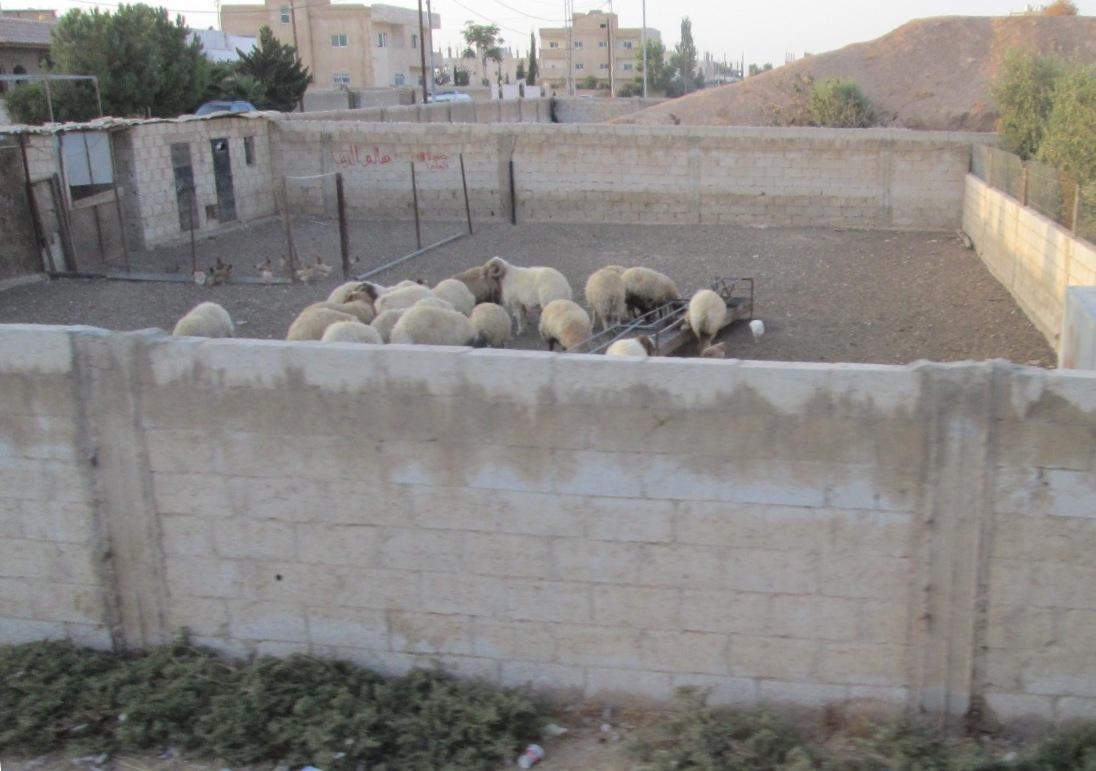 |
| Sheep pen in Jordan |
The holiday could have arisen from earlier spring harvest celebration where a thank offering was given to God with unleavened cakes cooked in oil (Lev. 7:12). The timing of the Hebrew Exodus would have called for an expansion of the event with added meaning.
 |
| Our book on Passover Backgrounds |
In my book Spring: Connecting with God, I tell how the festival has been celebrated or avoided throughout Biblical times. What began as a home celebration became a Temple activity, for which tens of thousands of people each year made the pilgrimage to Jerusalem, after Solomon built the worship center. (By the time Jesus was alive, millions of people were visiting the Temple Herod had renovated.) During the Babylonian exile the practice returned to the home, and is part of what kept the Jewish faith alive. Ezra reinstituted the Temple practices, which continued to be observed, and eventually were held by Jesus and his family.
 |
| Great spot for a picnic on the Mount of Olives |
The New Testament gives various hints that people looked forward to Passover as an annual event. Entire communities would travel together and camp inside or on the outskirts of Jerusalem. Jesus’ family probably camped near the base of the Mount of Olives, atop which he later prayed the night before he was crucified. Families from the Galilee were able to meet together with families who lived in Judea. This is why Mary was so familiar with her relative Elizabeth. People in Biblical times enjoyed the week-long opportunity to take a break from the regular routine of life and live in a different setting.
 |
| Dome of the Rock where the Temple once sat |
After the Temple was destroyed in 70 A.D. many of the Jewish holidays lost meaning, yet Passover grew in importance. Holy days such as Yom Kippur (the Day of Atonement) and Shavuot (the Feast of Weeks, or Pentecost in Greek) are based on the existence of the Temple for sacrifice and receipt of an offering. Chanukah (the Feast of Dedication or Winter - if you’ve read your gospels well, you’ve seen this terminology there!) became a day of mourning because the Temple sat in ruins as it had been during the destruction of Antiochus Epiphanes. Sukkot (the Feast of Tabernacles) remembered the journey from Egypt toward Israel, particularly the long years living in booths in the desert. The festival of Pesach (Passover) took on added importance as the Jewish people prayed once again that an evil Pharaoh (ruler) would be removed and they would be granted another exodus to their homeland.
 |
| A Home Passover Celebration in Saluda, NC |
The elements of families coming together and dining at a banquet, the prayer for the restoration of Jerusalem, and the retelling of the ancient story built Passover into a favorite holiday. During the Middle Ages, European Jews developed ornate Haggadot in order to aid the head of the household in remembering from year to year how to share the elements of faith and tell the story. These books also reminded a literate society of how they were to participate in the telling of the story. Rabbis reinforced family gatherings for Passover in order to bolster Jewish identity within the scattered communities of Europe.
 |
| My family getting ready for Passover |
Today’s Jewish families still gather to remember the ancient story, to pray for Jerusalem, and to strengthen relationships with each other and with God. My family went to Uncle Stuart’s home for the holiday. I still remember fun activities with my cousins as our parents talked and cooked together. I also remember much of the liturgy shared from the Chase & Sanborn Coffee Haggadah. My cousins and I carry many memories from these times together.
Other memories have been created over the years as my sister and I created a spontaneous Passover from memory (because we were unprepared, the shankbone was a milkbone biscuit!), Seders I have put together to teach friends in college and seminary, meals of the Jewish community in Louisville, KY, and celebrations with my wife and daughters add to the yearly Seders I remember. Presentations of the Seder given to churches have also provided fun stories (like the time I wore one black and one brown shoe). These happy memories build faith and family.
 |
| Passover Seder Plate |
The Passover celebration has provided a glue for Jewish society. The elements of faith celebrated in the home with extended family and a lot of fun could help Christians in today’s world. We live in an era where we are letting life (work and school) swamp our time at home. We are letting the “experts” at church direct our faith. Worship is becoming more and more leader-led and non-participatory. Children are separated from parents so they can have “fun,” which dilutes historic religious teachings because they are perceived as “boring.” In this process family memories have been displaced and the Christian faith becomes ever more secular…and lost.


