Showing posts with label Bell Caves. Show all posts

Monday, May 7, 2018

The Shfela

Today’s journey took us through the Shfela, or the low foothills between the Via Maris (way of the sea) and the Judean highlands. This would be similar to the foothills leading up to the mountains in North Carolina. All roads leading up to the interior highlands follow streams and valleys. Strong walled cities guard the entrance to each valley in order to control the travel corridor.
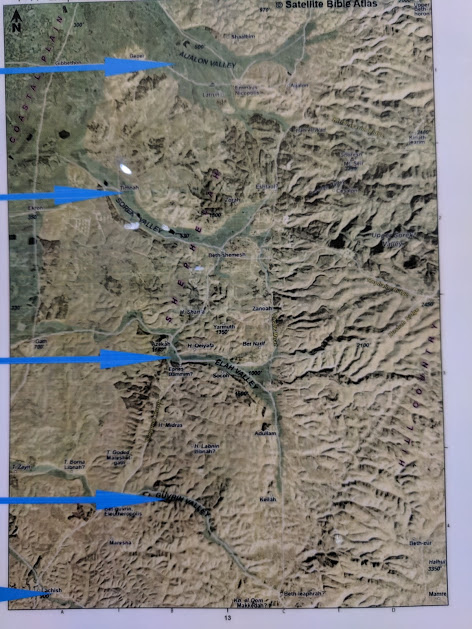
Five Valleys in Israel
The five valleys from north to south are the Ayalon, Sorek, Elah, Guvrin and Lachish valleys. The map above will show these clearly.
The Canaanite section of Tel Gezer
Our first stop of the day was at Tel Gezer, a site we are familiar with because Sarah participated in the dig for two years. (Video). Tel Gezer has a long history, with more than twenty levels within the tel. Gezer controls the Ayalon Valley. Excavations include a Middle Bronze period gate and water tunnel, and also a portion of the city from Solomonic times, when Pharaoh of Egypt gave the city to his daughter and his new son-in-law Solomon.
The Solomonic Gate at Gezer
From Gezer we traveled to Beit Shemesh in the Sorek Valley. This was the area where Samson lived. It is also the place where God returned the Ark of the Covenant to Israel after its capture by the Philistines. There is a new archeological dig at this site.
New Digs at Beit Shemesh
We then visited the Elah Valley, where a boy named David fought the giant Goliath. We were able to get a good view of the valley from Shaaraim or Shaaraim, a city with two gates which dates to the time period of King David. Our guide laid out the entire battle plan so we could see exactly where events took place.
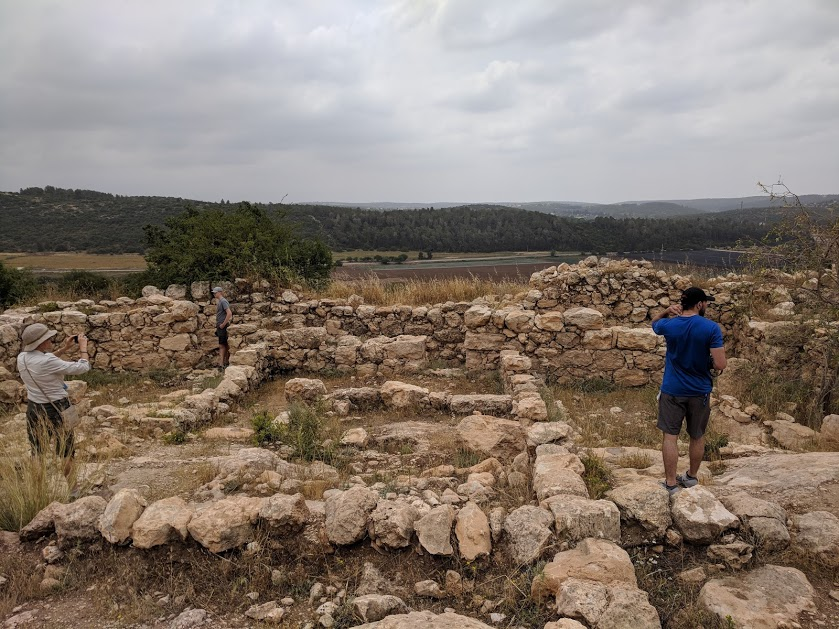
Shaaraim, a village of Two Gates
We visited Gath, the city protecting the Elah Valley. This city is also the hometown of Goliath. It is a massive tel with a long history.
The Philistine Village of Gath
Our journey continued with a stop at Beit Guvrin, this is were King Herod grew up. There are multiple columbarium (caves for doves) that are carved out of the chalk to produce underground caves.
Dove Housing at Beit Guvrin
There are also massive caves left behind from the mining of chalk. These bell shaped caves are very beautiful and have great acoustics.
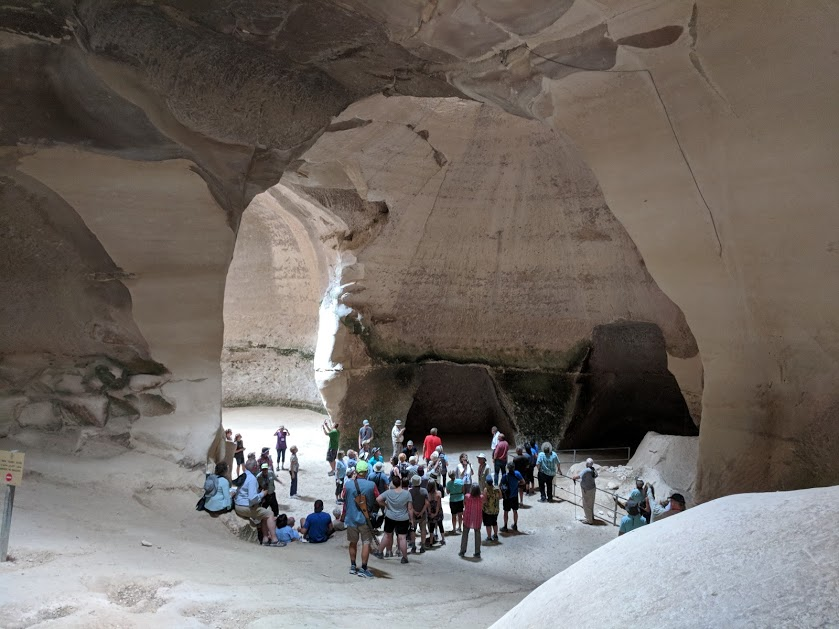
The Bell Caves at Maresha

We finished the day at the motel in Beer-Sheva.

Wednesday, March 22, 2017

Maresha and Bell Caves

The land of Israel is filled with natural beauty. One of the sites we will visit on our 14 day trip to the Holy Land in May 2018 are the bell caves at Bet Govrin. These huge caves are the result of underground quarries during the Byzantine and early Muslim periods. Over the years erosion has created bell shaped interiors with walls from the chalk compound that makes up the caves.
The Bell Caves are located near the older town of Maresha built by Rehoboam (2 Chronicles 11:5-8). The area was attacked by Egyptian Pharaohs Shishak and Osorkon. The Madaba Map records Maresha as the home of Micah the prophet.
After the assault by Nebuchadnezzar Edomites moved into abandoned cities in the region. The region became known by the Greek term Idumenea. John Hyrcanus conquered the region in 112 BC and forced Judaism upon the residents.  King Herod the Great, who was a son of a converted Idumaean consolidated power and showed favor to Maresha.
During the New Testament era Maresha was able to capitalize on its relationship with King Herod and his relationship with the High Priests of the Temple, especially his relationship with Simon Boethrus. Dove columbarium caves were excavated and raising these birds for food and Temple sacrifice became a major industry. The columbariums are filled with thousands of roosts so the birds can rest inside and find food outside. We will walk through a large roosting cave while we are on our trip to the Holy Land.
Bet Guvrin-Maresha National Park is filled with history and interesting sights. In addition to the Bell Caves and Columbarium Cave there are olive press caves, bathtub caves, Sidonian caves, and a Maze Cave from the Hellenistic period. Caves have been carved and used in the region from prehistoric times to the present. Caves were used as a hiding place for troops commanded by Polish General Wladslav Anders during World War II. There are many ancient housing areas including Tel Maresha, Eleutheropolis and Bet Guvrin. Kibbutz Bet Guvrin is located just outside the National Park.
Maresha is in the Judean Hills and the Shephelah region of Israel. It is in the Guvrin Valley at its intersection with what is known as the Parallel Road.  Guvrin Valley, also known as Wady el-`Afranj leads from Ashdod to Hebron.

As we travel through the hill country and through the various valleys we will gain an understanding of this region’s importance in both Biblical and modern eras.