Showing posts with label Holyland Pilgramage. Show all posts

Monday, June 4, 2018

A Morning Walk up the Mount of Olives

Today in Jerusalem I took advantage of the cool morning air to hike to the top of the Mount of Olives.
Looking up toward Temple Mount from the Mount of Olives
After a light Israeli breakfast my journey began by turning right out of the door at the Abraham Hostel.
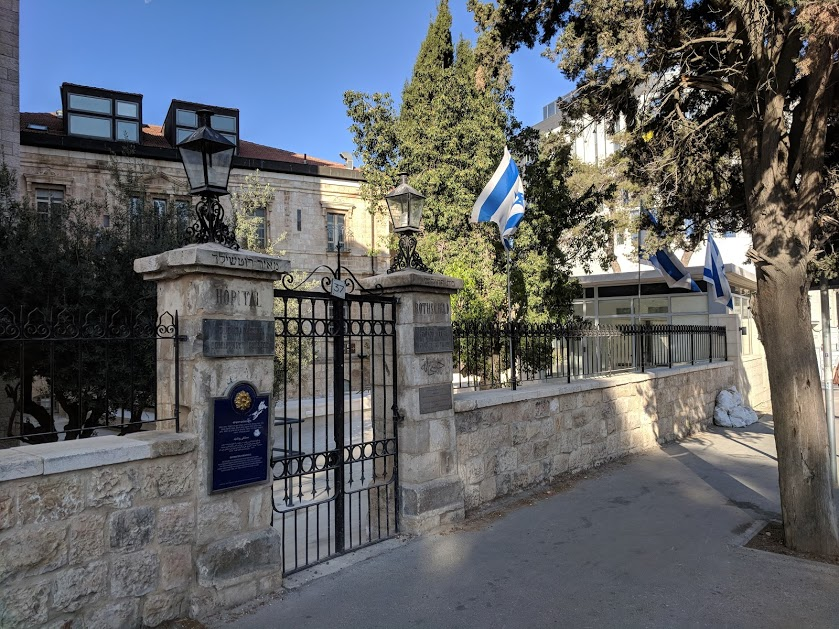
Rothschild Hospital in Jerusalem
I walked down HaNevi’im Street, or the street of the Prophets.
An Italian Hospital, now Israel Ministry of Education in Jerusalem
There are many interesting old buildings from the British era and before.
Shops near the Damascus Gate
I turned onto Sultan Suleiman Street, where I saw several markets selling fresh food.
Small shop with fresh fruit
Sultan Suleiman is an Ottoman ruler who built the current walls of Jerusalem about 500 AD.
Man with cart near the Damascus Gate
I came up to the wall at the Damascus Gate,
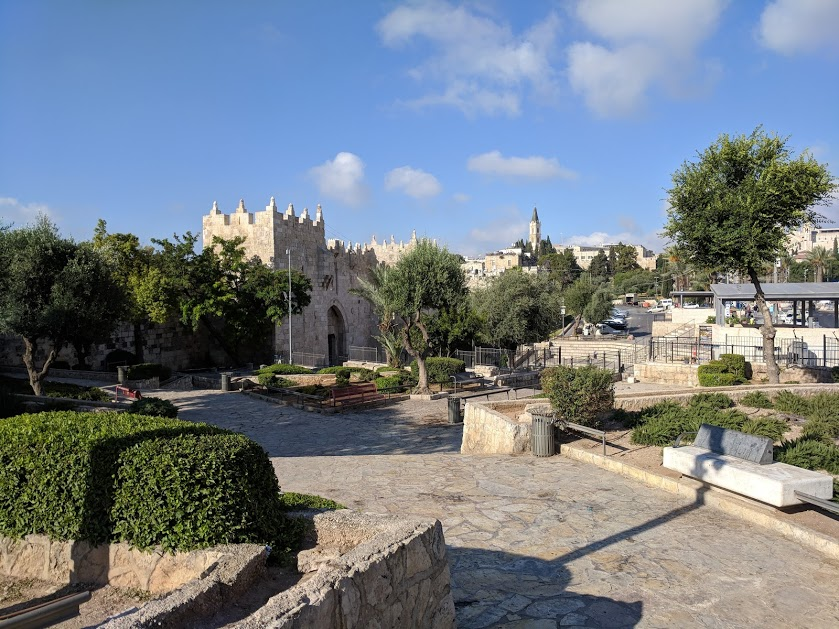
Approaching the Damascus Gate
Where an old Roman gate can be seen below the entrance.
The Two Damascus Gates
I walked through the Walls of Jerusalem National Park and passed Zedekiah’s Cave.
Zedekiah's Cave
The walls are built on high bedrock in this area.
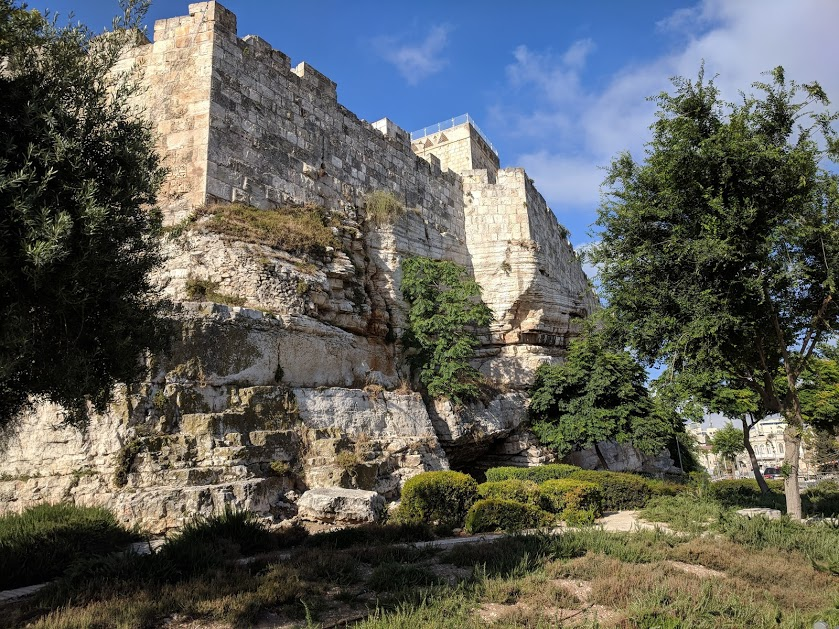
Walls of Jerusalem on Bedrock
Vendors were setting up the market at Herod’s gate (Flower Gate) as I passed.
Herod's Gate
Then I took a walkway through an Islamic cemetery.
Mount of Olives from Islamic Cemetery
I got a great view of Lion’s Gate from the cemetery which stood above the gate.
Stephen Gate in Jerusalem
From there I went into the Kidron Valley,
Kindron Valley, Absalom's Tomb in the valley
And passed the Church of St. Mary. There is a grotto here where Jesus prayed on the night he was arrested.
Grotto of the Virgin Mary
Also an Orthodox church, which is supposedly the place where the Virgin Mary was buried. This cave is quite ornate.
Tomb of the Virgin Mary
The Church of All Nations with its ancient Olive Trees is across the street.
Church of All Nations - Old Olive Trees
I found a set of stairs and walked up.
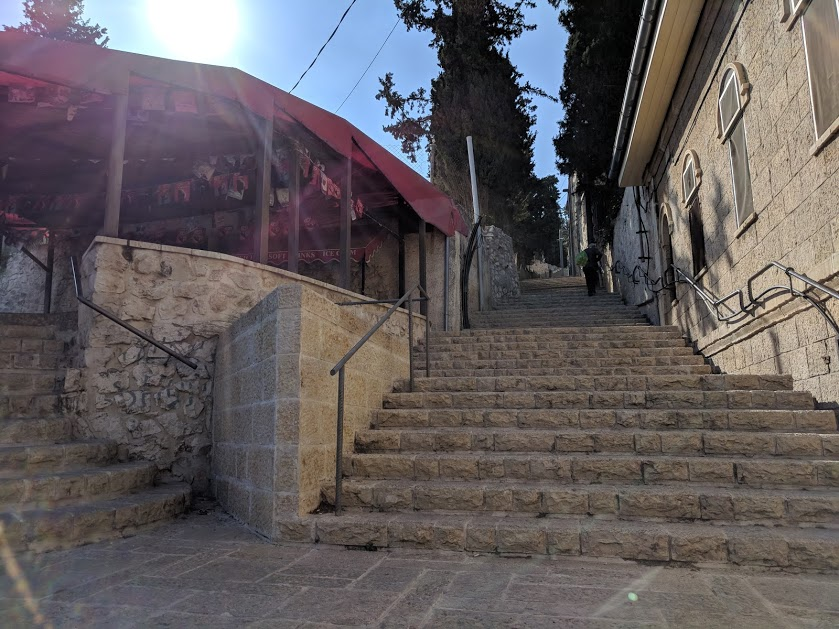
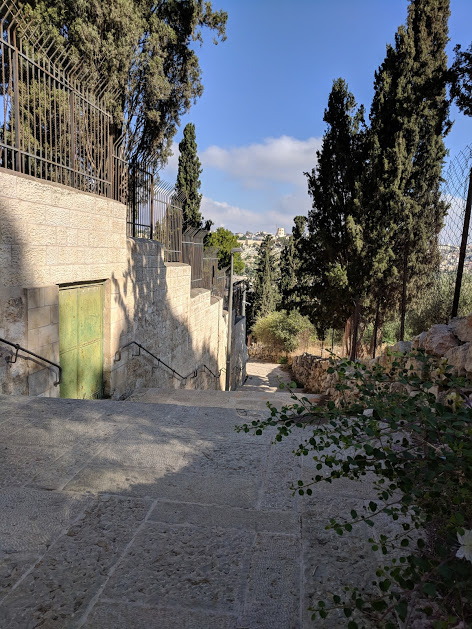
Stairs leading to top of Mount of Olives
The walk afforded great views!
View of Jerusalem from Olivet's Steps
There was a trail through an Olive Grove where I could picture King David and Jesus walking as they traversed the Mount of Olives.
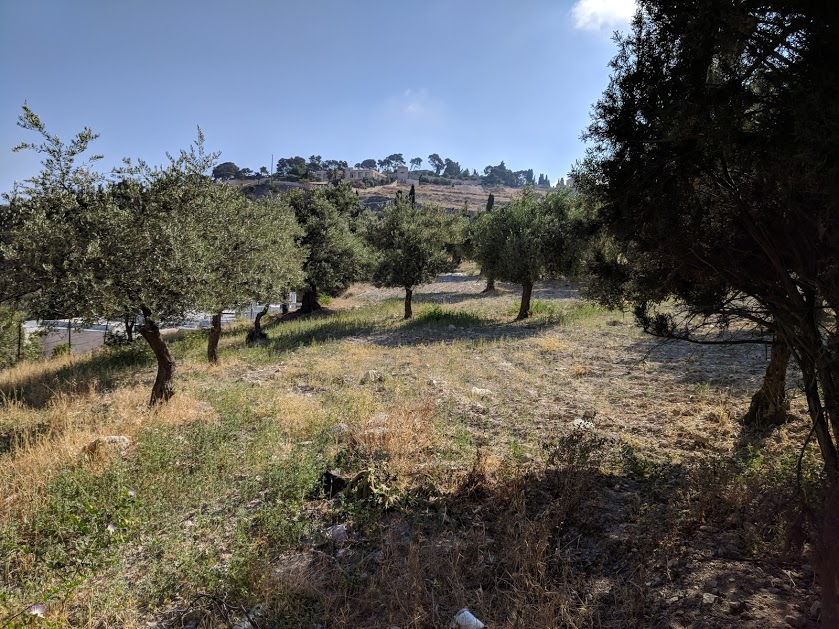
Path through the Olive Orchard
The stairs were like a road with homes along the way.
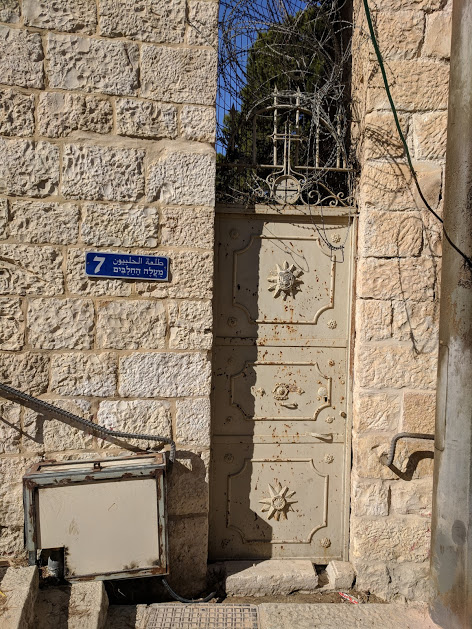
Doorway along the steps
At the top I reached Pater Noster Church, which is reported to be a place where Jesus taught. This might have been the place he prayed on his last night.
Pater Noster Church from Entrance
There was a 10 shekel charge to get in, and my wallet was back at the Hostel, so I looked from the entrance, and decided to come back at some time.
Mosque of the Ascension
I walked over to the Church of the Ascension.
Dome of the Ascension
I listened to a guide inside,
The Place where Jesus ascended to heaven - Acts 1:8
Who explained the footprint of Jesus left at this spot.
Heel mark can be seen on the left

It was an interesting walk. I saw many of the tings I wrote about in my book - Israel: Stories for Your Journey. (If you have not bought one yet, now is the time to click the link and order your copy.)

Friday, March 2, 2018

Life along the Sea of Galilee

I have often wondered what life was like along the shore of the Sea of Galilee during the first century. As I read the Bible I see hand picked events which were written to make a point for readers. On guided tours I travel along the shore in a large passenger bus, flying by the places of the Bible far too rapidly to absorb the scene. When I sail on a boat, I get the feel of the water, but realize the shoreline has changed. The Sea of Tiberias contains far more windsurfers than fishing boats.
Windsurfers along the north shore of the Sea of Galilee
In the first century a major industry on the Sea of Galilee was fishing. Today it is tourism. In various places motels nestle against the shoreline in order to give tourists the opportunity to experience the Lake of Gennesaret as it was in the days of Jesus. The places the Savior was known to frequent in the region have been altered from their original setting to a church site. Lake Kinneret is there, the mountains which have always surrounded the water are there, but the landscape of the first century has totally changed.
Painting from the Sea of Galilee
Two thousand years have passed since the man named Jesus walked along the shore of the Sea of Galilee with his twelve disciples. Across the years so much has changed that archaeologists at times are not sure if the remains they find belong to a village listed in the Bible, or if it is some other place.
The northern quadrant of the Sea of Galilee from Mount Arbel
Recently, the Sea of Galilee experienced a drought. Because of water usage and limited rainfall the level of the water dropped to a “new” low which has not been seen in years. Although the lack of water is not a good thing, there was one benefit that came from the drought. Old portages, long since forgotten about, came to be seen. The stone foundations of fishing piers appeared to be researched and photographed.
Harbors along the Sea of Galilee
Because of this, there is an idea of where fishing villages existed and where the men of Jesus’ day docked their boats. In 1986, during a previous drought, a boat was found that had been preserved in the mud since the first century. Today it is on display at the Kibbutz where it was found, and also a copy can be found in a museum at Haifa. This year it is believed the city of Bethsaida has been unearthed in a place which was formerly submerged.
The perfect companion for visitors to Israel
In my visits to Israel, in my Bible Study, and when I teach, I try to imagine what life was like along the shore of the Sea of Galilee during the time Jesus walked along its shore. I have collected some stories of my research in a new book Israel: Stories for Your Journey. This $2 Kindle book shares how Capernaum and Tiberias were started alongside other stories from the past in order to give an idea of what it was like to live and work in the first century. This book should be read by anyone going on a trip to the Holy Land.
Passover in the lives of People during Bible times and after.
I have also written about life along the Sea of Galilee in my book Spring: Connecting with God. This book looks at how Passover was celebrated in the time of Jesus. The section on the feeding of the 5,000 relates details of Jewish tradition that bring John’s story of the event to life. One of my passions is to help the Bible come to life so people will understand the stories of this book really happened to real people.