Showing posts with label Dizengoff. Show all posts

Friday, April 28, 2017

Patriotism in Tel Aviv

Next year I will be leading a tour group on a 14 day trip to the Holy Land. We will be visiting Tel-Aviv during the Seventieth Anniversary celebration of Israel’s birth as a modern nation. We will be visiting Independence Hall and many historic sites where we can participate in the celebration. I am inviting all my readers to join me on this unique tour of Israel. To see the full agenda or to sign up, click the links. You will be rewarded through personal discoveries and experiences by going on this journey.
The beginnings of the modern state of Israel began in the hearts and minds of several men and women in nineteenth century Europe. Pogroms in Russia drew French banker Baron Edmond Rothschild’s attention to Israel in the 1880s. He used a new idea to drain swamps on the plain of Sharon, starting agricultural communes where he could resettle Russian refugees. Farms were started in Rishon-Le-Zion, Petach Tikvah, Zichron Yaakov, Hederah, Rosh Pinah and Yesod Ha Ma’aleh which drew Jewish settlers from Russia, France, Germany, the Pale, and other areas of Europe.
Theodor (Binyamin Ze'ev) Herzl, a writer, playwright, and journalist, experienced anti-semitism while at the University of Vienna. He also saw that Russians displaced by the pogroms needed a place of refuge. In 1894 he wrote a play entitled “The Ghetto,” first of several works which birthed a movement called Zionism. This movement advanced a dream to establish a homeland for the Jewish people in Palestine, and consequently the settlement efforts.
As the movement of Jewish people to Israel increased in population, it angered Arab shepherds who used the land for grazing. They staged raids into Jewish compounds and destroyed crops. A primitive police force and small militia arose in the early settlements out of necessity. The farmers learned to take up arms, but the raids could come any time of day or night and the settlers realized that preparation and training with guns was not enough. They built walls first, then guard towers around their villages - simple throwbacks to the medieval castles of Europe or the walled cities of ancient Israel.
Just like in the days when Nehemiah was building the walls of Jerusalem, guards were posted in the fields by day and on the guard towers at night, watching for irregular but deadly Arab attacks. The early military included people like Israel Shochat, Yitzhak Ben-Zvi, Mendel Portugali, Israel Giladi, Alexander Zaid, Yehezkel Hankin, Yehezkel Nissanov, and Moshe Givoni, who realized that simple protection was not enough to halt the raids. They formed a secret a police organization called Bar-Giora to share information and formulate protective strategies. They went undercover as Arab shepherds in order to spy and thereby uncover potential attacks before they occurred.
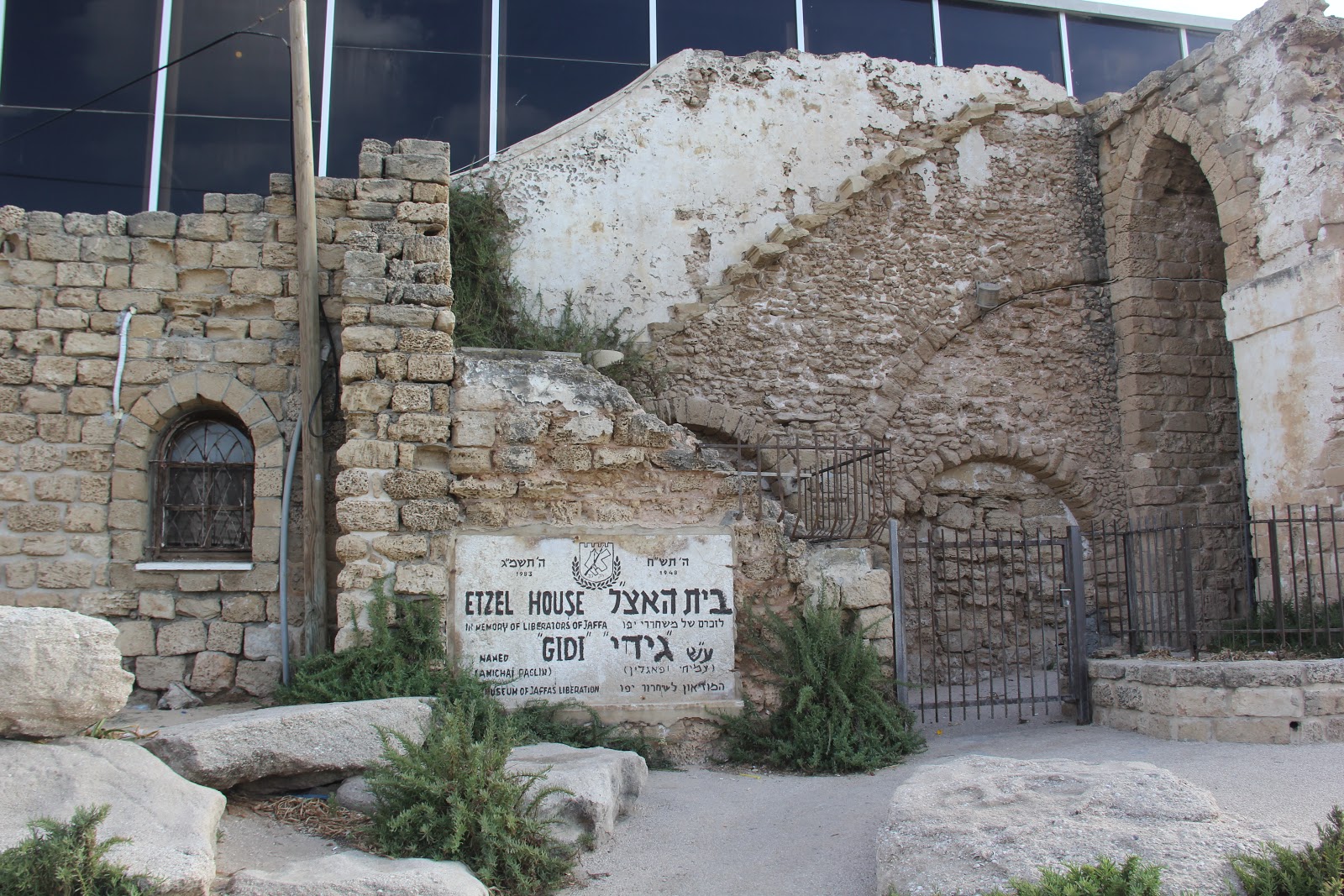
The early movement developed into several more assertive organizations by the twentieth century including the Ha-Shomer (Guild of Watchman), the Haganah, Etzel, and Irgun. These movements protected settlers against Arab uprisings (such as the the events of 1922 and 1929), continued and stepped up the training offered to community police organizations, and made preemptive strikes against terror-based groups in Palestine and beyond.
After World War I, the occupation of Palestine was transferred from the Ottoman Empire to Great Britain. The English were sympathetic to the Jewish settlers at first and issued a policy called the Balfour Declaration. The Arabs pressured their new rulers to stem the immigration of refugees and Zionist farmers who were changing their land. The British government then issued “White Papers,” or policies which reduced (1921), limited (1930), and then banned (1939) Jewish immigration. These papers incited Jewish resistance and necessitated methods to smuggle Jewish refugees into the land. The Haganah and other organizations declared war on England.
But the war effort was stalled as the power of a new enemy overshadowed skirmishes taking place in Zion. Jews who were formally at war with England joined British forces to defeat Adolf Hitler and the Nazis. Many stories of valor can be told of Jewish soldiers who cooperated with the British in World War II military efforts while simultaneously breaking British leadership’s anti-Jewish refugee laws by illegally smuggling concentration camp escapees into Israel.


As World War II came to an end the Haganah renewed their war with England. They planned and moved forward with resistance against British colonial rule. They also worked to bring displaced Jews who survived both war and concentration camps to the land as illegal refugees (with an obvious need and nowhere else to go - other countries, including the U.S., were also turning away Jews who had escaped the horrors of the Holocaust alive). Zionists talked about a Jewish homeland with a government of their own in order to protect their people from the winds of foreign policy.
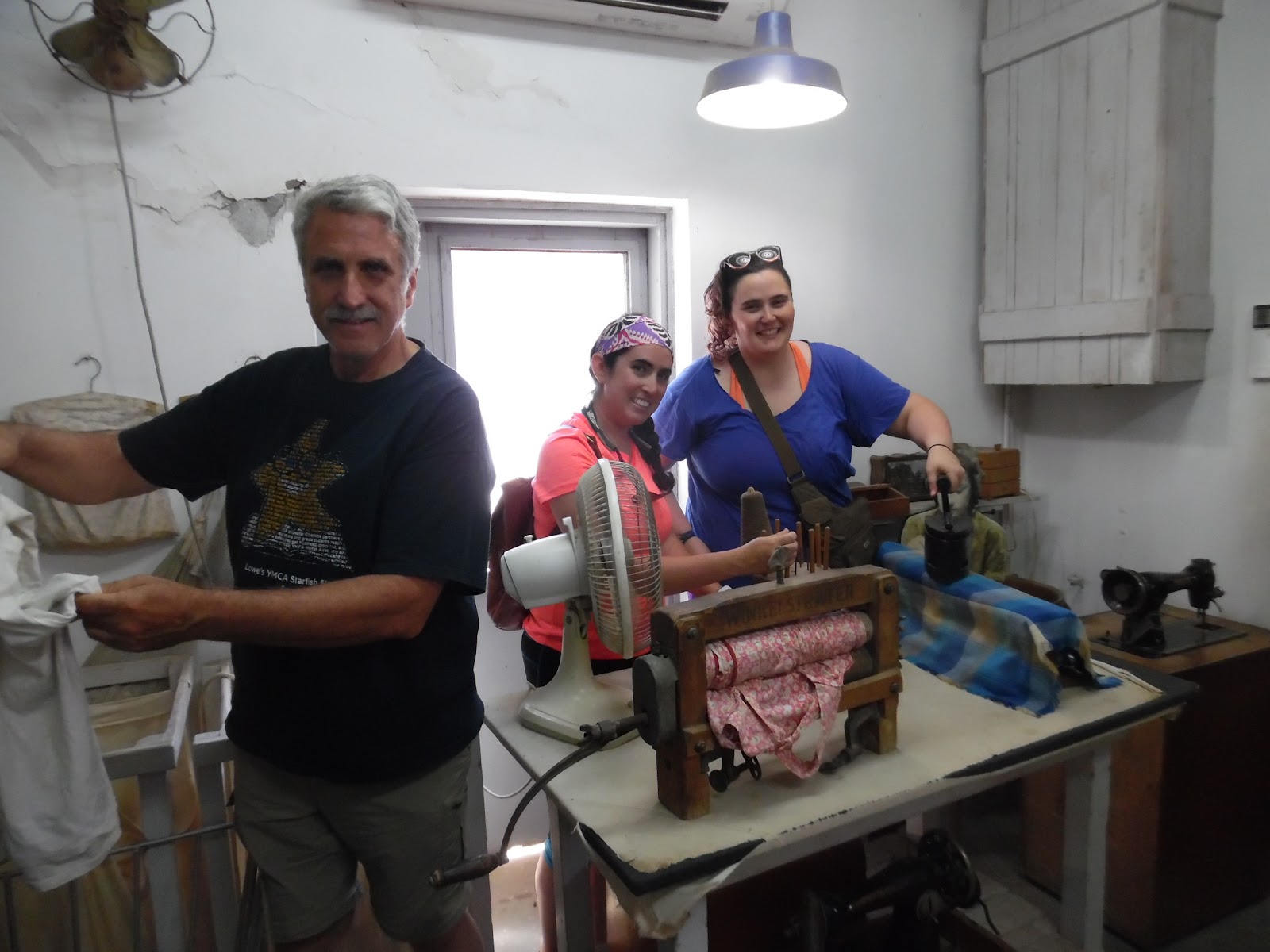
The Haganah built secret munitions factory and storage facilities to fight against Great Britain. We visited one such underground facility during our 2016 trip to Israel. We saw the laundry and bakery of Machon Ayalon, an agricultural kibbutz at Rehovot which hid an underground bullet factory.
Similar facilities were built across “Eretz Yisrael” (the land of Israel) in order to supply the rebellion and give birth to the new Jewish homeland.
Enlistment efforts were made to build an army and stage resistance which would lead to the independence of a new (yet ancient) Jewish homeland. Attacks were made on communication and transportation facilities in order to interrupt the ability of the British government and soldiers to effectively govern the land. These attacks were made at night in order to prevent loss of life for both the Jewish army and the British who operated these necessary services.
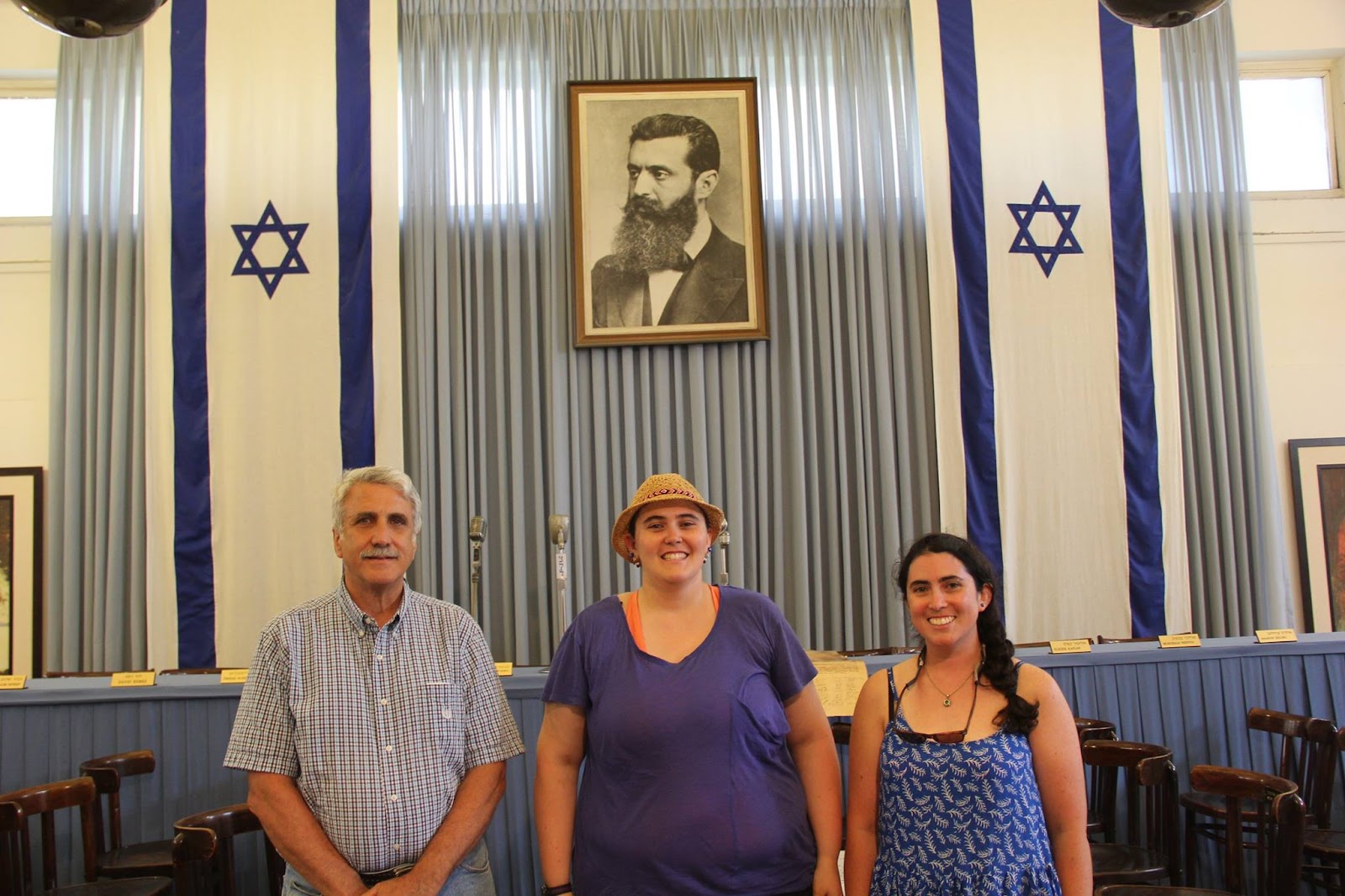
Jewish resistance was effective. England could not hold the country on their own and asked the United Nations to chart a course for the future. A resolution was drawn up recommending the creation of independent Arab and Jewish States. The Plan called for separate governments but economic union between two proposed states. At midnight on May 14, 1948, England announced their rule of Palestine would end and two new nations could be established.
The Jewish people seized the opportunity to establish a new government. Formal organization took place in the home of Meir Dizengoff to sign all necessary papers and to declare independence for the nation of Israel.
There is much more to this story which I hope can be shared on a trip to Israel May 5-18 next year. You are invited to come on this trip - information is found at this link and you can sign up by clicking this link. On our first day in Israel we will visit the Palmach Museum to learn about the Jewish resistance movement. We will also visit the former home of Meir Dizengoff in order to understand the Jewish desire for their own homeland and to catch the spirit of Zionism.
During the following days of our trip we will visit biblical sites, make new friends, and tell stories of faith and patriotism. This trip is a tour for people who wish to understand “Eretz Yisrael” (the land of Israel) from both Jewish and Christian perspectives. It will be life changing for all who choose to participate.

Wednesday, June 15, 2016

Israel Adventure - Day 6

Today was Founder's day on our Israel trip. We went downtown to see the patriotic side of Israel. The story of independence is more detailed, full of valor and greater than most people know, or could even guess.
As we drove to our destination it became obvious that the holiday, Shavuot, was over and traffic was crazy! Cars would not stay in their lanes and motorcycles drove all over the place. In Tel-Aviv a driver must also watch for pedestrians and bicycle riders who come out of nowhere into the crosswalks.
We began with breakfast at the Bagel Market - only, the bagel machine of the bagel market had broken, so we had fresh baguettes instead. This was one of the only bagel places in Tel Aviv, which was why we ate there. Even though there were no bagels, the breakfast was excellent. We had lox and a choice of many vegetables.
From breakfast we walked several blocks to Rothschild Blvd. Our first stop was the Haganah Museum. The museum is in Eliyahu Golomb’s old house. He was one of the original founders of the Jewish yishuv. The house was once was headquarters for the 71,000 member organization. This organization pre-dated and became the Israeli Defense Forces. Most of the commanders were members of the Haganah, and the eventual Prime Ministers of Israel all had a connection as well.
The Haganah grew out of the Zionist movement of the 1890s. At that time there was a desire to “return to the homeland.” Farms were established by Baron Rothschild to produce marketable goods. Through the philosophy of Theodor Herzl, European Jews moved to farming collectives called kibbutzim. Although the two were not in total agreement about how to settle the nation (if you have two Jews you have five opinions), in the end both methods of establishing settlement worked for the greater good.
By the end of World War I, the rapid pace of European Jewish immigration was turning the tide in Palestine politically. The Arabs, who did not like the Europeans from the beginning, saw themselves as losing clout. They began attacking the Kibbutzim. The settlers began police forces to protect themselves. Community police began to work together and train together in order to increase skills.
The Arabs continued to push England on the matter, and finally in 1939, the British government caved in and issued what is called “the White Paper” - forbidding Jewish immigration to Palestine. The British would blockade Mediterranean ports, and if immigrants were found, send them back to Europe and Germany in order to suffer whatever fate they may. The Haganah created diversions and found ways to smuggle the immigrants into Israel. They also declared war on England, a sort of revolution, letting the ruling government know they needed to lift the embargo on persecuted people. (Hitler was already in power in Germany!)

Several officers who had served in the army during World War I served as visionaries in this movement and began to strategize Israel’s future (some were members of the Jewish Legion, which was the first organized army marching under the Jewish banner since the destruction of the Jewish homeland in 70-135 AD). They encouraged and nurtured organization between villages and kibbutzim. They organized Jewish leaders around the world with the dream of a Jewish homeland (although the Jewish people had lived in Diaspora among the nations for over 2,000 years, periods of anti-Semitism arise even in nations once favorable to Jewish settlement). Two prominent leaders of this movement were David Ben-Gurion from Poland (he also lived in New York City for three years) and Chaim Weizmann of Russia (who moved to England).
The war between England and the Haganah began as skirmishes...and the eruption of World War II shook the world, including Israel and the Jews’ ongoing conflict with the British colonialists. The Haganah enlisted men and women to fight with England against the common enemy. They also enlisted spies to find concentration camps and release prisoners when possible (and when they found prisoners, released them, and brought them to Israel, there was a high chance the British would turn the ships around and send them back to Germany!).

After the war, planning began again with strategized terror attacks on bridges, trains, radio, and radar stations. The attacks were always planned to minimize loss of life even while accomplishing desired results - and they were successful. Eventually England (who would not make a decision to free Palestine) asked the United Nations to vote on what to do with Palestine. The land was divided between Jews and Arabs, opening the door for a Jewish homeland (although drastic changes to the UN’s plan would be necessary to make this homeland a reality).
The museum shared stories of bravery as the Jewish military was organized, even before the nation of Israel was born, which is fortunate, for the day after the nation’s birth it was attacked by Arabs, and survived (although the first attacks by the Arabs began six months prior, just after the UN plan was affirmed).
A block away, on the other side of Rothschild Blvd, there exists a building known as Israel’s Independence Hall. This was actually the home of Tel-Aviv’s first mayor, Meir Dizengoff.
After the United Nations drew up a plan for Palestine’s partition and ended British rule on November 29, 1947, Jewish leaders met to take the opportunity to organize a government. (The Arabs disputed the plan because it did not give them all of the land, so they had not taken the opportunity to draw up a constitution and form a government.  Various terrorist groups rule areas of Arab Palestine today.) On Friday (the Sabbath begins at sundown Friday and continues through Saturday - which is why the meeting did not take place the next day), May 14, 1948, the day before England was to pull out of Palestine, the Jewish people met at the Dizengoff home (in a room that was used as an art museum) to formally read the Declaration of Independence and assert their right to a land which had been theirs for over two thousand years. The event was put together rapidly, so it might be said Israel, the homeland of the Jewish people was formed in a day. (Isaiah 66:8)
After our tour at Israel’s Independence Hall we walked to the Sarona Market, an upscale food market which is mostly contained in a mall. We ate dates and apricots for a snack and also had some ice cream.
We then walked back to the car and drove back to our apartment. We had decided last night to eat at the Aladin restaurant in Old Jaffa with a patio above the Mediterranean. We went just before sunset. We sat down, almost immediately heard the call to prayer from the minaret next door, and seemingly in response the chiming of the hour by the bells at the Catholic church.
I ordered beef kabobs, Chelsea had baked eggplant, and Sarah had mussels. We also ate tabouli. The food was tov meod (very good). The view was outstanding.
After dinner we walked along the wharfs at the harbor. Other restaurants such as the Old Man and the Sea line old warehouses. We looked at the boats, heard some music, visited an art shop (which also had some familiar books…can you read the title above?) and took some pictures.
This is a picture of “Peter the Fisherman.” Although I do not know his real name, you can see the cross around his neck. He was preparing his lines for the next day.
After our walk we went back to Old Jaffa (no, I did not yet find the bag I lost two years ago, but I looked!) for Ice Cream (what else?!) and to plan our day for tomorrow.